
ARTICULATIONS OF THE SPINE AND THORAX Pages 8
- Slides: 28
ARTICULATIONS OF THE SPINE AND THORAX Pages 8 -12, 42 and 57
Arthrology § joint, articulation or union between two or more bones § Classification by degree of movement or tissue that bind the bones together
By Degree of Movement § synarthrodial joint - allows no movement; flat bones of the skull § amphiarthrodial joint - partially movable § diarthrodial joint - freely movable By Joint Tissues § fibrous connective tissue § cartilage § combination of connective tissue and cartilage § cartilage and joint cavity
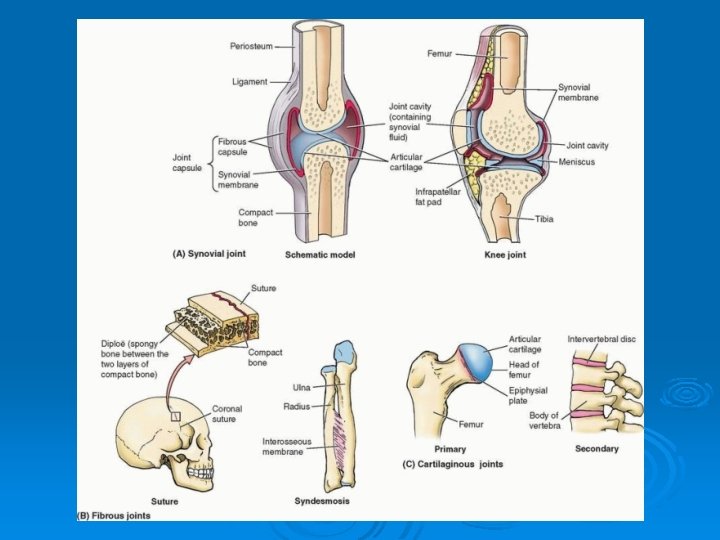
The Fibrous Joint suture - between bones of the skull § syndesmosis - partially movable; two bones connected by a fibrous interosseous membrane § gomphosis - articulation between the teeth and the alveolar processes § The Synchondroses primary cartilaginous joint § plate of hyaline cartilage between apposing surfaces = area of growth between bones § sphenooccipital synchondrosis in the young → fuses after adolescence §
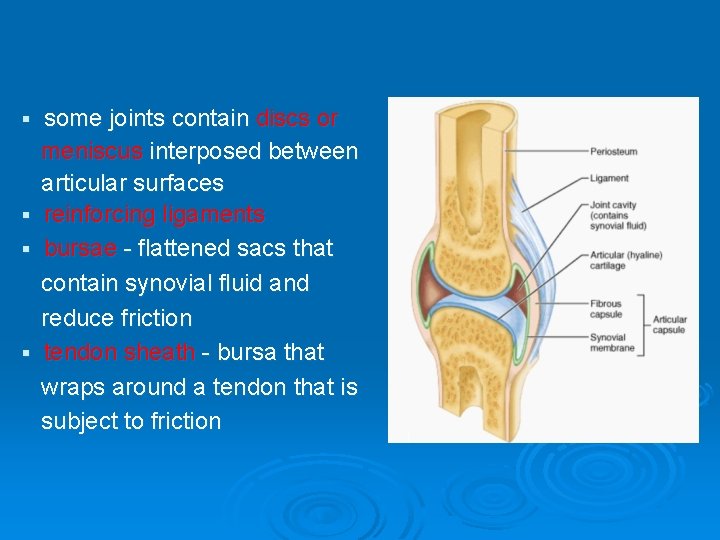
The Symphyses secondary cartilaginous joint § partially movable § § apposing bony surfaces are covered with cartilage but separated by intervening fibrous tissue or fibrocartilage § intervertebral discs, symphysis pubis The Synovial Joint freely movable § surfaces of the opposing bones are covered by articular cartil. § the inner aspect of articular cavity is lined with a synovial membrane (not articular surfaces of the cartilage) → produces intervening film of synovial fluid §
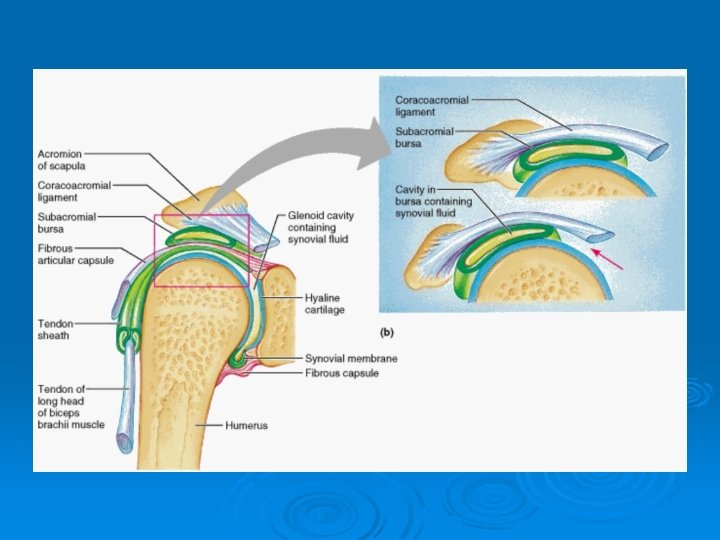
some joints contain discs or meniscus interposed between articular surfaces § reinforcing ligaments § bursae - flattened sacs that contain synovial fluid and reduce friction § tendon sheath - bursa that wraps around a tendon that is subject to friction §
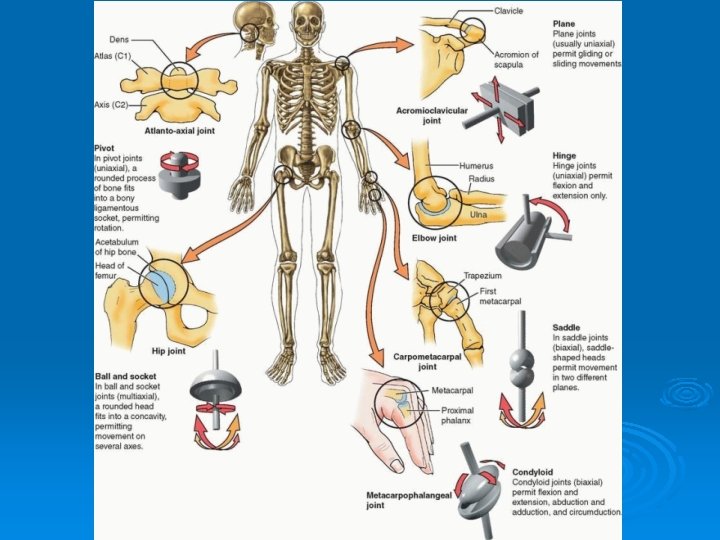
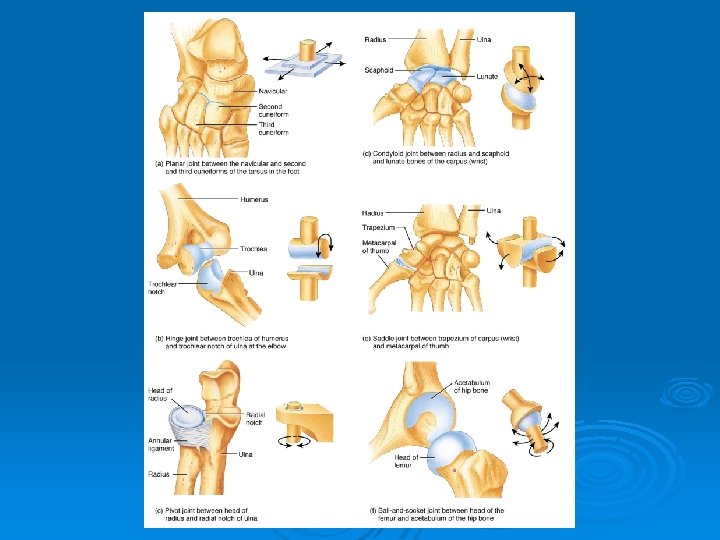
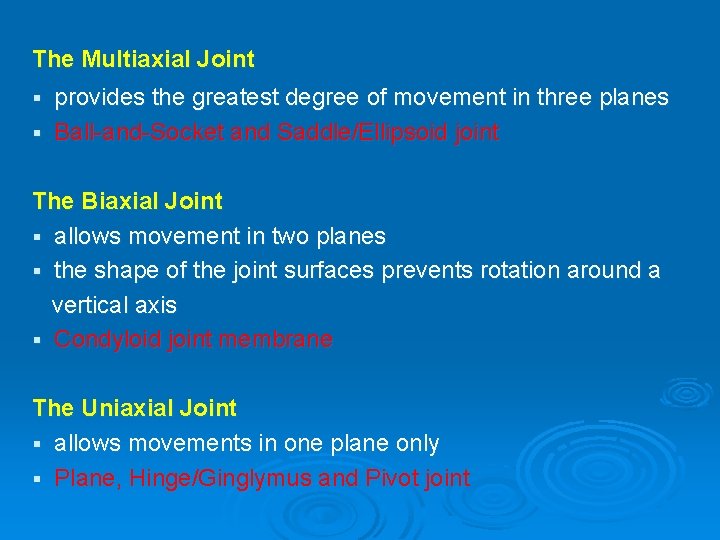
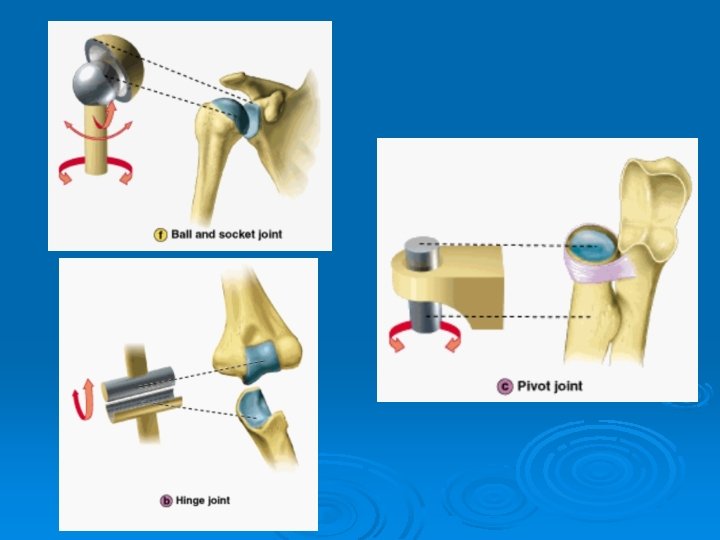
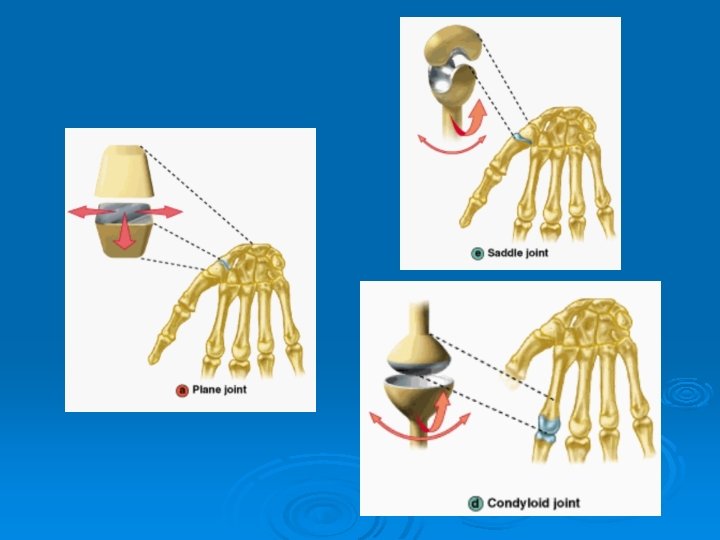
The Multiaxial Joint provides the greatest degree of movement in three planes § Ball-and-Socket and Saddle/Ellipsoid joint § The Biaxial Joint § allows movement in two planes § the shape of the joint surfaces prevents rotation around a vertical axis § Condyloid joint membrane The Uniaxial Joint § allows movements in one plane only § Plane, Hinge/Ginglymus and Pivot joint
Articulation of Spine
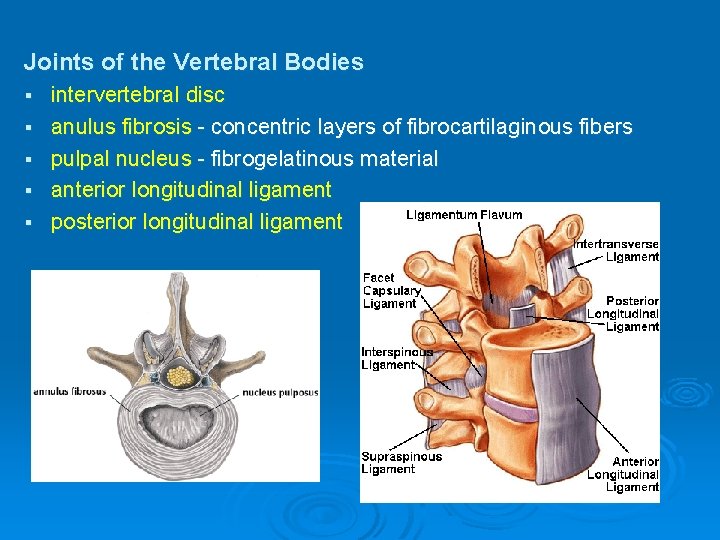
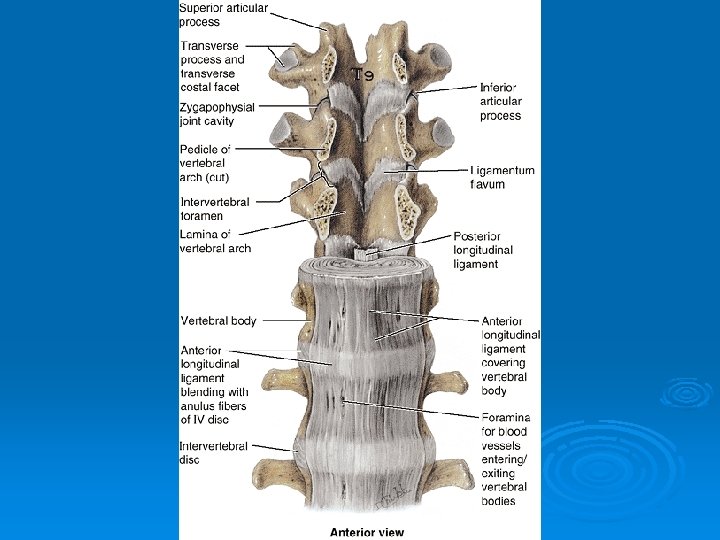
Joints of the Vertebral Bodies § § § intervertebral disc anulus fibrosis - concentric layers of fibrocartilaginous fibers pulpal nucleus - fibrogelatinous material anterior longitudinal ligament posterior longitudinal ligament
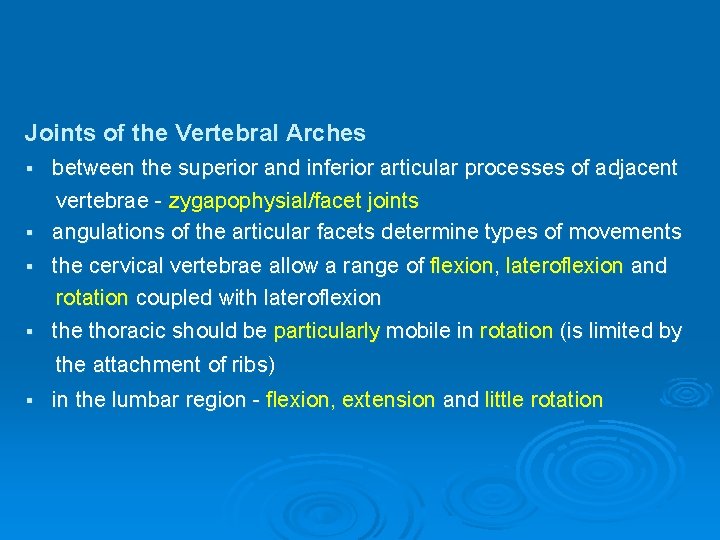
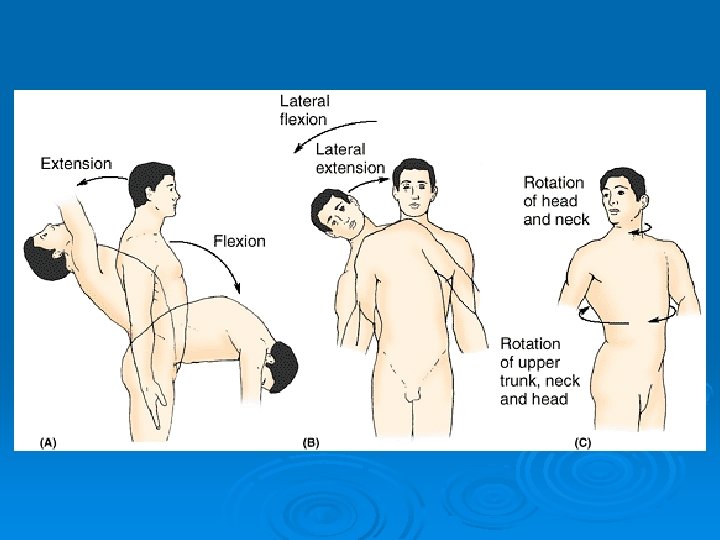
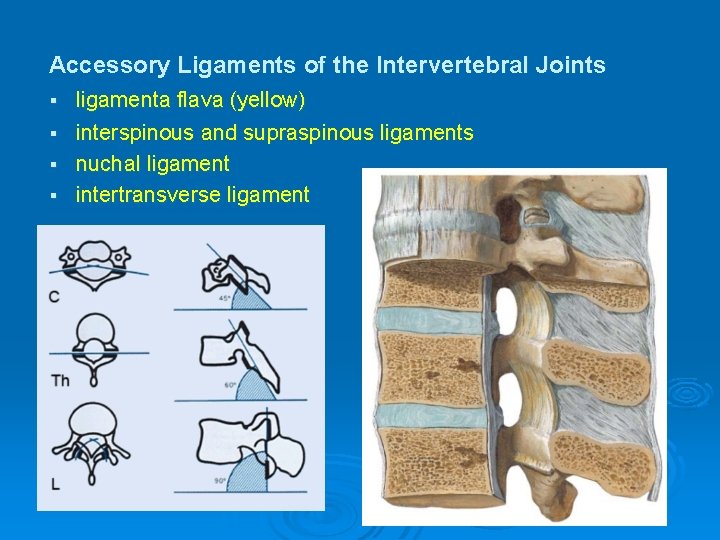
Joints of the Vertebral Arches between the superior and inferior articular processes of adjacent vertebrae - zygapophysial/facet joints § angulations of the articular facets determine types of movements § the cervical vertebrae allow a range of flexion, lateroflexion and rotation coupled with lateroflexion § the thoracic should be particularly mobile in rotation (is limited by § the attachment of ribs) § in the lumbar region - flexion, extension and little rotation
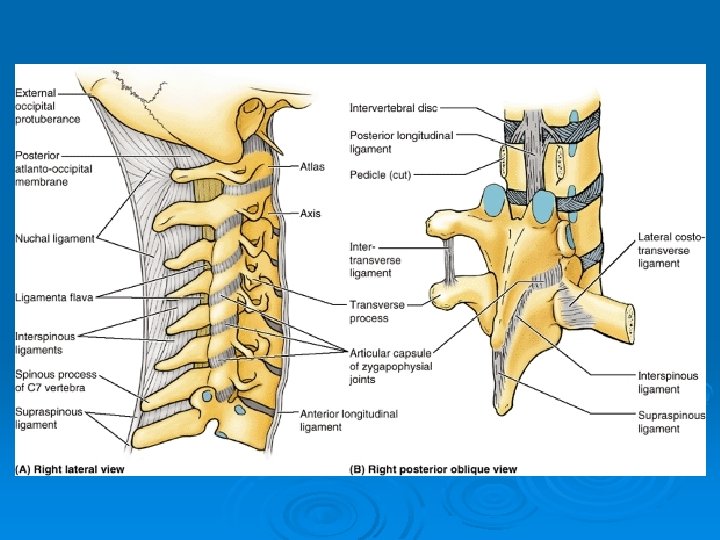
Accessory Ligaments of the Intervertebral Joints § § ligamenta flava (yellow) interspinous and supraspinous ligaments nuchal ligament intertransverse ligament
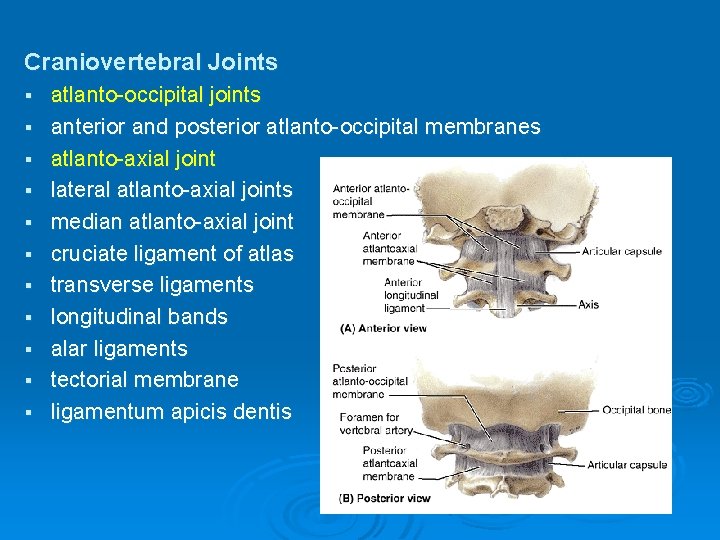
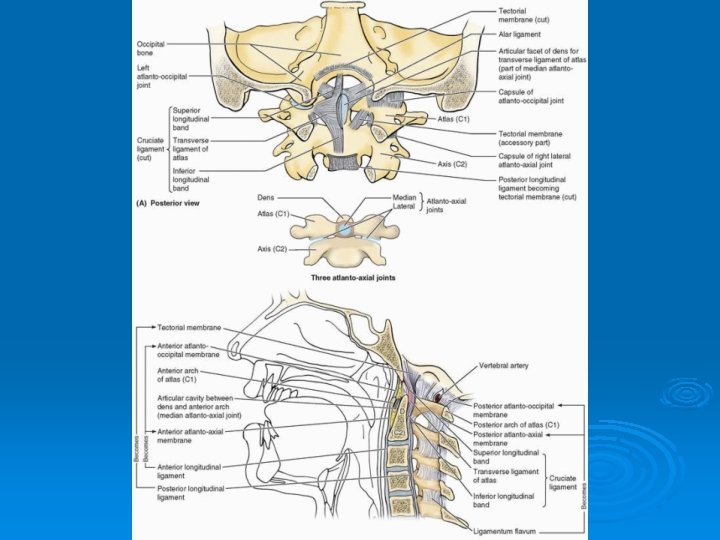
Craniovertebral Joints § § § atlanto-occipital joints anterior and posterior atlanto-occipital membranes atlanto-axial joint lateral atlanto-axial joints median atlanto-axial joint cruciate ligament of atlas transverse ligaments longitudinal bands alar ligaments tectorial membrane ligamentum apicis dentis
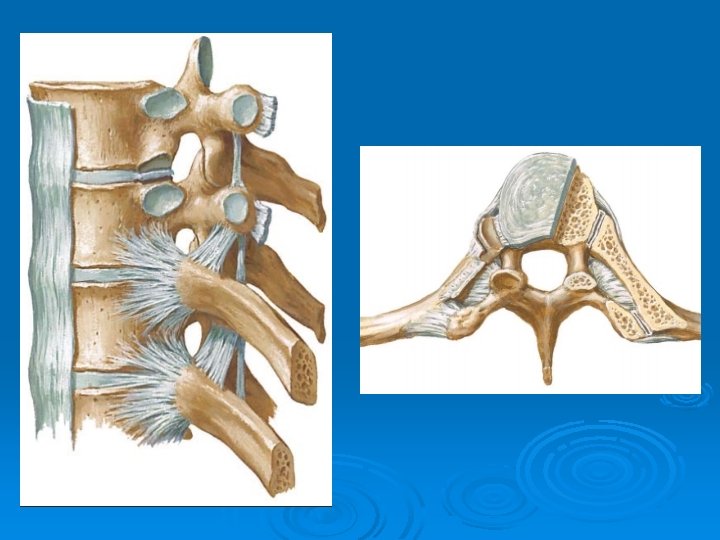
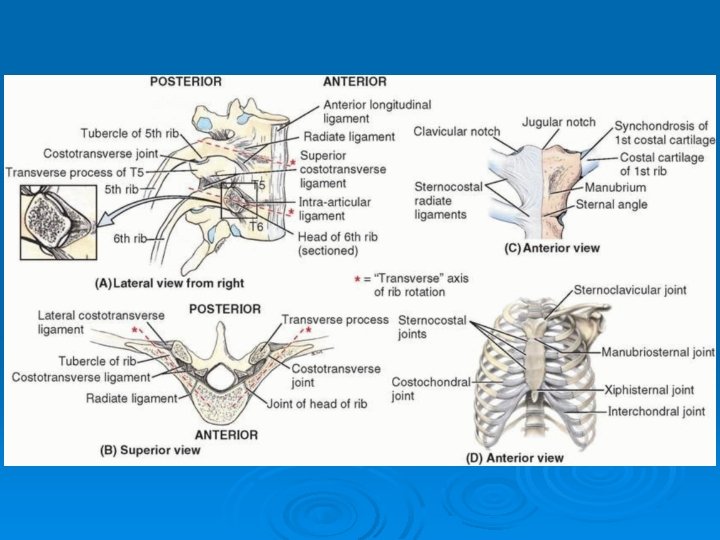
Articulation of Thorax costovertebral joints § costochondral joints and interchondral joints § sternocostal joints §
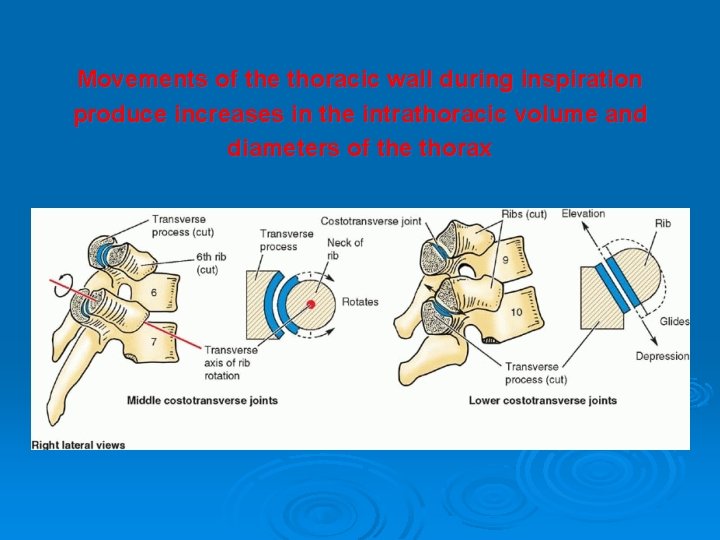
Costovertebral Joints head of the rib articulates with the inferior and superior costal facets of two adjacent vertebral bodies and the intervening intervertebral disc § allow elevation and depression of the ribs § Costotransverse Joints costotransverse ligaments - limit movements to slight gliding § radiate ligament (ligamentum capitis costae radiatum) § Costochondral Joints Interchondral Joints (6 th-9 th) Sternocostal Joints sternocostal radiate ligaments § membrana sterni externa et interna §
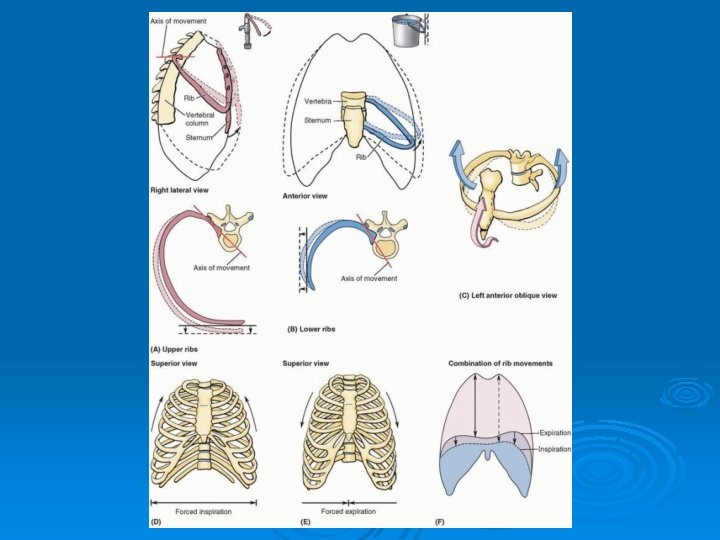
Movements of the thoracic wall during inspiration produce increases in the intrathoracic volume and diameters of the thorax