
Articulations Chapter 9 Classification Table 9 1 Functional
Articulations Chapter 9

Classification Table 9– 1

Functional Classification of Joints • Synarthroses (singular = synarthrosis) – Immovable joints • Amphiarthroses (singular = amphiarthrosis) – Slightly movable joints • Diarthroses (singular = diarthrosis) – Freely movable joints

Structural Classification of Joints • Fibrous • no joint cavity, bones held together with collagen fibers • Cartilagnous • no joint cavity, bones held together with cartilage • Synovial • have a “synovial” cavity, bones held together with an enclosed capsule & ligaments • Synostosis • Conversion of other joints to solid bone mass
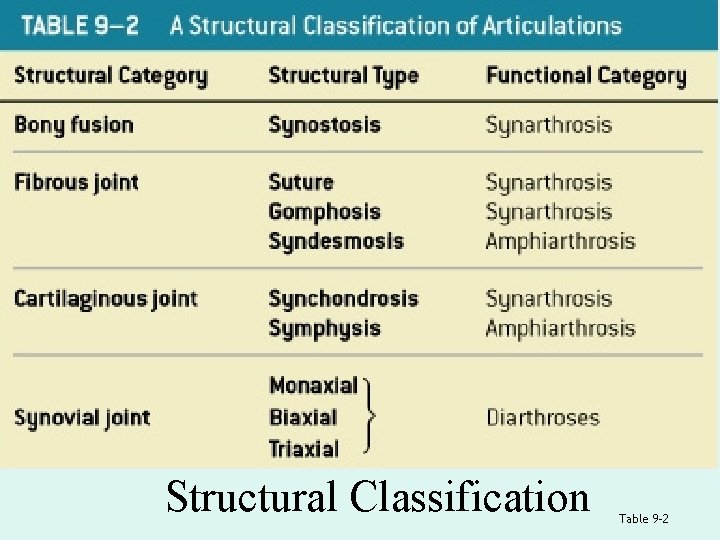
Structural Classification Table 9– 2

Suture: a fibrous synarthrosis
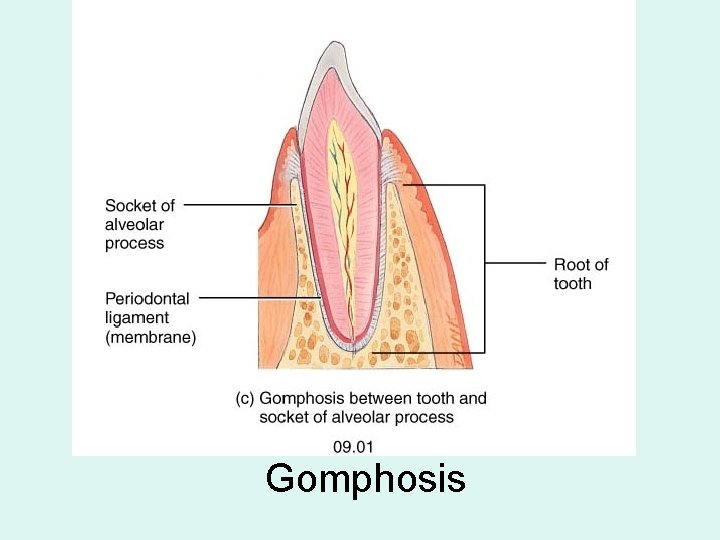
Gomphosis
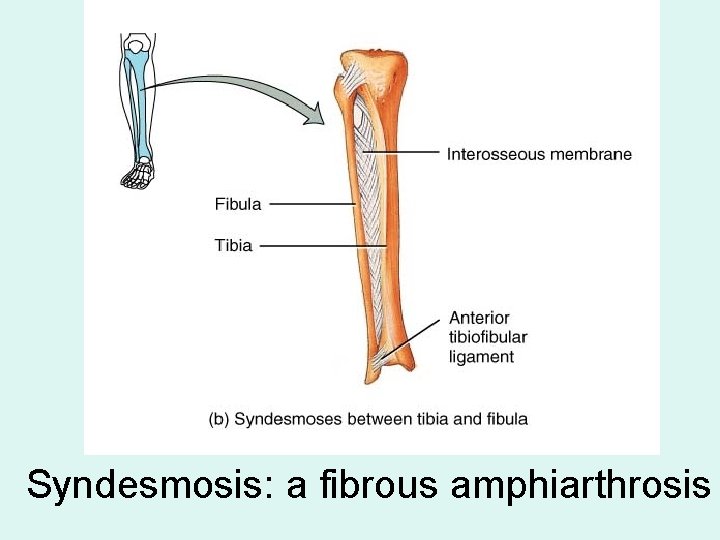
Syndesmosis: a fibrous amphiarthrosis
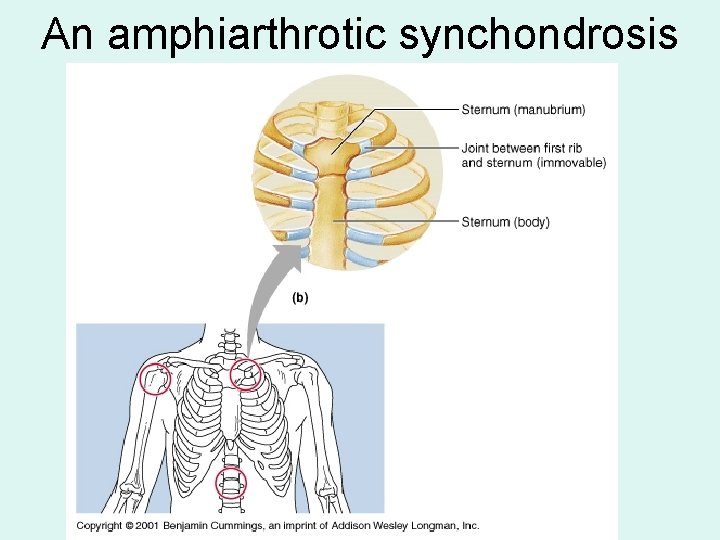
An amphiarthrotic synchondrosis

Symphysis
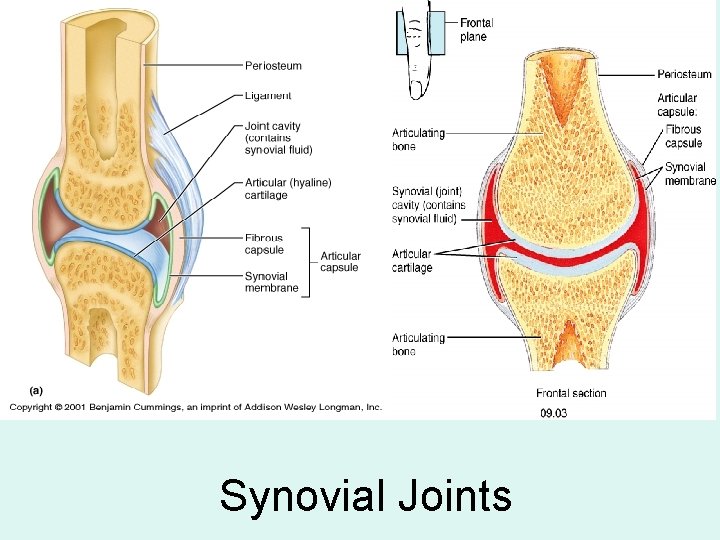
Synovial Joints
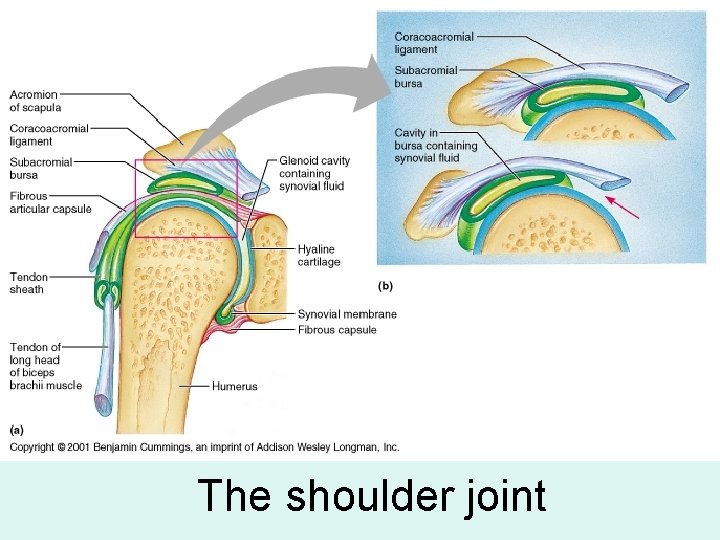
The shoulder joint
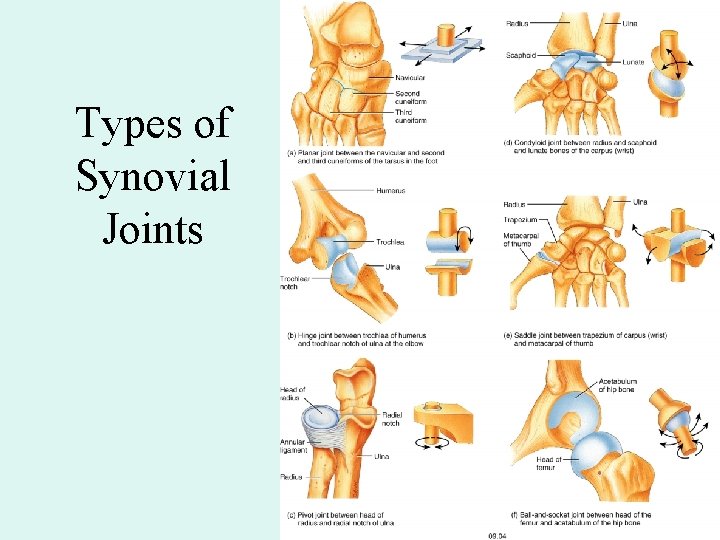
Types of Synovial Joints
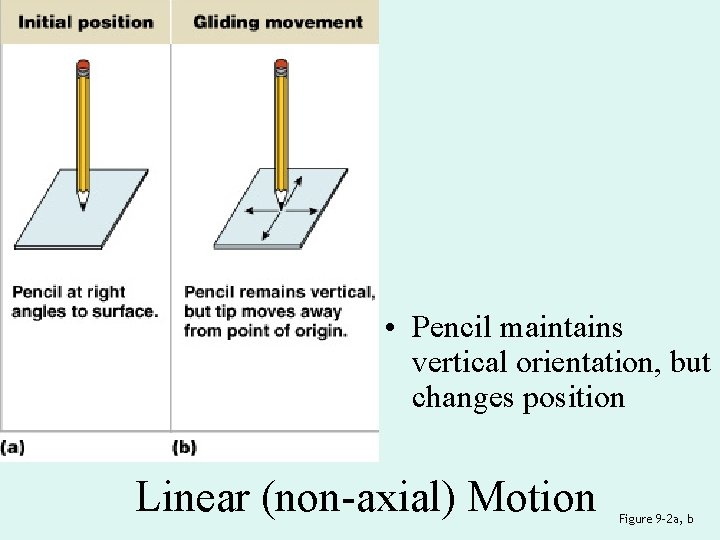
• Pencil maintains vertical orientation, but changes position Linear (non-axial) Motion Figure 9– 2 a, b
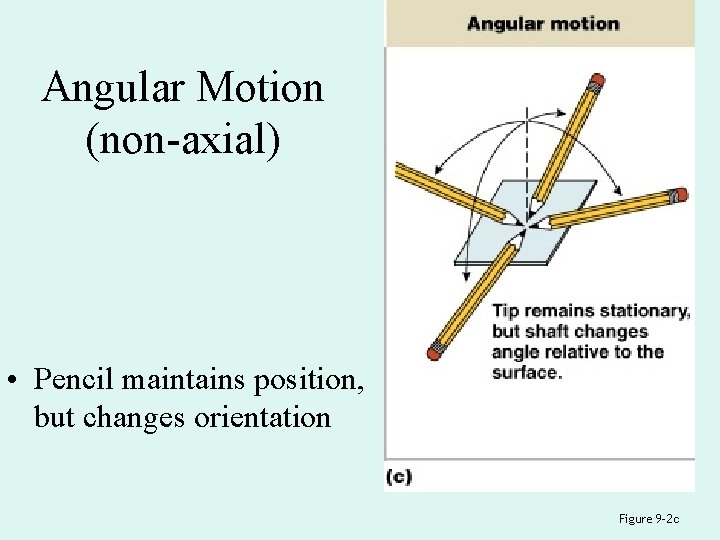
Angular Motion (non-axial) • Pencil maintains position, but changes orientation Figure 9– 2 c
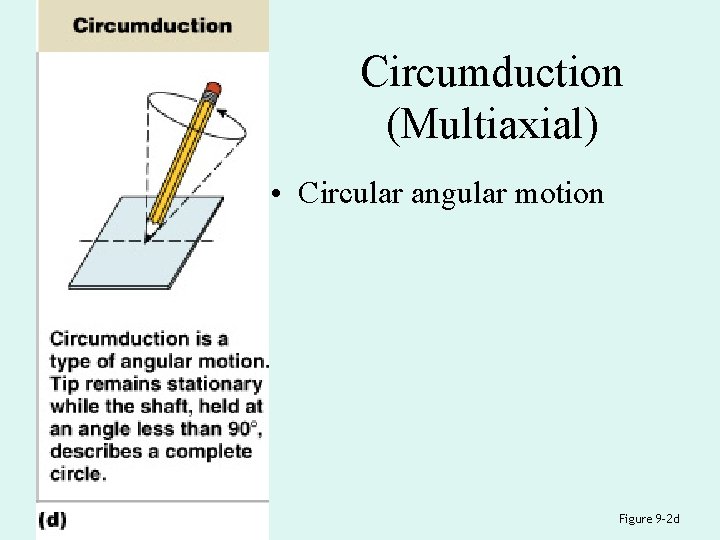
Circumduction (Multiaxial) • Circular angular motion Figure 9– 2 d

Rotation (Uniaxial) • Pencil maintains position and orientation, but spins Figure 9– 2 e
Planes (Axes) of Dynamic Motion • Monaxial or uniaxial (1 axis) • Biaxial (2 axes) • Triaxial or multiaxial (3 axes)
Types of Movements Possible at Synovial Joints
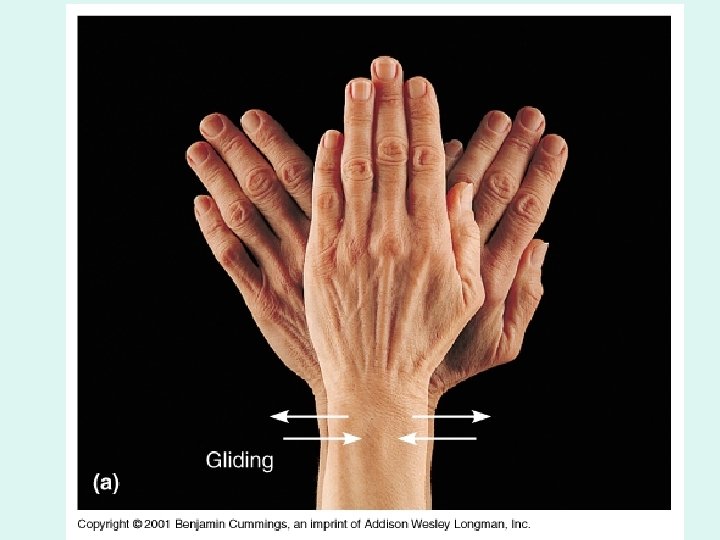
Gliding
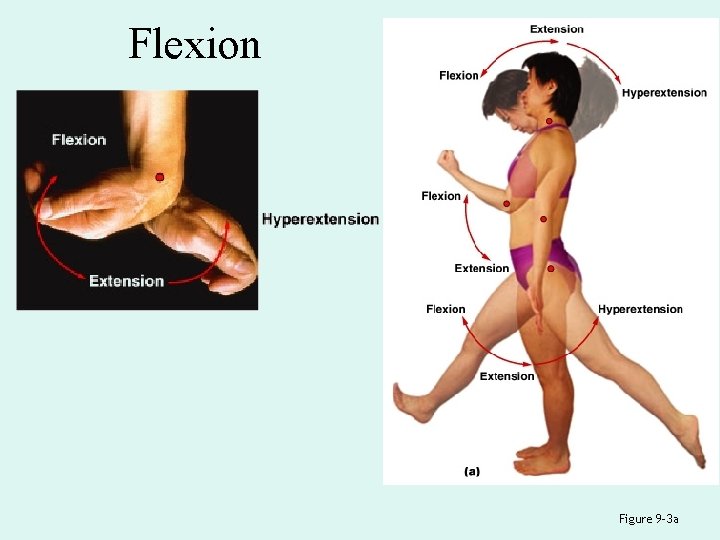
Flexion Figure 9– 3 a
Flexion • Angular motion • Anterior–posterior plane • Reduces angle between elements
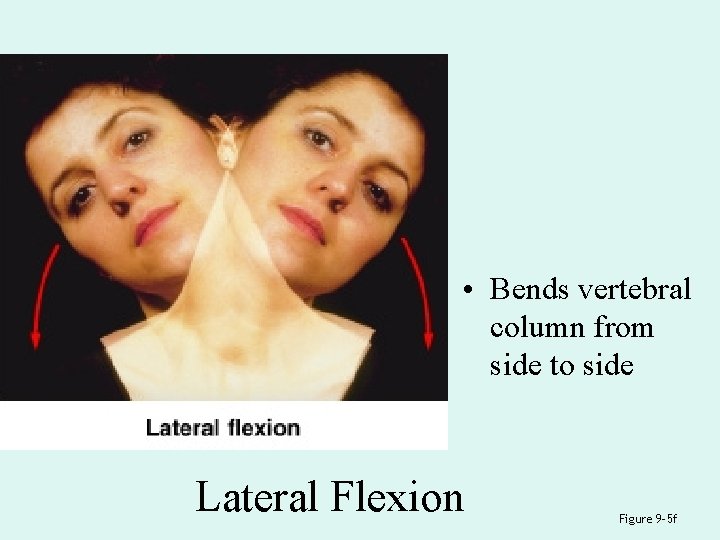
• Bends vertebral column from side to side Lateral Flexion Figure 9– 5 f
Extension • Angular motion • Anterior–posterior plane • Increases angle between elements
Hyperextension • Angular motion • Extension past anatomical position
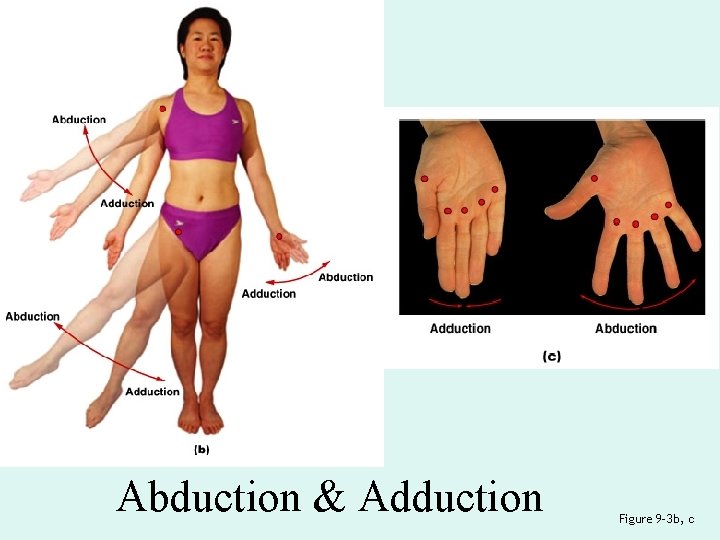
Abduction & Adduction Figure 9– 3 b, c
Abduction • Angular motion • Frontal plane • Moves away from longitudinal axis
Adduction • Angular motion • Frontal plane • Moves toward longitudinal axis
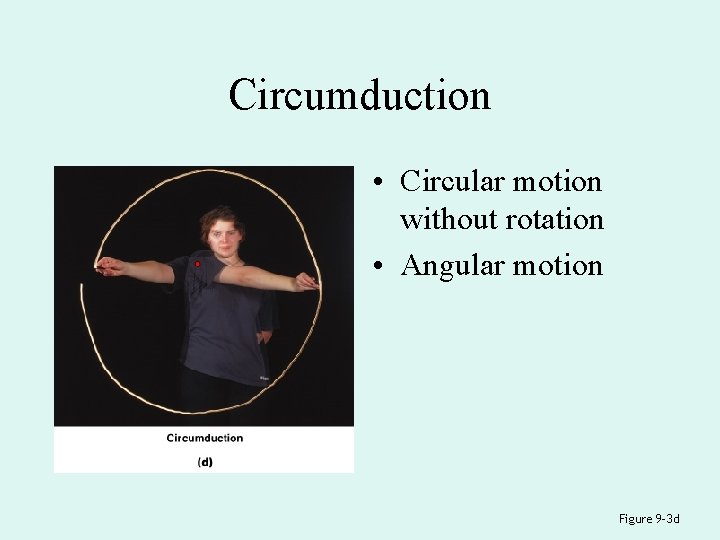
Circumduction • Circular motion without rotation • Angular motion Figure 9– 3 d
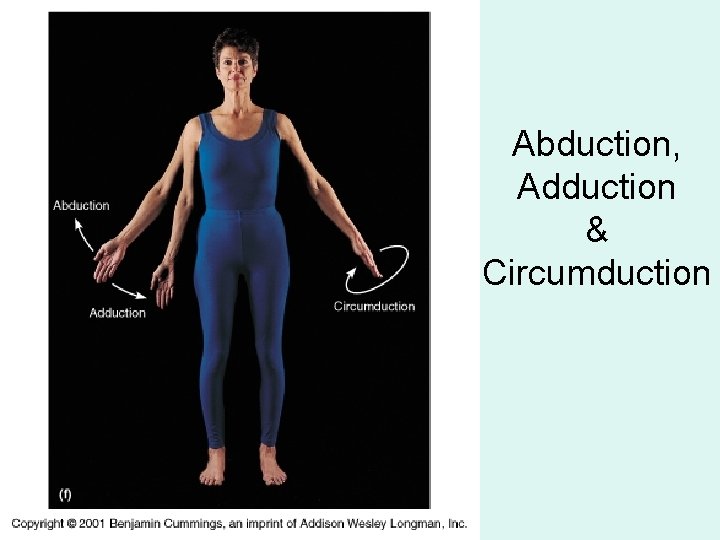
Abduction, Adduction & Circumduction
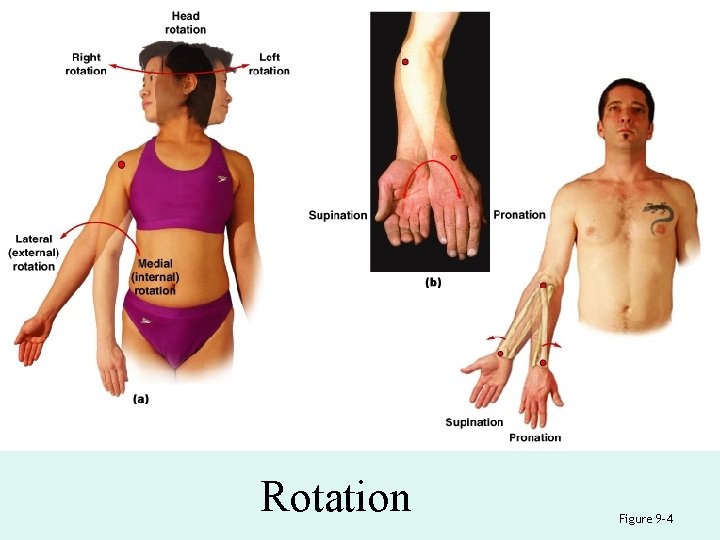
Rotation Figure 9– 4
Rotation • Direction of rotation from anatomical position • Relative to longitudinal axis of body. Left or right rotation • Medial rotation (inward rotation): – rotates toward axis • Lateral rotation (outward rotation): – rotates away from axis
Pronation and Supination • Pronation: – rotates forearm, radius over ulna • Supination: – forearm in anatomical position
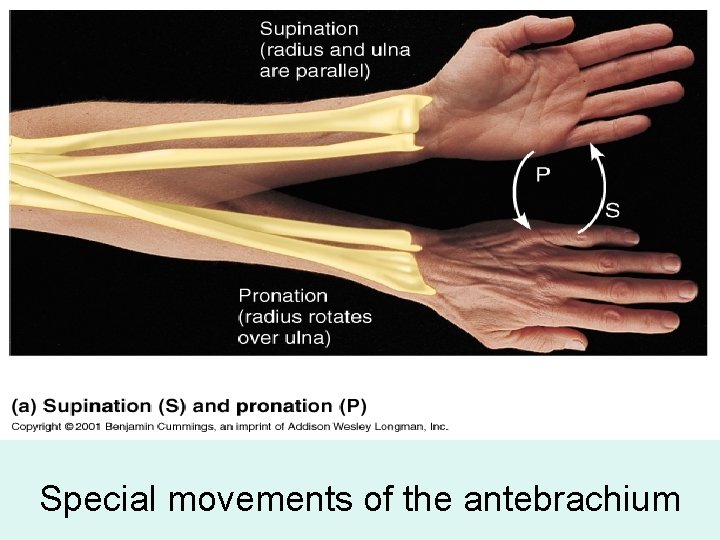
Special movements of the antebrachium

Inversion and Eversion Figure 9– 5 a
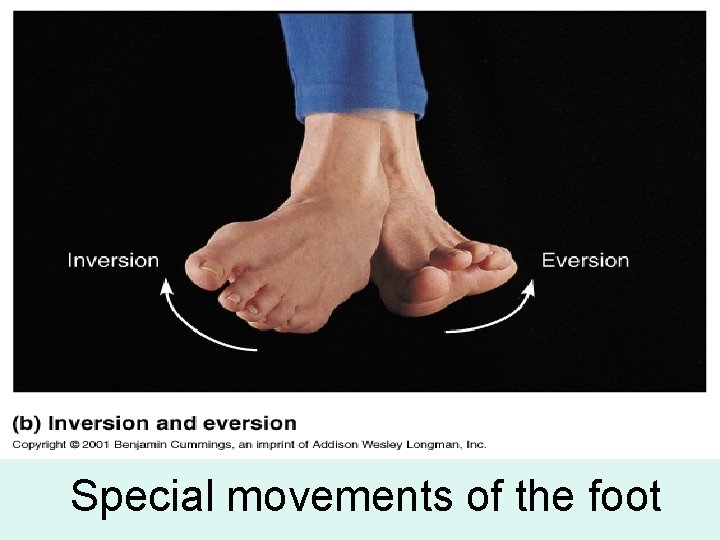
Special movements of the foot
Inversion and Eversion • Inversion: – twists sole of foot medially • Eversion: – twists sole of foot laterally
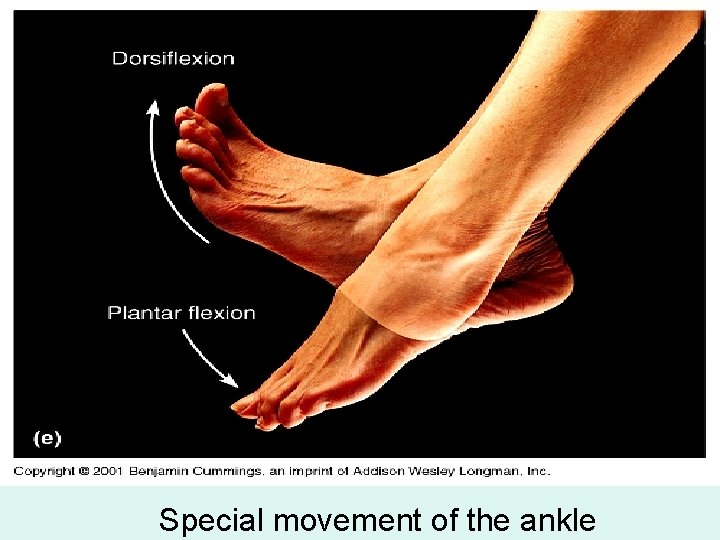
Special movement of the ankle
Dorsiflexion and Plantar Flexion • Dorsiflexion: – flexion at ankle (lifting toes) • Plantar flexion: – extension at ankle (pointing toes)
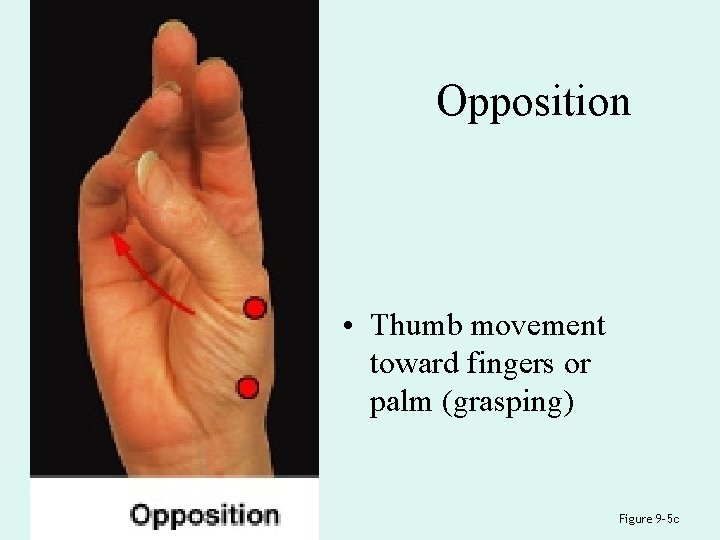
Opposition • Thumb movement toward fingers or palm (grasping) Figure 9– 5 c
Protraction and Retraction • Protraction: – moves anteriorly – in the horizontal plane (pushing forward) • Retraction: – opposite of protraction – moving anteriorly (pulling back)

Elevation and Depression Figure 9– 5 e
Elevation and Depression • Elevation: – moves in superior direction (up) • Depression: – moves in inferior direction (down)
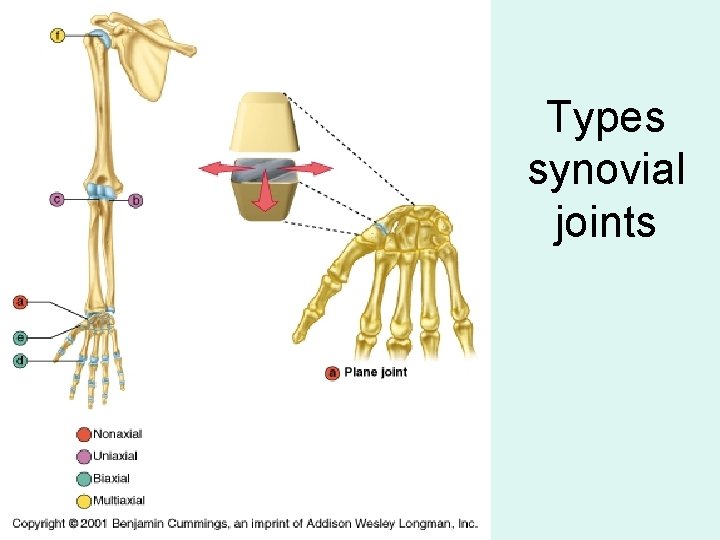
Types synovial joints
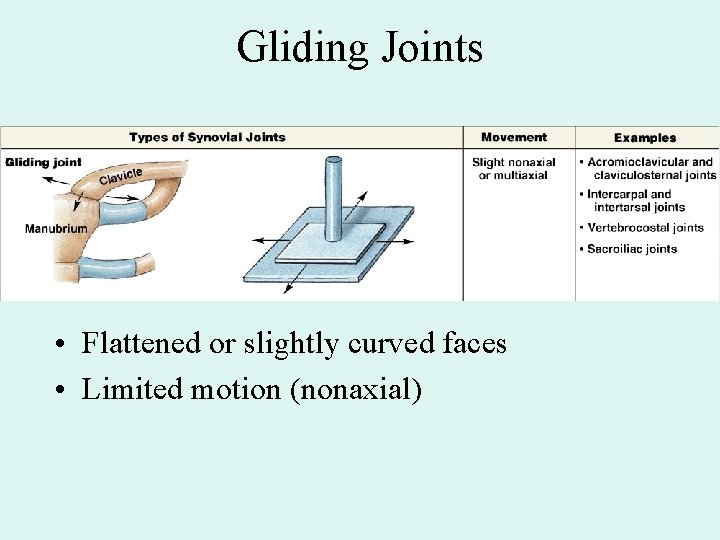
Gliding Joints • Flattened or slightly curved faces • Limited motion (nonaxial)
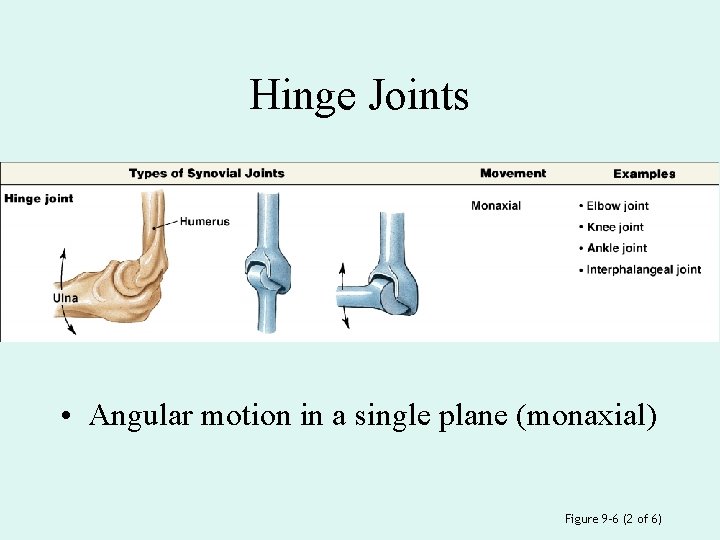
Hinge Joints • Angular motion in a single plane (monaxial) Figure 9– 6 (2 of 6)
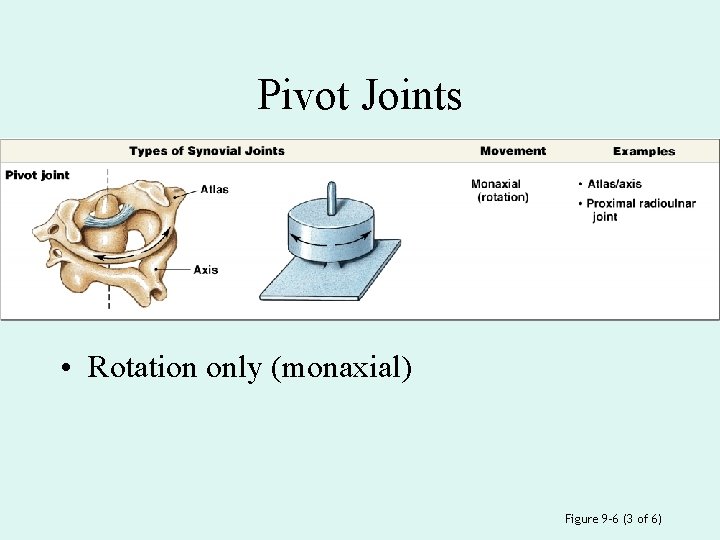
Pivot Joints • Rotation only (monaxial) Figure 9– 6 (3 of 6)
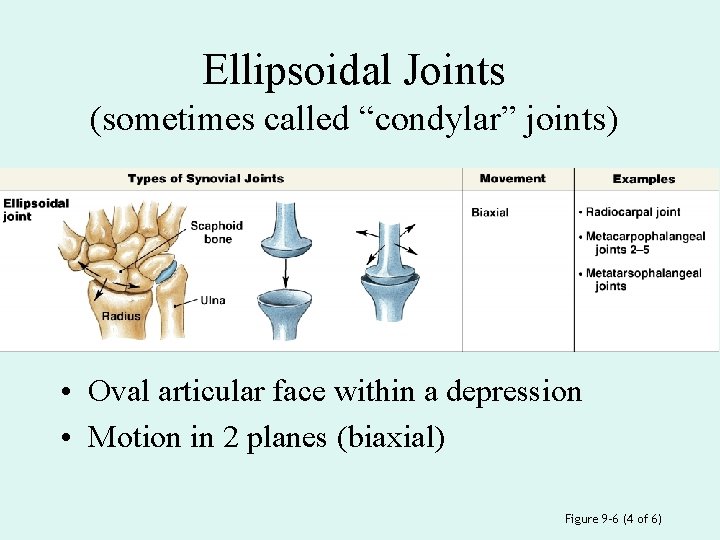
Ellipsoidal Joints (sometimes called “condylar” joints) • Oval articular face within a depression • Motion in 2 planes (biaxial) Figure 9– 6 (4 of 6)
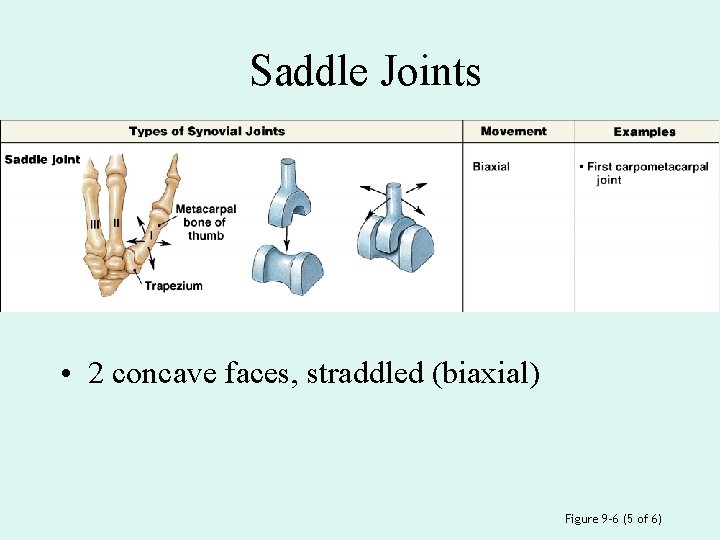
Saddle Joints • 2 concave faces, straddled (biaxial) Figure 9– 6 (5 of 6)
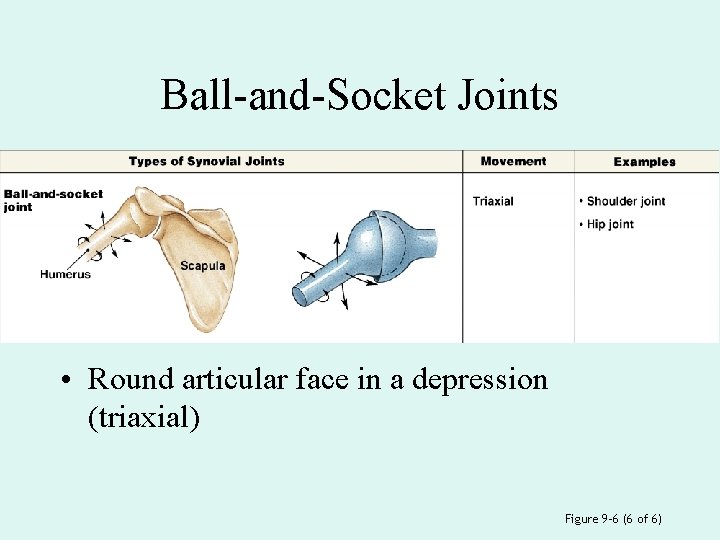
Ball-and-Socket Joints • Round articular face in a depression (triaxial) Figure 9– 6 (6 of 6)
Structural Details of Some Synovial Joints
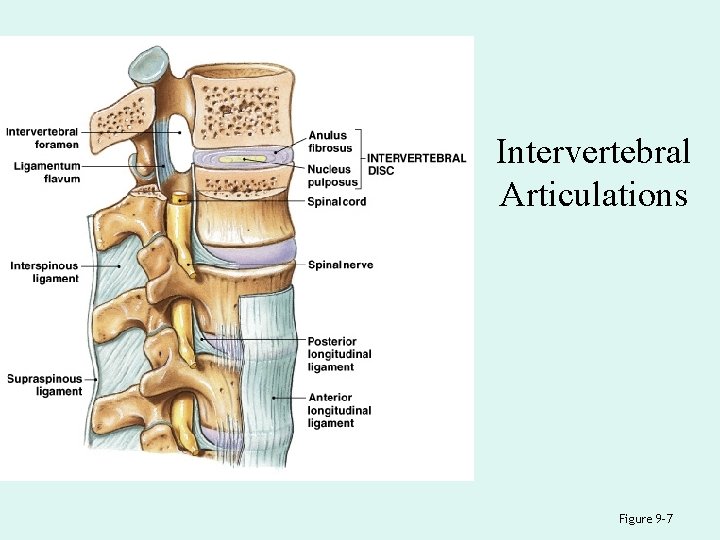
Intervertebral Articulations Figure 9– 7
Intervertebral Articulations • C 2 to L 5 spinal vertebrae articulate: – at inferior and superior articular processes (gliding joints) – between adjacent vertebral bodies (symphyseal joints)
Disc Structure • Anulus fibrosus: – tough outer layer – attaches disc to vertebrae • Nucleus pulposus: – elastic, gelatinous core – absorbs shocks
Verterbral Joints • Also called symphyseal joints • As vertebral column moves: – nucleus pulposus shifts – disc shape conforms to motion
6 Intervertebral Ligaments • Anterior longitudinal ligament: – connects anterior bodies • Posterior longitudinal ligament: – connects posterior bodies • Ligamentum flavum: – connects laminae
6 Intervertebral Ligaments • Interspinous ligament: – connects spinous processes • Supraspinous ligament: – connects tips of spinous processes (C 7 to sacrum) • Ligamentum nuchae: – continues supraspinous ligament (C 7 to skull)
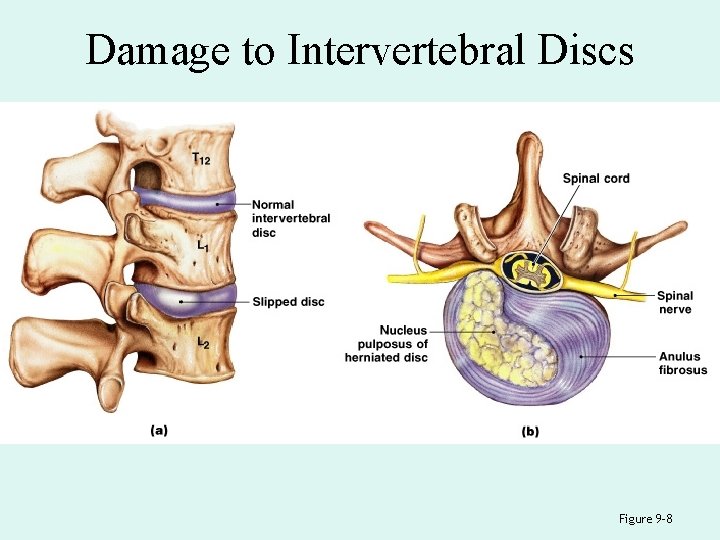
Damage to Intervertebral Discs Figure 9– 8
Damage to Intervertebral Discs • Slipped disc: – bulge in anulus fibrosus – invades vertebral canal • Herniated disc: – nucleus pulposus breaks through anulus fibrosus – presses on spinal cord or nerves
Movements of the Vertebral Column • Flexion: – bends anteriorly • Extension: – bends posteriorly • Lateral flexion: – bends laterally • Rotation
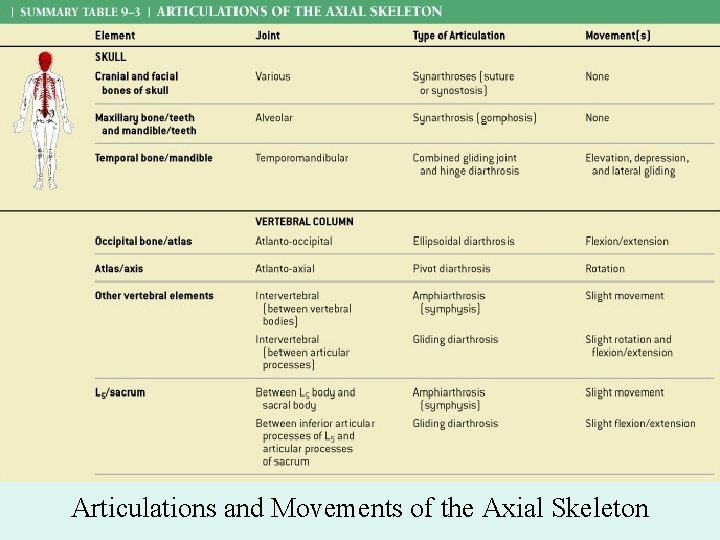
Articulations and Movements of the Axial Skeleton
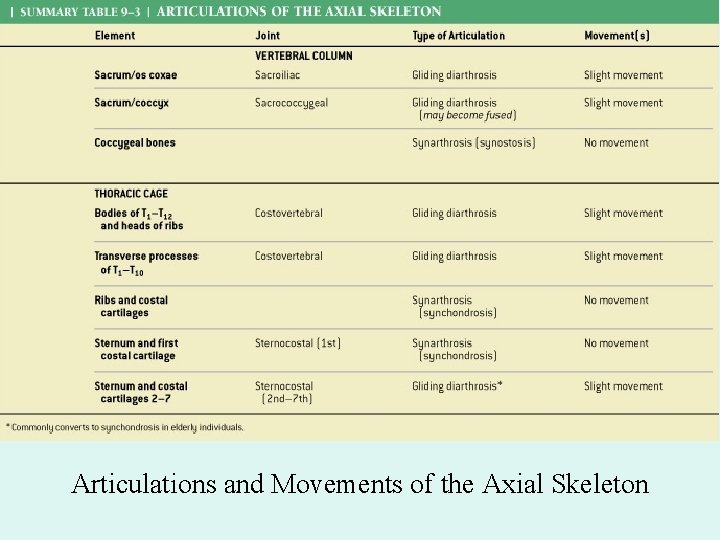
Articulations and Movements of the Axial Skeleton
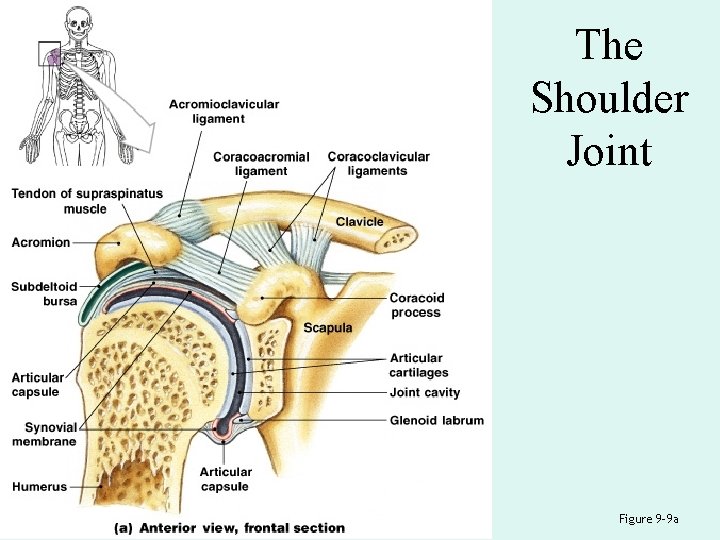
The Shoulder Joint Figure 9– 9 a
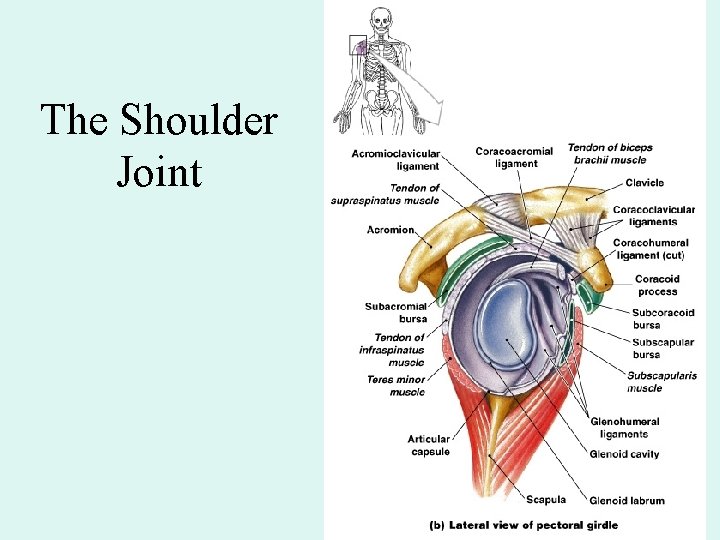
The Shoulder Joint Figure 9– 9 b
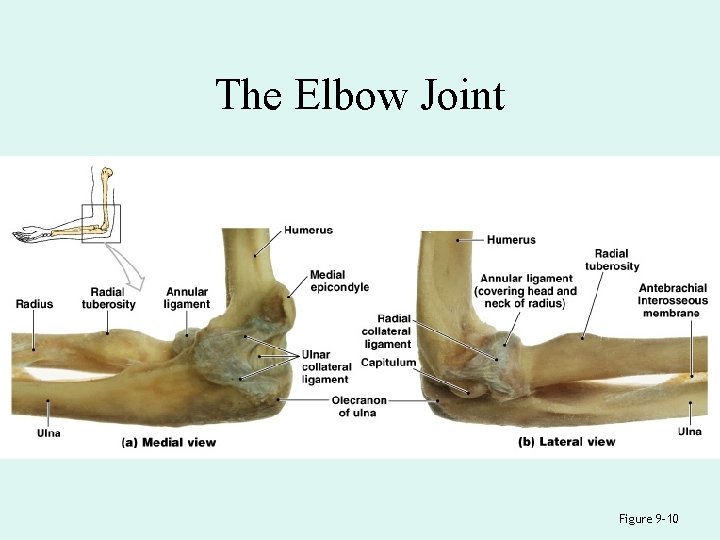
The Elbow Joint Figure 9– 10
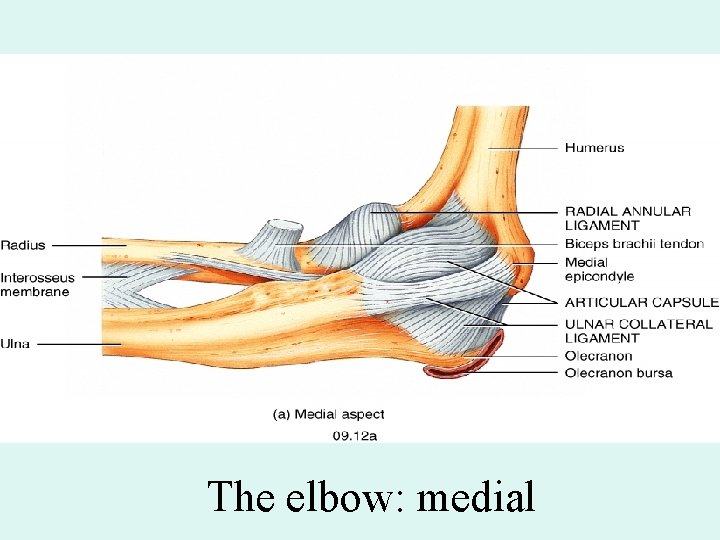
The elbow: medial
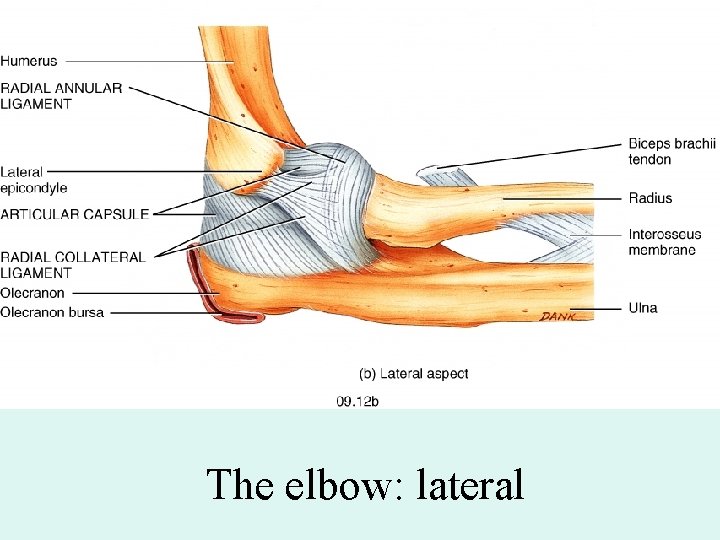
Fig. 09. 12 b The elbow: lateral
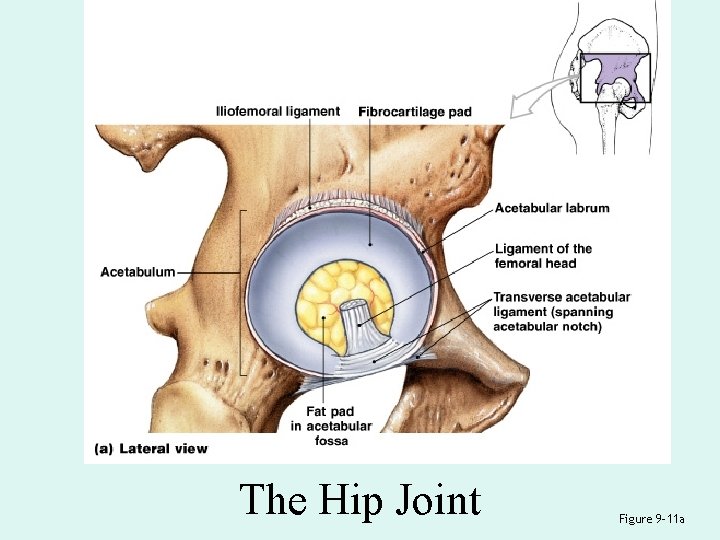
The Hip Joint Figure 9– 11 a
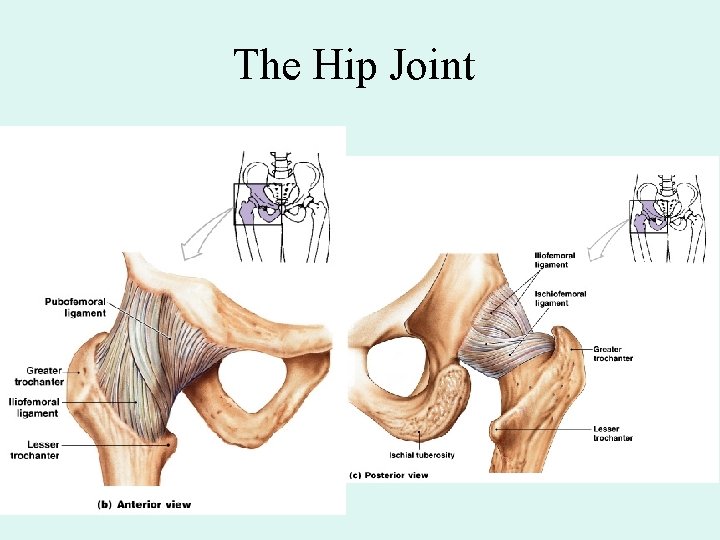
The Hip Joint
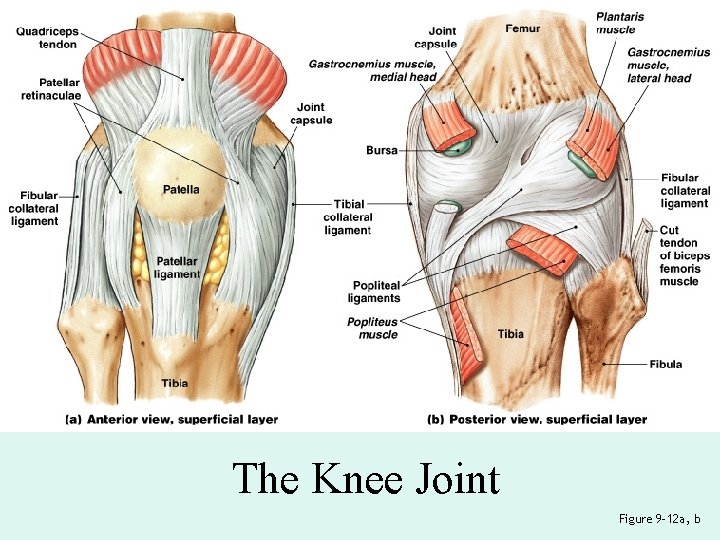
The Knee Joint Figure 9– 12 a, b
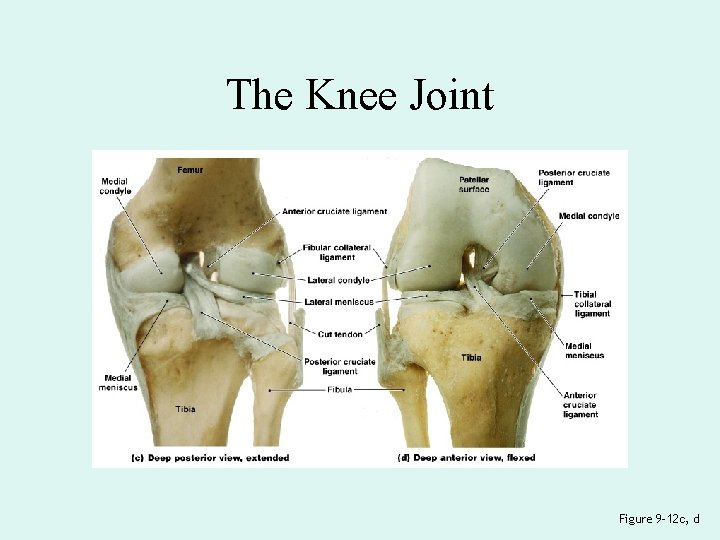
The Knee Joint Figure 9– 12 c, d
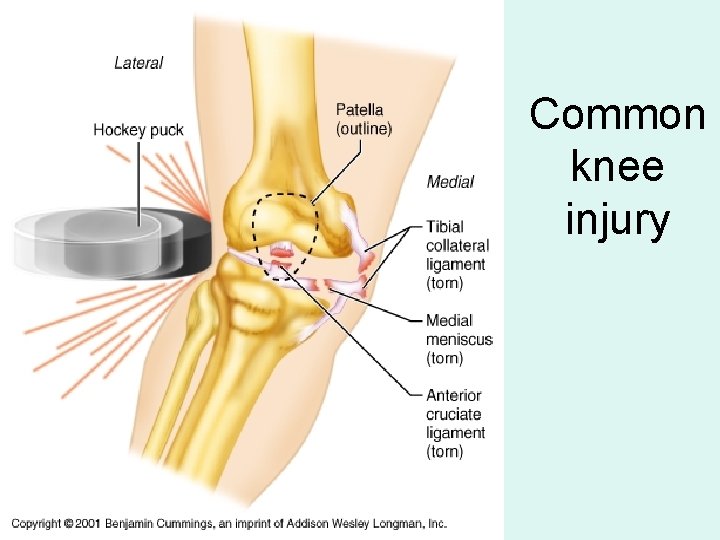
Common knee injury
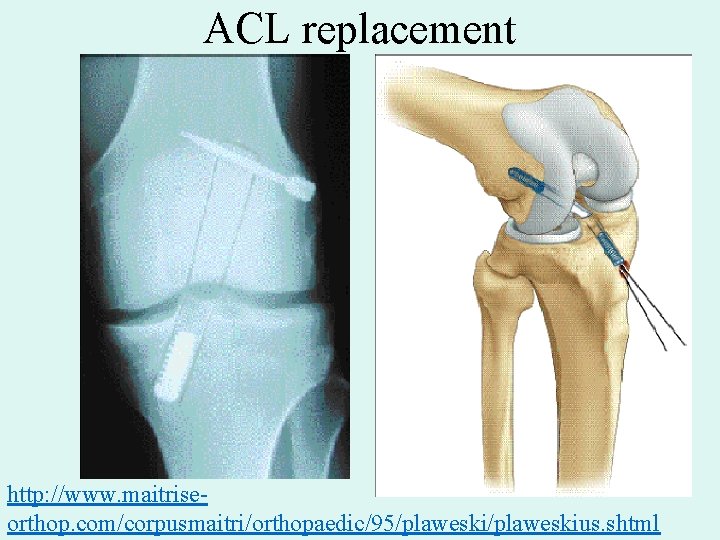
ACL replacement http: //www. maitriseorthop. com/corpusmaitri/orthopaedic/95/plaweskius. shtml
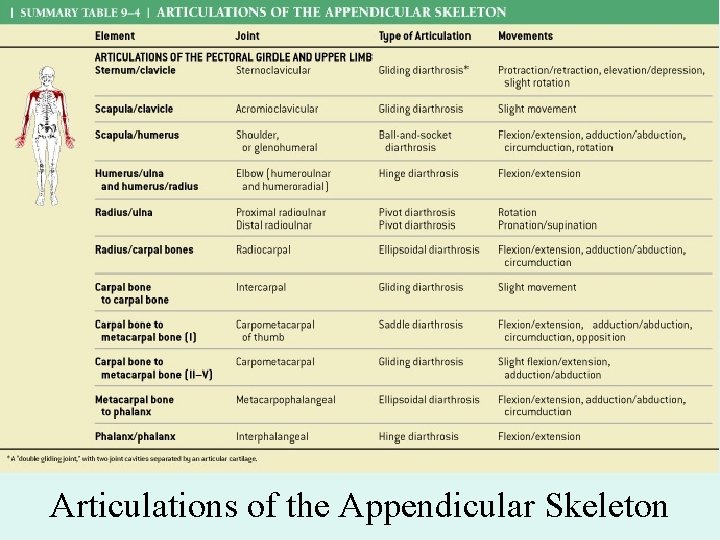
Articulations of the Appendicular Skeleton
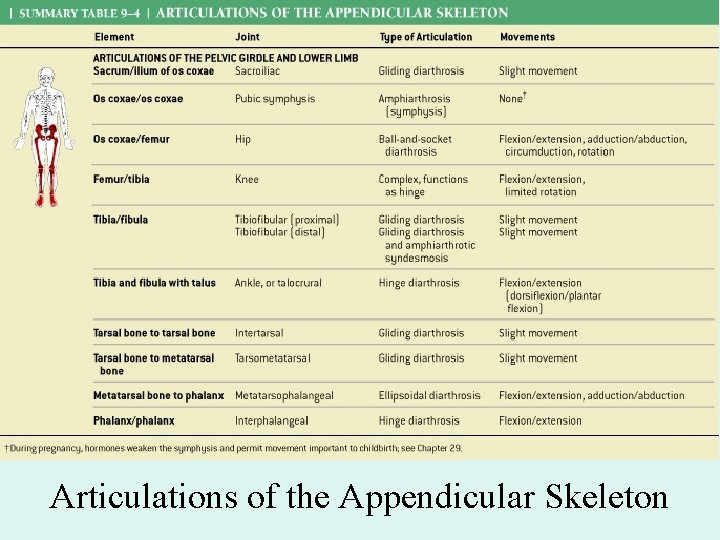
Articulations of the Appendicular Skeleton
Rheumatism • A pain and stiffness of skeletal and muscular systems Arthritis • All forms of rheumatism that damage articular cartilages of synovial joints
Osteoarthritis • Caused by wear and tear of joint surfaces, or genetic factors affecting collagen formation • Generally in people over age 60
Rheumatoid Arthritis • An inflammatory condition • Caused by infection, allergy, or autoimmune disease • Involves the immune system
Gouty Arthritis • Occurs when crystals (uric acid or calcium salts): – form within synovial fluid – due to metabolic disorders
Joint Immobilization • Reduces flow of synovial fluid • Can cause arthritis symptoms • Treated by continuous passive motion (therapy)
Bones and Aging • Bone mass decreases • Bones weaken • Increases risk of hip fracture, hip dislocation, or pelvic fracture

No Mas
- Slides: 82