
Articulation Lecture 12 Function Lip Labial Muscles Pucker
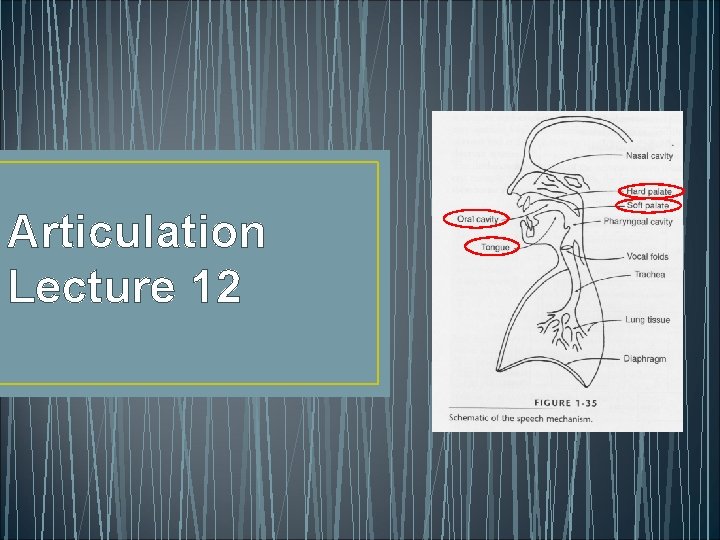
Articulation Lecture 12

Function Lip (Labial) Muscles Pucker Orbicularis oris, Incisivus labii Lateralize Buccinator, Risorius Angle up (smile) Zygomatic, Levator anguli oris Upper lip Levator labii, Depressor anguli oris Lower lip Depressor labii, Mentalis, Levator anguli oris

Function Tongue (Lingual) Muscles Shorten Longitudinal (superior, inferior) Tip up/down Superior longitudinal/Inferior longitudinal Narrow/flatten Transverse/Vertical Move forward Genioglossus* Move back Genioglossus, Styloglossus*, Hyoglossus* Move up Styloglossus, Palatoglossus* Move down Genioglossus, Hyoglossus *Know what structures they connect

Function Soft Palate (Velum) Lower Tensor veli palatini*, Palatoglossus Raise Levator veli palatini*, Musculus uvulae*

Oral Cavity • • Lips Teeth Tongue Palate • Hard • Soft • Mandible Zemlin, pg 227.
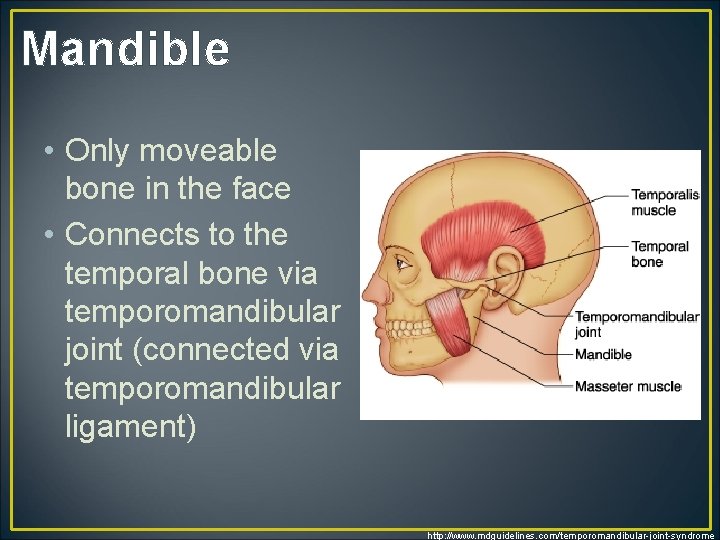
Mandible • Only moveable bone in the face • Connects to the temporal bone via temporomandibular joint (connected via temporomandibular ligament) http: //www. mdguidelines. com/temporomandibular-joint-syndrome
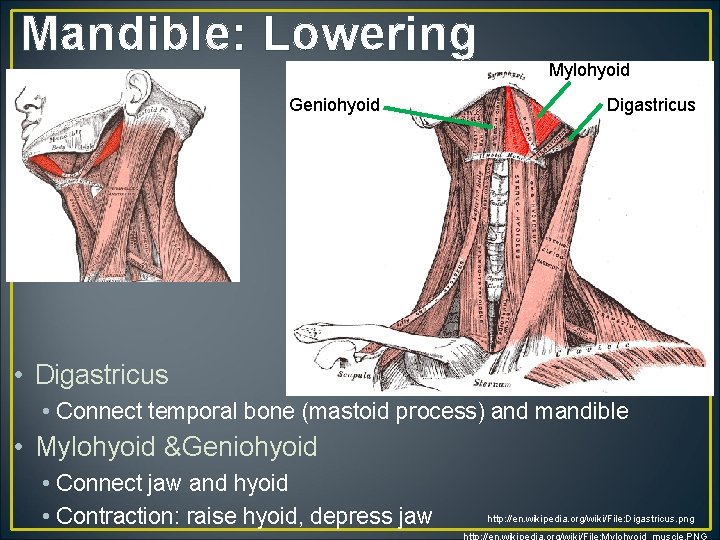
Mandible: Lowering Geniohyoid Mylohyoid Digastricus • Digastricus • Connect temporal bone (mastoid process) and mandible • Mylohyoid &Geniohyoid • Connect jaw and hyoid • Contraction: raise hyoid, depress jaw http: //en. wikipedia. org/wiki/File: Digastricus. png http: //en. wikipedia. org/wiki/File: Mylohyoid_muscle. PNG
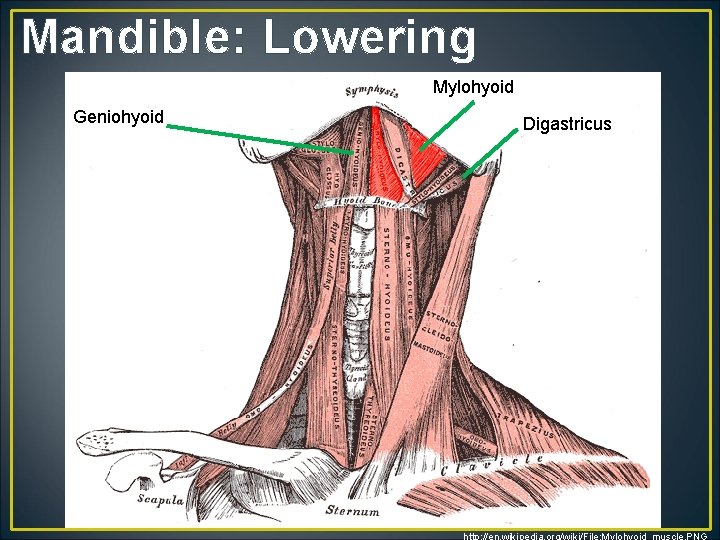
Mandible: Lowering Mylohyoid Geniohyoid Digastricus http: //en. wikipedia. org/wiki/File: Mylohyoid_muscle. PNG
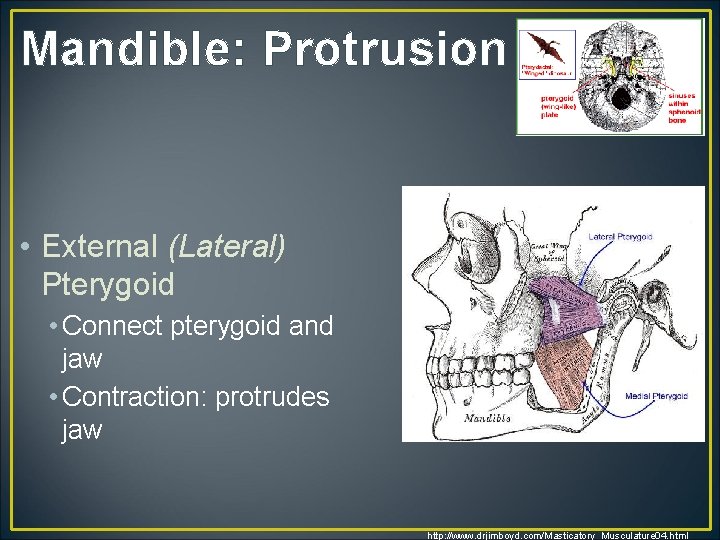
Mandible: Protrusion • External (Lateral) Pterygoid • Connect pterygoid and jaw • Contraction: protrudes jaw http: //www. drjimboyd. com/Masticatory_Musculature 04. html
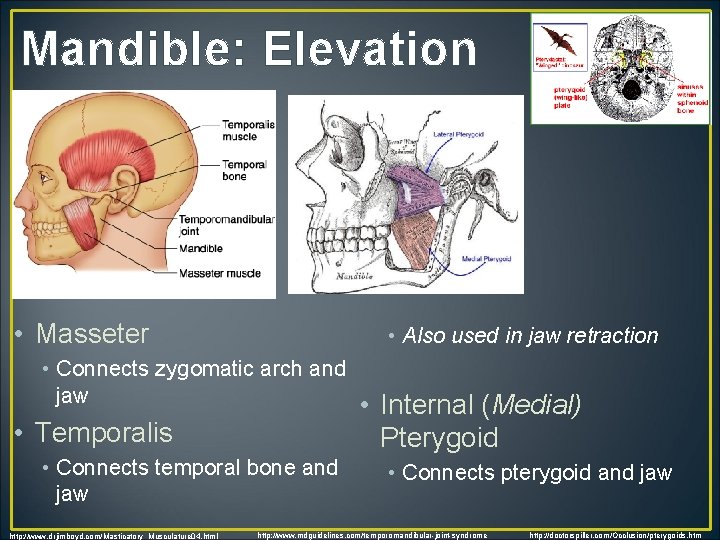
Mandible: Elevation • Masseter • Also used in jaw retraction • Connects zygomatic arch and jaw • Temporalis • Connects temporal bone and jaw http: //www. drjimboyd. com/Masticatory_Musculature 04. html • Internal (Medial) Pterygoid • Connects pterygoid and jaw http: //www. mdguidelines. com/temporomandibular-joint-syndrome http: //doctorspiller. com/Occlusion/pterygoids. htm

Function Mandible (Jaw) Muscles Lower Diagastricus, Mylohyoid, Geniohyoid Raise Masseter, Temporalis, Internal pterygoid Protrude External Pterygoid Retract Temporalis

Speech Physiology

Consonants • B/P • T/D • Bring lips together • Elevate tongue tip • Lower jaw • Pull lower lip down • Lower tongue tip http: //www. uiowa. edu/~acadtech/phonetics/#
Consonants • K/G • Th • Raise back of tongue • Move tongue forward • Lower back of tongue • Move tongue back http: //www. uiowa. edu/~acadtech/phonetics/#
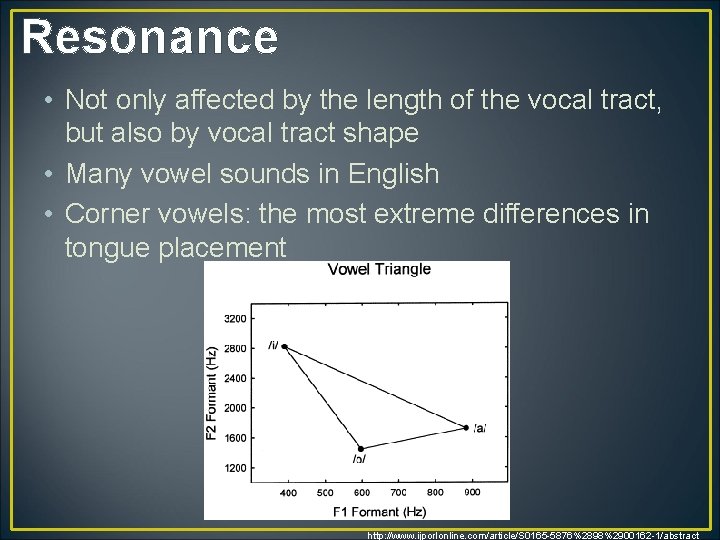
Resonance • Not only affected by the length of the vocal tract, but also by vocal tract shape • Many vowel sounds in English • Corner vowels: the most extreme differences in tongue placement http: //www. ijporlonline. com/article/S 0165 -5876%2898%2900162 -1/abstract
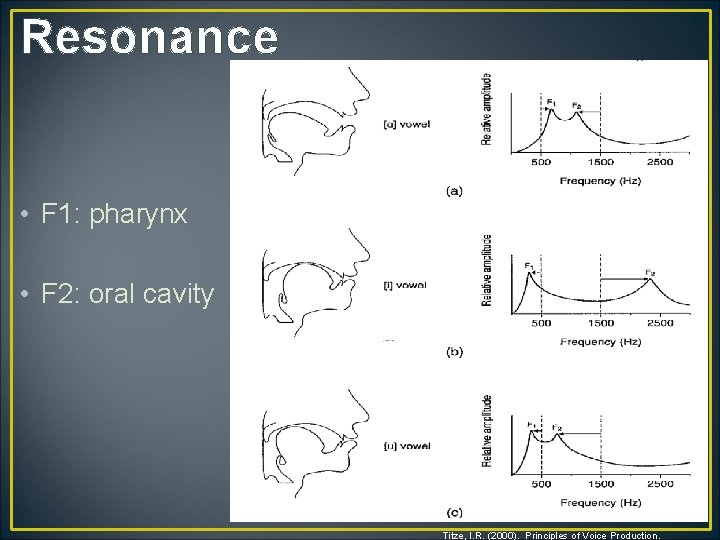
Resonance • F 1: pharynx • F 2: oral cavity Titze, I. R. (2000). Principles of Voice Production.
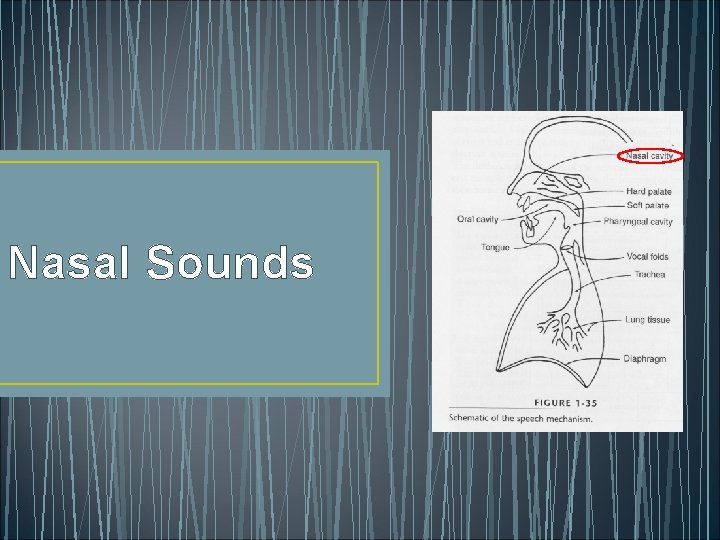
Nasal Sounds
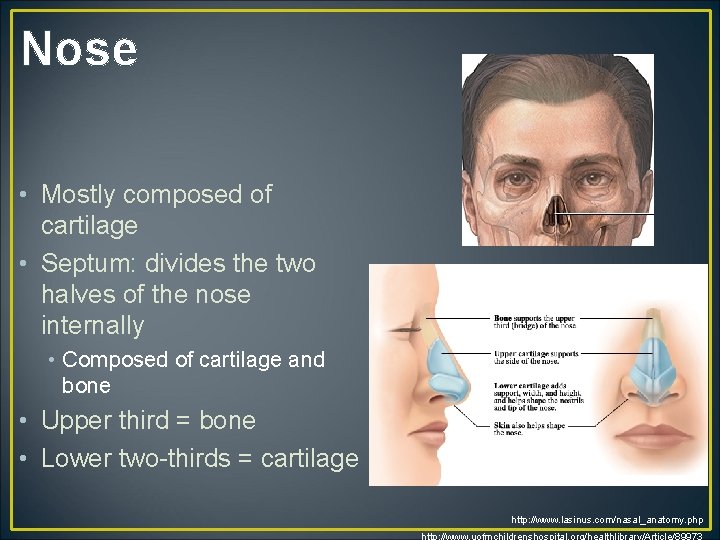
Nose • Mostly composed of cartilage • Septum: divides the two halves of the nose internally • Composed of cartilage and bone • Upper third = bone • Lower two-thirds = cartilage http: //www. lasinus. com/nasal_anatomy. php http: //www. uofmchildrenshospital. org/healthlibrary/Article/89973
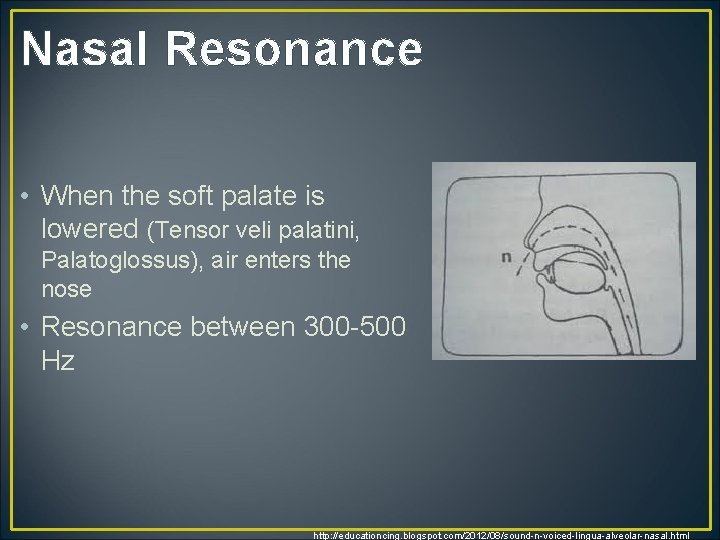
Nasal Resonance • When the soft palate is lowered (Tensor veli palatini, Palatoglossus), air enters the nose • Resonance between 300 -500 Hz http: //educationcing. blogspot. com/2012/08/sound-n-voiced-lingua-alveolar-nasal. html
- Slides: 19