
Articulating the Vision A Communications Strategy for a
![Target Audience Stakeholder Categories [Internal/External] Stakeholder Type [Power & Interest] Message Framing [Variable]](https://slidetodoc.com/presentation_image_h/bac50b44ca6e5764beb7680872808f2d/image-7.jpg "Target Audience Stakeholder Categories [Internal/External] Stakeholder Type [Power & Interest] Message Framing [Variable]")
![Low Power High Stakeholder Matrix Low Latents Promoters [Keep Satisfied] [Manage Closely] Apathetics Defenders](https://slidetodoc.com/presentation_image_h/bac50b44ca6e5764beb7680872808f2d/image-9.jpg "Low Power High Stakeholder Matrix Low Latents Promoters [Keep Satisfied] [Manage Closely] Apathetics Defenders")

- Slides: 21
Articulating the Vision: A Communications Strategy for a SET Region
Objectives • Define the components of a communications strategy • Conduct a stakeholder analysis to better understand the different communications needs for each audience • Inventory internal and external audiences and indicate what SET components are relevant to each audience • Conduct a SWOT analysis as part of an environmental scan to help craft the message • Determine which channels will be used to reach target audience • Create messages that support the regional SET initiative
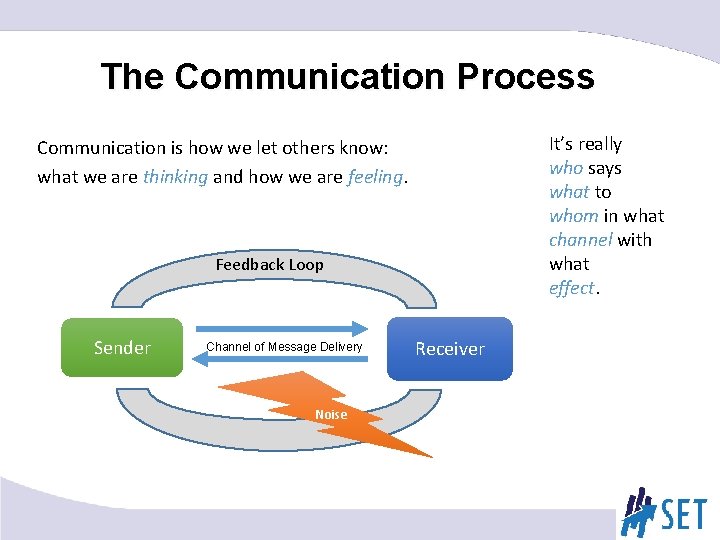
The Communication Process It’s really who says what to whom in what channel with what effect. Communication is how we let others know: what we are thinking and how we are feeling. Feedback Loop Sender Channel of Message Delivery Noise Receiver
Communications Strategy Benefits • Creates linkages and consistency among internal teams • Builds external awareness and credibility • Generates external support for the project • Enhances engagement with key stakeholders • Identifies the proper ways to reach desired audiences • Aids in crafting consistent and accurate messages • Showcases achievements
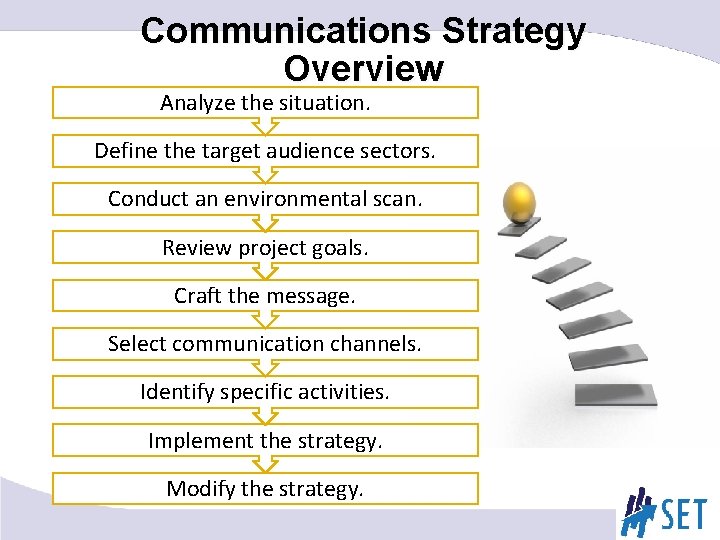
Communications Strategy Overview Analyze the situation. Define the target audience sectors. Conduct an environmental scan. Review project goals. Craft the message. Select communication channels. Identify specific activities. Implement the strategy. Modify the strategy.
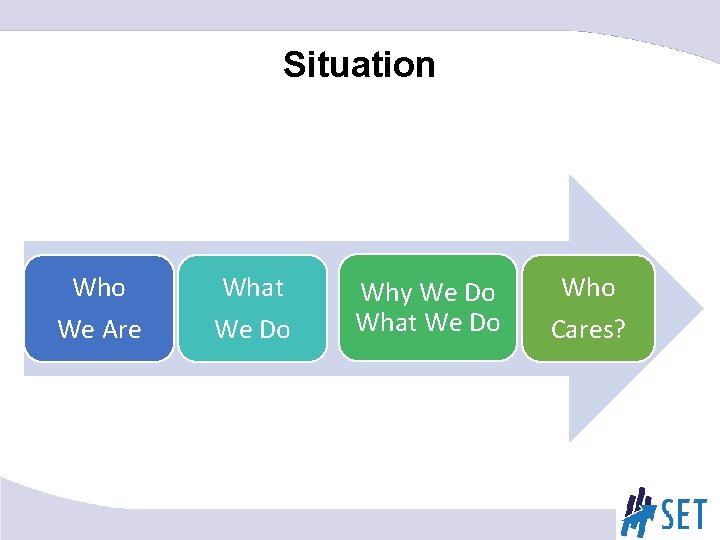
Situation Who What We Are We Do Why We Do What We Do Who Cares?
Target Audience Stakeholder Categories [Internal/External] Stakeholder Type [Power & Interest] Message Framing [Variable]
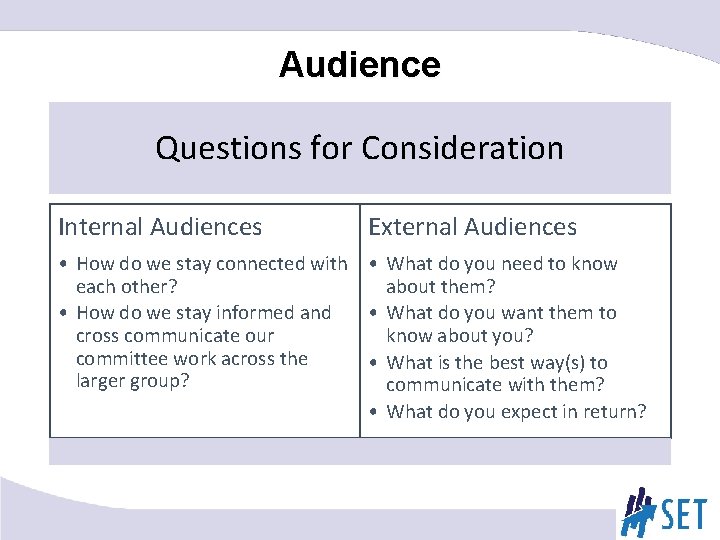
Audience Questions for Consideration Internal Audiences External Audiences • How do we stay connected with • What do you need to know each other? about them? • How do we stay informed and • What do you want them to cross communicate our know about you? committee work across the • What is the best way(s) to larger group? communicate with them? • What do you expect in return?
Low Power High Stakeholder Matrix Low Latents Promoters [Keep Satisfied] [Manage Closely] Apathetics Defenders [Monitor] [Keep Informed] Interest High Source: Mitchell, R. K. , B. R. Agle, and D. J. Wood. (1997). "Toward a Theory of Stakeholder Identification and Salience: Defining the Principle of Who and What really Counts. " in: Academy of Management Review 22(4): 853 - 888.
Audience Matrix Source: https: //www. youtube. com/watch? v=9 XXm. T 5 Bms 6 k www. mystrategicplan. com
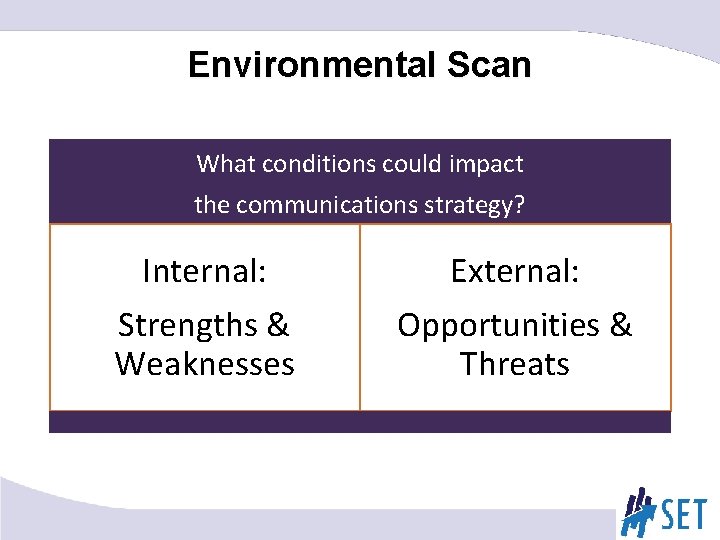
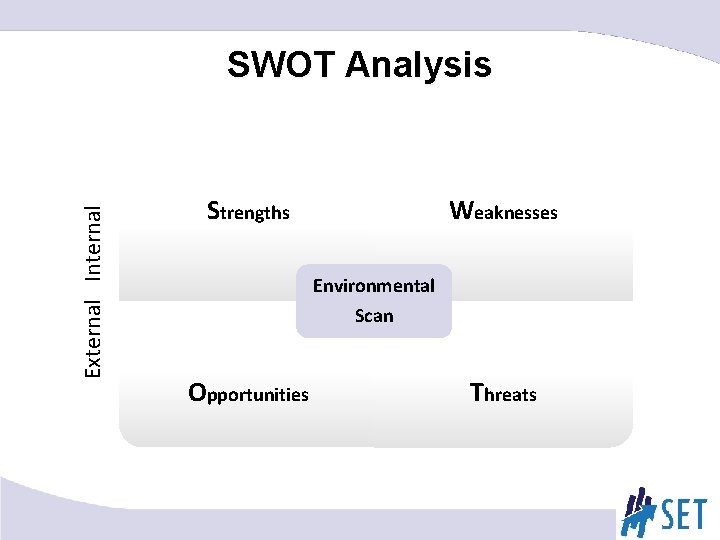
Environmental Scan What conditions could impact the communications strategy? Internal: Strengths & Weaknesses External: Opportunities & Threats
External Internal SWOT Analysis Weaknesses Strengths Environmental Scan Opportunities Threats
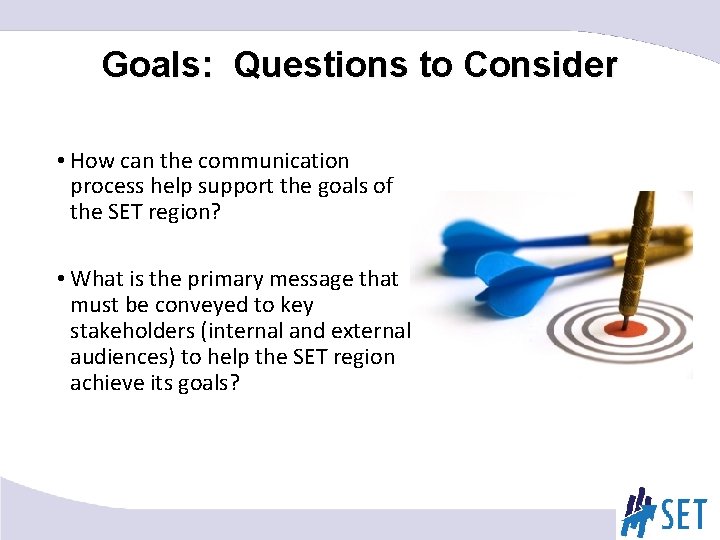
Goals: Questions to Consider • How can the communication process help support the goals of the SET region? • What is the primary message that must be conveyed to key stakeholders (internal and external audiences) to help the SET region achieve its goals?
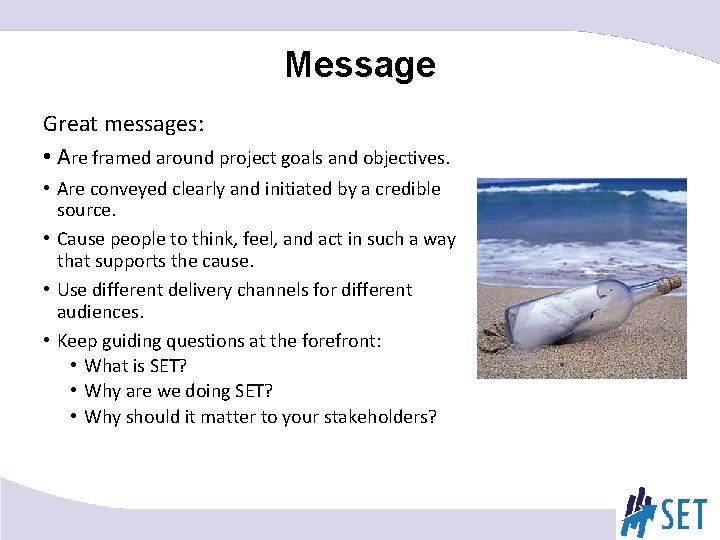
Message Great messages: • Are framed around project goals and objectives. • Are conveyed clearly and initiated by a credible source. • Cause people to think, feel, and act in such a way that supports the cause. • Use different delivery channels for different audiences. • Keep guiding questions at the forefront: • What is SET? • Why are we doing SET? • Why should it matter to your stakeholders?
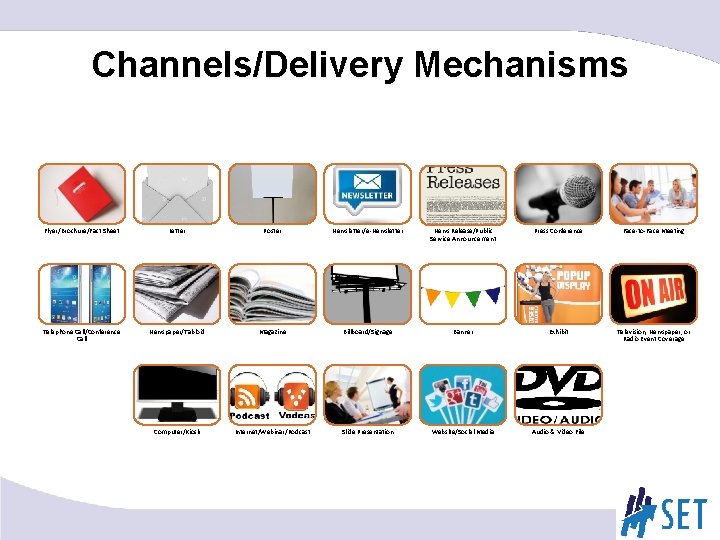
Channels/Delivery Mechanisms Flyer/Brochure/Fact Sheet Letter Poster Newsletter/e-Newsletter News Release/Public Service Announcement Press Conference Face-to-Face Meeting Telephone Call/Conference Call Newspaper/Tabloid Magazine Billboard/Signage Banner Exhibit Television, Newspaper, or Radio Event Coverage Computer/Kiosk Internet/Webinar/Podcast Slide Presentation Website/Social Media Audio & Video File
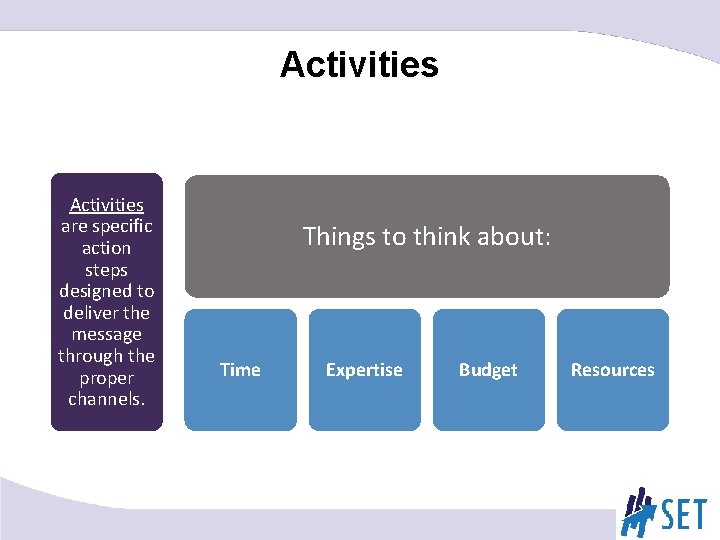
Activities are specific action steps designed to deliver the message through the proper channels. Things to think about: Time Expertise Budget Resources
Implementation • Following the communication process strengthens implementation. • Effective community relations requires organization, attention to detail, and commitment. • Communication is integral to the overall SET initiative.
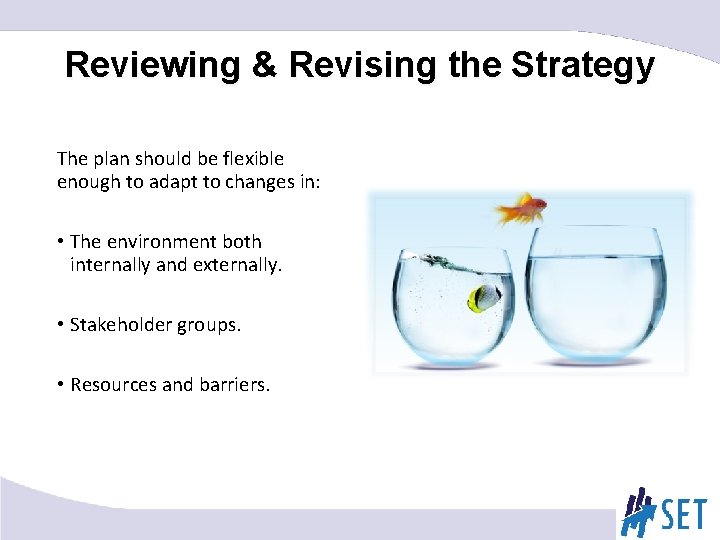
Reviewing & Revising the Strategy The plan should be flexible enough to adapt to changes in: • The environment both internally and externally. • Stakeholder groups. • Resources and barriers.
Final Thoughts • Media relations is an important component of a communications strategy, but it isn’t the only one. • You are competing for people’s increasingly shorter attention span. Make your messages matter. • Tap into local resources to help you master your communications goals, and celebrate (and communicate!) success along the way.
Questions