
ARTICLES IV THROUGH VII THE ROLE OF THE

- Slides: 17
ARTICLES IV THROUGH VII: THE ROLE OF THE CONSTITUTION Unit 2 U. S. Government Honors Stater
ARTICLE IV: STATES’ POWERS & RESPONSIBILITIES Section 1
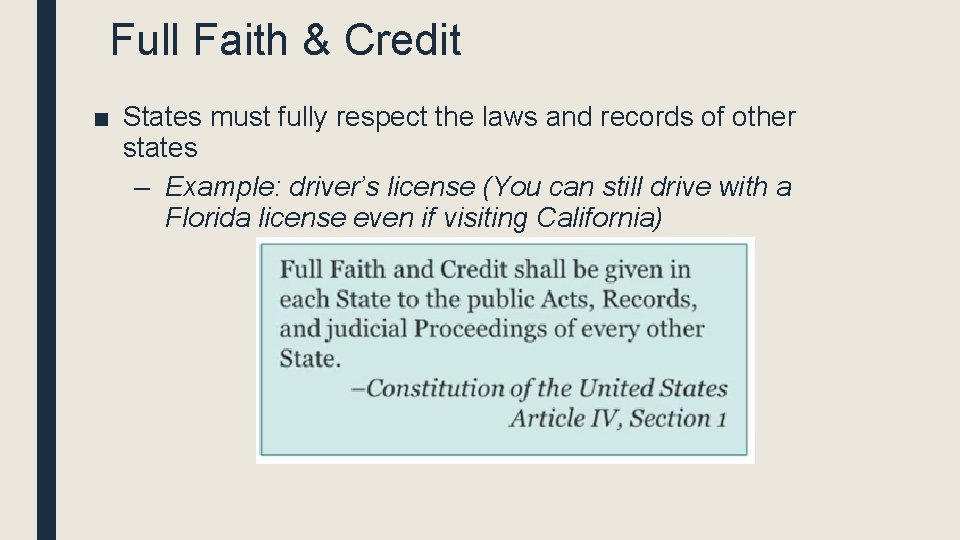
Full Faith & Credit ■ States must fully respect the laws and records of other states – Example: driver’s license (You can still drive with a Florida license even if visiting California)
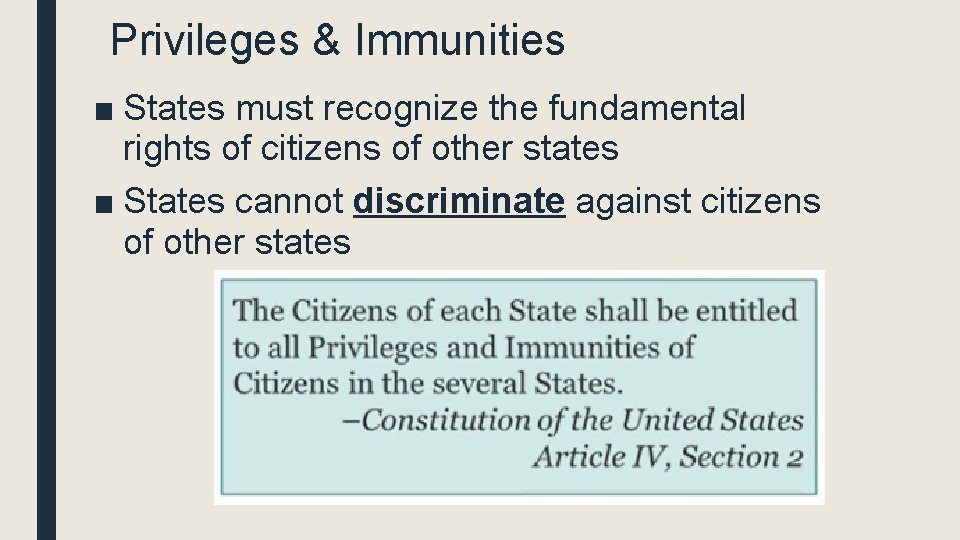
Privileges & Immunities ■ States must recognize the fundamental rights of citizens of other states ■ States cannot discriminate against citizens of other states
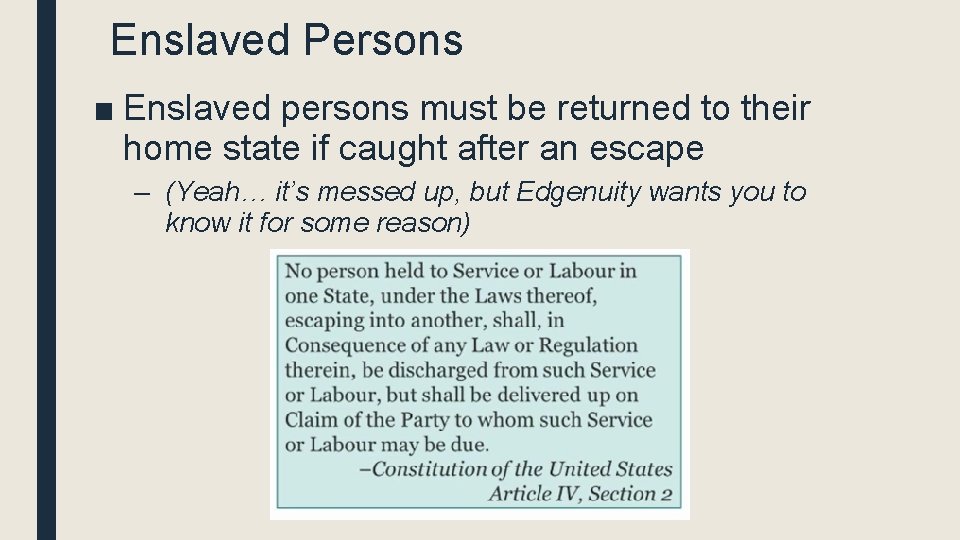
Enslaved Persons ■ Enslaved persons must be returned to their home state if caught after an escape – (Yeah… it’s messed up, but Edgenuity wants you to know it for some reason)
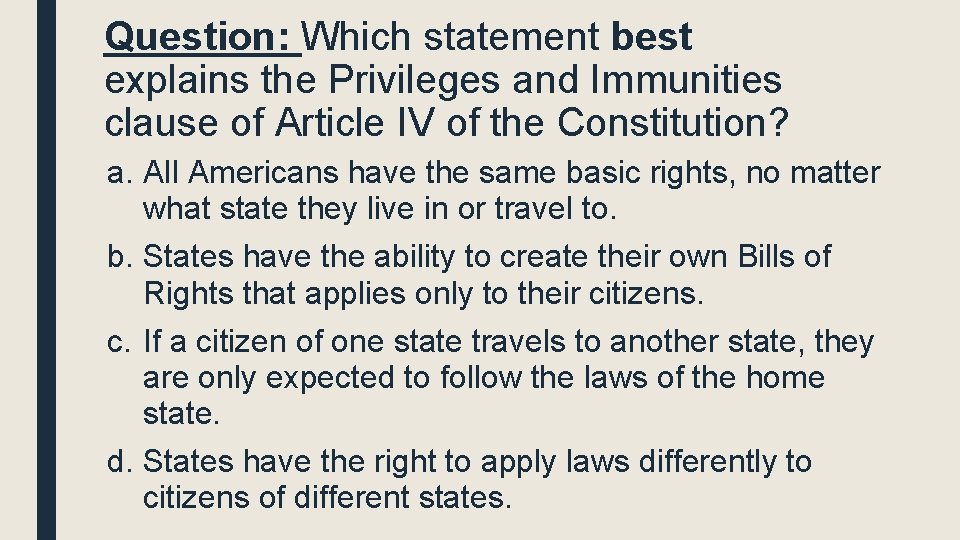
Question: Which statement best explains the Privileges and Immunities clause of Article IV of the Constitution? a. All Americans have the same basic rights, no matter what state they live in or travel to. b. States have the ability to create their own Bills of Rights that applies only to their citizens. c. If a citizen of one state travels to another state, they are only expected to follow the laws of the home state. d. States have the right to apply laws differently to citizens of different states.
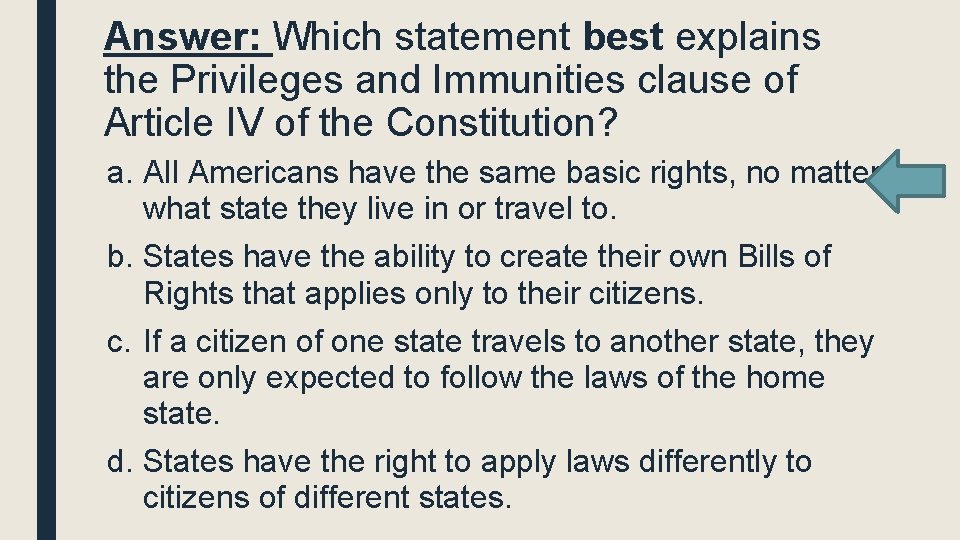
Answer: Which statement best explains the Privileges and Immunities clause of Article IV of the Constitution? a. All Americans have the same basic rights, no matter what state they live in or travel to. b. States have the ability to create their own Bills of Rights that applies only to their citizens. c. If a citizen of one state travels to another state, they are only expected to follow the laws of the home state. d. States have the right to apply laws differently to citizens of different states.
ARTICLE V: CONSTITUTIONAL AMENDMENT PROCESS Section 2
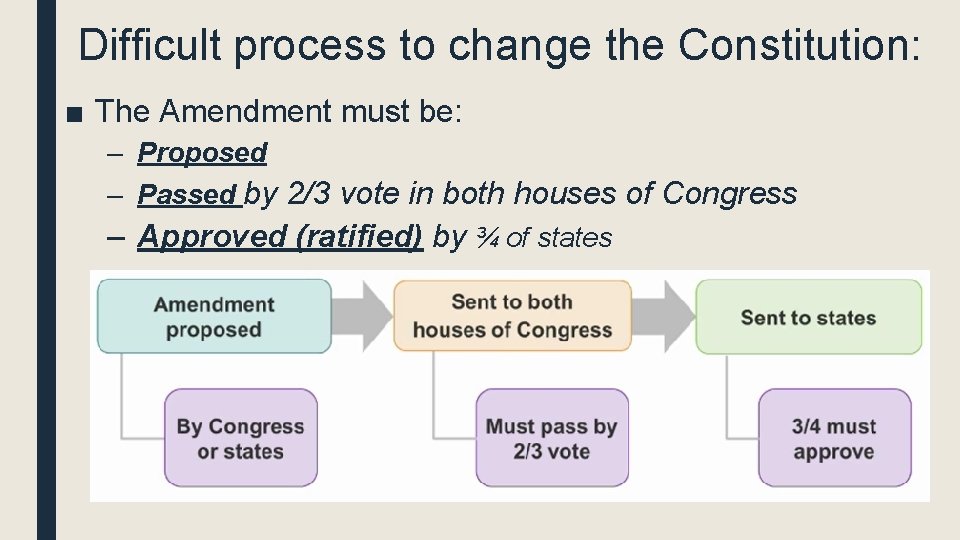
Difficult process to change the Constitution: ■ The Amendment must be: – Proposed – Passed by 2/3 vote in both houses of Congress – Approved (ratified) by ¾ of states
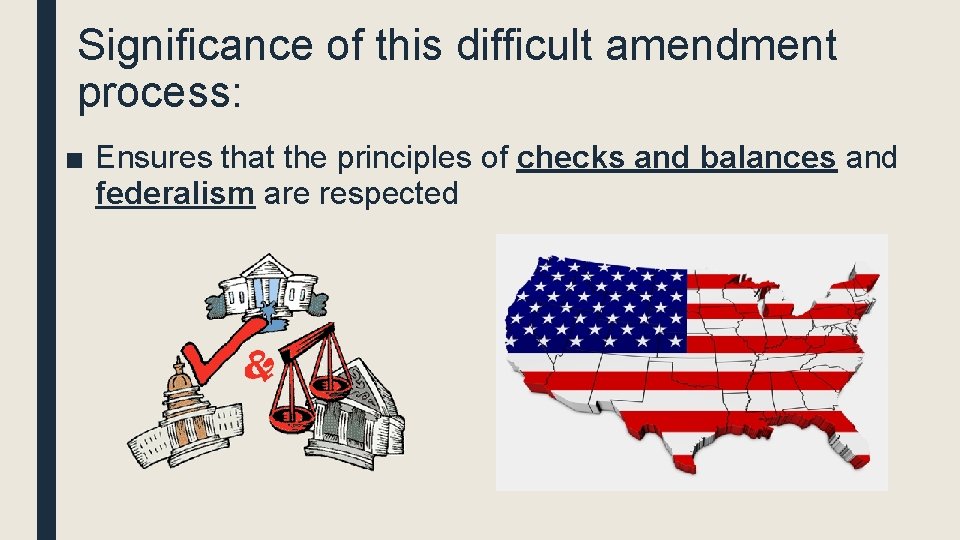
Significance of this difficult amendment process: ■ Ensures that the principles of checks and balances and federalism are respected
Question: A result of the amendment process is that a. it requires Congress and the states to work together. b. it requires Congress and the states to work separately. c. it requires Congress and the states to recognize people’s rights. d. it forces Congress and the states to respect legal records.
Answer: A result of the amendment process is that a. it requires Congress and the states to work together. b. it requires Congress and the states to work separately. c. it requires Congress and the states to recognize people’s rights. d. it forces Congress and the states to respect legal records.
ARTICLES VI AND VII: FEDERAL SUPREMACY AND THE RATIFICATION PROCESS Section 3
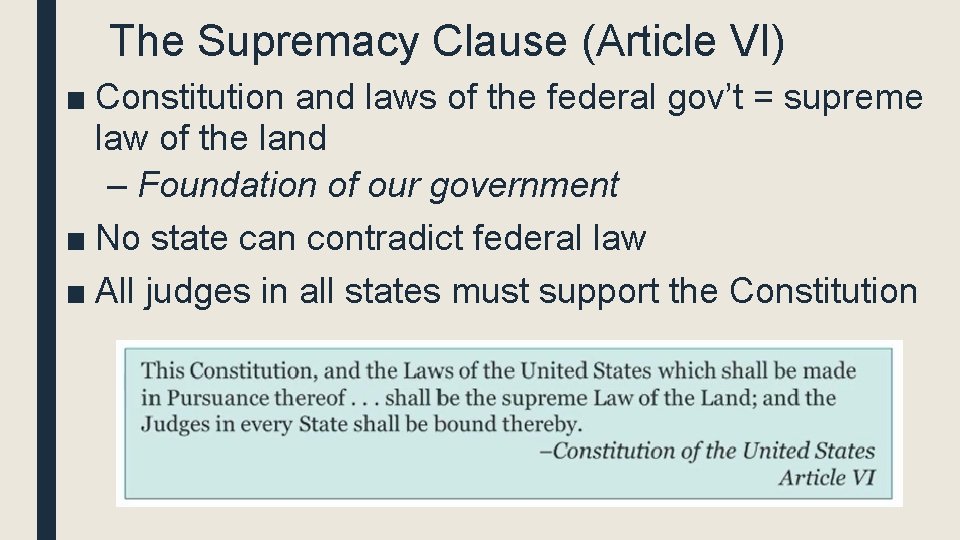
The Supremacy Clause (Article VI) ■ Constitution and laws of the federal gov’t = supreme law of the land – Foundation of our government ■ No state can contradict federal law ■ All judges in all states must support the Constitution
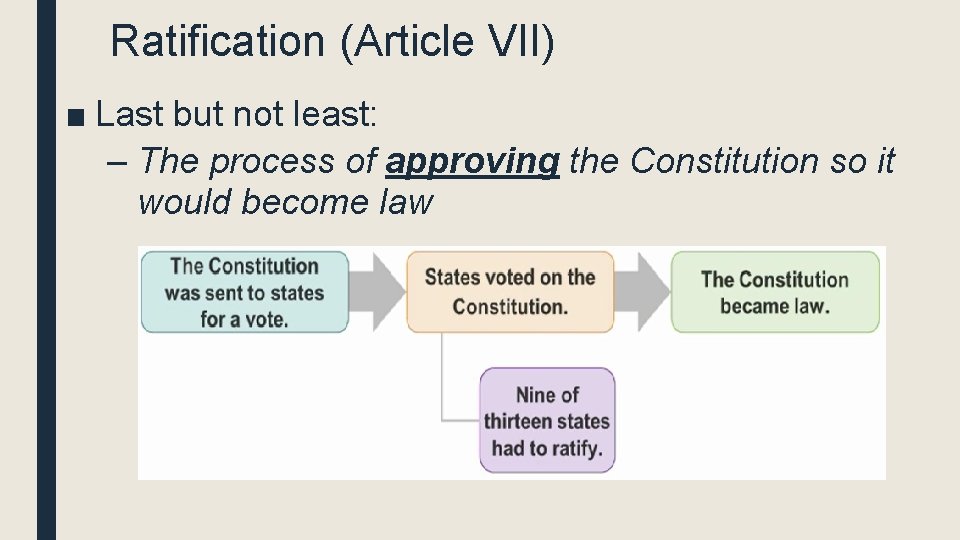
Ratification (Article VII) ■ Last but not least: – The process of approving the Constitution so it would become law
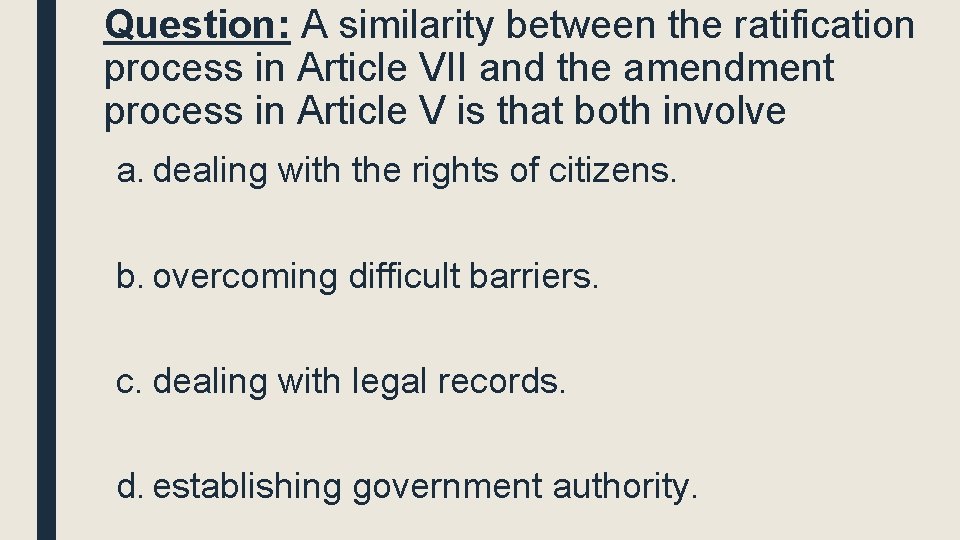
Question: A similarity between the ratification process in Article VII and the amendment process in Article V is that both involve a. dealing with the rights of citizens. b. overcoming difficult barriers. c. dealing with legal records. d. establishing government authority.
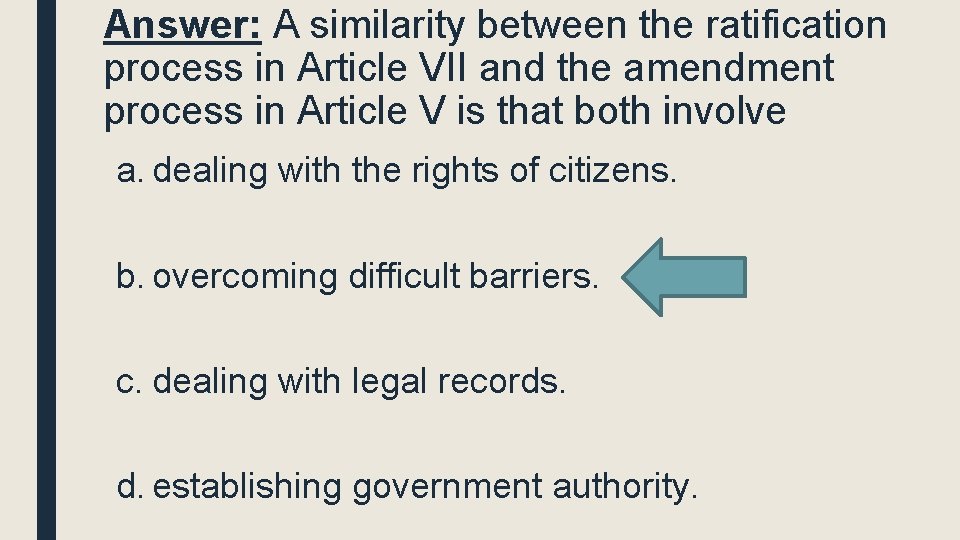
Answer: A similarity between the ratification process in Article VII and the amendment process in Article V is that both involve a. dealing with the rights of citizens. b. overcoming difficult barriers. c. dealing with legal records. d. establishing government authority.