
Article One Legislative Branch House vs Senate 435
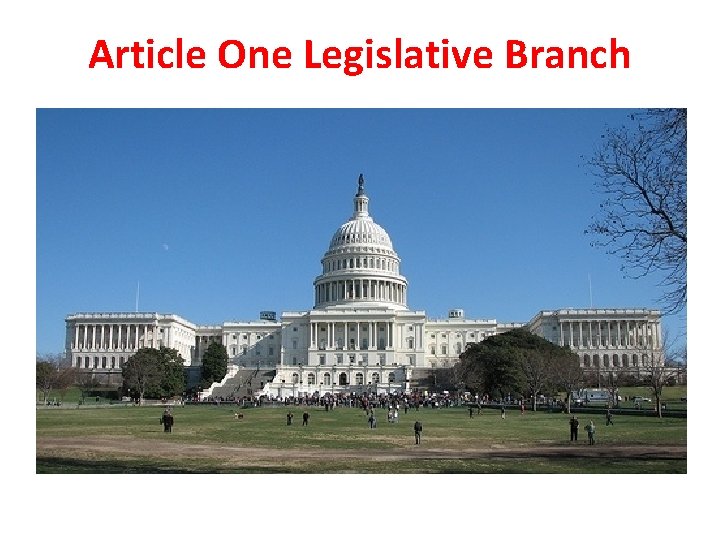
Article One Legislative Branch
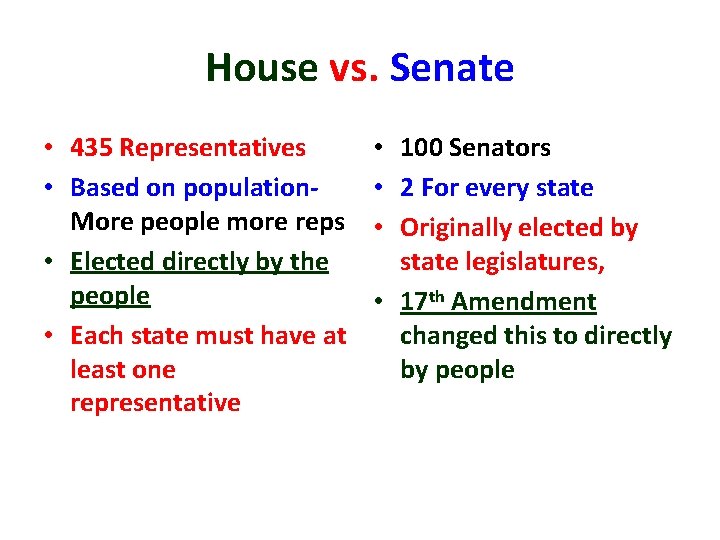
House vs. Senate • 435 Representatives • Based on population. More people more reps • Elected directly by the people • Each state must have at least one representative • 100 Senators • 2 For every state • Originally elected by state legislatures, • 17 th Amendment changed this to directly by people
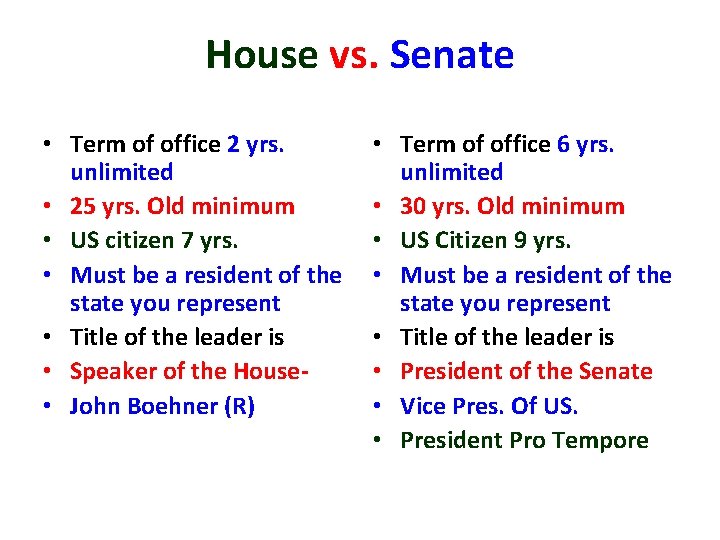
House vs. Senate • Term of office 2 yrs. unlimited • 25 yrs. Old minimum • US citizen 7 yrs. • Must be a resident of the state you represent • Title of the leader is • Speaker of the House • John Boehner (R) • Term of office 6 yrs. unlimited • 30 yrs. Old minimum • US Citizen 9 yrs. • Must be a resident of the state you represent • Title of the leader is • President of the Senate • Vice Pres. Of US. • President Pro Tempore




NY’s US Senators
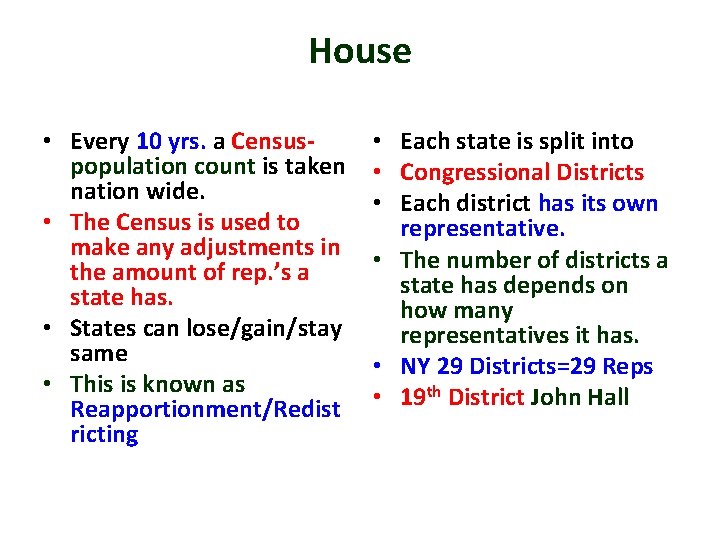
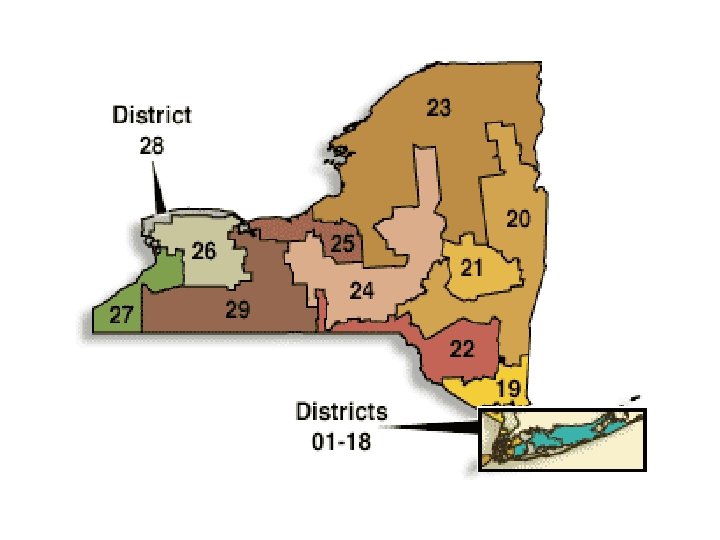
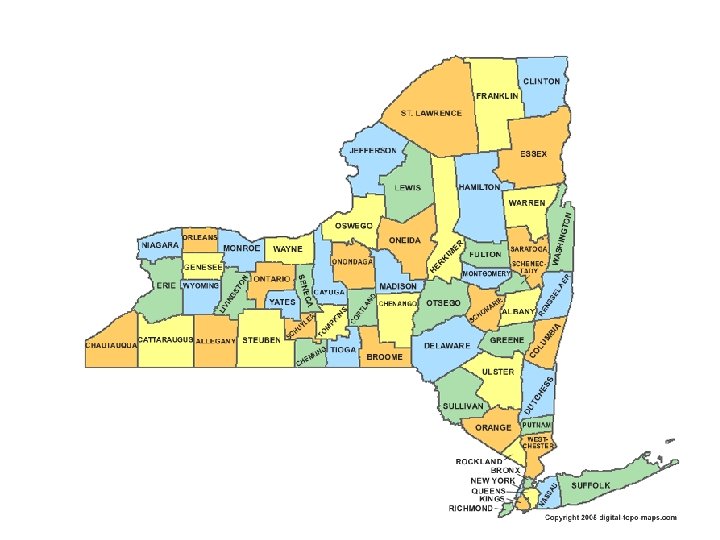
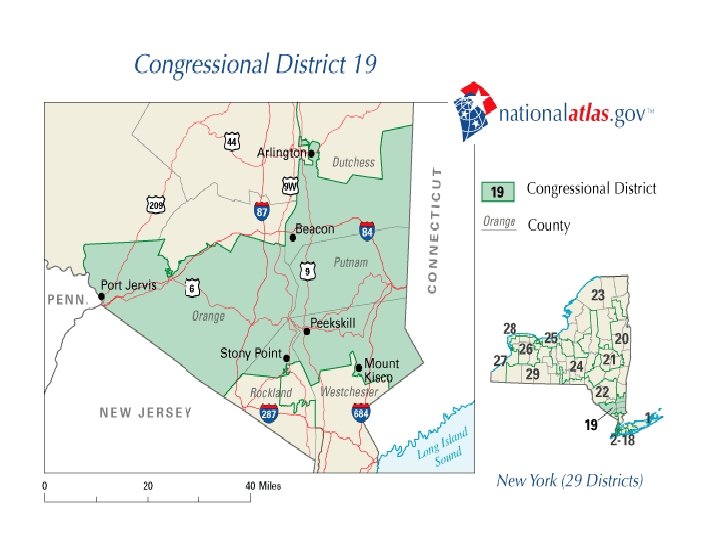
House • Every 10 yrs. a Censuspopulation count is taken nation wide. • The Census is used to make any adjustments in the amount of rep. ’s a state has. • States can lose/gain/stay same • This is known as Reapportionment/Redist ricting • Each state is split into • Congressional Districts • Each district has its own representative. • The number of districts a state has depends on how many representatives it has. • NY 29 Districts=29 Reps • 19 th District John Hall

House vs. Senate • Selects President if no • Selects vice president candidate wins • Approves all majority of electoral presidential treaties votes and presidential • Begins all revenue bills supreme court choices • Earn Salary $170, 000 yr.
House vs. Senate • Impeaches elected official-formally charges w/crime • Acts as jury in impeachment trial • Senators act like jurors – House conducts inquires • Chief Justice presides and investigates • 2/3 vote needed to – Need 1 more than 50% convict=67 Senators to impeach (accuse)=218
House vs. Senate • Forbidden Powers (safeguard people’s freedoms) AKA Denied Powers – 1 - Ex Post Facto Law: makes something illegal after the act has been done- person cannot be held responsible – 2 - Writ Of Habeas Corpus: requires a court to hold a hearing for a person accused of a crime (can be suspended during a national emergency) – 3 - Bill of Attainder: cannot sentence someone to jail without granting a trial
House vs. Senate • Main job of Congress is to pass laws – Bill: a proposed law – Must be passed by both the House and Senate & usually the President – System of Committees looks at the bills > impossible for full House or Senate to look at all bill (20, 000 a year) • Committees studies the bill and votes if it should go to full House or Senate • Most bills “die” in committee
House vs. Senate • President’s Choices on A Bill 1 - Sign the bill. . becomes a law 2 - Veto the bill > Congress can override 3 - Pocket the Bill - if Congress is in session, a pocketed bill becomes law without President’s signature after 10 days - if Congress is not in session, a pocketed bill is vetoed after 10 days (pocket veto)
House vs. Senate • Influences on Congress – Lobbyists: people hired by a special interest group to influence Congress – Experts: provide info to committees on certain bills – Constituents: voters who are represented by a member of Congress
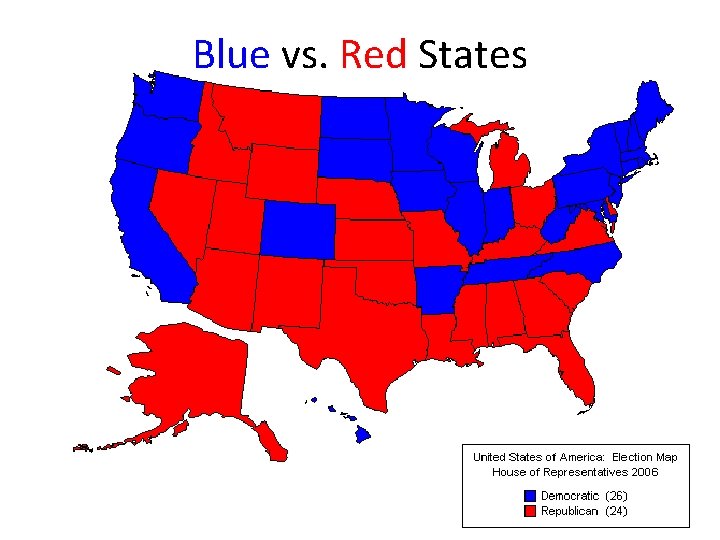
Blue vs. Red States
- Slides: 20