
Arthropods The Jointed Foot Creatures Characteristics of Arthropods
- Slides: 10
Arthropods The “Jointed Foot” Creatures
Characteristics of Arthropods § Arthropods have an exoskeleton made of Chiton and Proteins, Bilateral Symmetry, Coelomate, and jointed structures called Appendages. § The appendage can be used for a variety of functions including: sensing, walking, feeding and mating. § Arthropods must molt to grow.
Respitory structures § Arthropods have a variety of methods of Respiration. § Draw the 3 examples of them on page 764 in the Biology textbook. § Many have simple eyes (used for light detection) and compound eyes. § Terrestrial arthropods excrete waste through Malpighian tubules located on the abdomen. § Some Arthropods reproduce by Parthenogenesis, development of an unfertilized egg.
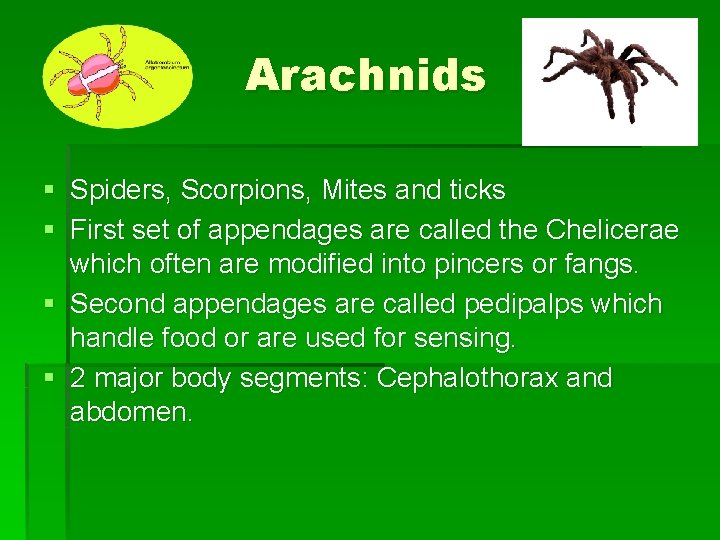
Arachnids § Spiders, Scorpions, Mites and ticks § First set of appendages are called the Chelicerae which often are modified into pincers or fangs. § Second appendages are called pedipalps which handle food or are used for sensing. § 2 major body segments: Cephalothorax and abdomen.
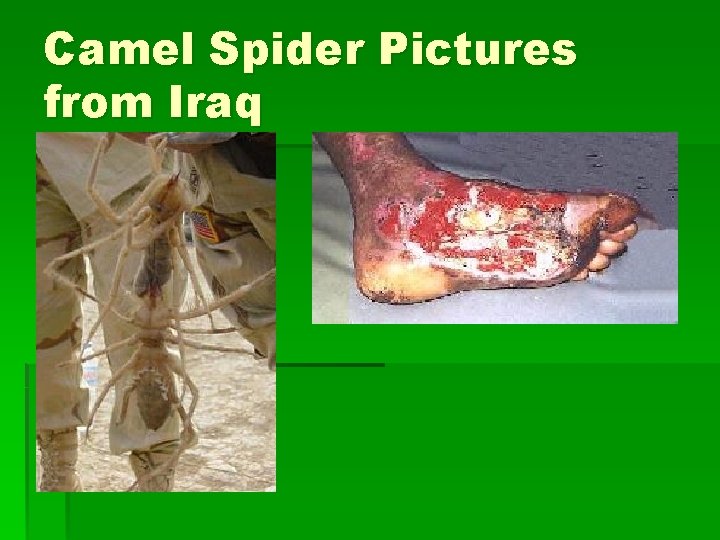
Camel Spider Pictures from Iraq
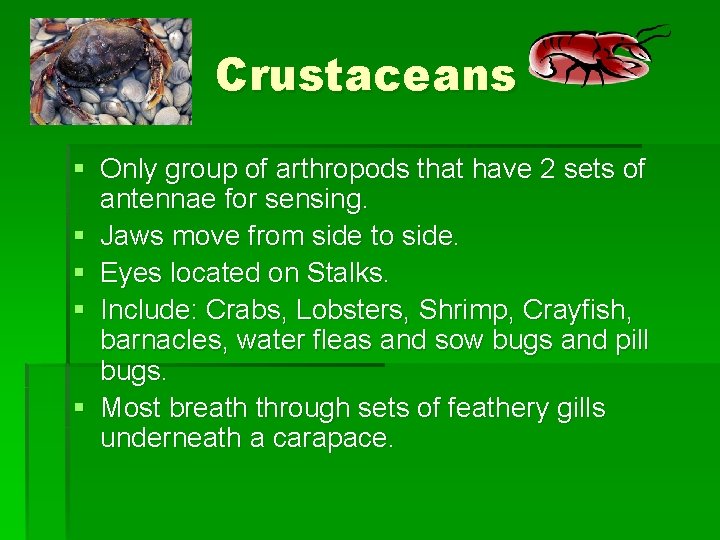
Crustaceans § Only group of arthropods that have 2 sets of antennae for sensing. § Jaws move from side to side. § Eyes located on Stalks. § Include: Crabs, Lobsters, Shrimp, Crayfish, barnacles, water fleas and sow bugs and pill bugs. § Most breath through sets of feathery gills underneath a carapace.
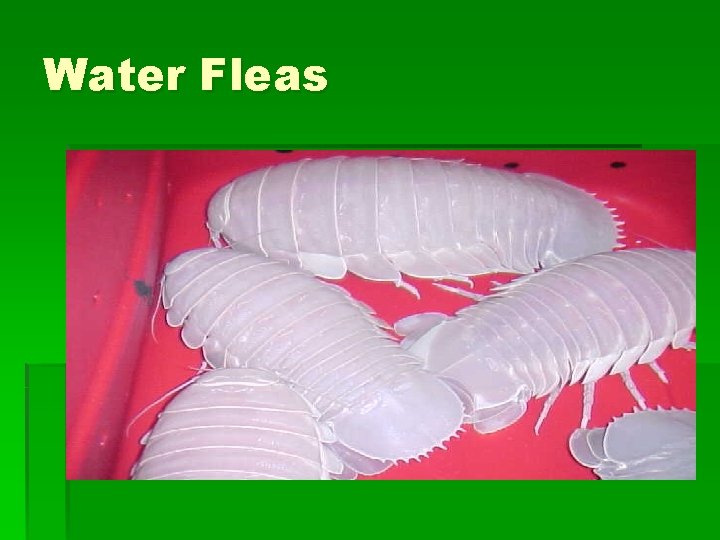
Water Fleas
Centipedes and Millipedes § Centipedes, class Chilopoda are all carnivores. Bites can be painful to humans. Malpighian tubules are used for waste. § Millipedes, class Diplopoda are herbivores that feed on decaying materials. Millipedes do not bite but can emit an obnoxious smell if disturbed.
Horseshoe Crabs § Class Merostomata § Very Ancient animals unchanged since the Cambrian era (500 million years ago) § Feed on seaweed, worms and molluscs. § Have blue blood due to the chemicals in it. § Draw a picture on page 771 of the horseshoe crab.
Insects § Class Insecta- Only one species is Marine § Almost 7/10 animals are Insects! § All insects undergo some form of metamorphosis. § Draw the picture of the Grasshopper on page 772 and label and explain the function of the following body parts: Antennae, Tympanum, Malpighian Tubules, Spiracles.