
Arthropods Phylum Arthropoda Make up largest phylum of
- Slides: 40
Arthropods Phylum Arthropoda
§ Make up largest phylum of Animals, with more than 1 million known species. § Of all animals on earth 3/4 are arthropods. § Largest group insects. (on land) § Largest group in oceans (crustaceans).
Crustaceans (Subphylum Crustacea) § Includes barnacles, shrimps, lobsters, and crabs. § Bodies are segmented and bilaterally symmetrical. § Body has jointed appendages, such as legs and mouthparts moved by muscles. § Have exoskeleton made of chitin for protection, support, flexibility, muscle attachment.
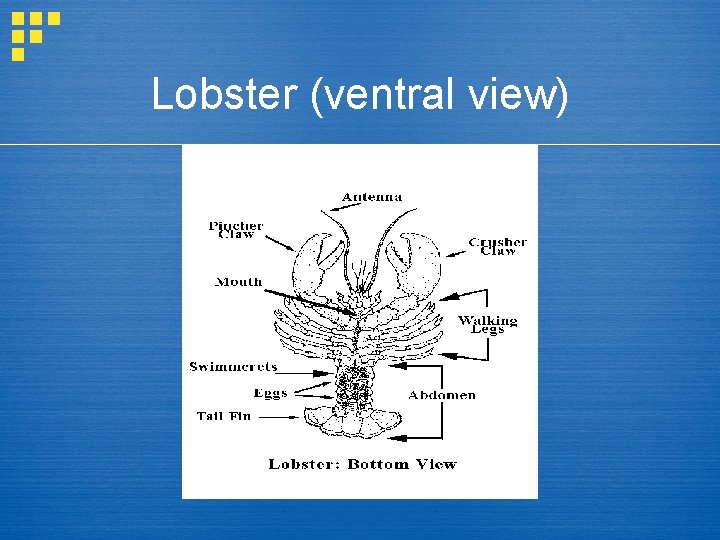
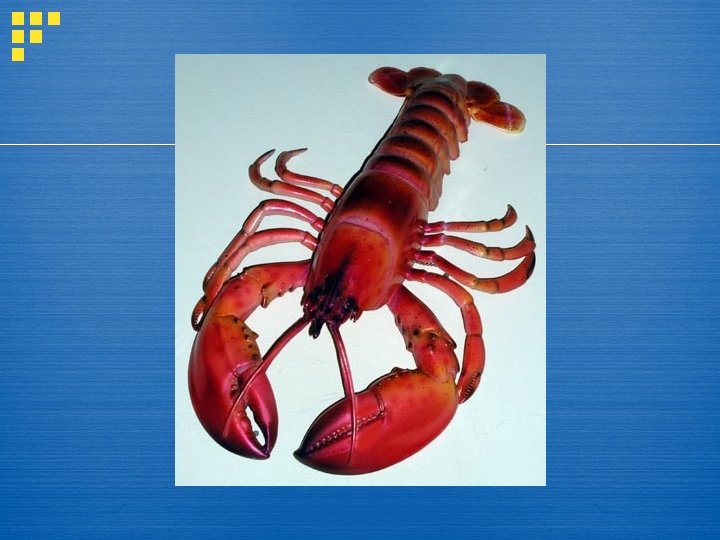
Lobster (ventral view)
§ § To grow arthropods molt. Molt- shed their exoskeleton. New shells develop under the old shell. After old shell is molted the new shell hardens. § This limits size of arthropods.
§ 68, 000 species of crustaceans, most are marine. § Specialized for life in water by having gills for obtaining oxygen, exoskeleton, appendages for swimming, crawling, and attachment for feeding and mating. § Have two antennae for sensing surroundings.
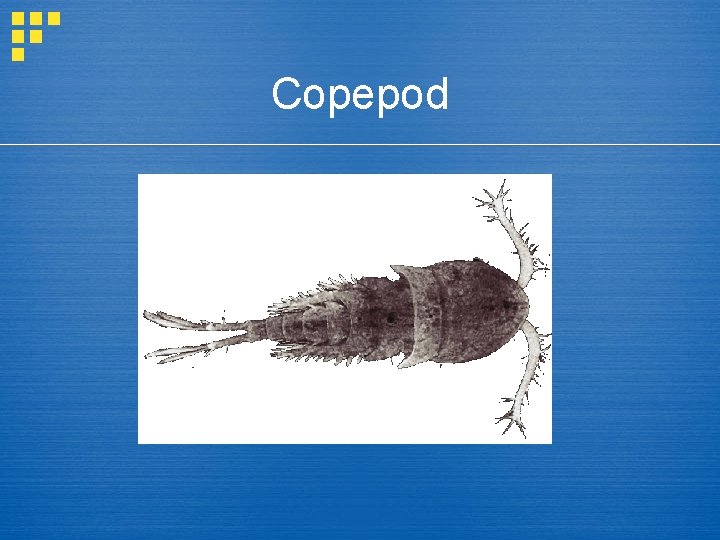
Small Crustaceans § Copepods- abundant and important in the plankton. § Use mouth parts to filter or capture food. § Use elongated antennae to swim. § Many are parasitic.
Copepod
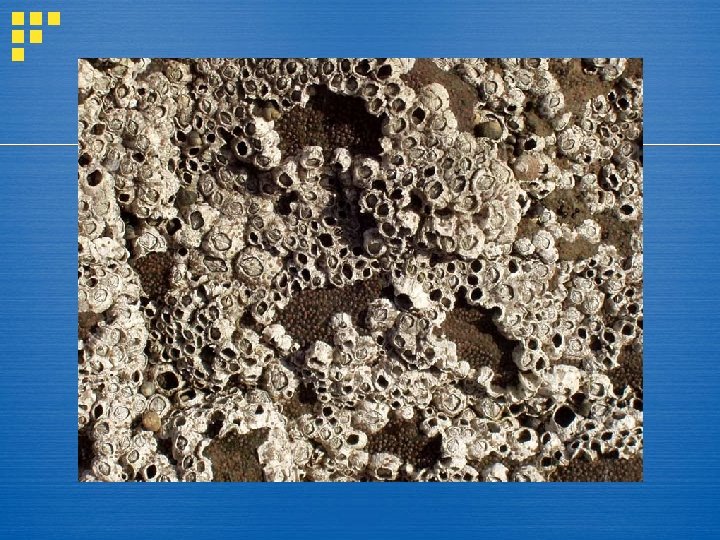
Barnacles § Filter feeders that live attached to surfaces including on whales and crabs. § Are fouling organisms. § Look like molluscs because their bodies are enclosed in calcareous plates. § Have feathery, filtering legs to sweep in the water.
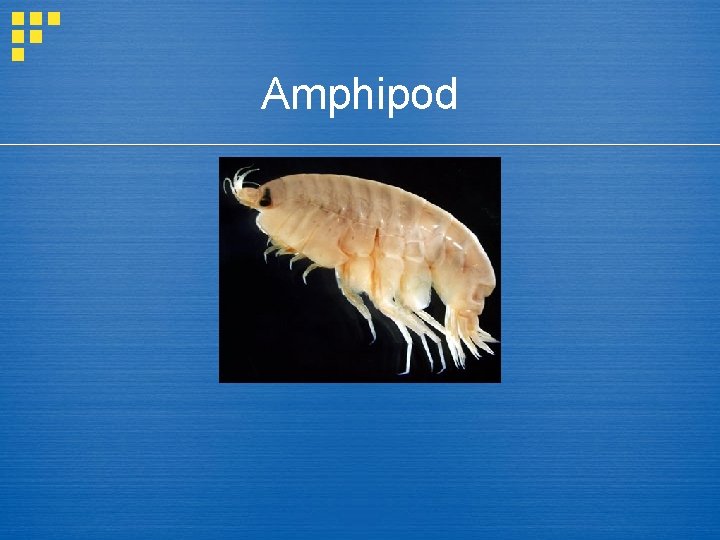
Amphipods § Have curved body that is flattened sideways. § Head and tail curve downwards. § Beach hoppers are strong jumpers by stretching their curved bodies. § Others crawl among seaweeds, or burrow in skin of whales (whale lice).
Amphipod
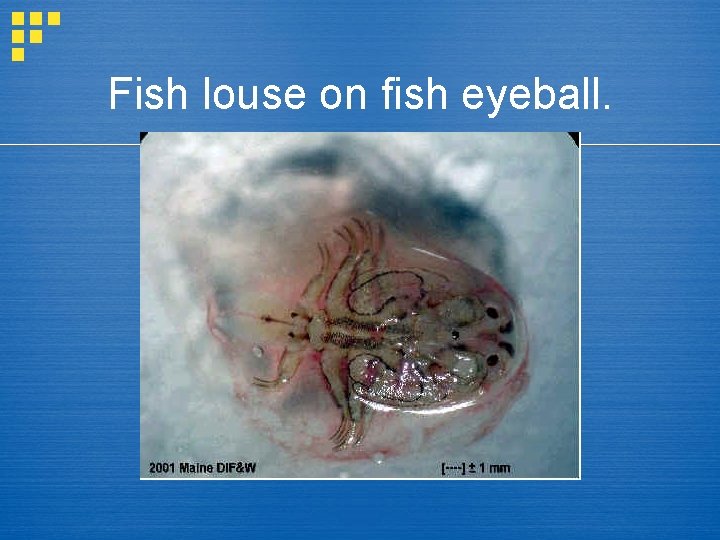
Isopods § Main part of body has legs that are similar to each other and are dorsoventrally flattened. § Pill bugs are common on land. § Fish lice are parasites of fishes and crustaceans.
Fish louse on fish eyeball.
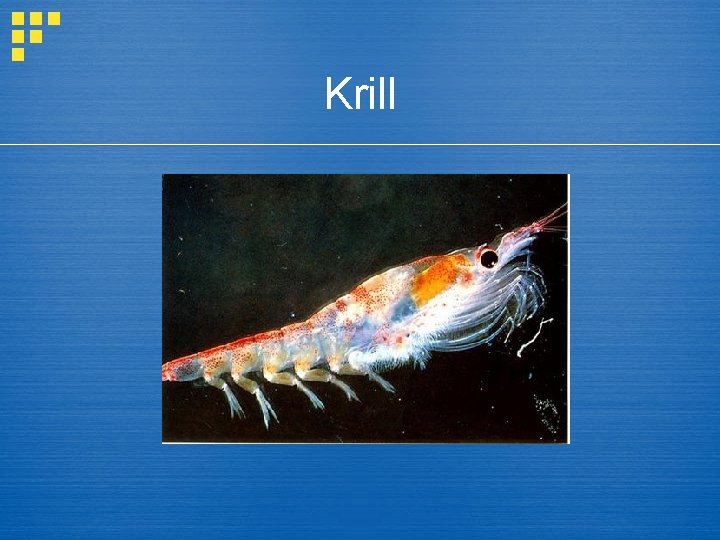
Krill (Euphausiids) § Planktonic, shrimp-like. § Head is fused with body segments to form a distinctive carapace that covers the body like armor. § Most are filter feeders of diatoms and plankton. § Exclusive source of food for whales, penguins, and fishes.
Krill
Shrimps, Lobsters, and Crabs § § § 10, 000 species. Decapods- ten legs. Largest crustacean group. Largest crustaceans in size. Prized food source.
Body Structure § Have five pairs of legs (pereopods). § First pair of legs is usually heavier and has claws for feeding and defense. § Three sets of maxillipeds close to mouth to sort out food and push toward the mouth. § Have cephalothorax- fused head and thorax. § Rest of body is the abdomen.
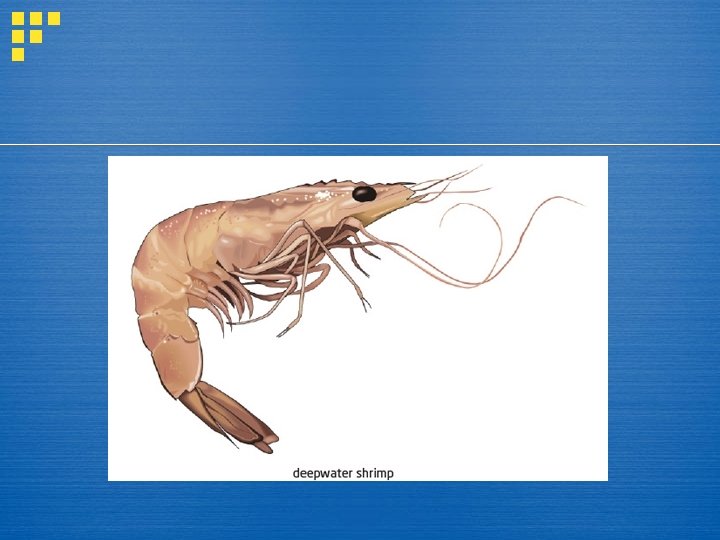
§ Shrimps and lobsters have laterally compressed bodies with elongated abdomens “tails”. . § Shrimps are scavengers feeding on detritus.
Larry the Lobster
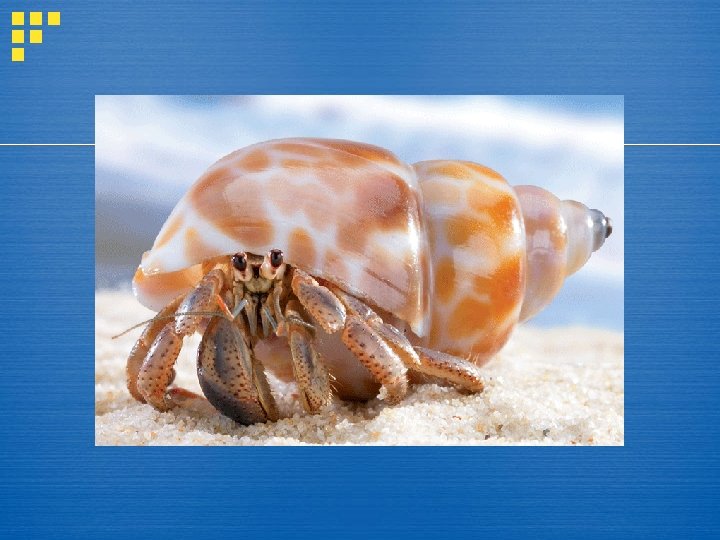
§ Hermit crabs- not true crabs are scavengers. § Hide long, soft abdomens in empty gastropod shells.
True Crabs § Abdomen is small and tucked under broad cephalothorax. § V-shaped abdomen in males. § U-shaped abdomen in females for carrying eggs. § Highly mobile move sideways “sidle”. § Most are scavengers or predators.
Mr. Krabs
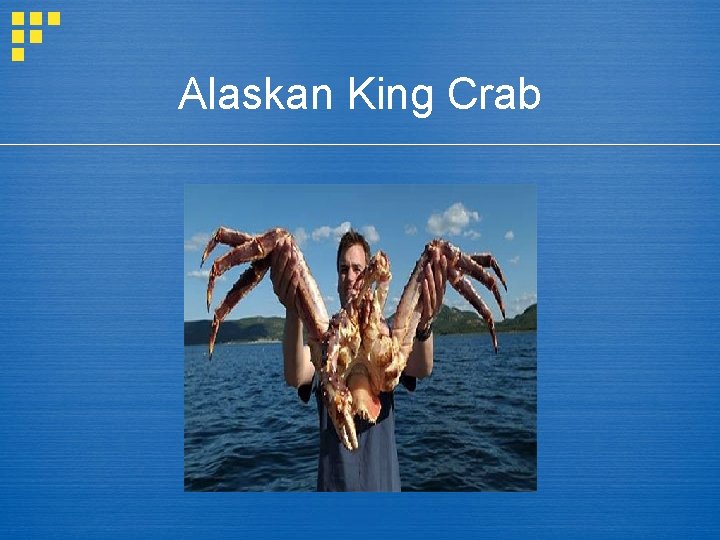
Alaskan King Crab
Feeding and Digestion § Filter feeding common on copepods and small crustaceans. § Stiff, hair-like bristles are used to catch food particles in the water. § Appendages used to pierce and suck in parasitic copepods and isopods. § Food passes to a stomach with chitinous teeth for grinding and sifting.
§ Stomachs are connected to digestive glands that secrete digestive enzymes and absorb nutrients. § Intestine ends in an anus. § Nutrients absorbed by an open circulatory system. § Gas exchange carried out by gills. § Crabs have gill chamber filled with air like our lungs.
Nervous System and Behavior § Simple crustaceans have a ladder-like nervous system. § Have a small, relatively simple brain but well-developed sensory organs. § Most have compound eyes with 14, 000 light sensors. § Decopods have eyes on the end of movable stalks like periscopes.
§ Have keen sense of smell. § Many have statocysts for balance. § Behaviorally complex and use a variety of signals to communicate. § Behaviors used to settle disputes, and for courtship.
Reproduction and Life History § Most are separate sexes. § Males use specialized appendages to transfer sperm directly to the female. § Hermaphrodites even transfer sperm between each other. § Barnacles have a penis that can stretch to reach others in the neighborhood.
§ Mating usually takes place after the female molts while the exoskeleton in soft. § Females store sperm to fertilize different batches of eggs. § In decapods the eggs are carried in Pleopods (swimmerets) beneath the body.
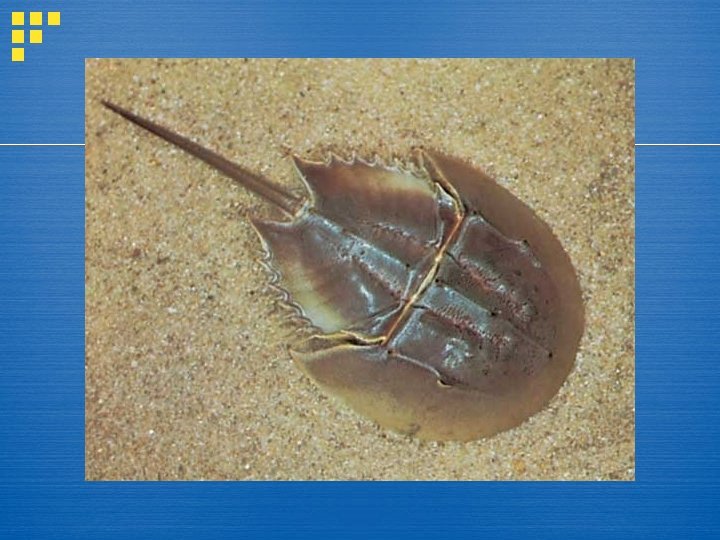
Horseshoe Crabs § Class Merostomata § Not true crabs but “living fossils” § Live on soft bottoms in shallow water on the Atlantic and Gulf Coasts of North America and South East Asia. § Horseshoe-shaped carapace that encloses body with five pairs of appendages.
Horseshoe Crabs
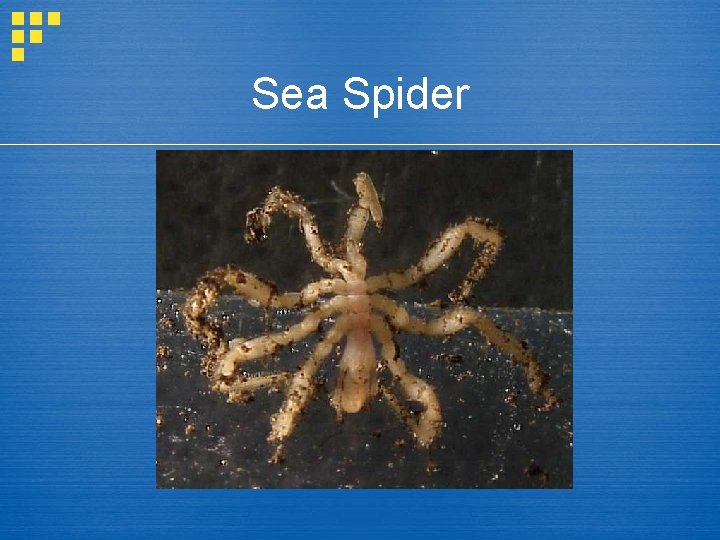
Sea Spiders § Class Pycnogonida § Have four or more pairs of jointed legs § Large proboscis with the mouth at the tip used to feed on soft invertebrates such as anemones and hydrozoans. § Common in cold waters.
Sea Spider
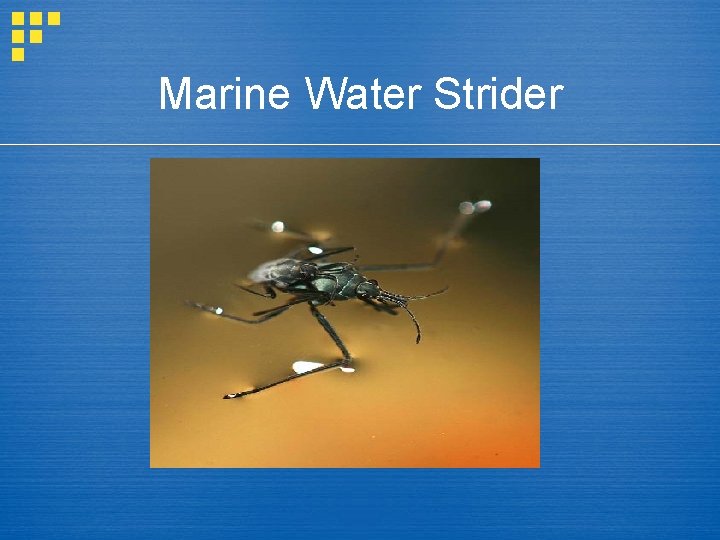
Insects (Class Insecta) § Have only three pairs of legs as adults. § Most diverse on earth but rare in the sea. § Most marine insects live at water’s edge where they scavenge sea weeds, barnacles, and rocks.
Marine Water Strider