
ARTHROPODS Jointfooted Animals Southern Boone County HS 2010
ARTHROPODS Joint-footed Animals Southern Boone County HS 2010 Bill Palmer
ARTHROPODS Joint-footed Animals Very Numerous Very Diverse Common Characteristics Segmented Bilateral Symmetry Exoskeleton Jointed Structures-legs, antenna
ARTHROPODS Joint-footed Animals Exoskeleton Hard outer covering Made of Chitin-a protein Continuous covering or plates Protects internal tissues Protects against water loss in terrestrial species
ARTHROPODS Joint-footed Animals Exoskeleton Very heavy Must be shed in order for organism to grow This is –molting Most arthropods molt 4 -7 times in life Easy prey at molting

ARTHROPODS Joint-footed Animals Segmentation Most have three body parts • Head, thorax, abdomen Head + thorax = cephalothorax Cephalothorax limits movements but gives greater protection
ARTHROPODS Joint-footed Animals Generally quick and active-need lots of oxygen Three types of respiratory structures Tracheal tubes-insects-hollow tubes that carry air throughout the body Gills-aquatic arthropods-shrimp, crayfish Book Lungs-air chambers with leaf-like plates
ARTHROPODS Joint-footed Animals Acute Senses Antenna-detect movement, sound, chemicals Antenna-used for communication (ants) Pheromones-chemicals used for communication Simple eye (or pair) Compound eyes
ARTHROPODS Joint-footed Animals Well-developed nervous system Nerve cord Brain Ganglia-enlargements along nerve cord
ARTHROPODS Joint-footed Animals Complex body systems One or more hearts Complete digestive system-mouth, stomach, intestine, anus, glands Complex jaws (mandibles) for biting, holding, sucking, chewing
ARTHROPODS Joint-footed Animals Complex body systems Excrete liquid waste through malpighian tubes Complex muscle system
ARTHROPODS Joint-footed Animals Reproductive systems Most have sexual reproduction Internal fertilization on land species External fertilization in aquatic species Parthenogenic-unfertilized egg develops
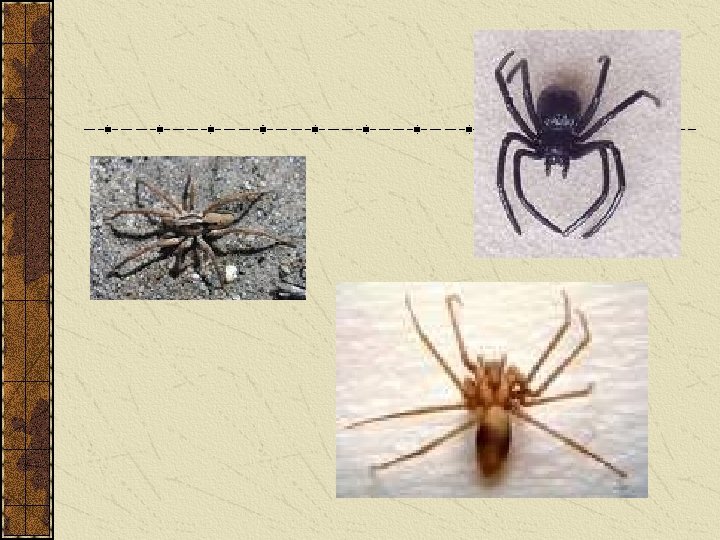
ARTHROPODS Class: Arachnids (spiders, scorpions, ticks) Spiders-largest group of arachnids 30, 000 species 12 are dangerous to humans Black widow Brown Recluse
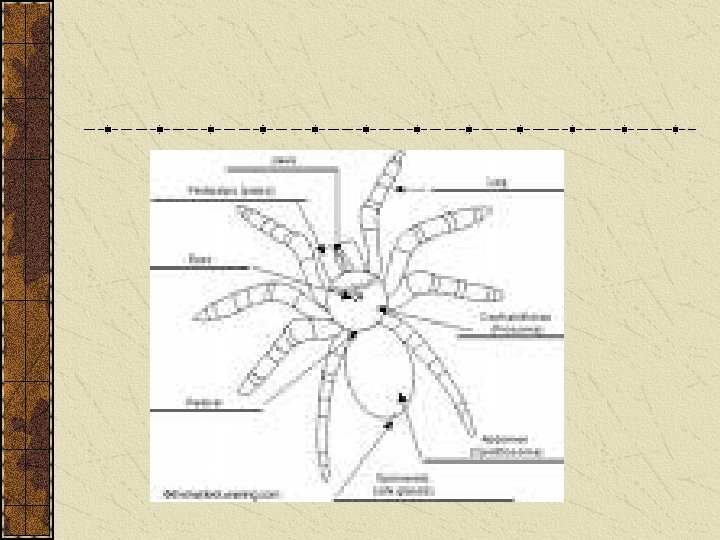
ARTHROPODS Class: Arachnids Pedipalps- second pair of appendages Handle food Transfer sperm in males No antenna Spinnerets make web
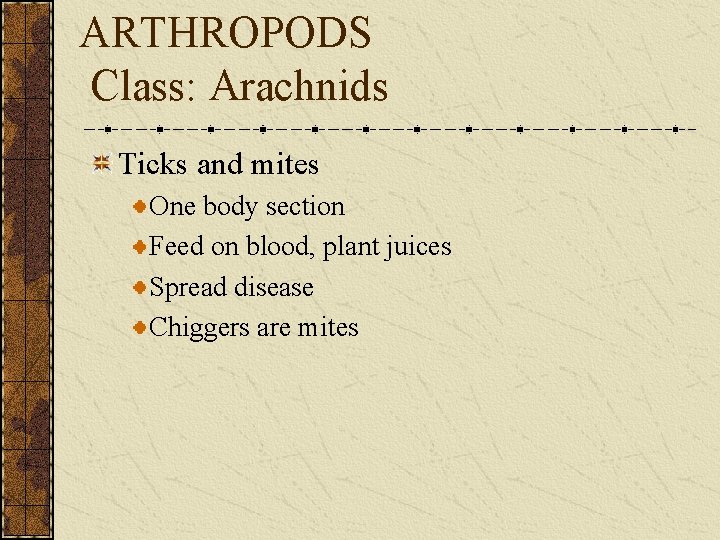
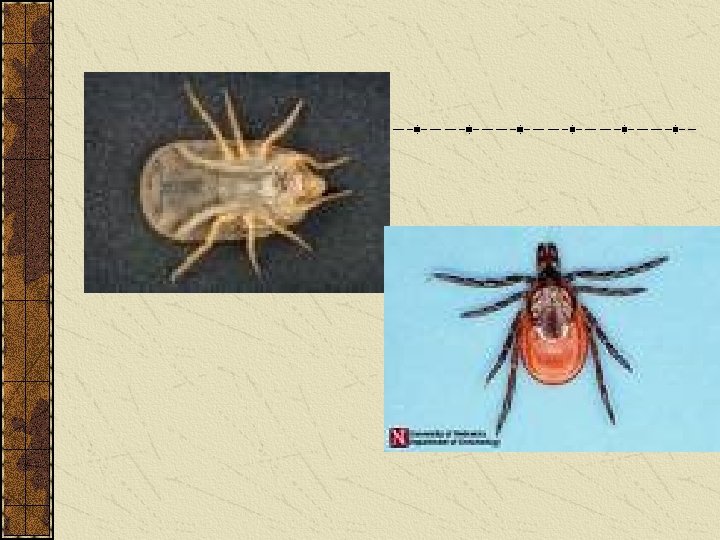
ARTHROPODS Class: Arachnids Ticks and mites One body section Feed on blood, plant juices Spread disease Chiggers are mites
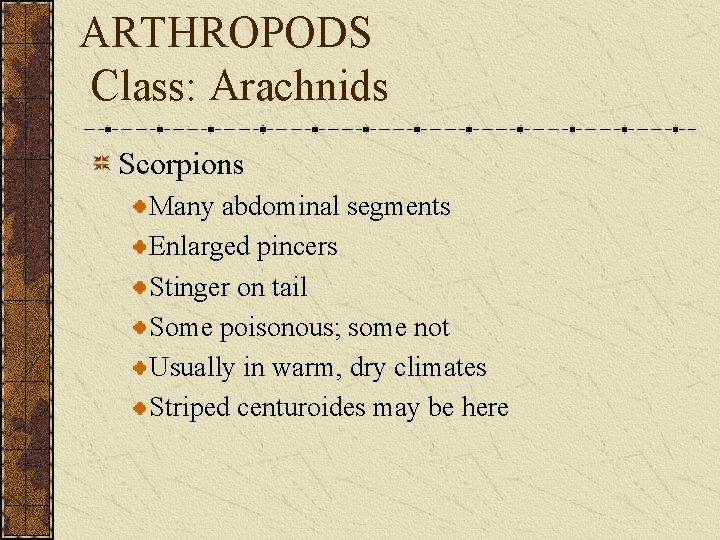
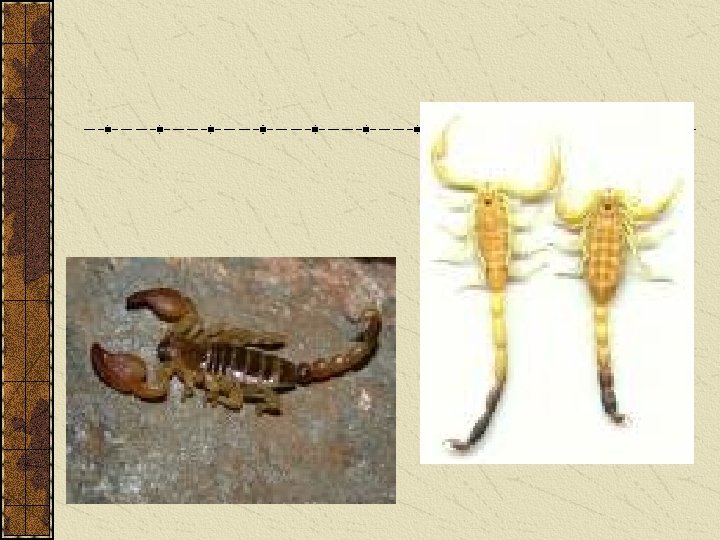
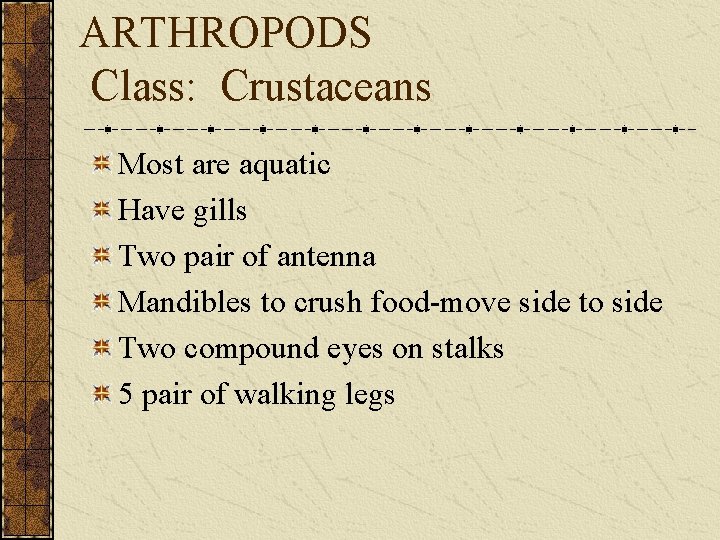
ARTHROPODS Class: Arachnids Scorpions Many abdominal segments Enlarged pincers Stinger on tail Some poisonous; some not Usually in warm, dry climates Striped centuroides may be here
ARTHROPODS Class: Crustaceans Most are aquatic Have gills Two pair of antenna Mandibles to crush food-move side to side Two compound eyes on stalks 5 pair of walking legs
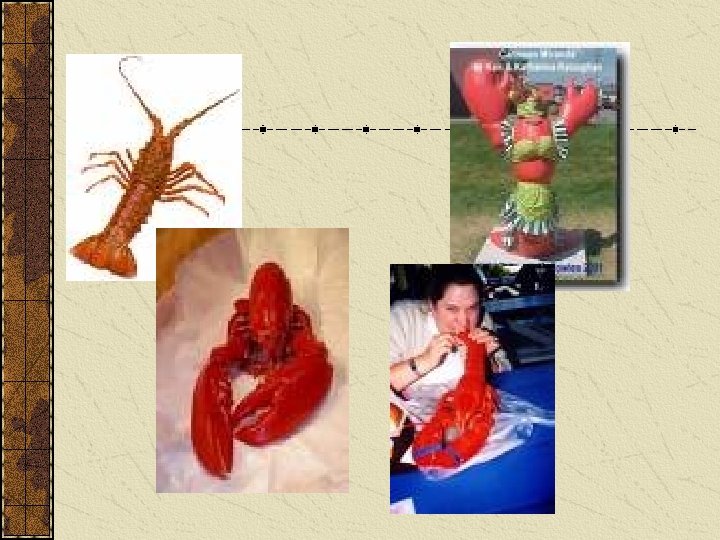
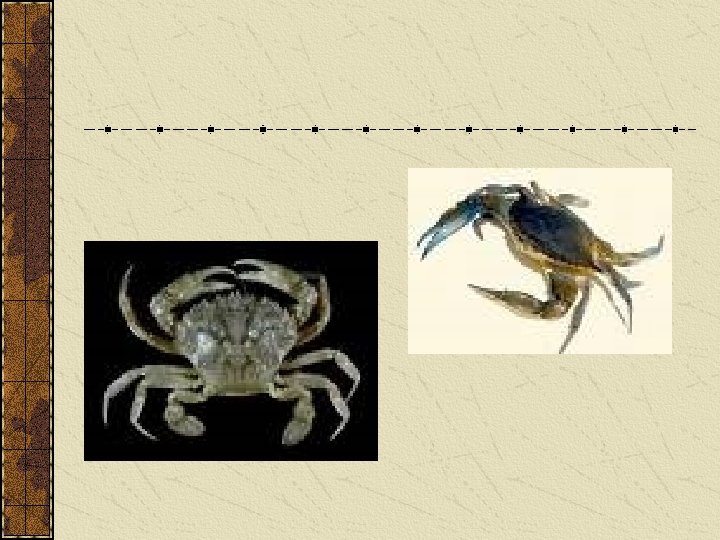
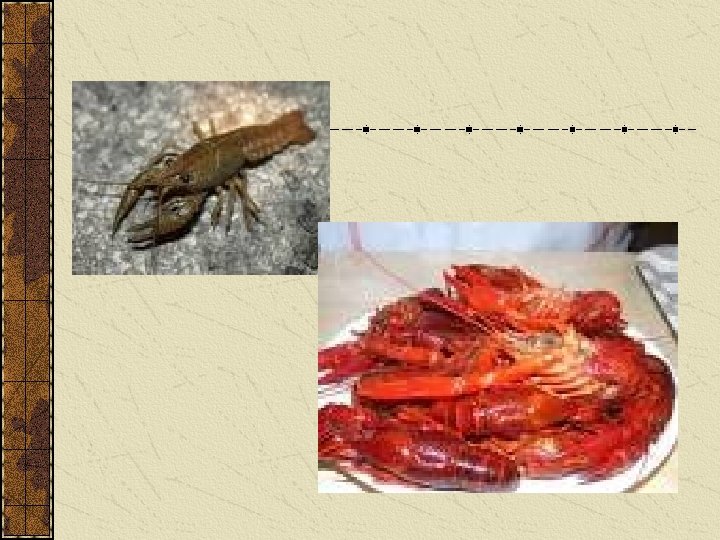
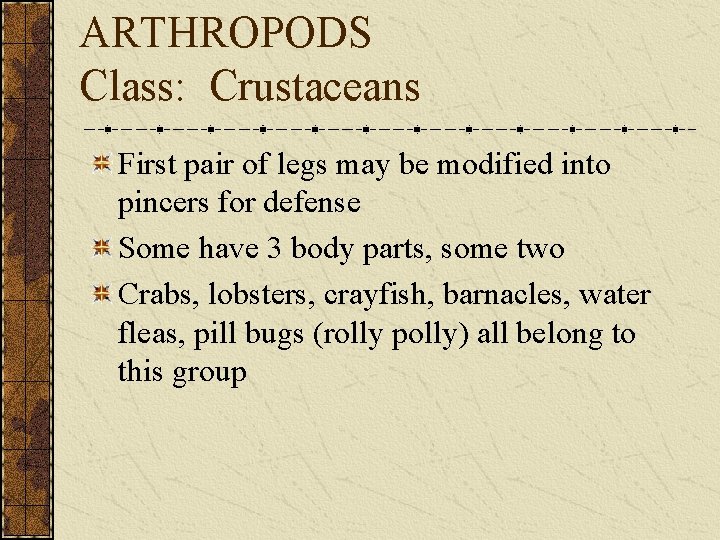
ARTHROPODS Class: Crustaceans First pair of legs may be modified into pincers for defense Some have 3 body parts, some two Crabs, lobsters, crayfish, barnacles, water fleas, pill bugs (rolly polly) all belong to this group
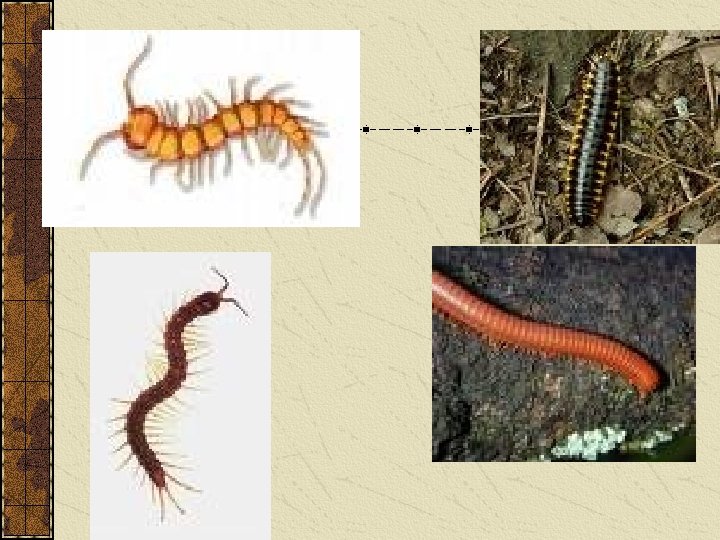
ARTHROPODS Class: Chilopoda and Diploda Centipede – Chilopoda Carnivorous-eat worms Will bite humans One pair of legs per segment Millipede – Diploda Herbivorous. Stink defense Two pairs of legs per segment
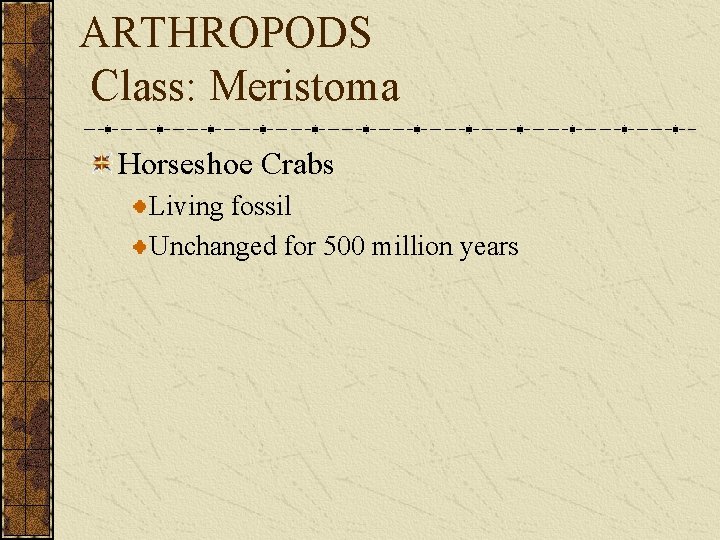
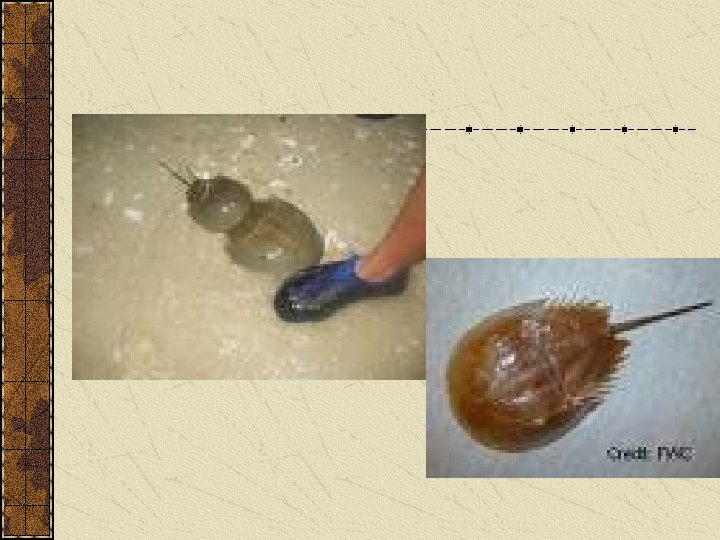
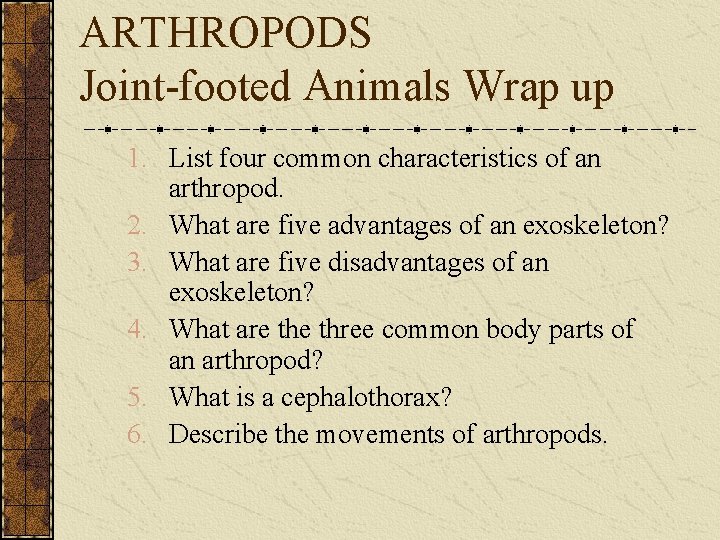
ARTHROPODS Class: Meristoma Horseshoe Crabs Living fossil Unchanged for 500 million years
ARTHROPODS Joint-footed Animals Wrap up 1. List four common characteristics of an arthropod. 2. What are five advantages of an exoskeleton? 3. What are five disadvantages of an exoskeleton? 4. What are three common body parts of an arthropod? 5. What is a cephalothorax? 6. Describe the movements of arthropods.
ARTHROPODS Joint-footed Animals Wrap up 7. List the three types of respiratory structures found in arthropods and give an example of an organism that has each type. 8. What are pheromones? 9. What are antenna used for in arthropods? 10. What are two types of eyes found in arthropods? 11. What are the main parts of all arthropod digestive systems?
ARTHROPODS Joint-footed Animals Wrap up 12. What are malpighian tubes? 13. How are arthropods jaws modified? 14. How do arthropods reproduce? 15. What is parthenogenesis? 16. Compare the sound made when stomping on a Cnidarian to the sound made when stomping on an Arthropod. 17. Complete the problem-solving Lab 28. 1 activity on page 766. Estimate without a protractor
- Slides: 32