
Arthropods Chapter 28 What is an Arthropod Phylum




- Slides: 10
Arthropods Chapter 28
What is an Arthropod? �Phylum Arthropoda �Segmented body with specialized structures �Exoskeleton made of chitin �Jointed appendages �Bilateral symmetry �All 3 germ layers � 2 digestive openings �coelomate
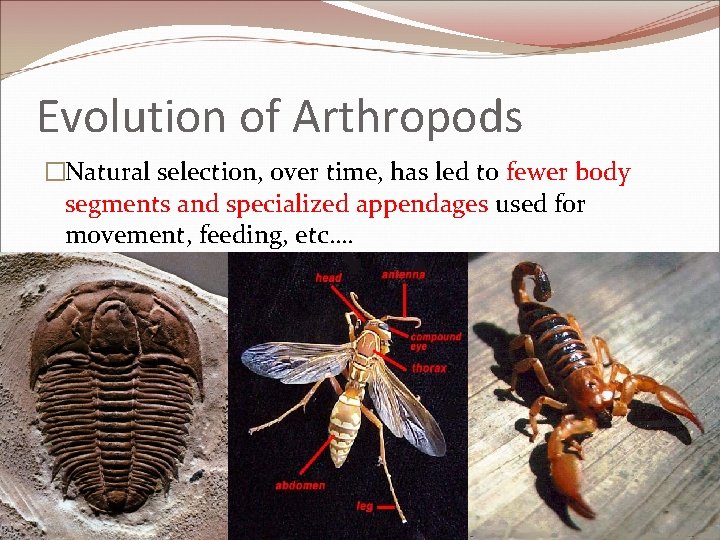
Evolution of Arthropods �Natural selection, over time, has led to fewer body segments and specialized appendages used for movement, feeding, etc….
Growth & Development of Arthropods �Arthropods undergo periods of molting when they outgrow their exoskeleton �Molting: shedding of entire exoskeleton and making of new one to take its place.
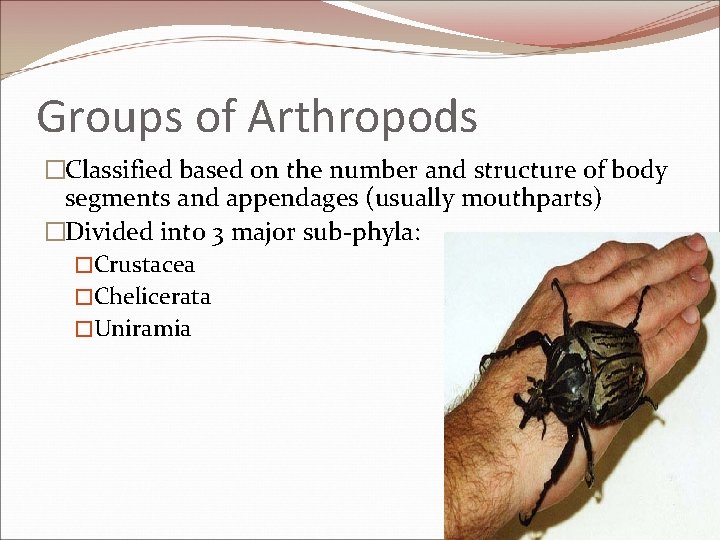
Groups of Arthropods �Classified based on the number and structure of body segments and appendages (usually mouthparts) �Divided into 3 major sub-phyla: �Crustacea �Chelicerata �Uniramia
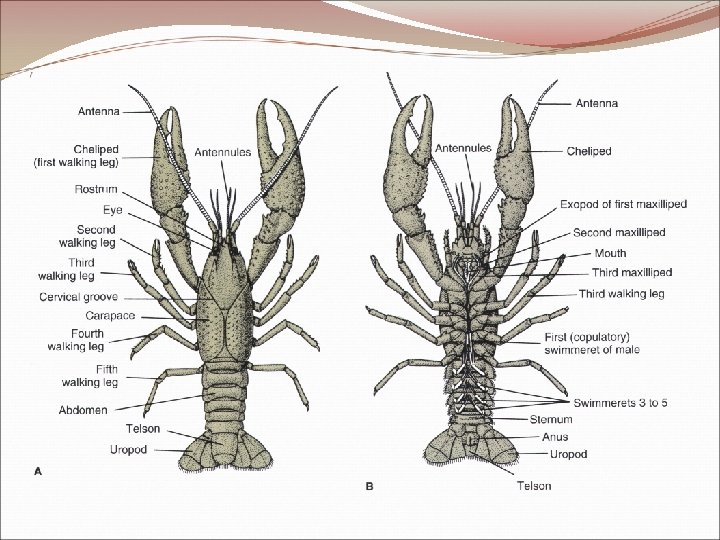
Crustacea � 2 pairs of antennae � 2 or 3 body segments �Chewing mouthparts (mandibles) �Ex: lobster, shrimp, crabs, barnacles
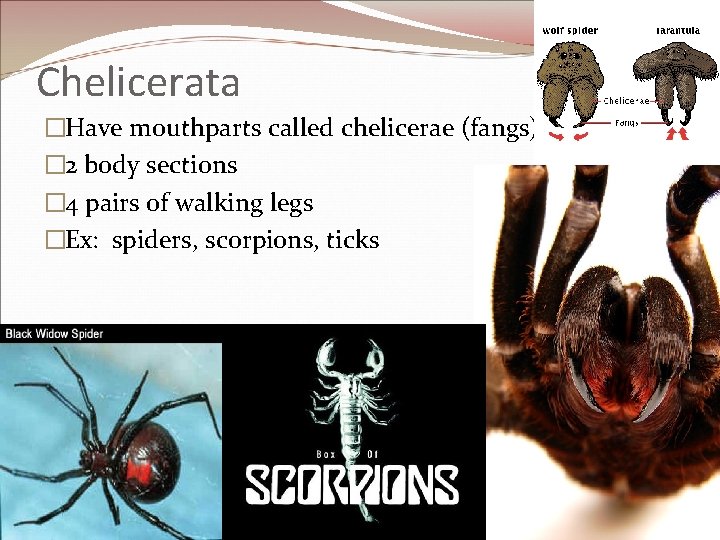
Chelicerata �Have mouthparts called chelicerae (fangs) � 2 body sections � 4 pairs of walking legs �Ex: spiders, scorpions, ticks
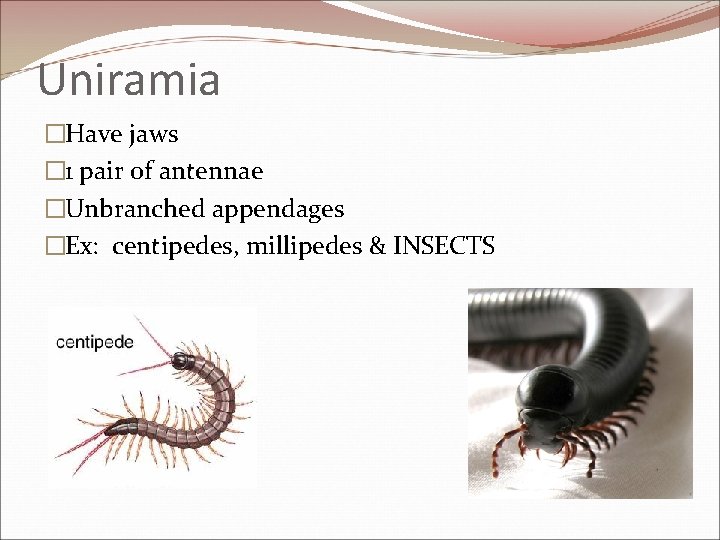
Uniramia �Have jaws � 1 pair of antennae �Unbranched appendages �Ex: centipedes, millipedes & INSECTS
Insects � 3 body parts (head, thorax, abdomen) � 3 pairs of legs on thorax � Ex: ants, beetles, flies, butterflies, bees, wasps, etc…………. .