
ARTHROPODS ARTHROPOD CHARACTERISTICS Largest phylum of animals p
- Slides: 19
ARTHROPODS
ARTHROPOD CHARACTERISTICS Largest phylum of animals p Most marine arthropods are crustaceans p Body is segmented, bilaterally symmetrical p Jointed appendages p Exoskeleton made of chitin p Molt (shed exoskeleton) p small p
CRUSTACEANS 68, 000 known species p Most marine p Have gills p 2 pairs of antennae p Examples; copepods, barnacles, amphipods, isopods, krill, shrimp, lobster, crabs p
BIOLOGY OF CRUSTACEANS p Filter feeding n n p smaller crustaceans Use bristles on appendages to gather particles Use appendages in some for sucking and piercing Stomach has chitinous teeth Predators- decapods n n Stomach is two chambered; digestive enzymes Extracellular digestion; have anus
Open circulatory system p Gill exchange gases p Simple brain; but well developed sensory organs p n n n Compound eyes Keen sense of smell Communicate with signals
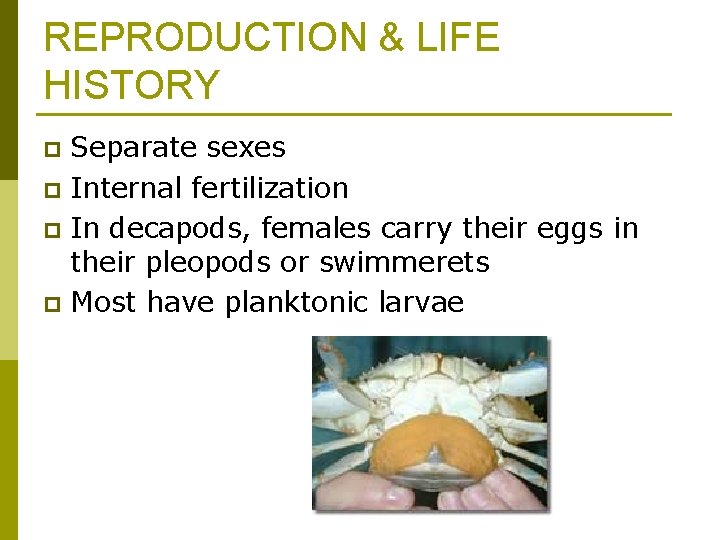
REPRODUCTION & LIFE HISTORY Separate sexes p Internal fertilization p In decapods, females carry their eggs in their pleopods or swimmerets p Most have planktonic larvae p
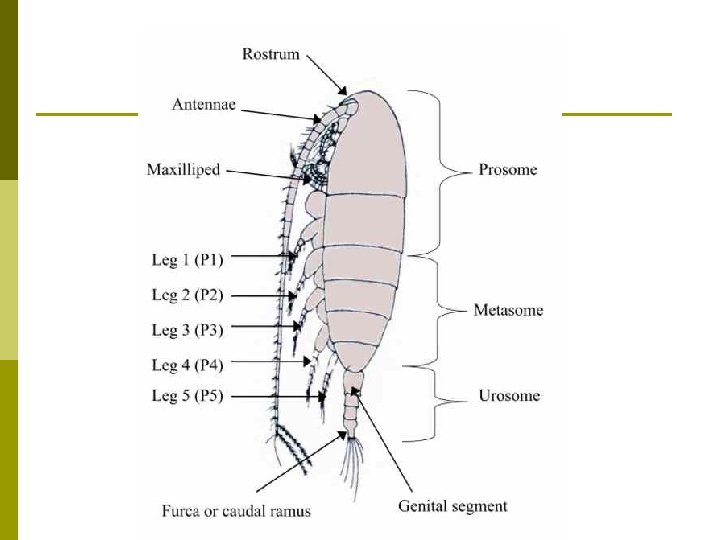
SMALL CRUSTACEANS p COPEPODS: planktonic; use mouthparts to filter and capture food n Some parasitic
§ Barnacles- filter feeder; live attached to surfaces; body enclosed with heavy calcareous plates; have feathery filtering appendages called cirri
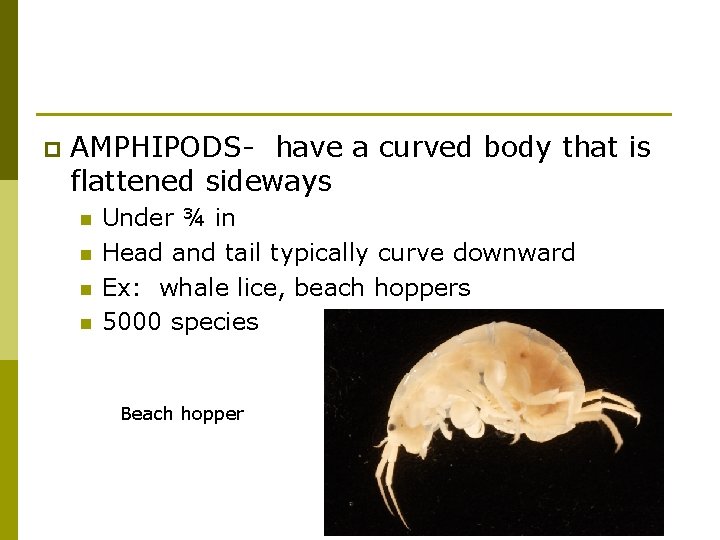
p AMPHIPODS- have a curved body that is flattened sideways n n Under ¾ in Head and tail typically curve downward Ex: whale lice, beach hoppers 5000 species Beach hopper
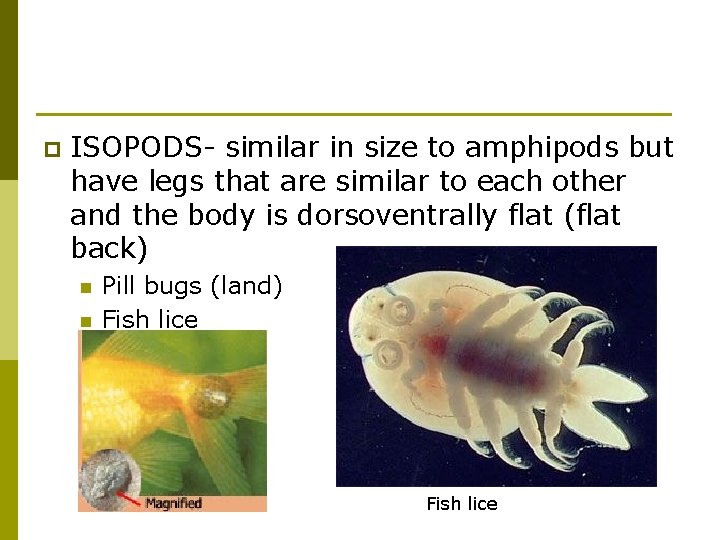
p ISOPODS- similar in size to amphipods but have legs that are similar to each other and the body is dorsoventrally flat (flat back) n n Pill bugs (land) Fish lice
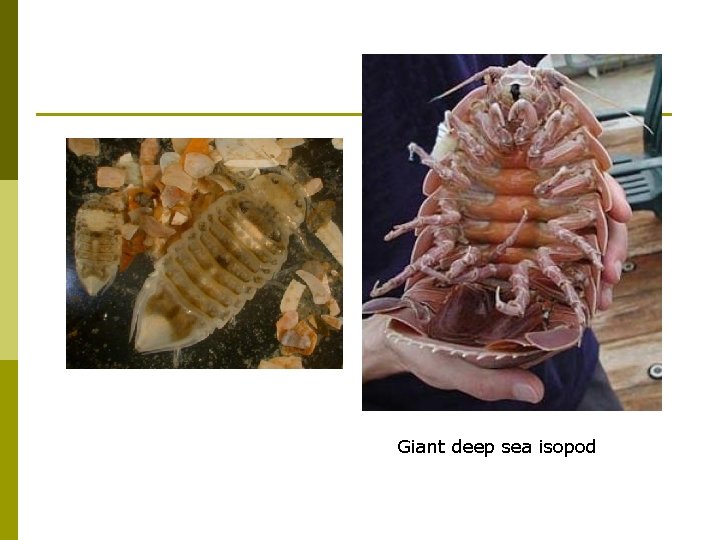
Giant deep sea isopod
p KRILL OR EUPHAUSIIDS- shrimp-like crustaceans; up to 2. 5”; planktonic; head is fused with some of the body segments to form a carapace n n Most filter feeders Polar waters Deep water Main food source for large marine mammals
DECAPODS Shrimps, lobsters, and crabs p 10000 species p Largest group of crustaceans p Five pairs of legs or perapods p n 1 st which is the heavier- the claw or cheliped 3 pairs of maxillipeds- close to the mouth; used for eating p Well-developed carapace and encloses the cephlathorax (fused head and thorax) p abdomen p
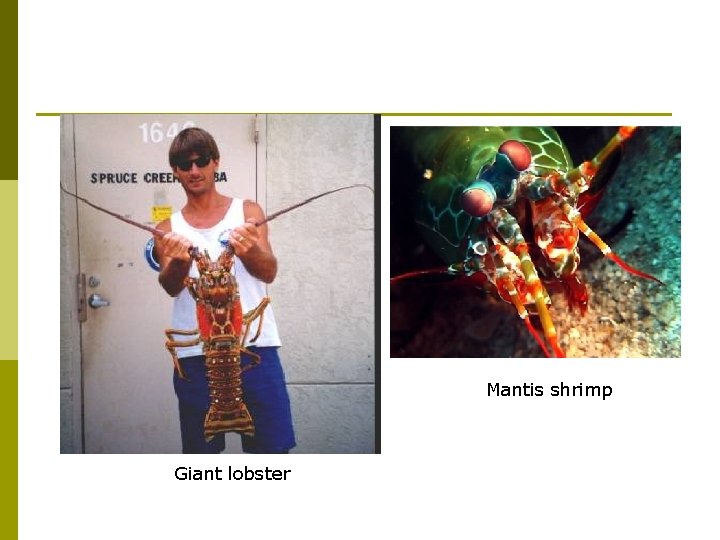
p Shrimps and lobsters n n n Laterally compressed bodies with elongated abdomens Shrimps are scavangers-some are cleaners Some burrow in muddy bottoms Lobsters are mostly nocturnal; scavangers and predators; Hermit crabs (they are not true crabs) are scavangers; hide in snail shells
Mantis shrimp Giant lobster
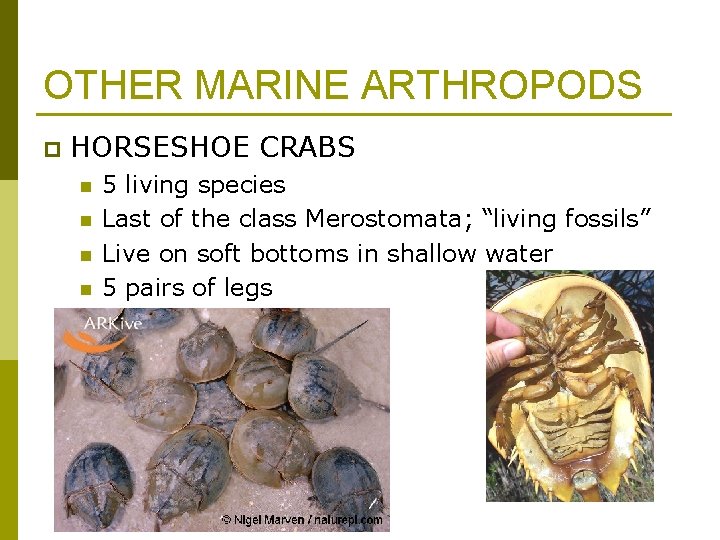
OTHER MARINE ARTHROPODS p HORSESHOE CRABS n n 5 living species Last of the class Merostomata; “living fossils” Live on soft bottoms in shallow water 5 pairs of legs
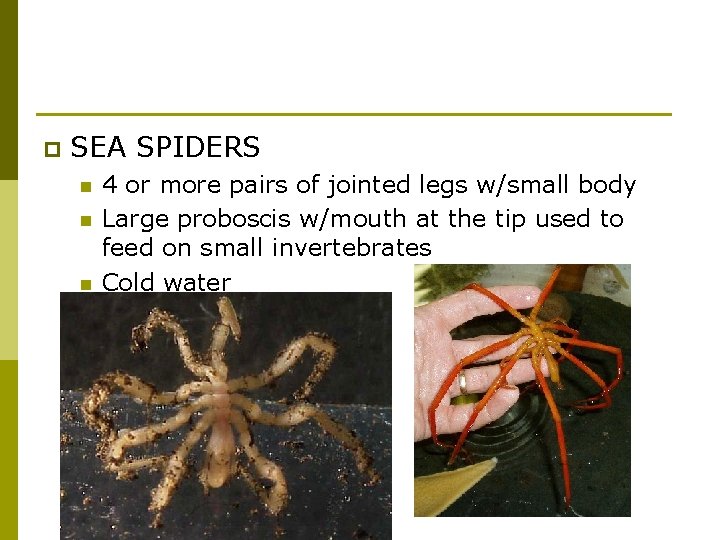
p SEA SPIDERS n n n 4 or more pairs of jointed legs w/small body Large proboscis w/mouth at the tip used to feed on small invertebrates Cold water
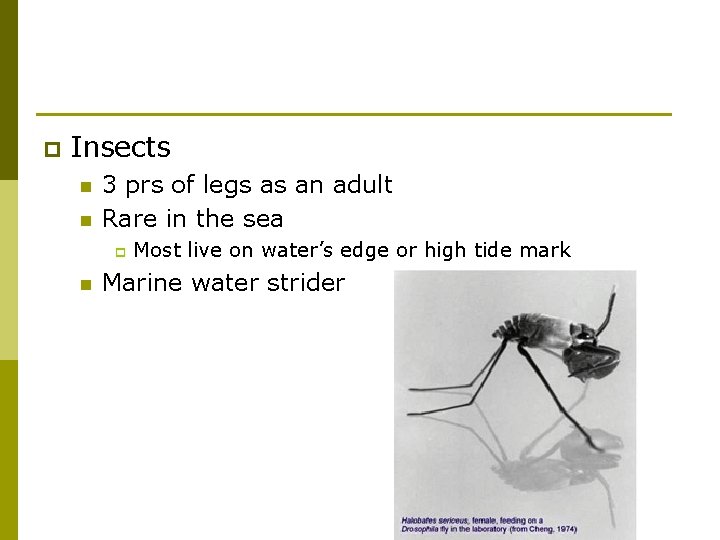
p Insects n n 3 prs of legs as an adult Rare in the sea p n Most live on water’s edge or high tide mark Marine water strider