
Arthropoda 5 major lines of arthropod evolution 1
- Slides: 14
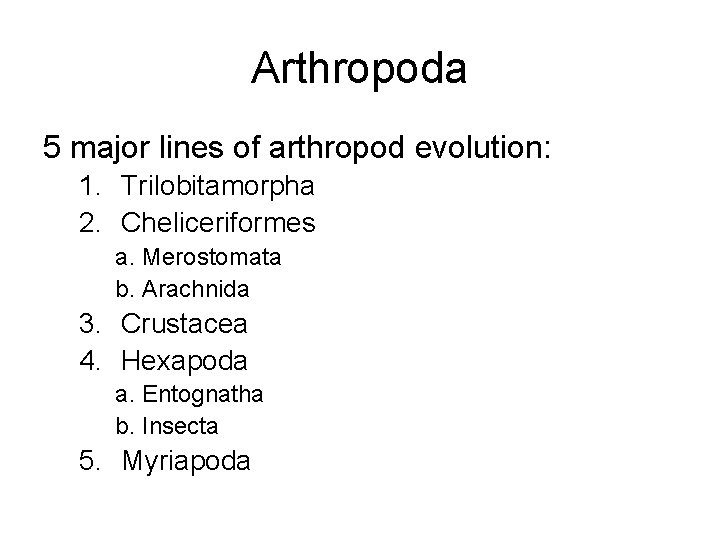
Arthropoda 5 major lines of arthropod evolution: 1. Trilobitamorpha 2. Cheliceriformes a. Merostomata b. Arachnida 3. Crustacea 4. Hexapoda a. Entognatha b. Insecta 5. Myriapoda
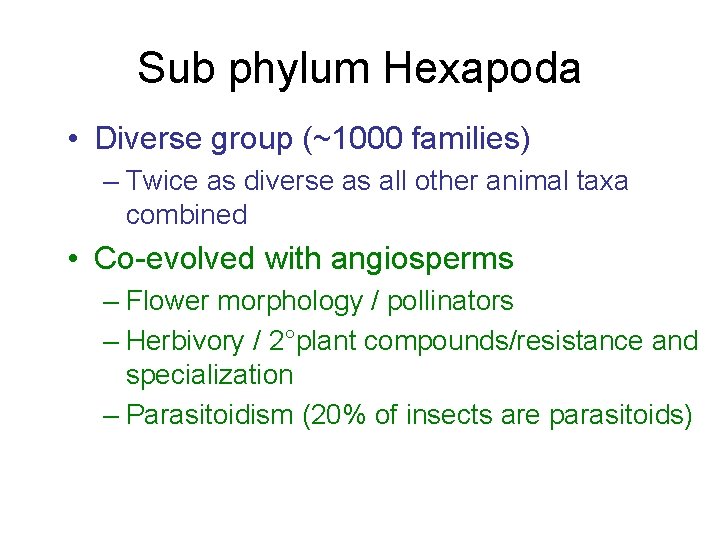
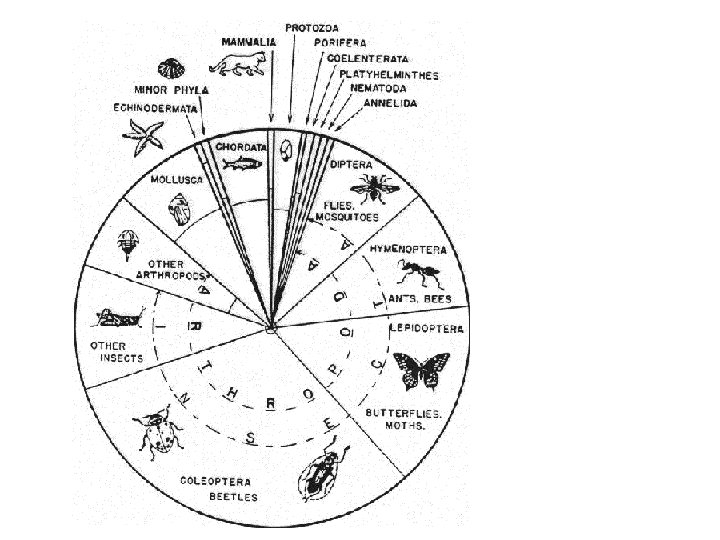
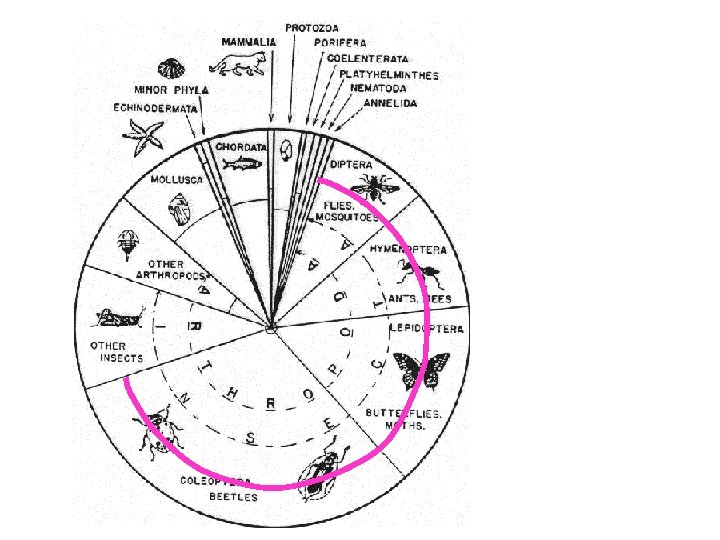
Sub phylum Hexapoda • Diverse group (~1000 families) – Twice as diverse as all other animal taxa combined • Co-evolved with angiosperms – Flower morphology / pollinators – Herbivory / 2°plant compounds/resistance and specialization – Parasitoidism (20% of insects are parasitoids)
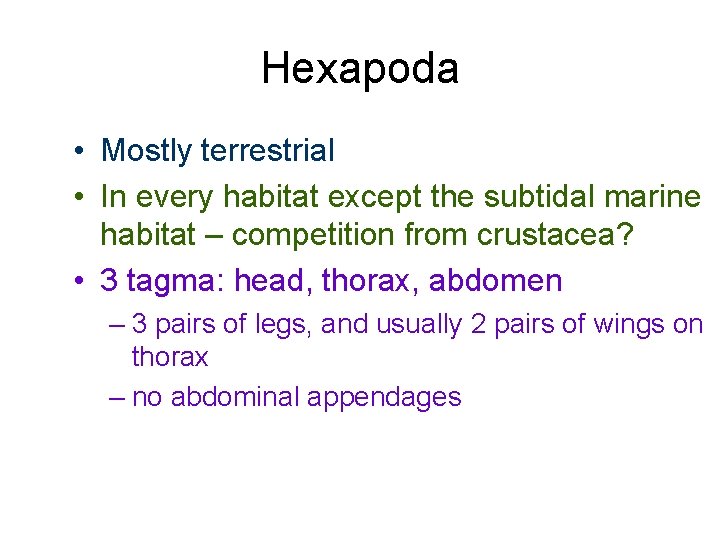
Hexapoda • Mostly terrestrial • In every habitat except the subtidal marine habitat – competition from crustacea? • 3 tagma: head, thorax, abdomen – 3 pairs of legs, and usually 2 pairs of wings on thorax – no abdominal appendages
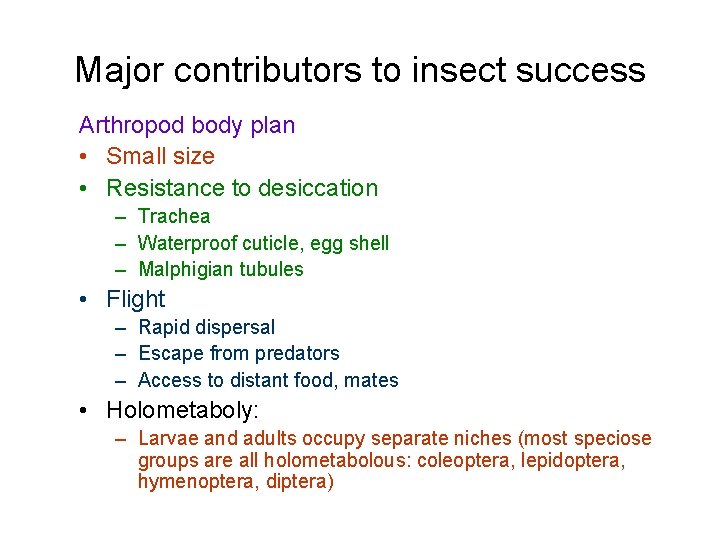
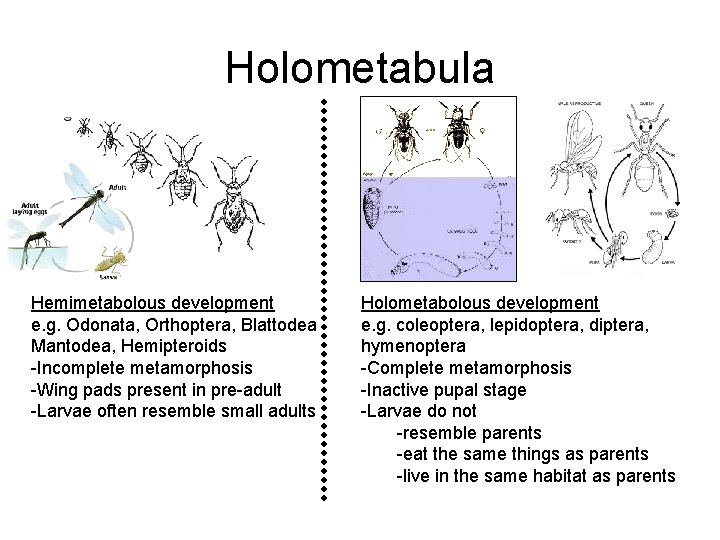
Major contributors to insect success Arthropod body plan • Small size • Resistance to desiccation – Trachea – Waterproof cuticle, egg shell – Malphigian tubules • Flight – Rapid dispersal – Escape from predators – Access to distant food, mates • Holometaboly: – Larvae and adults occupy separate niches (most speciose groups are all holometabolous: coleoptera, lepidoptera, hymenoptera, diptera)
Holometabula Hemimetabolous development e. g. Odonata, Orthoptera, Blattodea Mantodea, Hemipteroids -Incomplete metamorphosis -Wing pads present in pre-adult -Larvae often resemble small adults Holometabolous development e. g. coleoptera, lepidoptera, diptera, hymenoptera -Complete metamorphosis -Inactive pupal stage -Larvae do not -resemble parents -eat the same things as parents -live in the same habitat as parents
Big picture • Hugely important ecologically as pollinators (2/3 of all flowering plants), detritivores, herbivores • Important economically and socially (to humans) as disease vectors (fleas, lice, bedbugs, biting flies), crop pests (and also as pollinators and biological control agents)
Hexapoda 2 classes: 1. Entognatha (mouth parts recessed), 2. Insecta (mouthparts are ectognathous = exposed and projecting from head capsule)
Hexapod origins • From aquatic crustacean ancestor – Probably freshwater • Winglessness (apterygota) is primitive condition
“Pterygota” • Flight evolved 300 -400 mya • Wings = outpocketings of exoskeleton • Origins of wings? Multiple hypotheses: – Used for thermoregulatory purposes then later co-opted for flight? – Used to stabilize body during jumping? – Modified from external gills? (genetic similarities with crustacean gill structures)
Requirements for flight • Musculature – Striated – Attached to strong exoskeleton with flexible joints • Small body size • Impervious to water loss • Efficient internal physiology for gas exchange (trachea), nutrient storage and distribution • Well-developed and integrated sensory organs to regulate rapid movement
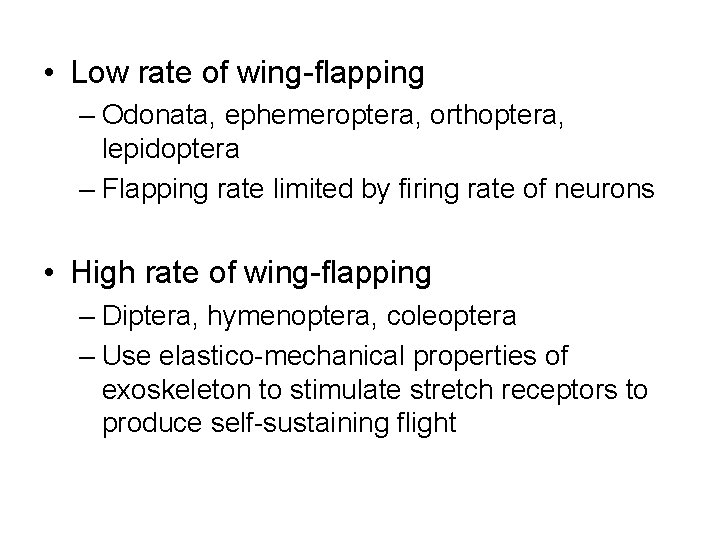
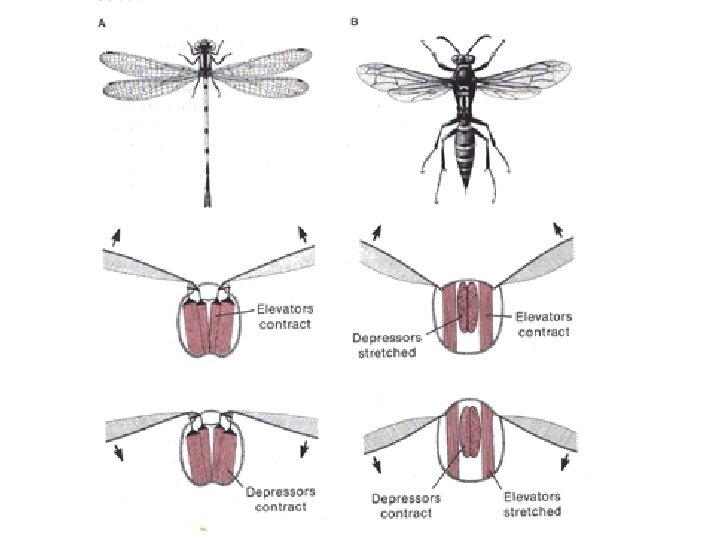
• Low rate of wing-flapping – Odonata, ephemeroptera, orthoptera, lepidoptera – Flapping rate limited by firing rate of neurons • High rate of wing-flapping – Diptera, hymenoptera, coleoptera – Use elastico-mechanical properties of exoskeleton to stimulate stretch receptors to produce self-sustaining flight