
Arterial Blood Gas Analysis Overview What is an
Arterial Blood Gas Analysis Overview
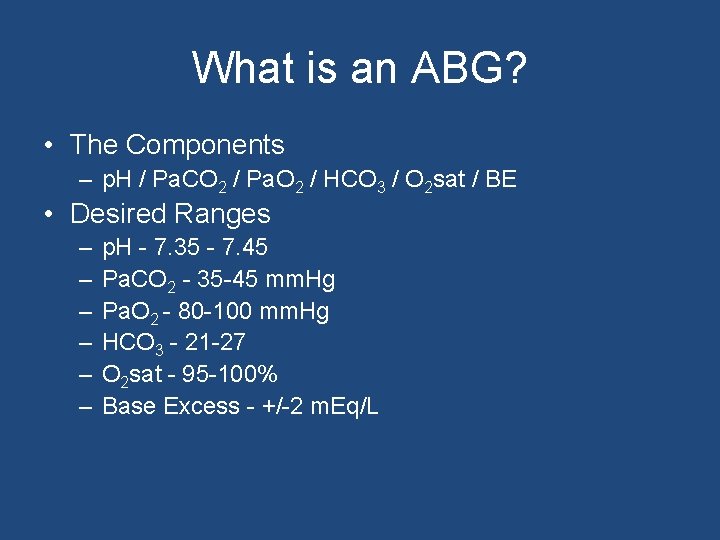
What is an ABG? • The Components – p. H / Pa. CO 2 / Pa. O 2 / HCO 3 / O 2 sat / BE • Desired Ranges – – – p. H - 7. 35 - 7. 45 Pa. CO 2 - 35 -45 mm. Hg Pa. O 2 - 80 -100 mm. Hg HCO 3 - 21 -27 O 2 sat - 95 -100% Base Excess - +/-2 m. Eq/L
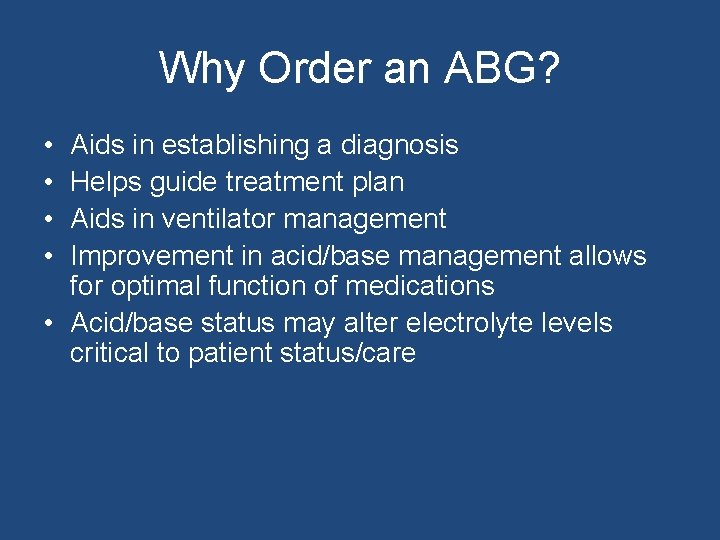
Why Order an ABG? • • Aids in establishing a diagnosis Helps guide treatment plan Aids in ventilator management Improvement in acid/base management allows for optimal function of medications • Acid/base status may alter electrolyte levels critical to patient status/care
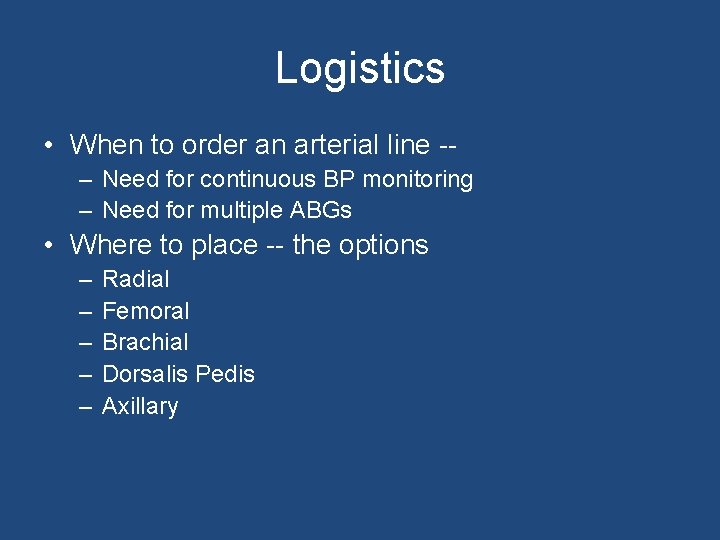
Logistics • When to order an arterial line -– Need for continuous BP monitoring – Need for multiple ABGs • Where to place -- the options – – – Radial Femoral Brachial Dorsalis Pedis Axillary
Acid Base Balance • The body produces acids daily – 15, 000 mmol CO 2 – 50 -100 m. Eq Nonvolatile acids • The lungs and kidneys attempt to maintain balance
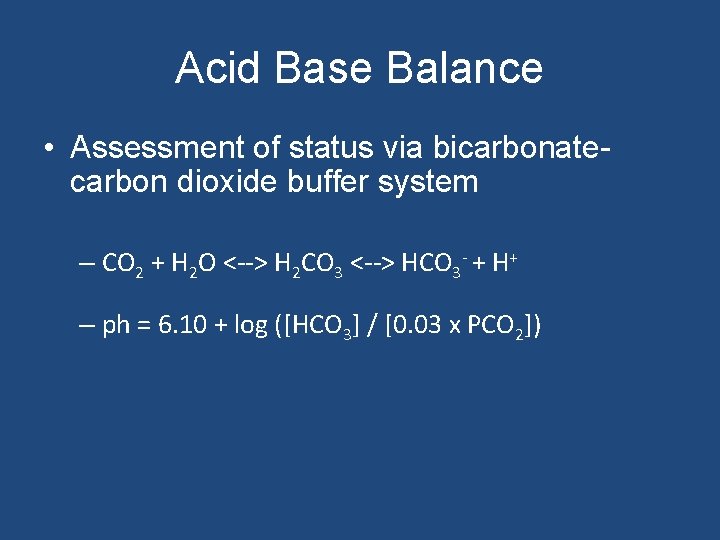
Acid Base Balance • Assessment of status via bicarbonatecarbon dioxide buffer system – CO 2 + H 2 O <--> H 2 CO 3 <--> HCO 3 - + H+ – ph = 6. 10 + log ([HCO 3] / [0. 03 x PCO 2])
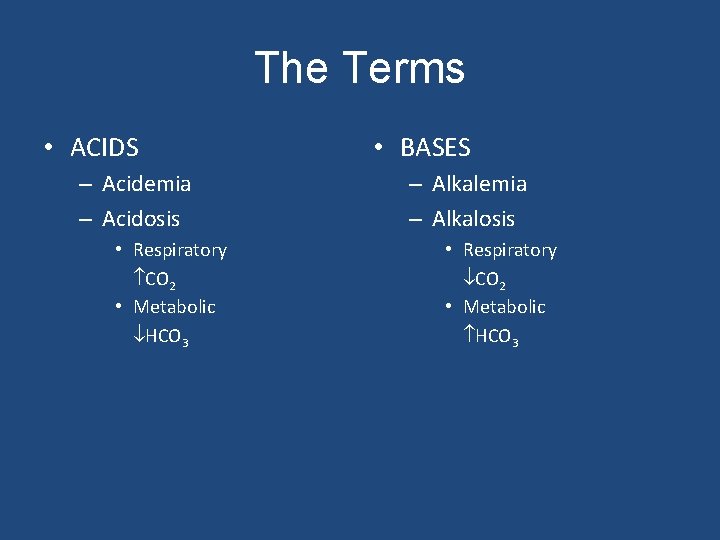
The Terms • ACIDS – Acidemia – Acidosis • Respiratory CO 2 • Metabolic HCO 3 • BASES – Alkalemia – Alkalosis • Respiratory CO 2 • Metabolic HCO 3
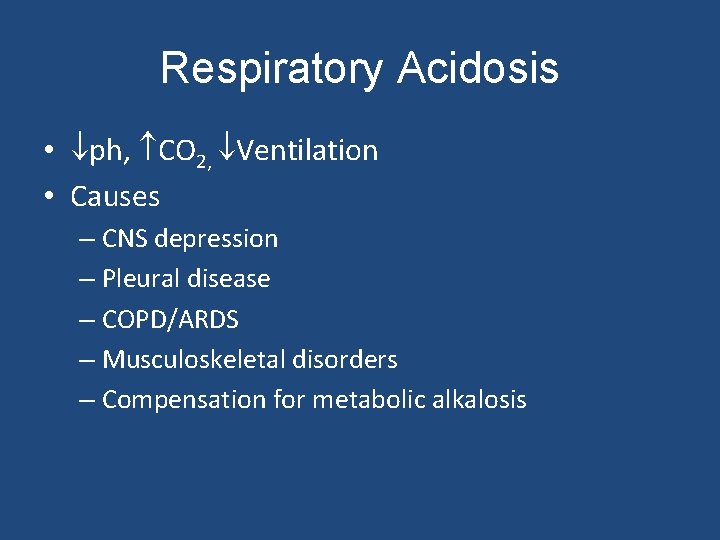
Respiratory Acidosis • ph, CO 2, Ventilation • Causes – CNS depression – Pleural disease – COPD/ARDS – Musculoskeletal disorders – Compensation for metabolic alkalosis
Respiratory Acidosis • Acute vs Chronic – Acute - little kidney involvement. Buffering via titration via Hb for example • p. H by 0. 08 for 10 mm. Hg in CO 2 – Chronic - Renal compensation via synthesis and retention of HCO 3 ( Cl to balance charges hypochloremia) • p. H by 0. 03 for 10 mm. Hg in CO 2
Respiratory Alkalosis • p. H, CO 2, Ventilation • CO 2 HCO 3 ( Cl to balance charges hyperchloremia) • Causes – – – Intracerebral hemorrhage Salicylate and Progesterone drug usage Anxiety lung compliance Cirrhosis of the liver Sepsis
Respiratory Alkalosis • Acute vs. Chronic – Acute - HCO 3 by 2 m. Eq/L for every 10 mm. Hg in PCO 2 – Chronic - Ratio increases to 4 m. Eq/L of HCO 3 for every 10 mm. Hg in PCO 2 – Decreased bicarb reabsorption and decreased ammonium excretion to normalize p. H
Metabolic Acidosis • p. H, HCO 3 • 12 -24 hours for complete activation of respiratory compensation • PCO 2 by 1. 2 mm. Hg for every 1 m. Eq/L HCO 3 • The degree of compensation is assessed via the Winter’s Formula PCO 2 = 1. 5(HCO 3) +8 2
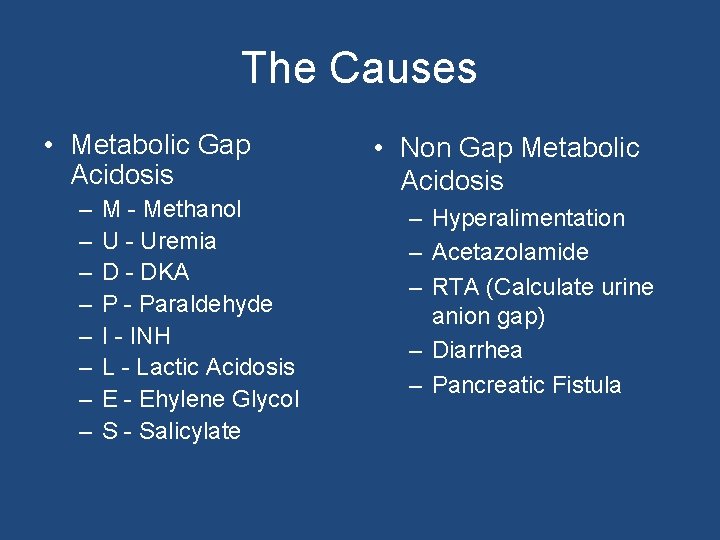
The Causes • Metabolic Gap Acidosis – – – – M - Methanol U - Uremia D - DKA P - Paraldehyde I - INH L - Lactic Acidosis E - Ehylene Glycol S - Salicylate • Non Gap Metabolic Acidosis – Hyperalimentation – Acetazolamide – RTA (Calculate urine anion gap) – Diarrhea – Pancreatic Fistula
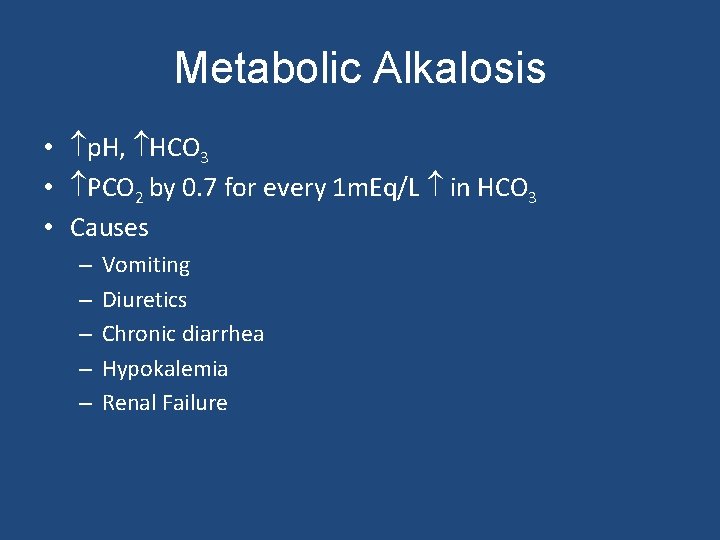
Metabolic Alkalosis • p. H, HCO 3 • PCO 2 by 0. 7 for every 1 m. Eq/L in HCO 3 • Causes – – – Vomiting Diuretics Chronic diarrhea Hypokalemia Renal Failure
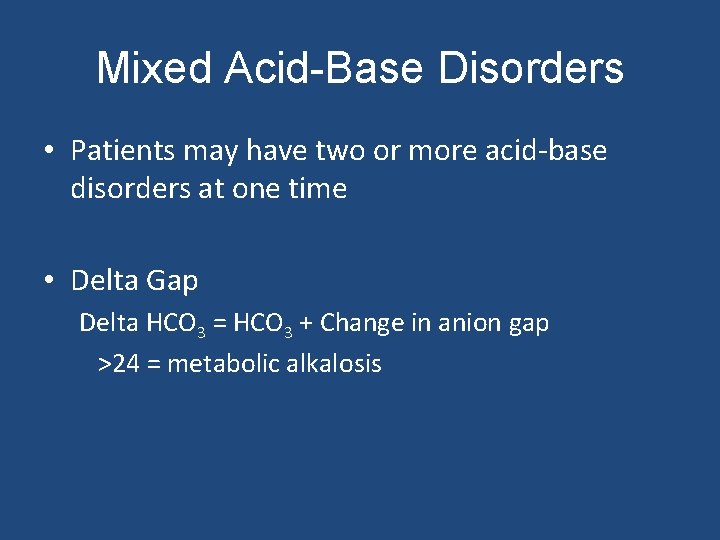
Mixed Acid-Base Disorders • Patients may have two or more acid-base disorders at one time • Delta Gap Delta HCO 3 = HCO 3 + Change in anion gap >24 = metabolic alkalosis
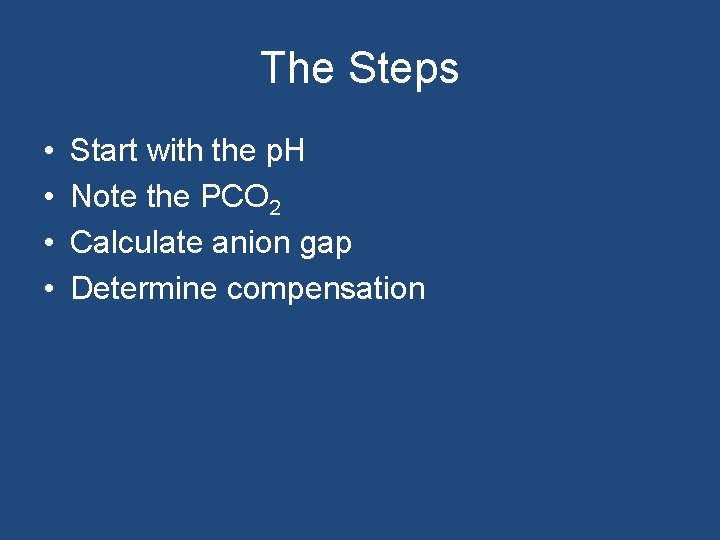
The Steps • • Start with the p. H Note the PCO 2 Calculate anion gap Determine compensation
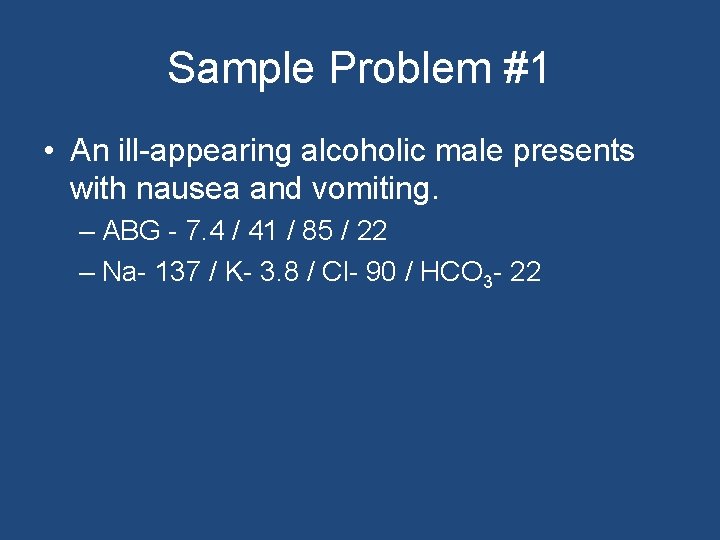
Sample Problem #1 • An ill-appearing alcoholic male presents with nausea and vomiting. – ABG - 7. 4 / 41 / 85 / 22 – Na- 137 / K- 3. 8 / Cl- 90 / HCO 3 - 22
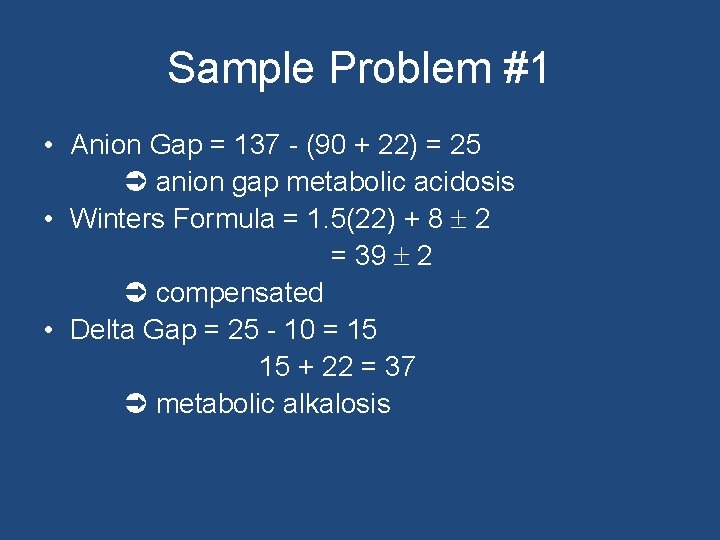
Sample Problem #1 • Anion Gap = 137 - (90 + 22) = 25 anion gap metabolic acidosis • Winters Formula = 1. 5(22) + 8 2 = 39 2 compensated • Delta Gap = 25 - 10 = 15 15 + 22 = 37 metabolic alkalosis
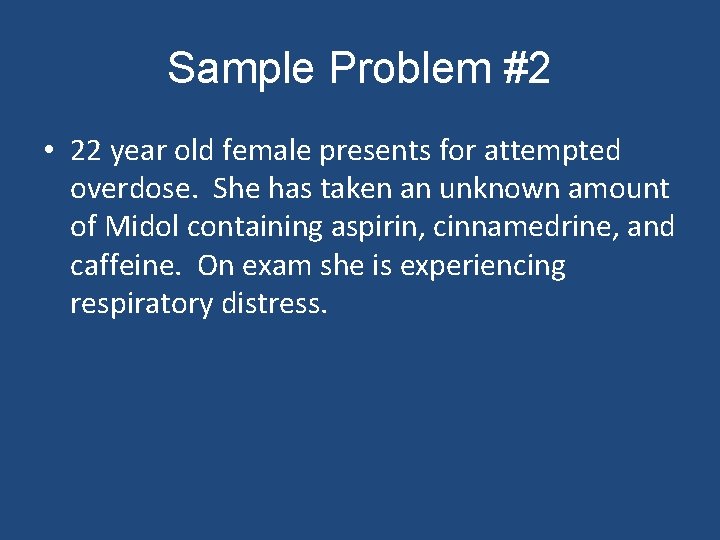
Sample Problem #2 • 22 year old female presents for attempted overdose. She has taken an unknown amount of Midol containing aspirin, cinnamedrine, and caffeine. On exam she is experiencing respiratory distress.
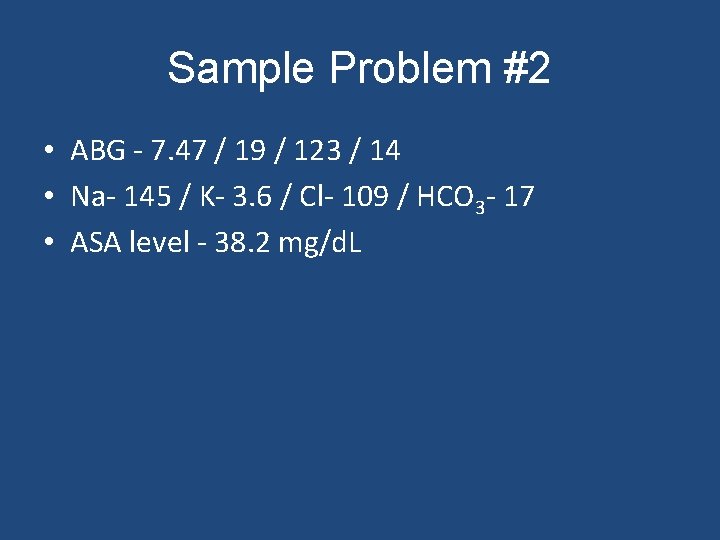
Sample Problem #2 • ABG - 7. 47 / 19 / 123 / 14 • Na- 145 / K- 3. 6 / Cl- 109 / HCO 3 - 17 • ASA level - 38. 2 mg/d. L
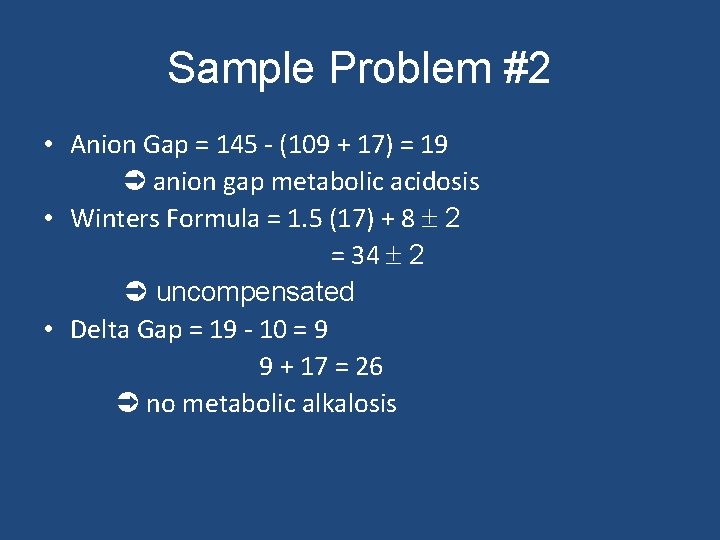
Sample Problem #2 • Anion Gap = 145 - (109 + 17) = 19 anion gap metabolic acidosis • Winters Formula = 1. 5 (17) + 8 2 = 34 2 uncompensated • Delta Gap = 19 - 10 = 9 9 + 17 = 26 no metabolic alkalosis
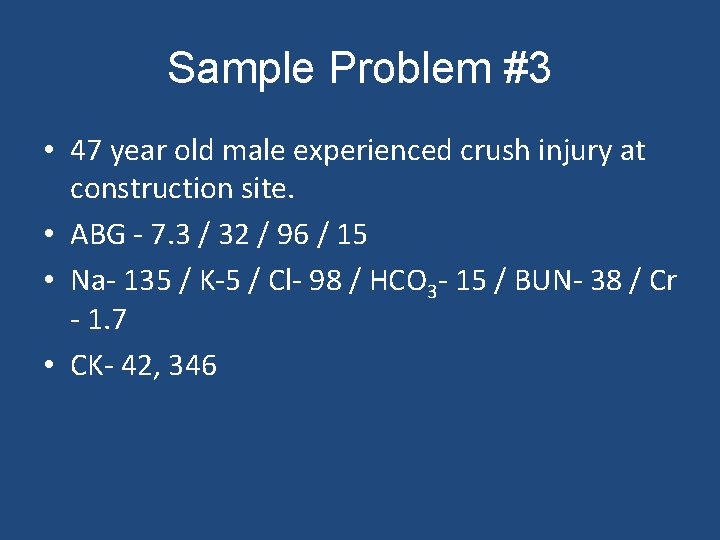
Sample Problem #3 • 47 year old male experienced crush injury at construction site. • ABG - 7. 3 / 32 / 96 / 15 • Na- 135 / K-5 / Cl- 98 / HCO 3 - 15 / BUN- 38 / Cr - 1. 7 • CK- 42, 346
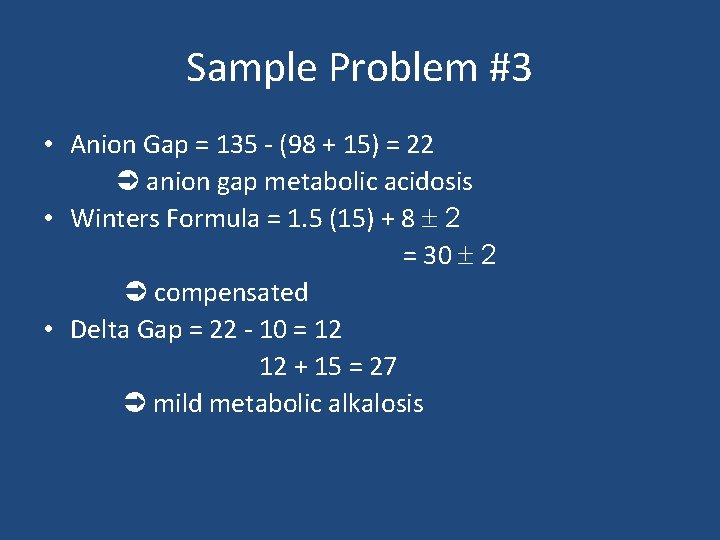
Sample Problem #3 • Anion Gap = 135 - (98 + 15) = 22 anion gap metabolic acidosis • Winters Formula = 1. 5 (15) + 8 2 = 30 2 compensated • Delta Gap = 22 - 10 = 12 12 + 15 = 27 mild metabolic alkalosis
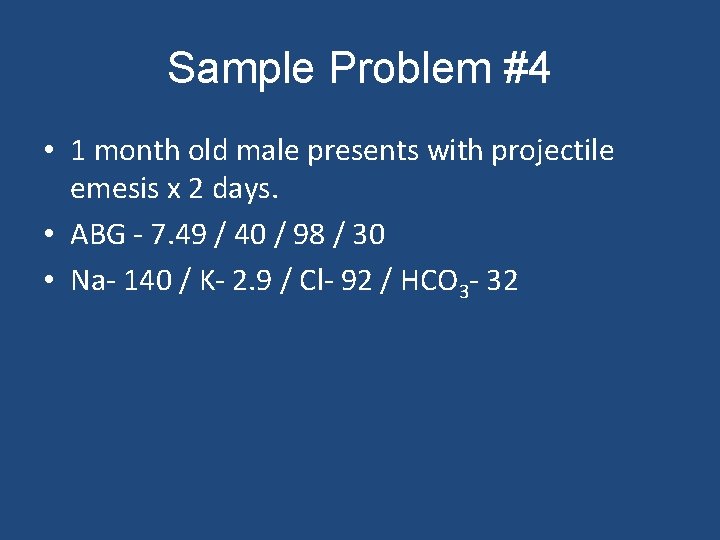
Sample Problem #4 • 1 month old male presents with projectile emesis x 2 days. • ABG - 7. 49 / 40 / 98 / 30 • Na- 140 / K- 2. 9 / Cl- 92 / HCO 3 - 32
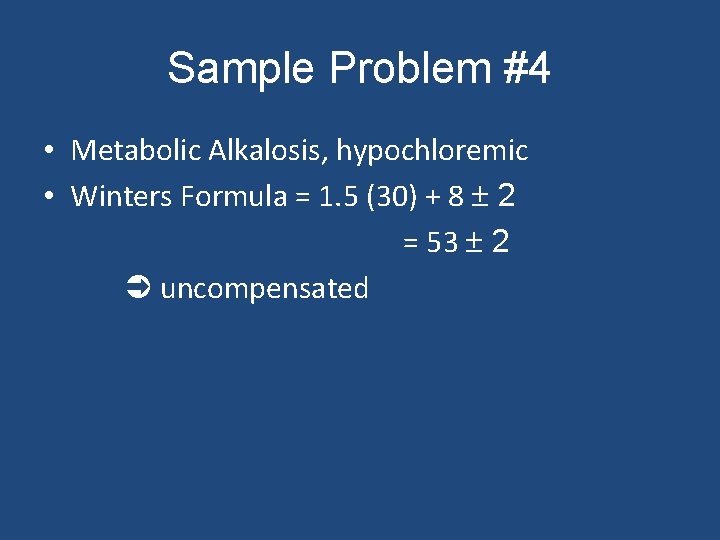
Sample Problem #4 • Metabolic Alkalosis, hypochloremic • Winters Formula = 1. 5 (30) + 8 2 = 53 2 uncompensated
- Slides: 25