
Artemia culture in Southeast Asia Special emphasis to

- Slides: 21
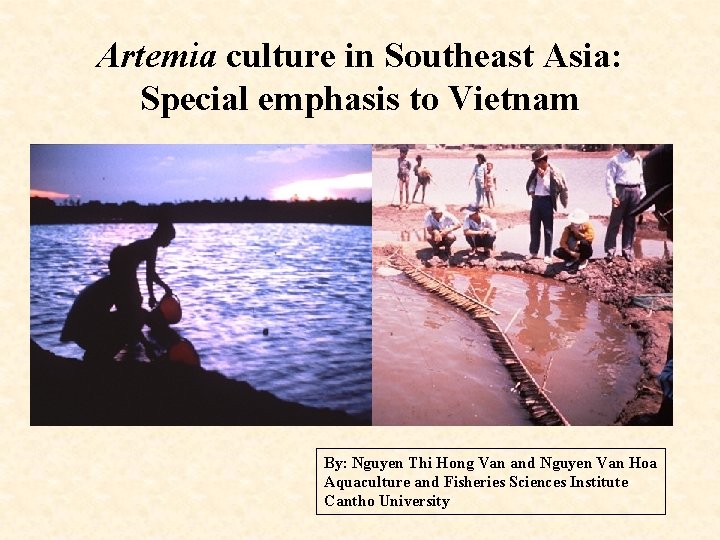
Artemia culture in Southeast Asia: Special emphasis to Vietnam By: Nguyen Thi Hong Van and Nguyen Van Hoa Aquaculture and Fisheries Sciences Institute Cantho University
- In most of the countries that belong to Southeast Asia like Philippine, Malaysia, Indonesia…ect Artemia culture in the salt-pan presently are not yet done except indoor culture in the hatcheries - In Thailand, there a few places that culturing Artemia biomass for ornamental fish industry and exporting to the Singapore. - Artemia culture indoor in most of the hatcheries in Southeast Asia not only used as live food for shrimp and fishes but also used as a bio-filter to clean the seawater
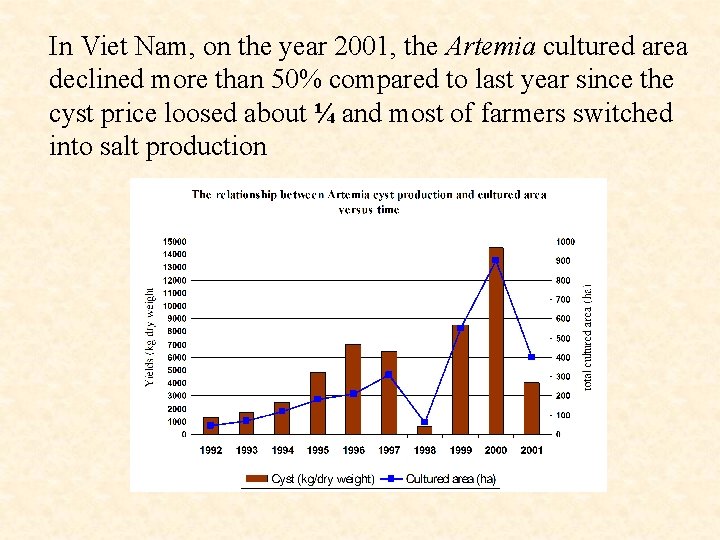
In Viet Nam, on the year 2001, the Artemia cultured area declined more than 50% compared to last year since the cyst price loosed about ¼ and most of farmers switched into salt production
Large Production This activity was done mainly under the aid of AFSI extension team (est. 60 ha). Most of remaining cultured area were self-management by experienced farmers (est. 360 to 370 ha). - The yields varied from 20 kg to more than 100 kg/ha/crop - Average yields: 45 kg/ha/crop
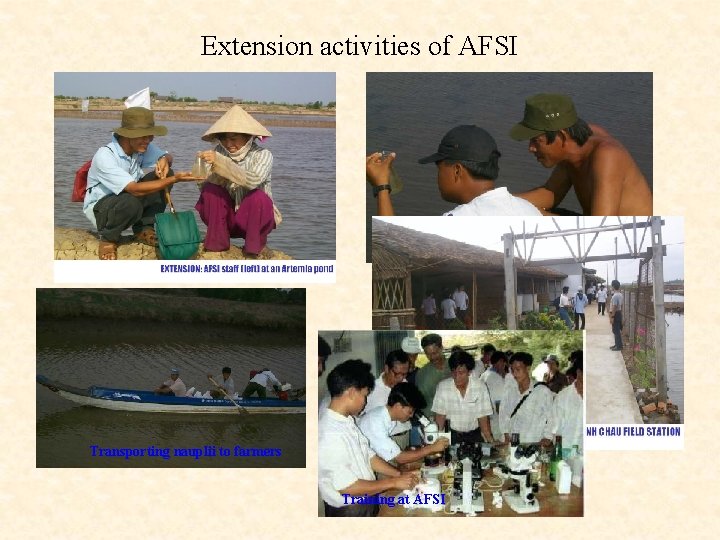
Extension activities of AFSI Transporting nauplii to farmers Training at AFSI
Advantages: üCulture technique were gradually transferred to the farmers and the culture area are expanding by time. üTo decrease the working pressure on extension team when the culture area are expanded. Disadvantages: üLess experienced or new farmers normally have poor production. üFarmers usually manage the production by their feeling and experiences rather than their understanding on biological processes that appear in the ponds.
Some characteristics on management of large production: - Salinity: 70 ppt upwards - Water level: normally shallow (2 -3 cm at the beginning and 5 -10 at the end of the culture) - Stocking densities: high: 200 -300 nauliar/litter. Farmers prefer to stock with very high densities and after few days the densities were lowered by transferring Artemia to another pond. * Problem: - Water levels are very shallow, shortage of food - Salinity are slowdown dramatically - Copepode population grow quickly - Macro-algae and Lab-lab development Survival is very low
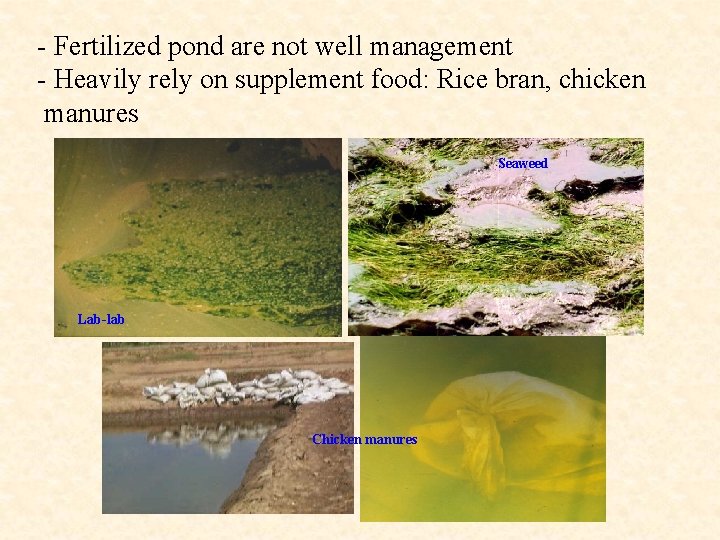
- Fertilized pond are not well management - Heavily rely on supplement food: Rice bran, chicken manures Seaweed Lab-lab Chicken manures
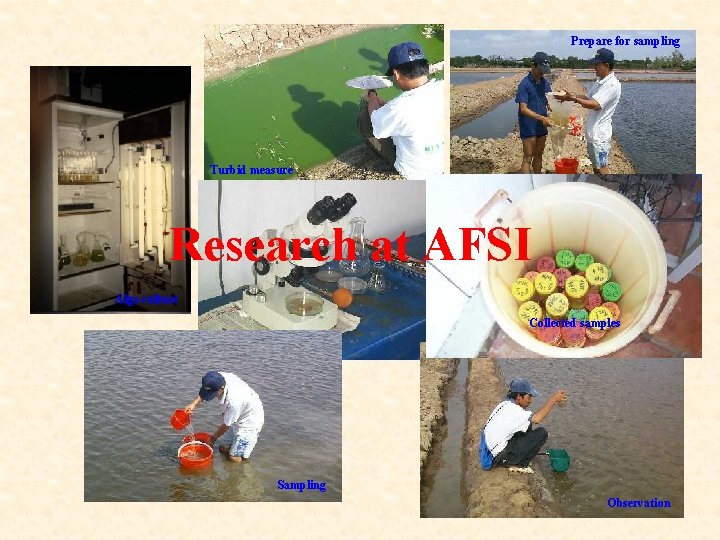
Prepare for sampling Turbid measure Research at AFSI Alga culture Collected samples Sampling Observation
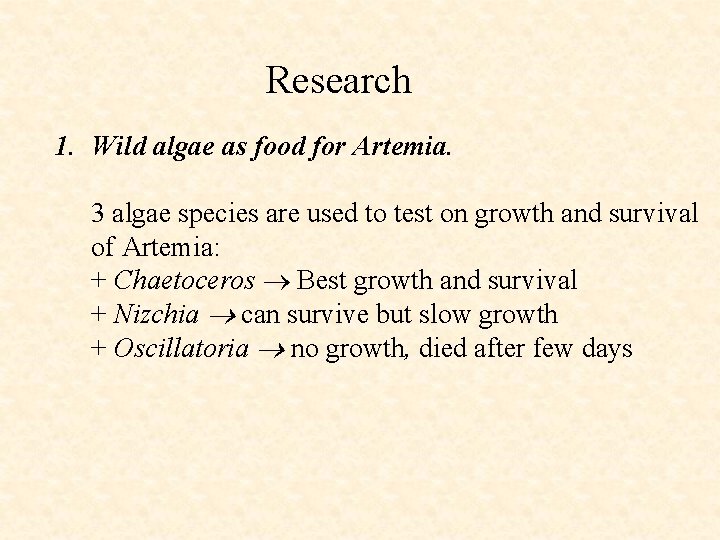
Research 1. Wild algae as food for Artemia. 3 algae species are used to test on growth and survival of Artemia: + Chaetoceros Best growth and survival + Nizchia can survive but slow growth + Oscillatoria no growth, died after few days
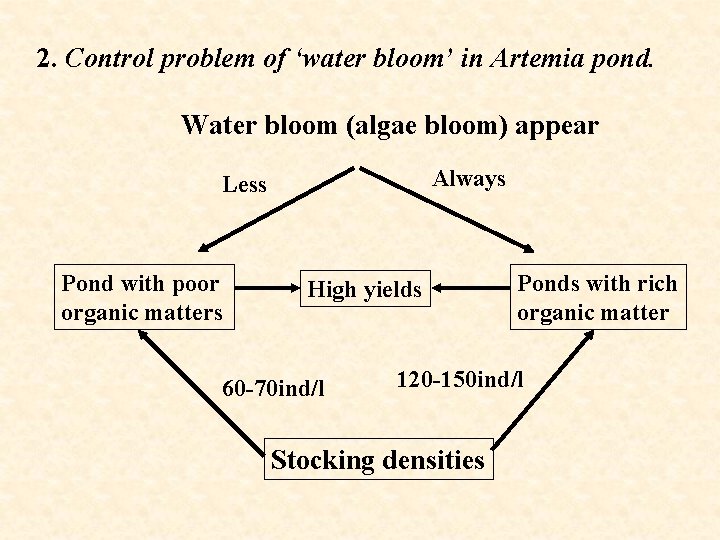
2. Control problem of ‘water bloom’ in Artemia pond. Water bloom (algae bloom) appear Always Less Pond with poor organic matters High yields 60 -70 ind/l Ponds with rich organic matter 120 -150 ind/l Stocking densities
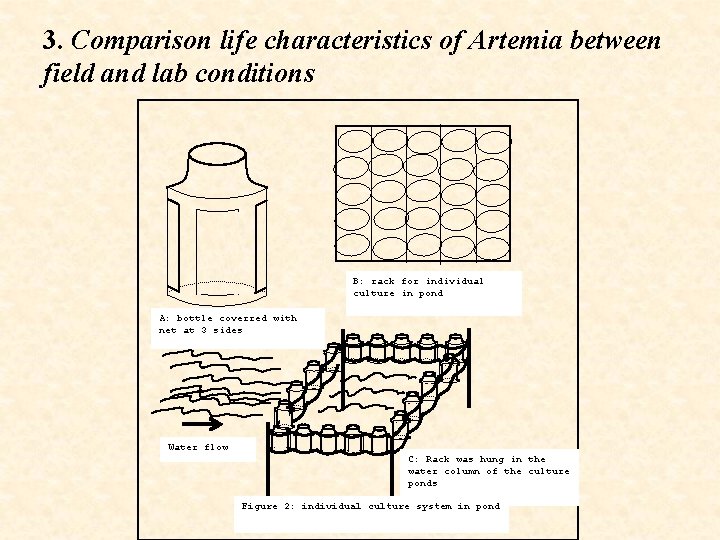
3. Comparison life characteristics of Artemia between field and lab conditions B: rack for individual culture in pond A: bottle coverred with net at 3 sides Water flow C: Rack was hung in the water column of the culture ponds Figure 2: individual culture system in pond
+ Pair culture in the laboratory: The animals were fed with water from the culture pond, the culture medium was maintained similar as in the pond Results: The reproductive characteristics (reproductive mode, fecundity) - Pond culture (sampling) No sinificant differences - Pair culture in pond - Pair culture in the laboratory
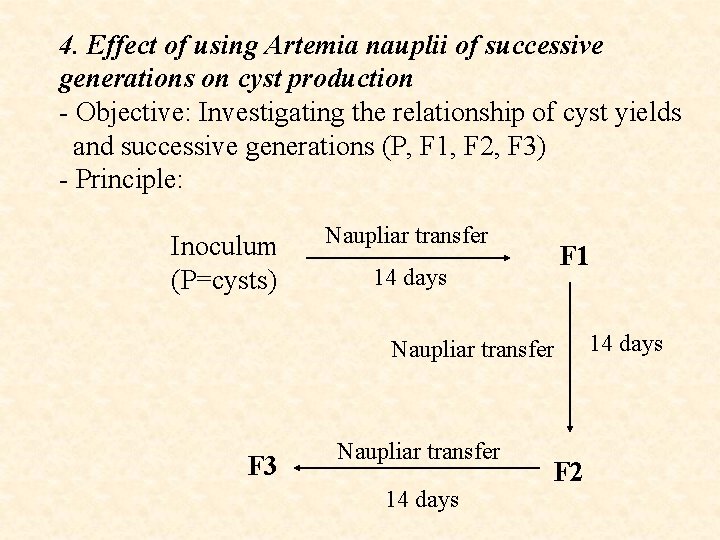
4. Effect of using Artemia nauplii of successive generations on cyst production - Objective: Investigating the relationship of cyst yields and successive generations (P, F 1, F 2, F 3) - Principle: Inoculum (P=cysts) Naupliar transfer F 1 14 days Naupliar transfer F 3 Naupliar transfer 14 days F 2 14 days
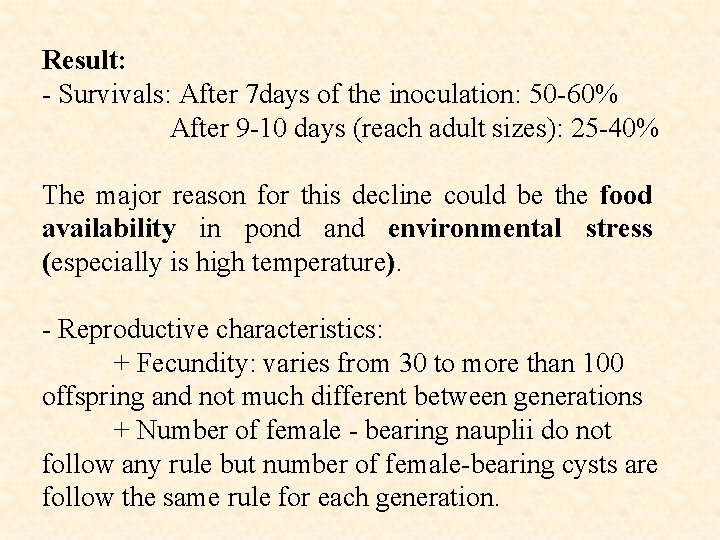
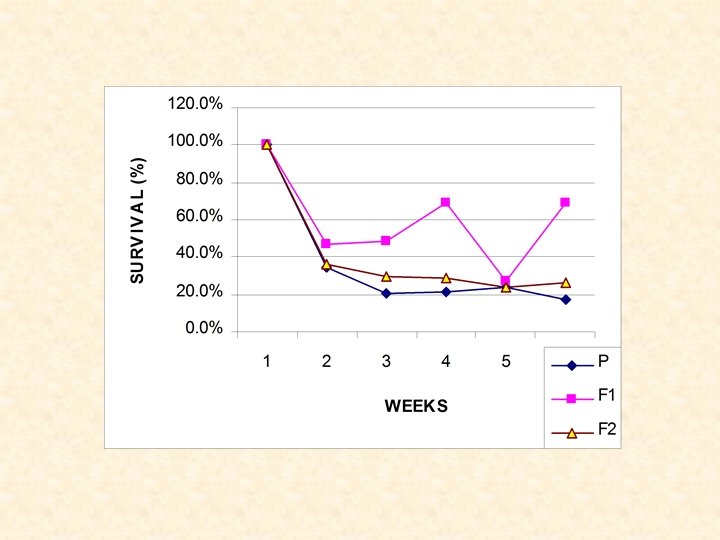
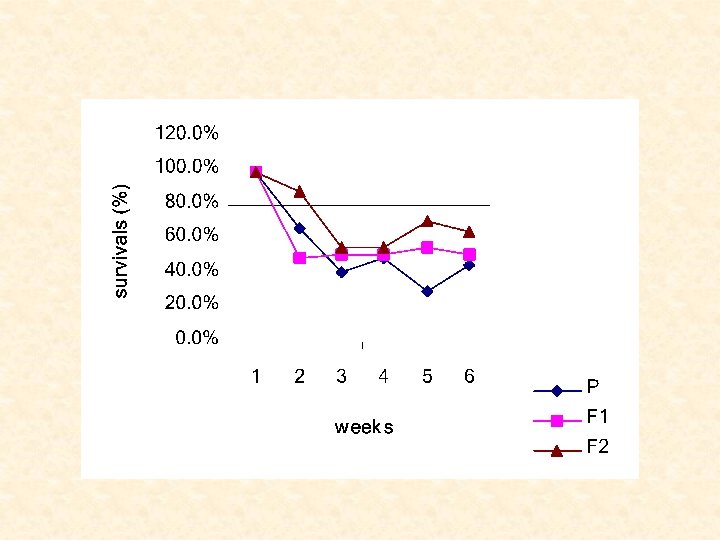
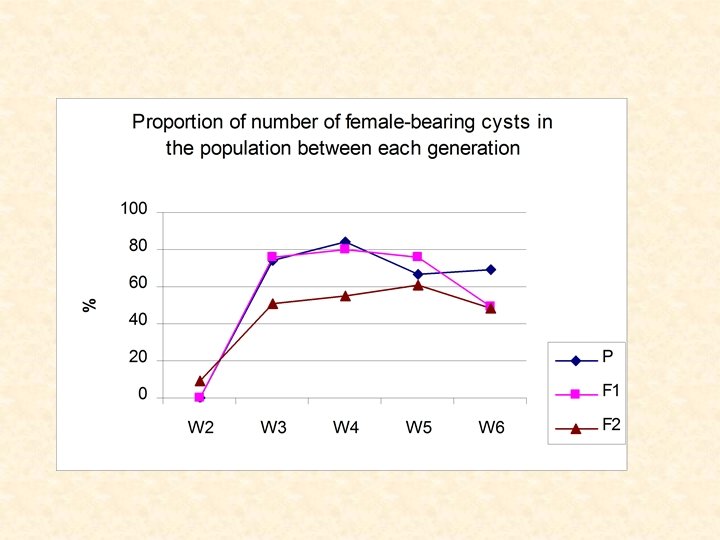
Result: - Survivals: After 7 days of the inoculation: 50 -60% After 9 -10 days (reach adult sizes): 25 -40% The major reason for this decline could be the food availability in pond and environmental stress (especially is high temperature). - Reproductive characteristics: + Fecundity: varies from 30 to more than 100 offspring and not much different between generations + Number of female - bearing nauplii do not follow any rule but number of female-bearing cysts are follow the same rule for each generation.
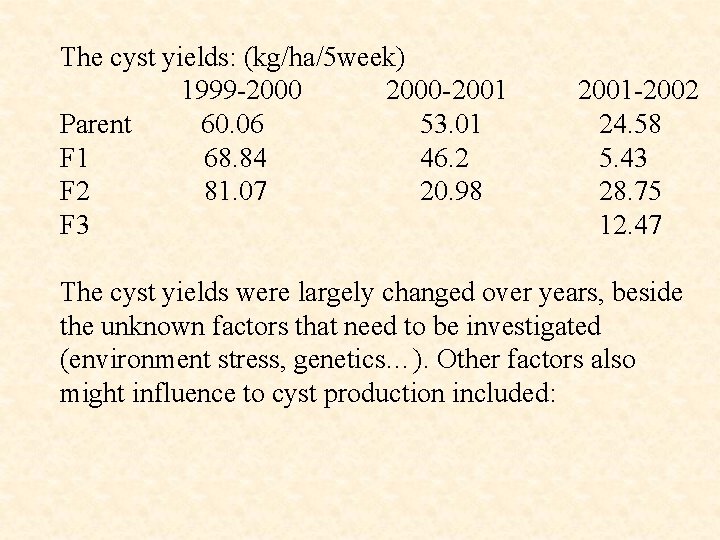
The cyst yields: (kg/ha/5 week) 1999 -2000 2000 -2001 2001 -2002 Parent 60. 06 53. 01 24. 58 F 1 68. 84 46. 2 5. 43 F 2 81. 07 20. 98 28. 75 F 3 12. 47 The cyst yields were largely changed over years, beside the unknown factors that need to be investigated (environment stress, genetics…). Other factors also might influence to cyst production included:
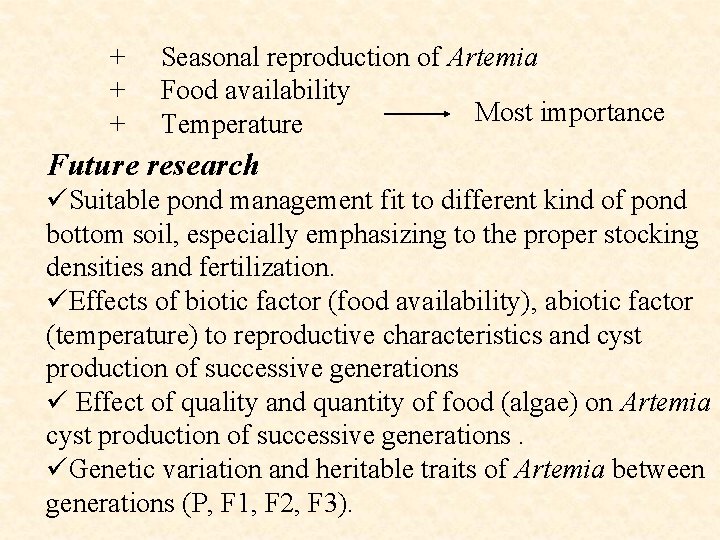
+ Seasonal reproduction of Artemia + Food availability Most importance + Temperature Future research üSuitable pond management fit to different kind of pond bottom soil, especially emphasizing to the proper stocking densities and fertilization. üEffects of biotic factor (food availability), abiotic factor (temperature) to reproductive characteristics and cyst production of successive generations ü Effect of quality and quantity of food (algae) on Artemia cyst production of successive generations. üGenetic variation and heritable traits of Artemia between generations (P, F 1, F 2, F 3).
Thanks for your attention