
ART GALLERY VISUAL AND DESIGN ELEMENTS Mona Lisa
- Slides: 20
ART GALLERY: VISUAL AND DESIGN ELEMENTS
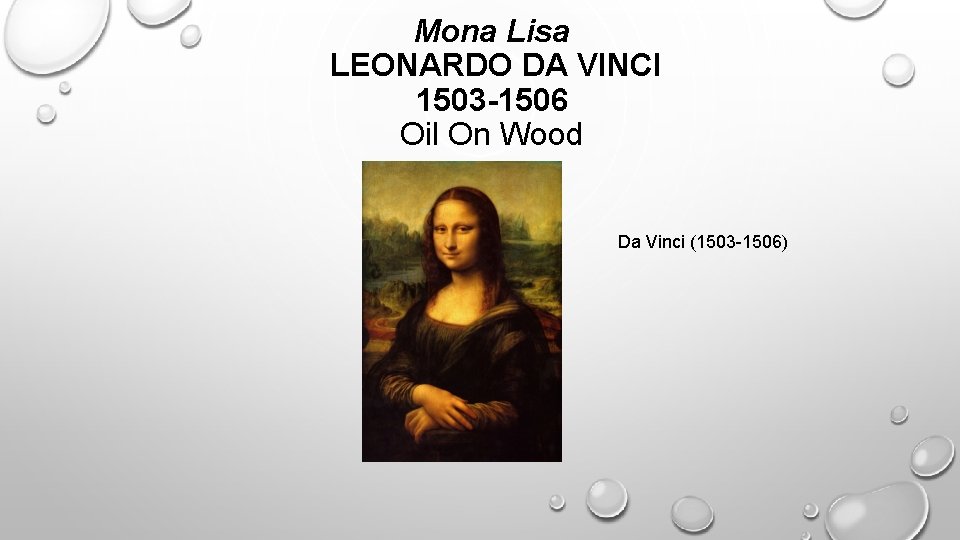
Mona Lisa LEONARDO DA VINCI 1503 -1506 Oil On Wood Da Vinci (1503 -1506)
MONA LISA • Line- Curly lines create motion. The lines provide a detailed information on the background of the art by highlighting on the inscriptions. • Shape- Circular shapes are elongated to show the beauty of the landscape. • Lighting- Lighting is dispersed throughout the artwork but the figure is shaded. • Colors- Notably, different shades have been used. Light colors have been used for the body and the background. • Texture- The texture of this art is impasto as the paint has been laid in different areas with thick layers. • Mass- The light shading creates an illusion of figures that take mass in the artwork. • Time; The background light of the artwork give the impression that it is day time. • Motion; Stretched arms indicate motion by the figure.
MONA LISA DESIGN • Unity- The lines, shape, lighting and color work together to depict the harmonious nature of the art. • Variety- The colors, lighting and mass create diversity in the art. • Balance- The art is symmetrical as both sides are equal. • Emphasis- The focal part is the facial expression of Mona Lisa. • Directional forces- The paths for the eye to follow are supplemented by the lighting on the background. • Contrast- Contrasting elements in the art can be viewed on the background. • Repetition & rhythm- The same shades of color have been repeated. • Scale &proportion- The objects are not in proportion to each other.
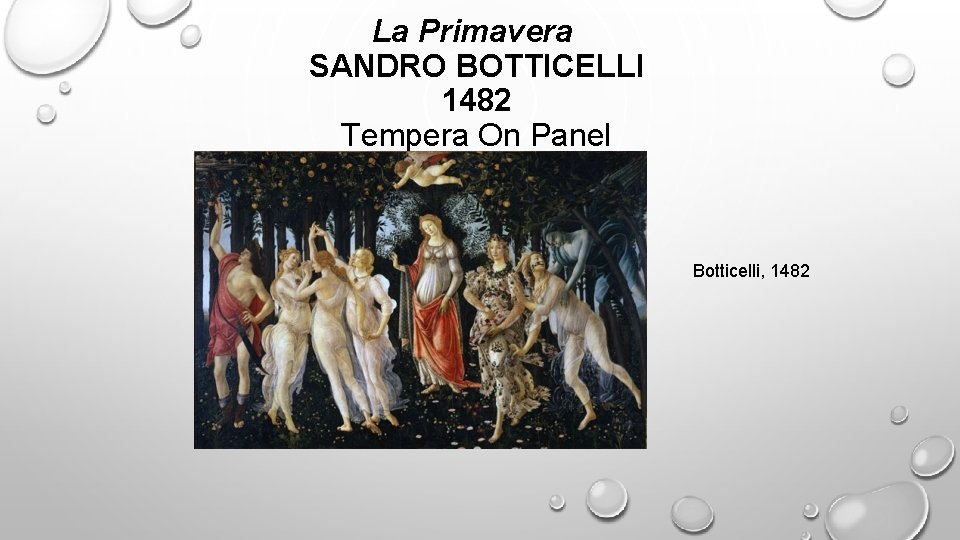
La Primavera SANDRO BOTTICELLI 1482 Tempera On Panel Botticelli, 1482
LA PRIMAVERA • Line- Vertical curved lines create motion in the art. • Shape- Female shapes have been elongated to highlight on beauty. • Light- The light is dispersed in the artwork but figures look shaded. • Colors- The light colors used stand out against the background. • Texture- The fabrics appear see through, dispersed flowers on the ground create pattern and texture on the artwork. • Mass- The lighting creates an illusion of figures taking space and mass in the art. • Time-The dark forest and the blue sky create the impression that it is early or late day. • Motion- The out retched arms and legs indicate motion by the figures in the artwork.
LA PRIMAVERA DESIGN ELEMENTS • Unity- The lighting, texture and color create a harmonious whole. • Variety- The different color shades and motion create diversity in the art. • Balance- The art is asymmetrical as both sides are not equal. • Emphasis- The focal pint is the human figure on the centre. • Directional forces- The eyes follow the motion and the lighting in the background. • Contrast- Contrasting elements are evident on the human figures and background. • Repetition & rhythm- There is repetition of color, motion and mass. • Scale &proportion- The objects are in proportion to each other.
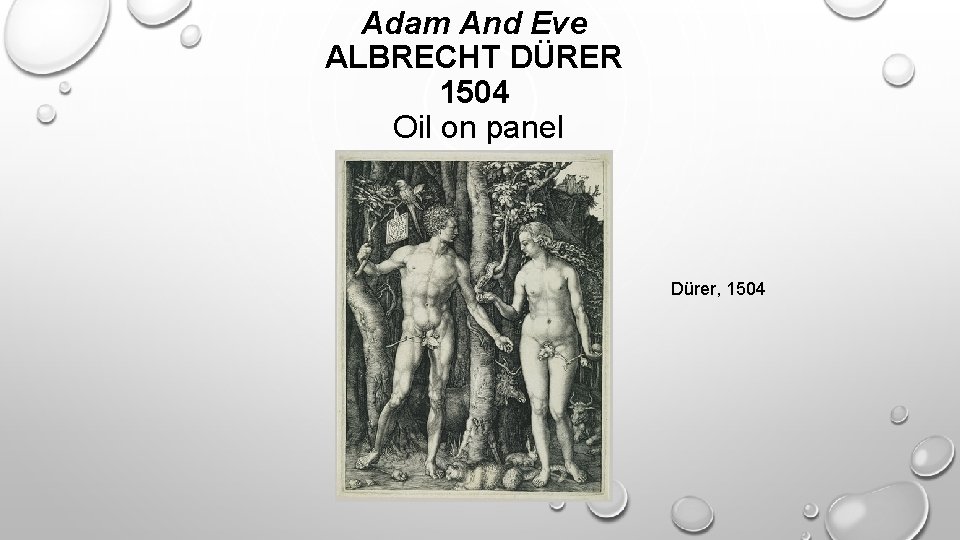
Adam And Eve ALBRECHT DÜRER 1504 Oil on panel Dürer, 1504
ADAM AND EVE • Lines- Vertical lines are used to create the illusion of motion. • Shape- Rectangular shape is used to show their standing position. • Light- The natural light is coming from the moon while the background is shaded. • Colors- Both grey and black colors with different shades have been used. The colors stand out against the shaded background. • Texture- The different colors create a pattern on some area of the artwork as the background is darker and heavier. • Mass- The grey colors highlight a heavier mass on the background. • Time- The lighting give the sense that it is at night. • Motion- Outstretched arms depict motion in the artwork.
ADAM AND EVE DESIGN • Unity- The lighting and color work together to make a harmonious whole. • Variety- The different color shades create diversity. • Balance- The art is asymmetrical as both sides are not equal. • Emphasis- The focal point is n the standing figures. • Directional forces- The eyes follow the texture and the lighting. • Contrast- Contrasting elements can be viewed on the background. • Repetition & rhythm- The texture and lighting has been repeated. • Scale &proportion- The figures are in proportion to each other.
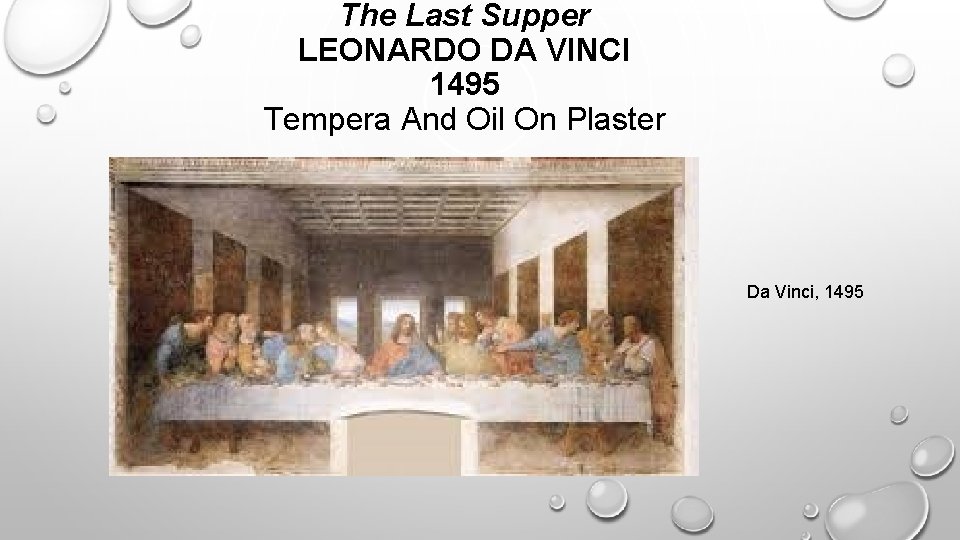
The Last Supper LEONARDO DA VINCI 1495 Tempera And Oil On Plaster Da Vinci, 1495
THE LAST SUPPER • Lines- Vertical lines are used to emphasize on motion in the art. • Shape- A rectangular shape has been used to replicate the building. • Light- The light is dispersed throughout the artwork but the background is shaded. • Colors- The notable colors are blue, grey, green and maroon that are bright with one hue. The bright colors stand out against the dark background. • Texture- The texture is impasto as the paint has been laid in one area with thick layers making it heavier on different sides. • Mass- The lighting creates the illusion that people are taking space and mass in the artwork. • Time- The natural light gives the sense its daytime. • Motion- Outstretched arms and standing people highlight motion on the table.
THE LAST SUPPER DESIGN • Unity- The texture, lighting and motion work together t make a harmonious whole. • Variety- The different color shades, mass and texture create diversity. • Balance- The art is asymmetrical as both sides are not equal. • Emphasis- The focal point is the center piece image. • Directional forces- The eye follow the motion and the texture. • Contrast- Contrasting elements can be viewed on the figures. • Repetition & rhythm- The texture, mass and motion are repeated. • Scale &proportion- The figures are not in proportion to each other.
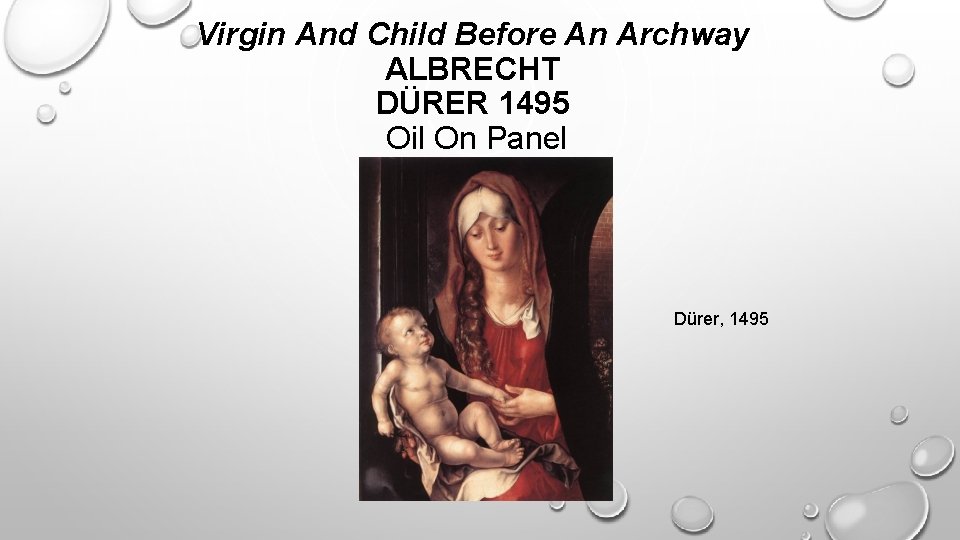
Virgin And Child Before An Archway ALBRECHT DÜRER 1495 Oil On Panel Dürer, 1495
VIRGIN AND CHILD BEFORE AN ARCHWAY • Lines- Curvy lines are used to create motion. • Shape- Circular shapes are used to show beauty. • Light- Lighting is dispersed throughout the artwork but the figures are brighter. • Colors- The colors used are brown, white, maroon and red all of which are bright with different shades and stand out against the background. • Texture- The paint texture of this art is impasto as the paint has been laid in different areas with thick layers. • Mass- The bright colors highlight that the artwork is heavier on the background. • Time- The nature of its lighting make it seem that it is at nighttime. • Motion- Outstretched arms depict motion by the figures.
VIRGIN AND CHILD DESIGN • Unity- The color lighting and texture work together to make a harmonious whole. • Variety- The mass, color and lighting create diversity. • Balance- The art is symmetrical as both sides are equal. • Emphasis- The focal point of the art is the child. • Directional forces- The eye follow the lighting and the color. • Contrast- Contrasting elements are viewed on the objects. • Repetition & rhythm- Both the color and mass have been repeated. • Scale &proportion- The objects are not in proportion to each other.
Art Criticism: Contextual Theory • The contextual theory considers art a product of culture. They try to ascertain how the artwork fit in the society at the time of its creation (Barrett, 2014). Critics using this theory focus on what is happening at the same time when the artwork is designed (Frank, 2014). How does it fit within the society at its time of creation? • The artworks presented in this gallery can be better understood through the use of the contextual theory (Barrett, 2014). The artworks are examples of art style during the renaissance period (Frank, 2014). • The renaissance era was characterized by high demand of artwork about spiritual subjects and religion (Barrett, 2014). • The La Primavera art best fits with the contextual theory. This art is about thought in humanism that commenced in the renaissance period (Barrett, 2014). This is a great example as it features spirituality (Frank, 2014). Thus, the structure of this art it emphasizes on human spirituality, an aspect that was of importance to the society during this time (Frank, 2014).
Art Criticism: Formal Theory • The formal theory focuses on the composition of the artwork and how it is influenced by past works of art. As such, artwork might be influenced by work of other artists (Frank, 2014). For artworks that are categorized using this theory, the technical skill exhibited is important (Barrett, 2014). The critics using this theory criticize artwork in the context of its aesthetics (Barrett, 2014). • The Last Supper artwork is better understood and categorized using this theory. • The artwork shows excellent use of both design principles and visual elements (Barrett, 2014). The linear perspective used in The Last Supper was relatively new in the 1400 s. Besides, elements of humanism have been used to showcase the disciples (Barrett, 2014).
Art Criticism: Expressive Theory • Expressive theories focus their attention to the artist’s expression of world view or personality. As such, they are looking at the personal meanings and psychological insights (Barrett, 2014). • The Mona Lisa artwork can be best understood using this theory. The subject is showing emotion which elicits compassion from the viewers (Frank, 2014). • Viewers of this artwork try to ascertain the personal meanings or insights of the artist (Barrett, 2014). • The purpose of this artwork was to elicit emotional reaction from its viewers as they try to understand the artist’s expression on Mona Lisa personality.
REFERENCES • • Barrett, T. (2008). Why Is That Art? : Aesthetics And Criticism Of Contemporary Art. Oxford University Press, USA. • Botticelli, S. (1480). Birth Of Venus [Tempera On Canvas]. Retrieved From Http: //Www. Uffizi. Org/Artworks/The‐birth‐of‐venus‐by‐ Sandro‐botticelli/ • Botticelli, S. (1482). Primavera [Tempera On Panel]. Retrieved From Http: //Www. Uffizi. Org/Artworks/La‐primavera‐allegory‐of‐s pring‐ By‐sandro‐botticelli/ • Da Vinci, L. (1498). The Last Supper [Oil On Canvas]. Retrieved From Http: //Www. Abcgallery. Com/L/Leonardo 4. Html#note • Da Vinci, L. (1503‐ 1506). Mona Lisa [Oil On Wood]. Retrieved From Http: //Www. Louvre. Fr/En/Oeuvre‐notices/Mona‐lisa‐portrait‐lisa ‐ Gherardini‐wife‐francesco‐del‐giocondo • Dürer, A. (1495). Virgin And Child Before An Archway [Oil On Panel]. Retrieved From Http: //Www. Wga. Hu/Html_m/D/Durer/1/01/07 virgin. Html • Dürer, A. (1504). Adam And Eve [Engraving]. Retrieved From Https: //Www. Metmuseum. Org/Toah/Works‐of‐art/19. 73. 1 • Frank, P. (2014). Prebles' Artforms: An Introduction To The Visual Arts. 11 th Ed. Boston, MA: Pearson Education.