
Art and Politics THE AESTHETIC AND POLITICAL JUDGMENT


- Slides: 15
Art and Politics THE AESTHETIC AND POLITICAL JUDGMENT
What is Judgment? �Way of subject‘s relating or attitude to the object - this relating has either positive or negative character (there are no neutral judgments) - the negative or positive quality is ascribed to the object, i. e. it gains a positive or negative value - subject feels either pleasure or displeasure caused by the object �Judgment is an expression of attitude towards an object which has negative or positive value
�To judge means to draw a normative - distinction, a distinction of value judgment establishes a norm of what is valuable or desirable and what is not we judge object (behavior, social group etc. ) as good or bad, beautiful or ugly, right or wrong attitude either of acceptance or rejection determination of our future action (i. e. what to avoid and what to prefer or choose)
�Judgments have a social meaning - they define what is appropriate and what is inappropriate in other‘s behavior - they form social practices and categories - when we judge, we expect others to agree �Judging differs from personal taste or preferences (i. e. in colours, food etc. )
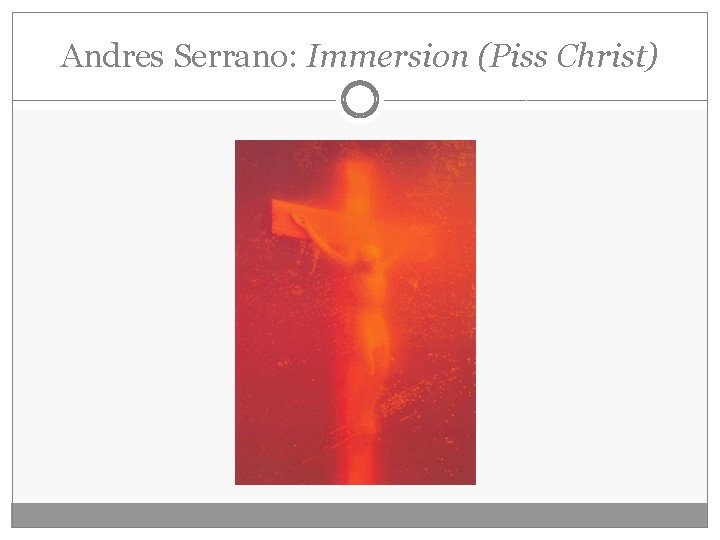
Andres Serrano: Immersion (Piss Christ)
Hannah Arendt on Judgment Hannah Arendt (1906 -1975) �German-American philsopher and political theorist � The Origins of Totalitarianism (1951) �The Human Condition (1958) �Eichman in Jerusalem (1963) �The Life of the Mind (2 volumes published posthumously in 1977 and 1978)
The Lectures on Kant‘s Political Philosophy �New York School for Social Research, Fall semester 1970 �The enlargment of mind or the enlarged mentality - imagining the attitudes of others while making one‘s own judgment - suppresing personal interest - perspective enabling to perceive, reflect and judge from distance - not participating in action
�Key role of the spectator �Imagination - ability to re/present what is absent - provides us with „images“ of objects, not direct contact with them �Necessity of distance, detachment, disinterestedness �Impartiality of judgment �Social character of judgment
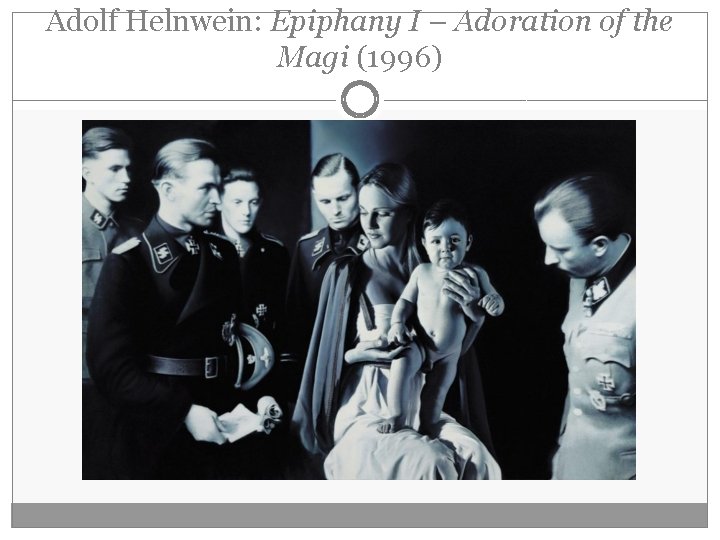
Adolf Helnwein: Epiphany I – Adoration of the Magi (1996)
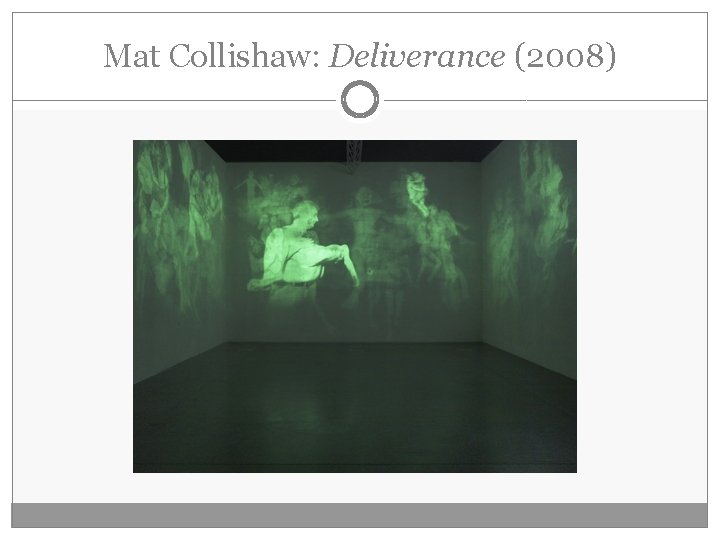
Mat Collishaw: Deliverance (2008)
Henrik Kaare Nielsen: Aesthetic Judgment and Political Judgment �Judgment mediates between the particular and the universal, between the sensual object and theoretical understanding �The aesthetic judgment may contribute to strenghtening the universal perspective, the ability to establish a reflective distance to immediate, private inclinations and interests – necessary for the development of democratic community and the ability to imagine alternatives to the status quo �But it is insufficient as the main principle for the formation of political communities
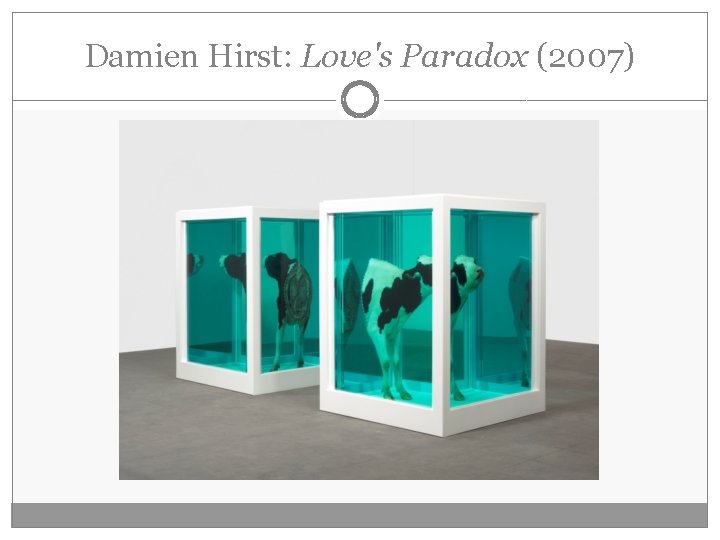
Damien Hirst: Love's Paradox (2007)
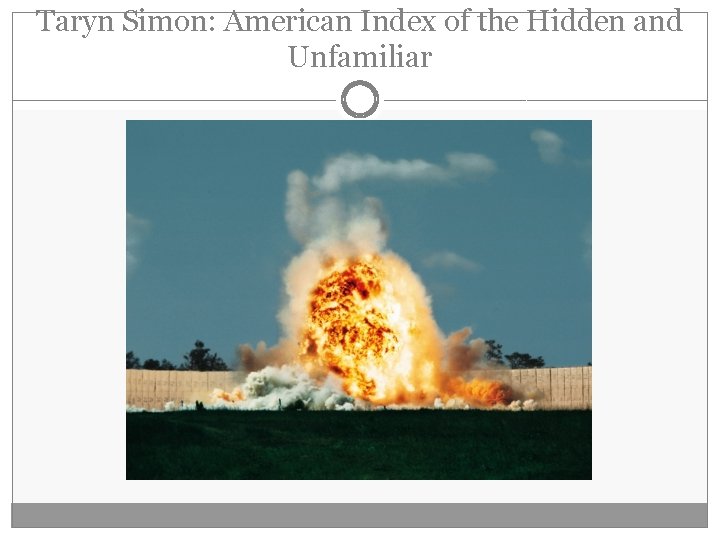
Taryn Simon: American Index of the Hidden and Unfamiliar