
Arson 1 What is fire A study of
- Slides: 37
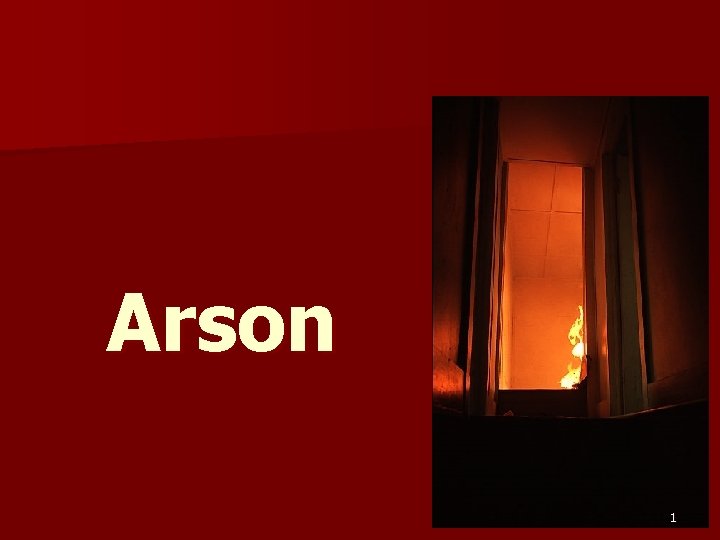
Arson 1
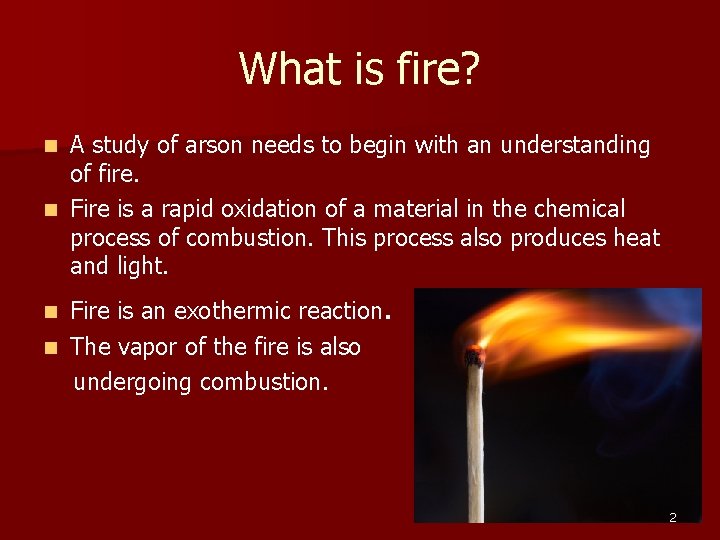
What is fire? A study of arson needs to begin with an understanding of fire. n Fire is a rapid oxidation of a material in the chemical process of combustion. This process also produces heat and light. n Fire is an exothermic reaction. n The vapor of the fire is also undergoing combustion. n 2
What is Arson? n n Arson is the intentional setting of a fire to a structure or wild land area. Arson is a complex crime and difficult to prove. The crime scene generally has extensive destruction. The crime scene technician has a limited role. A trained arson investigator will conduct a thorough investigation and make the final determination. 3
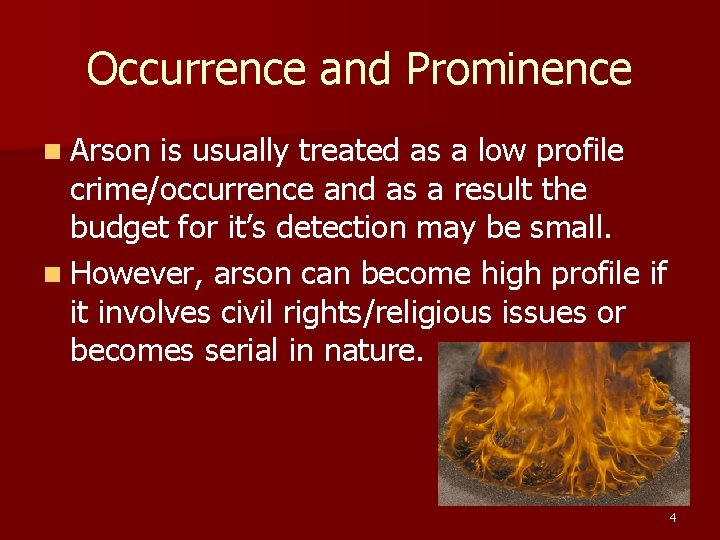
Occurrence and Prominence n Arson is usually treated as a low profile crime/occurrence and as a result the budget for it’s detection may be small. n However, arson can become high profile if it involves civil rights/religious issues or becomes serial in nature. 4
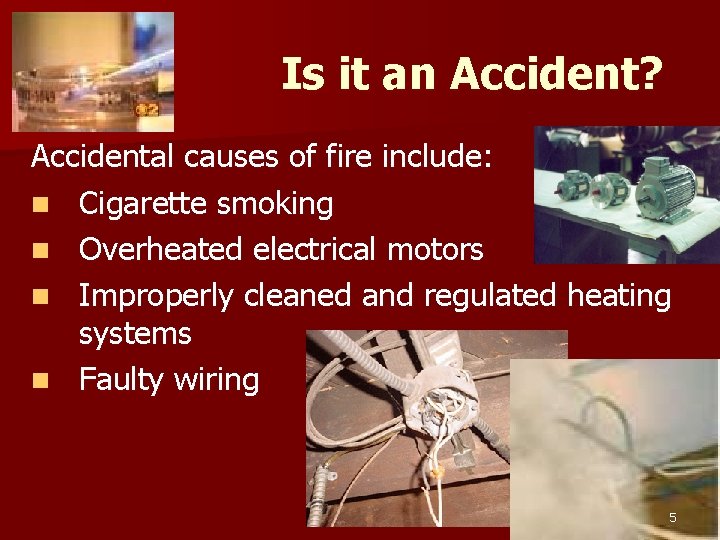
Is it an Accident? Accidental causes of fire include: n Cigarette smoking n Overheated electrical motors n Improperly cleaned and regulated heating systems n Faulty wiring 5
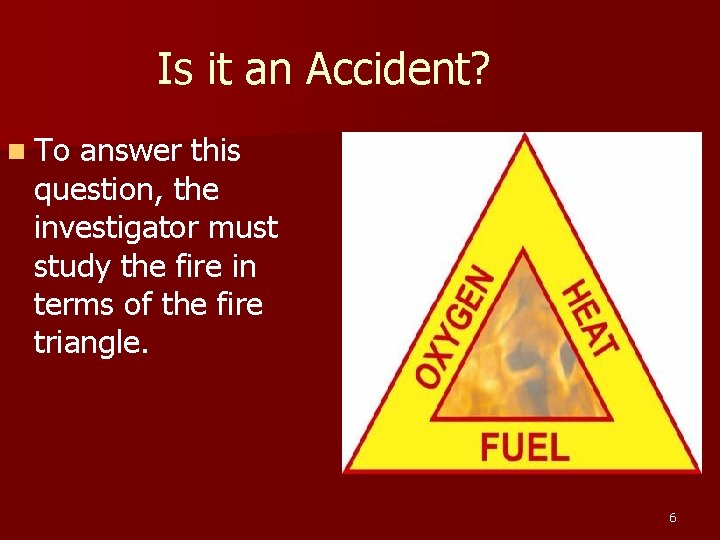
Is it an Accident? n To answer this question, the investigator must study the fire in terms of the fire triangle. 6
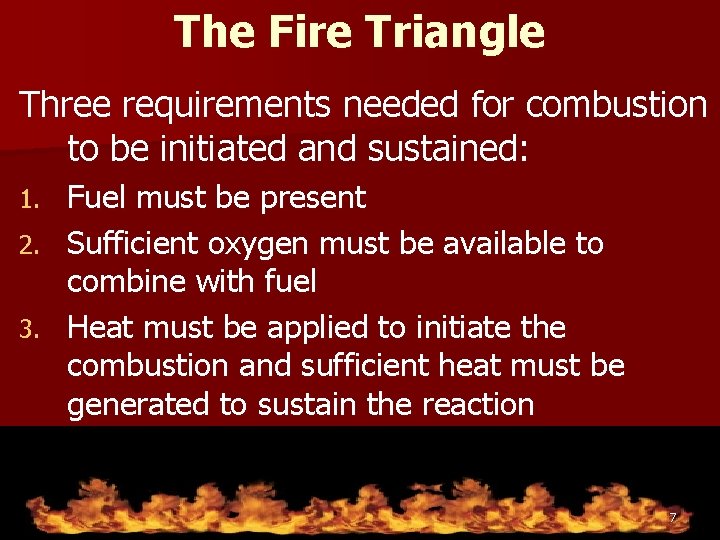
The Fire Triangle Three requirements needed for combustion to be initiated and sustained: Fuel must be present 2. Sufficient oxygen must be available to combine with fuel 3. Heat must be applied to initiate the combustion and sufficient heat must be generated to sustain the reaction 1. 7
The Fire Triangle If the fire is a case of arson, the arsonist will have manipulated one or more of the components of the fire triangle. This manipulation must be proven in order to state the fire is an arson. n They may increase the fuel load by adding accelerant or flammable items. n More oxygen may be introduced by opening windows or punching holes in walls or the ceiling. n 8
Other Clues of an Arson – Multiple points of origin – Strange odors – Accelerant soaked rags will keep the fire low or localized, not traveling up as usual – Extensive regions of low burn – Faster and hotter fire than would be expected. – Empty containers of accelerants, time delay devices, and other items left by the perpetrator 9
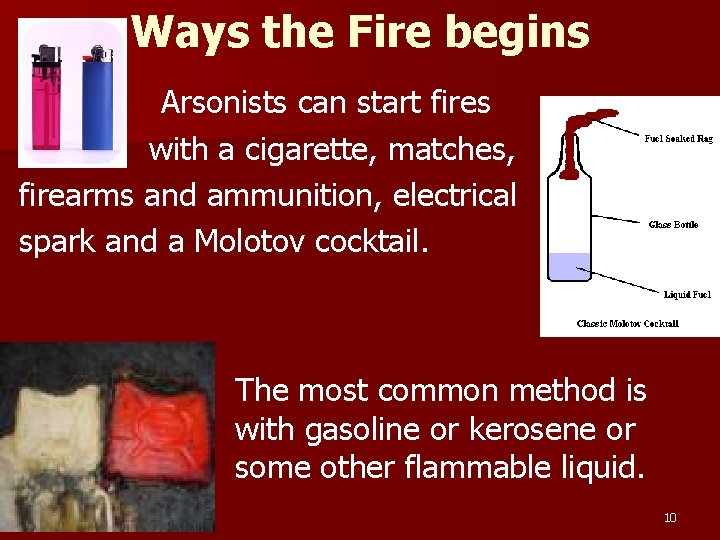
Ways the Fire begins Arsonists can start fires with a cigarette, matches, firearms and ammunition, electrical spark and a Molotov cocktail. The most common method is with gasoline or kerosene or some other flammable liquid. 10
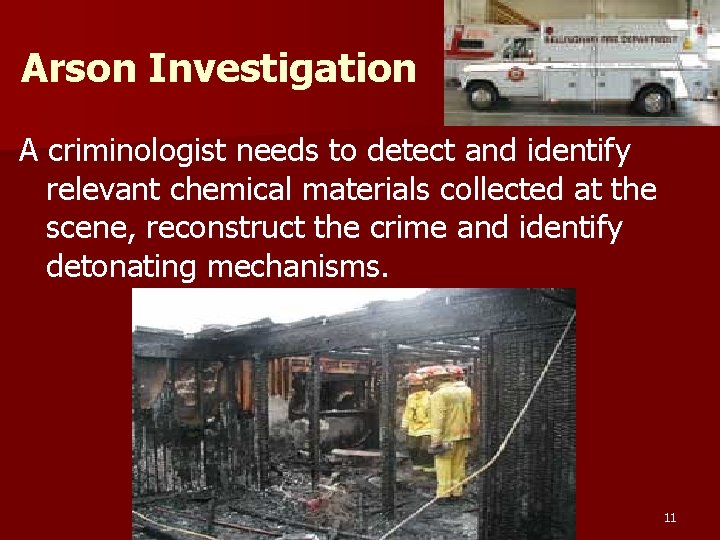
Arson Investigation A criminologist needs to detect and identify relevant chemical materials collected at the scene, reconstruct the crime and identify detonating mechanisms. 11
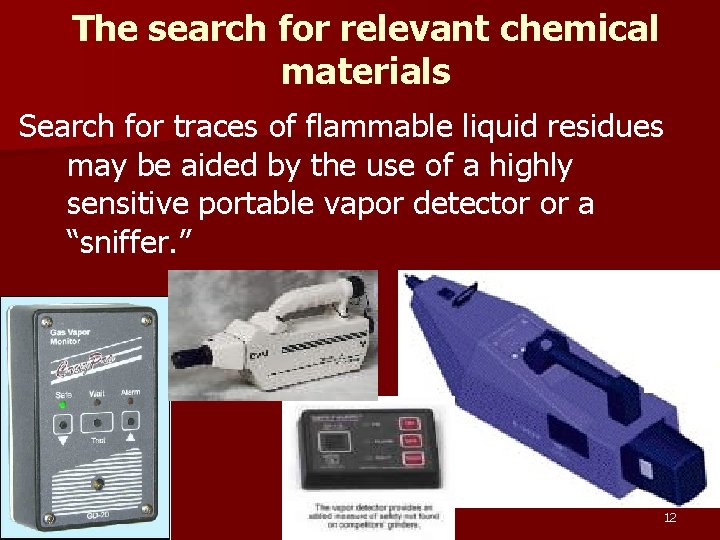
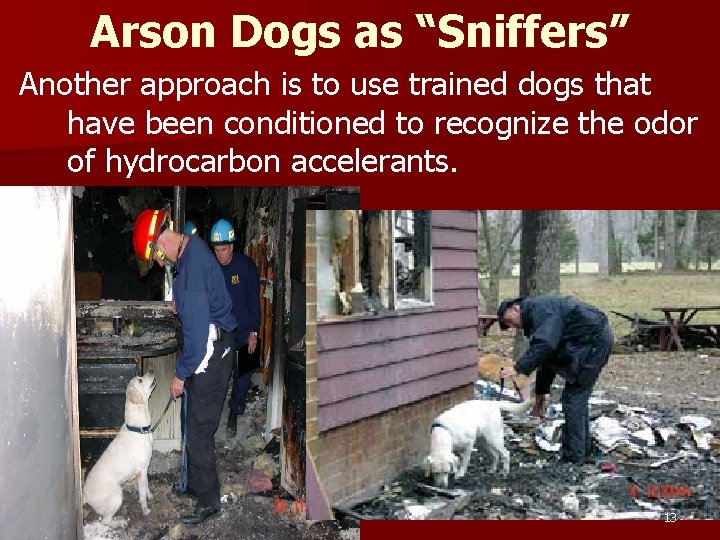
The search for relevant chemical materials Search for traces of flammable liquid residues may be aided by the use of a highly sensitive portable vapor detector or a “sniffer. ” 12
Arson Dogs as “Sniffers” Another approach is to use trained dogs that have been conditioned to recognize the odor of hydrocarbon accelerants. 13
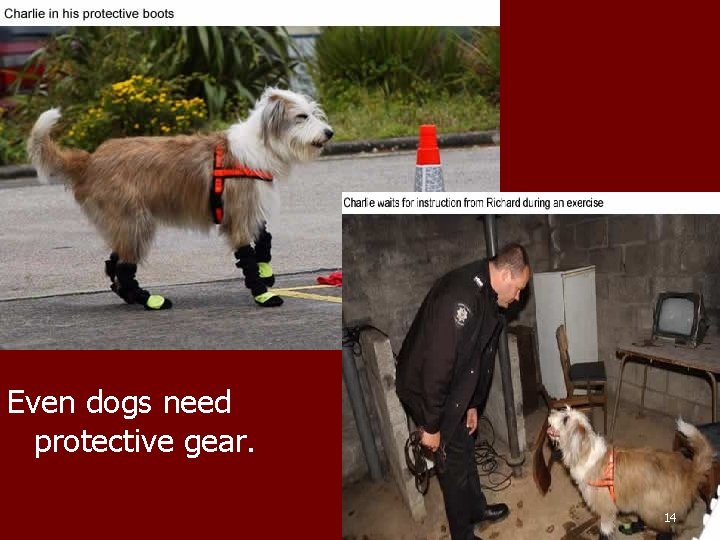
Arson Even dogs need protective gear. 14
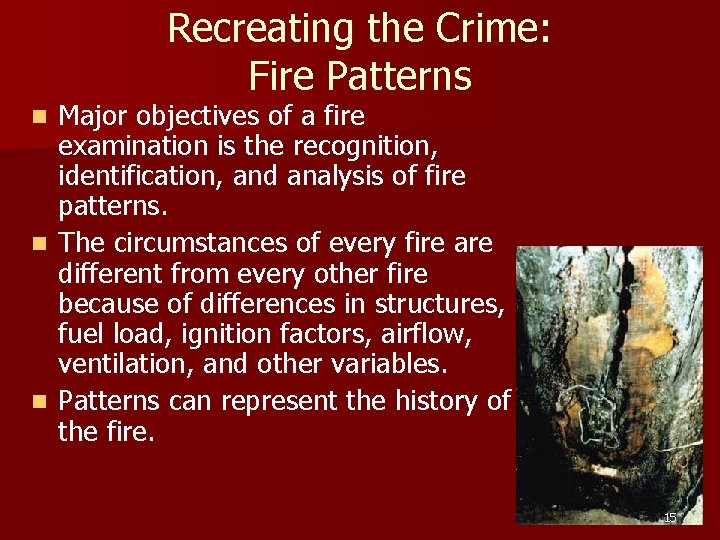
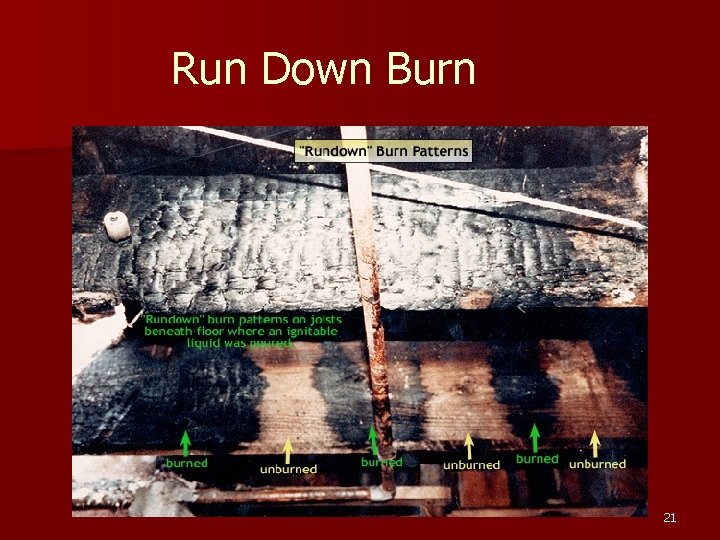
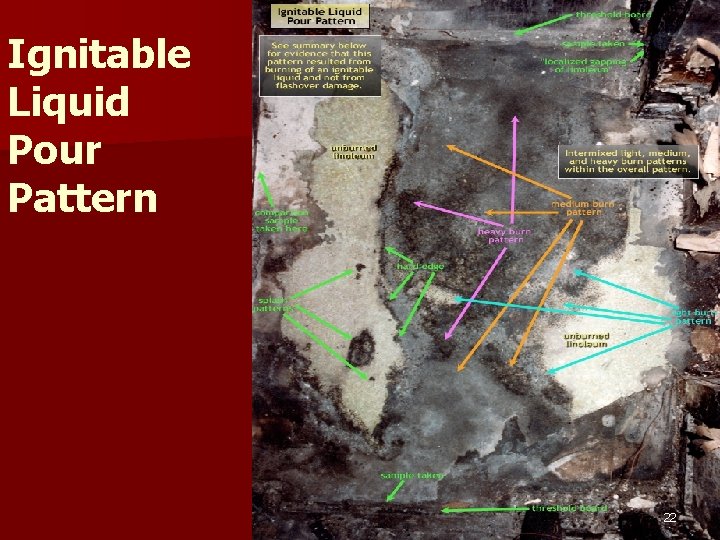
Recreating the Crime: Fire Patterns Major objectives of a fire examination is the recognition, identification, and analysis of fire patterns. n The circumstances of every fire are different from every other fire because of differences in structures, fuel load, ignition factors, airflow, ventilation, and other variables. n Patterns can represent the history of the fire. n 15
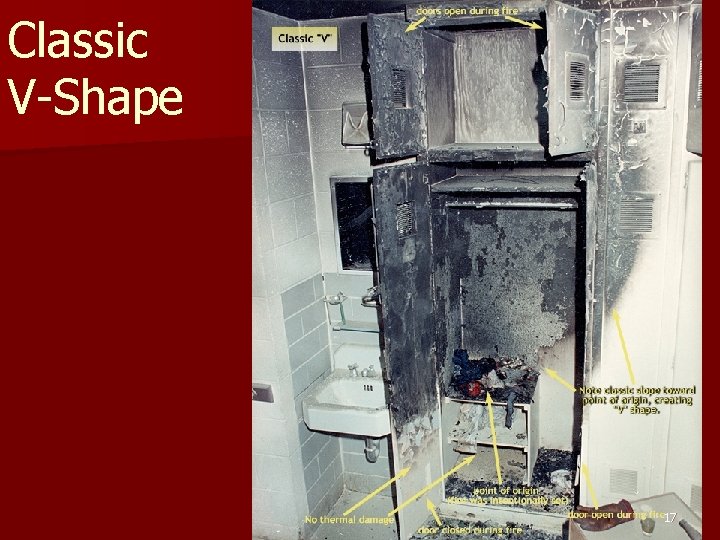
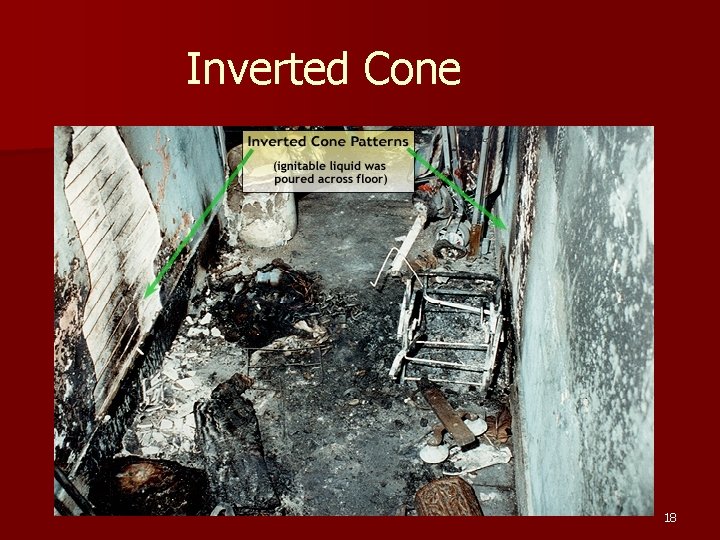
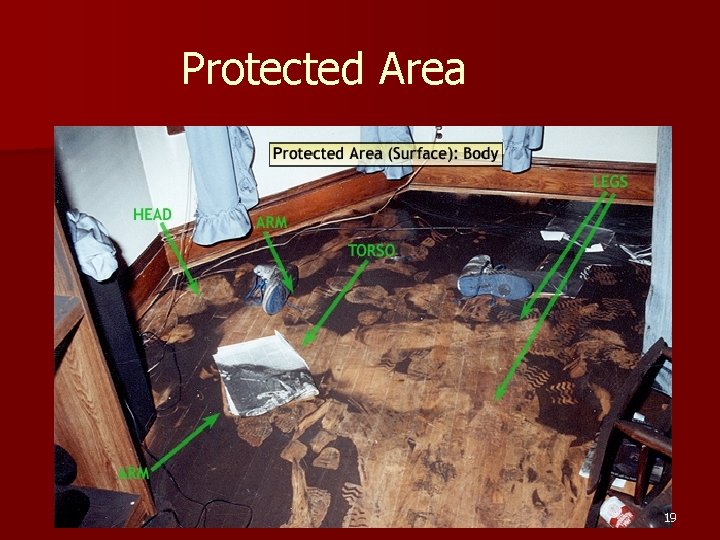
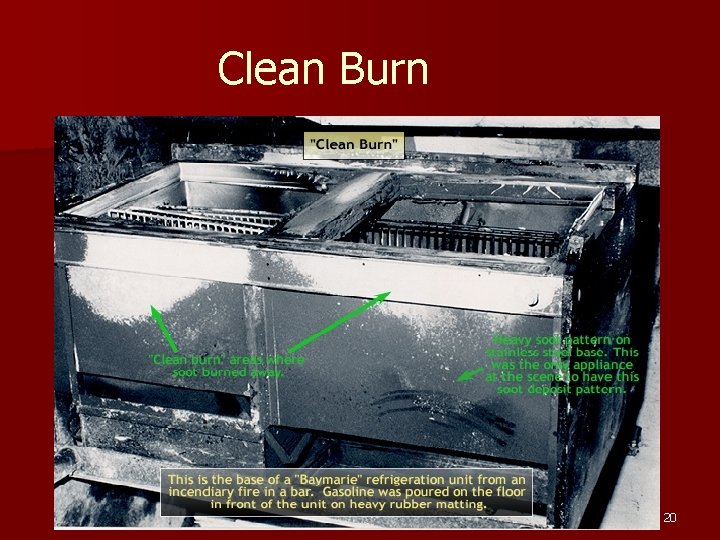
What are the fire patterns? n Common Fire Patterns include: n Classic V- Shape n Inverted Cone n Protected Area n Clean Burn n Run Down Burn n Ignitable Liquid Pour Pattern 16
Classic V-Shape 17
Inverted Cone 18
Protected Area 19
Clean Burn 20
Run Down Burn 21
Ignitable Liquid Pour Pattern 22
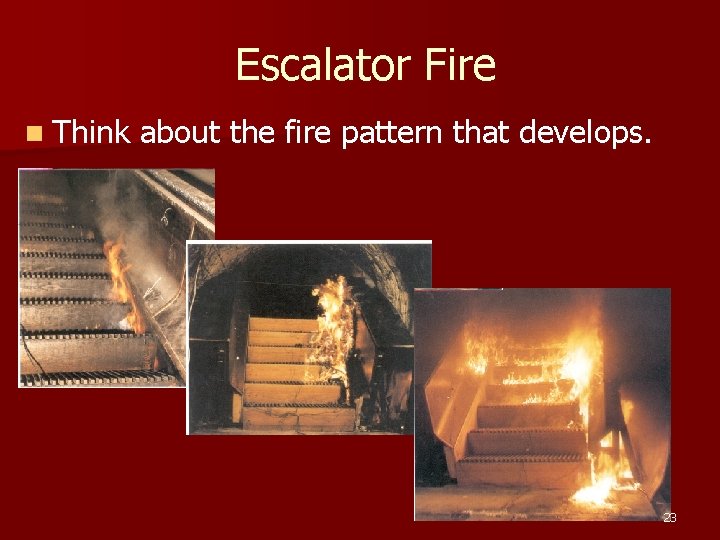
Escalator Fire n Think about the fire pattern that develops. 23
Dynamic of Patterns n Recognition of fire patterns depends on the investigators understanding of the development of fire, heat, and flame spread. n Heat moves by convection, conduction, and radiation. n These produce the fire patterns and the nature of flame, heat, and smoke movement within a structure. 24
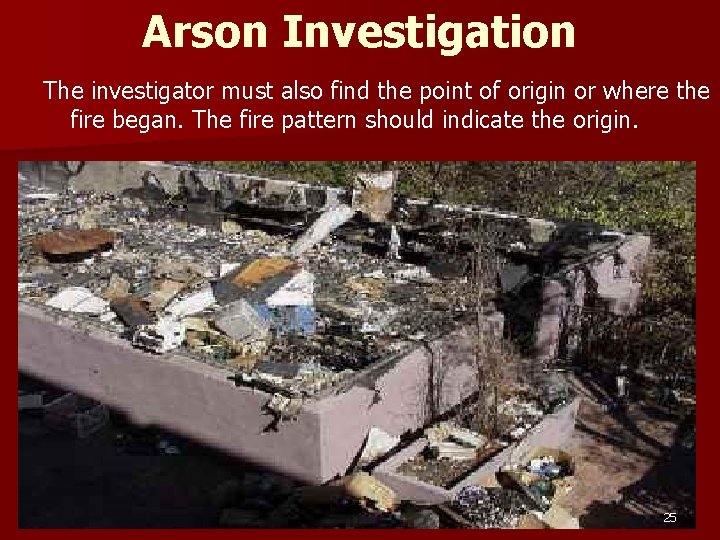
Arson Investigation The investigator must also find the point of origin or where the fire began. The fire pattern should indicate the origin. 25
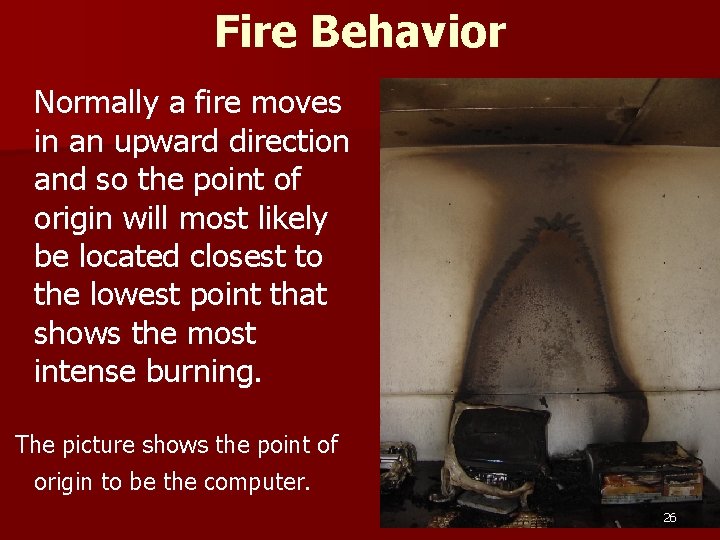
Fire Behavior Normally a fire moves in an upward direction and so the point of origin will most likely be located closest to the lowest point that shows the most intense burning. The picture shows the point of origin to be the computer. 26
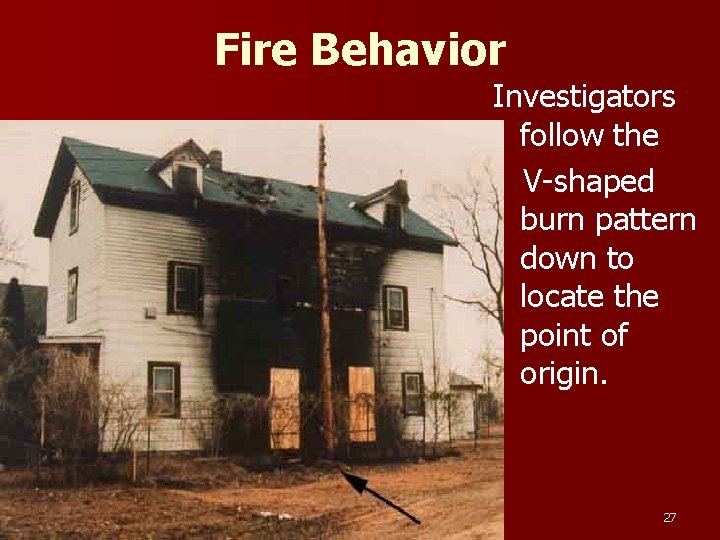
Fire Behavior Investigators follow the V-shaped burn pattern down to locate the point of origin. 27
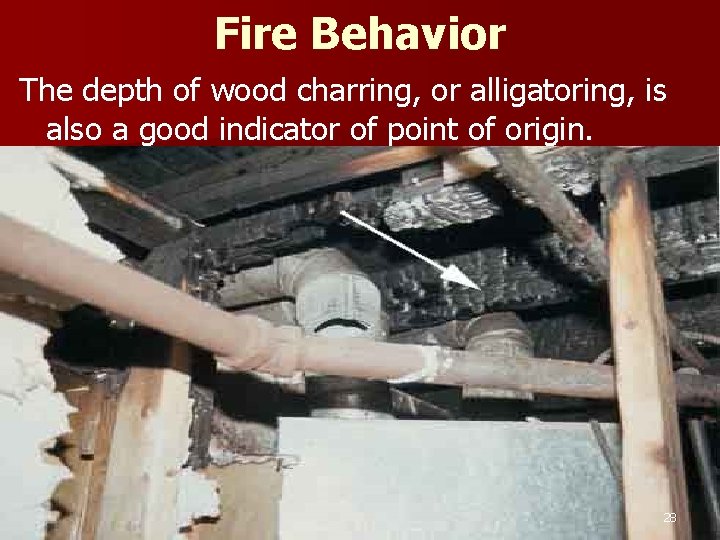
Fire Behavior The depth of wood charring, or alligatoring, is also a good indicator of point of origin. 28
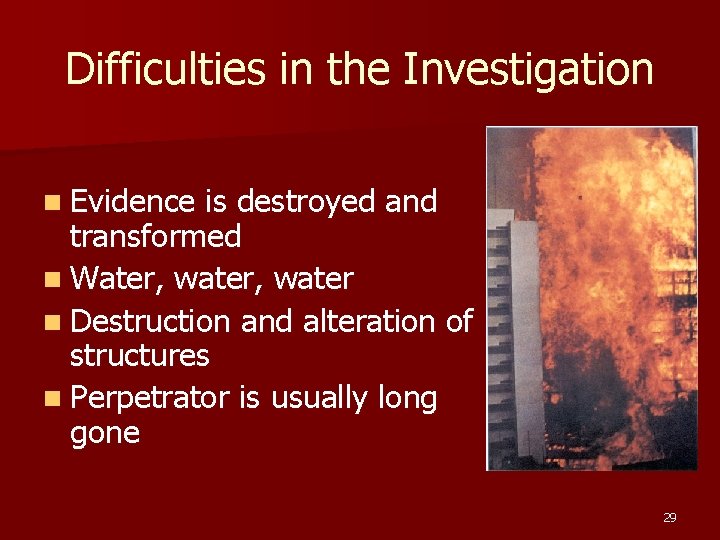
Difficulties in the Investigation n Evidence is destroyed and transformed n Water, water n Destruction and alteration of structures n Perpetrator is usually long gone 29
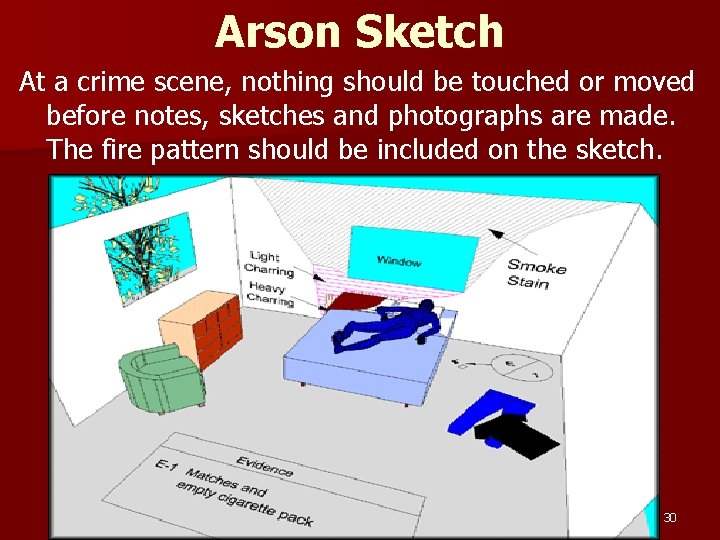
Arson Sketch At a crime scene, nothing should be touched or moved before notes, sketches and photographs are made. The fire pattern should be included on the sketch. 30
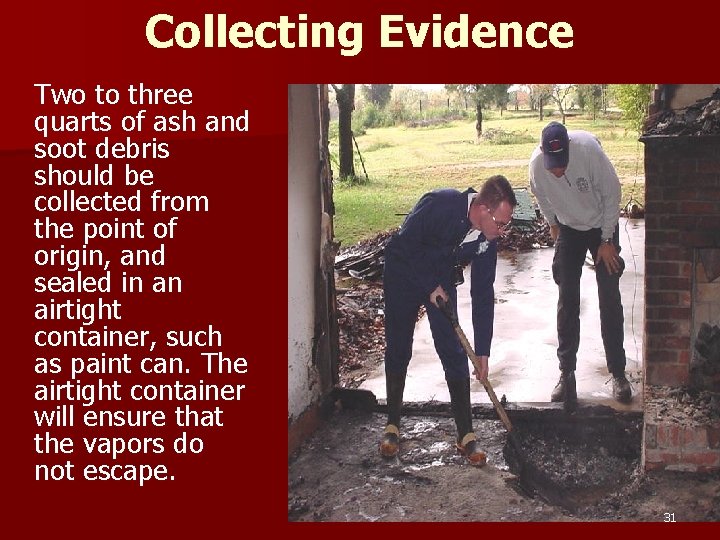
Collecting Evidence Two to three quarts of ash and soot debris should be collected from the point of origin, and sealed in an airtight container, such as paint can. The airtight container will ensure that the vapors do not escape. 31
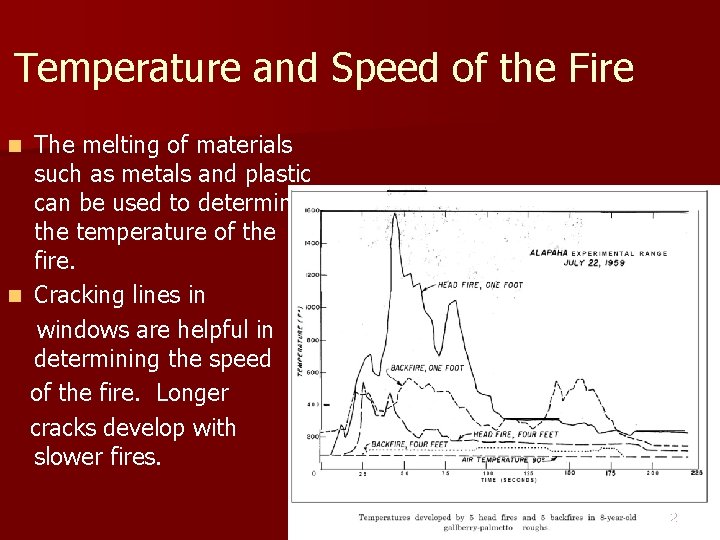
Temperature and Speed of the Fire The melting of materials such as metals and plastic can be used to determine the temperature of the fire. n Cracking lines in windows are helpful in determining the speed of the fire. Longer cracks develop with slower fires. n 32
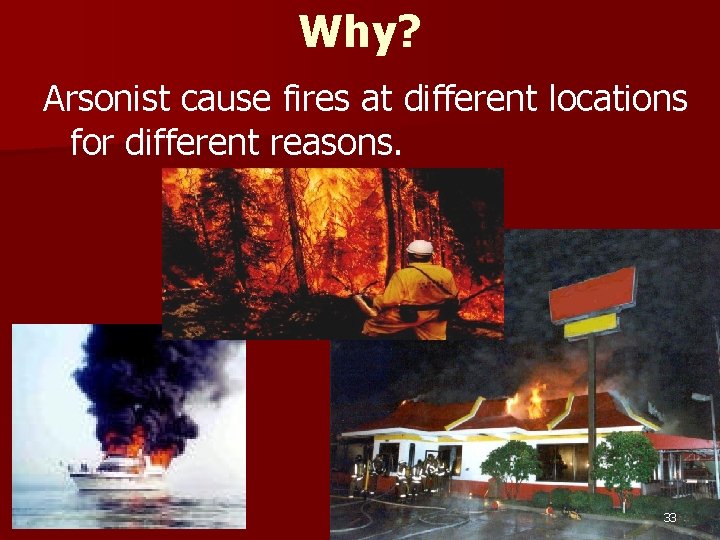
Why? Arsonist cause fires at different locations for different reasons. 33
Motivation for arson includes: n Vandalism-both mischievous and malicious n Excitement-a thrill seeker, wants attention n Revenge-retaliation for a personal or societal ‘injustice’ n Crime Concealment- to cover up a primary crime, such as a murder n Profit- insurance money n Extremist- beliefs on social issues, such as abortion clinics or churches 34
Finding the Arsonist An arson profiler will use information from: the arson scene any potential witnesses the types of accelerants used 35
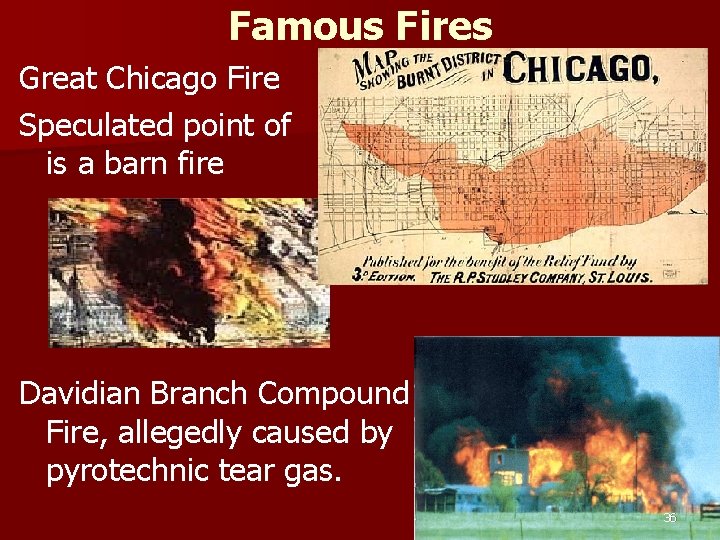
Famous Fires Great Chicago Fire Speculated point of origin is a barn fire Davidian Branch Compound Fire, allegedly caused by pyrotechnic tear gas. 36
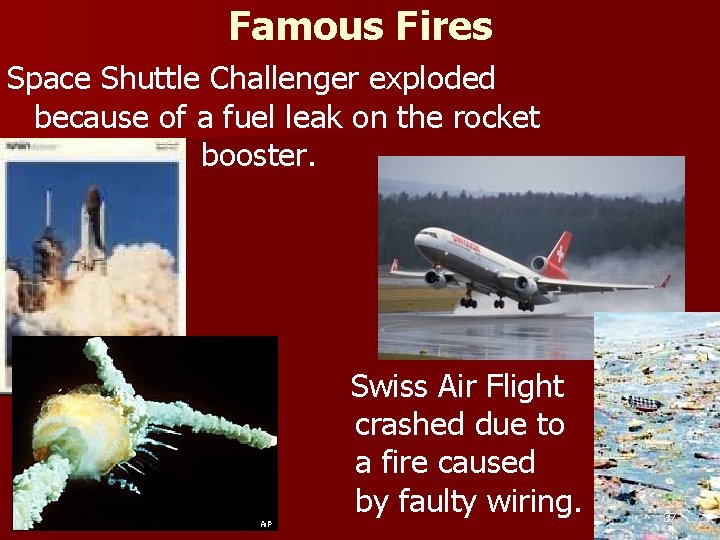
Famous Fires Space Shuttle Challenger exploded because of a fuel leak on the rocket booster. Swiss Air Flight crashed due to a fire caused by faulty wiring. 37