
ARSENIC EXPOSURE PERSPECTIVE ON RISK ASSESSMENT RABIYA SHABNAM
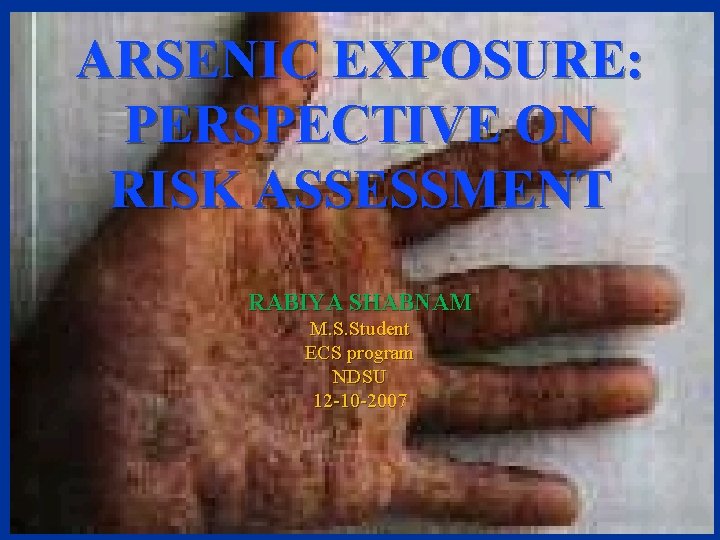
ARSENIC EXPOSURE: PERSPECTIVE ON RISK ASSESSMENT RABIYA SHABNAM M. S. Student ECS program NDSU 12 -10 -2007
OVER VIEW n n n n INTRODUCTION GOAL OF RISK ASSESSMENT HEALTH EXPOSURE ASSESSMENT DOSE ASSESSMENT EPIDEMIOLOGICAL STUDIES METHODS OF ARSENIC MEASUREMENT REFERENCES ACKNOWLEDGEMENT
INTRODUCTION n Arsenic in the form of Arsenic(III) & Arsenic (V) causes health hazards. n The WHO guideline for Arsenic in drinking water is 10μg/L. n Arsenic in groundwater is an International Problem. n Arsenic is also known to cause a variety of cancers including skin cancer (non-melanoma type), kidney, bladder, lung, prostate and liver cancer. n Acute (short-term) arsenic poisoning may cause nausea, vomiting, diarrhea, weakness, loss of appetite, shaking, cough and headache. n Chronic (long-term) exposure may lead to a variety of symptoms including skin pigmentation, numbness, cardiovascular disease, diabetes, and vascular disease. n There is a dose-response relationship between the ratio of MMA/DMA in urine and the risk for skin and bladder cancer (Chen et al, 2003).
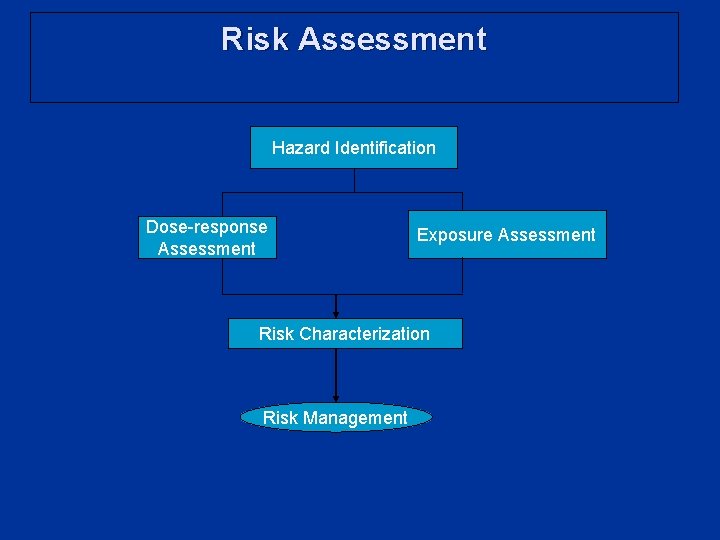
Risk Assessment Hazard Identification Dose-response Assessment Exposure Assessment Risk Characterization Risk Management
Goal of risk assessment Adequate Qualitative, Quantitative data concerning the exposure (Source, Amounts) n Dose (Metabolism and disposition of active metabolites) n Response – Good Arsenic risk assessment epidemiological data to measure risk, to understand the risk factors and disease. n
Goal of risk assessment Two critical issues in arsenic risk assessment: Methylation in the doseresponse relationship n The role of internal cancers n Exposure estimate –high / low n Higher exposure studies has been used to measure risk. n How arsenic can be measured using analytical methods n
Human Health Exposure Assessment Exposure to i. As-Contaminated drinking water causes development of Cancer of Skin and internal organs. n Exposure sources: Water, Soil, Air, Diet. n Epidemiologic studies in highly exposed & Low levels exposure among the populations. n Bangladesh, India, China, Taiwan, USA(Nevada) n
Dose Assessment The dose of arsenic causing a health impact. n The person being exposed (children are more sensitive than adults) n The route of exposure. n The type of health impacts being examined cancer risks. n Lifetime cancer risk probability of 1/100, 000 or, 1 x 10 -5. n
Arsenic metabolism The elucidation of the metabolic pathways of inorganic arsenic and the toxicity profile of the arsenic metabolites are important. n Epidemolgical studies – geographical distributions and diseases. n Drinking water causing different cancers and mortality rates. n Studies on LUNG, BLADDER, KIDNEY cancer n Case studies of Taiwan, Bangladesh, India Chile. n
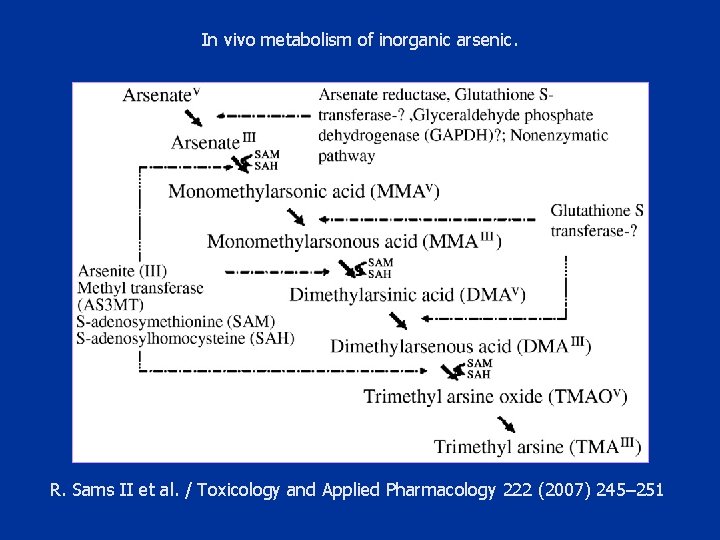
In vivo metabolism of inorganic arsenic. R. Sams II et al. / Toxicology and Applied Pharmacology 222 (2007) 245– 251
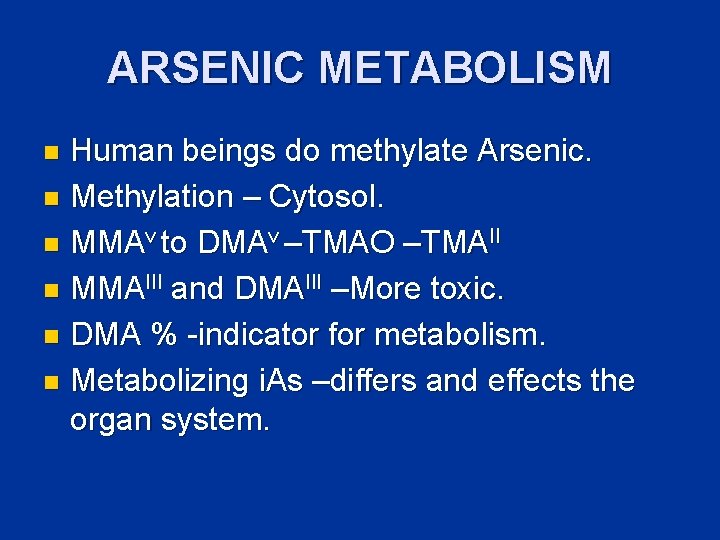
ARSENIC METABOLISM Human beings do methylate Arsenic. n Methylation – Cytosol. n MMAv to DMAv –TMAO –TMAII n MMAIII and DMAIII –More toxic. n DMA % -indicator for metabolism. n Metabolizing i. As –differs and effects the organ system. n
Epidemiological studies. Evidences from Taiwan cancer causes n n n Epidemiologic data in the areas of world with As levels in drinking water (>150 µg/L) shows risk. Exposure to i. As through drinking well water causes blackfoot disease (BFD) in Taiwan. Arsenic exposure and arsenic methylation capacity on the development of arsenic-related skin cancers and bladder cancer.
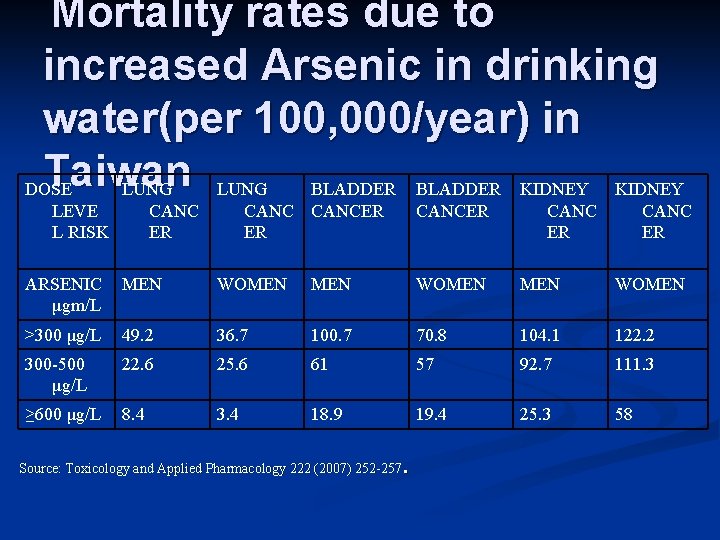
Mortality rates due to increased Arsenic in drinking water(per 100, 000/year) in Taiwan DOSE LUNG BLADDER KIDNEY LEVE L RISK CANC ER CANCER ER CANC ER ARSENIC μgm/L MEN WOMEN >300 μg/L 49. 2 36. 7 100. 7 70. 8 104. 1 122. 2 300 -500 μg/L 22. 6 25. 6 61 57 92. 7 111. 3 ≥ 600 μg/L 8. 4 3. 4 18. 9 19. 4 25. 3 58 . Source: Toxicology and Applied Pharmacology 222 (2007) 252 -257
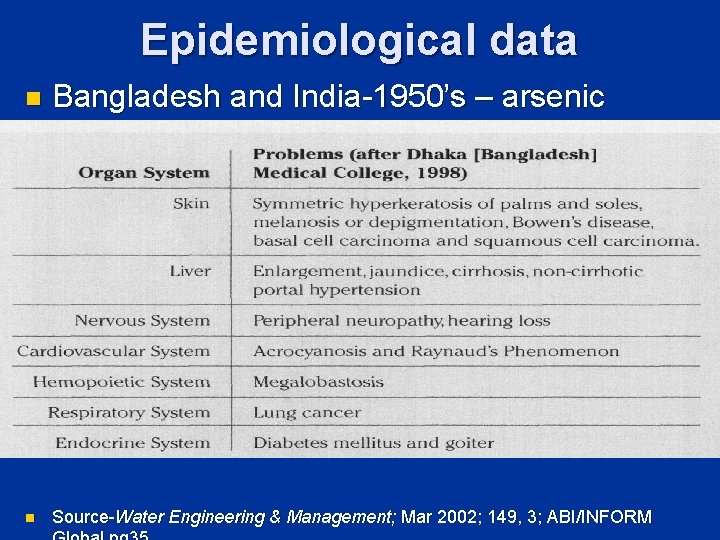
Epidemiological data n n Bangladesh and India-1950’s – arsenic 50μg/l Source-Water Engineering & Management; Mar 2002; 149, 3; ABI/INFORM
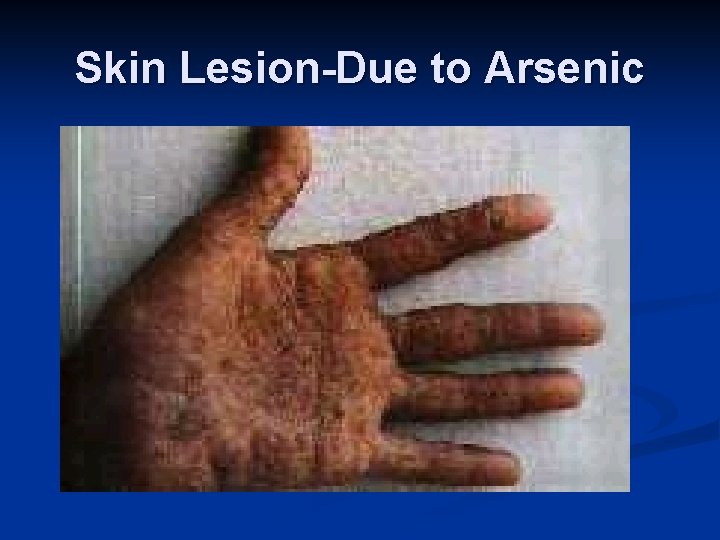
Skin Lesion-Due to Arsenic
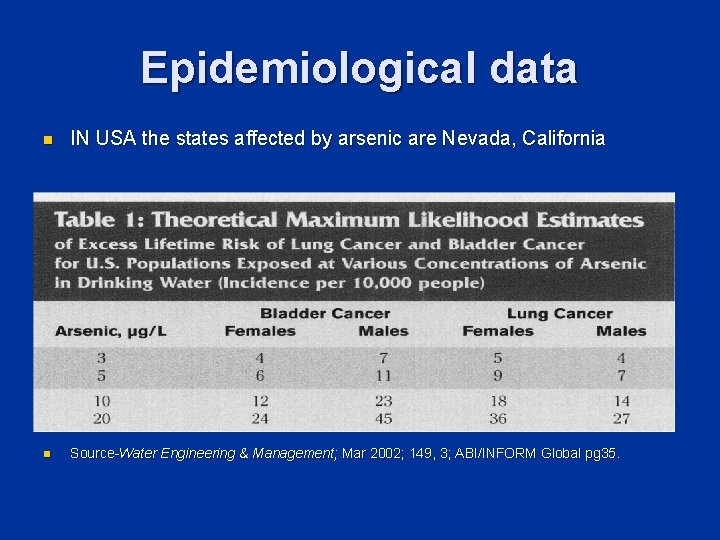
Epidemiological data n IN USA the states affected by arsenic are Nevada, California n Source-Water Engineering & Management; Mar 2002; 149, 3; ABI/INFORM Global pg 35.
Analytical methods to determine arsenic HPLC n Capillary zone electrophoresis n ICP-MS (As- Detection Limit (ppt)400 -500) n Elevated As Concentration in Solid X-ray absorption technique (e. g. XANES) n In Humans “Total Arsenic” level in the urine and Blood. n
Analytical methods The coupling of GC and ICP-MSdetermine Arsenic of gaseous / volatile species. n HPLC / ICP-MS , HPLC- Arseno sugars n ICP-MS gives molecular information. n ESI-MS –binding stoichiometry n DMAv can be identified by Electron spray. MS. n Separation of i. As Ion-Pairing chromatography. n iii v, v v iii
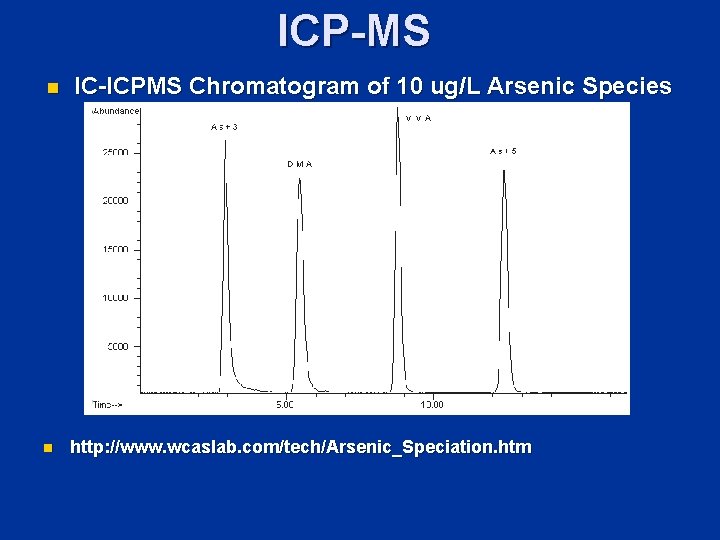
ICP-MS n IC-ICPMS Chromatogram of 10 ug/L Arsenic Species n n http: //www. wcaslab. com/tech/Arsenic_Speciation. htm
Summary As- toxic and carcinogenic. n Sort out the risk of exposure, dose response relation ship. n Risk management n Risk of Arsenic is well known, but is used as chemotherapeutic agent –Acute promyelocytic leukemia (APL) n
References n n n n Micheal F. Hughes, Elaina M. Kenyon, Kirk T. Kitchin. , 2007. Toxicology and Applied Pharmacology 222 (2007) 399 -404. Toxicology and Applied Pharmacology 222 (2007) 245– 251. Joyce S. Tuji, Lisa J. Yost, Leila M. Barraj, Carolyn G. Scrrafford, Pamela J. Mink, 2007. Regulatory Toxicology and Pharmacology 48 (2007) 59 -68. Jurgen Mattush, Rainer Wennrich, 2005. Microchim Acta 151, 137 -139(2005). K. P. Cantor, J. H. Lubin, Toxicology and Applied Pharmacology 222 (2007) 252 -257. Jurgen Mattusch and Rainer Wennrich, Microchim Acta 151, 137 -139 (2005) X. Chris Le, Xiufen Lu, Xing-Fang Li, Arsenic Speciation, Analytical chemistry January 1, 2004, 27 A-33 A. John T O'Connor, Arsenic in drinking water Part 2: Human exposure and health effects Water Engineering & Management; Mar 2002; 149, 3; ABI/INFORM Global pg 35.
Acknowledgement Dr. Achintya Bezbaruah n All my classmates of class 479/679 n

Question ? THANK YOU
- Slides: 23