
Arrhythmia Management in Patients With Left Ventricular Assist

- Slides: 28
Arrhythmia Management in Patients With Left Ventricular Assist Devices Rabea Asleh MD Ph. D MHA FACC Director, Heart Failure Unit Hadassah University Medical Center Jerusalem, Israel 28. 11. 2019
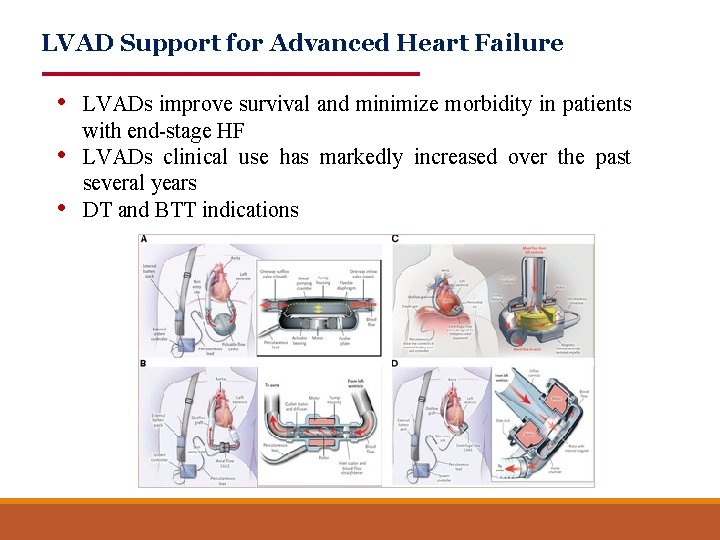
LVAD Support for Advanced Heart Failure • LVADs improve survival and minimize morbidity in patients • • with end-stage HF LVADs clinical use has markedly increased over the past several years DT and BTT indications
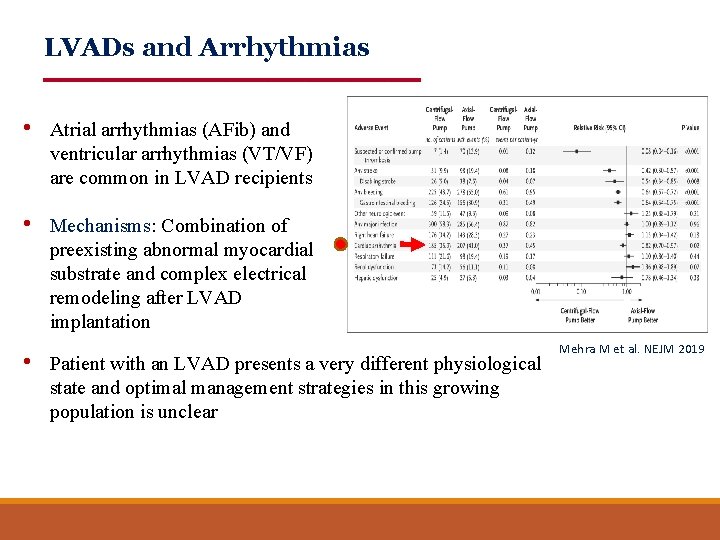
LVADs and Arrhythmias • Atrial arrhythmias (AFib) and ventricular arrhythmias (VT/VF) are common in LVAD recipients • Mechanisms: Combination of preexisting abnormal myocardial substrate and complex electrical remodeling after LVAD implantation • Patient with an LVAD presents a very different physiological state and optimal management strategies in this growing population is unclear Mehra M et al. NEJM 2019
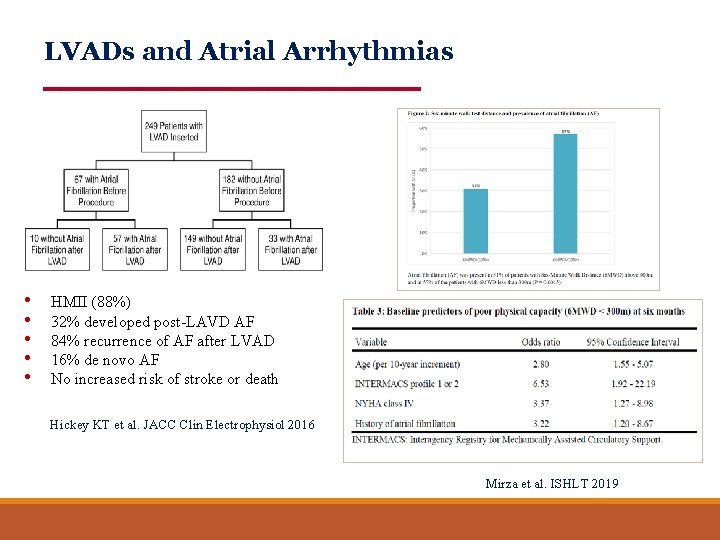
LVAD and Atrial Arrhythmias • Atrial Arrhythmias are diagnosed in 20%-50% of patients before LVAD implantation • The strongest predictor of post-LVAD AF is pre-LVAD AF • Postoperative AF not strongly associated with stroke or mortality • A high burden of AF may portend a worse outcome
LVADs and Atrial Arrhythmias • • • HMII (88%) 32% developed post-LAVD AF 84% recurrence of AF after LVAD 16% de novo AF No increased risk of stroke or death Hickey KT et al. JACC Clin Electrophysiol 2016 Mirza et al. ISHLT 2019
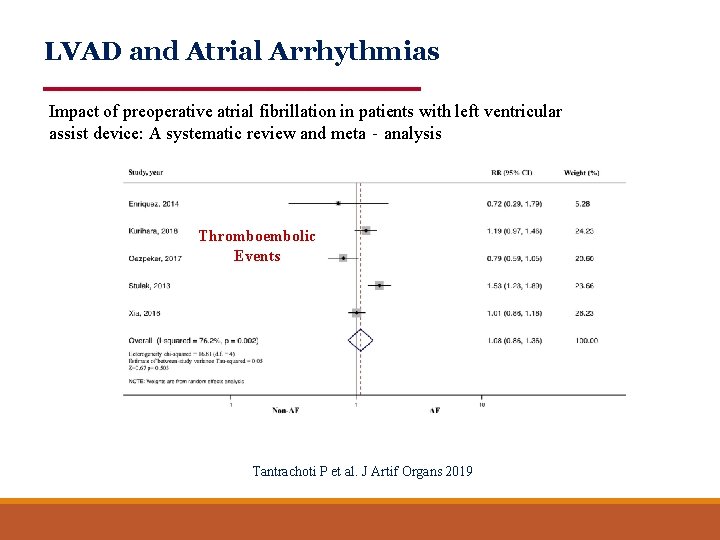
LVAD and Atrial Arrhythmias Impact of preoperative atrial fibrillation in patients with left ventricular assist device: A systematic review and meta‐analysis All-Cause Mortality Thromboembolic Events Tantrachoti P et al. J Artif Organs 2019
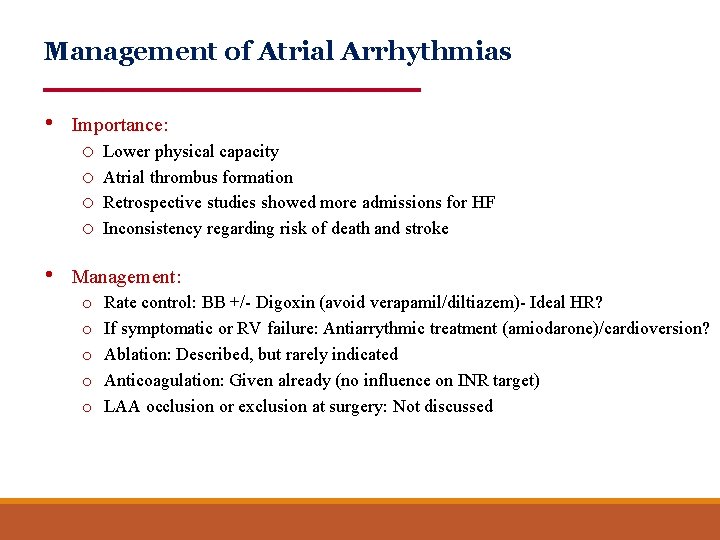
Management of Atrial Arrhythmias • Importance: o o Lower physical capacity Atrial thrombus formation Retrospective studies showed more admissions for HF Inconsistency regarding risk of death and stroke • Management: o o o Rate control: BB +/- Digoxin (avoid verapamil/diltiazem)- Ideal HR? If symptomatic or RV failure: Antiarrythmic treatment (amiodarone)/cardioversion? Ablation: Described, but rarely indicated Anticoagulation: Given already (no influence on INR target) LAA occlusion or exclusion at surgery: Not discussed
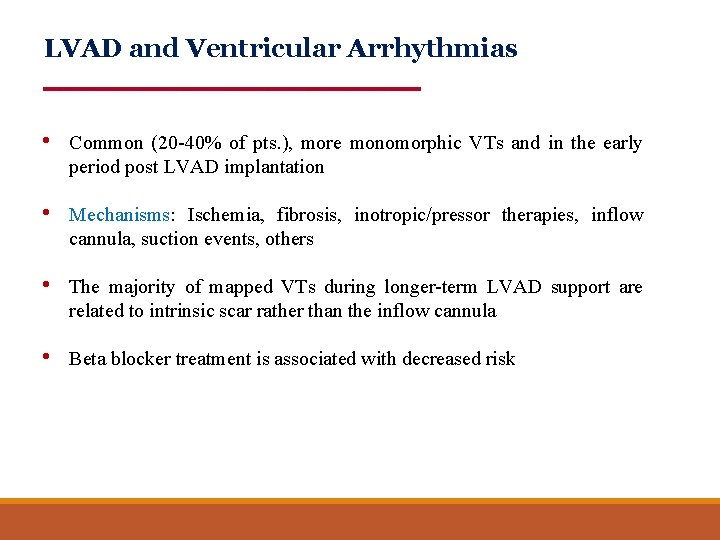
LVAD and Ventricular Arrhythmias • Common (20 -40% of pts. ), more monomorphic VTs and in the early period post LVAD implantation • Mechanisms: Ischemia, fibrosis, inotropic/pressor therapies, inflow cannula, suction events, others • The majority of mapped VTs during longer-term LVAD support are related to intrinsic scar rather than the inflow cannula • Beta blocker treatment is associated with decreased risk
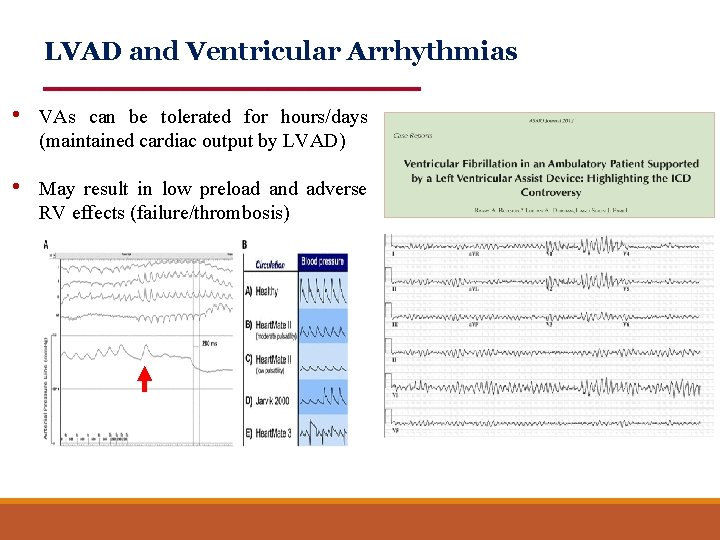
LVAD and Ventricular Arrhythmias • VAs can be tolerated for hours/days (maintained cardiac output by LVAD) • May result in low preload and adverse RV effects (failure/thrombosis)
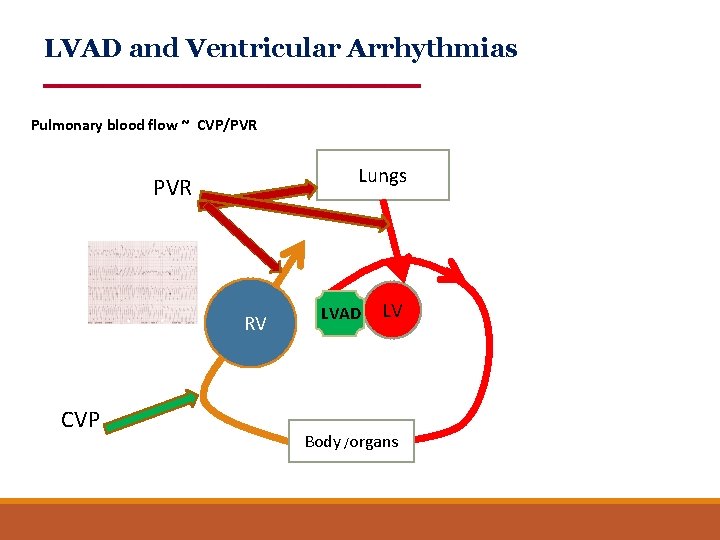
LVAD and Ventricular Arrhythmias Pulmonary blood flow ~ CVP/PVR Lungs PVR RV CVP LVAD LV Body /organs
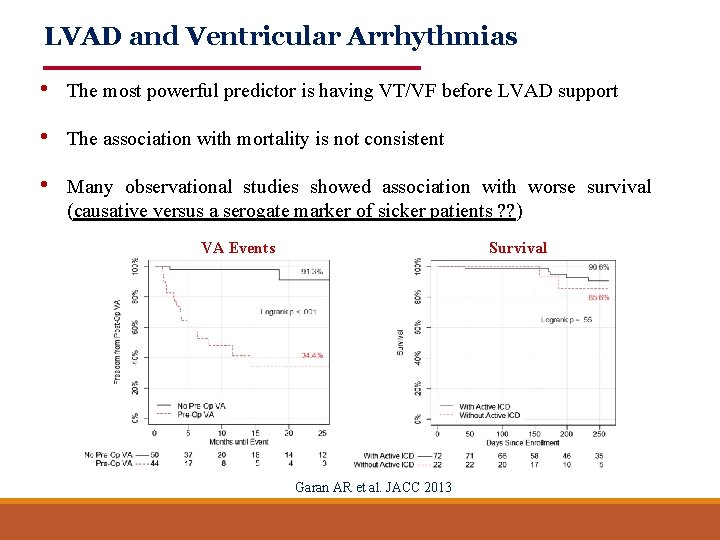
LVAD and Ventricular Arrhythmias • The most powerful predictor is having VT/VF before LVAD support • The association with mortality is not consistent • Many observational studies showed association with worse survival (causative versus a serogate marker of sicker patients ? ? ) VA Events Survival Garan AR et al. JACC 2013
ICD in Patients With LVAD • Problem: VT/VF in most patients will lead to shock in awake patients • Should patients with ICDs have their shock therapy turned on? • If yes, how should it be programmed? • Should patients without ICD have an ICD implanted?
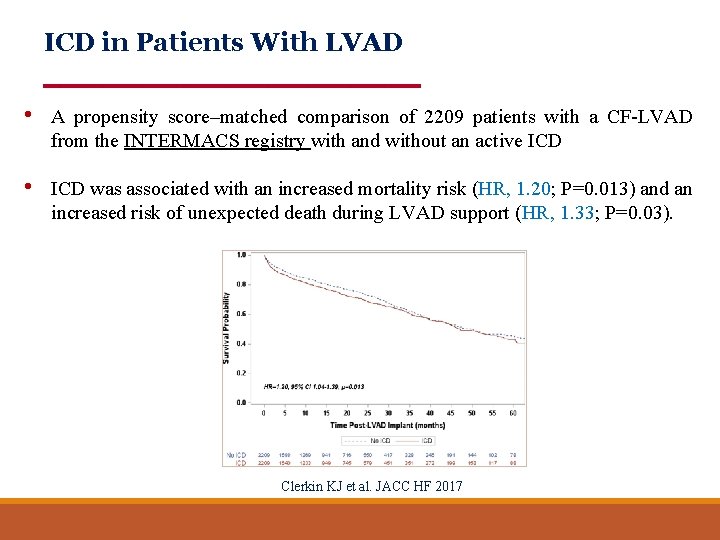
ICD in Patients With LVAD • A propensity score–matched comparison of 2209 patients with a CF-LVAD from the INTERMACS registry with and without an active ICD • ICD was associated with an increased mortality risk (HR, 1. 20; P=0. 013) and an increased risk of unexpected death during LVAD support (HR, 1. 33; P=0. 03). Clerkin KJ et al. JACC HF 2017
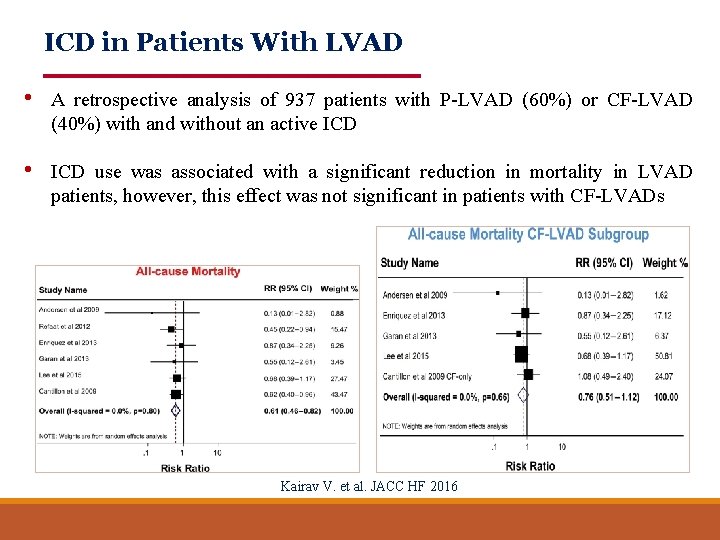
ICD in Patients With LVAD • A retrospective analysis of 937 patients with P-LVAD (60%) or CF-LVAD (40%) with and without an active ICD • ICD use was associated with a significant reduction in mortality in LVAD patients, however, this effect was not significant in patients with CF-LVADs Kairav V. et al. JACC HF 2016
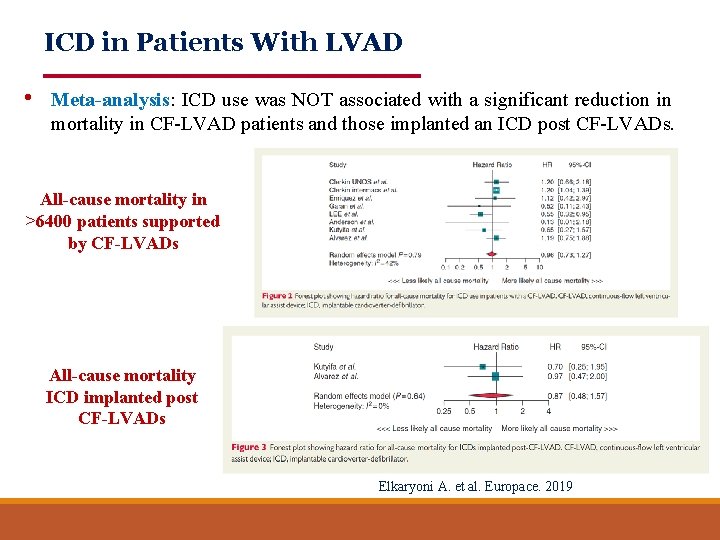
ICD in Patients With LVAD • Meta-analysis: ICD use was NOT associated with a significant reduction in mortality in CF-LVAD patients and those implanted an ICD post CF-LVADs. All-cause mortality in >6400 patients supported by CF-LVADs All-cause mortality ICD implanted post CF-LVADs Elkaryoni A. et al. Europace. 2019
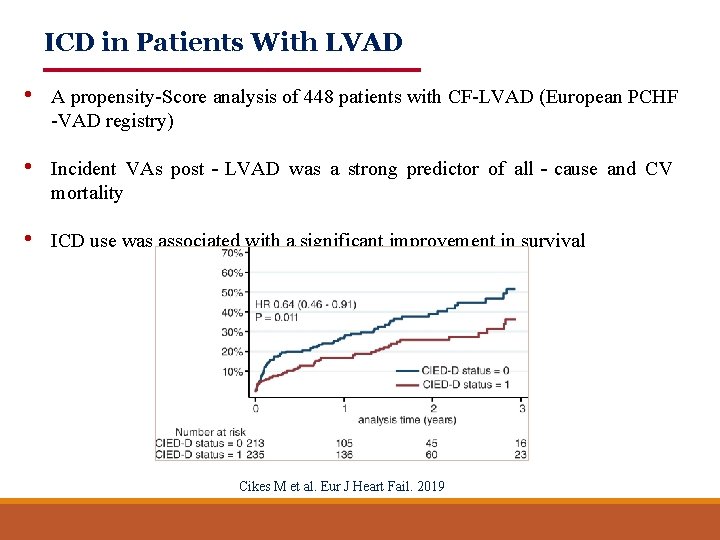
ICD in Patients With LVAD • A propensity-Score analysis of 448 patients with CF-LVAD (European PCHF -VAD registry) • Incident VAs post‐LVAD was a strong predictor of all‐cause and CV mortality • ICD use was associated with a significant improvement in survival Cikes M et al. Eur J Heart Fail. 2019
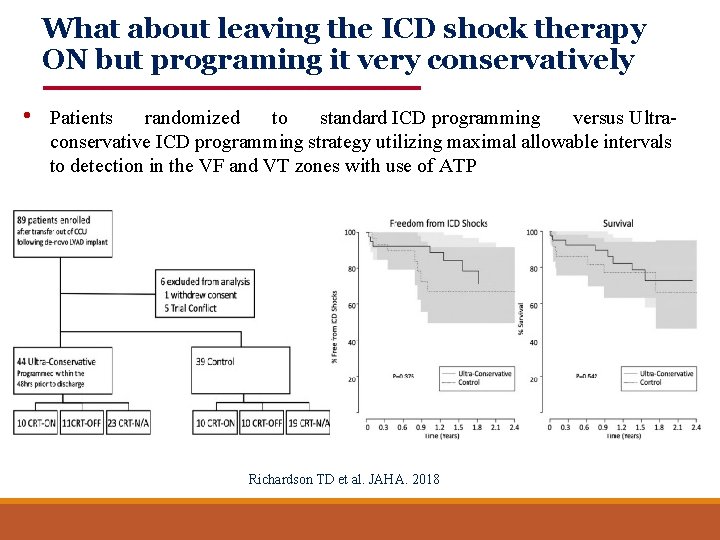
What about leaving the ICD shock therapy ON but programing it very conservatively • Patients randomized to standard ICD programming versus Ultraconservative ICD programming strategy utilizing maximal allowable intervals to detection in the VF and VT zones with use of ATP Richardson TD et al. JAHA. 2018
ICD in Patients With LVAD Recommendations • In patients with ICD: Leave shock function on/ Discuss with patient • In patients without ICD and pre-LVAD burden of VT/VF: Consider ICD • In patients without ICD and hemodynamic destabilizing VT: Amiodarone/ablation and ICD after discussion with patient
The Impact of CRT on Clinical Outcomes in CF -LVAD Patients • Main question: Leave CRT function on? • Battery use • Does it improve HF symptoms / exercise capacity ? • Does it improve survival and other outcomes ?
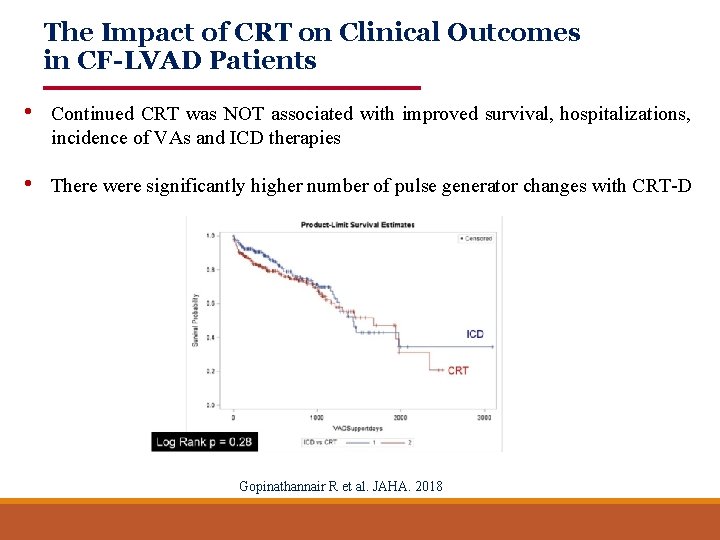
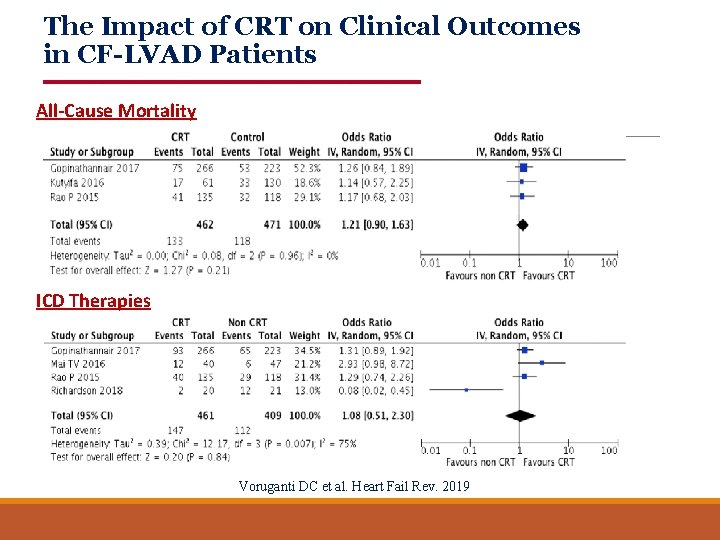
The Impact of CRT on Clinical Outcomes in CF-LVAD Patients • Continued CRT was NOT associated with improved survival, hospitalizations, incidence of VAs and ICD therapies • There were significantly higher number of pulse generator changes with CRT-D Gopinathannair R et al. JAHA. 2018
The Impact of CRT on Clinical Outcomes in CF-LVAD Patients All-Cause Mortality ICD Therapies Voruganti DC et al. Heart Fail Rev. 2019
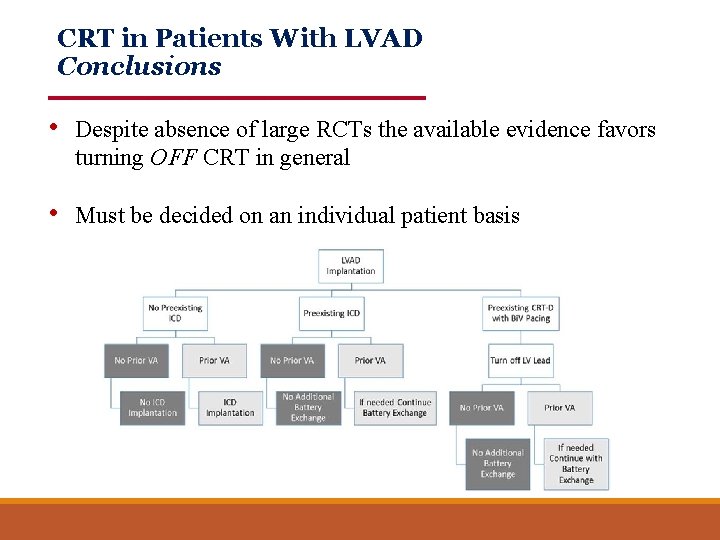
CRT in Patients With LVAD Conclusions • Despite absence of large RCTs the available evidence favors turning OFF CRT in general • Must be decided on an individual patient basis
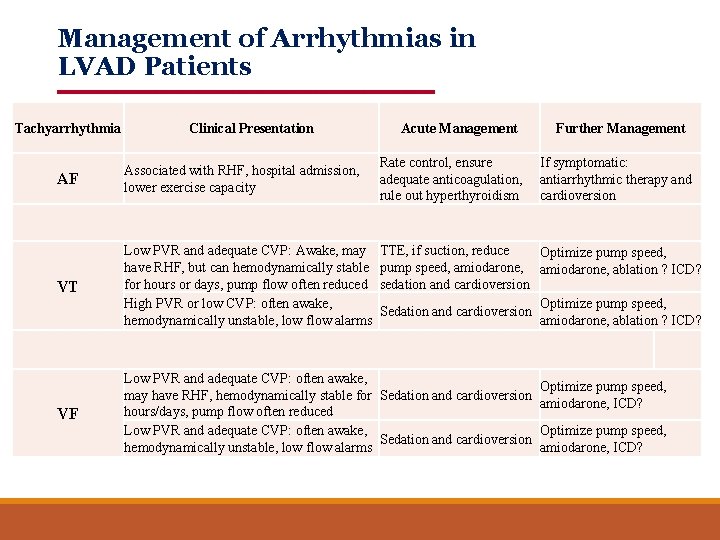
Management of Arrhythmias in LVAD Patients Tachyarrhythmia Clinical Presentation Acute Management Further Management AF Associated with RHF, hospital admission, lower exercise capacity Rate control, ensure adequate anticoagulation, rule out hyperthyroidism If symptomatic: antiarrhythmic therapy and cardioversion VT Low PVR and adequate CVP: Awake, may have RHF, but can hemodynamically stable for hours or days, pump flow often reduced High PVR or low CVP: often awake, hemodynamically unstable, low flow alarms TTE, if suction, reduce Optimize pump speed, amiodarone, ablation ? ICD? sedation and cardioversion Optimize pump speed, Sedation and cardioversion amiodarone, ablation ? ICD? VF Low PVR and adequate CVP: often awake, may have RHF, hemodynamically stable for Sedation and cardioversion hours/days, pump flow often reduced Low PVR and adequate CVP: often awake, Sedation and cardioversion hemodynamically unstable, low flow alarms Optimize pump speed, amiodarone, ICD?
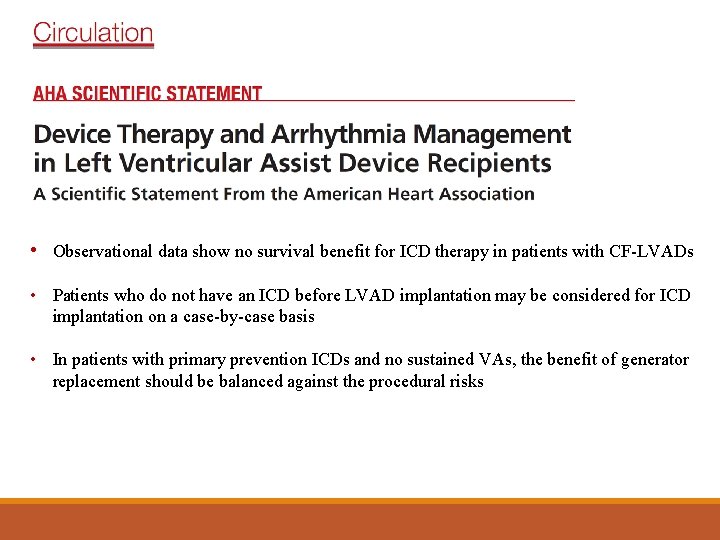
Conclusions • Observational data show no survival benefit for ICD therapy in patients with CF-LVADs • Patients who do not have an ICD before LVAD implantation may be considered for ICD implantation on a case-by-case basis • In patients with primary prevention ICDs and no sustained VAs, the benefit of generator replacement should be balanced against the procedural risks
Conclusions • A conservative programming strategy should be used with the aim of minimizing ICD shocks A high-rate cutoff VF zone (240– 250 bpm) with the longest programmable detection time available on the device. A second zone can be added for patients at risk of or with a known history of VAs with the highest detection cutoff allowed by the device unless the tachycardia is known to result in hemodynamic instability • If ATP is unsuccessful at terminating a VT episode, elective cardioversion or defibrillation under sedation is advised
Conclusions • Certain patients with an LVAD may prefer to have their ICD therapies programmed off to minimize painful ICD shocks • An alternative option would be to give the patient a magnet to disable ICD therapies when needed • In patients with an existing CRT-D device who receive a CF-LVAD, consideration can be given to programming LV pacing off after LVAD implantation
Conclusions • Antiarrhythmic drugs: Guideline recommendations to treat AAs and VAs in the non -LVAD population can be followed in these patients • Ablation therapy: Should be considered as a first-line therapy for typical atrial flutter in patients with an LVAD if there is a clear hemodynamic and functional compromise from the atrial flutter • VT ablation should be considered in patients with an LVAD with recurrent, drugresistant VAs resulting in hemodynamic compromise or recurrent ICD shocks • For patients with significant VAs before LVAD implantation, intraoperative VT ablation during LVAD implantation may be effective at reducing postoperative VAs
Thank You