
Arrhenius Model of Acids and Bases Svante August
Arrhenius Model of Acids and Bases
Svante August Arrhenius (February 19, 1859 – October 2, 1927) Swedish chemist
Acid + Base Water + Salt

Acids – something with Hydrogen that makes hydrogen ions in water. • produce H+ ions *(or hydronium ions H 3 O+) HCl H+ + Cl. H 2 SO 4 2 H+ + SO 42 H 3 PO 4 3 H+ + PO 43 - monoprotic diprotic triprotic
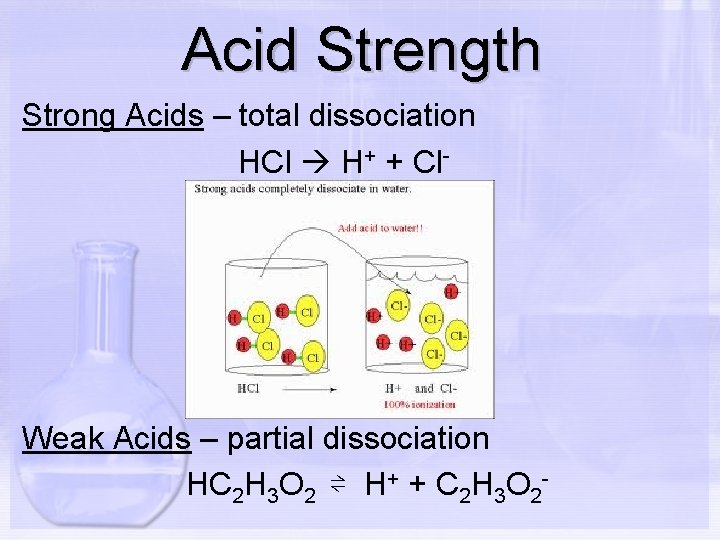
Acid Strength Strong Acids – total dissociation HCl H+ + Cl- Weak Acids – partial dissociation HC 2 H 3 O 2 ⇌ H+ + C 2 H 3 O 2 -
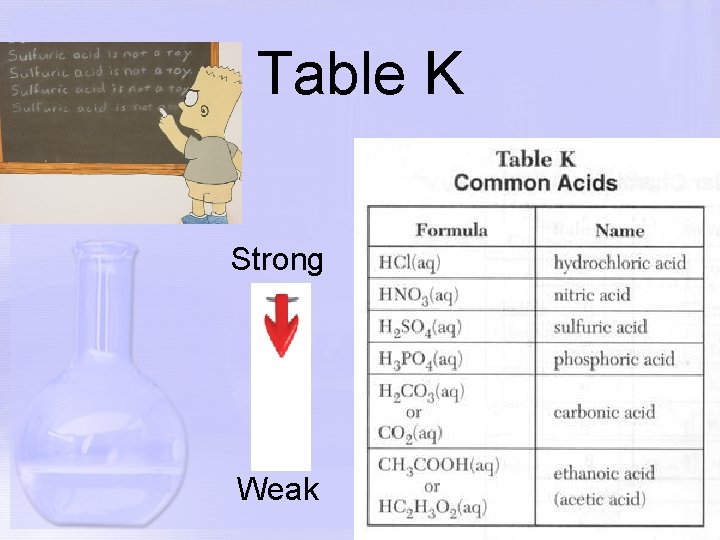
Table K Strong Weak
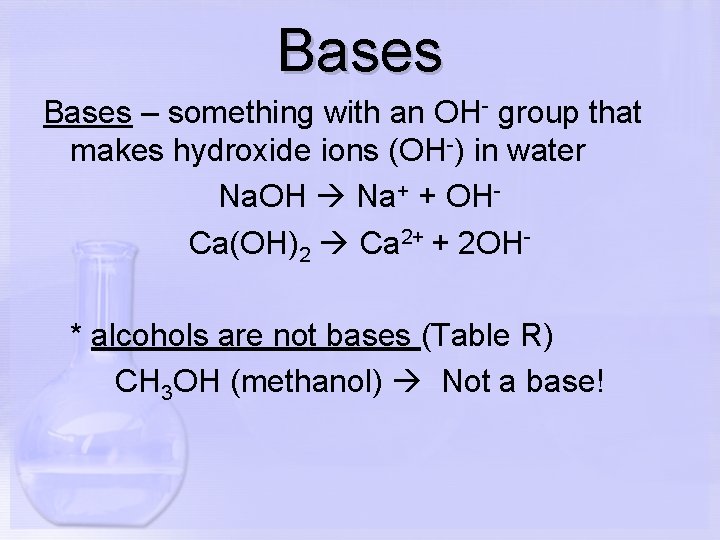
Bases – something with an OH- group that makes hydroxide ions (OH-) in water Na. OH Na+ + OHCa(OH)2 Ca 2+ + 2 OH* alcohols are not bases (Table R) CH 3 OH (methanol) Not a base!
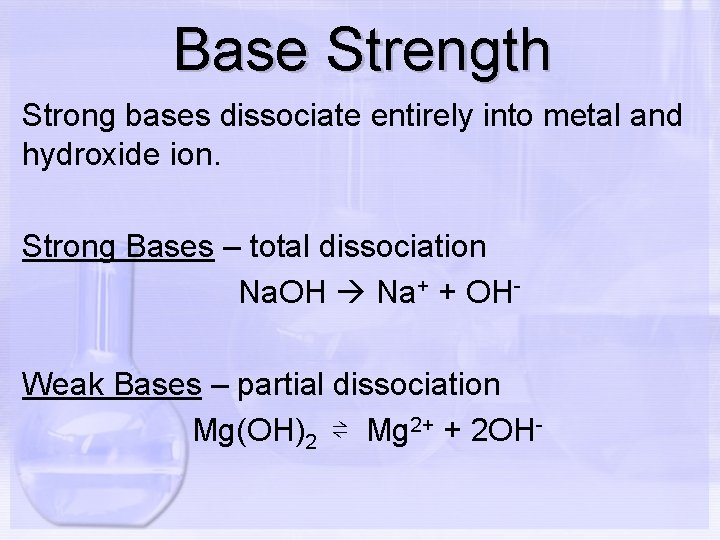
Base Strength Strong bases dissociate entirely into metal and hydroxide ion. Strong Bases – total dissociation Na. OH Na+ + OHWeak Bases – partial dissociation Mg(OH)2 ⇌ Mg 2+ + 2 OH-
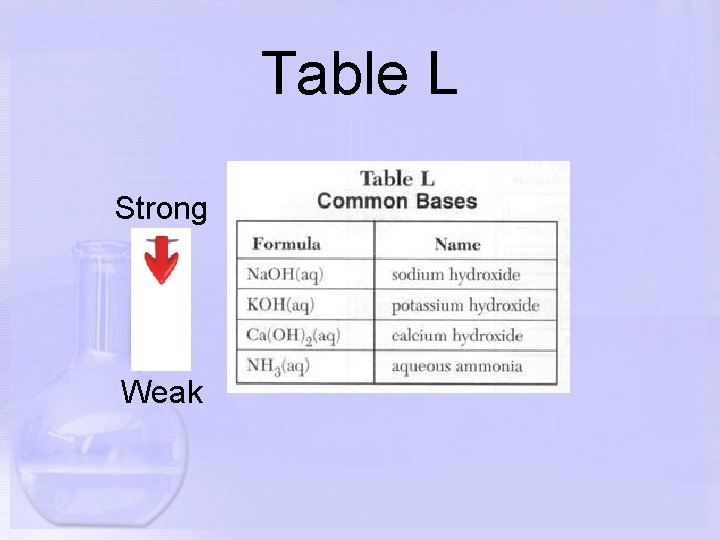
Table L Strong Weak
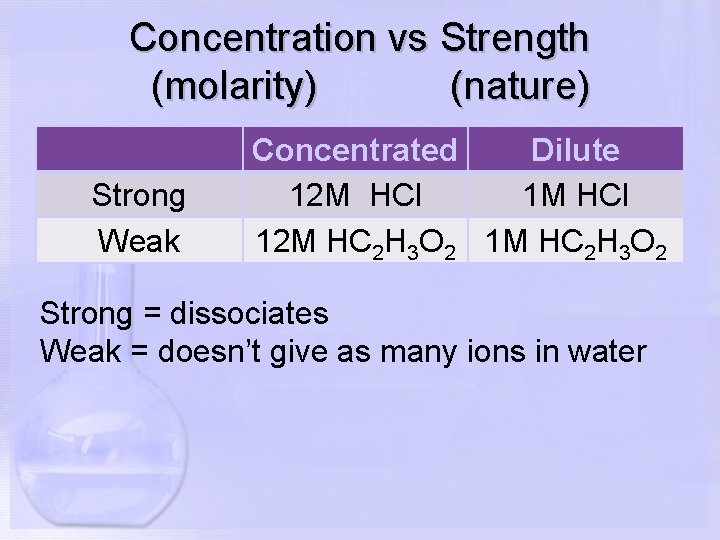
Concentration vs Strength (molarity) (nature) Strong Weak Concentrated Dilute 12 M HCl 12 M HC 2 H 3 O 2 1 M HC 2 H 3 O 2 Strong = dissociates Weak = doesn’t give as many ions in water
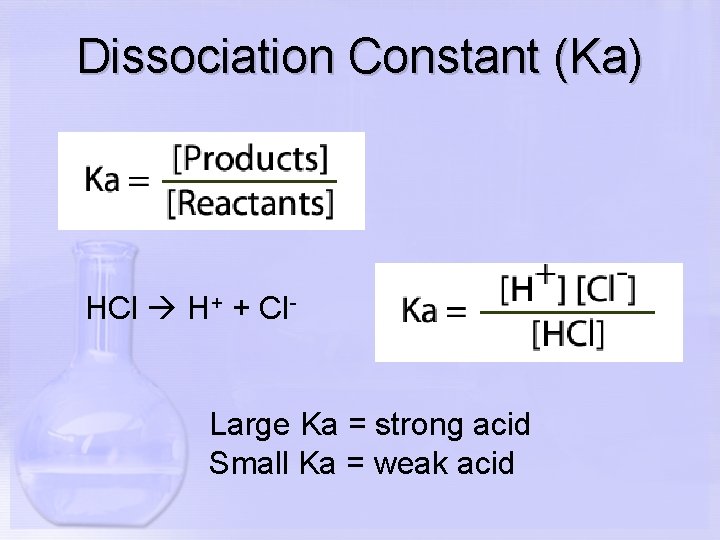
Dissociation Constant (Ka) HCl H+ + Cl- Large Ka = strong acid Small Ka = weak acid
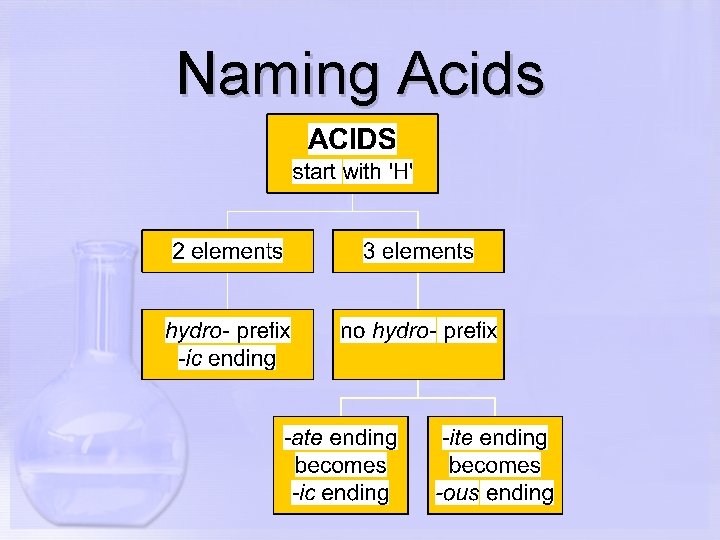
Naming Acids
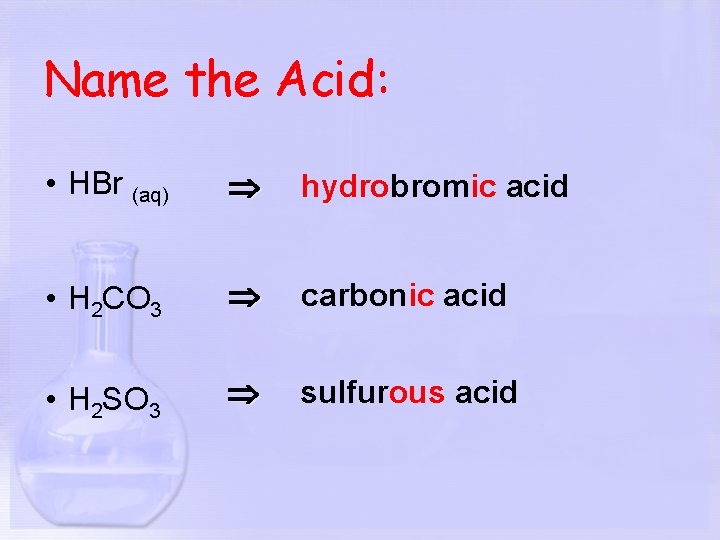
Name the Acid: • HBr (aq) hydrobromic acid • H 2 CO 3 carbonic acid • H 2 SO 3 sulfurous acid
- Slides: 13