
Arousal Theories A 2 PE Sports Psychology Objectives
Arousal Theories A 2 PE – Sports Psychology
Objectives To have a basic understanding of arousal theories How sports performance can be analysed through arousal theories How arousal can have an effect on sports performance

Arousal Definition ‘A general physiological and psychological activation, varying in intensity along a continuum, from deep sleep to intense excitement’ (Gould & Krane, 1992)
4 Theories of Arousal Drive Theory Inverted U Hypothesis Catastrophe Theory Zone of Optimal Functioning
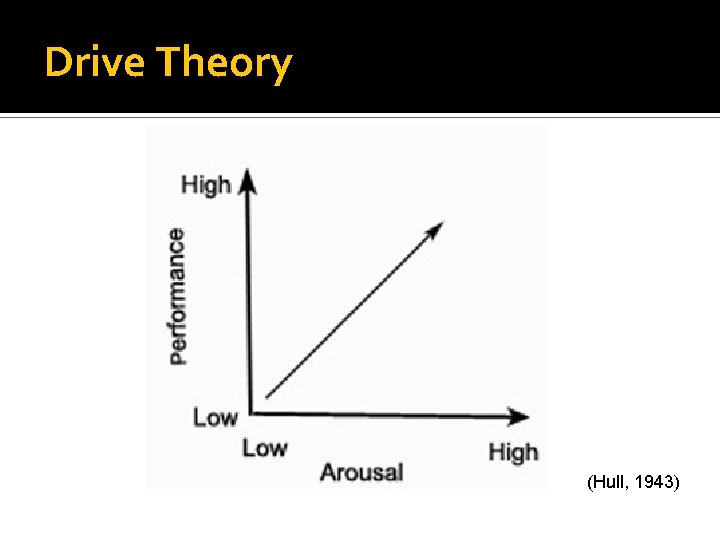
Drive Theory (Hull, 1943)

Drive Theory Suggests: A linear relationship between performance and arousal As arousal increases so does performance Arousal has a different affect on performers of different levels Beginners will make more mistakes when the task is too high and they have high levels of arousal
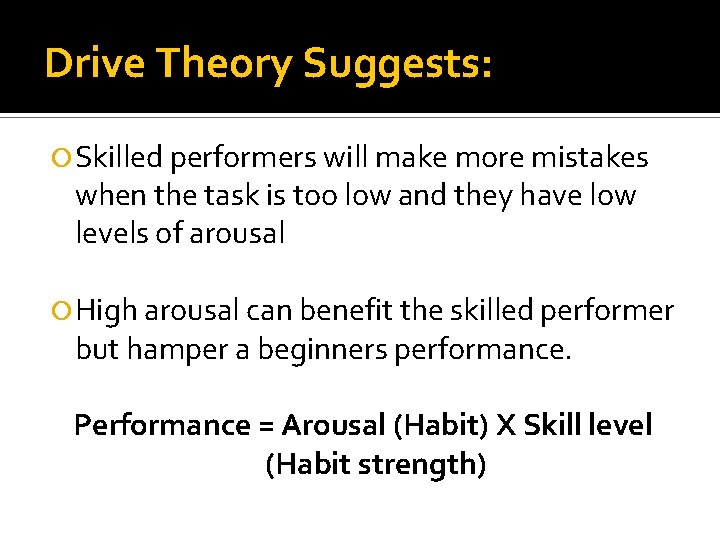
Drive Theory Suggests: Skilled performers will make more mistakes when the task is too low and they have low levels of arousal High arousal can benefit the skilled performer but hamper a beginners performance. Performance = Arousal (Habit) X Skill level (Habit strength)
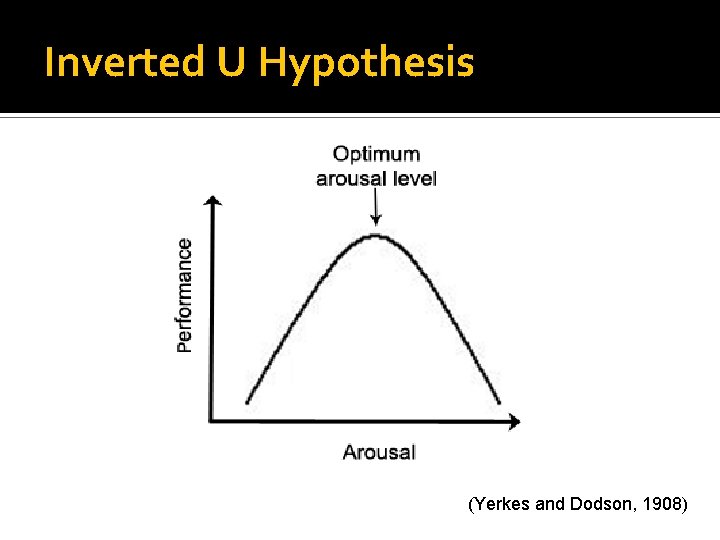
Inverted U Hypothesis (Yerkes and Dodson, 1908)
Inverted U Suggests: For every type of performance there is an optimal level of arousal Moderate intensity produces maximum performance. Levels of arousal above or below this point produce a lower level of performance.
Discussion Points Worksheet One In groups you need to decide where on the inverted U these sporting situations should be placed and justify why. . .
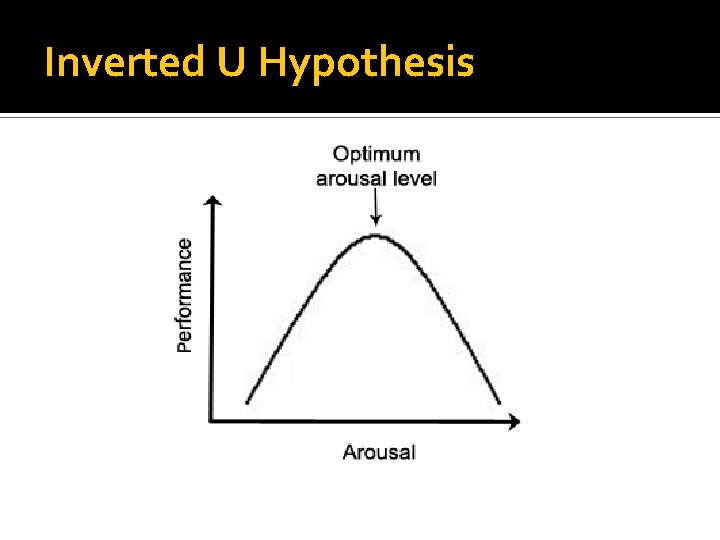
Inverted U Hypothesis
Inverted U: Differences in Sports Fine motor control sports e. g. golf putt, will perform better with lower levels of arousal. Gross motor skills e. g. rugby, will perform better with higher levels of arousal. Skilled performers require higher levels of arousal when performing the same skill/task as a beginner. Extroverts perform better when under situations of high levels of arousal. Introverts perform better under situations of low levels of arousal.
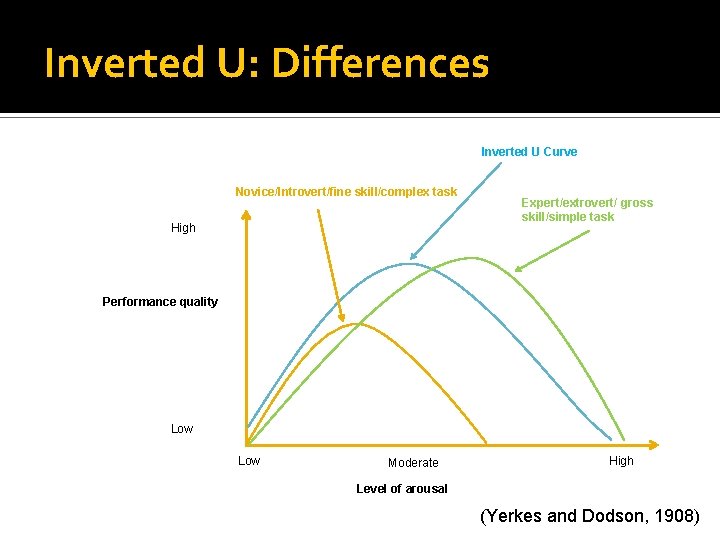
Inverted U: Differences Inverted U Curve Novice/Introvert/fine skill/complex task High Expert/extrovert/ gross skill/simple task Performance quality Low Moderate High Level of arousal (Yerkes and Dodson, 1908)
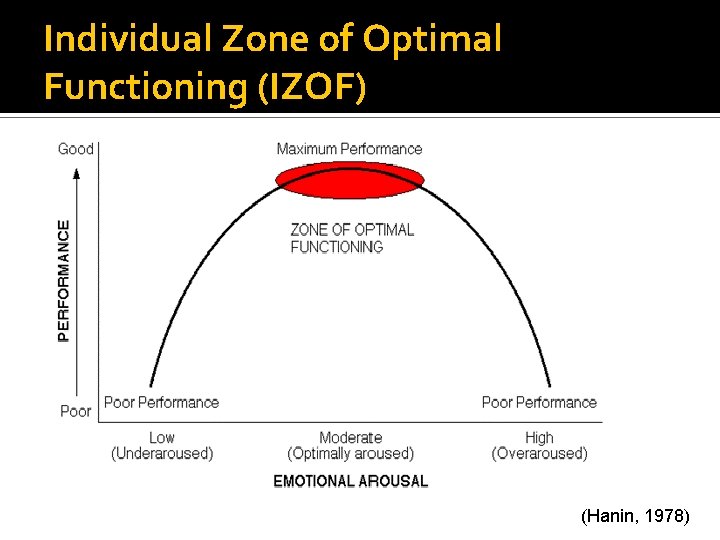
Individual Zone of Optimal Functioning (IZOF) (Hanin, 1978)
IZOF Each individual will perform at their very best when they are within their pre-performance anxiety zone. Once the performer is outside of their anxiety zone this will have a detrimental affect on performance. This IZOF model takes in to account performers emotions.
IZOF This IZOF model takes in to account performers emotions. Therefore for, optimum performance will not only require the performer to be within their anxiety zone but within their optimal levels of emotion. Example If an athlete has found their optimum level of arousal but emotionally they feel lethargic and lack determination, then they will not perform to the best of their ability.
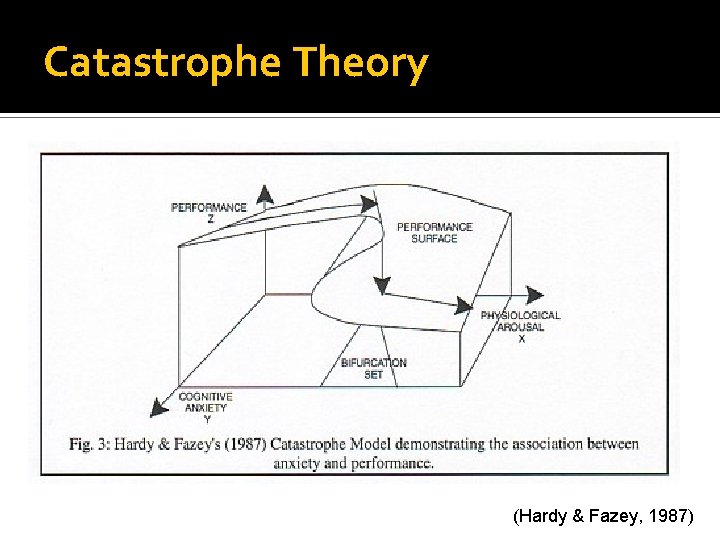
Catastrophe Theory (Hardy & Fazey, 1987)
Catastrophe Theory Suggests: Modification to the inverted U hypothesis Both argue that if arousal increases it will have a positive effect on performance to a certain point Combination of high physiological arousal with high cognitive anxiety levels – players become upset to the detriment of the game
Catastrophe Theory Suggests: Deterioration is much more extreme Can not be put right by merely calming down Effects performers ability to concentrate Recovery can be very difficult Requires mental toughness
Effects of Arousal on Performance Each individual athlete will have their own levels of arousal which will either have a positive or negative affect on performance. Positive levels of arousal for one performer may be negative for another and vice versa. Therefore arousal is down to the interpretation of each individual athlete.
Effects of Arousal on Performance It is therefore down to the coach and athlete to find out how they perform best and ensure they include strategies to deal with the situation. It is also important to avoid extremely high anxiety as this generally causes poor performances and can be difficult to reverse (Catastrophe Theory).
Changes in Attention Focus Once athletes are outside their arousal zone this can lead to a decline in attention and focus. Examples: Low arousal = broad attention field = take in relevant & irrelevant cues. High arousal = low attention field = miss important cues
Choking is likely to occur when arousal is high and anxiety is perceived as something negative and therefore maybe related to increased levels of somatic trait anxiety.
Group Activity In groups you need to come up with a play, song, rap or poem to explain one of the following theories Drive Theory Inverted U Hypothesis Catastrophe Theory Zone of Optimal Functioning
- Slides: 24