
Aromaticity Coal as a Source of Benzene 1675
Aromaticity
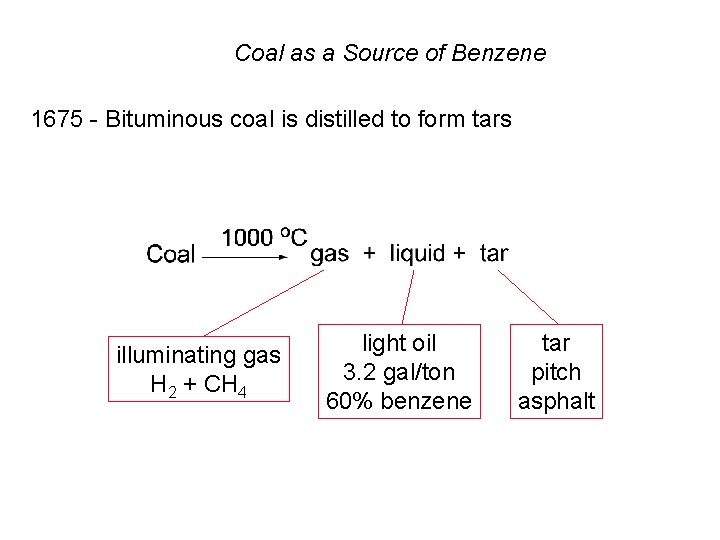
Coal as a Source of Benzene 1675 - Bituminous coal is distilled to form tars illuminating gas H 2 + CH 4 light oil 3. 2 gal/ton 60% benzene tar pitch asphalt
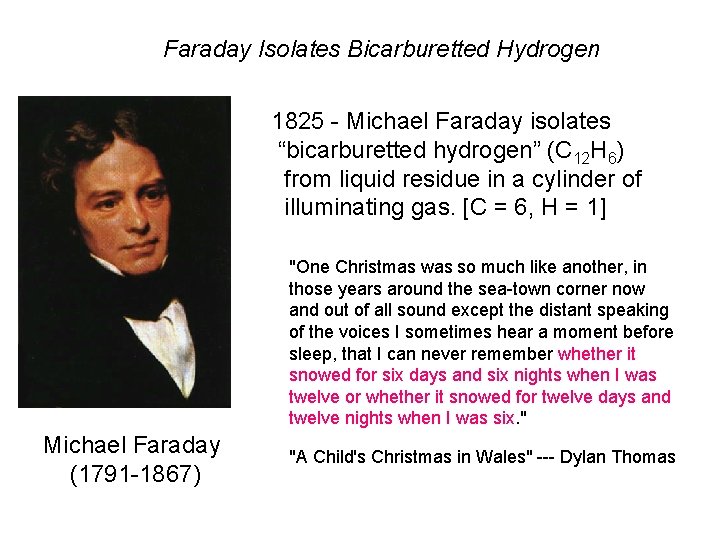
Faraday Isolates Bicarburetted Hydrogen 1825 - Michael Faraday isolates “bicarburetted hydrogen” (C 12 H 6) from liquid residue in a cylinder of illuminating gas. [C = 6, H = 1] "One Christmas was so much like another, in those years around the sea-town corner now and out of all sound except the distant speaking of the voices I sometimes hear a moment before sleep, that I can never remember whether it snowed for six days and six nights when I was twelve or whether it snowed for twelve days and twelve nights when I was six. " Michael Faraday (1791 -1867) "A Child's Christmas in Wales" --- Dylan Thomas
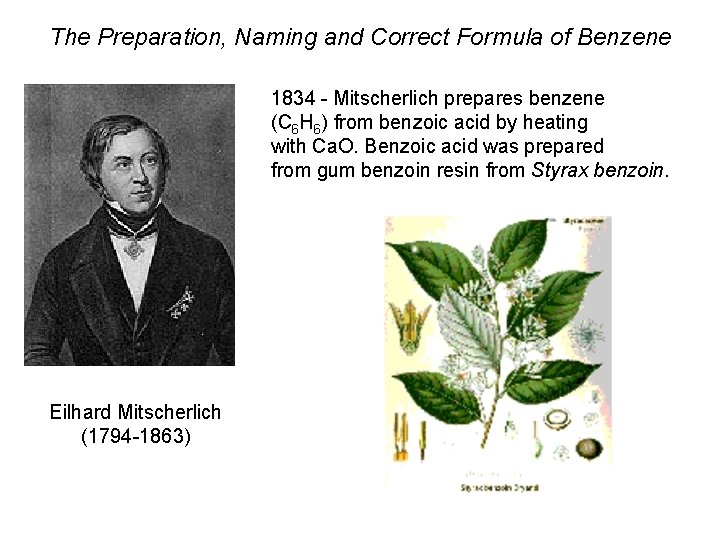
The Preparation, Naming and Correct Formula of Benzene 1834 - Mitscherlich prepares benzene (C 6 H 6) from benzoic acid by heating with Ca. O. Benzoic acid was prepared from gum benzoin resin from Styrax benzoin. Eilhard Mitscherlich (1794 -1863)
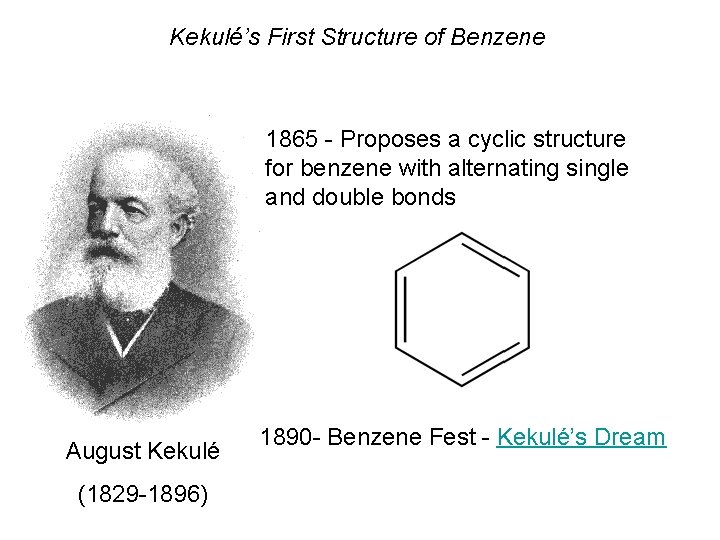
Kekulé’s First Structure of Benzene 1865 - Proposes a cyclic structure for benzene with alternating single and double bonds August Kekulé (1829 -1896) 1890 - Benzene Fest - Kekulé’s Dream
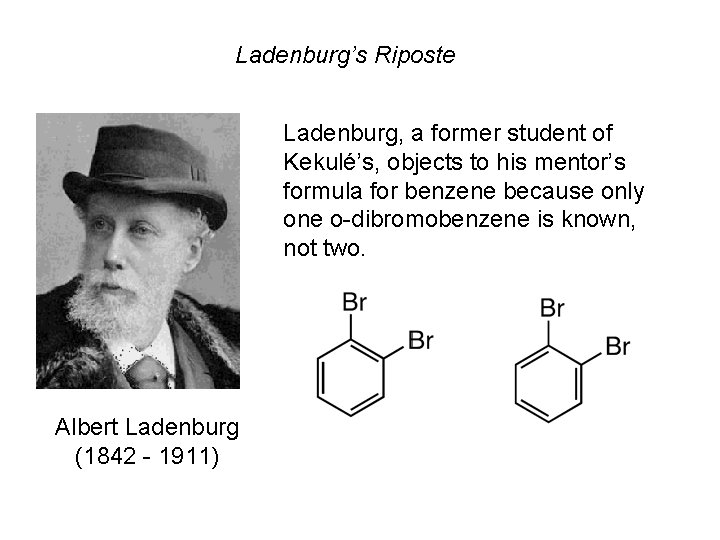
Ladenburg’s Riposte Ladenburg, a former student of Kekulé’s, objects to his mentor’s formula for benzene because only one o-dibromobenzene is known, not two. Albert Ladenburg (1842 - 1911)
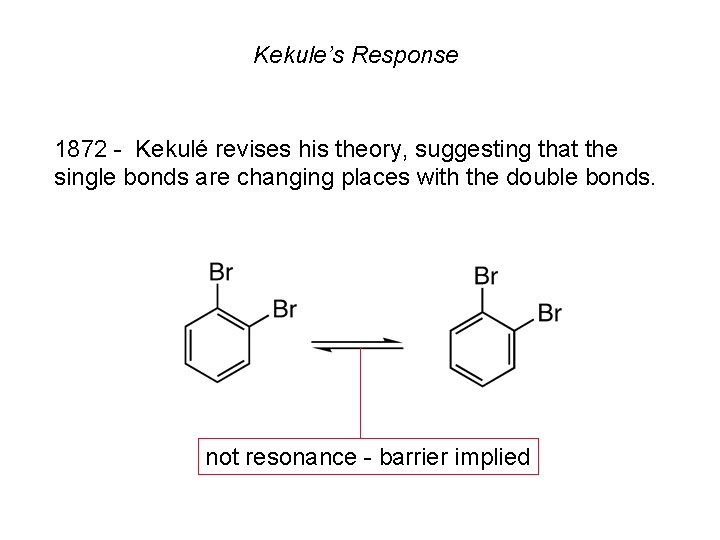
Kekule’s Response 1872 - Kekulé revises his theory, suggesting that the single bonds are changing places with the double bonds. not resonance - barrier implied

Ladenburg’s Prismane Structure 1869 - Ladenburg proposes the prismane structure for benzene. . ortho para meta
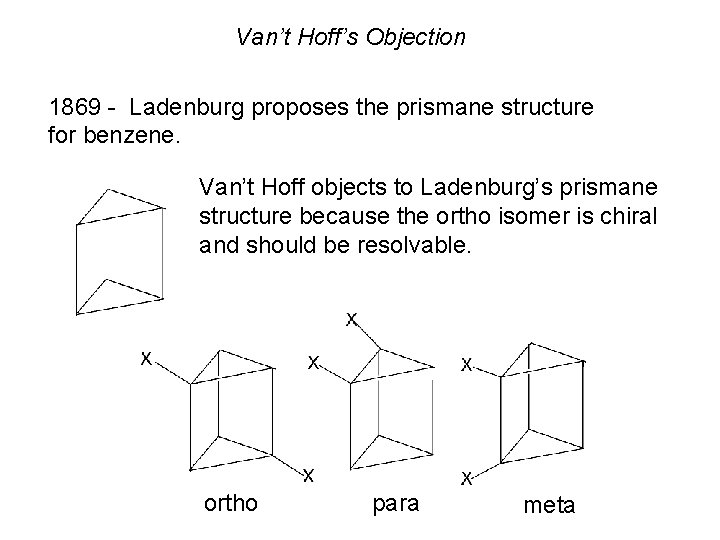
Van’t Hoff’s Objection 1869 - Ladenburg proposes the prismane structure for benzene. Van’t Hoff objects to Ladenburg’s prismane structure because the ortho isomer is chiral and should be resolvable. ortho para meta
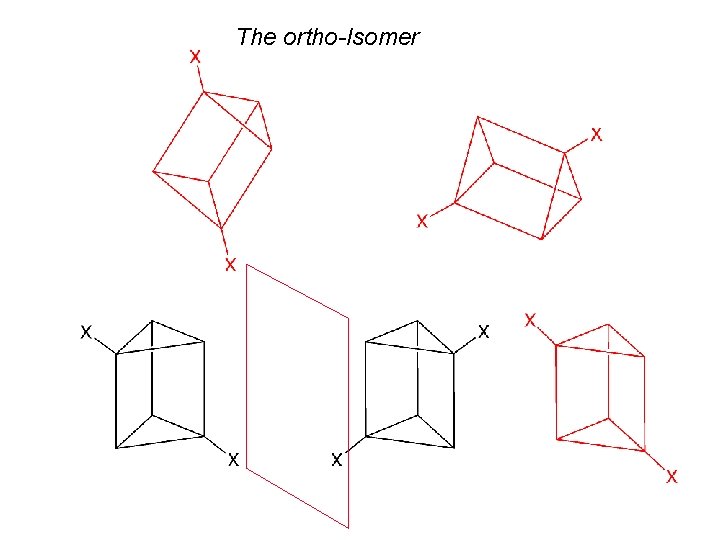
The ortho-Isomer
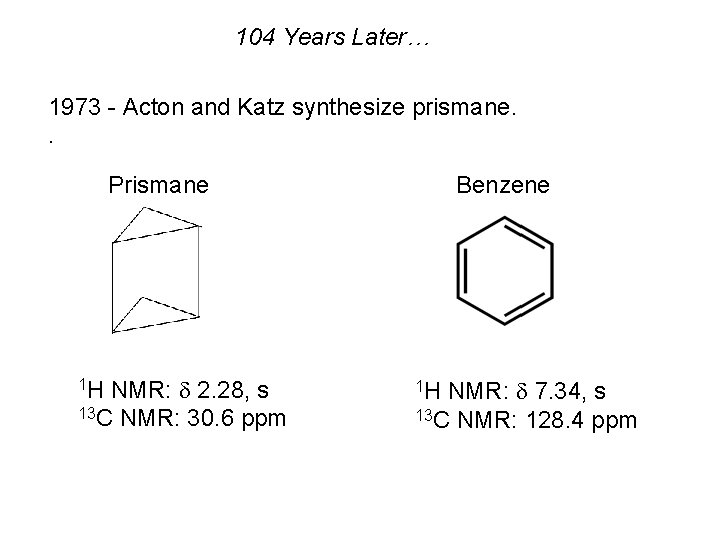
104 Years Later… 1973 - Acton and Katz synthesize prismane. . Prismane NMR: 2. 28, s 13 C NMR: 30. 6 ppm 1 H Benzene NMR: 7. 34, s 13 C NMR: 128. 4 ppm 1 H
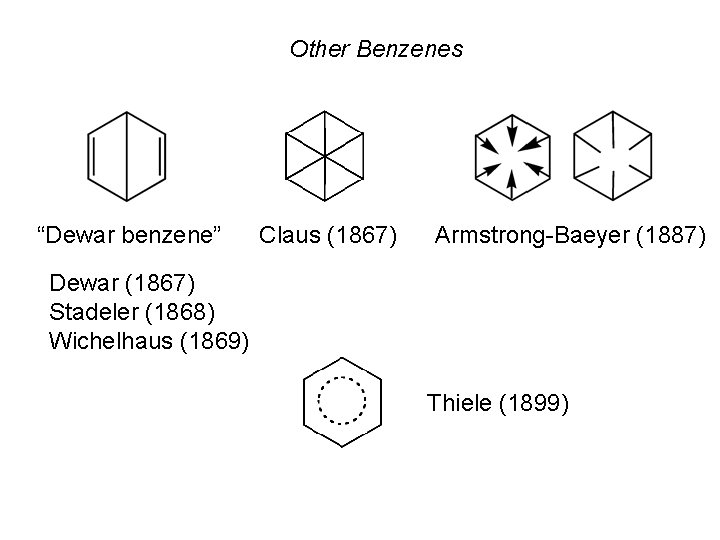
Other Benzenes “Dewar benzene” Claus (1867) Armstrong-Baeyer (1887) Dewar (1867) Stadeler (1868) Wichelhaus (1869) Thiele (1899)
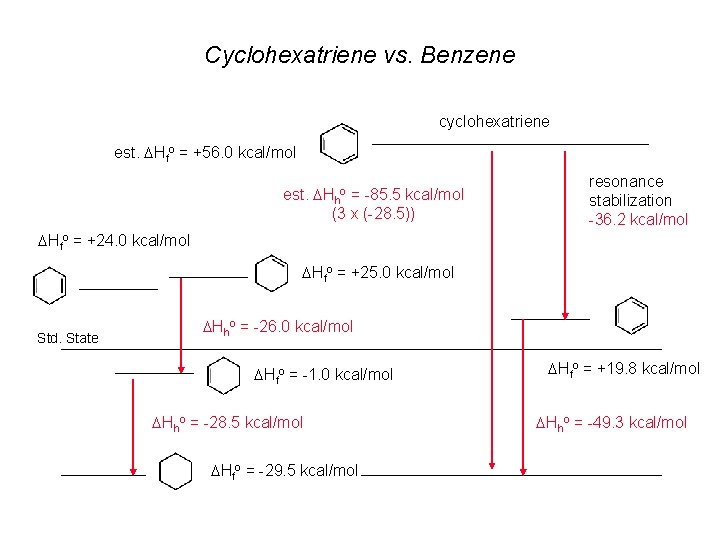
Cyclohexatriene vs. Benzene cyclohexatriene est. DHfo = +56. 0 kcal/mol est. DHh = -85. 5 kcal/mol (3 x (-28. 5)) o resonance stabilization -36. 2 kcal/mol DHfo = +24. 0 kcal/mol DHfo = +25. 0 kcal/mol Std. State DHho = -26. 0 kcal/mol DHfo = -1. 0 kcal/mol DHho = -28. 5 kcal/mol DHfo = -29. 5 kcal/mol DHfo = +19. 8 kcal/mol DHho = -49. 3 kcal/mol
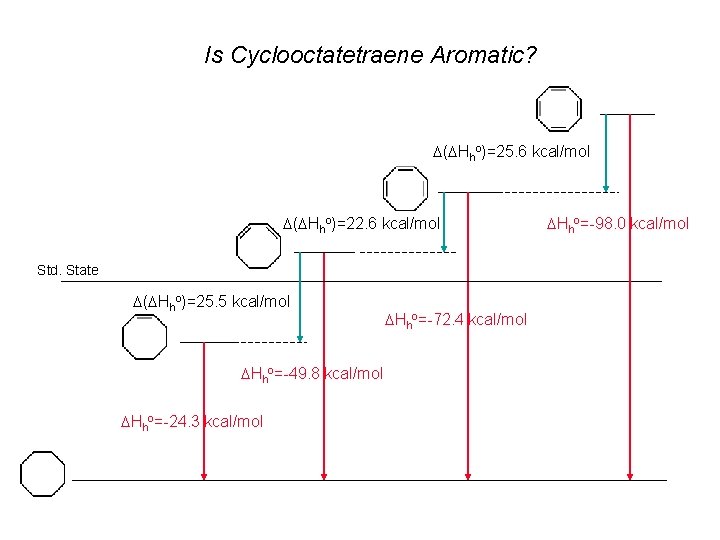
Is Cyclooctatetraene Aromatic? D(DHho)=25. 6 kcal/mol D(DHho)=22. 6 kcal/mol Std. State D(DHho)=25. 5 kcal/mol DHho=-49. 8 kcal/mol DHho=-24. 3 kcal/mol DHho=-72. 4 kcal/mol DHho=-98. 0 kcal/mol
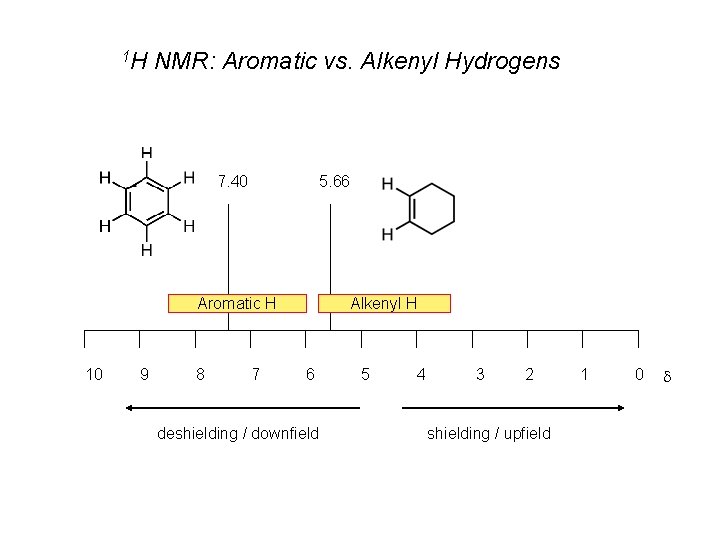
1 H NMR: Aromatic vs. Alkenyl Hydrogens 7. 40 5. 66 Aromatic H 10 9 8 7 Alkenyl H 6 deshielding / downfield 5 4 3 2 shielding / upfield 1 0
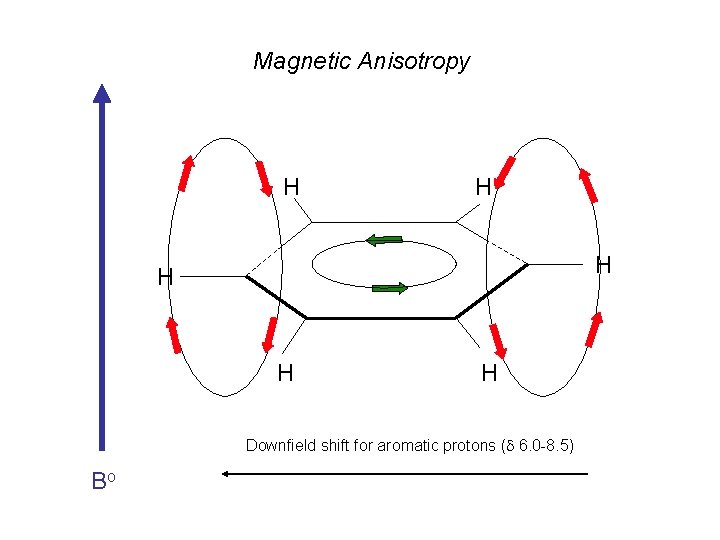
Magnetic Anisotropy H H H Downfield shift for aromatic protons ( 6. 0 -8. 5) Bo
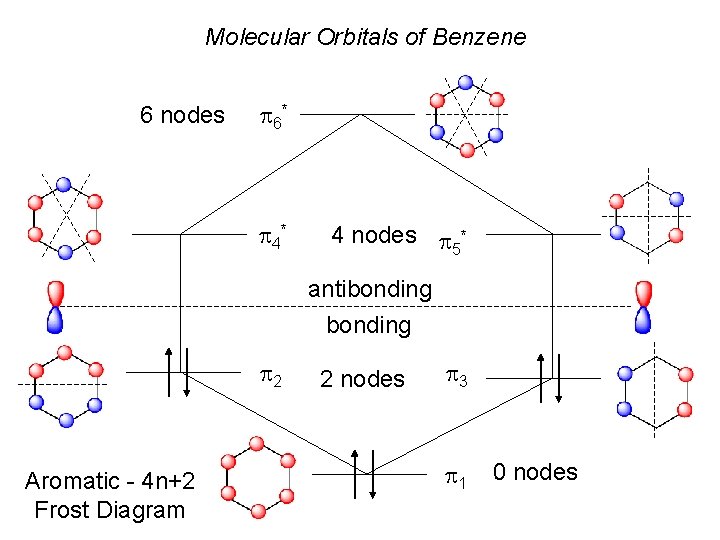
Molecular Orbitals of Benzene 6 nodes p 6* p 4* 4 nodes p * 5 antibonding p 2 Aromatic - 4 n+2 Frost Diagram 2 nodes p 3 p 1 0 nodes
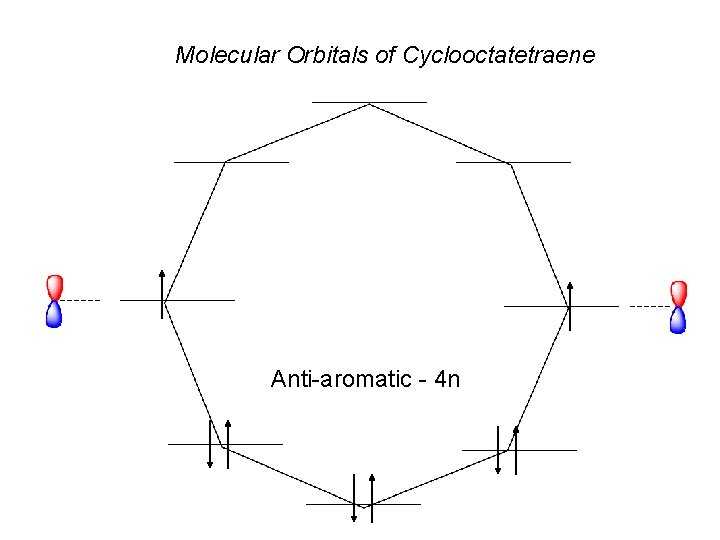
Molecular Orbitals of Cyclooctatetraene Anti-aromatic - 4 n
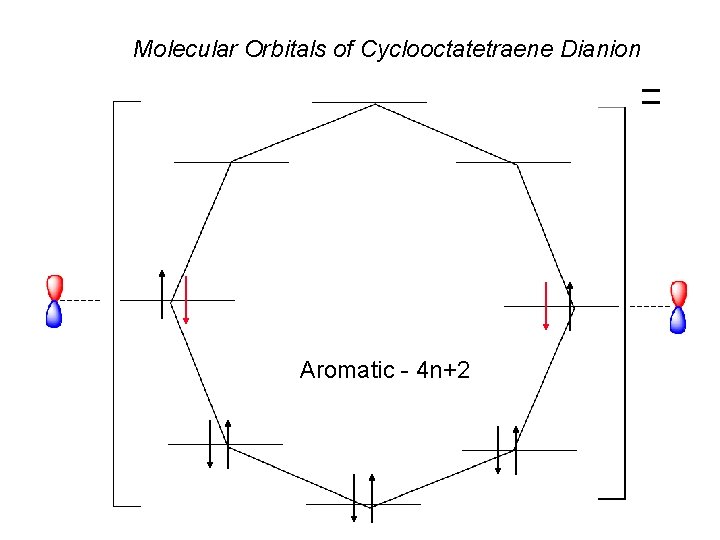
Molecular Orbitals of Cyclooctatetraene Dianion Aromatic - 4 n+2
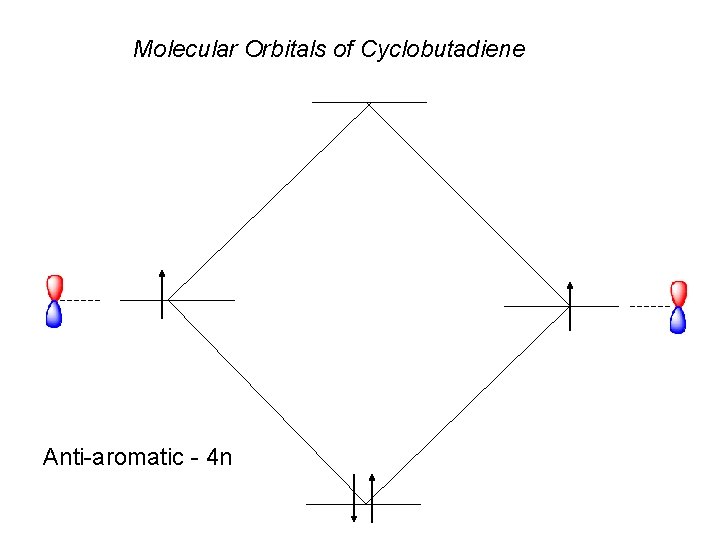
Molecular Orbitals of Cyclobutadiene Anti-aromatic - 4 n
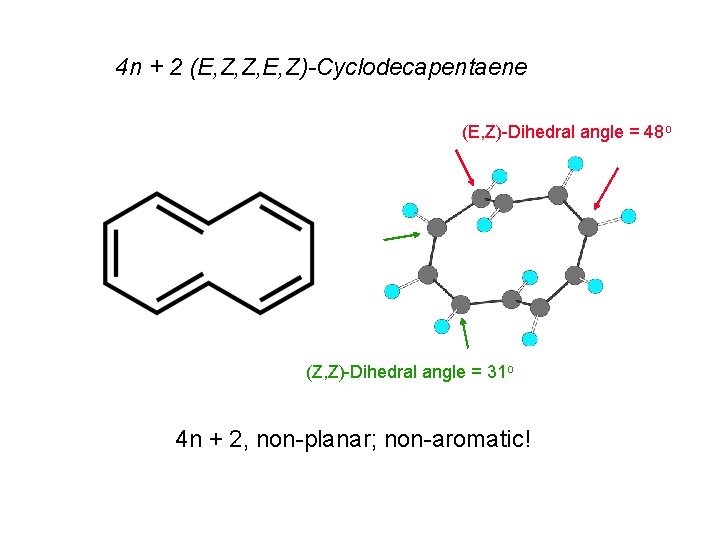
4 n + 2 (E, Z, Z, E, Z)-Cyclodecapentaene (E, Z)-Dihedral angle = 48 o (Z, Z)-Dihedral angle = 31 o 4 n + 2, non-planar; non-aromatic!
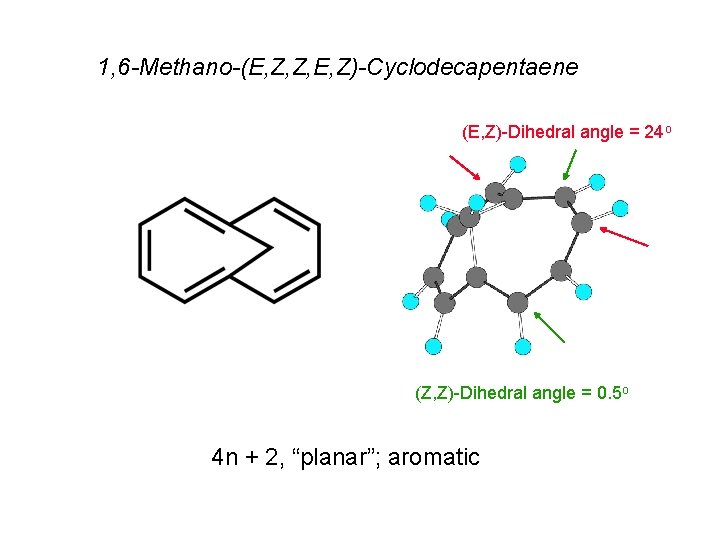
1, 6 -Methano-(E, Z, Z, E, Z)-Cyclodecapentaene (E, Z)-Dihedral angle = 24 o (Z, Z)-Dihedral angle = 0. 5 o 4 n + 2, “planar”; aromatic
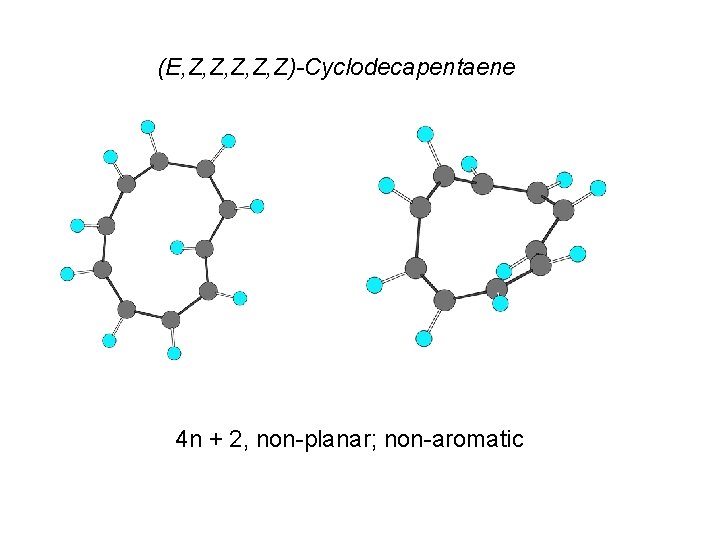
(E, Z, Z, Z)-Cyclodecapentaene 4 n + 2, non-planar; non-aromatic
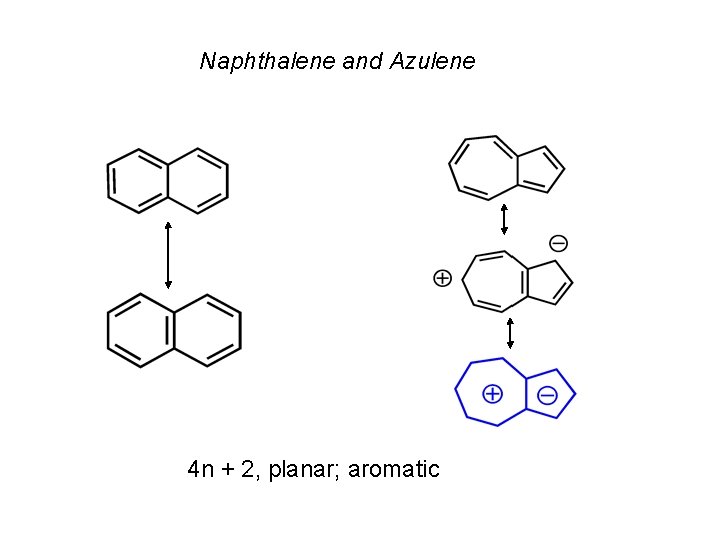
Naphthalene and Azulene 4 n + 2, planar; aromatic
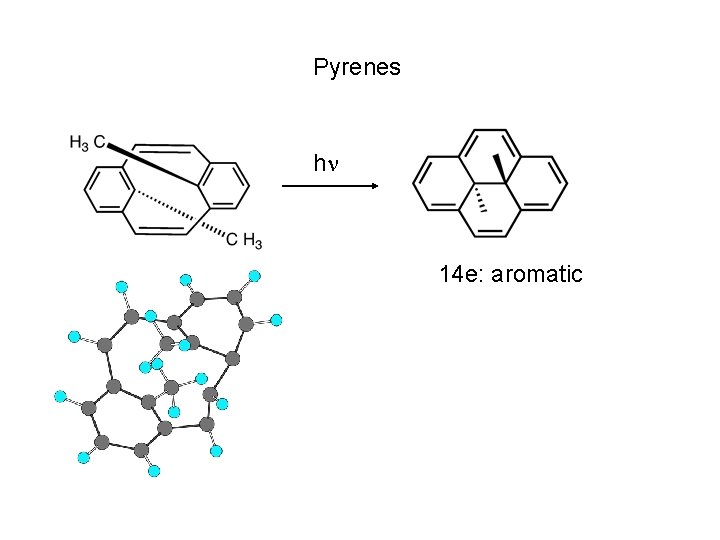
Pyrenes hn ? 14 e: aromatic
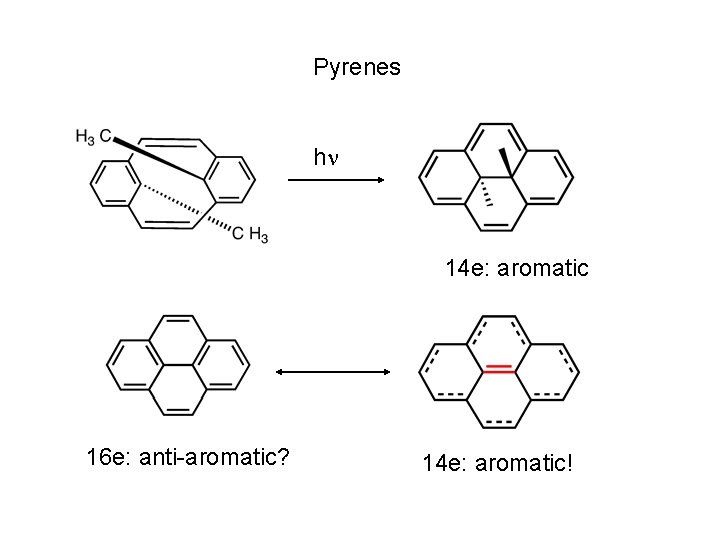
Pyrenes hn 14 e: aromatic 16 e: anti-aromatic? 14 e: aromatic!
![[18]-Annulene 1 H NMR: 120 OC; 5. 45 (18 H, s) -60 o. C;](http://slidetodoc.com/presentation_image/48dfab943de0fb87cb924fd8b7f4f7c6/image-27.jpg "[18]-Annulene 1 H NMR: 120 OC; 5. 45 (18 H, s) -60 o. C;")
[18]-Annulene 1 H NMR: 120 OC; 5. 45 (18 H, s) -60 o. C; 9. 25 (12 H, s), -2. 9 (6 H, s) B 0
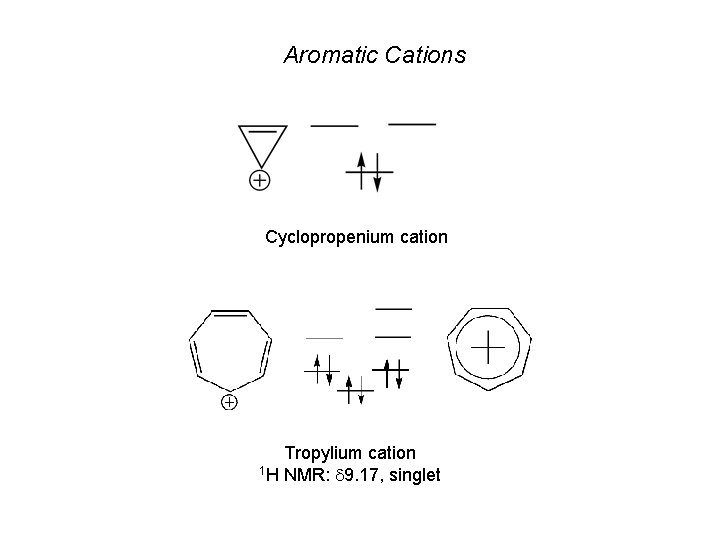
Aromatic Cations Cyclopropenium cation Tropylium cation 1 H NMR: 9. 17, singlet
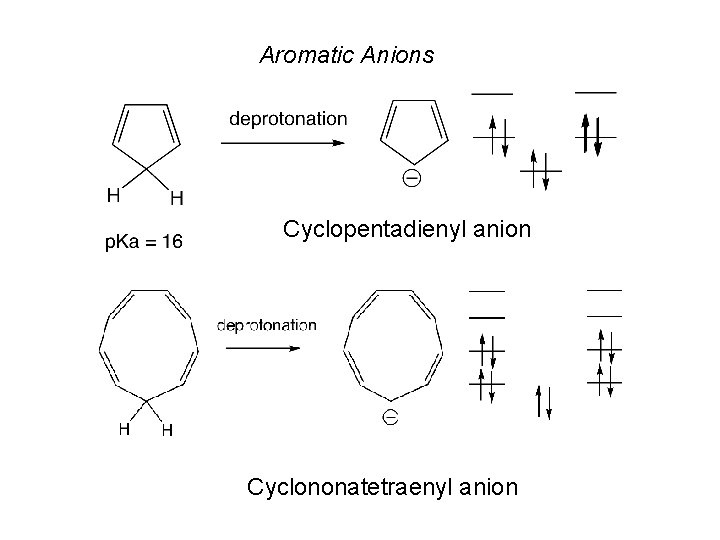
Aromatic Anions Cyclopentadienyl anion Cyclononatetraenyl anion
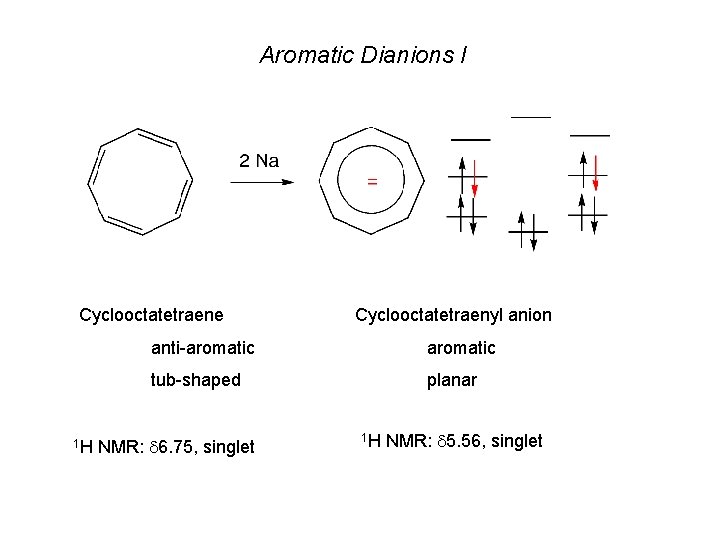
Aromatic Dianions I Cyclooctatetraene 1 H Cyclooctatetraenyl anion anti-aromatic tub-shaped planar NMR: 6. 75, singlet 1 H NMR: 5. 56, singlet
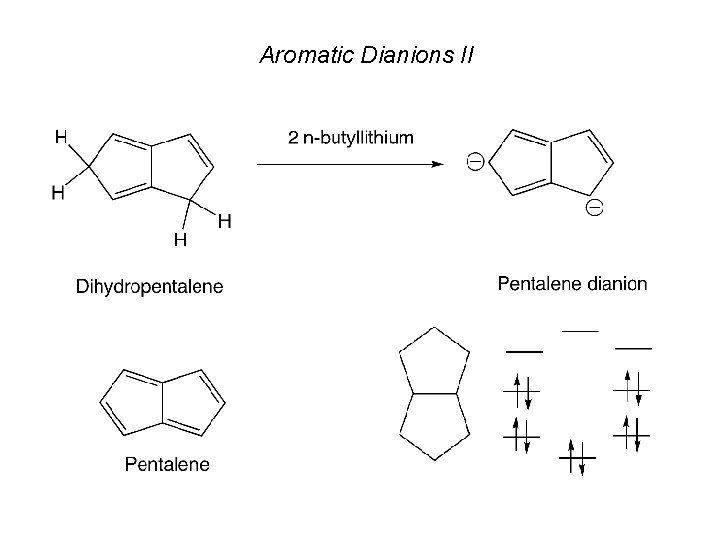
Aromatic Dianions II
The End
- Slides: 32