
Army DCIPS 2010 Performance Management and Bonus Process
Army DCIPS 2010 Performance Management and Bonus Process Review

Agenda q. Purpose q. Key Timeline Data q. Lessons Learned q. Organizations Analyzed q. Army Aggregate Data q. Bonus Group Results q. Challenges
Purpose The purpose of this brief is to provide a comprehensive overview of the 2010 Performance Management and Bonus Process. It also depicts a 2009 bonus data set to correlate the results of the 2010 analysis to possible key decisions in the process. BLUF: Meaningful distinction in Performance Management provided bonus results within expected outcomes.
Key Timeline Data q The earliest bonus pool was conducted on 16 Nov 10 q The last bonus pool was conducted on 20 Dec 10 q The pay out for 2010 was conducted on 27 Jan 11 q Manual RPAs were processed after 28 Feb 11 q Initial analysis conducted by USD(I) 1 Mar 11 q Bonus data call sent to the community 1 Mar 11 q Final data received from community 27 Apr 11 q Final review completed and reported 18 May 11 q Comments/data received from 22 organizations for the analysis
Key Impacts – 3 Each Positive and Negative q Meaningful distinction in the Performance Management Process resulted in fair and equitable distributions of rating for DCIPS vs TAPES - An approximate 40% increase in both Successful and Excellent ratings - An approximate 80% decrease in the Outstanding rating under TAPES 2009 q Minimal reconsideration requests at HQDA, G-2 level - Only 6 requests required G-2 ruling/determination q The incorporation of the PRA review added validity to the process - The 2 nd level review reinforced the leadership involvement in the PM process v Minimal training on DCIPS was significant for: HLRs, Managers and Military Raters v The 50% Bonus Rule proved problematic and restricted the ability to adequately reward the workforce v The automated tools supporting the process required modification - PAA Tool allowed HLRs to approve reports prior to PRA approval - CWB/DPAT required changes during the process to function properly
Lessons Learned q The 50% Bonus Rule did not allow the organizations maximum flexibility to adequately reward employees q Rater consistency training required for shared understanding of ratings category q Managers needed more training on writing SMART objectives q Employees needed more training on writing self assessments q Bonus guidance should be released earlier in the PM process to provide organizations adequate time to develop business rules q Training for bonus board members just prior to commencement of the boards supported the process q Identifying alternate board members provided continuity throughout the process q The awareness of assessing the Performance Elements as well as the Objectives
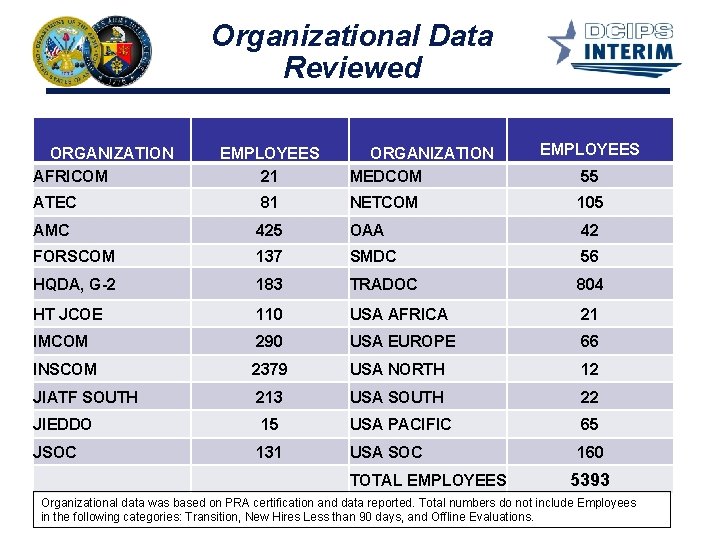
Organizational Data Reviewed ORGANIZATION AFRICOM EMPLOYEES 21 ORGANIZATION MEDCOM EMPLOYEES 55 ATEC 81 NETCOM 105 AMC 425 OAA 42 FORSCOM 137 SMDC 56 HQDA, G-2 183 TRADOC 804 HT JCOE 110 USA AFRICA 21 IMCOM 290 USA EUROPE 66 INSCOM 2379 USA NORTH 12 JIATF SOUTH 213 USA SOUTH 22 JIEDDO 15 USA PACIFIC 65 JSOC 131 USA SOC 160 TOTAL EMPLOYEES 5393 Organizational data was based on PRA certification and data reported. Total numbers do not include Employees in the following categories: Transition, New Hires Less than 90 days, and Offline Evaluations.

Army Aggregate Report for Employees Overall Summary – FY 10 Performance Cycle Overall Workforce Considered 5393 Number of Bonus Pools 140 Average Overall Rating 3. 78 Average Bonus Budget Percentage 1. 77% Average Bonus Amount $2, 813 Number of QSIs 258 Percent of Workforce Receiving a Bonus 47% 8
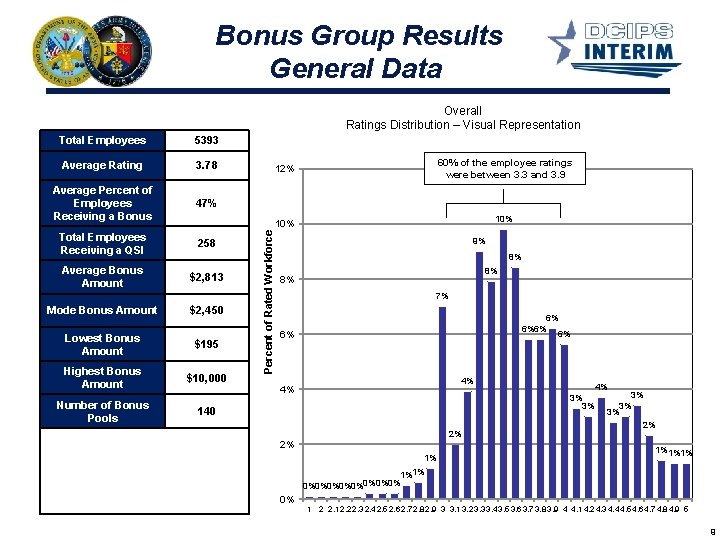
Bonus Group Results General Data Overall Ratings Distribution – Visual Representation 5393 Average Rating 3. 78 Average Percent of Employees Receiving a Bonus 47% Total Employees Receiving a QSI 258 Average Bonus Amount $2, 813 Mode Bonus Amount $2, 450 Lowest Bonus Amount $195 Highest Bonus Amount $10, 000 Number of Bonus Pools 140 60% of the employee ratings were between 3. 3 and 3. 9 12% Percent of Rated Workforce Total Employees 10% 9% 8% 8% 8% 7% 6% 6% 6% 4% 4% 2% 2% 1% 4% 3% 3% 3% 2% 1%1%1% 0%0%0% 0% 1 2 2. 1 2. 2 2. 3 2. 4 2. 5 2. 6 2. 7 2. 8 2. 9 3 3. 1 3. 2 3. 3 3. 4 3. 5 3. 6 3. 7 3. 8 3. 9 4 4. 1 4. 2 4. 3 4. 4 4. 5 4. 6 4. 7 4. 8 4. 9 5 9
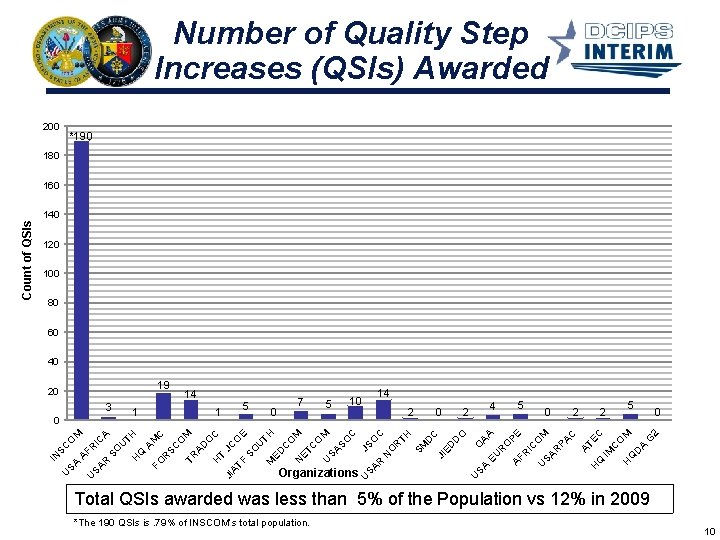
Number of Quality Step Increases (QSIs) Awarded 200 *190 180 140 120 100 80 60 40 7 14 0 2 4 5 0 2 2 5 0 C J SO SA C R N O R TH SM D C JI ED D O U O SA A EU A R O P A FR E IC O U SA M R PA C A TE H C Q IM C O M H Q D A G 2 2 SO M SA O C ET U O C ED Organizations U M 10 5 N U M 0 TH E A TF JC O C D O H T A O TR SC FO R A M C TH Q H SO R SA U U IC A M FR O A SA 5 1 M 1 0 IN SC 14 JI 3 SO 19 20 U Count of QSIs 160 Total QSIs awarded was less than 5% of the Population vs 12% in 2009 *The 190 QSIs is. 79% of INSCOM’s total population. 10
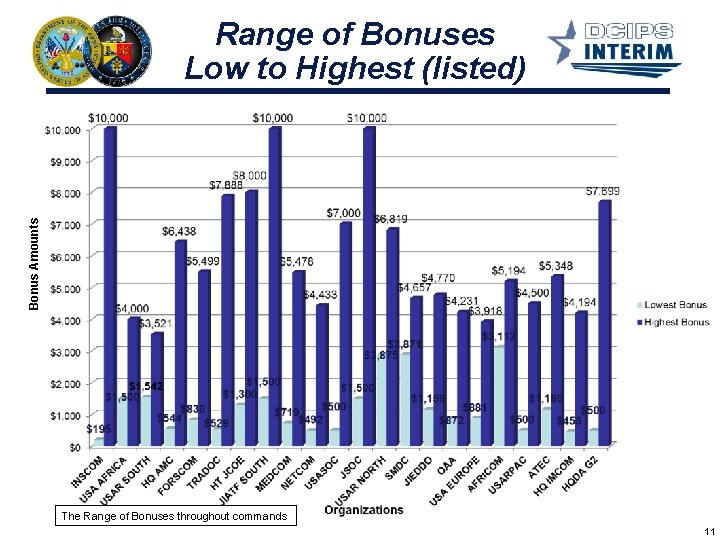
Bonus Amounts Range of Bonuses Low to Highest (listed) The Range of Bonuses throughout commands 11

SA M R PA C A TE H C Q IM C O M H Q D A G 2 0% IC O PE O A A 5% U FR A R EU O 0% SA D O D C SM D 0% JI E C TH R O N JS O 1% 3. 3% 1% U R SA U C 1. 7% 0% 0% SO M M O C SA U E TH O C ET N ED U SO O C 2% M TF A JC 0% 0% JI O D M O 4. 8% H T A TR C M A TH 0% SC R FO Q U 1% SO IC A M O 10 H R SA FR A 0 U SA U IN SC Overall Rating Percentage Employees Rated Minimally Successful (Level 2) 100 90 80 70 60 50 40 30 20 1% 0% 0% 0%. 03%. 1% Organizations 12
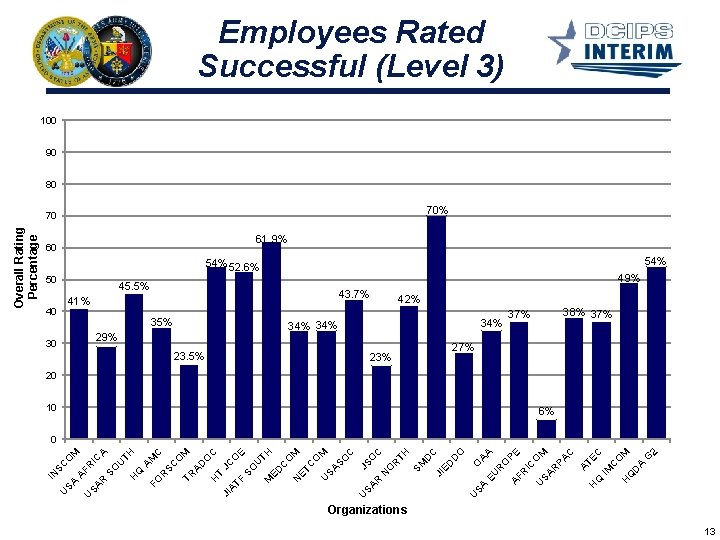
45. 5% 41% C J SO SA C R N O R TH SM D C JI ED D O U O SA A EU A R O P A FR E IC O U SA M R PA C A TE H C Q IM C O M H Q D A G 2 U M O SO SA U C M O 29% ET TH E 35% N C ED U SO C O JC D O M O 60 M TF A JI H T A TR C TH M A SC R FO Q U 30 SO IC A M O 50 H R SA FR A 40 U SA U IN SC Overall Rating Percentage Employees Rated Successful (Level 3) 100 90 80 70 70% 61. 9% 54% 52. 6% 54% 49% 43. 7% 23. 5% 42% 34% 34% 23% 10 37% 38% 37% 20 6% 0 Organizations 13

51% SA M R PA C A TE H C Q IM C O M H Q D A G 2 60 IC O PE O 70 U FR A A 51% R A O 17% EU D O D C SM D 33% JI E C TH R O N JS O 29. 5% U SA R SA U C SO M O 49% SA C 53. 8% U M O C ET N 30 ED U TH E O C 40 SO JC O M 42% M TF A JI H T D A O 50% 45. 5% TR M C A SC R Q 43% FO TH U SO IC A M O 48% H R SA FR A IN SC 50 U SA U Overall Rating Percentage Employees Rated Excellent (Level 4) 100 90 80 72% 62% 54% 57% 50% 45. 6% 40% 42% 45% 27% 20 10 0 Organizations 14
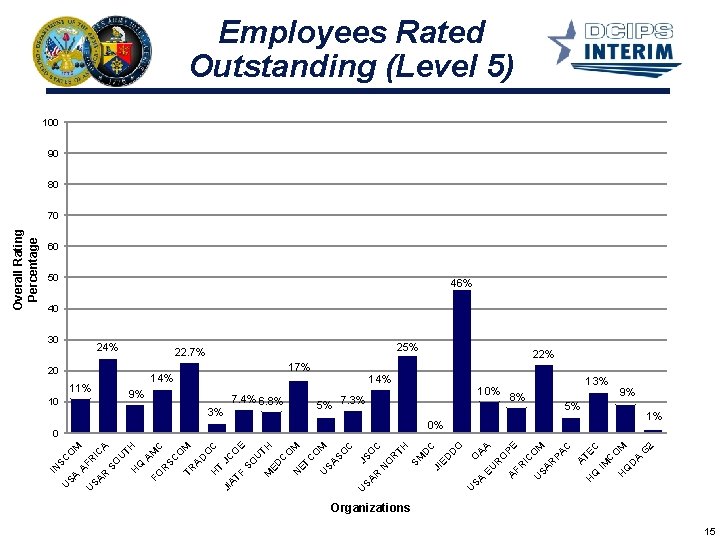
C J SO SA C R N O R TH SM D C JI ED D O U O SA A EU A R O P A FR E IC O U SA M R PA C A TE H C Q IM C O M H Q D A G 2 U M SO SA O 7. 4% 6. 8% U M O C ET 14% N C ED U TH E 3% SO C O JC D O M 9% M TF A JI H T A O 24% TR C M A 20 SC R Q 10 FO TH U 11% H IC A M O 30 SO FR A IN SC R SA U Overall Rating Percentage Employees Rated Outstanding (Level 5) 100 90 80 70 60 50 46% 40 22. 7% 25% 17% 0 22% 14% 5% 7. 3% 10% 8% 0% 13% 5% 9% 1% Organizations 15
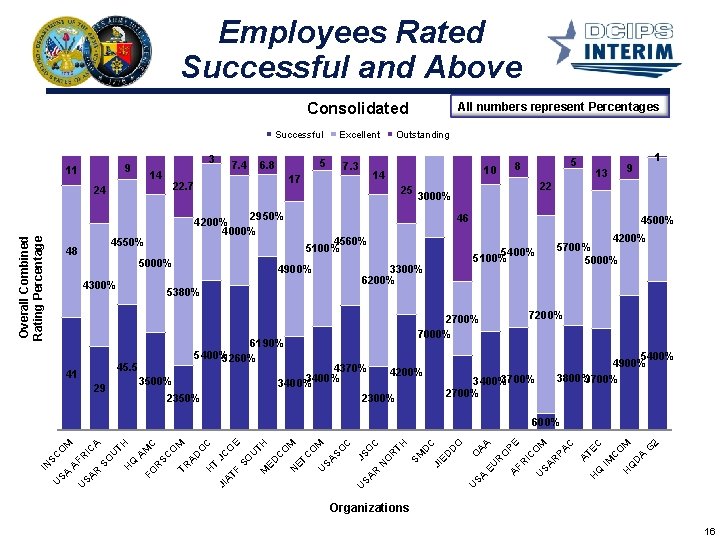
Employees Rated Successful and Above Consolidated Successful 3 9 11 14 Overall Combined Rating Percentage 5000% 4300% 3000% 4200% 5700% 5000% 7200% 2700% 7000% 4370% 4200% 3400% 2300% 3500% 2350% 4500% 5400% 5100% 3300% 6200% 6190% 5400% 5260% 13 1 9 22 4560% 5100% 5380% 29 14 5 8 10 46 4900% 45. 5 41 Outstanding 25 2950% 4200% 4000% 4550% 7. 3 17 22. 7 24 48 5 6. 8 7. 4 Excellent All numbers represent Percentages 3700% 3400% 2700% 5400% 4900% 3800% 3700% SA M R PA C A TE H C Q IM C O M H Q D A G 2 IC O U PE FR A EU R O A A O SA U D O JI E D C U SA R SM D N O R TH C JS O C SO M O C SA U M O ET N C ED M SO U TH E JI A TF JC O C D O H T M A O TR SC R Q A M C TH U H FO SA R SO FR A U U SA IN SC O IC A M 600% Organizations 16

Overall Percentage by Ratings Category 100% 90% Total Percentage 80% 70% 60% 47. 6% 50% 42. 4% 40% 30% 20% 9. 7% 10% 0% 0. 1% 0. 7% Unacceptable Minimally Successful Excellent Outstanding Rating Category 17
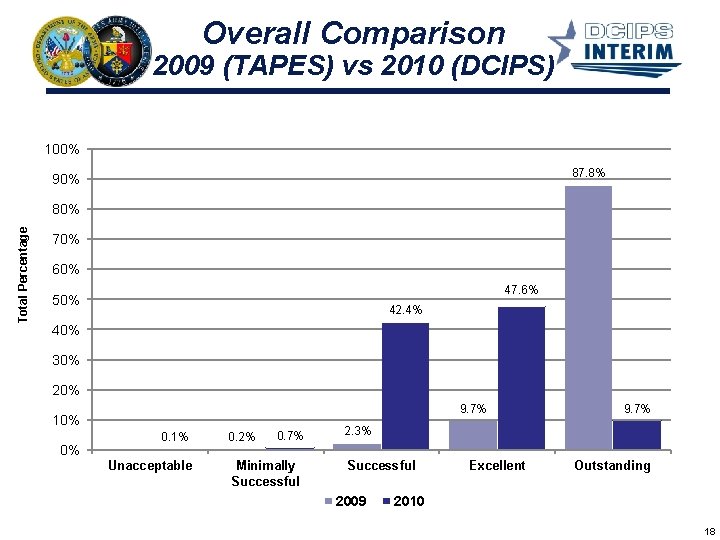
Overall Comparison 2009 (TAPES) vs 2010 (DCIPS) 100% 87. 8% 90% Total Percentage 80% 70% 60% 47. 6% 50% 42. 4% 40% 30% 20% 9. 7% 10% 0% 0. 1% Unacceptable 0. 2% 0. 7% Minimally Successful 9. 7% 2. 3% Successful 2009 Excellent Outstanding 2010 18
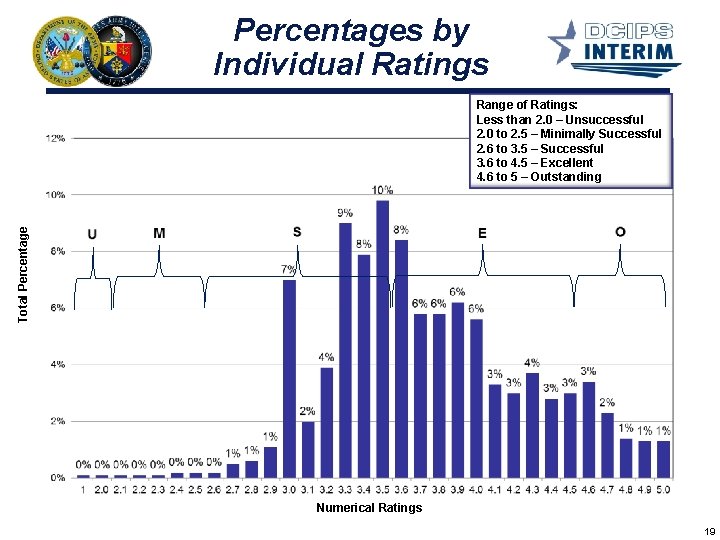
Percentages by Individual Ratings Total Percentage Range of Ratings: Less than 2. 0 – Unsuccessful 2. 0 to 2. 5 – Minimally Successful 2. 6 to 3. 5 – Successful 3. 6 to 4. 5 – Excellent 4. 6 to 5 – Outstanding Numerical Ratings 19
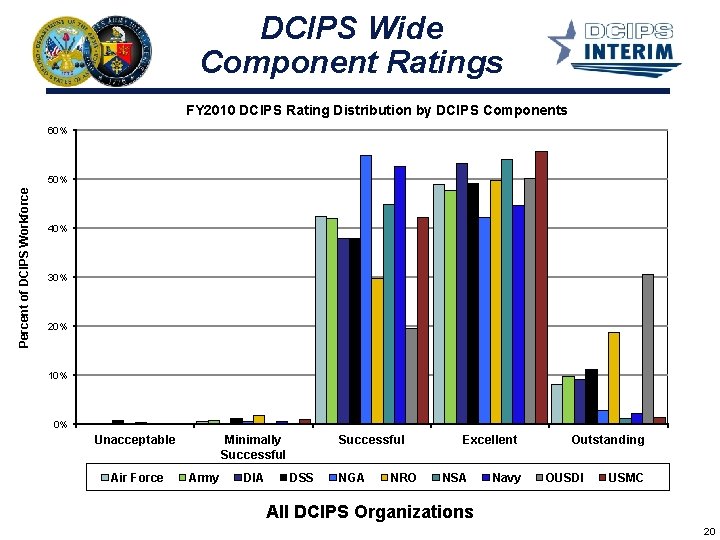
DCIPS Wide Component Ratings FY 2010 DCIPS Rating Distribution by DCIPS Components 60% Percent of DCIPS Workforce 50% 40% 30% 20% 10% 0% Unacceptable Air Force Minimally Successful Army DIA Successful DSS NGA NRO Excellent NSA Navy Outstanding OUSDI USMC All DCIPS Organizations 20

Performance Management Program Challenges q Management of the 50% Bonus Rule q Performance Objectives not SMART enough q Poorly written Self Report of Accomplishments (SRAs) q Explaining the ratings distinction within/across ratings categories (3. 5 Successful to 3. 6 Excellent, a 10 th difference) q Lack of PRA teeth in the process – ability to direct changes q Lack of bonus pool training for all Data Administrators q Multiple user guides made the process difficult q The automated tools (numerous “Flash Updates”) Ø PAA – Premature approvals in the system Ø CWB – Import tool missed key data points for successful upload into DCPDS Ø DCPDS – CWB Uploads for bonus pay out were problematic
Back Up Data 22
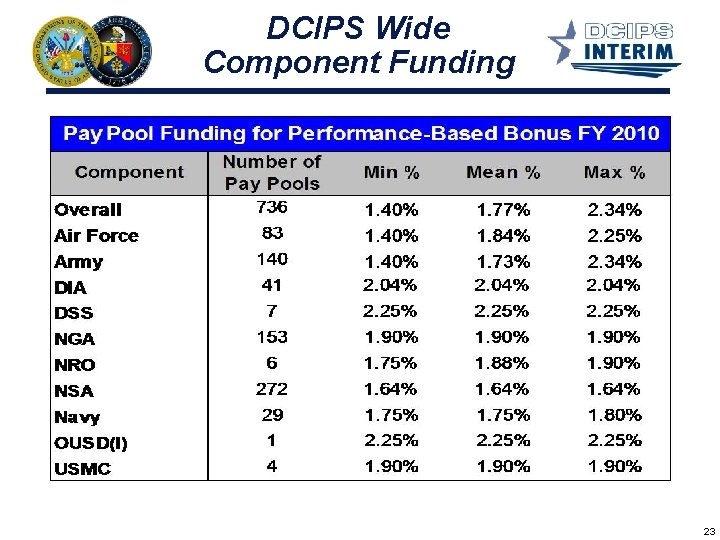
DCIPS Wide Component Funding 23
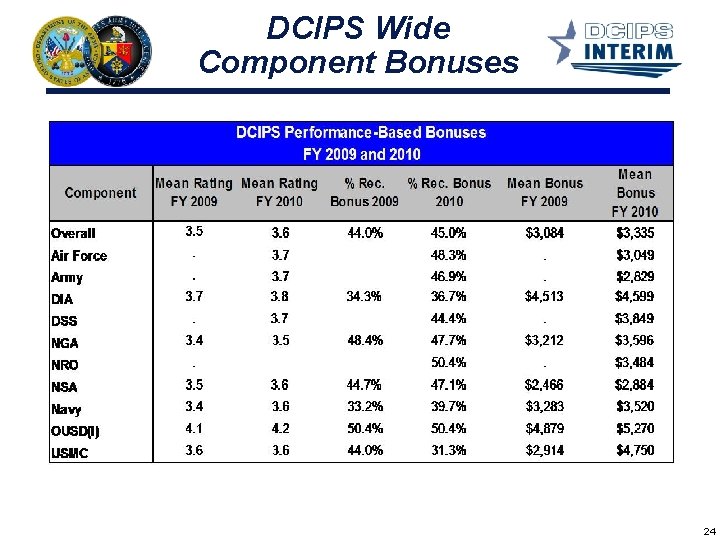
DCIPS Wide Component Bonuses 24
- Slides: 24