
Arms Control and Stability President Nixon and General
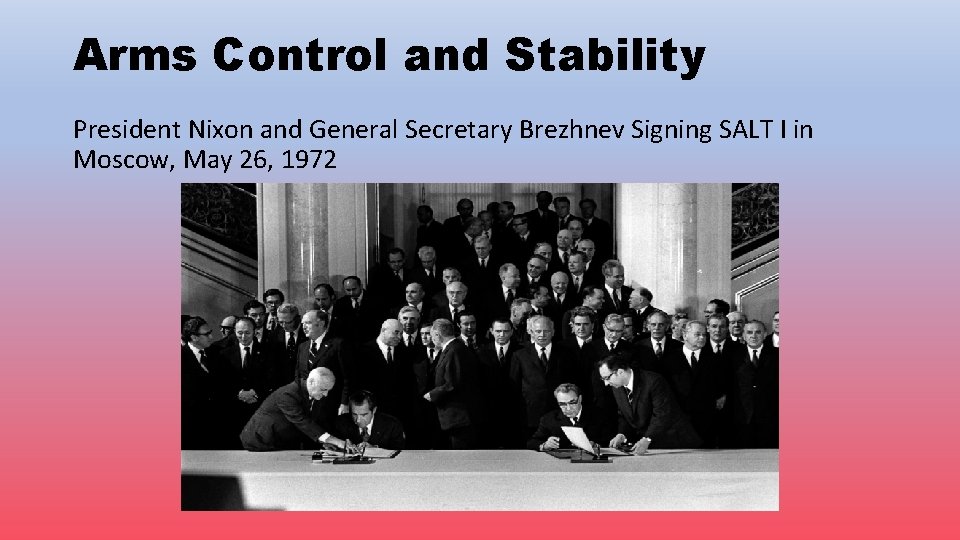
Arms Control and Stability President Nixon and General Secretary Brezhnev Signing SALT I in Moscow, May 26, 1972
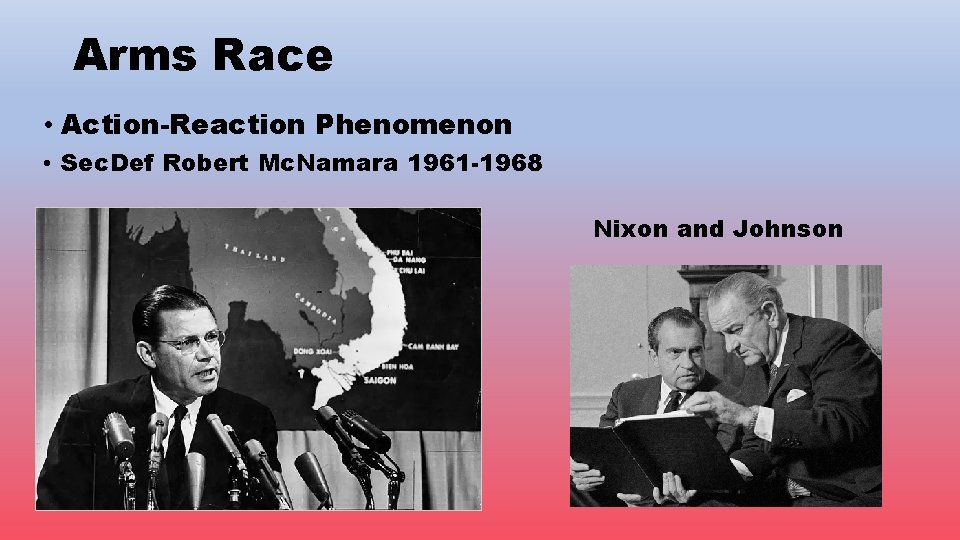
Arms Race • Action-Reaction Phenomenon • Sec. Def Robert Mc. Namara 1961 -1968 • N Nixon and Johnson
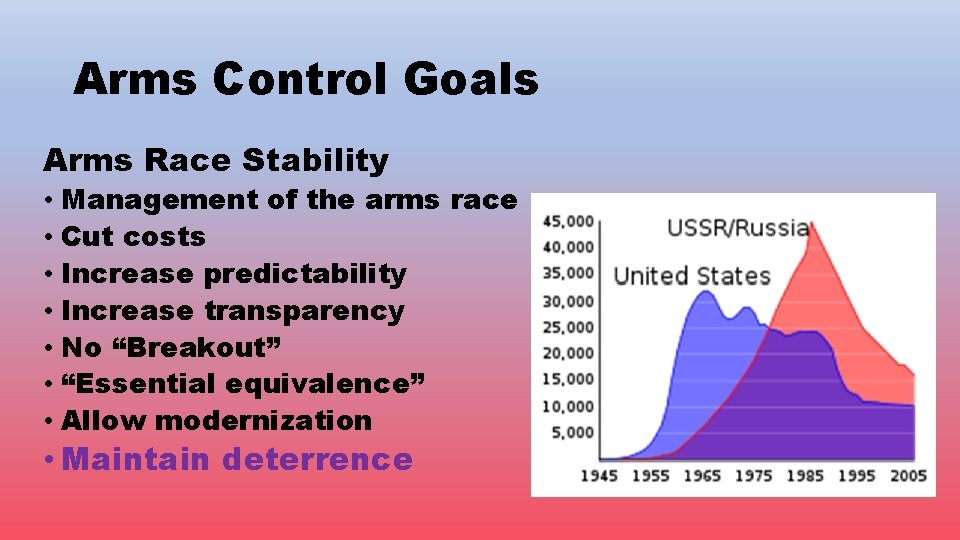
Arms Control Goals Arms Race Stability • Management of the arms race • Cut costs • Increase predictability • Increase transparency • No “Breakout” • “Essential equivalence” • Allow modernization • Maintain deterrence
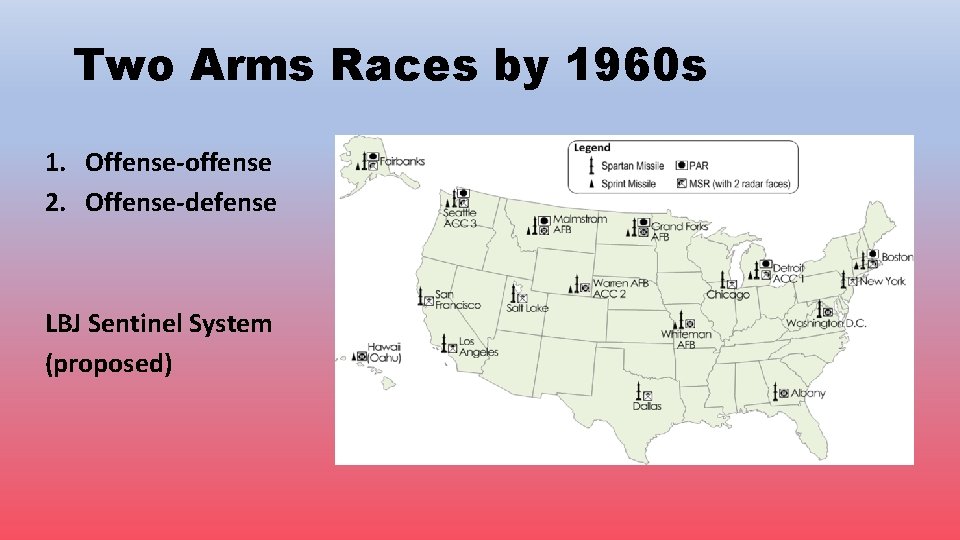
Two Arms Races by 1960 s 1. Offense-offense 2. Offense-defense LBJ Sentinel System (proposed)
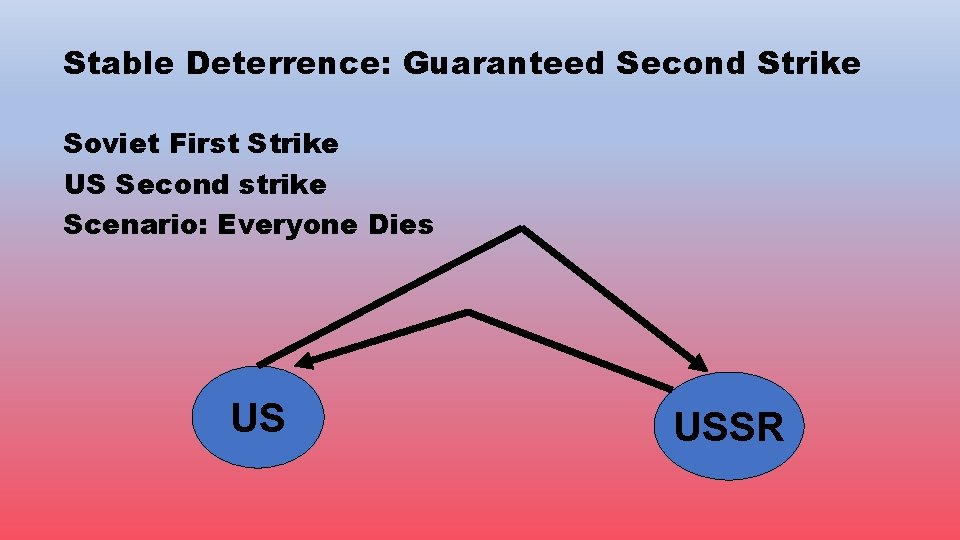
Stable Deterrence: Guaranteed Second Strike Soviet First Strike US Second strike Scenario: Everyone Dies US USSR

De-stablizing Defenses Soviet First Strike: Successful: USSR “wins” Soviet ABMs US Second strike US USSR
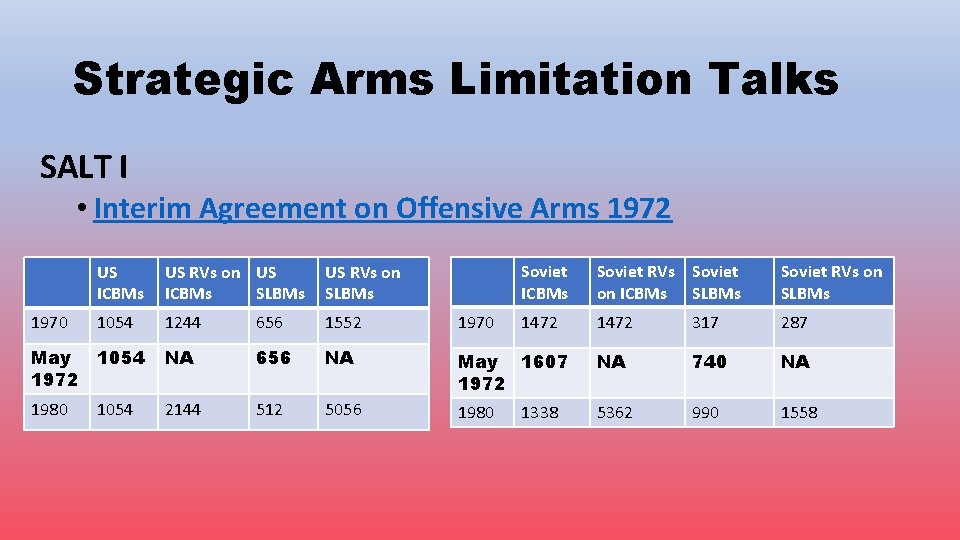
Strategic Arms Limitation Talks SALT I • Interim Agreement on Offensive Arms 1972 Soviet ICBMs Soviet RVs Soviet on ICBMs SLBMs Soviet RVs on SLBMs 1472 317 287 May 1607 1972 NA 740 NA 1980 5362 990 1558 US ICBMs US RVs on US ICBMs SLBMs US RVs on SLBMs 1054 1244 656 1552 1970 May 1054 1972 NA 656 NA 1980 2144 512 5056 1970 1054 1338
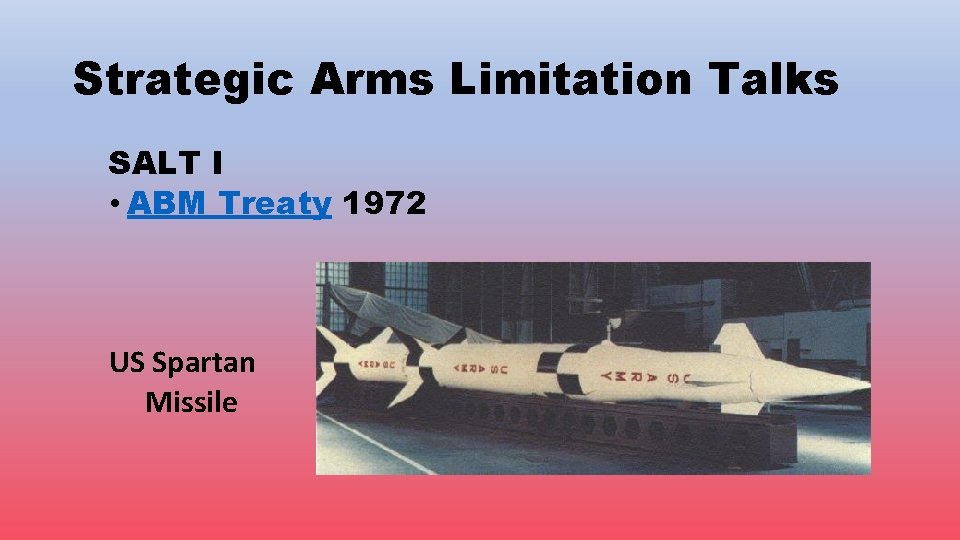
Strategic Arms Limitation Talks SALT I • ABM Treaty 1972 US Spartan Missile
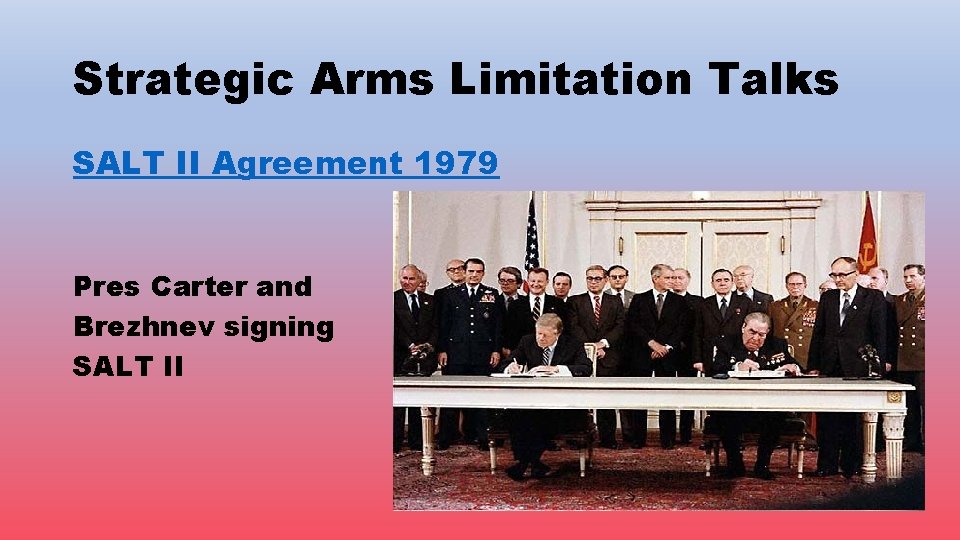
Strategic Arms Limitation Talks SALT II Agreement 1979 Pres Carter and Brezhnev signing SALT II
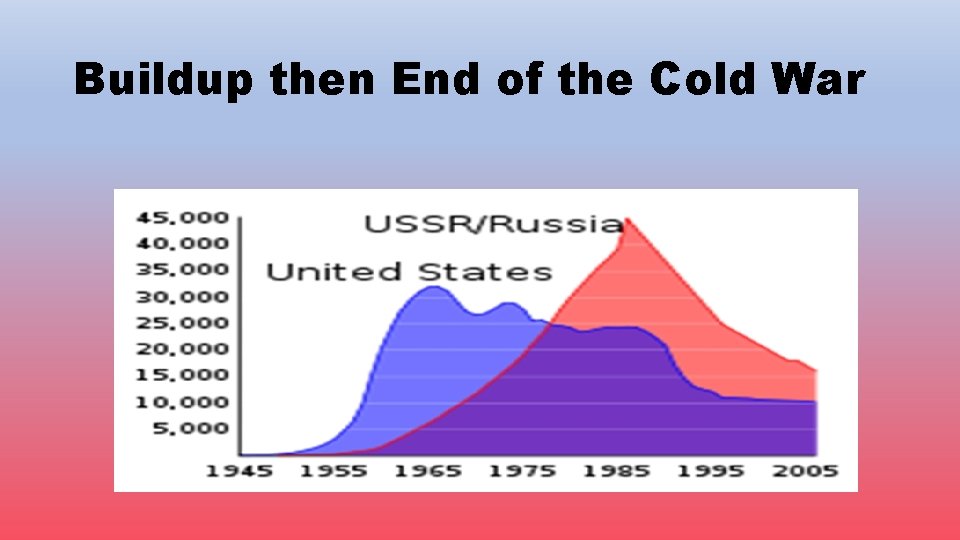
Buildup then End of the Cold War
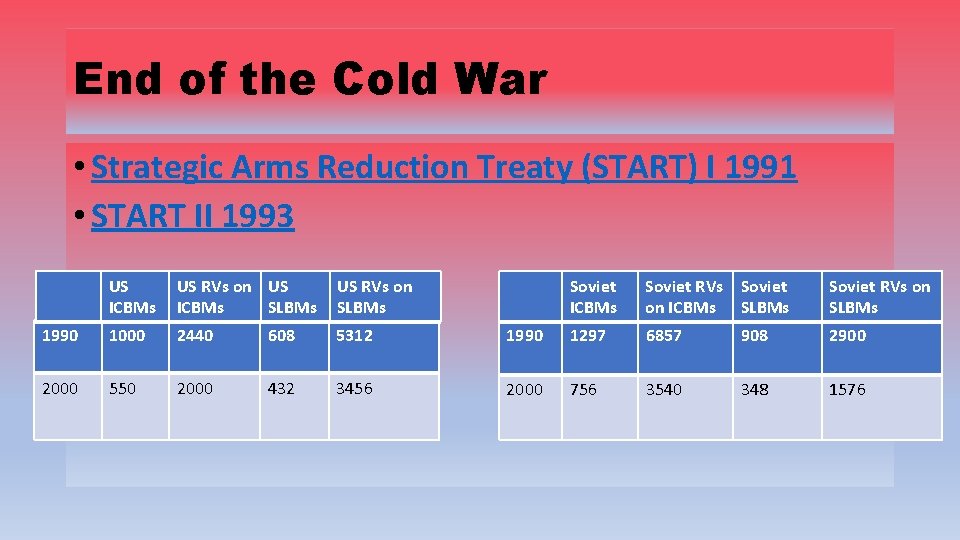
End of the Cold War • Strategic Arms Reduction Treaty (START) I 1991 • START II 1993 US ICBMs US RVs on US ICBMs SLBMs US RVs on SLBMs 1990 1000 2440 608 5312 2000 550 2000 432 3456 Soviet ICBMs Soviet RVs Soviet on ICBMs SLBMs Soviet RVs on SLBMs 1990 1297 6857 908 2900 2000 756 3540 348 1576
- Slides: 11