
Arithmetic Numbers and Operations General Reminders There are
Arithmetic: Numbers and Operations
General Reminders: • There are multiple ways to get to the right answer. • If you know how to solve it, then solve it. • If you don’t know how to solve it, remember: • Variables in the answer choices = Make a Target • Numbers in the answer choices = Plug-n-Chug • Grid-in = you might still be able to Target or Plug, depending on the question
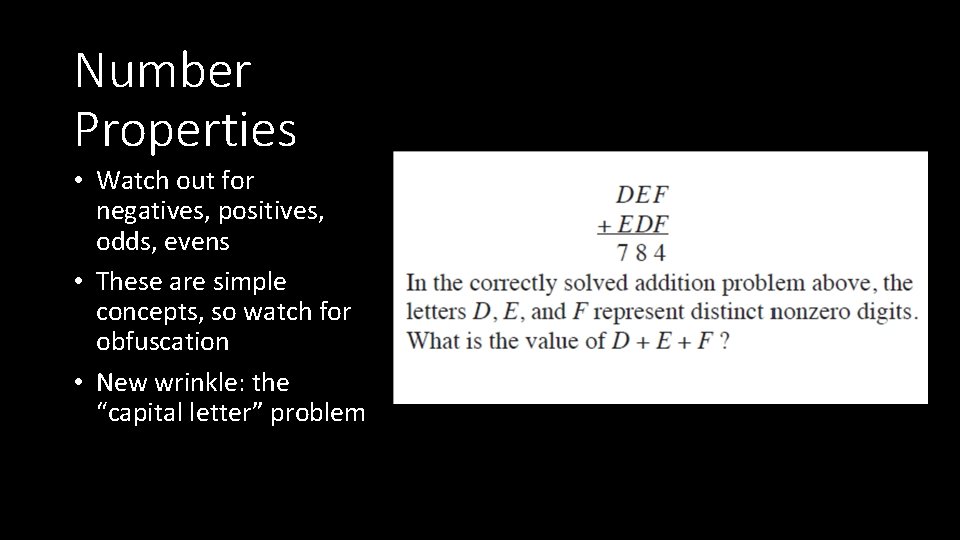
Number Properties • Watch out for negatives, positives, odds, evens • These are simple concepts, so watch for obfuscation • New wrinkle: the “capital letter” problem
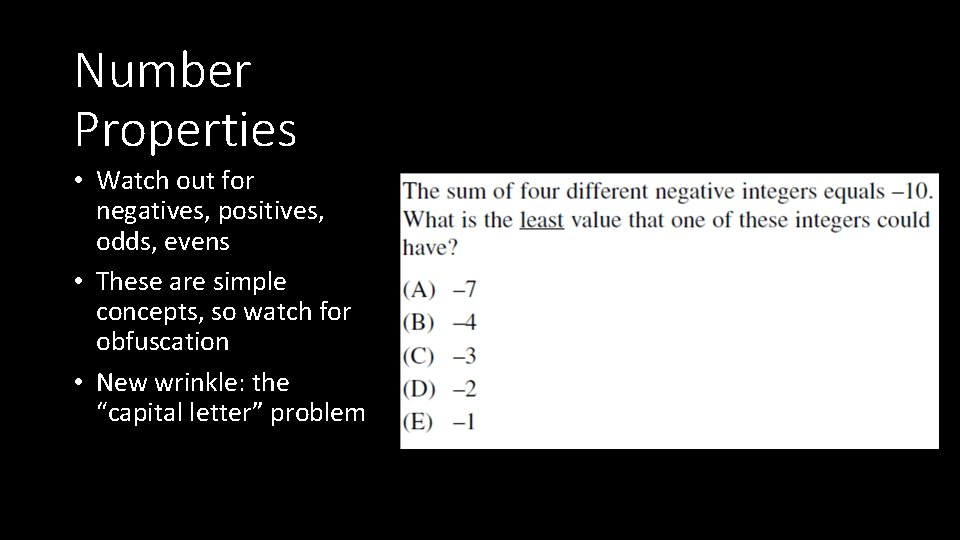
Number Properties • Watch out for negatives, positives, odds, evens • These are simple concepts, so watch for obfuscation • New wrinkle: the “capital letter” problem
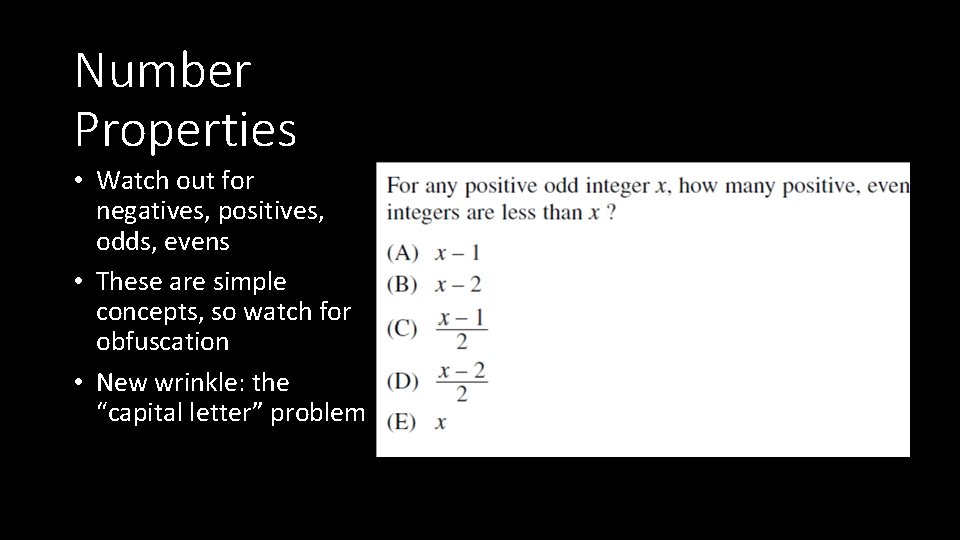
Number Properties • Watch out for negatives, positives, odds, evens • These are simple concepts, so watch for obfuscation • New wrinkle: the “capital letter” problem
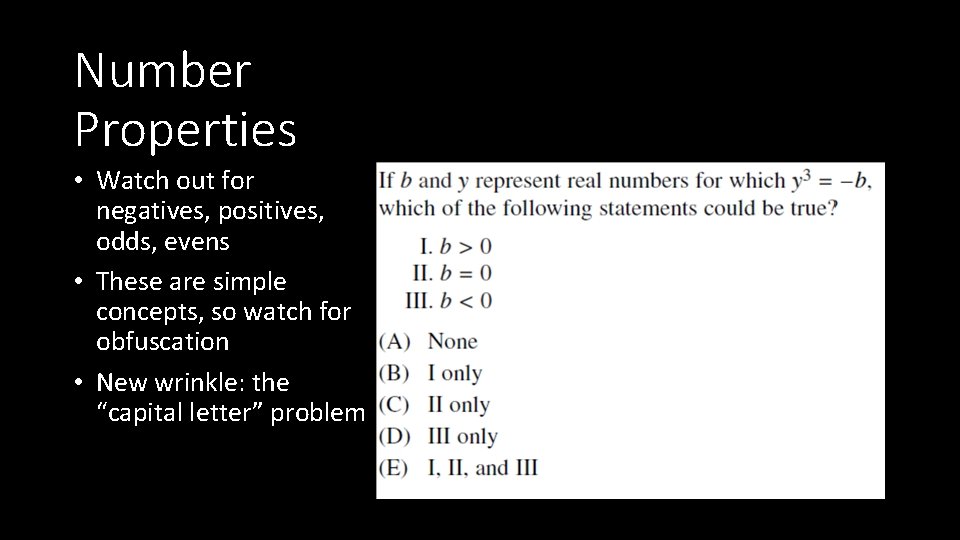
Number Properties • Watch out for negatives, positives, odds, evens • These are simple concepts, so watch for obfuscation • New wrinkle: the “capital letter” problem
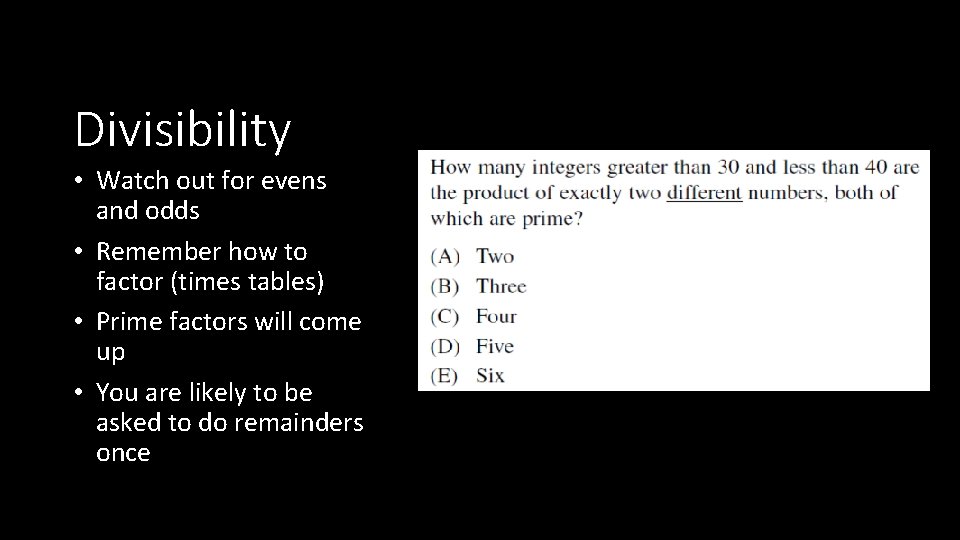
Divisibility • Watch out for evens and odds • Remember how to factor (times tables) • Prime factors will come up • You are likely to be asked to do remainders once
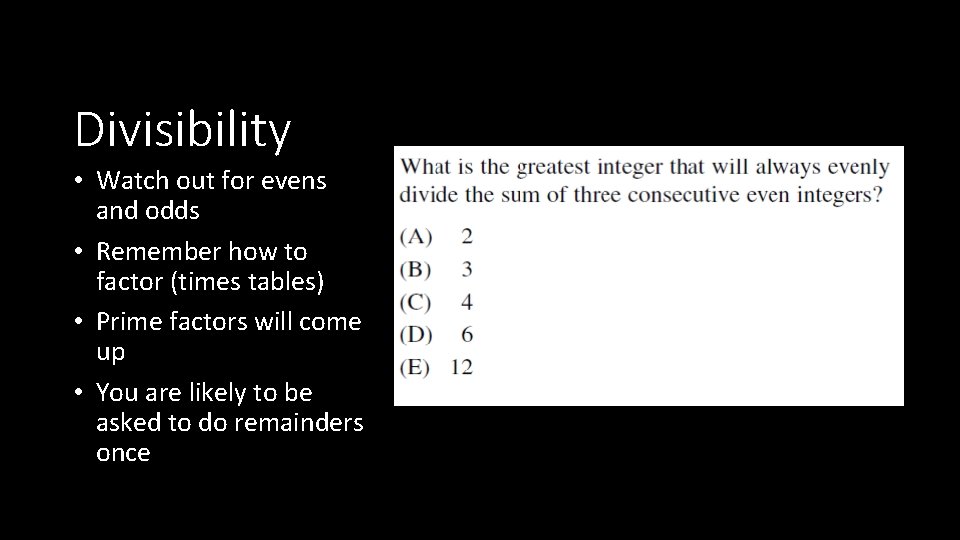
Divisibility • Watch out for evens and odds • Remember how to factor (times tables) • Prime factors will come up • You are likely to be asked to do remainders once
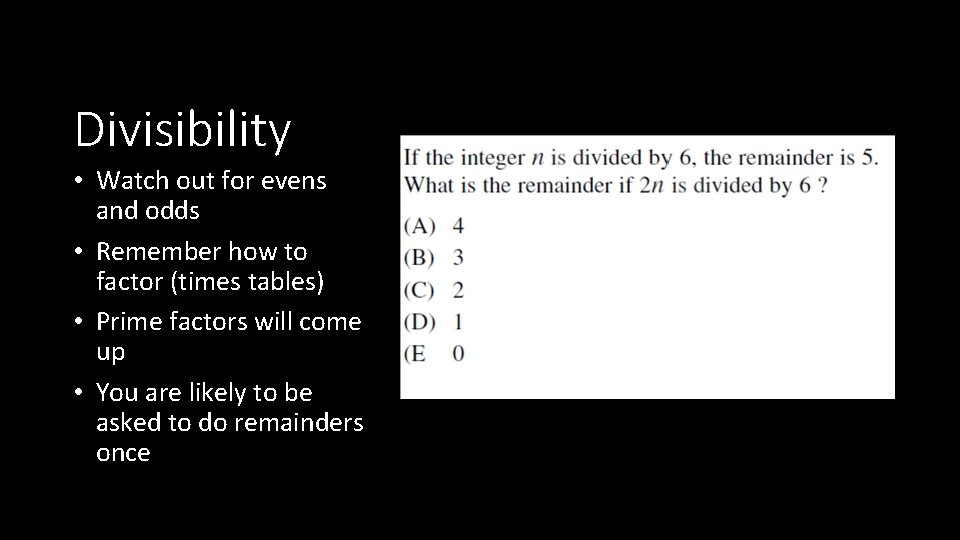
Divisibility • Watch out for evens and odds • Remember how to factor (times tables) • Prime factors will come up • You are likely to be asked to do remainders once
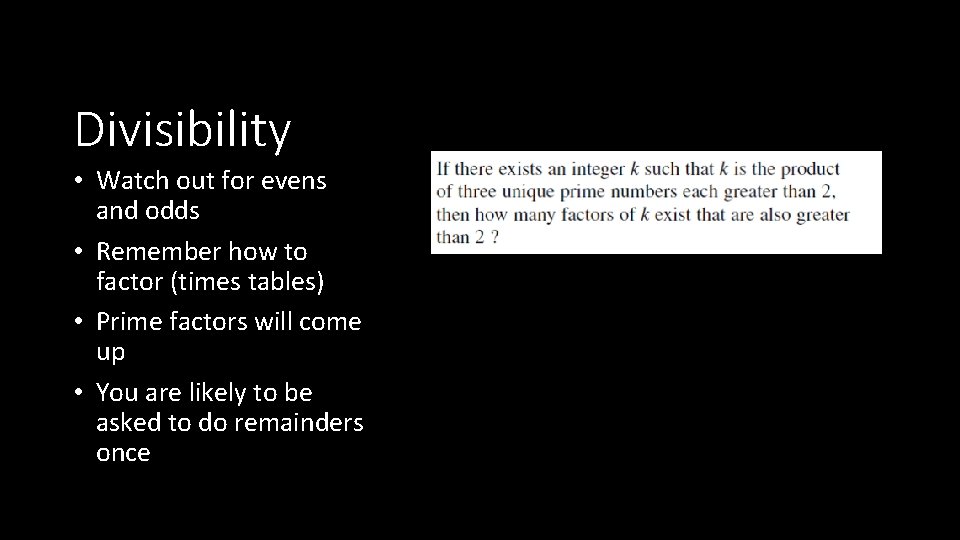
Divisibility • Watch out for evens and odds • Remember how to factor (times tables) • Prime factors will come up • You are likely to be asked to do remainders once

Number Lines • Again, these are simple concepts, so watch for obfuscation • Remember that the figure is not always drawn to scale • Relationships might be more important than actual values
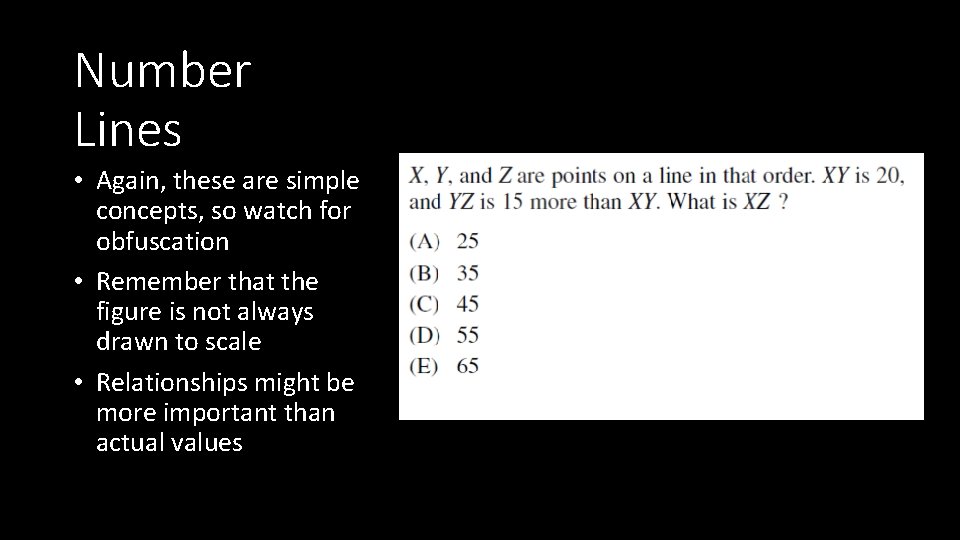
Number Lines • Again, these are simple concepts, so watch for obfuscation • Remember that the figure is not always drawn to scale • Relationships might be more important than actual values
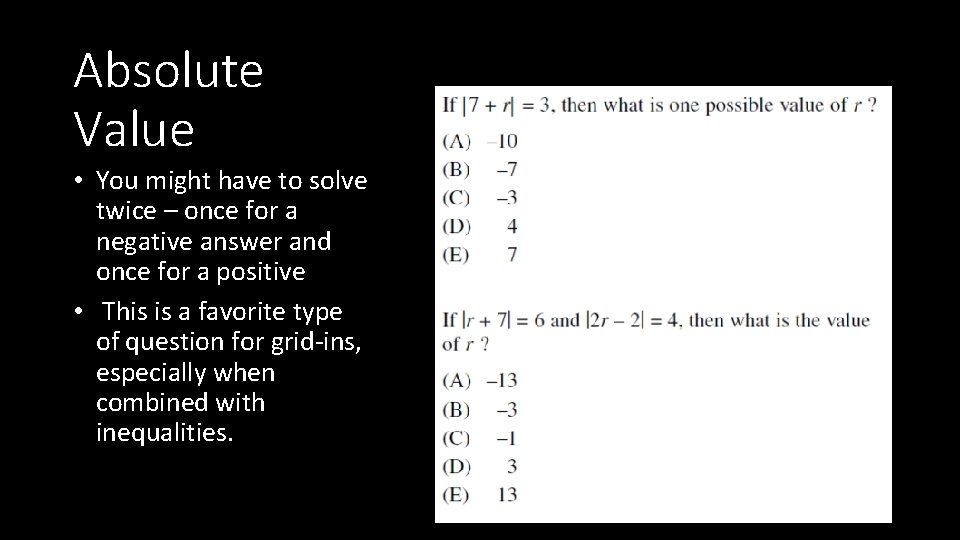
Absolute Value • You might have to solve twice – once for a negative answer and once for a positive • This is a favorite type of question for grid-ins, especially when combined with inequalities.
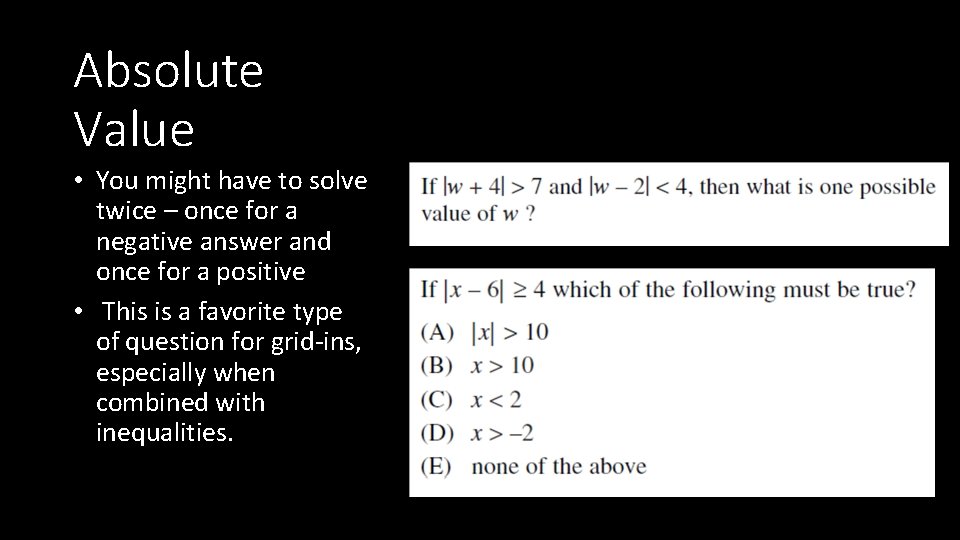
Absolute Value • You might have to solve twice – once for a negative answer and once for a positive • This is a favorite type of question for grid-ins, especially when combined with inequalities.
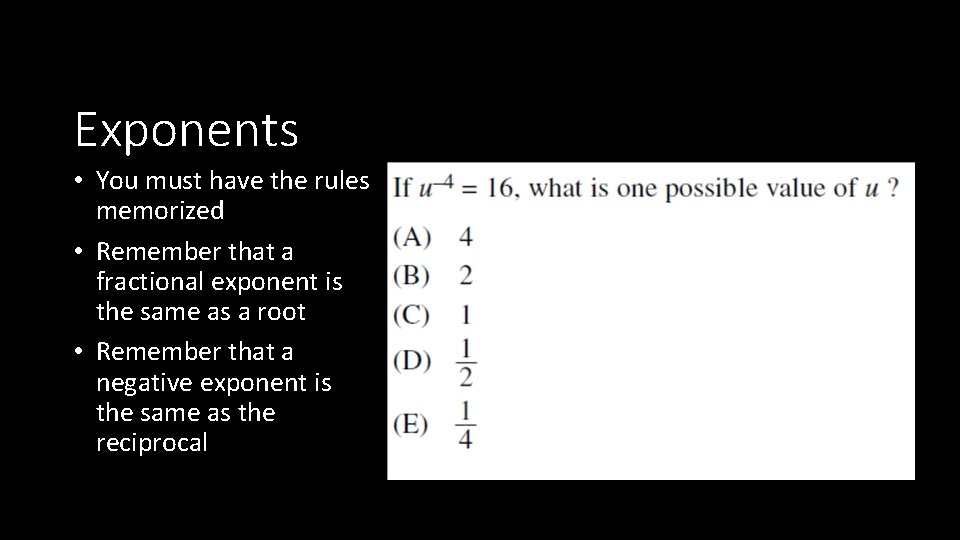
Exponents • You must have the rules memorized • Remember that a fractional exponent is the same as a root • Remember that a negative exponent is the same as the reciprocal
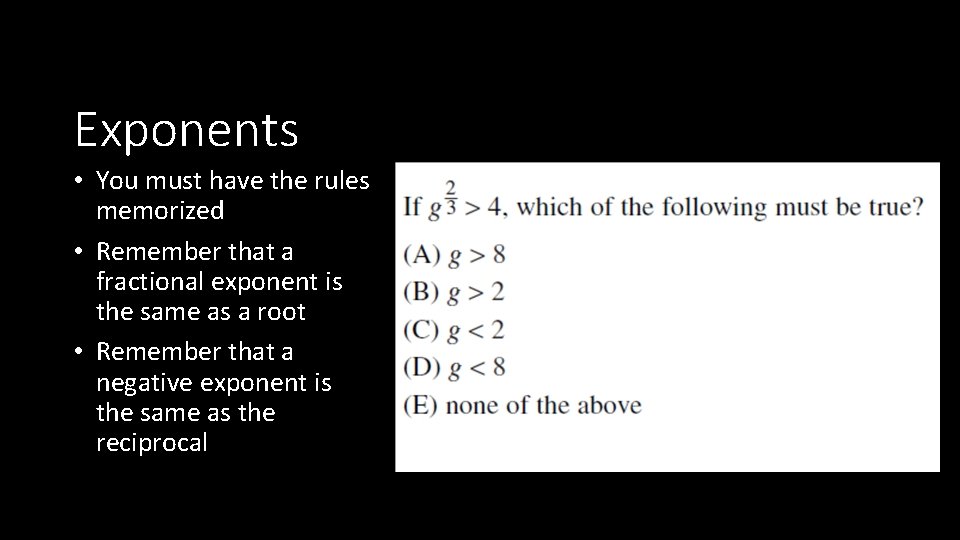
Exponents • You must have the rules memorized • Remember that a fractional exponent is the same as a root • Remember that a negative exponent is the same as the reciprocal
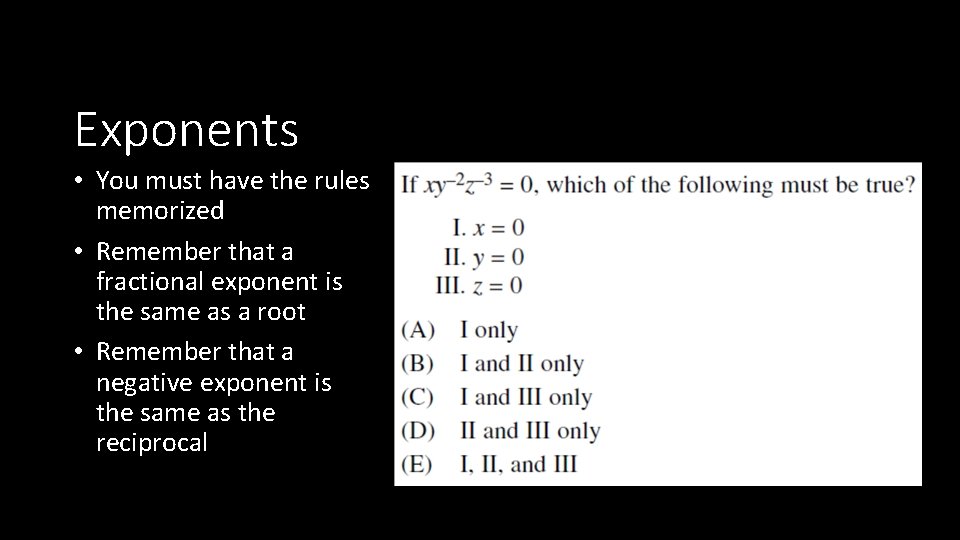
Exponents • You must have the rules memorized • Remember that a fractional exponent is the same as a root • Remember that a negative exponent is the same as the reciprocal
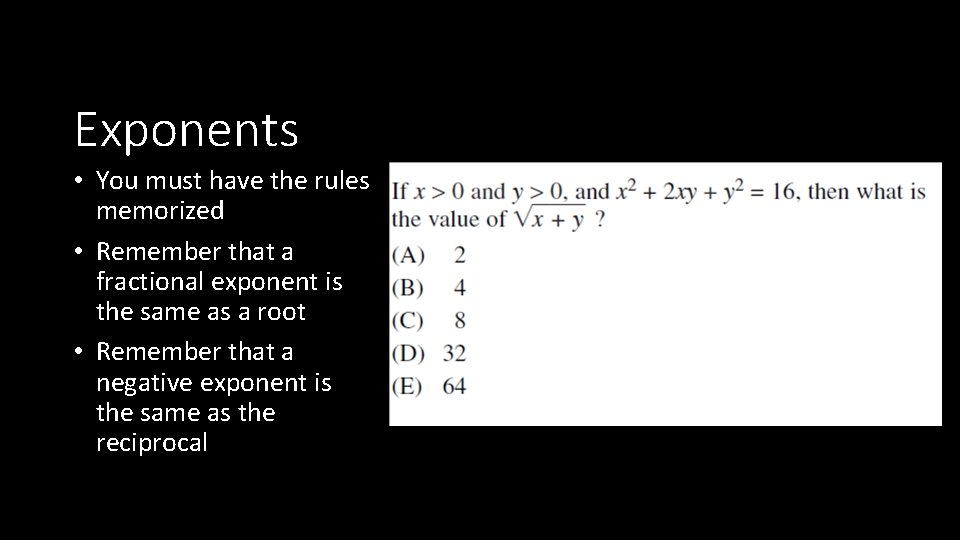
Exponents • You must have the rules memorized • Remember that a fractional exponent is the same as a root • Remember that a negative exponent is the same as the reciprocal
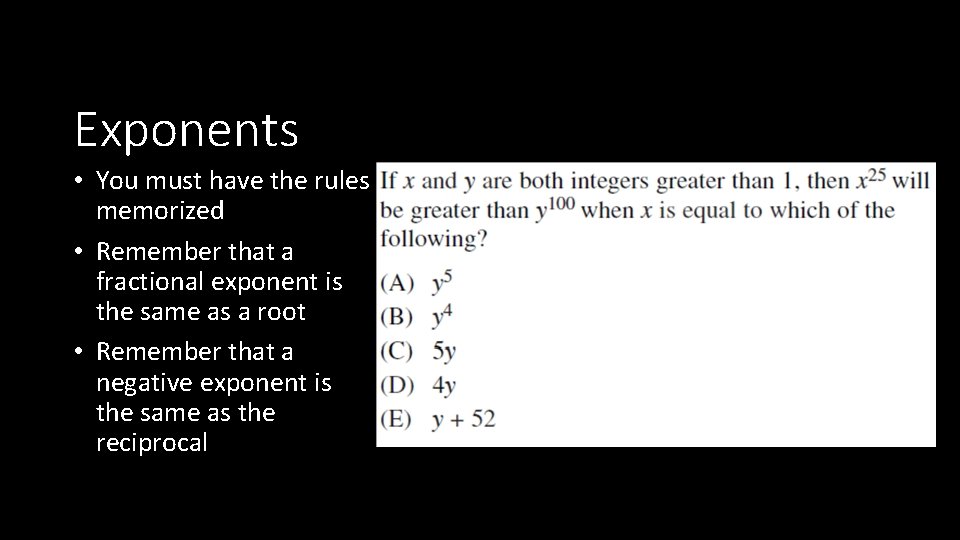
Exponents • You must have the rules memorized • Remember that a fractional exponent is the same as a root • Remember that a negative exponent is the same as the reciprocal
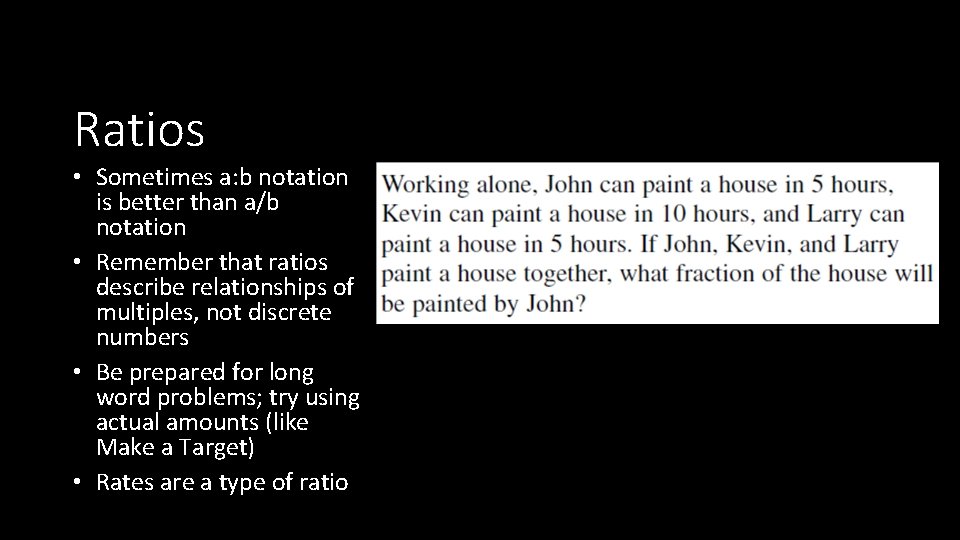
Ratios • Sometimes a: b notation is better than a/b notation • Remember that ratios describe relationships of multiples, not discrete numbers • Be prepared for long word problems; try using actual amounts (like Make a Target) • Rates are a type of ratio
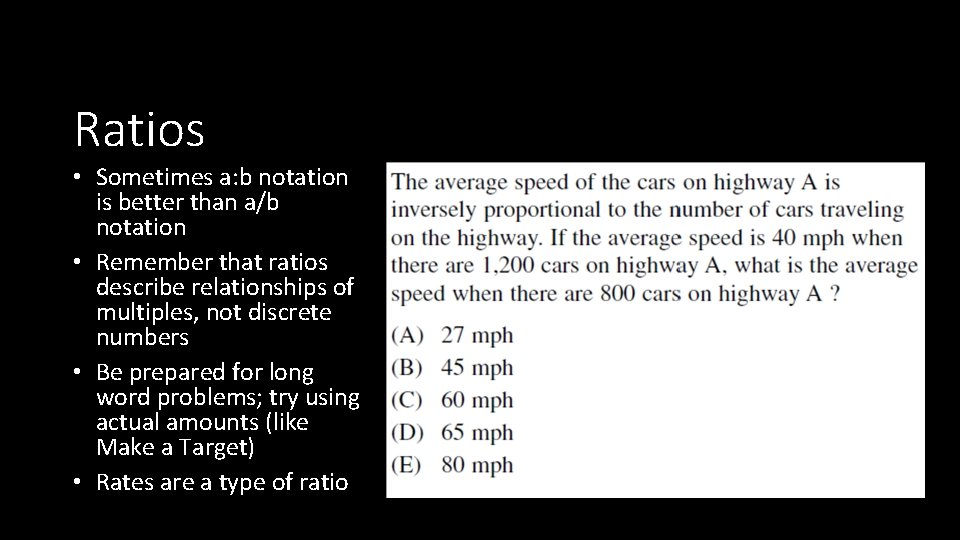
Ratios • Sometimes a: b notation is better than a/b notation • Remember that ratios describe relationships of multiples, not discrete numbers • Be prepared for long word problems; try using actual amounts (like Make a Target) • Rates are a type of ratio
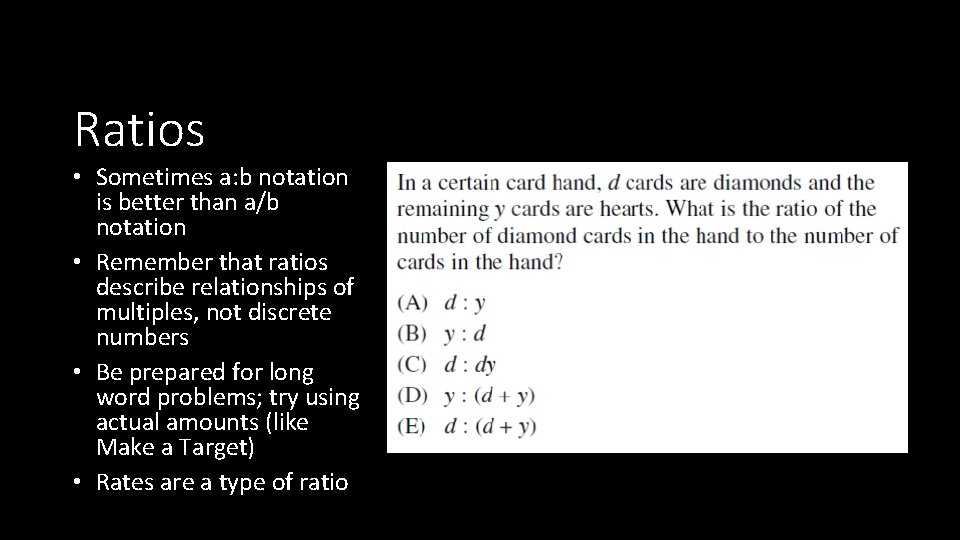
Ratios • Sometimes a: b notation is better than a/b notation • Remember that ratios describe relationships of multiples, not discrete numbers • Be prepared for long word problems; try using actual amounts (like Make a Target) • Rates are a type of ratio
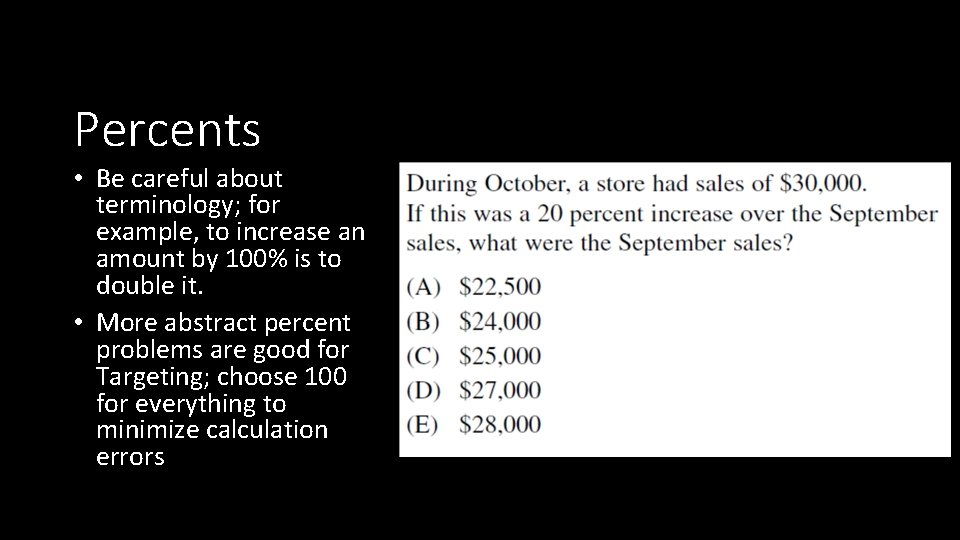
Percents • Be careful about terminology; for example, to increase an amount by 100% is to double it. • More abstract percent problems are good for Targeting; choose 100 for everything to minimize calculation errors
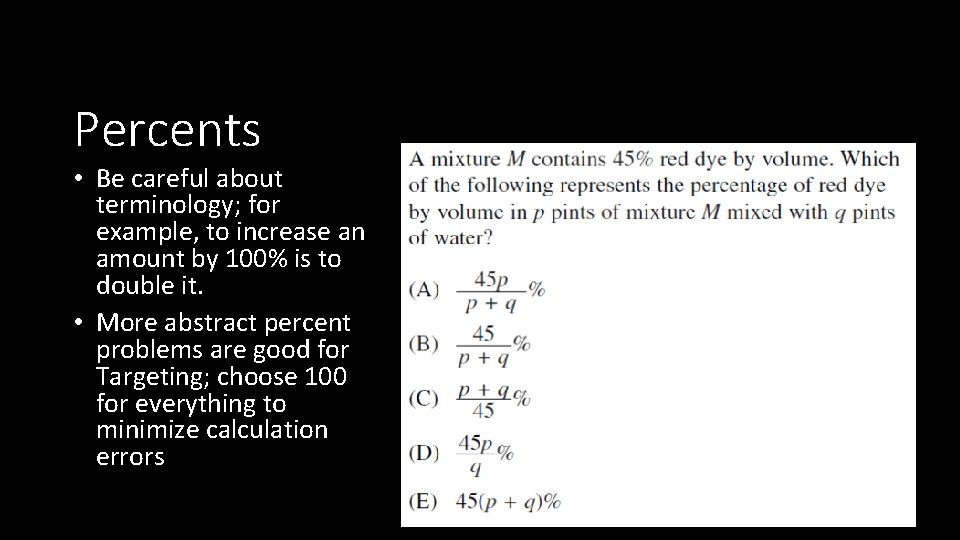
Percents • Be careful about terminology; for example, to increase an amount by 100% is to double it. • More abstract percent problems are good for Targeting; choose 100 for everything to minimize calculation errors
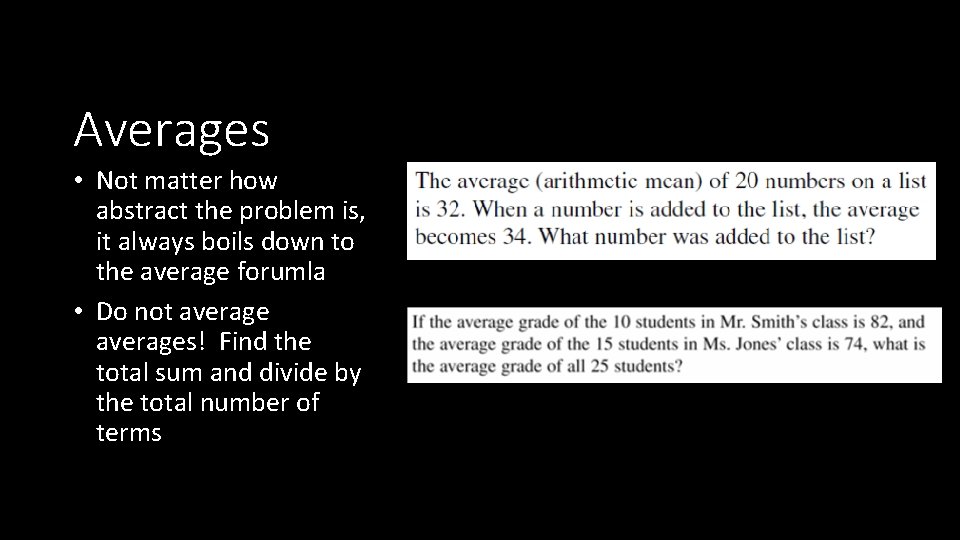
Averages • Not matter how abstract the problem is, it always boils down to the average forumla • Do not averages! Find the total sum and divide by the total number of terms
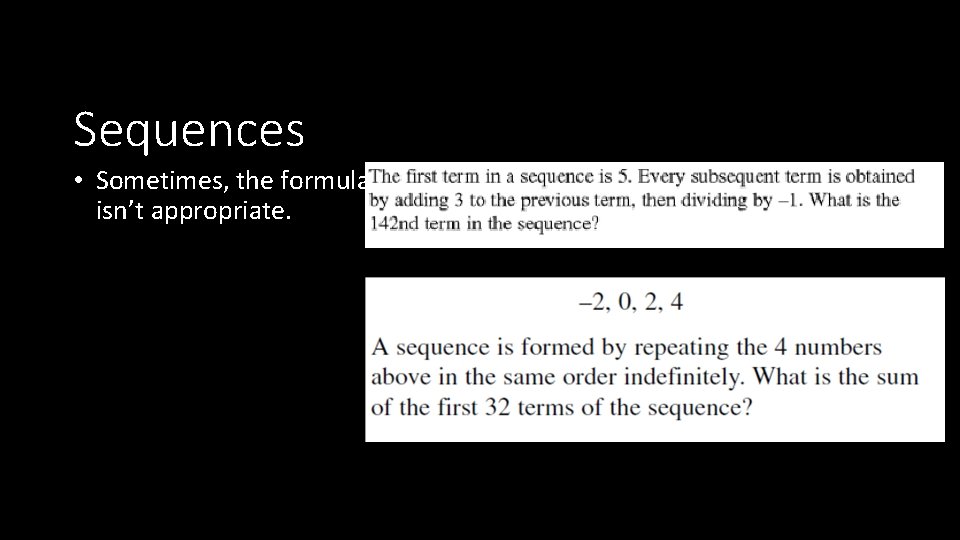
Sequences • Sometimes, the formula isn’t appropriate.
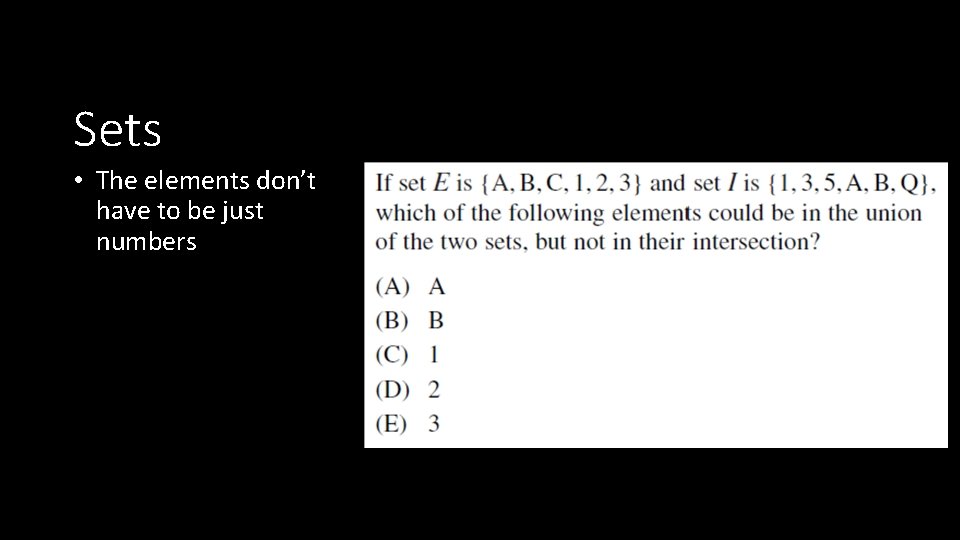
Sets • The elements don’t have to be just numbers
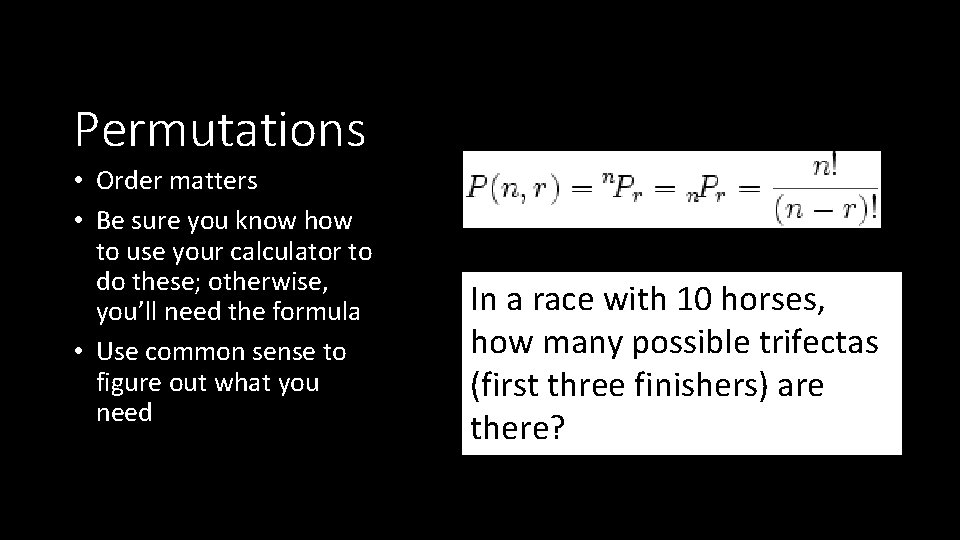
Permutations • Order matters • Be sure you know how to use your calculator to do these; otherwise, you’ll need the formula • Use common sense to figure out what you need In a race with 10 horses, how many possible trifectas (first three finishers) are there?
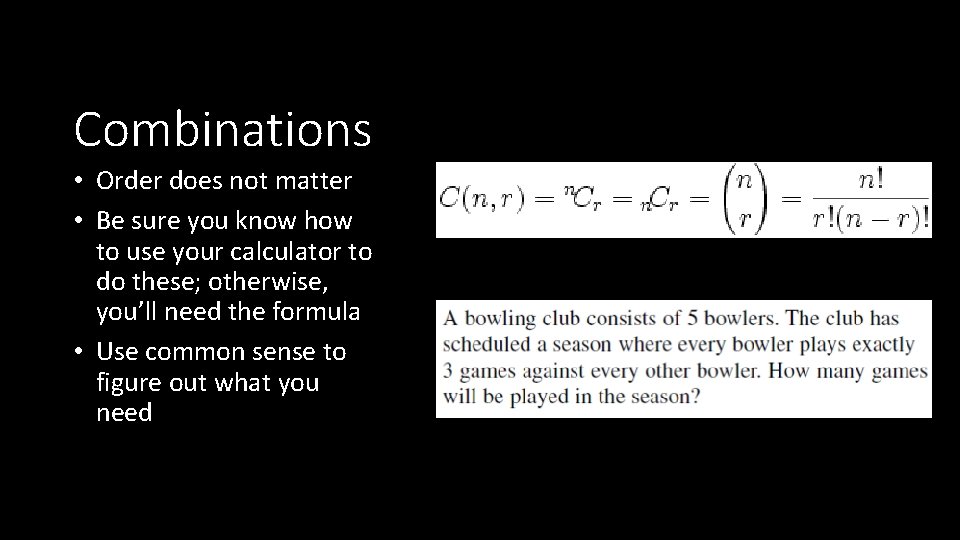
Combinations • Order does not matter • Be sure you know how to use your calculator to do these; otherwise, you’ll need the formula • Use common sense to figure out what you need
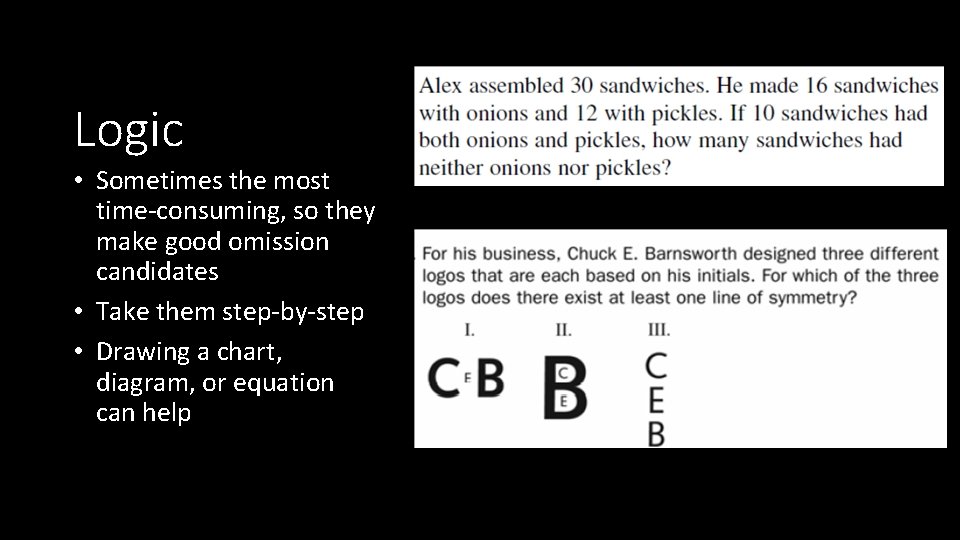
Logic • Sometimes the most time-consuming, so they make good omission candidates • Take them step-by-step • Drawing a chart, diagram, or equation can help
Next up… Algebra
- Slides: 31