
ARISTOTLES 3 PERSUASIVE APPEALS LOGOS ETHOS PATHOS WHAT

- Slides: 54
ARISTOTLE’S 3 PERSUASIVE APPEALS LOGOS ETHOS PATHOS
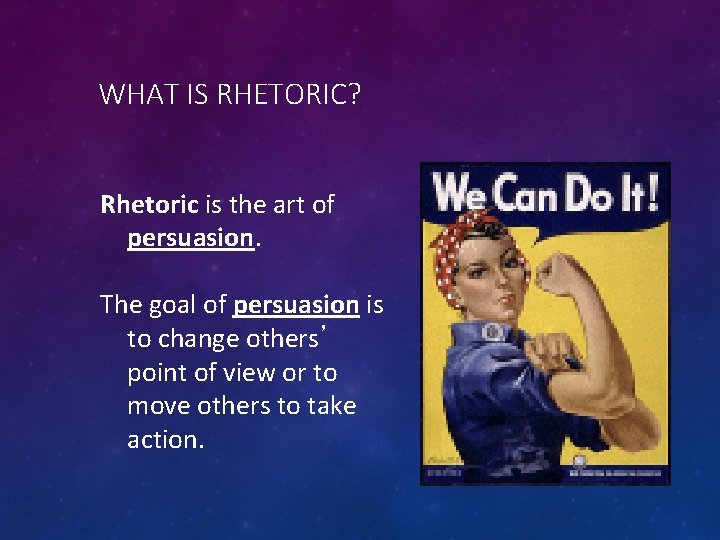
WHAT IS RHETORIC? Rhetoric is the art of persuasion. The goal of persuasion is to change others’ point of view or to move others to take action.
WHO IS ARISTOTLE? Aristotle (384 -322 BCE) is the most notable product of the educational program devised by Plato. Aristotle wrote on an amazing range of subjects, from logic, philosophy, and ethics to physics, biology, psychology, politics, and rhetoric.
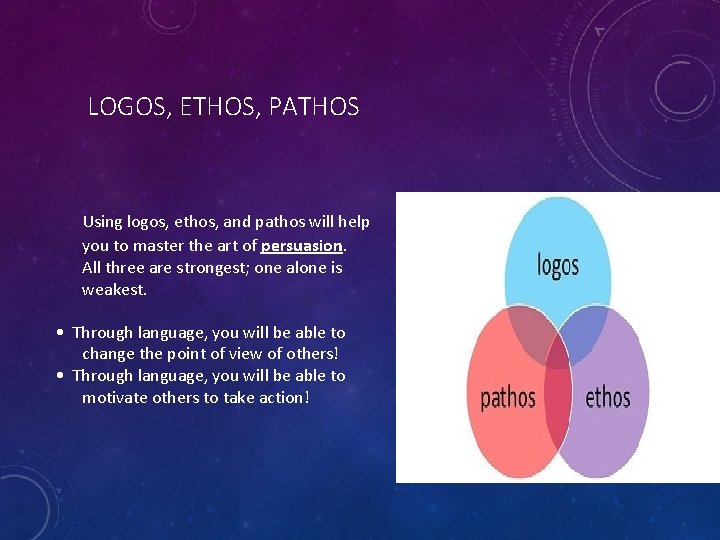
WHAT IS LOGOS, ETHOS, AND PATHOS? Logos = Logical Ethos = Ethical (Concerning good character traits) Pathos = Emotional
LOGOS, ETHOS, PATHOS Using logos, ethos, and pathos will help you to master the art of persuasion. All three are strongest; one alone is weakest. • Through language, you will be able to change the point of view of others! • Through language, you will be able to motivate others to take action!
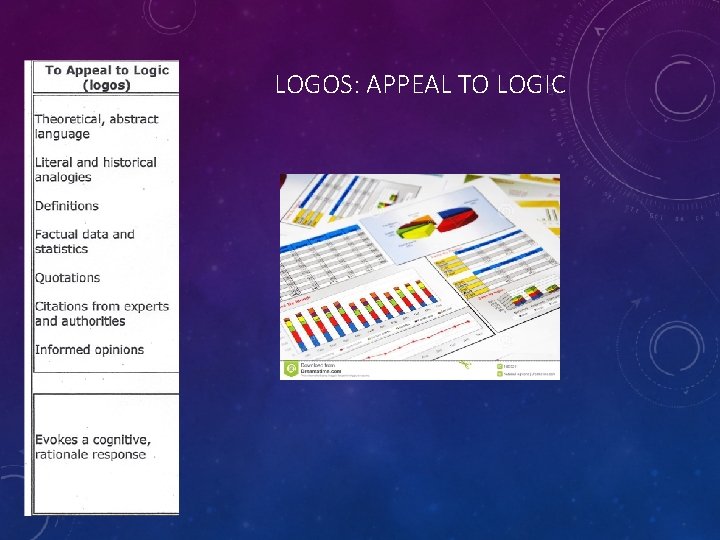
LOGOS: APPEAL TO LOGIC
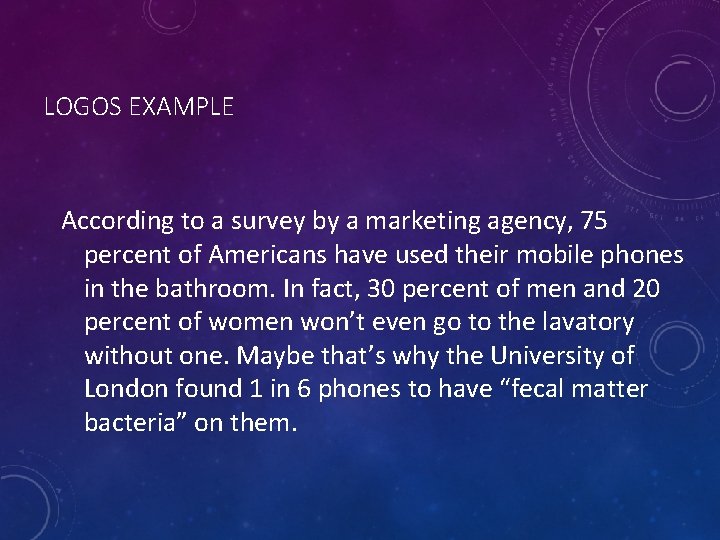
LOGOS EXAMPLE According to a survey by a marketing agency, 75 percent of Americans have used their mobile phones in the bathroom. In fact, 30 percent of men and 20 percent of women won’t even go to the lavatory without one. Maybe that’s why the University of London found 1 in 6 phones to have “fecal matter bacteria” on them.
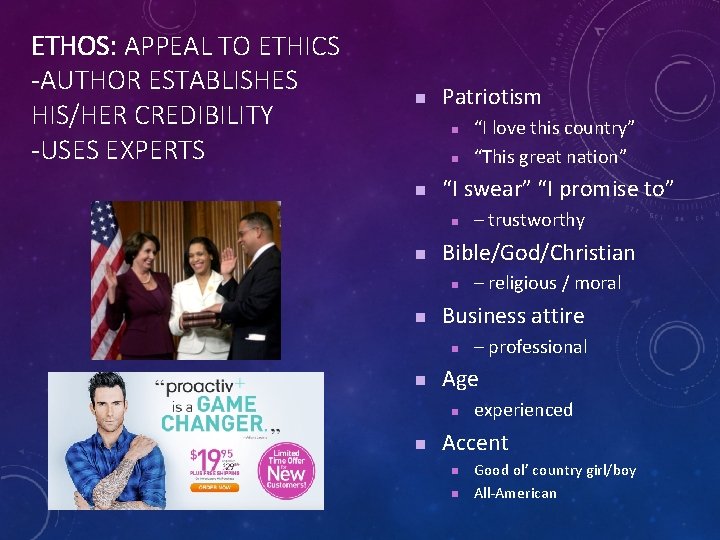
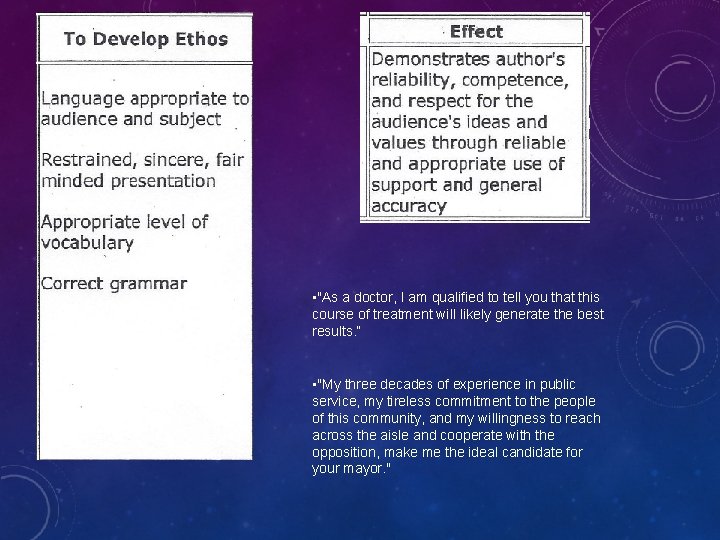
ETHOS: APPEAL TO ETHICS -AUTHOR ESTABLISHES HIS/HER CREDIBILITY -USES EXPERTS n Patriotism n n n “I swear” “I promise to” n n – professional Age n n – religious / moral Business attire n n – trustworthy Bible/God/Christian n n “I love this country” “This great nation” experienced Accent n n Good ol’ country girl/boy All-American
ETHOS EXAMPLES • "As a doctor, I am qualified to tell you that this course of treatment will likely generate the best results. “ • "My three decades of experience in public service, my tireless commitment to the people of this community, and my willingness to reach across the aisle and cooperate with the opposition, make me the ideal candidate for your mayor. "
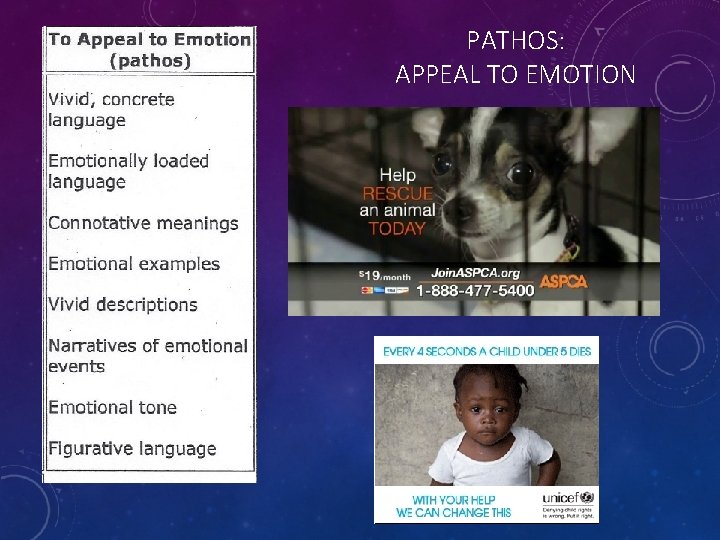
PATHOS: APPEAL TO EMOTION
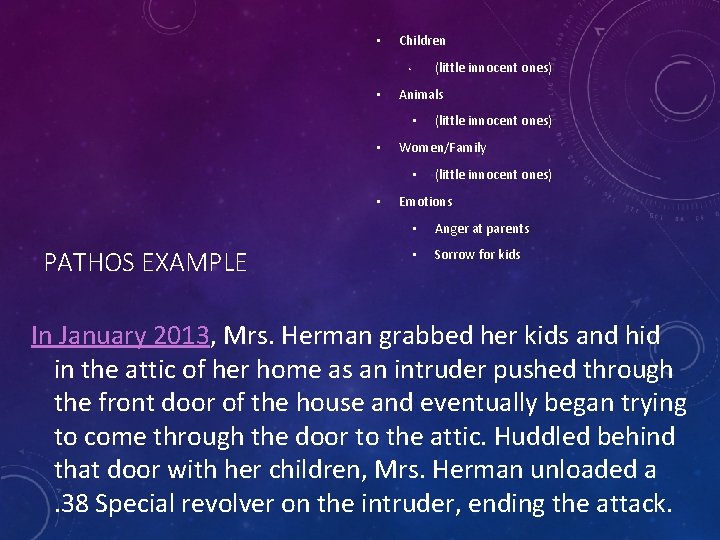
• Children (little innocent ones) • • Animals • • Women/Family • • PATHOS EXAMPLE (little innocent ones) Emotions • Anger at parents • Sorrow for kids In January 2013, Mrs. Herman grabbed her kids and hid in the attic of her home as an intruder pushed through the front door of the house and eventually began trying to come through the door to the attic. Huddled behind that door with her children, Mrs. Herman unloaded a. 38 Special revolver on the intruder, ending the attack.
Persuasive Techniques
FACTS �Information that can be verified EX: Texans eat 50 tons of steak per year.
Logical Appeal �reasoning and fact-based evidence of support See p. 258 -259 in Holt grammar text.
Logical Fallacy �The support is accurate but the conclusion is not If Ms. Janszen sings in the car, and Tina Turner sings in her car, then Ms. Janszen sings like Tina Turner.
Logical Fallacy �Statements made by respected/recognized authority A doctor supports a new x-ray technique.
Logical Fallacy • Fallacies are common errors in reasoning that will undermine the logic of your argument. Fallacies can be either illegitimate arguments or irrelevant points, and are often identified because they lack evidence that supports their claim.
Anecdotal Fallacy • Assuming because you read something somewhere, or a person you know experienced something that it lends your argument credibility. • Person 1 told me that he saw Y. • Therefore, I must accept that Y is true.
Bandwagon • Speaker asks listeners to “jump on the bandwagon” and to become part of the socalled majority • You don’t want to be left out. • Everyone is using this product. Everyone is throwing his support behind candidate Jones.
Begging the Question (Circular Reasoning) • Speaker never really proves the point he/ she is trying to make. Talks in circles. • George Bush is a good communicator because he speaks effectively. .
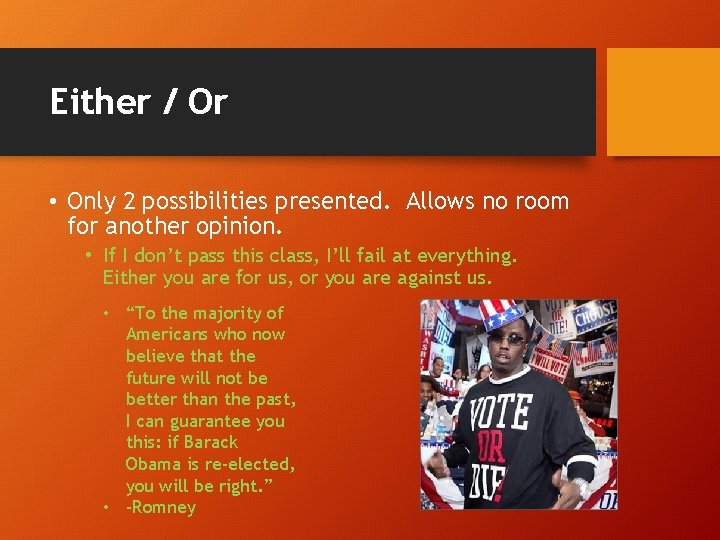
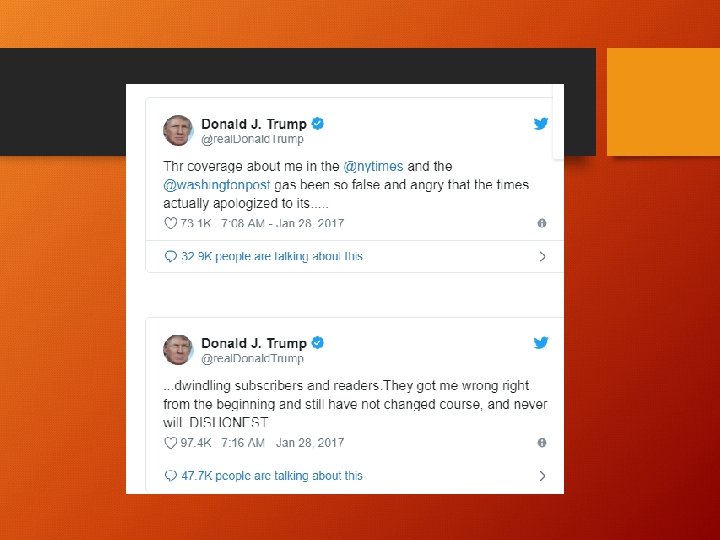
Either / Or • Only 2 possibilities presented. Allows no room for another opinion. • If I don’t pass this class, I’ll fail at everything. Either you are for us, or you are against us. • “To the majority of Americans who now believe that the future will not be better than the past, I can guarantee you this: if Barack Obama is re-elected, you will be right. ” • -Romney
False Analogy/ Moral Equivalency • Comparison of 2 unlike things • Usually a comparison of a minor misdeed with a major misdeed • Skydiving is as easy as falling out of bed. • You know who wore a mustache? ? ? Hitler. (Godwin’s Law) it is possible to use analogies effectively when reasoning inductively. a. to accomplish this the following must hold true: a. the things compared share several common characteristics b. these similarities are relevant to the conclusion intended;
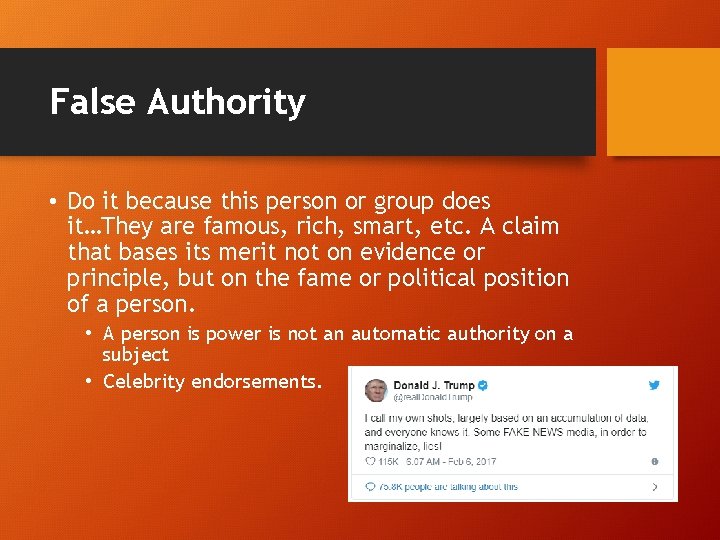
False Authority • Do it because this person or group does it…They are famous, rich, smart, etc. A claim that bases its merit not on evidence or principle, but on the fame or political position of a person. • A person is power is not an automatic authority on a subject • Celebrity endorsements.
Faulty Cause/Effect (Non-sequitur/ Post hoc) • Conclusion/effects is not logical based on causes • It rained today because I washed my car. • I am the best man for the job because I am well-respected at the office and play a great game of tennis. this type of reasoning is fallacious because it fails to recognize a distinction between causes and coincidences.
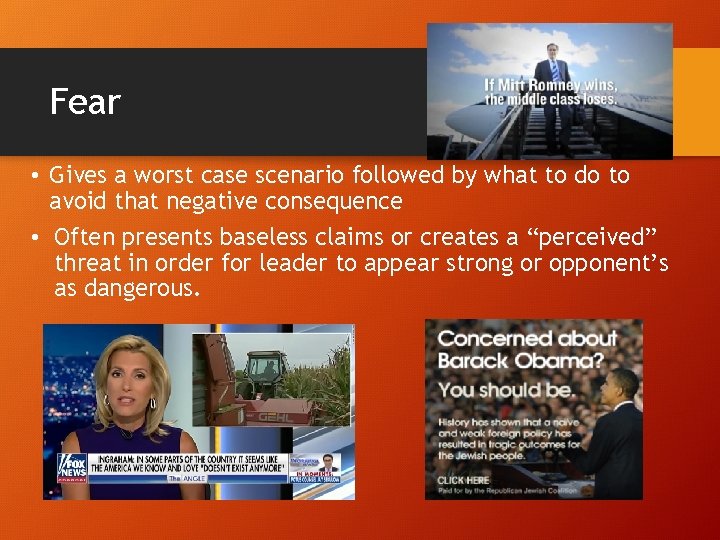
Fear • Gives a worst case scenario followed by what to do to avoid that negative consequence • Often presents baseless claims or creates a “perceived” threat in order for leader to appear strong or opponent’s as dangerous.
FEAR • "When Mexico sends its people, they're not sending their best, " he said then. "They're bringing drugs. They're bringing crime. They're rapists. And some, I assume, are good people. " • It is one of the most powerful forms of argumentation because its appeal is to the audience’s emotions. • The danger in this type of argumentation is, the presenter never really knows how his argument will affect the individual listener on an emotional level
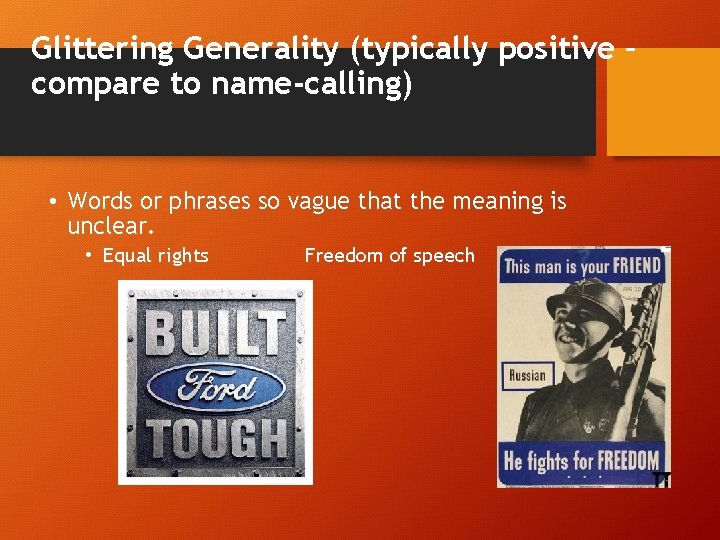
Glittering Generality (typically positive – compare to name-calling) • Words or phrases so vague that the meaning is unclear. • Equal rights Freedom of speech
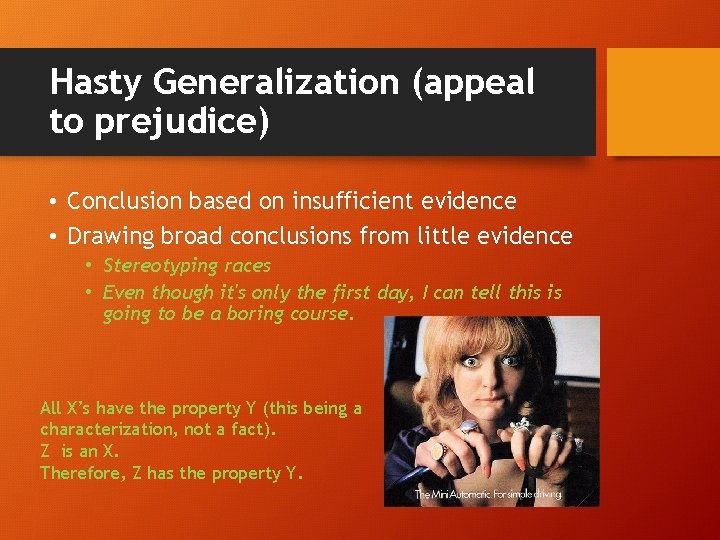
Hasty Generalization (appeal to prejudice) • Conclusion based on insufficient evidence • Drawing broad conclusions from little evidence • Stereotyping races • Even though it's only the first day, I can tell this is going to be a boring course. All X’s have the property Y (this being a characterization, not a fact). Z is an X. Therefore, Z has the property Y.
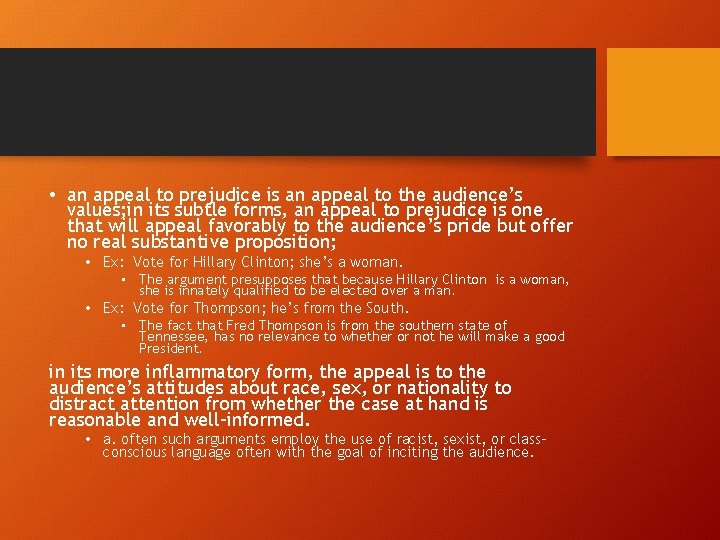
• an appeal to prejudice is an appeal to the audience’s values; in its subtle forms, an appeal to prejudice is one that will appeal favorably to the audience’s pride but offer no real substantive proposition; • Ex: Vote for Hillary Clinton; she’s a woman. • The argument presupposes that because Hillary Clinton is a woman, she is innately qualified to be elected over a man. • Ex: Vote for Thompson; he’s from the South. • The fact that Fred Thompson is from the southern state of Tennessee, has no relevance to whether or not he will make a good President. in its more inflammatory form, the appeal is to the audience’s attitudes about race, sex, or nationality to distract attention from whether the case at hand is reasonable and well-informed. • a. often such arguments employ the use of racist, sexist, or classconscious language often with the goal of inciting the audience.
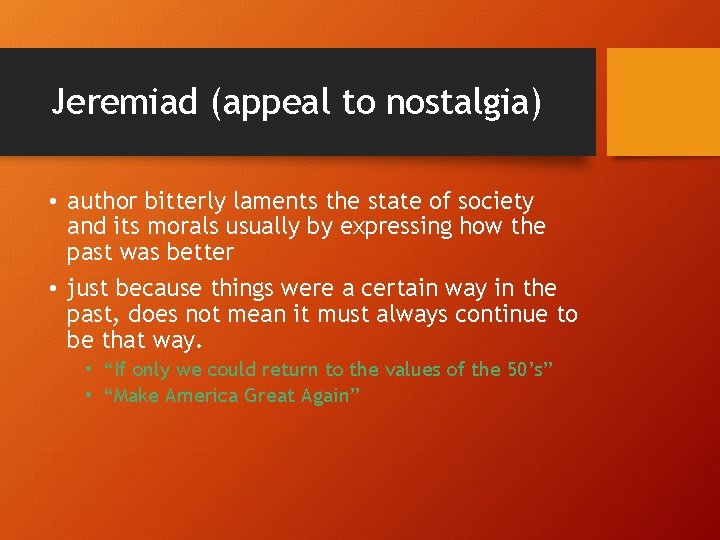
Jeremiad (appeal to nostalgia) • author bitterly laments the state of society and its morals usually by expressing how the past was better • just because things were a certain way in the past, does not mean it must always continue to be that way. • “If only we could return to the values of the 50’s” • “Make America Great Again”
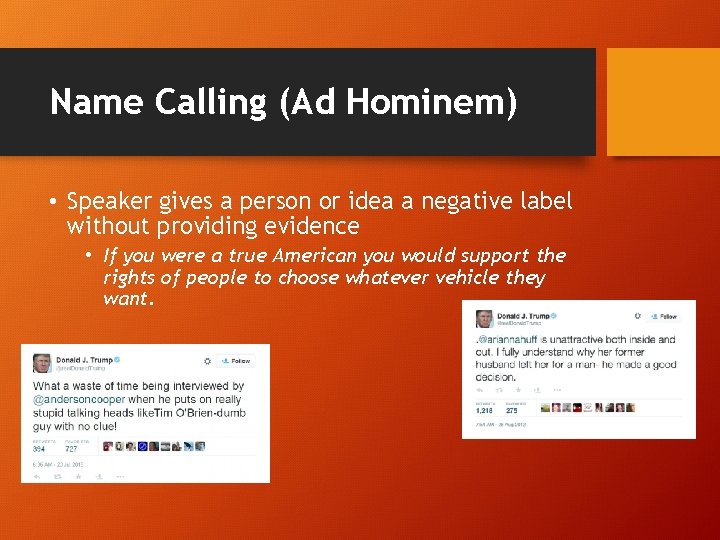
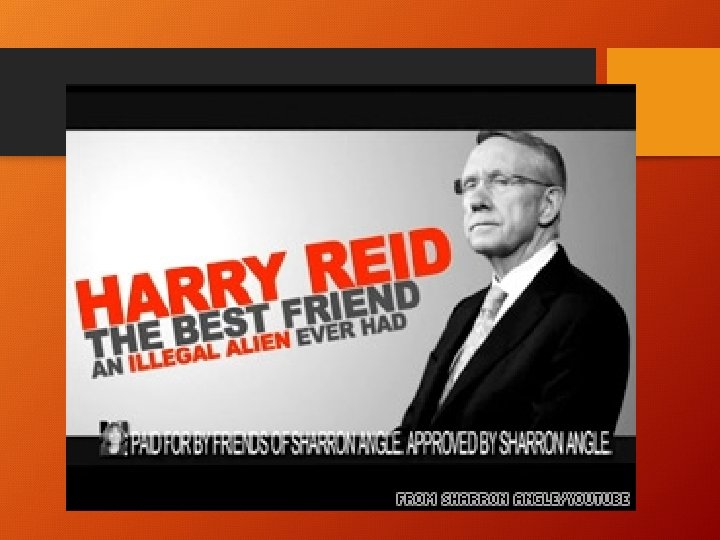
Name Calling (Ad Hominem) • Speaker gives a person or idea a negative label without providing evidence • If you were a true American you would support the rights of people to choose whatever vehicle they want.
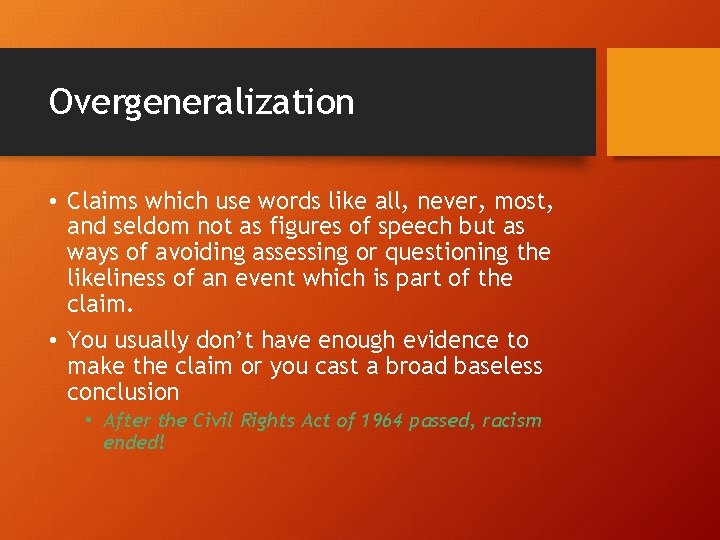
Overgeneralization • Claims which use words like all, never, most, and seldom not as figures of speech but as ways of avoiding assessing or questioning the likeliness of an event which is part of the claim. • You usually don’t have enough evidence to make the claim or you cast a broad baseless conclusion • After the Civil Rights Act of 1964 passed, racism ended!
Oversimplication • To state things in such a way that it overlooks necessary complexities. • i. e. The Texas school system can be fixed with better teachers. The wording we use when discussing science is important. Studies don’t “prove, ” nor are they “true” or “false. ” Rather, they “suggest” or they “find”; they are well designed and executed or they are flawed. The language isn’t sexy, and it may not make headlines, but it’s responsible. If we are to improve the tone of the debate, America needs to bear in mind the fundamentals of scientific investigation. -From Climate Change to Obesity, the Media Oversimplifies Science the Media Oversimplifes Science
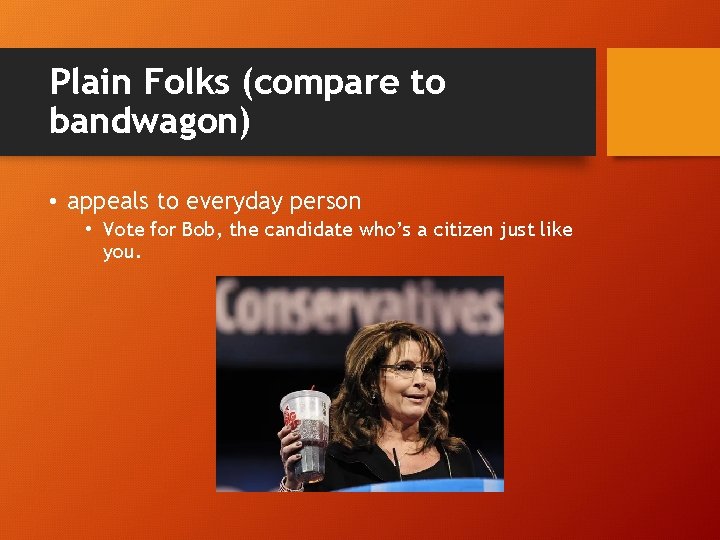
Plain Folks (compare to bandwagon) • appeals to everyday person • Vote for Bob, the candidate who’s a citizen just like you.
Red Herring (whataboutism) • This is a diversionary tactic that avoids the key issues, often by avoiding opposing arguments rather than addressing them. Changes subject. • The level of mercury in seafood may be unsafe, but what will fishers do to support their families? • Someone jumps into an argument about deaths related to racial profiling to argue that abortion is the real issue no one is talking about.
Slippery Slope: • An exaggerated claim that if “A” happens it will INEVITABLY lead to the worst possible scenario or “Z” - ignores complexity. Key word is to imply it will happen eventually. • If we ban Hummers because they are bad for the environment eventually the government will ban all cars, so we should not ban Hummers. • “If we let gays get married, then what is next? People marrying dogs and cats? (also a false equivalency)
Snob Appeal • Appeals to an elite group • “The few, the proud, the Marines. ” • “L’oreal may cost a little more, but I’m worth it. ”
Opposing a Straw Man Argument • overstating, exaggerating, or over-simplifying the arguments of the opposing side, or purposefully mischaracterizing them. • A false argument created to be easily knocked down and show the strength of the speaker • Senator Smith says that the nation should not add to the defense budget. Senator Jones says that he cannot believe that Senator Smith wants to leave the nation defenseless. • speaker is attacking a “straw man” or super simplified or misinterpreted stand-in rather than the actual person’s argument since the actual person may have never said such a thing
Straw Man Cont. • the most common form is to exaggerate the views of others or to respond only to an extreme view that does not adequately represent the arguments of one’s opponents. • a. Ex: If the argument premise is against abolishing Social Security, do not think that the premise has been effectively defended from all criticisms of it. By responding only to an extreme position, nothing has been done to resolve specific concerns about how Social Security is financed and administered.
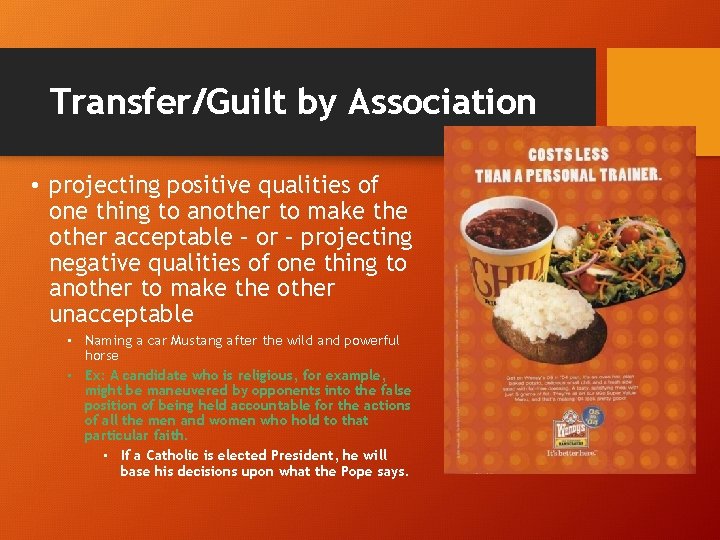
Transfer/Guilt by Association • projecting positive qualities of one thing to another to make the other acceptable – or – projecting negative qualities of one thing to another to make the other unacceptable • Naming a car Mustang after the wild and powerful horse • Ex: A candidate who is religious, for example, might be maneuvered by opponents into the false position of being held accountable for the actions of all the men and women who hold to that particular faith. • If a Catholic is elected President, he will base his decisions upon what the Pope says.
Rhetorical Devices
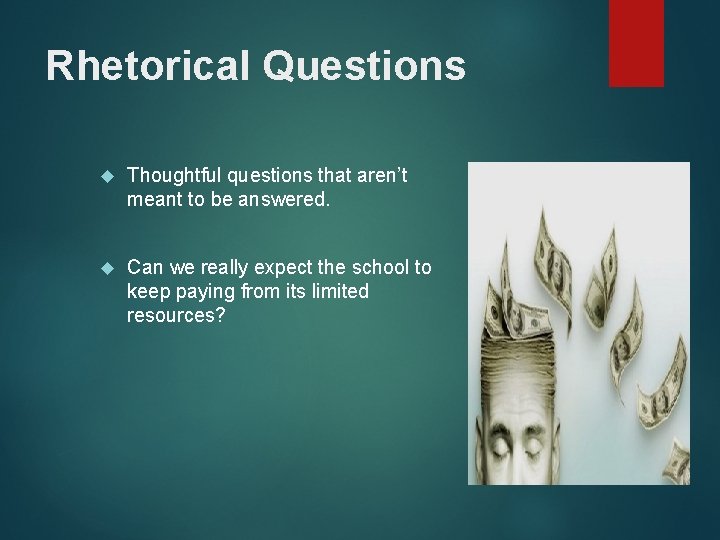
Rhetorical Questions Thoughtful questions that aren’t meant to be answered. Can we really expect the school to keep paying from its limited resources?
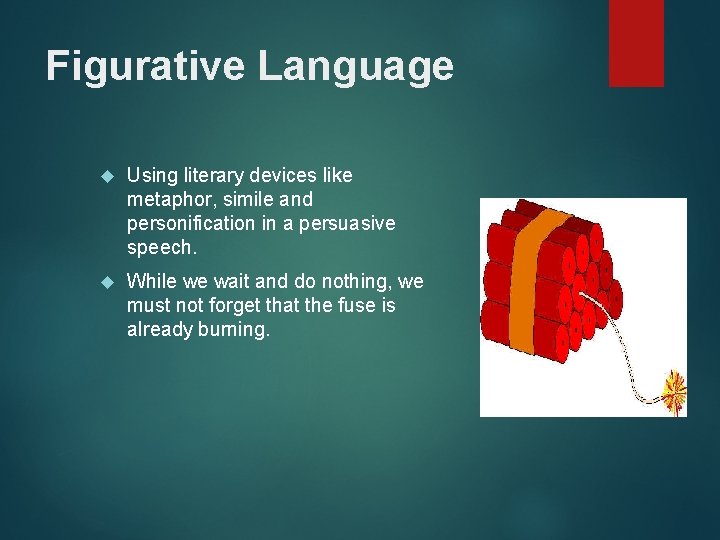
Figurative Language Using literary devices like metaphor, simile and personification in a persuasive speech. While we wait and do nothing, we must not forget that the fuse is already burning.
Repetition or Anaphora - The intentional repetition of a word or phrase at the beginning of a line for emphasis. Repetition can be anywhere. Will he read the book? Will he learn what it has to teach him? Will he live according to what he has learned? Not time, not money, not laws, but willing diligence will get this done.
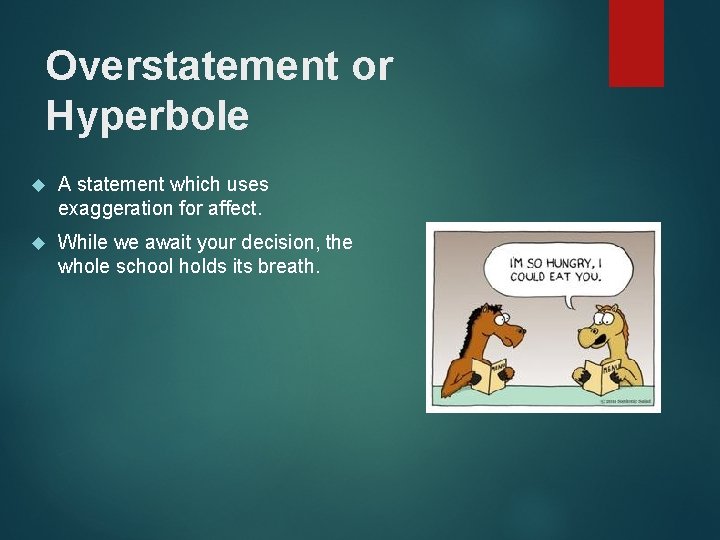
Overstatement or Hyperbole A statement which uses exaggeration for affect. While we await your decision, the whole school holds its breath.
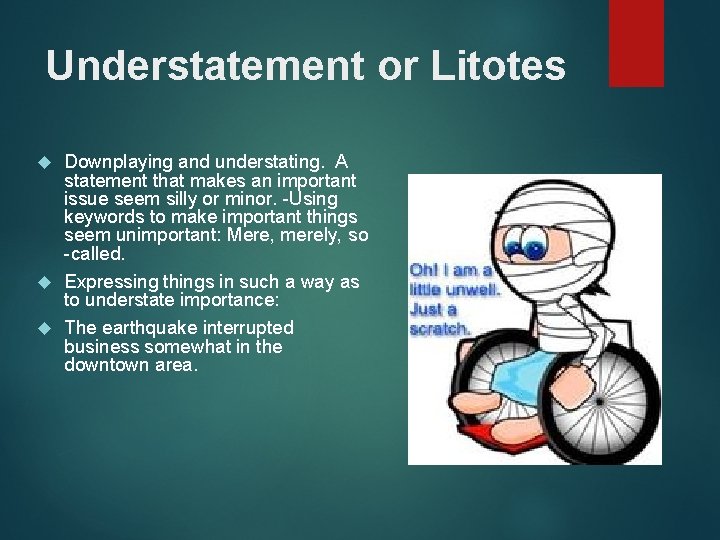
Understatement or Litotes Downplaying and understating. A statement that makes an important issue seem silly or minor. -Using keywords to make important things seem unimportant: Mere, merely, so -called. Expressing things in such a way as to understate importance: The earthquake interrupted business somewhat in the downtown area.
Parallelism or Parallel Structures Repetition of structure but not exact words. To show kindness is praiseworthy; to show hatred is evil.
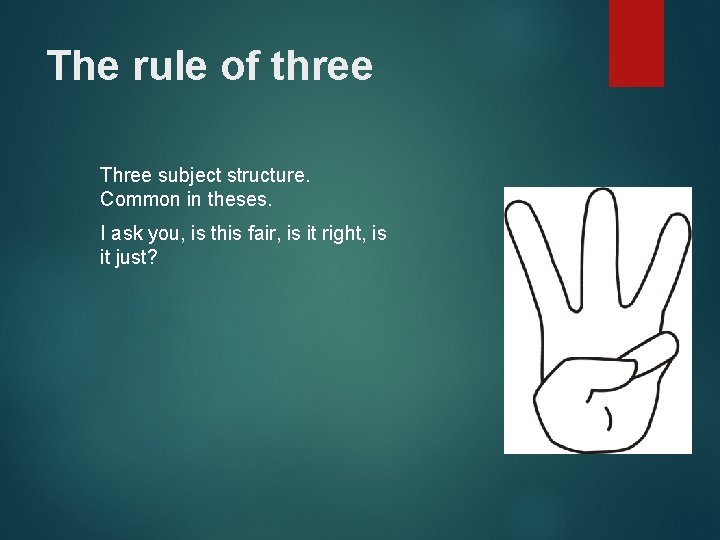
The rule of three Three subject structure. Common in theses. I ask you, is this fair, is it right, is it just?
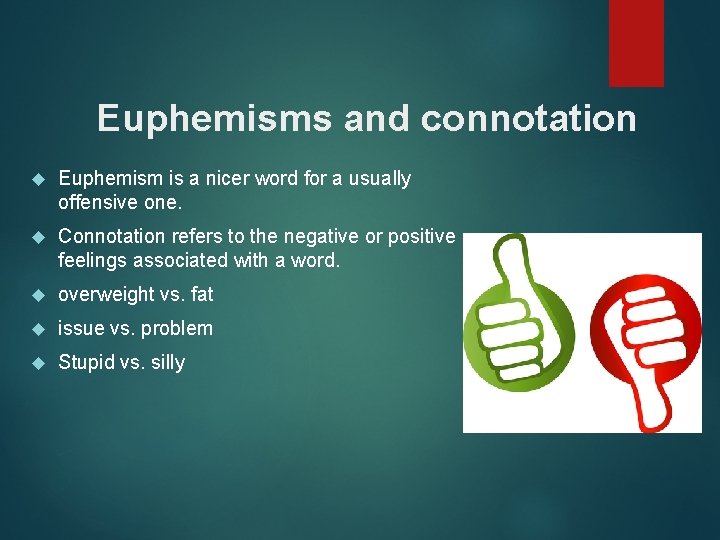
Euphemisms and connotation Euphemism is a nicer word for a usually offensive one. Connotation refers to the negative or positive feelings associated with a word. overweight vs. fat issue vs. problem Stupid vs. silly
Anecdote A short and interesting story taken from your past experience - or that of someone you know or have heard about. Audiences love them.