
Aristotle University of Thessaloniki AUTH Institute of Steel
- Slides: 9
Aristotle University of Thessaloniki (AUTH) Institute of Steel Structures Prof. C. C Baniotopoulos Iakovos Lavasas Civil Engineer Padelis Zervas Dr. Civil Enginner George Nikolaidis Civil Engineer
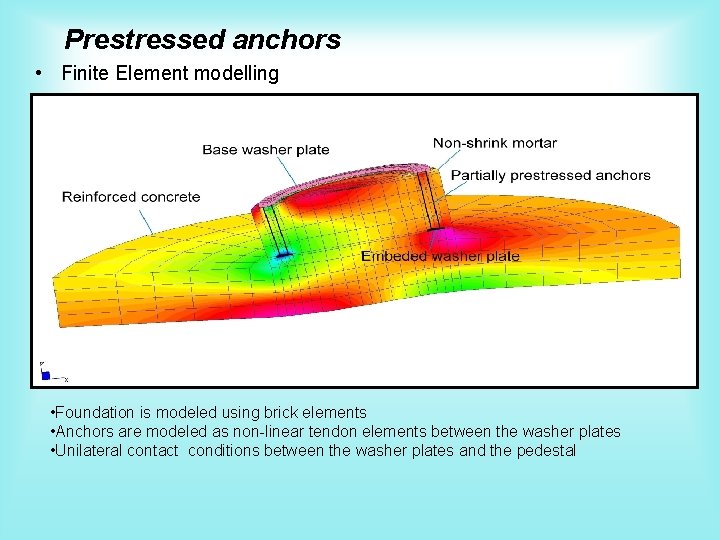
Prestressed anchors • Finite Element modelling • Foundation is modeled using brick elements • Anchors are modeled as non-linear tendon elements between the washer plates • Unilateral contact conditions between the washer plates and the pedestal
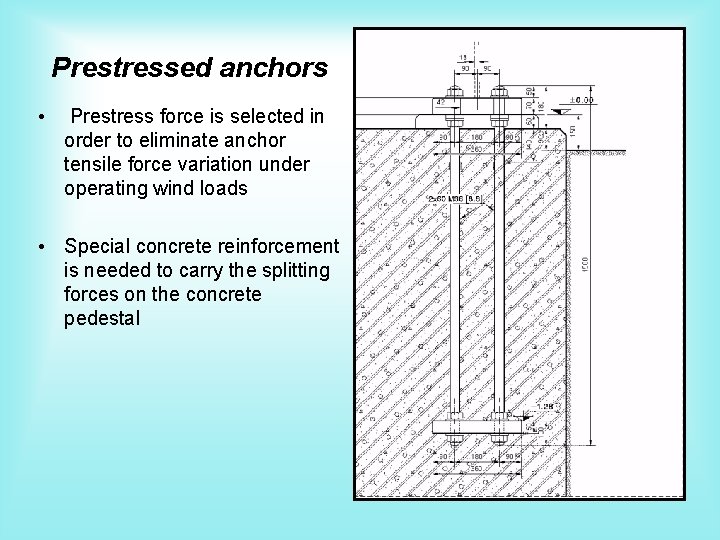
Prestressed anchors • Prestress force is selected in order to eliminate anchor tensile force variation under operating wind loads • Special concrete reinforcement is needed to carry the splitting forces on the concrete pedestal
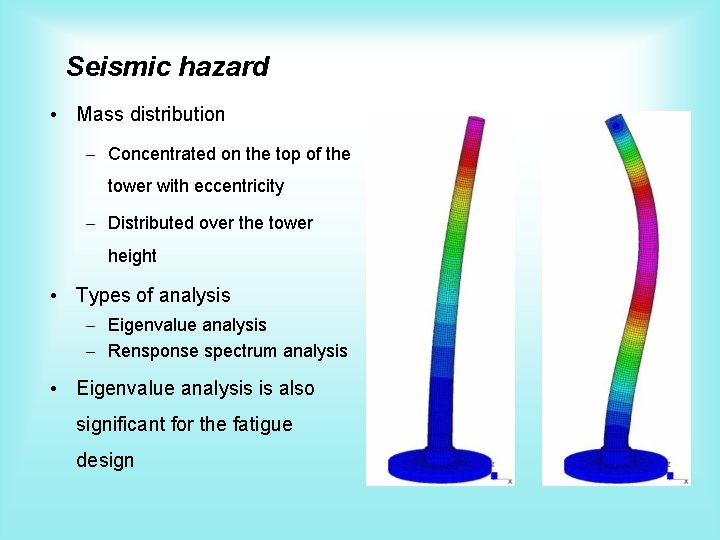
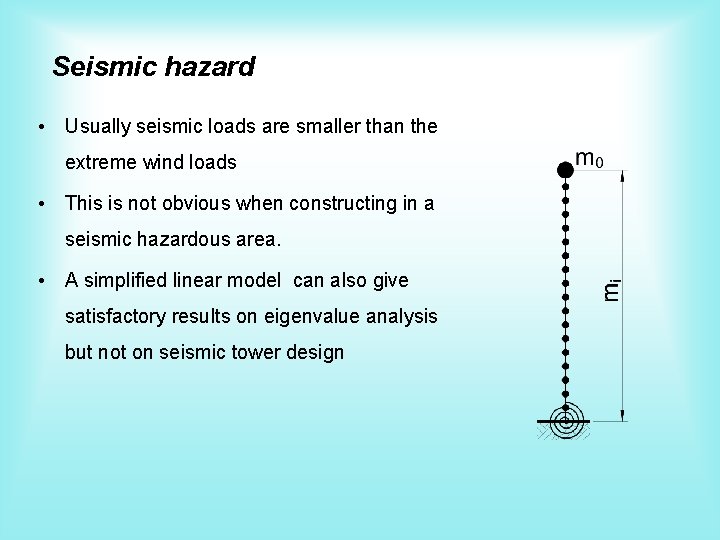
Seismic hazard • Mass distribution – Concentrated on the top of the tower with eccentricity – Distributed over the tower height • Types of analysis – Eigenvalue analysis – Rensponse spectrum analysis • Eigenvalue analysis is also significant for the fatigue design
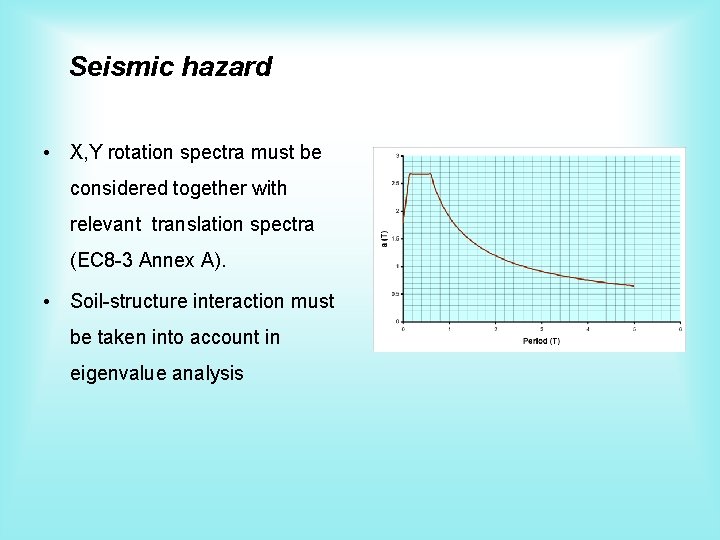
Seismic hazard • X, Y rotation spectra must be considered together with relevant translation spectra (EC 8 -3 Annex A). • Soil-structure interaction must be taken into account in eigenvalue analysis
Seismic hazard • Usually seismic loads are smaller than the extreme wind loads • This is not obvious when constructing in a seismic hazardous area. • A simplified linear model can also give satisfactory results on eigenvalue analysis but not on seismic tower design
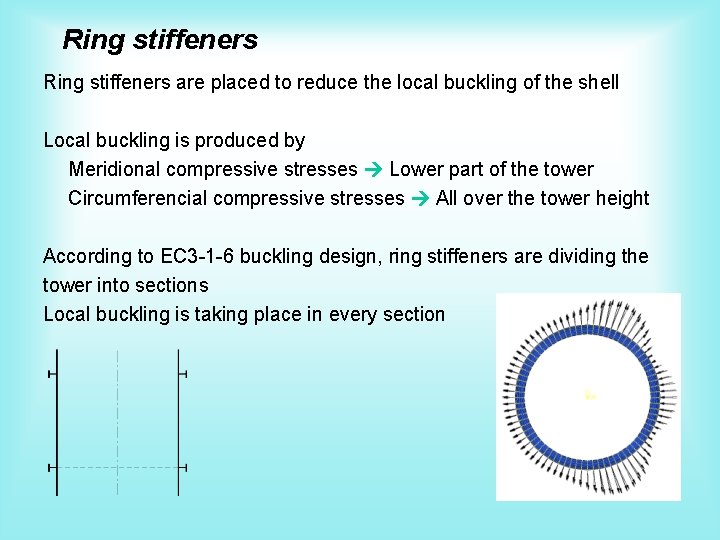
Ring stiffeners are placed to reduce the local buckling of the shell Local buckling is produced by Meridional compressive stresses Lower part of the tower Circumferencial compressive stresses All over the tower height According to EC 3 -1 -6 buckling design, ring stiffeners are dividing the tower into sections Local buckling is taking place in every section
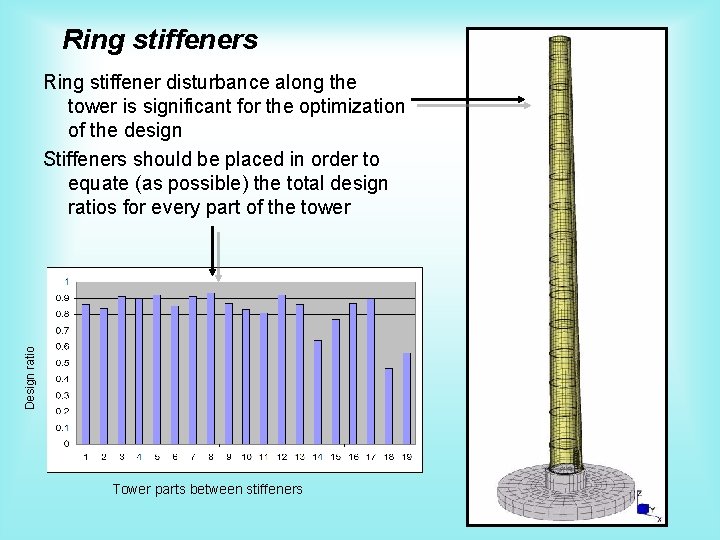
Ring stiffeners Design ratio Ring stiffener disturbance along the tower is significant for the optimization of the design Stiffeners should be placed in order to equate (as possible) the total design ratios for every part of the tower Tower parts between stiffeners
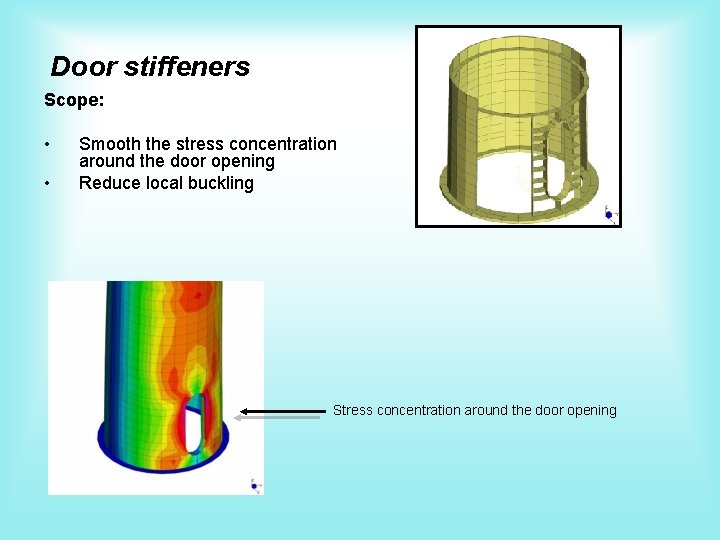
Door stiffeners Scope: • • Smooth the stress concentration around the door opening Reduce local buckling Stress concentration around the door opening