
Argumentative Writing Understanding the Scoring Criteria For an
- Slides: 27
Argumentative Writing
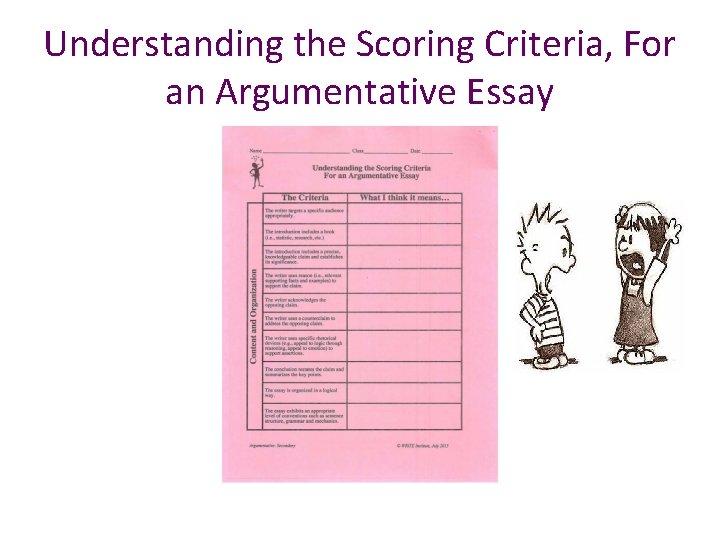
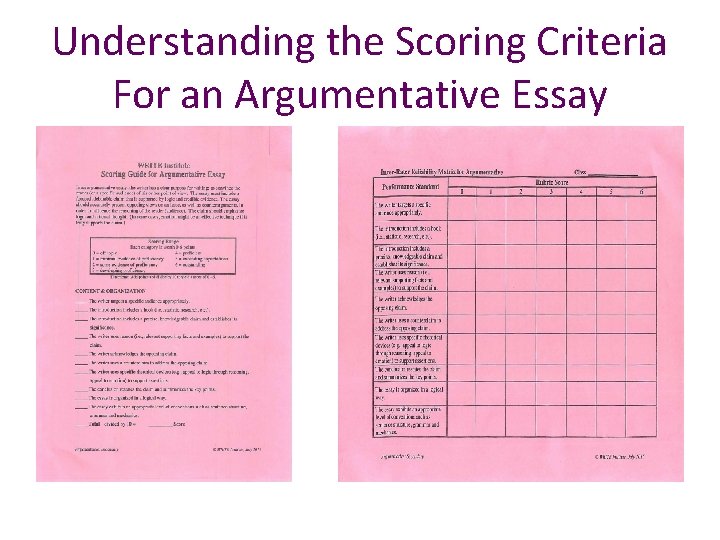
Understanding the Scoring Criteria, For an Argumentative Essay
Objectives for Argumentative Writing: - Incorporate common writing process strategies across contents. - Incorporate specific research-based strategies as part of the prewriting process. - Implement common academic language - Engage students in argumentative thinking (i. e. , debates). - Use models to explicitly teach the organization, vocabulary, frames, and thinking skills (i. e. , summarize, compare/contrast, evaluate, analyze, etc. )
Introducing the Genre - Building on Background - Teach the Rubric Criteria -Genre Vocabulary -
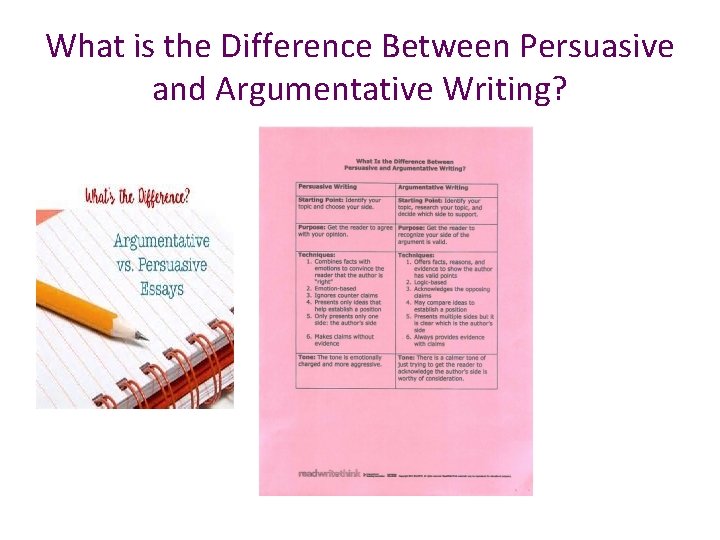
What is the Difference Between Persuasive and Argumentative Writing?
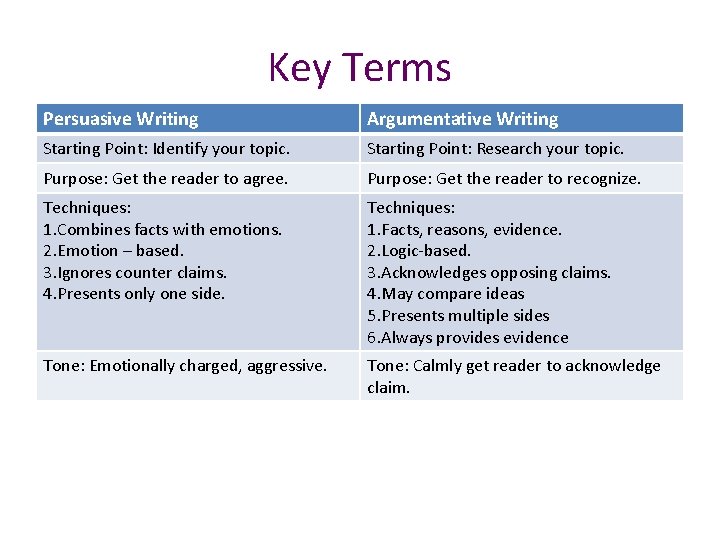
Key Terms Persuasive Writing Argumentative Writing Starting Point: Identify your topic. Starting Point: Research your topic. Purpose: Get the reader to agree. Purpose: Get the reader to recognize. Techniques: 1. Combines facts with emotions. 2. Emotion – based. 3. Ignores counter claims. 4. Presents only one side. Techniques: 1. Facts, reasons, evidence. 2. Logic-based. 3. Acknowledges opposing claims. 4. May compare ideas 5. Presents multiple sides 6. Always provides evidence Tone: Emotionally charged, aggressive. Tone: Calmly get reader to acknowledge claim.
Understanding the Scoring Criteria For an Argumentative Essay
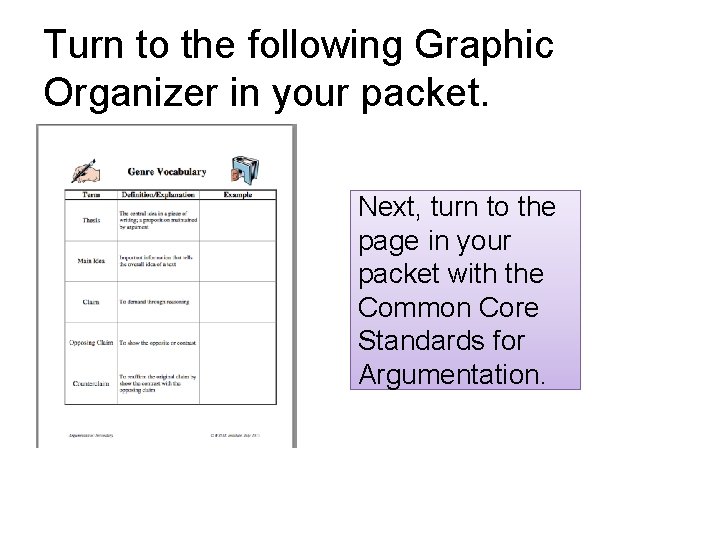
Turn to the following Graphic Organizer in your packet. Next, turn to the page in your packet with the Common Core Standards for Argumentation.
Let’s take a closer look… • Turn to the GENRE VOCABULARY page in your packet. • Listed are the various vocabulary words significant to the Genre (Argumentative) • Based on the definition/explanation of the term, Identify the STANDARD that matches the definition given. • Write your response in the space provided. (47 min. )
Unpacking the Genre - -Study of Models/Mentor Text -Side by Side - Teacher models -Grammar and Vocabulary -
Student Sample: Grade 9, Argument • Writing Task: – Students compare a book they read on their own to a movie about the same story and prove which was better.
Mentor Text: Partner Work Objectives: • Read the mentor text and analyze it to determine which structure the student writer is using to develop his or her argument. • Determine whether this student sample correlates with our understanding of “argumentative” writing.
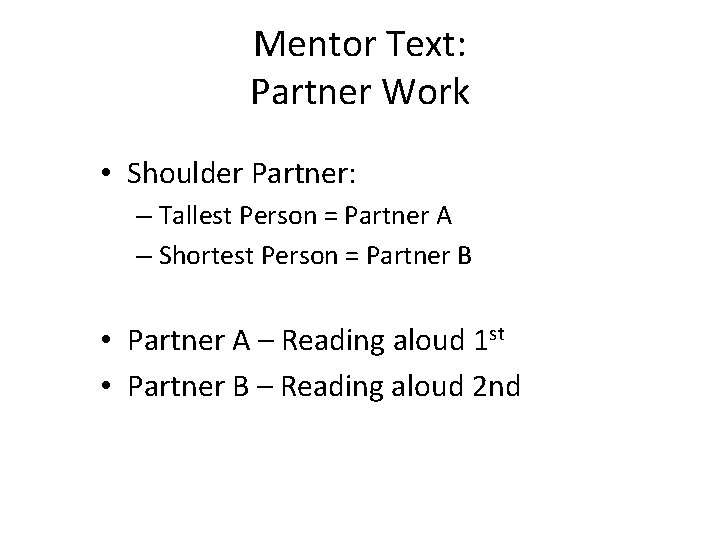
Mentor Text: Partner Work • Shoulder Partner: – Tallest Person = Partner A – Shortest Person = Partner B • Partner A – Reading aloud 1 st • Partner B – Reading aloud 2 nd
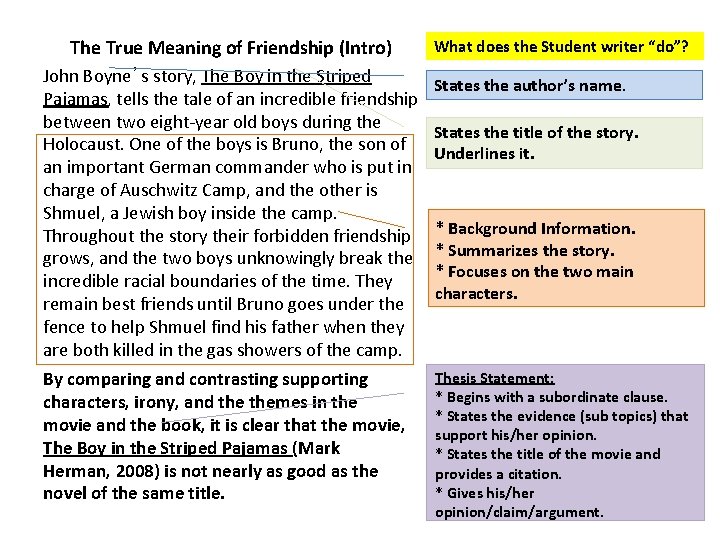
The True Meaning of Friendship (Intro) John Boyne’s story, The Boy in the Striped Pajamas, tells the tale of an incredible friendship between two eight-year old boys during the Holocaust. One of the boys is Bruno, the son of an important German commander who is put in charge of Auschwitz Camp, and the other is Shmuel, a Jewish boy inside the camp. Throughout the story their forbidden friendship grows, and the two boys unknowingly break the incredible racial boundaries of the time. They remain best friends until Bruno goes under the fence to help Shmuel find his father when they are both killed in the gas showers of the camp. By comparing and contrasting supporting characters, irony, and themes in the movie and the book, it is clear that the movie, The Boy in the Striped Pajamas (Mark Herman, 2008) is not nearly as good as the novel of the same title. What does the Student writer “do”? States the author’s name. States the title of the story. Underlines it. * Background Information. * Summarizes the story. * Focuses on the two main characters. Thesis Statement: * Begins with a subordinate clause. * States the evidence (sub topics) that support his/her opinion. * States the title of the movie and provides a citation. * Gives his/her opinion/claim/argument.
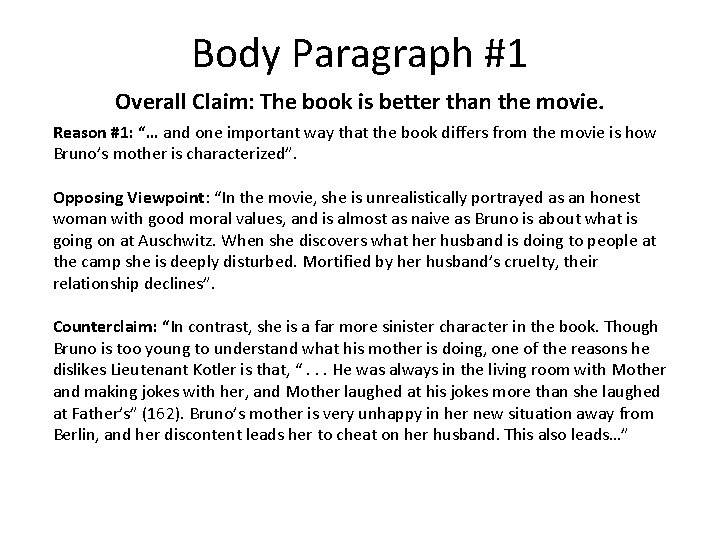
Body Paragraph #1 Overall Claim: The book is better than the movie. Reason #1: “… and one important way that the book differs from the movie is how Bruno’s mother is characterized”. Opposing Viewpoint: “In the movie, she is unrealistically portrayed as an honest woman with good moral values, and is almost as naive as Bruno is about what is going on at Auschwitz. When she discovers what her husband is doing to people at the camp she is deeply disturbed. Mortified by her husband’s cruelty, their relationship declines”. Counterclaim: “In contrast, she is a far more sinister character in the book. Though Bruno is too young to understand what his mother is doing, one of the reasons he dislikes Lieutenant Kotler is that, “. . . He was always in the living room with Mother and making jokes with her, and Mother laughed at his jokes more than she laughed at Father’s” (162). Bruno’s mother is very unhappy in her new situation away from Berlin, and her discontent leads her to cheat on her husband. This also leads…”
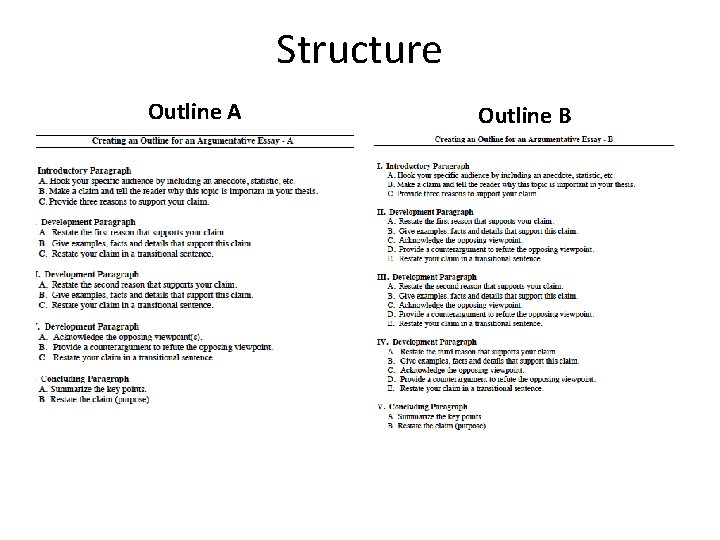
Structure Outline A Outline B
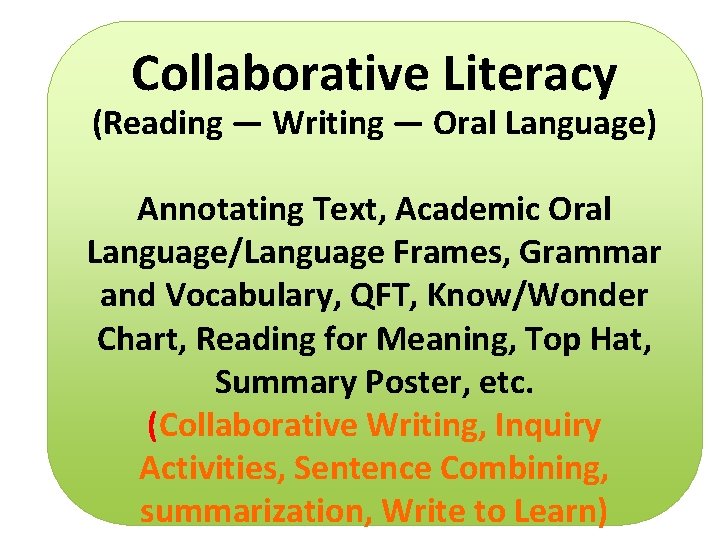
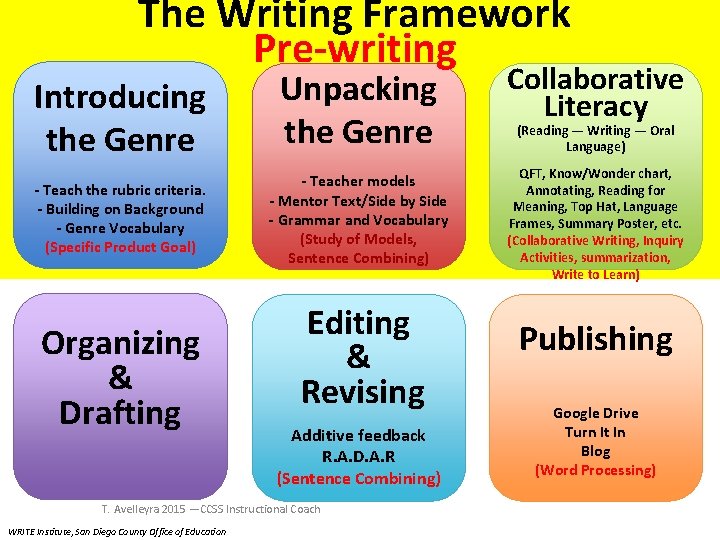
Collaborative Literacy (Reading — Writing — Oral Language) Annotating Text, Academic Oral Language/Language Frames, Grammar and Vocabulary, QFT, Know/Wonder Chart, Reading for Meaning, Top Hat, Summary Poster, etc. (Collaborative Writing, Inquiry Activities, Sentence Combining, summarization, Write to Learn)
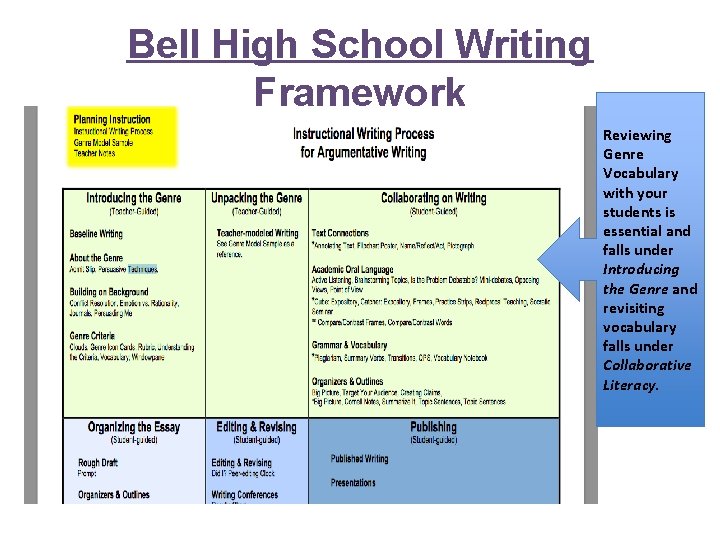
Bell High School Writing Framework Reviewing Genre Vocabulary with your students is essential and falls under Introducing the Genre and revisiting vocabulary falls under Collaborative Literacy.
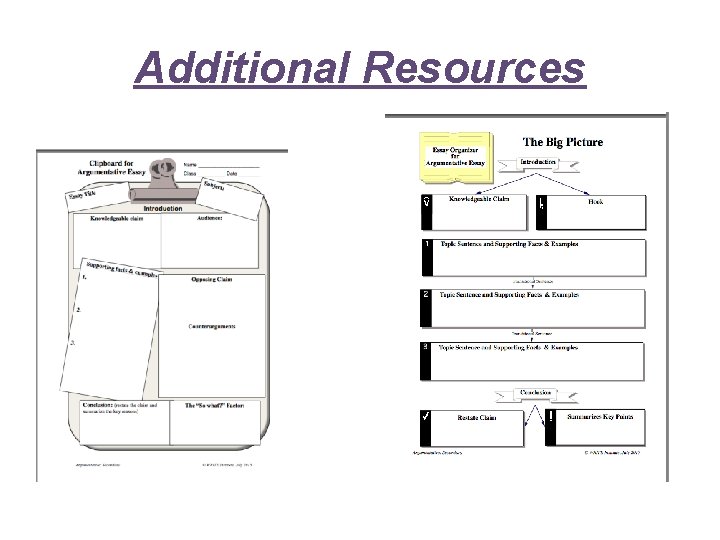
Additional Resources
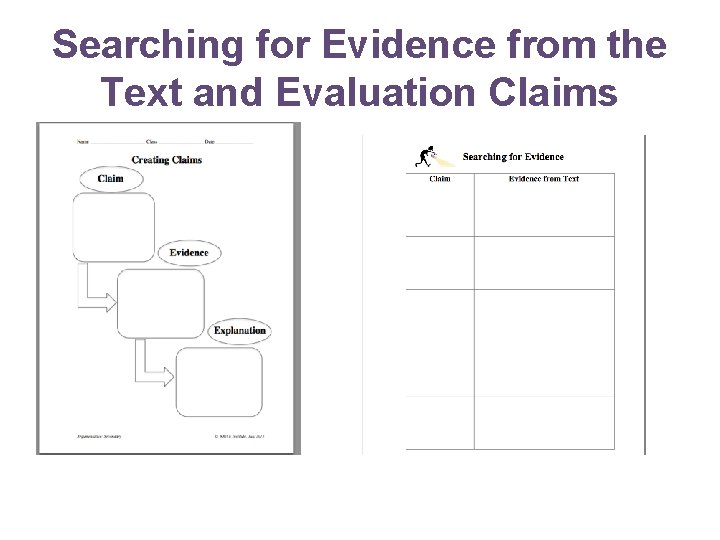
Searching for Evidence from the Text and Evaluation Claims
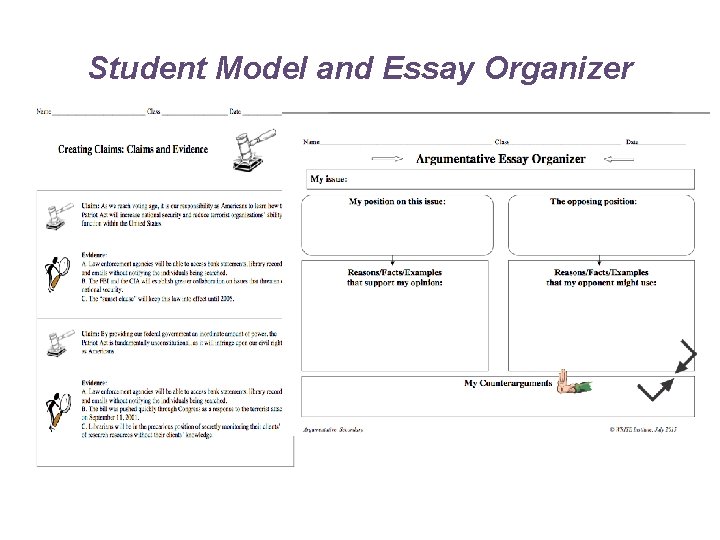
Student Model and Essay Organizer
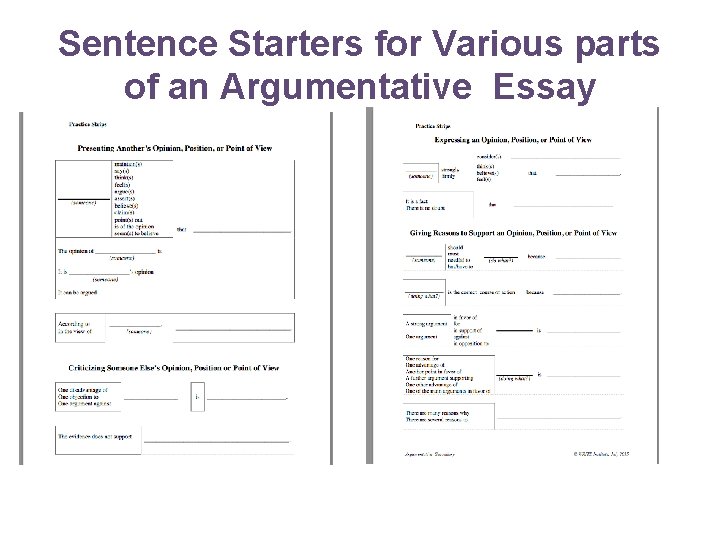
Sentence Starters for Various parts of an Argumentative Essay
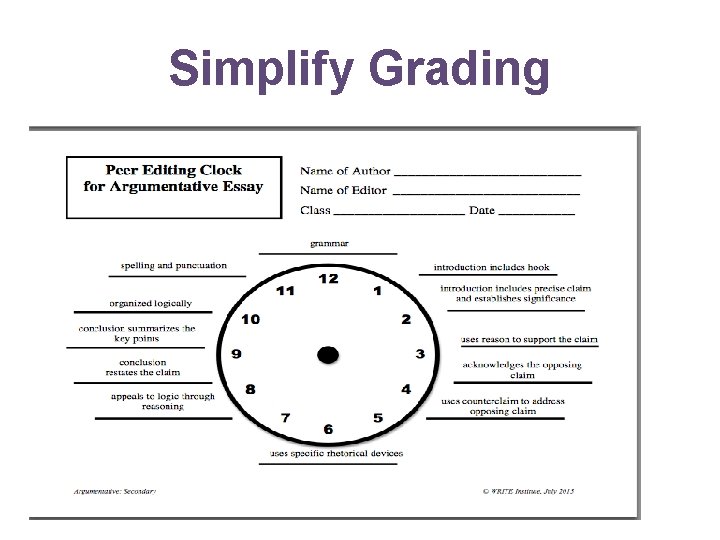
Simplify Grading
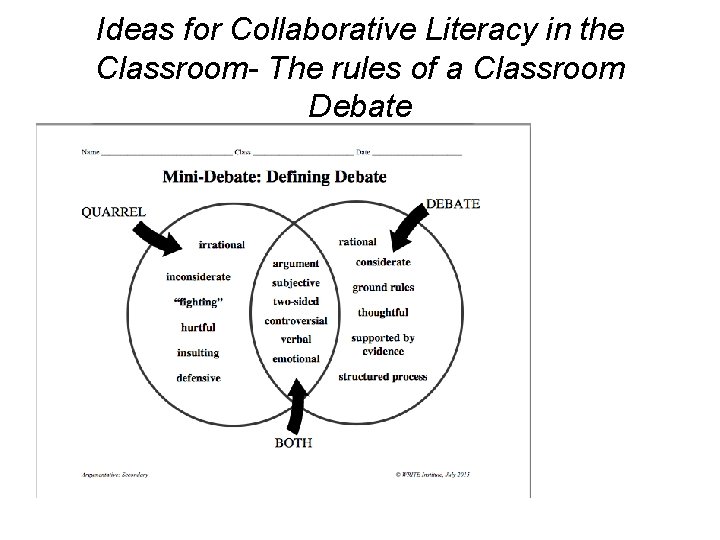
Ideas for Collaborative Literacy in the Classroom- The rules of a Classroom Debate
Make sure to review the academic meaning of “argument” and set ground rules for group interaction. An argument is a thoughtful process of reasoning in support of a claim; it’s not a quarrel or a dispute. The goal is to support a claim and to better understand complex, multifaceted issues, not to put people on the defensive. When someone feels insulted, meaningful interaction ceases to exist.
It’s about TEACHING writing, not just ASSIGNING writing! © WRITE Institute, San Diego County Office of Education
The Writing Framework Pre-writing Introducing the Genre - Teach the rubric criteria. - Building on Background - Genre Vocabulary (Specific Product Goal) Organizing & Drafting Unpacking the Genre - Teacher models - Mentor Text/Side by Side - Grammar and Vocabulary (Study of Models, Sentence Combining) Editing & Revising Additive feedback R. A. D. A. R (Sentence Combining) T. Avelleyra 2015 —CCSS Instructional Coach WRITE Institute, San Diego County Office of Education Collaborative Literacy (Reading — Writing — Oral Language) QFT, Know/Wonder chart, Annotating, Reading for Meaning, Top Hat, Language Frames, Summary Poster, etc. (Collaborative Writing, Inquiry Activities, summarization, Write to Learn) Publishing Google Drive Turn It In Blog (Word Processing)