
ARFF No Foam Testing Procedure May 5 2020
- Slides: 23
ARFF No Foam Testing Procedure May 5, 2020
No. Foam Portable Testing System • This test has been approved by the FAA and is compliant with NFPA 412 testing standards • ALL No. Foam testing shall be done with the fire mechanic present • No. Foam testing shall be performed annually within 6 months of the FAA inspection • No. Foam testing enables foam testing to be performed to ensure each discharge produces a 3% foam concentration • No. Foam testing uses water instead of foam to prevent waste as well as preserve the environment
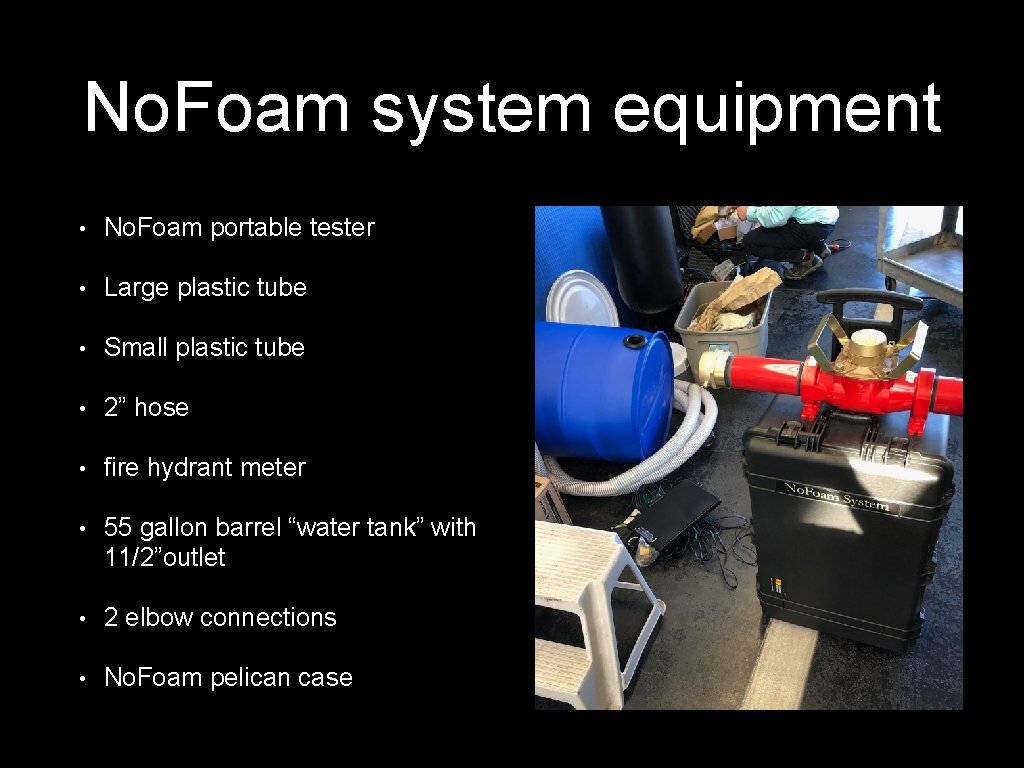
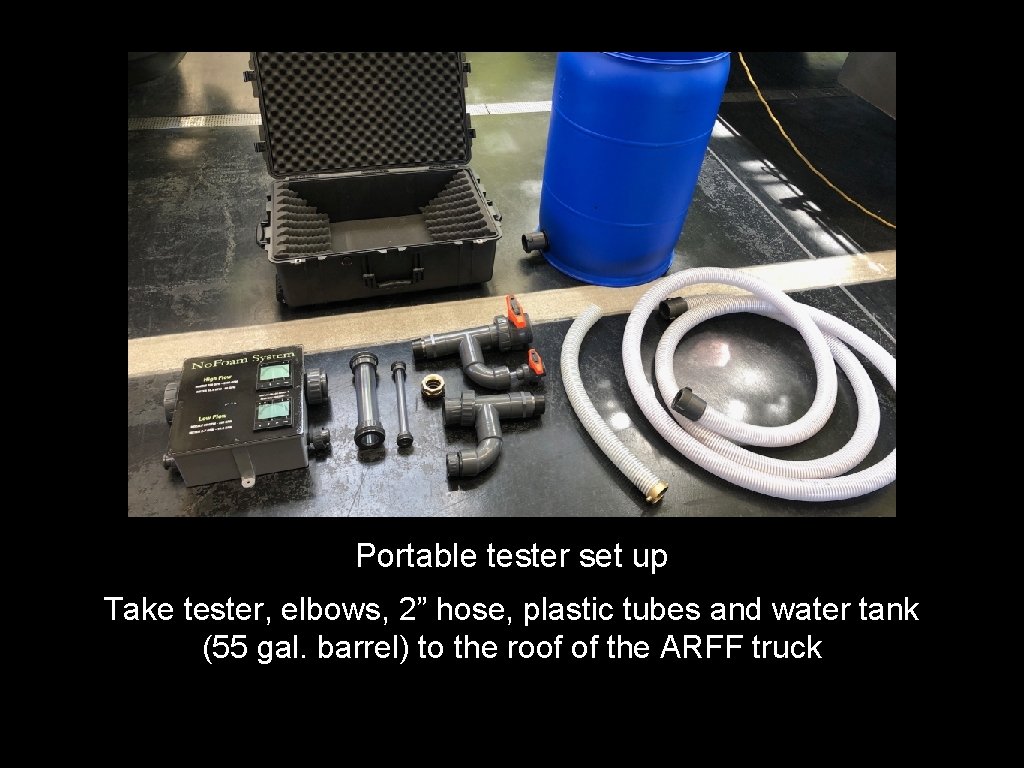
No. Foam system equipment • No. Foam portable tester • Large plastic tube • Small plastic tube • 2” hose • fire hydrant meter • 55 gallon barrel “water tank” with 11/2”outlet • 2 elbow connections • No. Foam pelican case
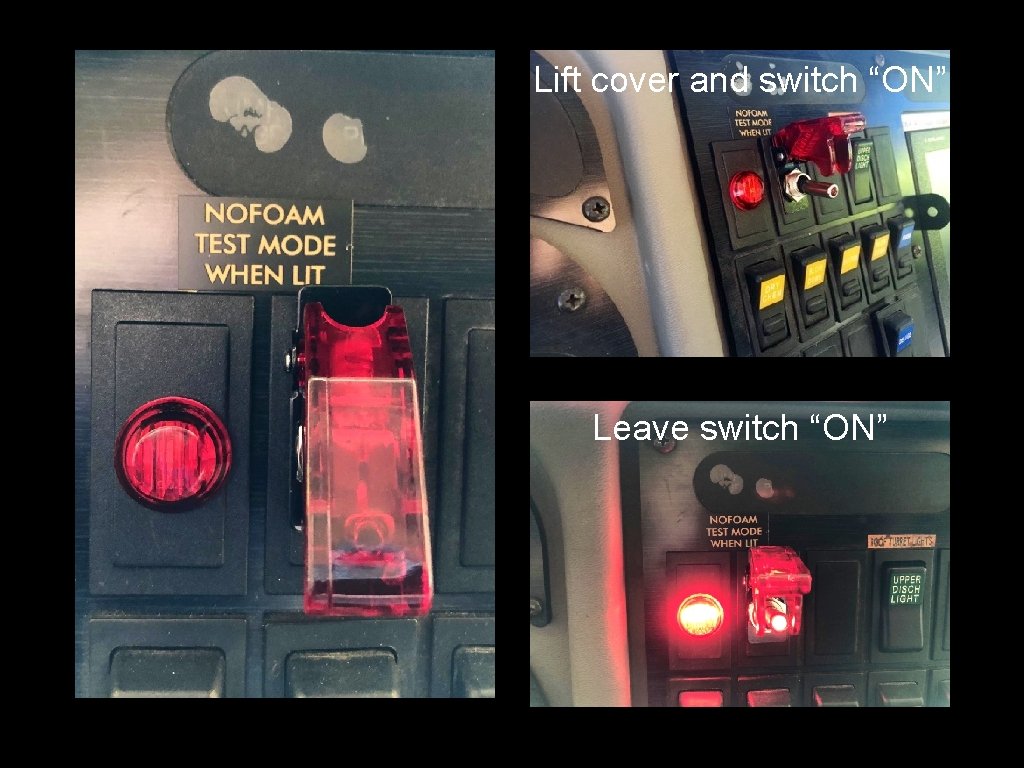
No. Foam System set up • Pull ARFF rig out on front apron • Turn “ON” No. Foam test mode switch in the cab. The red “test switch lamp” will illuminate. • ***LEAVE THIS SWITCH “ON” FOR THE DURATION OF THE TESTING PROCESS***
Lift cover and switch “ON” Leave switch “ON”
Portable tester set up Take tester, elbows, 2” hose, plastic tubes and water tank (55 gal. barrel) to the roof of the ARFF truck
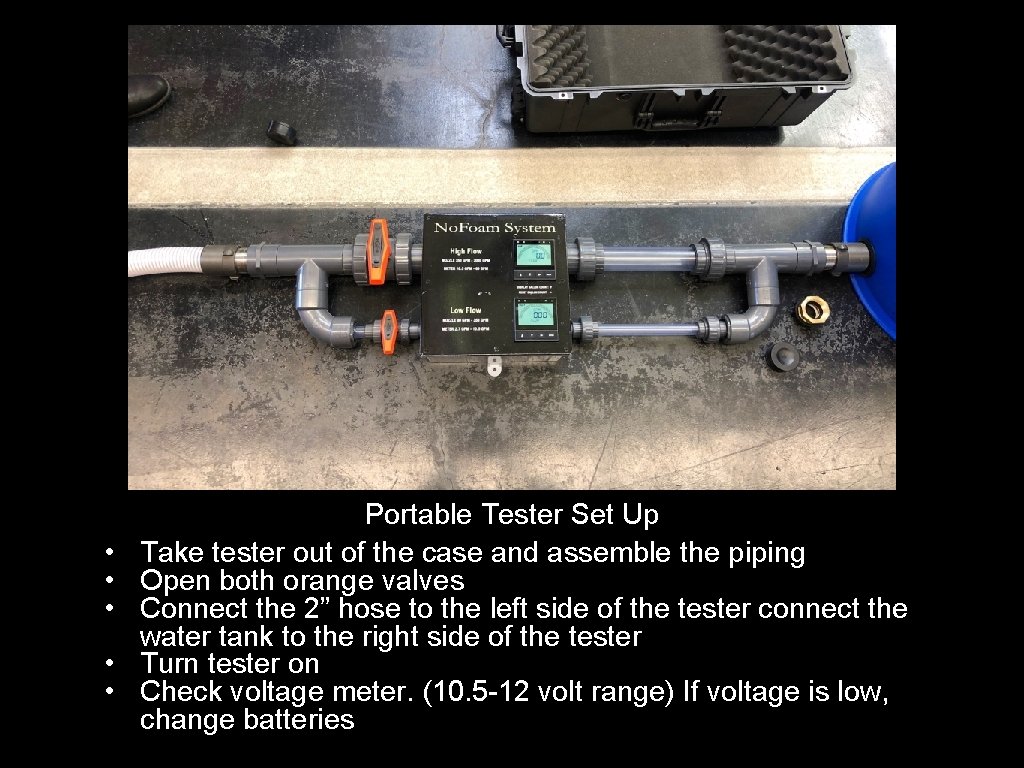
• • • Portable Tester Set Up Take tester out of the case and assemble the piping Open both orange valves Connect the 2” hose to the left side of the tester connect the water tank to the right side of the tester Turn tester on Check voltage meter. (10. 5 -12 volt range) If voltage is low, change batteries
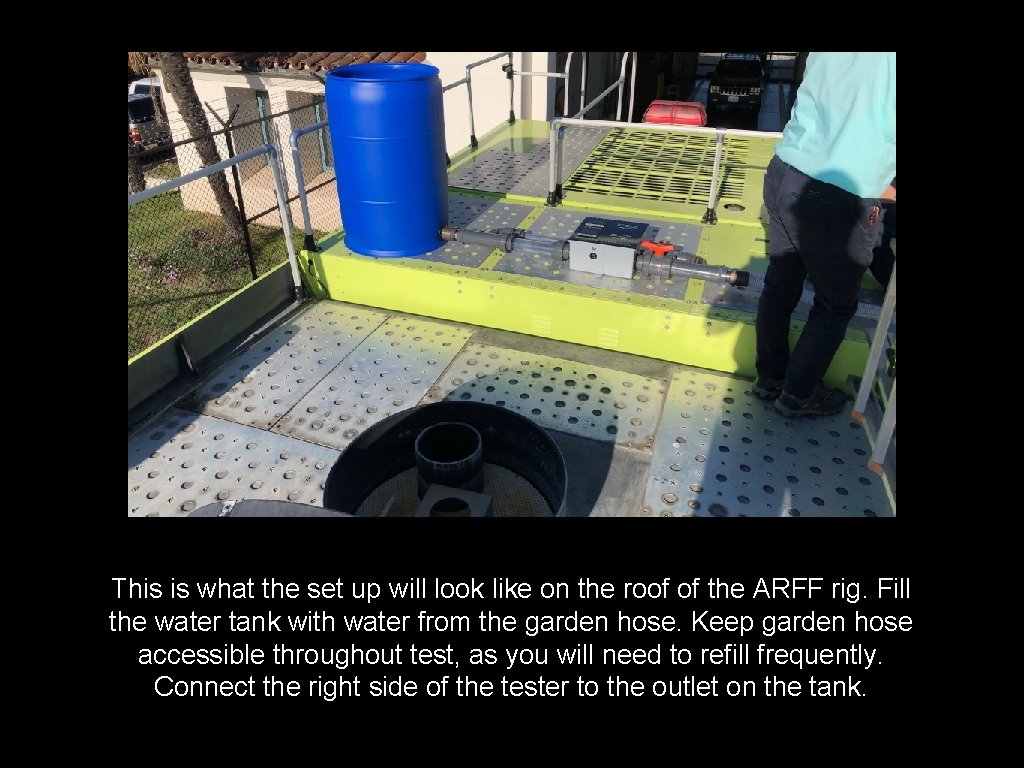
This is what the set up will look like on the roof of the ARFF rig. Fill the water tank with water from the garden hose. Keep garden hose accessible throughout test, as you will need to refill frequently. Connect the right side of the tester to the outlet on the tank.
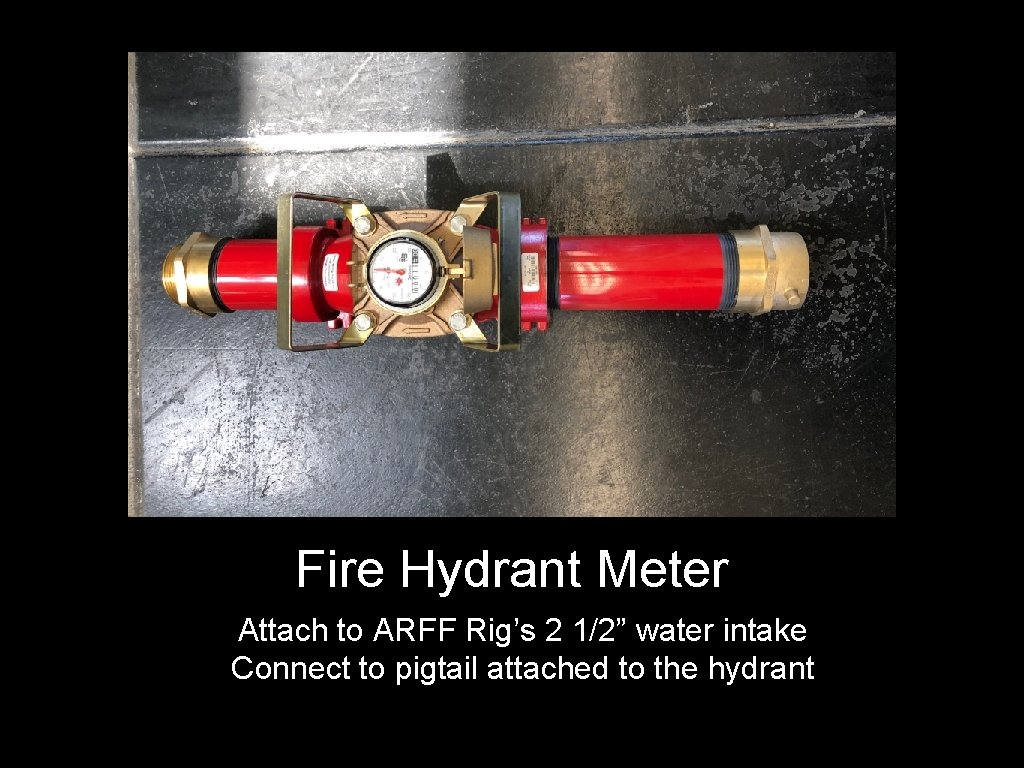
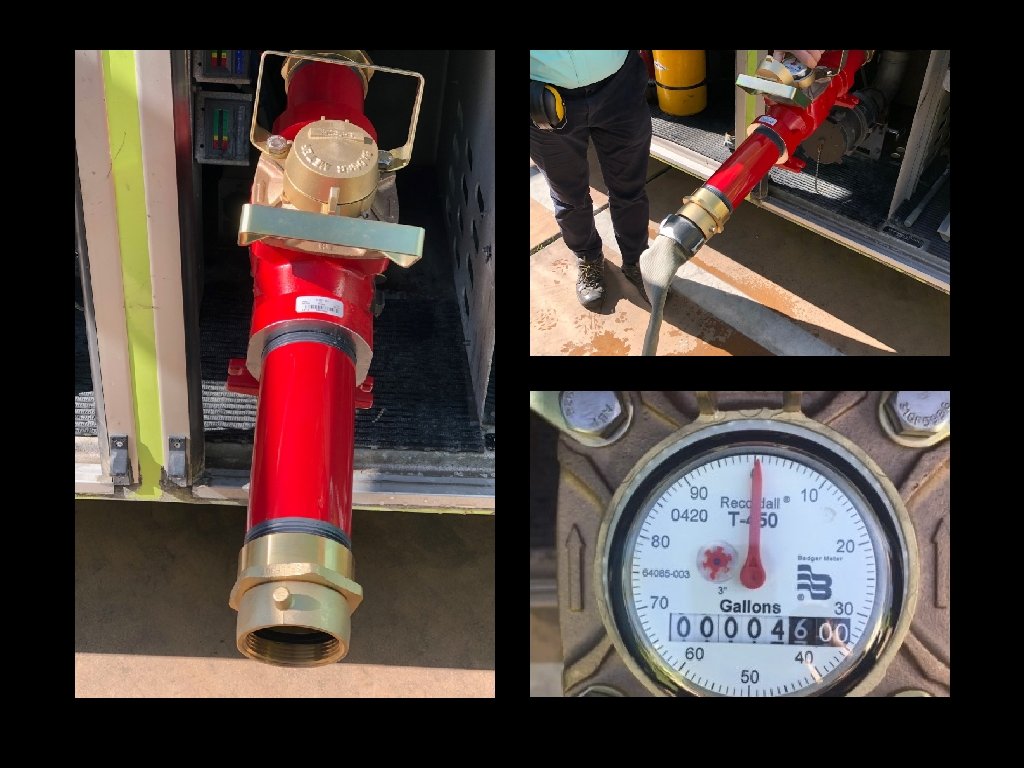
Fire Hydrant Meter Attach to ARFF Rig’s 2 1/2” water intake Connect to pigtail attached to the hydrant
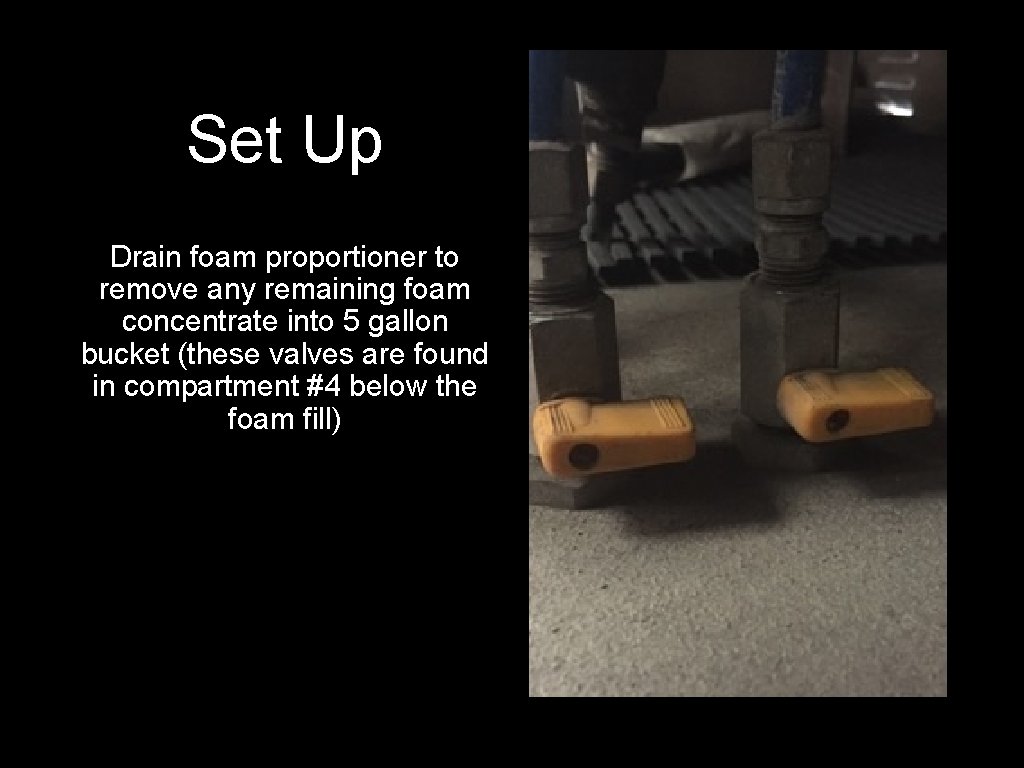
Set Up Drain foam proportioner to remove any remaining foam concentrate into 5 gallon bucket (these valves are found in compartment #4 below the foam fill)
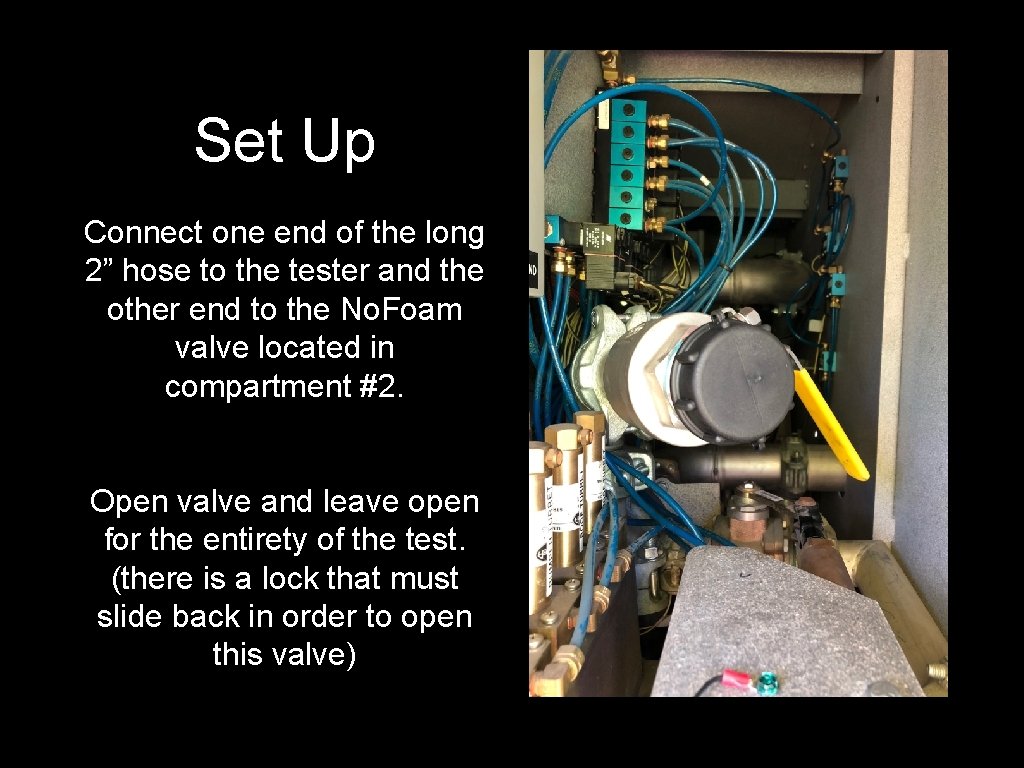
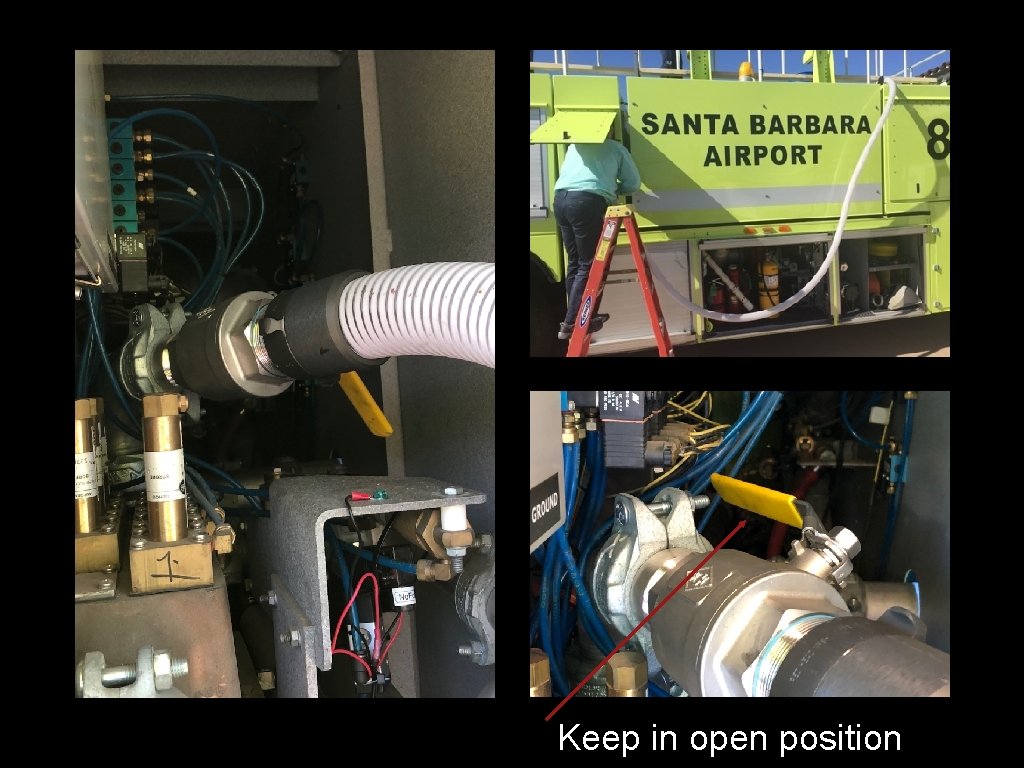
Set Up Connect one end of the long 2” hose to the tester and the other end to the No. Foam valve located in compartment #2. Open valve and leave open for the entirety of the test. (there is a lock that must slide back in order to open this valve)
Keep in open position
Testing Procedure • Requires 2 or more personnel and the fire mechanic • One person will be operating in the cab, the other will be operating the fire hydrant meter • Additional personnel will assist mechanic on the roof • Cab member will start to flow water through the bumper or roof turret to bleed all air from the system
In Cab Procedure • Start to flow water though bumper or roof turret. (This will bleed all air from system) • Turn foam switch “ON”while flowing water to flow through tester. • Turn off turret but keep water and foam switches on. • When all other positions are ready for testing, the cab member initiates test by flowing for 60 seconds EXACTLY
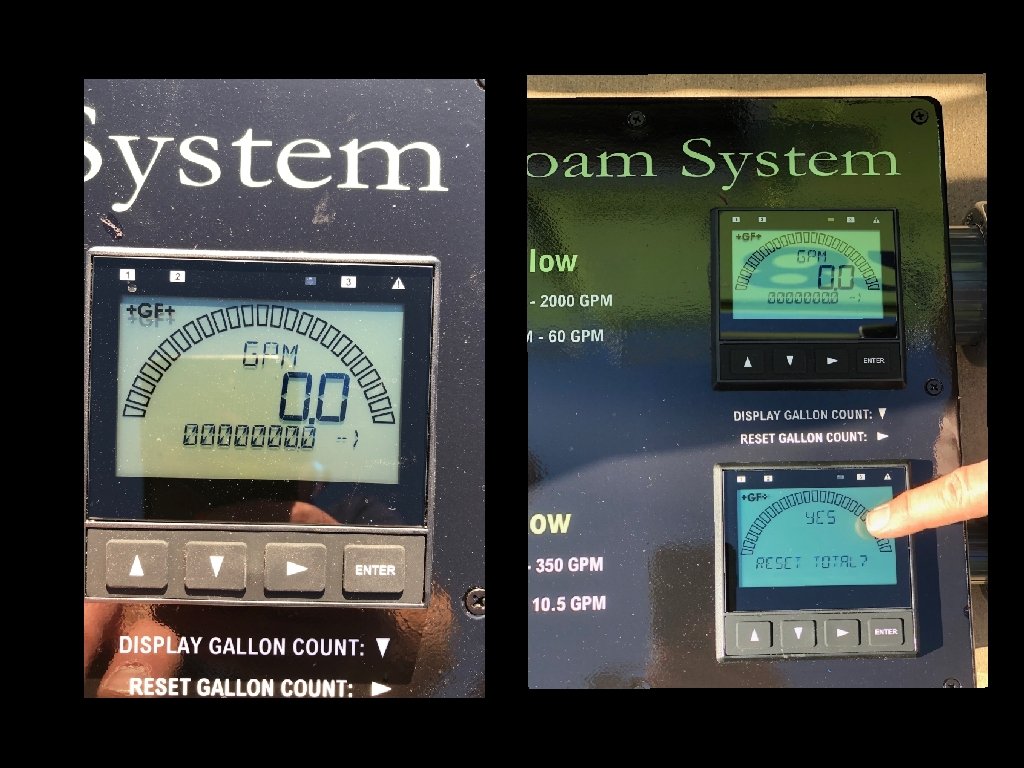
Roof/Mechanic Procedure • Close one of the orange valves (only one should be open during testing). The large valve is turrets on both high and low flow. The small valve is for the under trucks and the hand line. • Open lid of rig tank. Fill tank to middle of the chimney but DO NOT OVERFLOW. Overflow will result in miscalculations. (signal to the hydrant meter member when to stop filling) • Mechanic will record the number on the meter as the total gallon starting number on the test sheet • Reset gallon counter on the tester’s readout panel by pushing right arrow once. The panel will show “RESET TOTAL” with default “NO”. Push down arrow once to select “YES” then push enter • At this point cab member will initiate test for 60 seconds
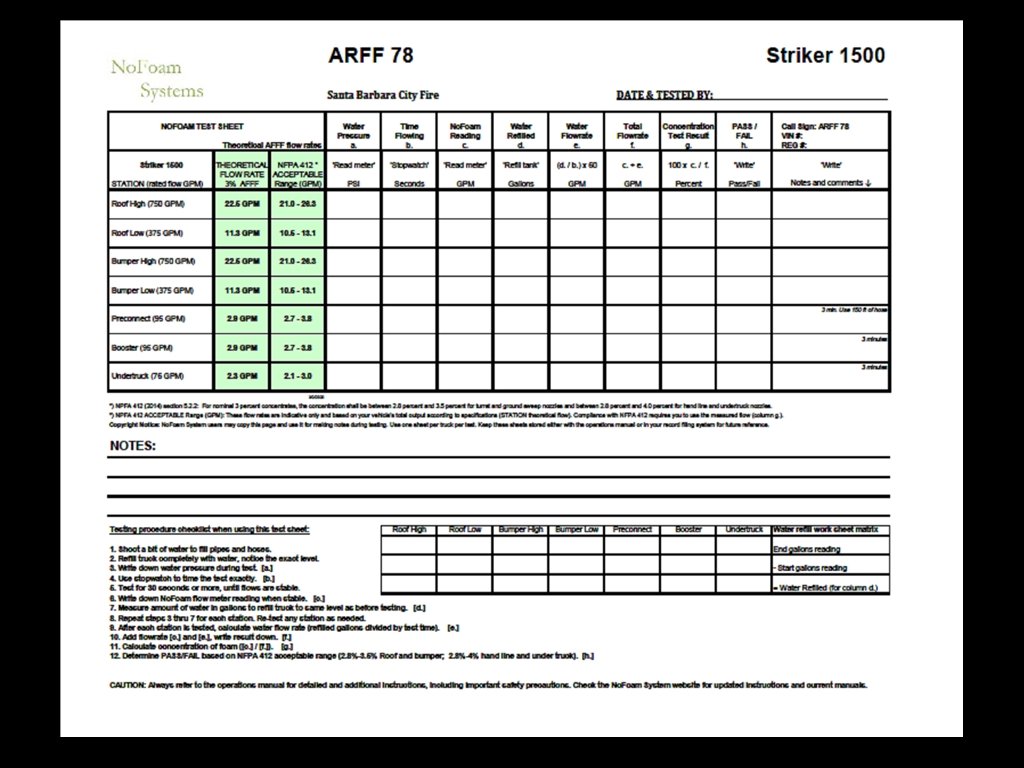
Mechanic Procedure • Once test has been initiated will record the flow rate on the tester after approximately 30 seconds (noted on test sheet in No. Foam flow rate column on test sheet) • Water pressure during discharge is noted in PSI on test sheet • After 60 second test, refill water in rig tank using hydrant meter. After tank is full, number on meter is “end gallons reading” on test sheet • Test results are calculated by the mechanic. Passing requirements are between 2. 8%-3. 5% for turrets and between 2. 8%-4. 0% for under trucks and hand lines
Hydrant Meter Procedure • Open valve to fill rig tank when roof member initiates. • Fills tank until roof member says its full • relay number on hydrant meter to mechanic
Tests to be Performed • Bumper turret in high and low flow • Roof turret in high and low flow • Under trucks • Hand lines (2)
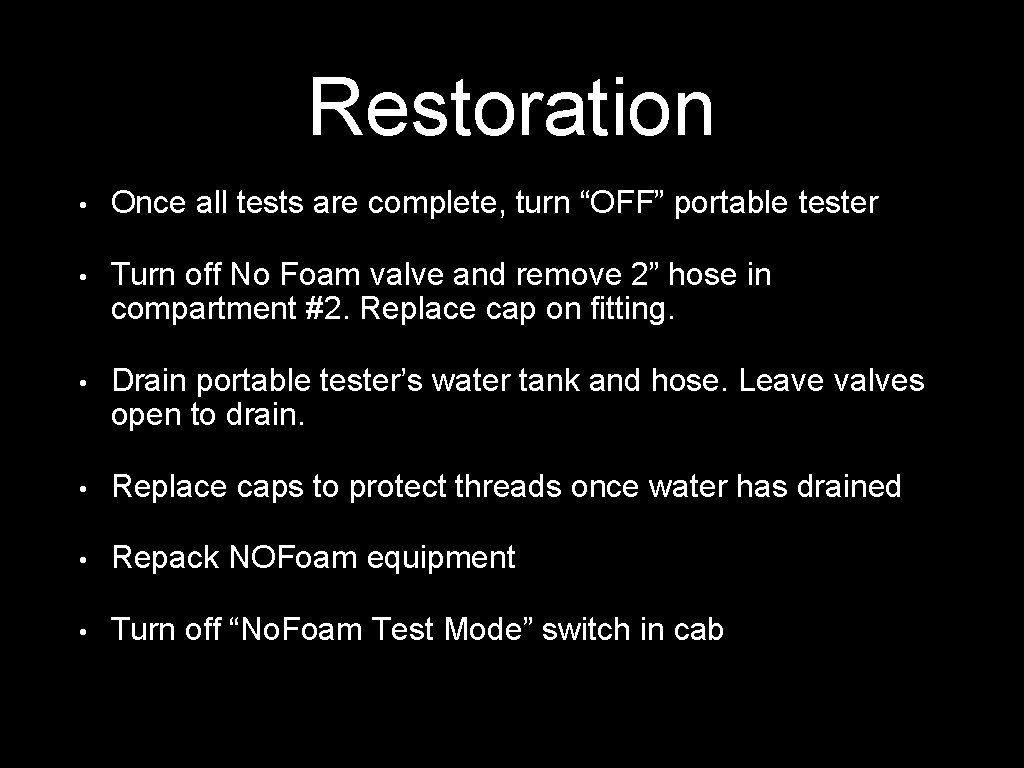
Restoration • Once all tests are complete, turn “OFF” portable tester • Turn off No Foam valve and remove 2” hose in compartment #2. Replace cap on fitting. • Drain portable tester’s water tank and hose. Leave valves open to drain. • Replace caps to protect threads once water has drained • Repack NOFoam equipment • Turn off “No. Foam Test Mode” switch in cab
No Foam Test Sheets and Manual • No. Foam Test Sheet - Santa Barbara CA ver 2. pdf • H: Group FolderTRAININGARFFNo Foam InfoNo. Foam Training and Operations manual ver 3 -3 -2020 - Santa Barbara City Fire - add test sheets files separately. pdf