
Arenes and Aromaticity Hydrocarbons Aliphatic Alkanes Aromatic Alkenes
Arenes and Aromaticity
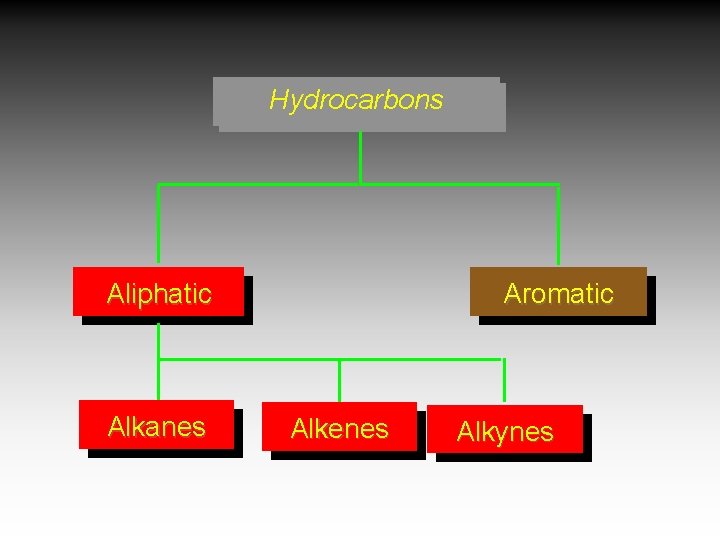
Hydrocarbons Aliphatic Alkanes Aromatic Alkenes Alkynes
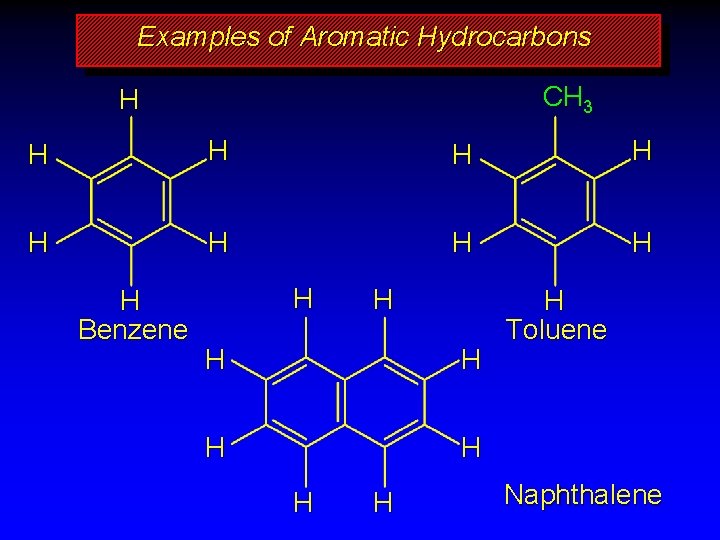
Examples of Aromatic Hydrocarbons CH 3 H H H H H Benzene H H H H H Toluene Naphthalene

Some history 1834 Eilhardt Mitscherlich isolates a new hydrocarbon and determines its empirical formula to be Cn. Hn. Compound comes to be called benzene. 1845 August W. von Hofmann isolates benzene from coal tar. 1866 August Kekulé proposes structure of benzene.

Kekulé Formulation of Benzene Later, Kekulé revised his proposal by suggesting a rapid equilibrium between two equivalent structures. H H H

Structure of Benzene Structural studies of benzene do not support the Kekulé formulation. Instead of alternating single and double bonds, all of the C—C bonds are the same length. Benzene has the shape of a regular hexagon.
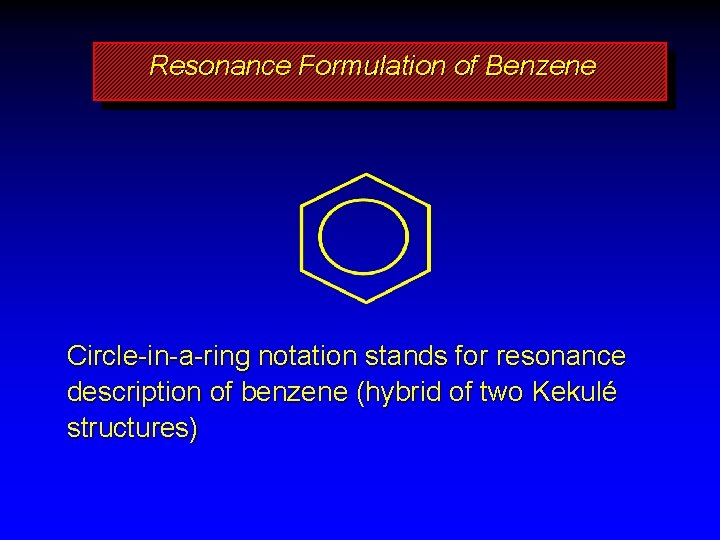
Resonance Formulation of Benzene Circle-in-a-ring notation stands for resonance description of benzene (hybrid of two Kekulé structures)
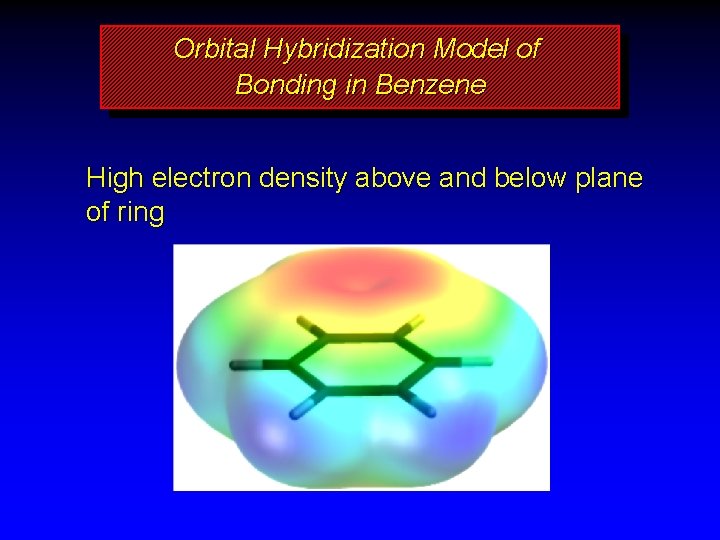
Orbital Hybridization Model of Bonding in Benzene High electron density above and below plane of ring
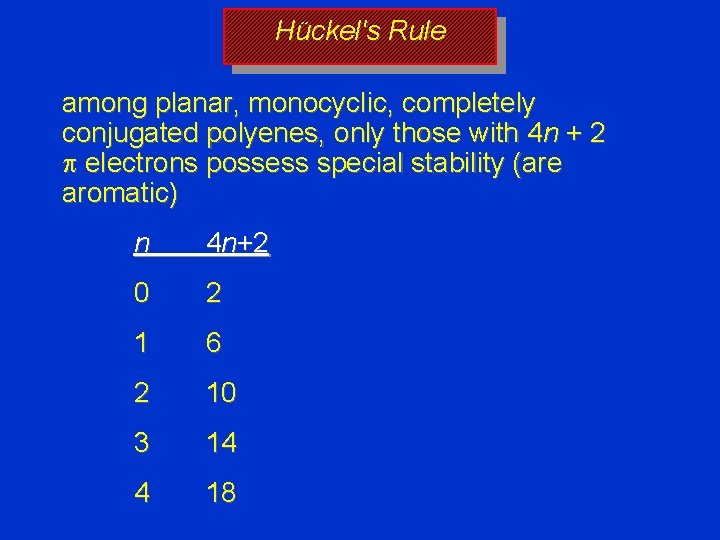
Hückel's Rule among planar, monocyclic, completely conjugated polyenes, only those with 4 n + 2 p electrons possess special stability (are aromatic) n 4 n+2 0 2 1 6 2 10 3 14 4 18
General Points 1) Benzene is considered as the parent and comes last in the name. 2) List substituents in alphabetical order 3) Number ring in direction that gives lowest locant at first point of difference
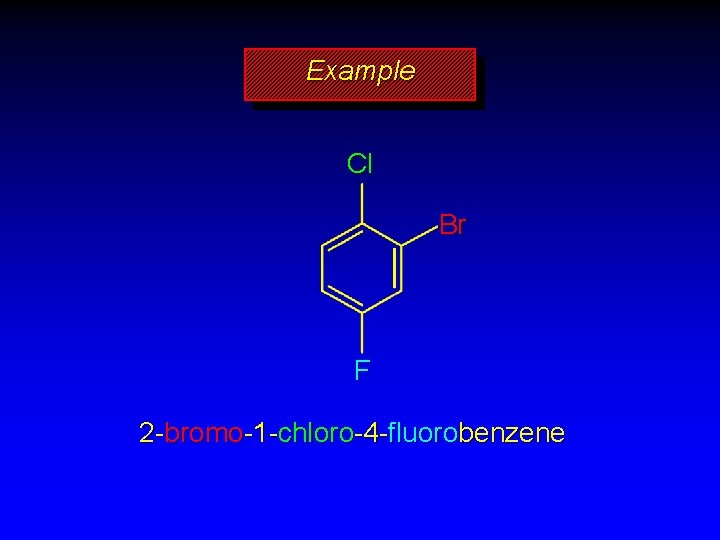
Example Cl Br F 2 -bromo-1 -chloro-4 -fluorobenzene
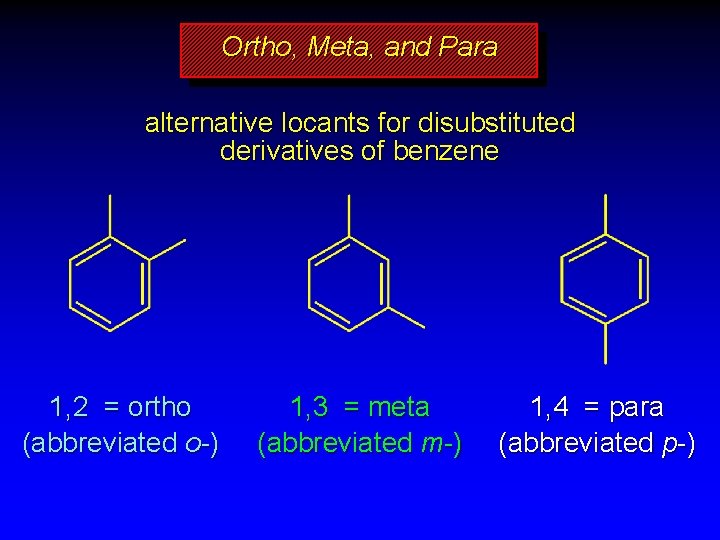
Ortho, Meta, and Para alternative locants for disubstituted derivatives of benzene 1, 2 = ortho (abbreviated o-) 1, 3 = meta (abbreviated m-) 1, 4 = para (abbreviated p-)
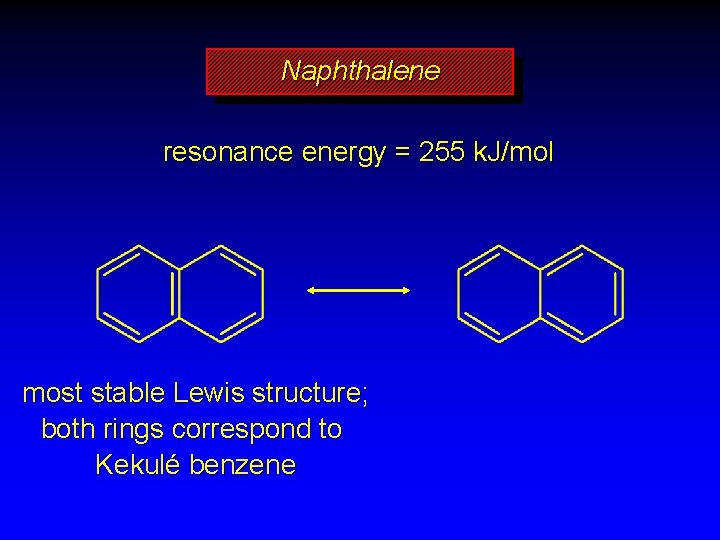
Naphthalene resonance energy = 255 k. J/mol most stable Lewis structure; both rings correspond to Kekulé benzene
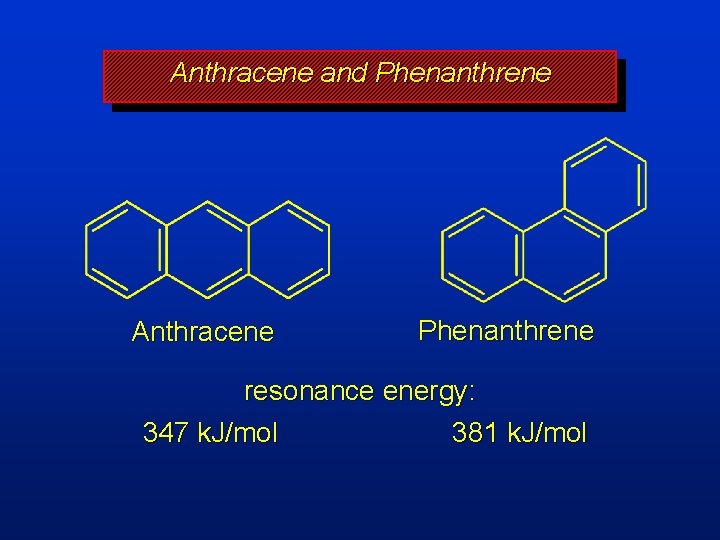
Anthracene and Phenanthrene Anthracene Phenanthrene resonance energy: 347 k. J/mol 381 k. J/mol
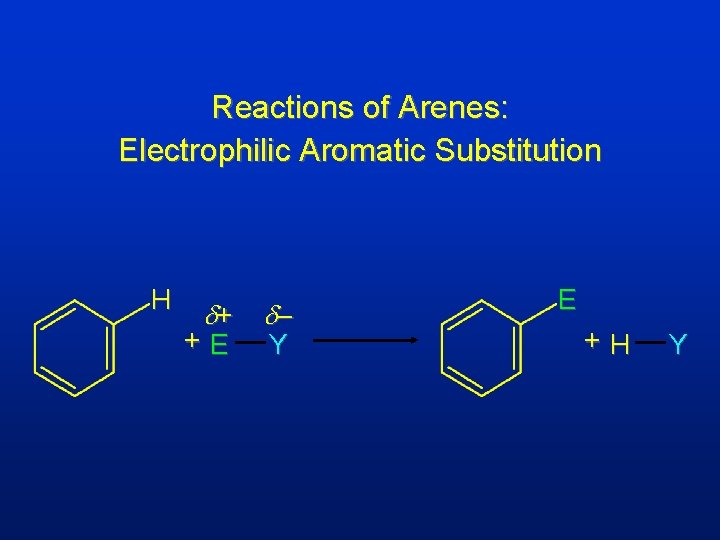
Reactions of Arenes: Electrophilic Aromatic Substitution H d+ d– +E Y E +H Y
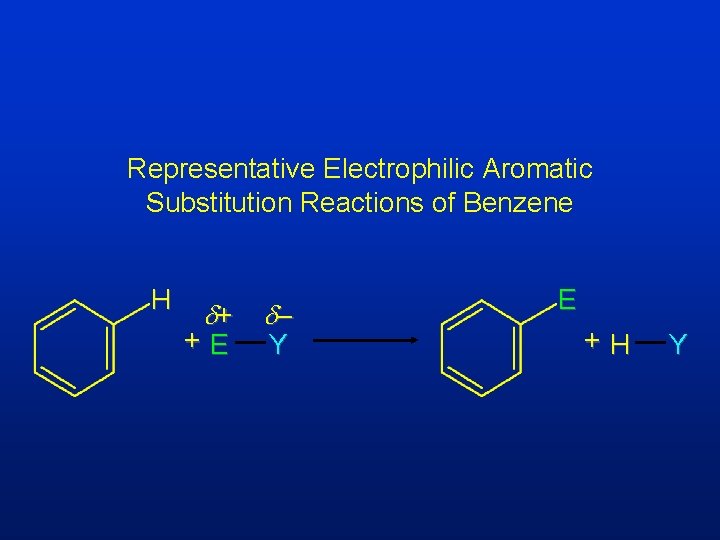
Representative Electrophilic Aromatic Substitution Reactions of Benzene H d+ d– +E Y E +H Y
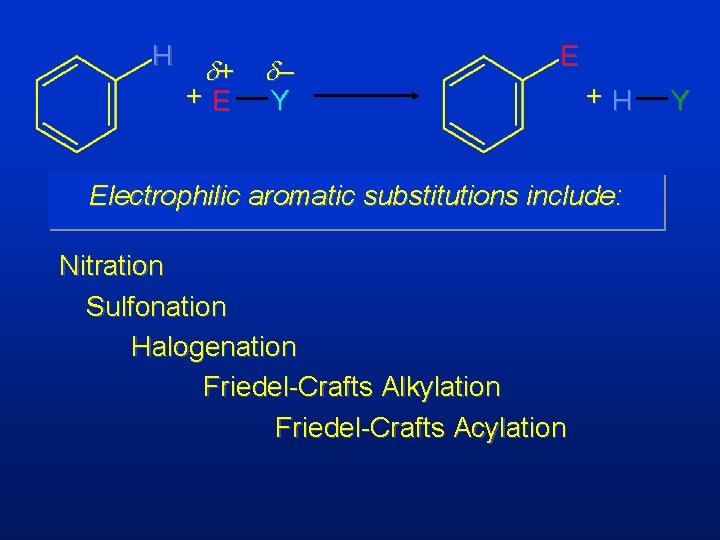
H d+ d– +E E Y +H Electrophilic aromatic substitutions include: Nitration Sulfonation Halogenation Friedel-Crafts Alkylation Friedel-Crafts Acylation Y
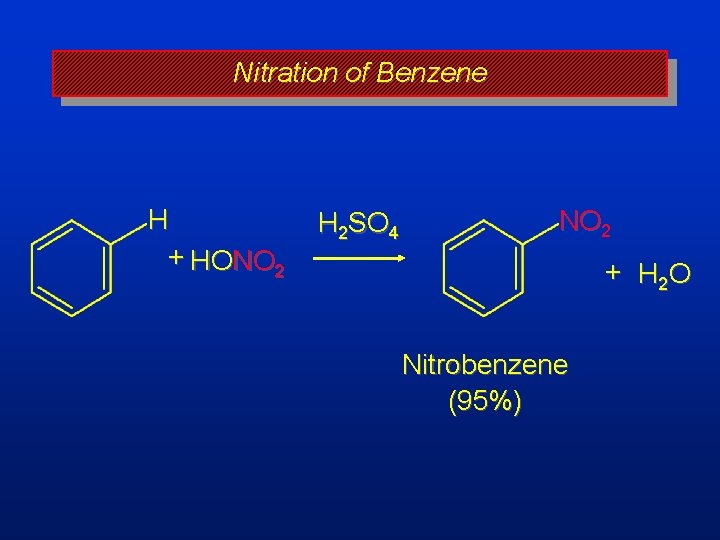
Nitration of Benzene H + HONO 2 H 2 SO 4 NO 2 + H 2 O Nitrobenzene (95%)
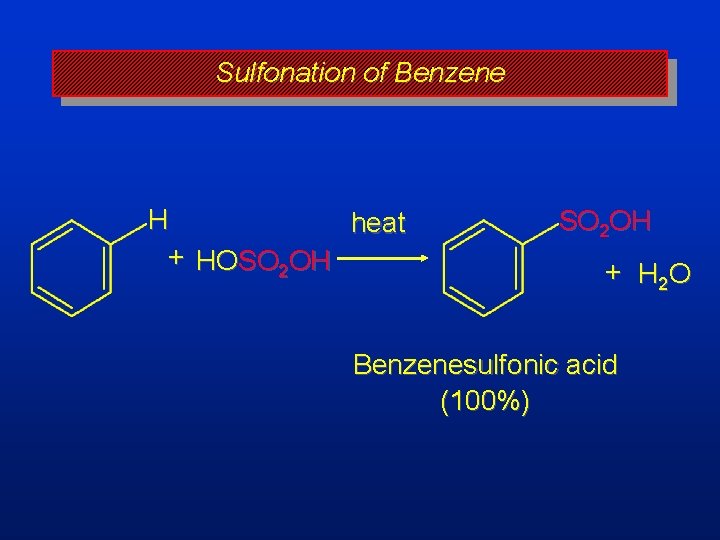
Sulfonation of Benzene H heat + HOSO 2 OH + H 2 O Benzenesulfonic acid (100%)
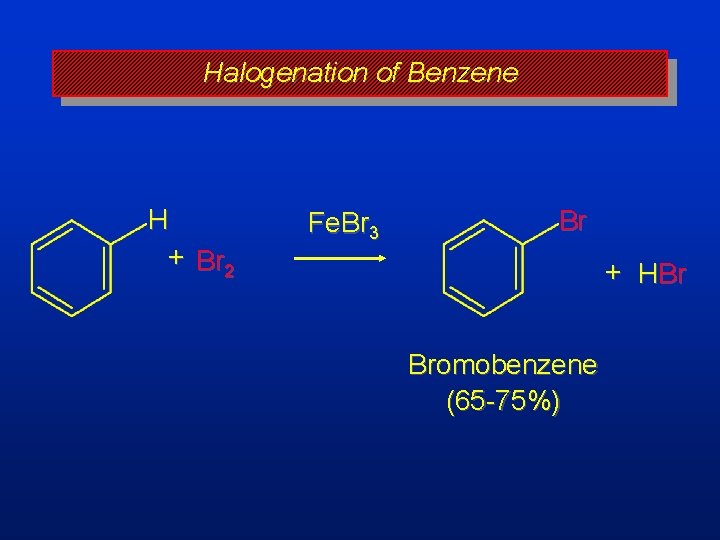
Halogenation of Benzene H + Br 2 Fe. Br 3 Br + HBr Bromobenzene (65 -75%)
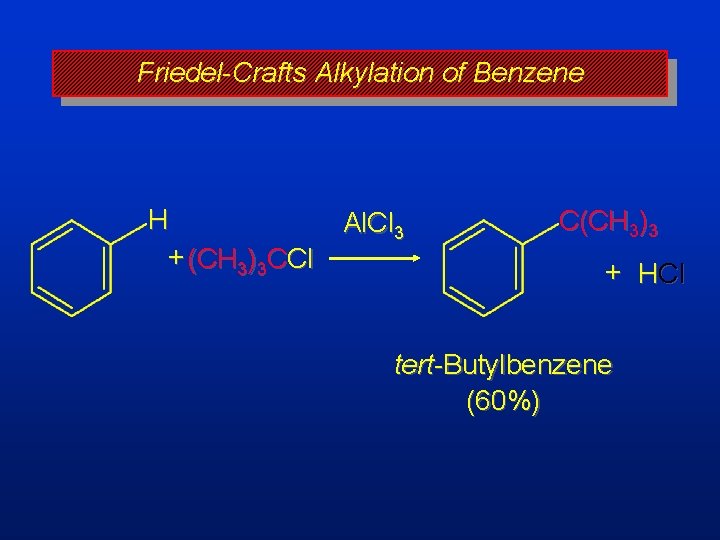
Friedel-Crafts Alkylation of Benzene H Al. Cl 3 + (CH 3)3 CCl C(CH 3)3 + HCl tert-Butylbenzene (60%)
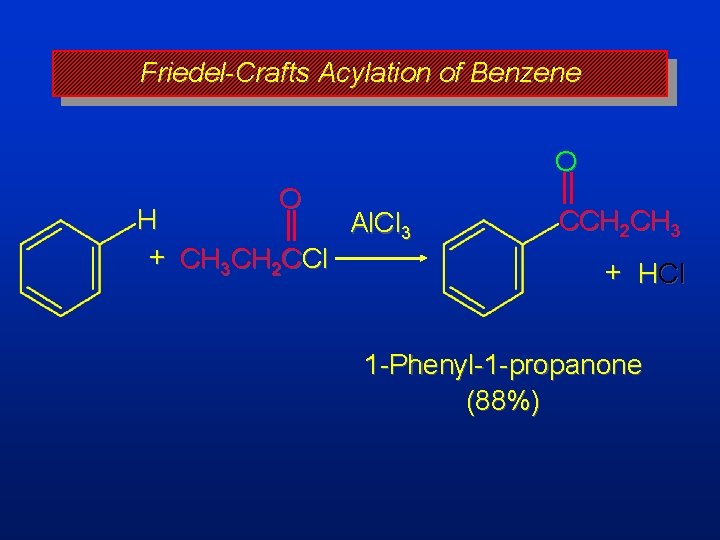
Friedel-Crafts Acylation of Benzene O O H Al. Cl 3 + CH 3 CH 2 CCl CCH 2 CH 3 + HCl 1 -Phenyl-1 -propanone (88%)
- Slides: 22