
AREAS TYPES MOVEMENT AND COMBAT The Stage Kinds
AREAS, TYPES, MOVEMENT, AND COMBAT The Stage
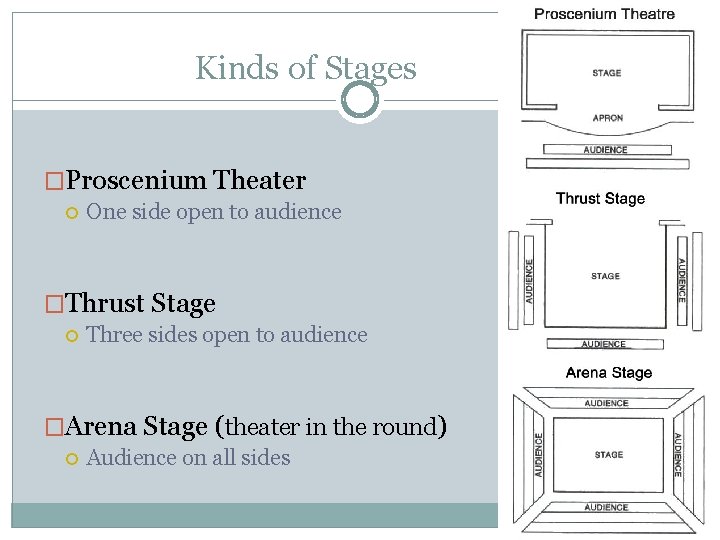
Kinds of Stages �Proscenium Theater One side open to audience �Thrust Stage Three sides open to audience �Arena Stage (theater in the round) Audience on all sides
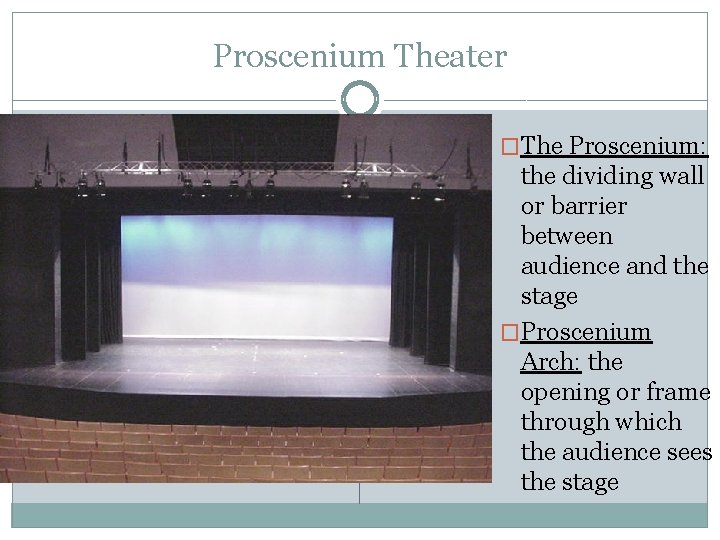
Proscenium Theater �The Proscenium: the dividing wall or barrier between audience and the stage �Proscenium Arch: the opening or frame through which the audience sees the stage
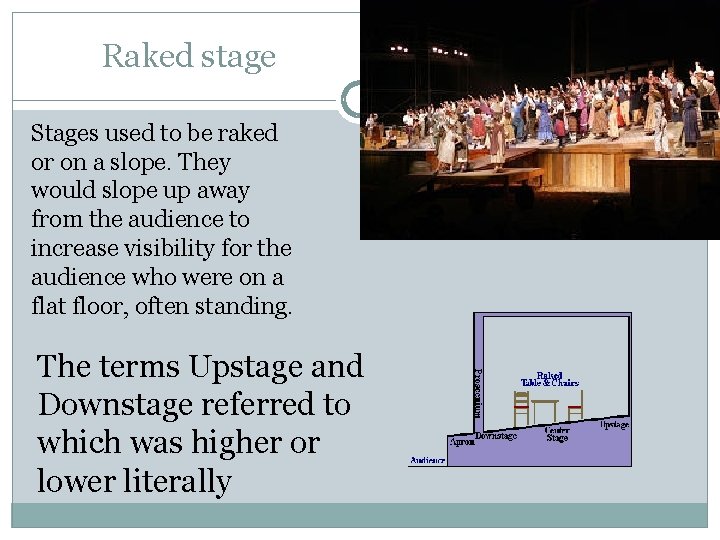
Raked stage Stages used to be raked or on a slope. They would slope up away from the audience to increase visibility for the audience who were on a flat floor, often standing. The terms Upstage and Downstage referred to which was higher or lower literally
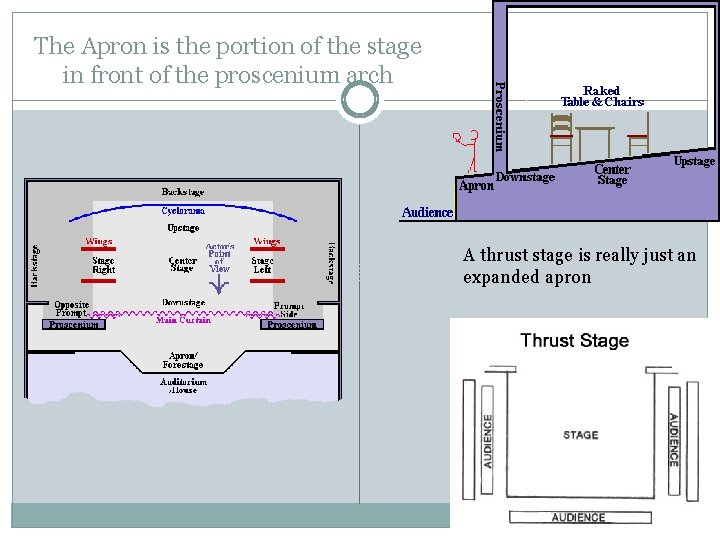
The Apron is the portion of the stage in front of the proscenium arch A thrust stage is really just an expanded apron
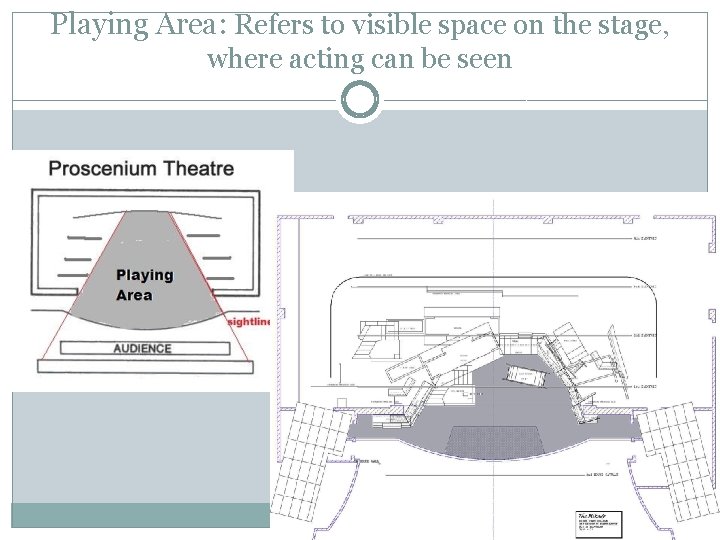
Playing Area: Refers to visible space on the stage, where acting can be seen
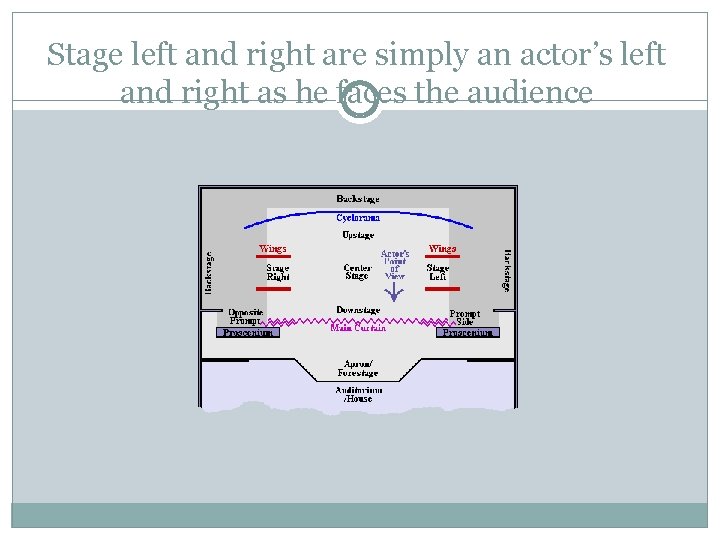
Stage left and right are simply an actor’s left and right as he faces the audience
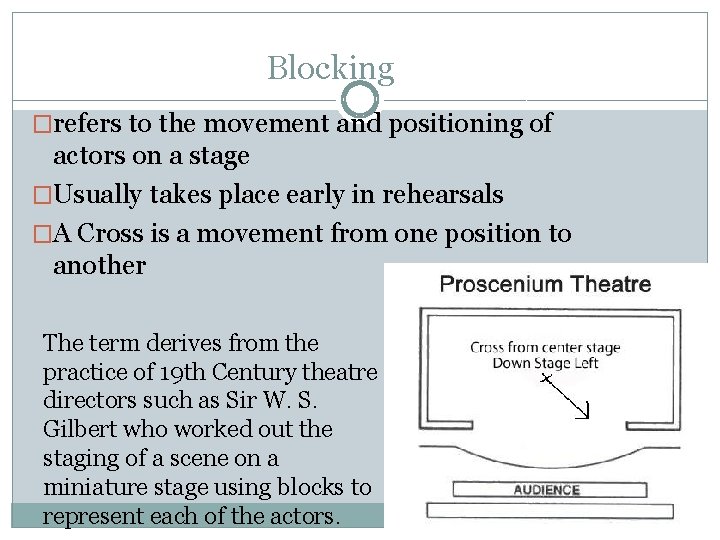
Blocking �refers to the movement and positioning of actors on a stage �Usually takes place early in rehearsals �A Cross is a movement from one position to another The term derives from the practice of 19 th Century theatre directors such as Sir W. S. Gilbert who worked out the staging of a scene on a miniature stage using blocks to represent each of the actors.

Stage Combat Concepts �Safety, and. . . Safety. �Connection �Victim is always in control �Willing to stop if needed �Safe distance around vital body areas �Correct angles to hide moves’ distance
�Rehearsed at 25% to 50% of full speed � 80% of full speed is performance speed �Attacker should have controlled consistent and accurate movement �During execution of the move victim’s movement should be kept to a minimum and entirely controlled and consistent
Steps: � 1 connect with your partner “ready? ” “Ready. ” (eye contact and verbal or non-verbal cue) � 2 attacker presents move “Here I go” � 3 victim accepts move “ok” � 4 execute move “Aaagh” � victim can stop at any time
- Slides: 12