
Area Formulas Rectangle What is the area formula
- Slides: 47
Area Formulas
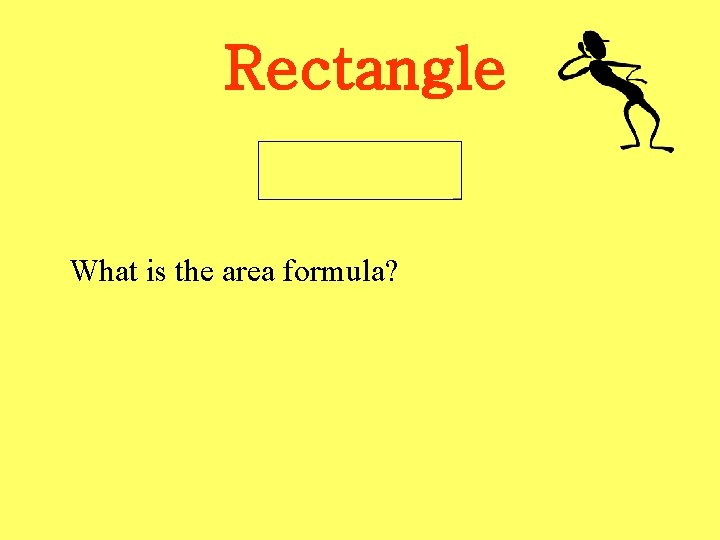
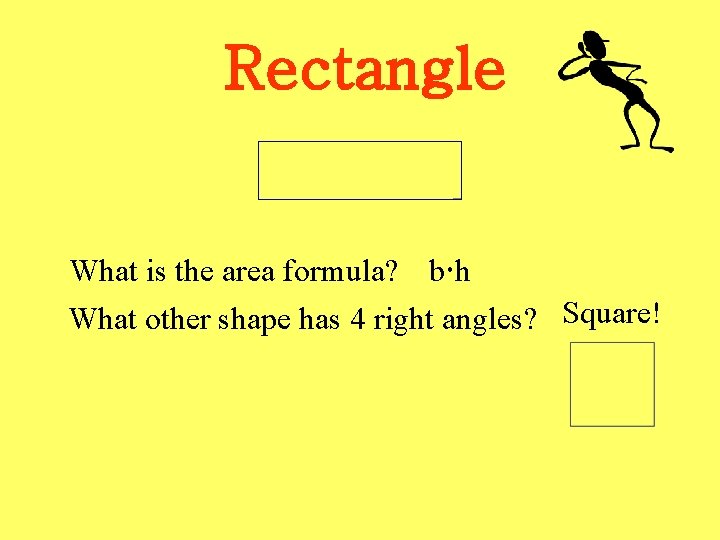
Rectangle What is the area formula?
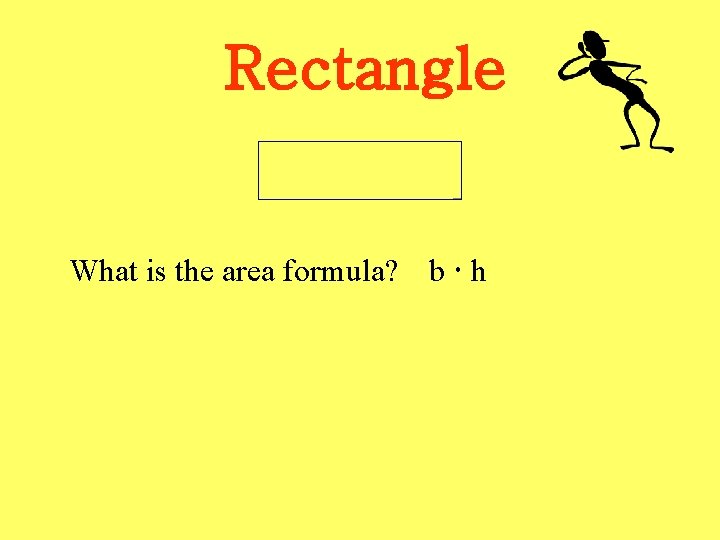
Rectangle What is the area formula? b h
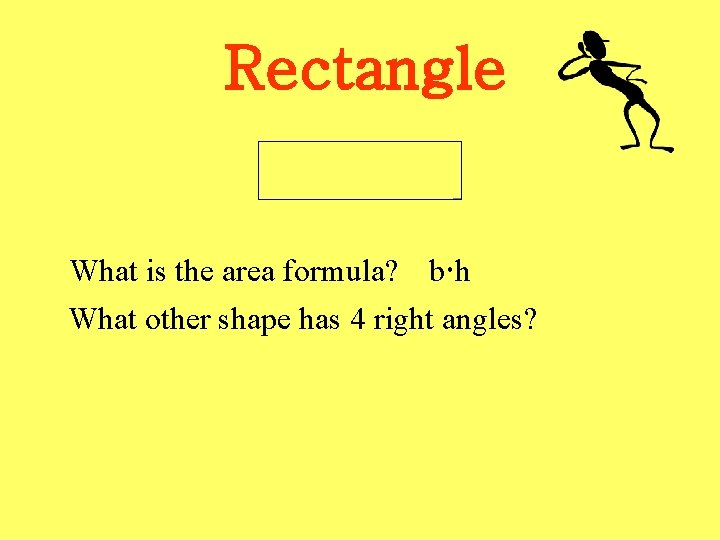
Rectangle What is the area formula? b h What other shape has 4 right angles?
Rectangle What is the area formula? b h What other shape has 4 right angles? Square!
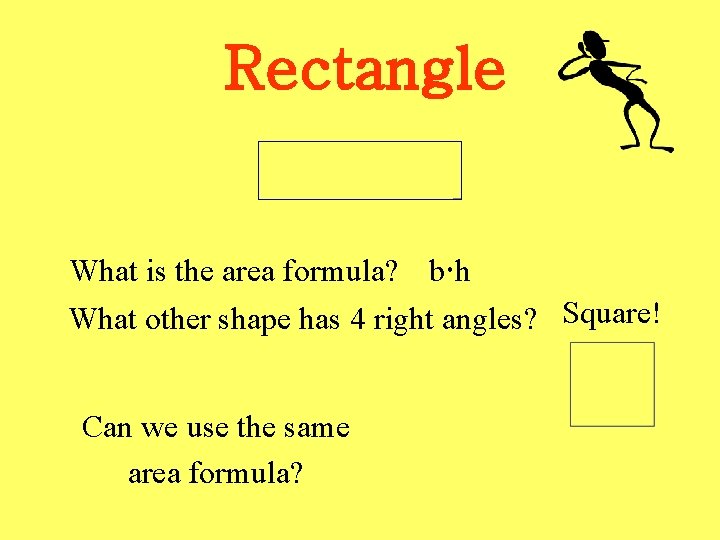
Rectangle What is the area formula? b h What other shape has 4 right angles? Square! Can we use the same area formula?
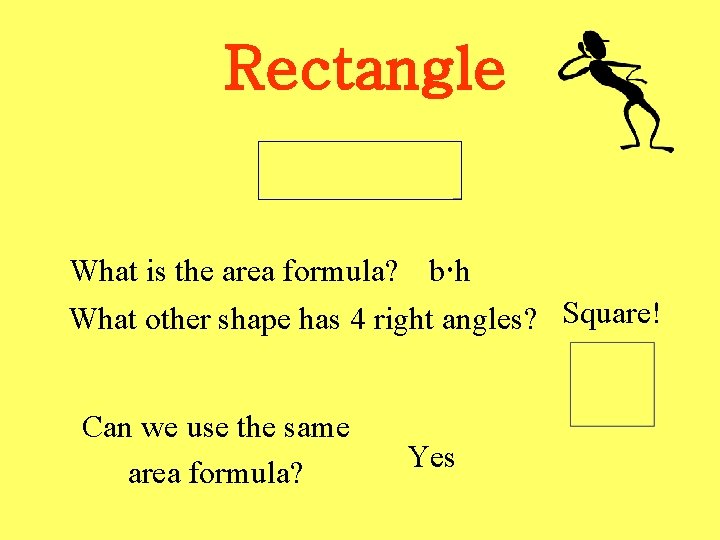
Rectangle What is the area formula? b h What other shape has 4 right angles? Square! Can we use the same area formula? Yes
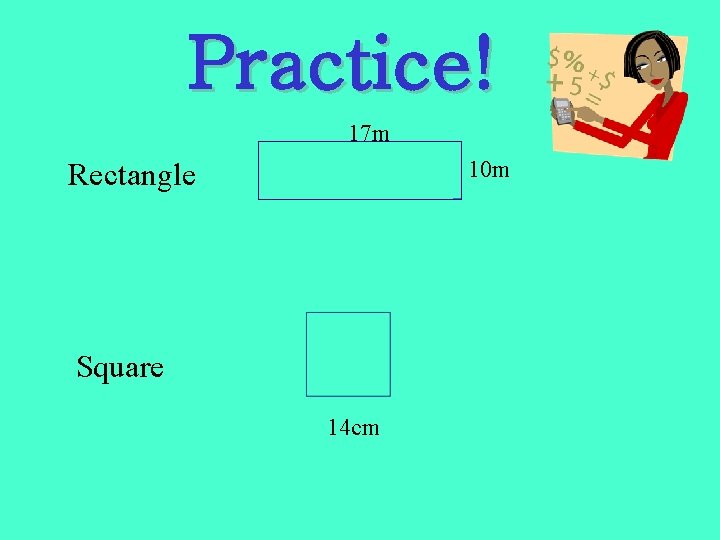
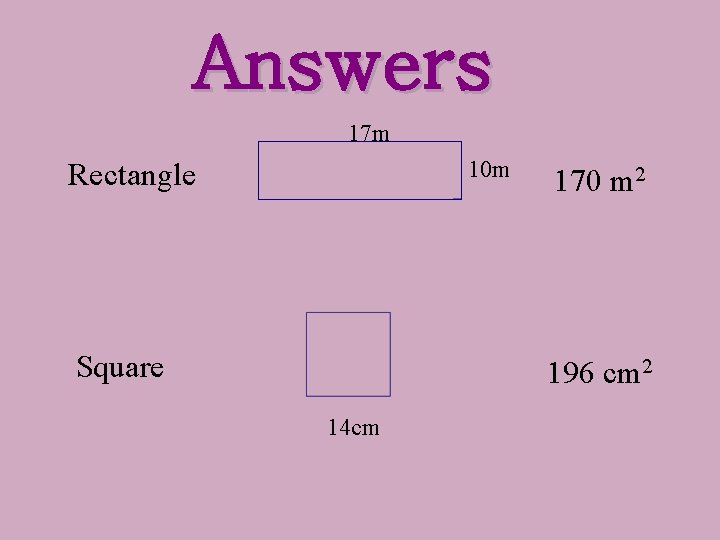
Practice! 17 m 10 m Rectangle Square 14 cm
Answers 17 m 10 m Rectangle Square 170 m 2 196 cm 2 14 cm
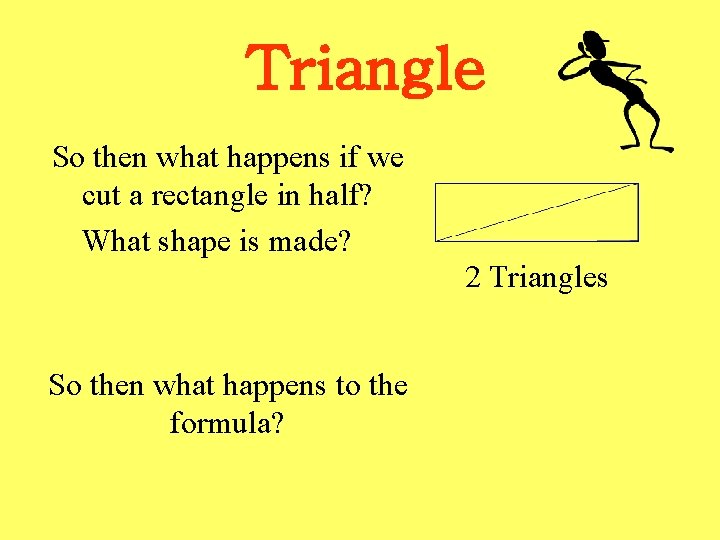
So then what happens if we cut a rectangle in half? What shape is made?
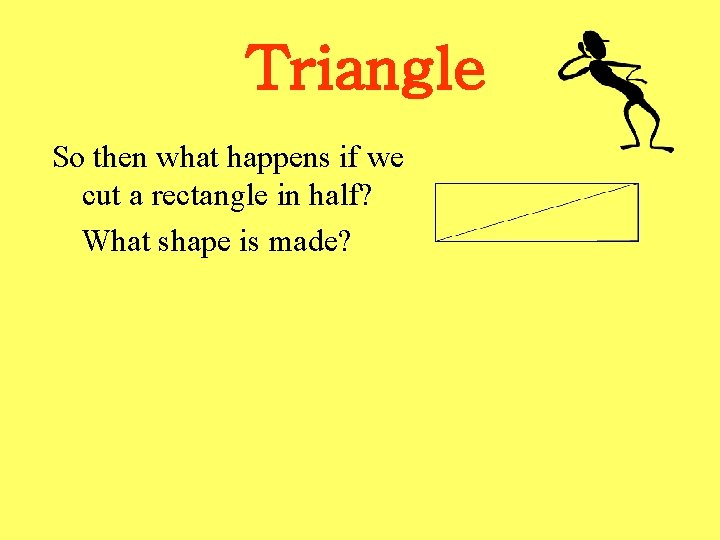
Triangle So then what happens if we cut a rectangle in half? What shape is made?
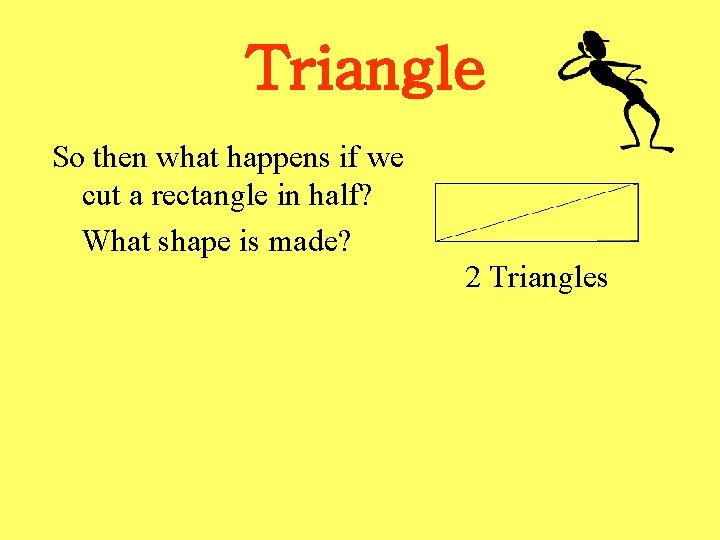
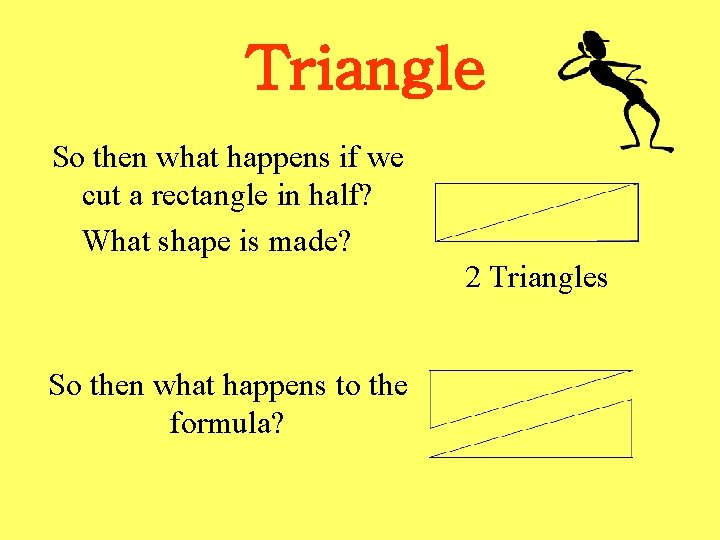
Triangle So then what happens if we cut a rectangle in half? What shape is made? 2 Triangles
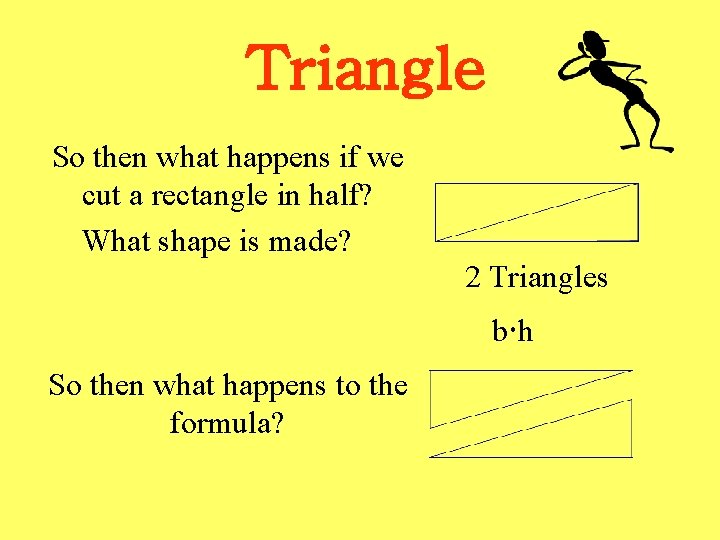
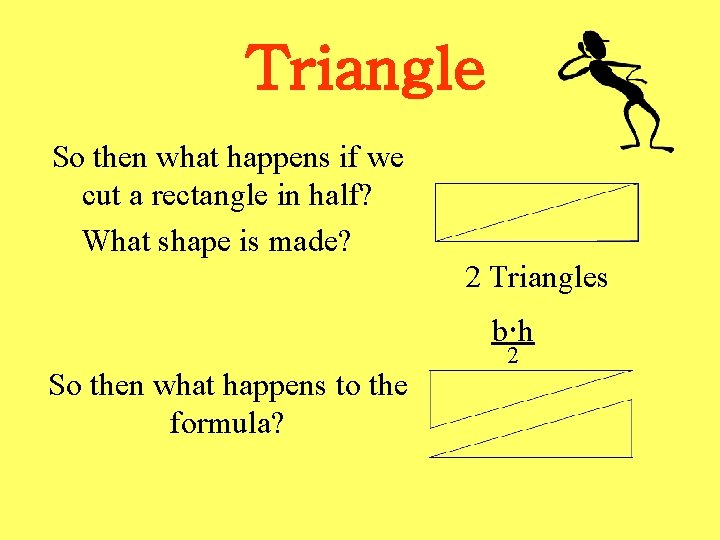
Triangle So then what happens if we cut a rectangle in half? What shape is made? 2 Triangles So then what happens to the formula?
Triangle So then what happens if we cut a rectangle in half? What shape is made? 2 Triangles So then what happens to the formula?
Triangle So then what happens if we cut a rectangle in half? What shape is made? 2 Triangles b h So then what happens to the formula?
Triangle So then what happens if we cut a rectangle in half? What shape is made? 2 Triangles b h So then what happens to the formula? 2
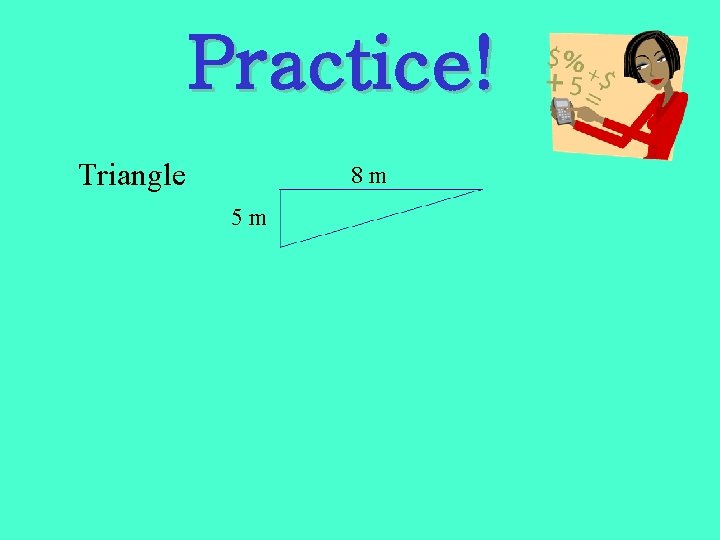
Practice! Triangle 8 m 5 m
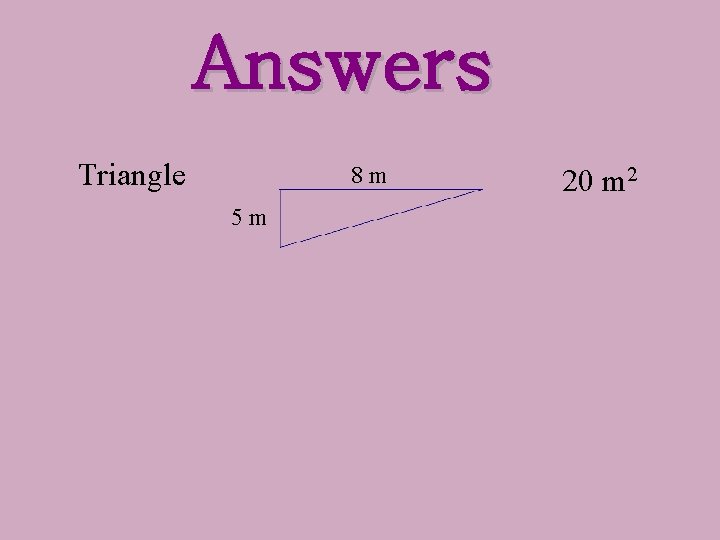
Answers Triangle 8 m 5 m 20 m 2
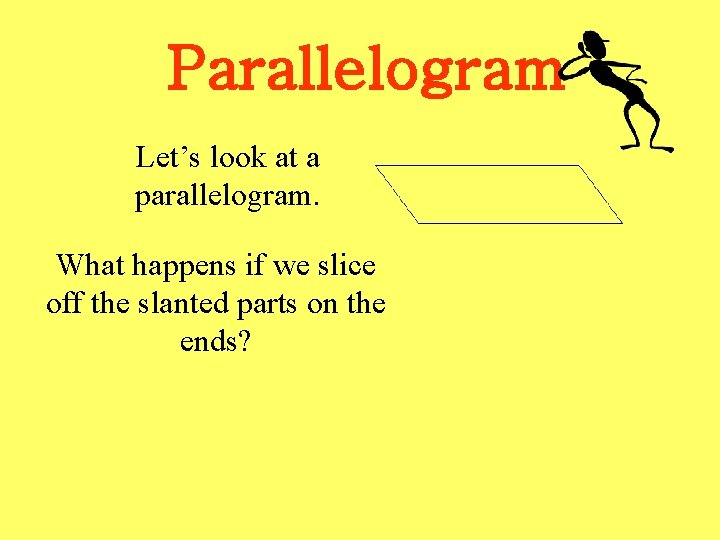
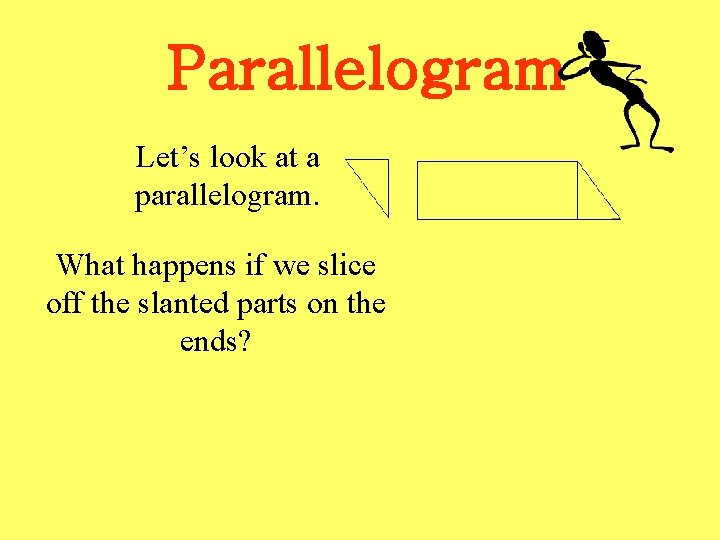
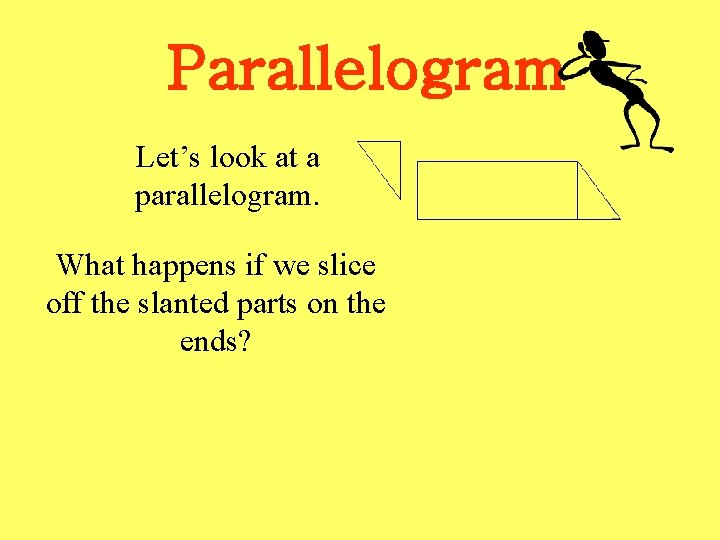
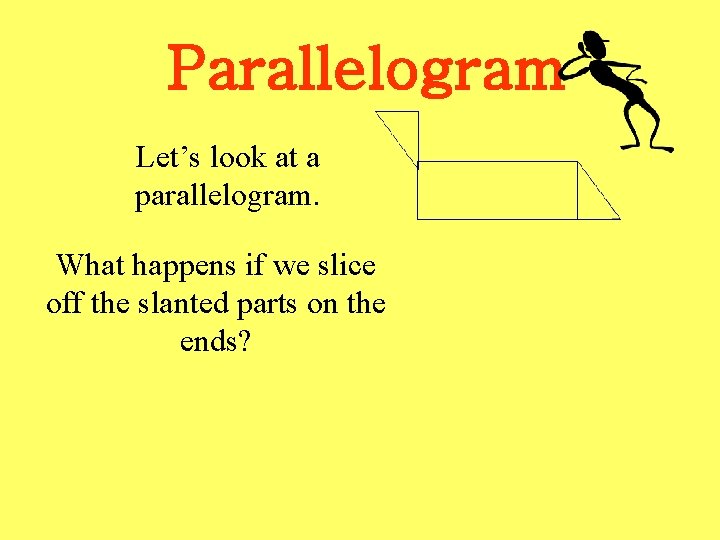
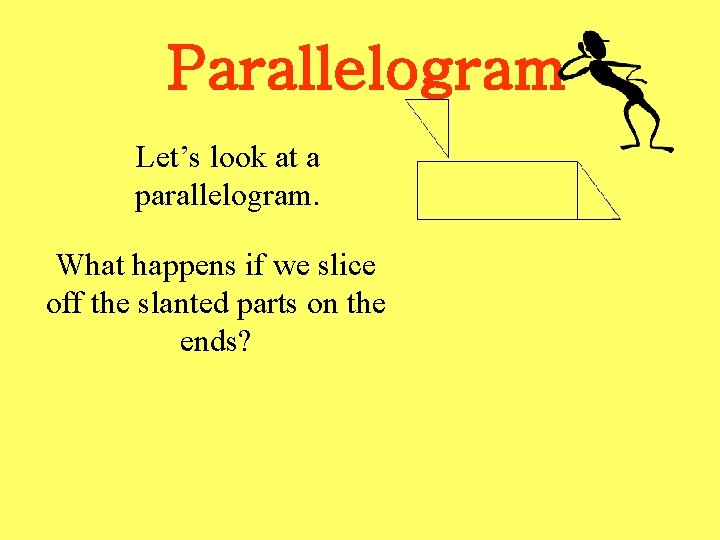
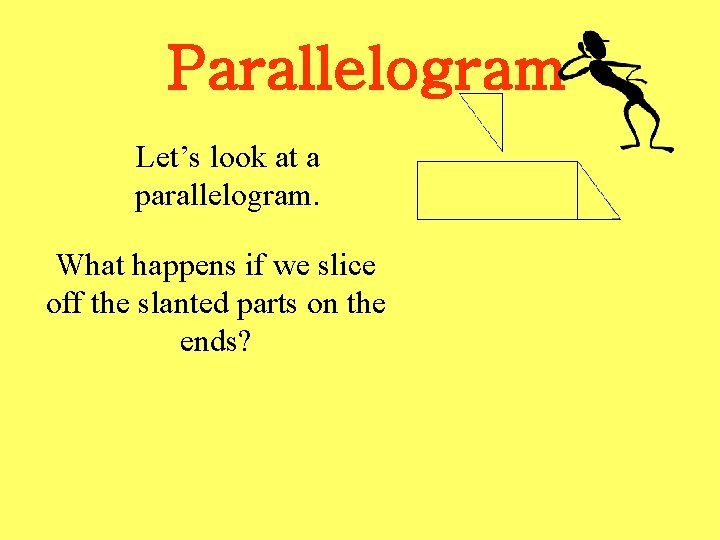
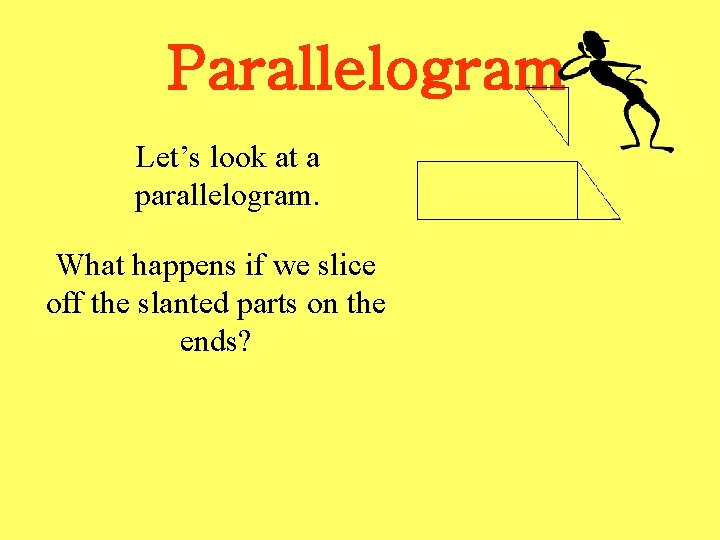
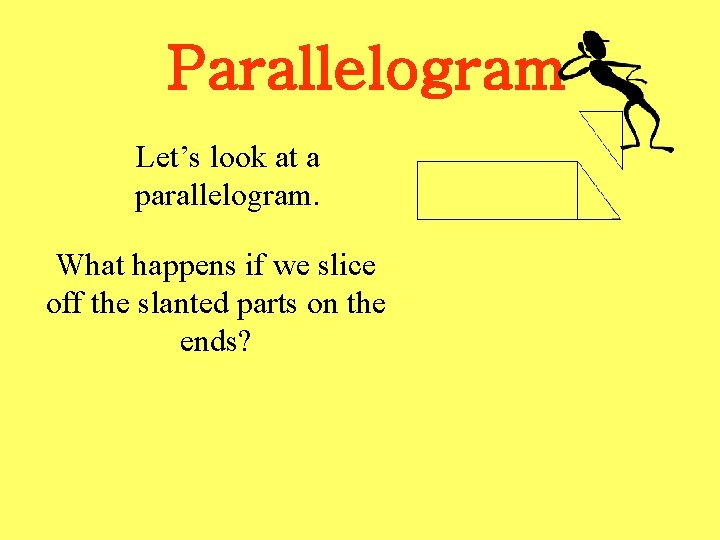
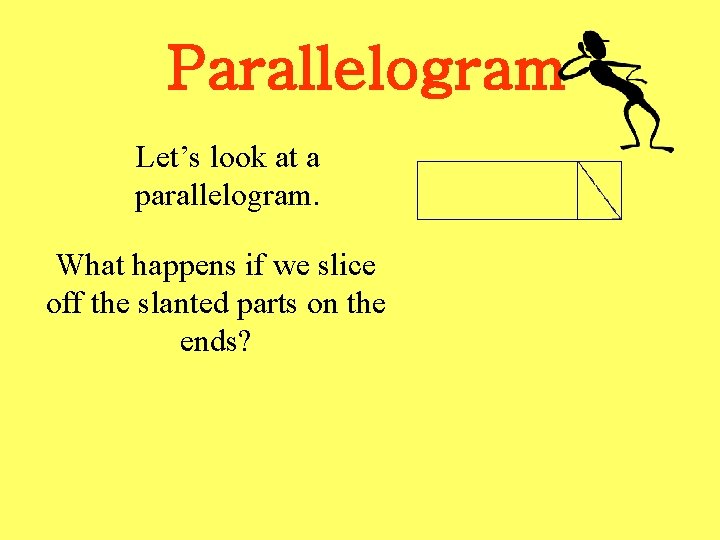
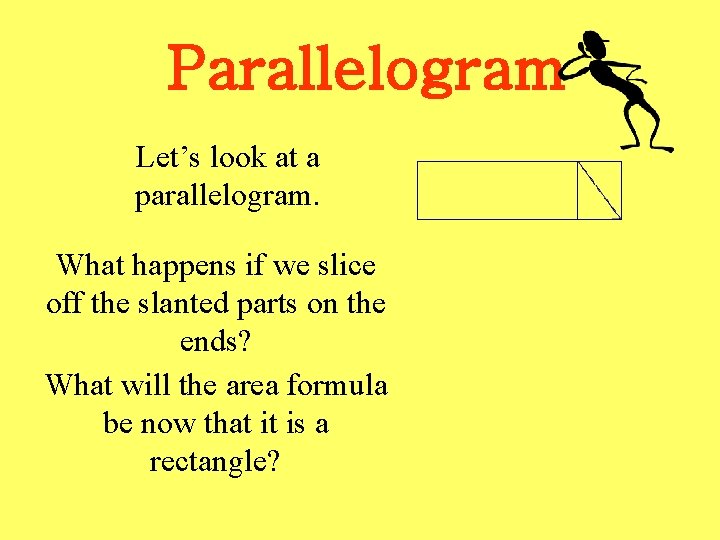
Parallelogram Let’s look at a parallelogram. What happens if we slice off the slanted parts on the ends?
Parallelogram Let’s look at a parallelogram. What happens if we slice off the slanted parts on the ends?
Parallelogram Let’s look at a parallelogram. What happens if we slice off the slanted parts on the ends?
Parallelogram Let’s look at a parallelogram. What happens if we slice off the slanted parts on the ends?
Parallelogram Let’s look at a parallelogram. What happens if we slice off the slanted parts on the ends?
Parallelogram Let’s look at a parallelogram. What happens if we slice off the slanted parts on the ends?
Parallelogram Let’s look at a parallelogram. What happens if we slice off the slanted parts on the ends?
Parallelogram Let’s look at a parallelogram. What happens if we slice off the slanted parts on the ends?
Parallelogram Let’s look at a parallelogram. What happens if we slice off the slanted parts on the ends?
Parallelogram Let’s look at a parallelogram. What happens if we slice off the slanted parts on the ends?
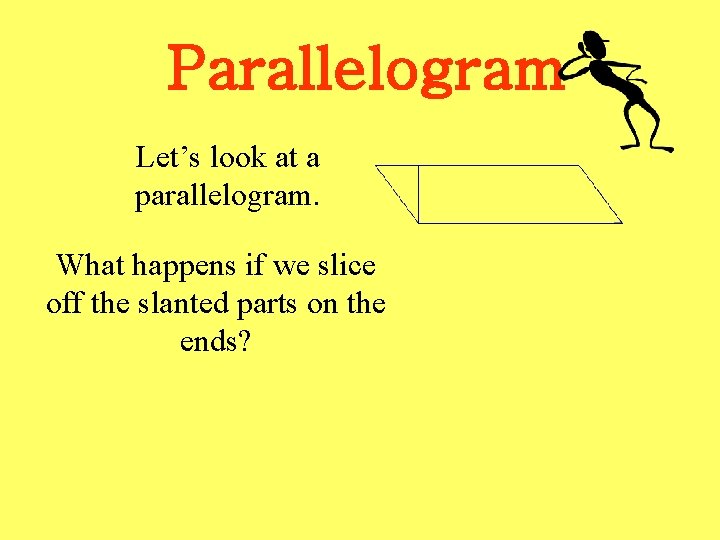
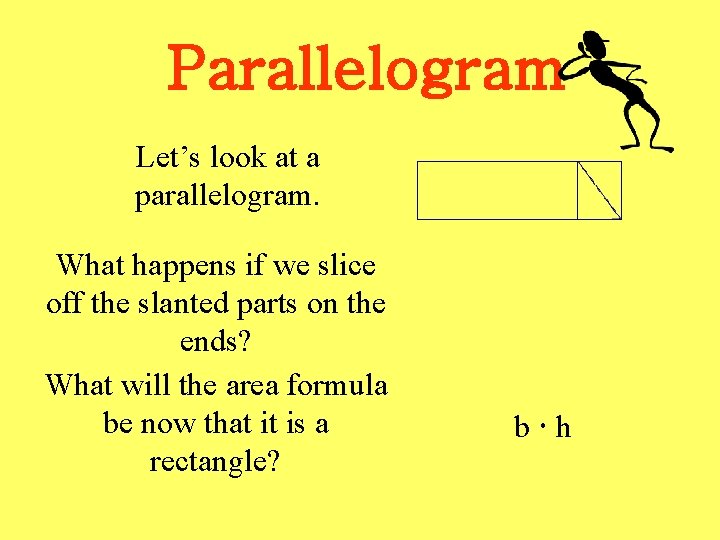
Parallelogram Let’s look at a parallelogram. What happens if we slice off the slanted parts on the ends? What will the area formula be now that it is a rectangle?
Parallelogram Let’s look at a parallelogram. What happens if we slice off the slanted parts on the ends? What will the area formula be now that it is a rectangle? b h
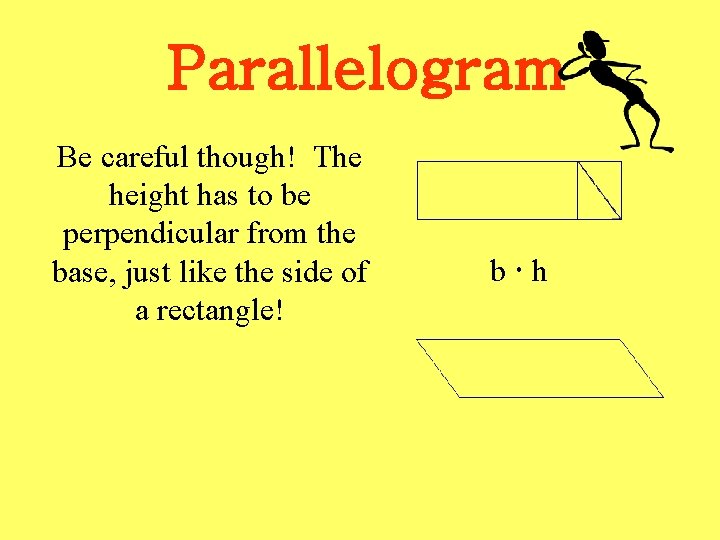
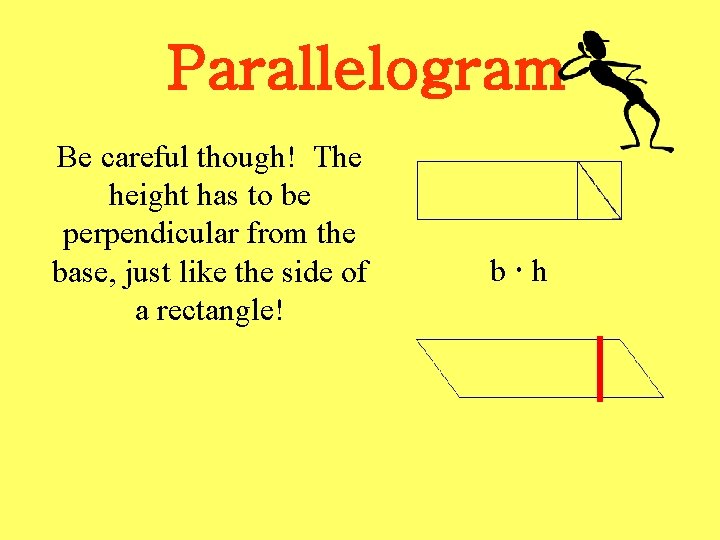
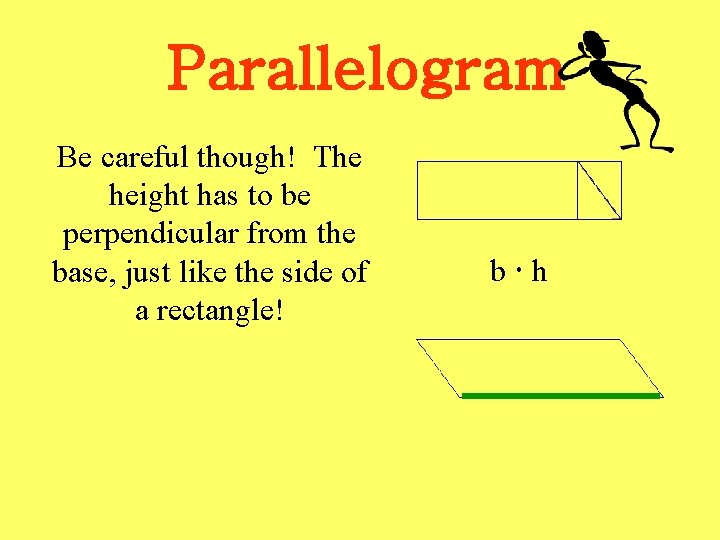
Parallelogram Be careful though! The height has to be perpendicular from the base, just like the side of a rectangle! b h
Parallelogram Be careful though! The height has to be perpendicular from the base, just like the side of a rectangle! b h
Parallelogram Be careful though! The height has to be perpendicular from the base, just like the side of a rectangle! b h
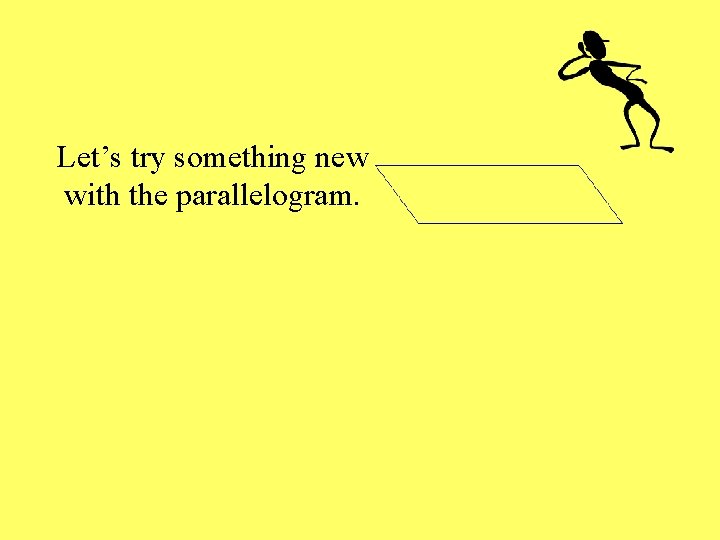
Let’s try something new with the parallelogram.
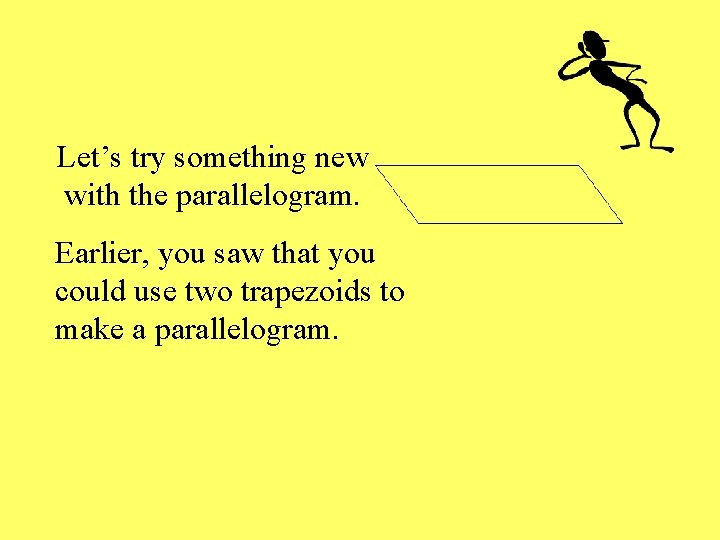
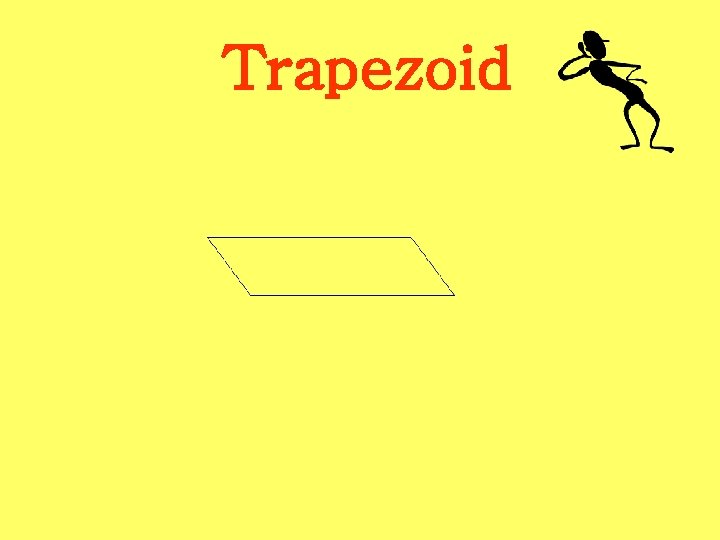
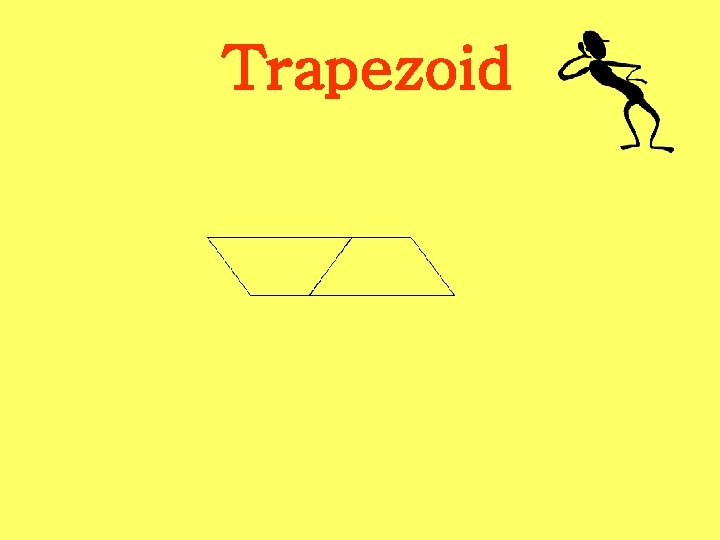
Let’s try something new with the parallelogram. Earlier, you saw that you could use two trapezoids to make a parallelogram.
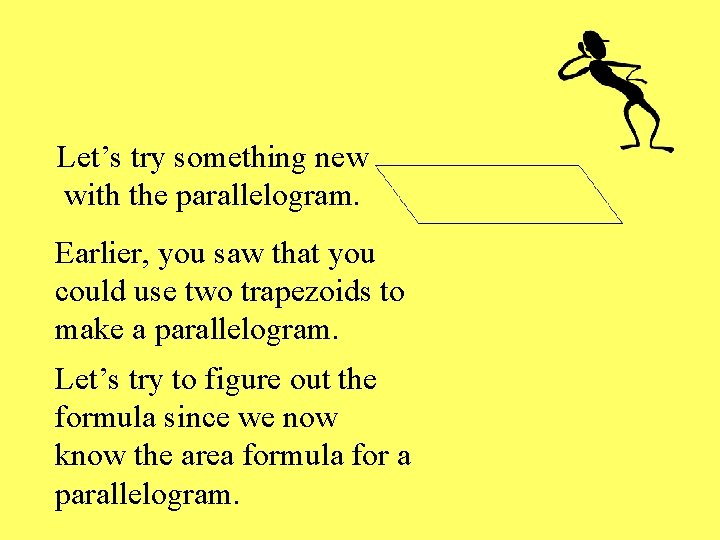
Let’s try something new with the parallelogram. Earlier, you saw that you could use two trapezoids to make a parallelogram. Let’s try to figure out the formula since we now know the area formula for a parallelogram.
Trapezoid
Trapezoid
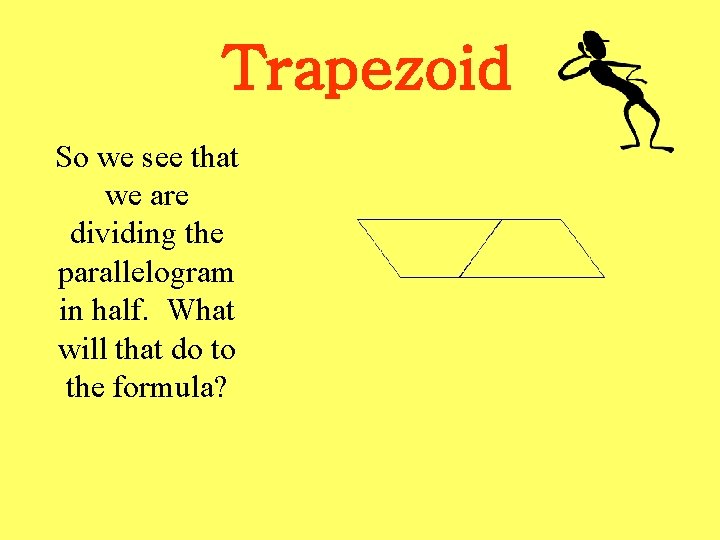
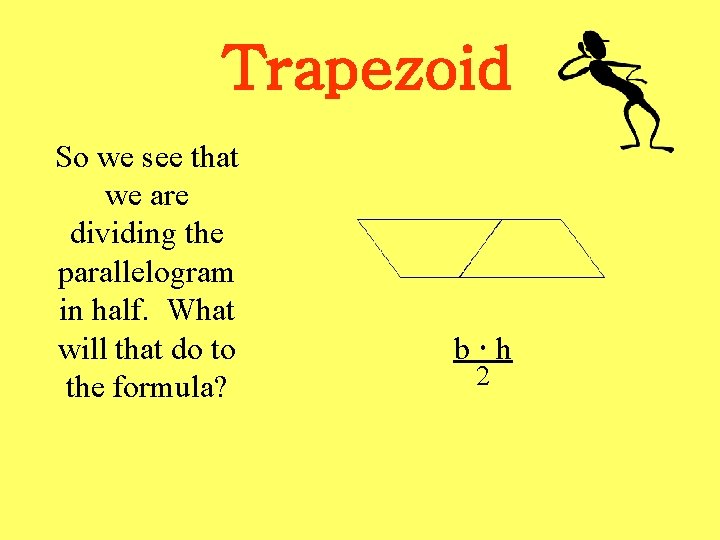
Trapezoid So we see that we are dividing the parallelogram in half. What will that do to the formula?
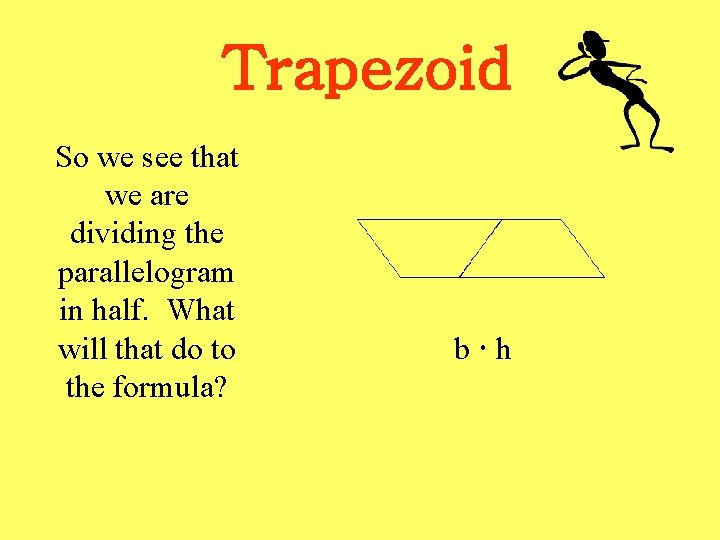
Trapezoid So we see that we are dividing the parallelogram in half. What will that do to the formula? b h
Trapezoid So we see that we are dividing the parallelogram in half. What will that do to the formula? b h 2
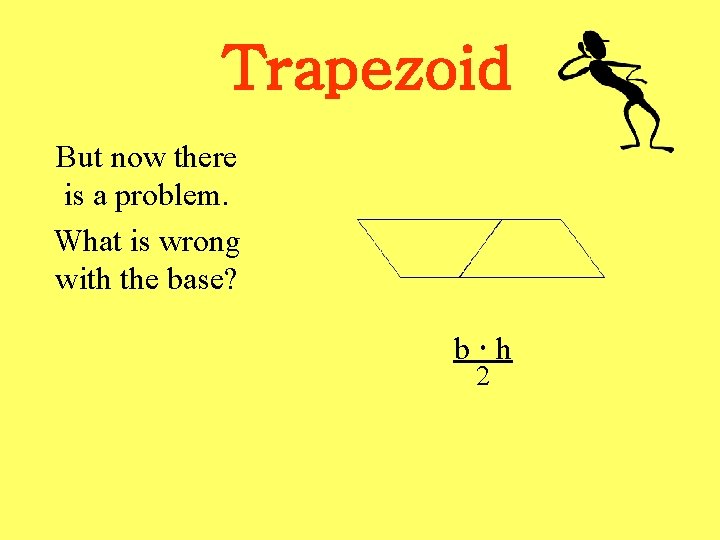
Trapezoid But now there is a problem. What is wrong with the base? b h 2
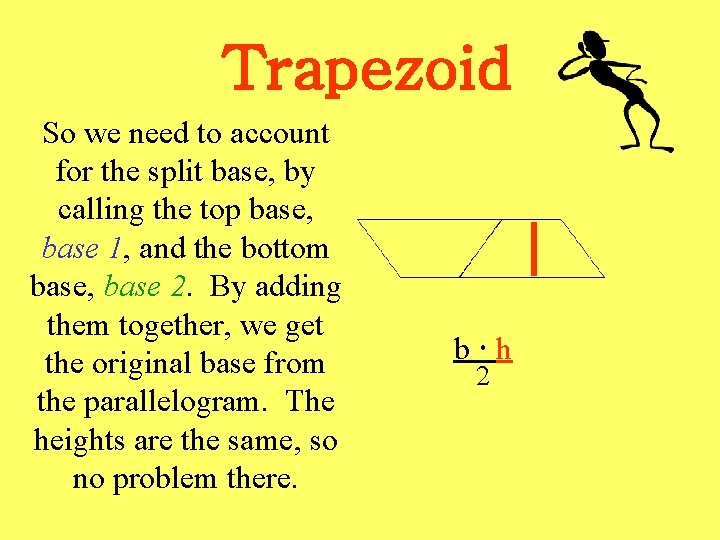
Trapezoid So we need to account for the split base, by calling the top base, base 1, and the bottom base, base 2. By adding them together, we get the original base from the parallelogram. The heights are the same, so no problem there. b h 2
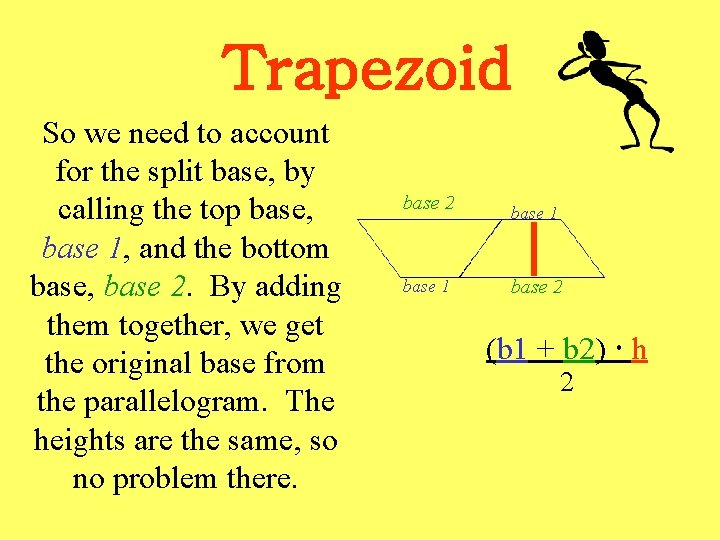
Trapezoid So we need to account for the split base, by calling the top base, base 1, and the bottom base, base 2. By adding them together, we get the original base from the parallelogram. The heights are the same, so no problem there. base 2 base 1 base 2 (b 1 + b 2) h 2
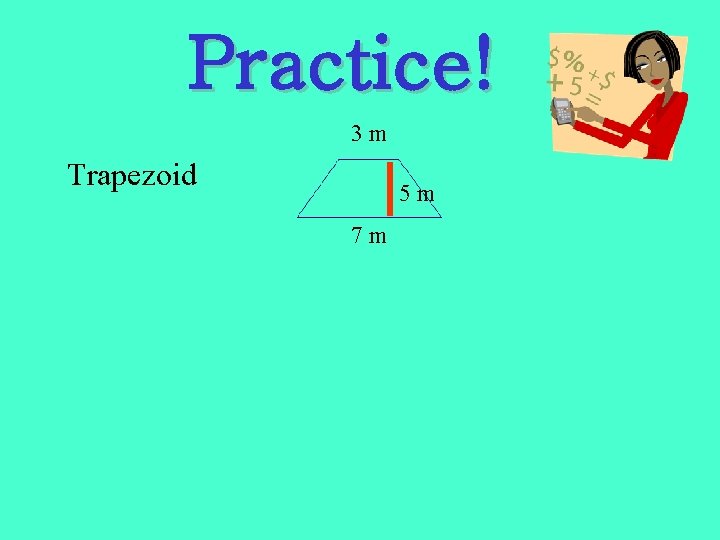
Practice! 3 m Trapezoid 5 m 7 m
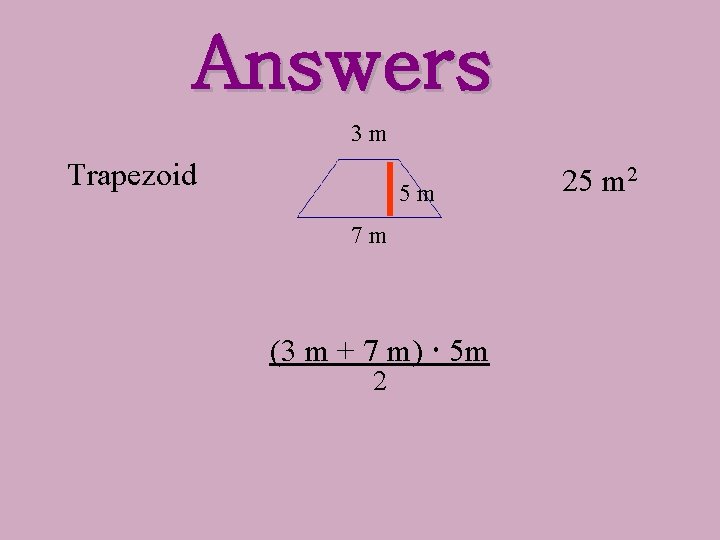
Answers 3 m Trapezoid 5 m 7 m (3 m + 7 m) 5 m 2 25 m 2
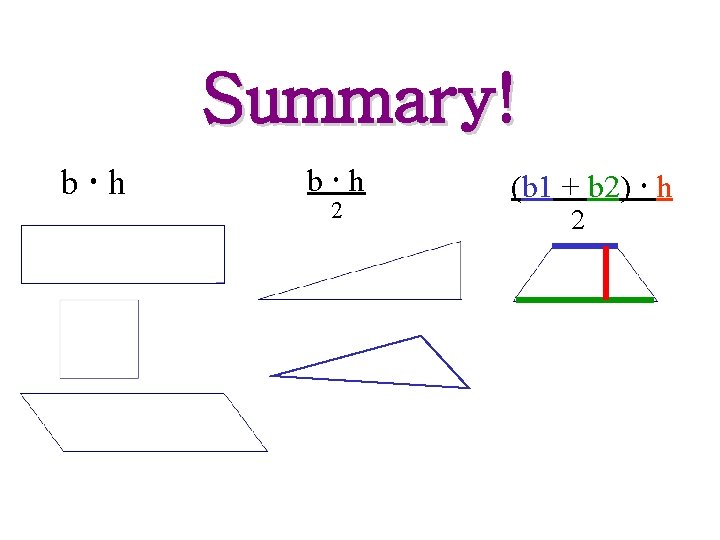
Summary! b h 2 (b 1 + b 2) h 2