
Are You Smarter Than An 8 th Grader
- Slides: 44
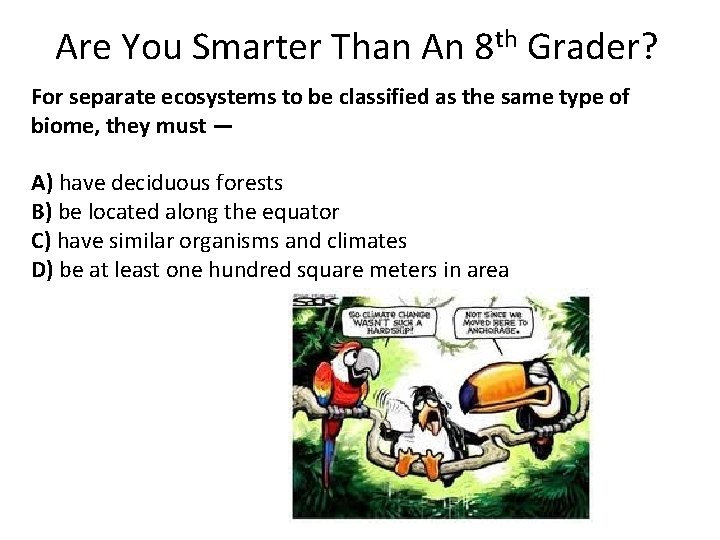
Are You Smarter Than An 8 th Grader? For separate ecosystems to be classified as the same type of biome, they must — A) have deciduous forests B) be located along the equator C) have similar organisms and climates D) be at least one hundred square meters in area
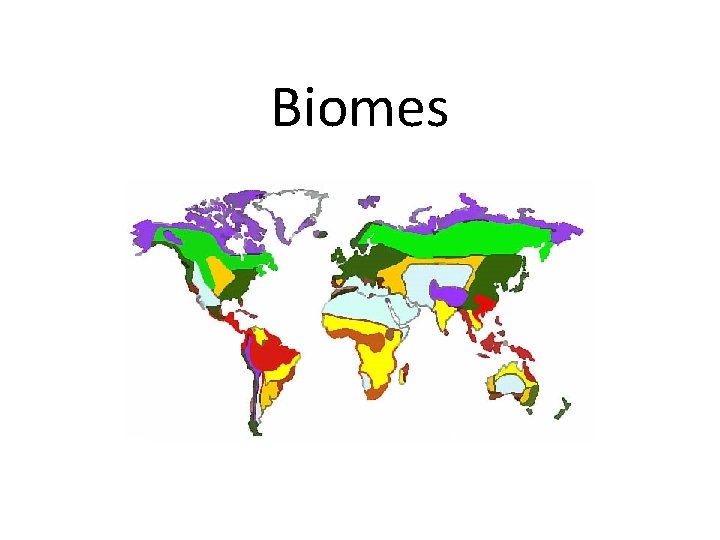
Biomes
Ecologists group Earth's diverse environments into biomes. Biome is a large area that exhibits similar climate, plants, and animals.
Climate has 2 main components Temperature Precipitation
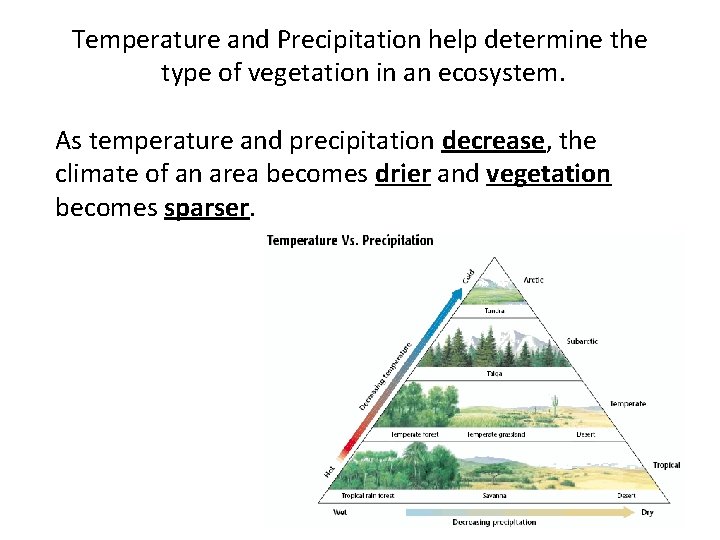
Temperature and Precipitation help determine the type of vegetation in an ecosystem. As temperature and precipitation decrease, the climate of an area becomes drier and vegetation becomes sparser.
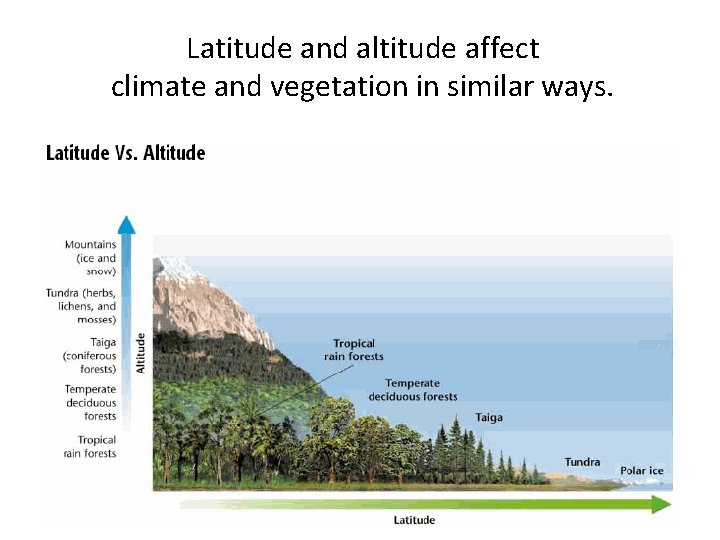
Latitude and altitude affect climate and vegetation in similar ways.
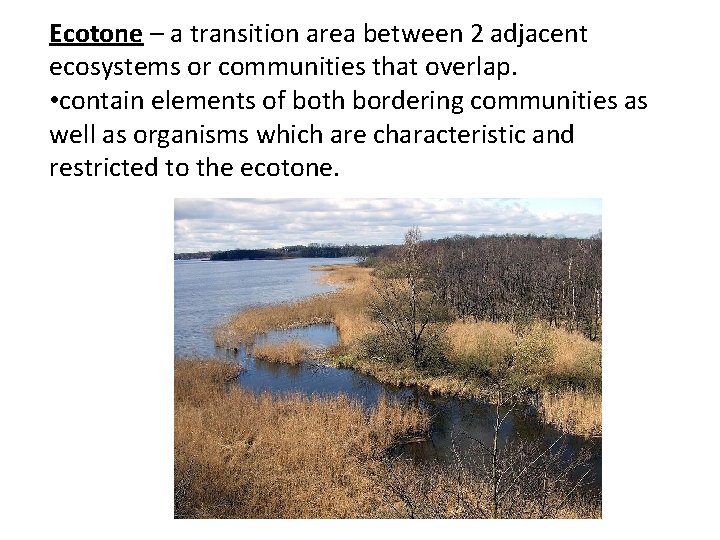
Ecotone – a transition area between 2 adjacent ecosystems or communities that overlap. • contain elements of both bordering communities as well as organisms which are characteristic and restricted to the ecotone.
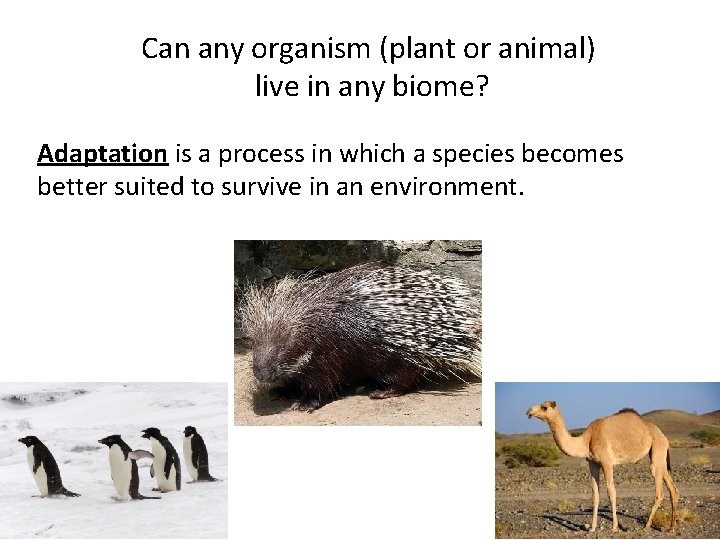
Can any organism (plant or animal) live in any biome? Adaptation is a process in which a species becomes better suited to survive in an environment.
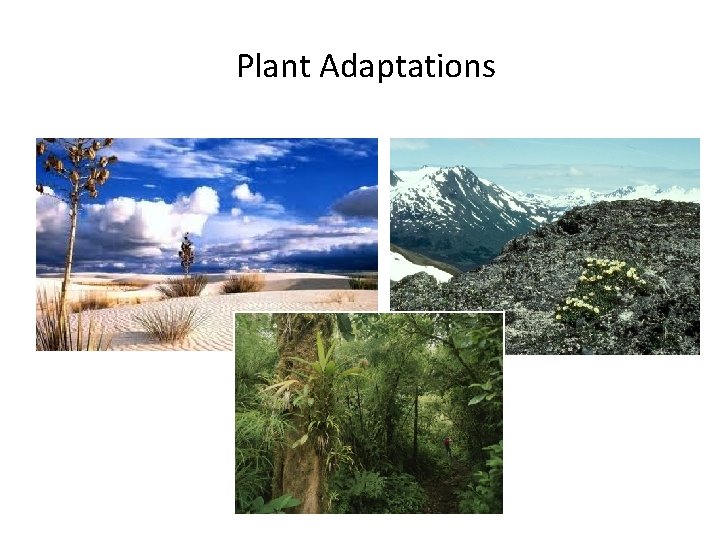
Plant Adaptations
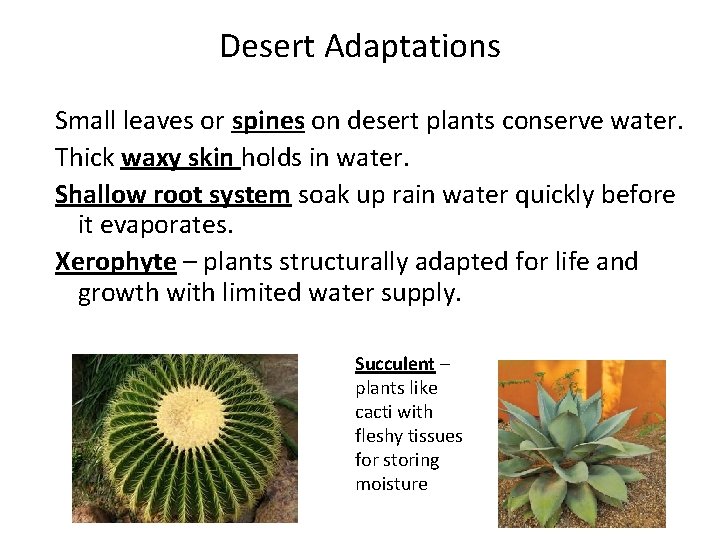
Desert Adaptations Small leaves or spines on desert plants conserve water. Thick waxy skin holds in water. Shallow root system soak up rain water quickly before it evaporates. Xerophyte – plants structurally adapted for life and growth with limited water supply. Succulent – plants like cacti with fleshy tissues for storing moisture
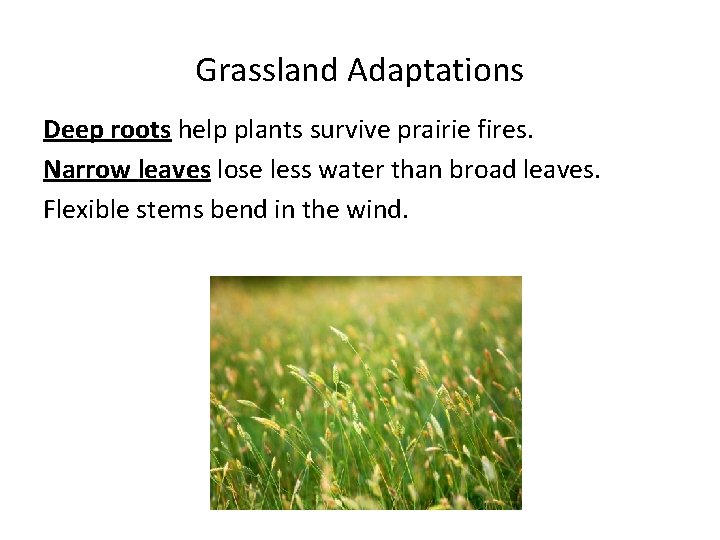
Grassland Adaptations Deep roots help plants survive prairie fires. Narrow leaves lose less water than broad leaves. Flexible stems bend in the wind.
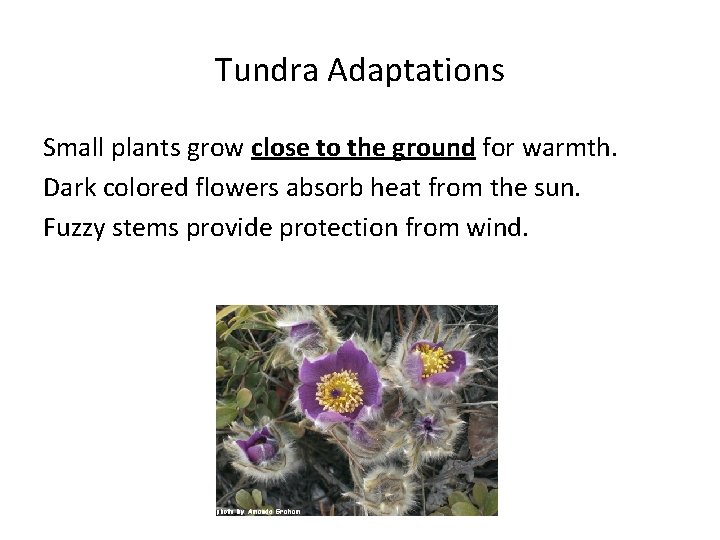
Tundra Adaptations Small plants grow close to the ground for warmth. Dark colored flowers absorb heat from the sun. Fuzzy stems provide protection from wind.
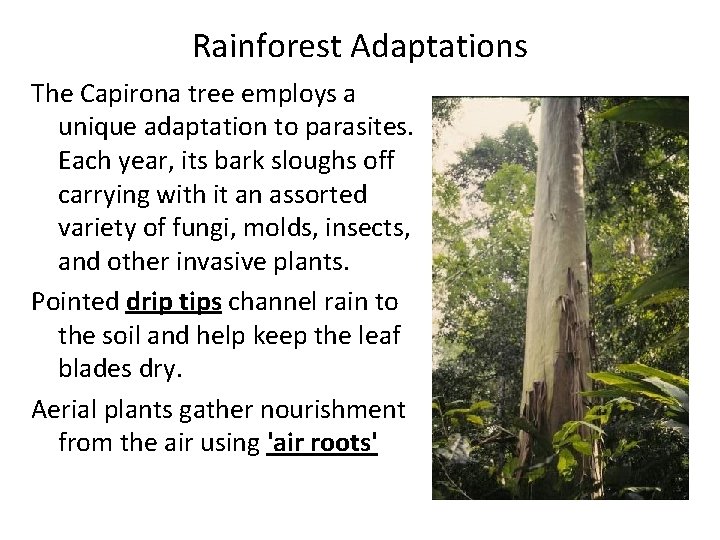
Rainforest Adaptations The Capirona tree employs a unique adaptation to parasites. Each year, its bark sloughs off carrying with it an assorted variety of fungi, molds, insects, and other invasive plants. Pointed drip tips channel rain to the soil and help keep the leaf blades dry. Aerial plants gather nourishment from the air using 'air roots'
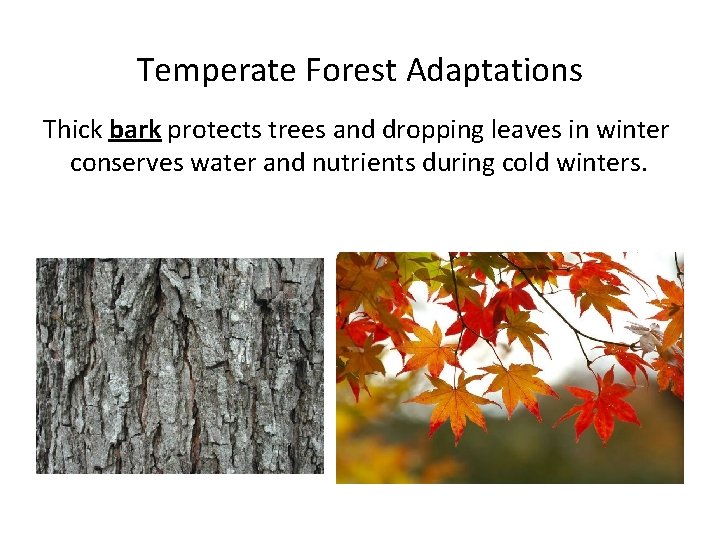
Temperate Forest Adaptations Thick bark protects trees and dropping leaves in winter conserves water and nutrients during cold winters.
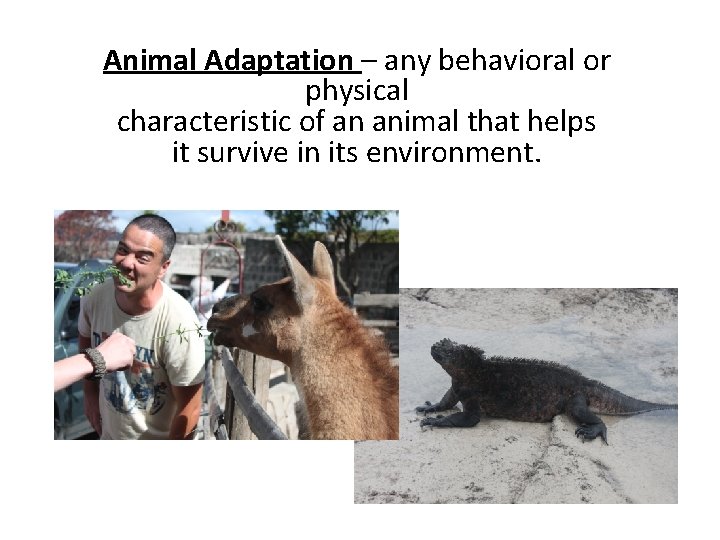
Animal Adaptation – any behavioral or physical characteristic of an animal that helps it survive in its environment.
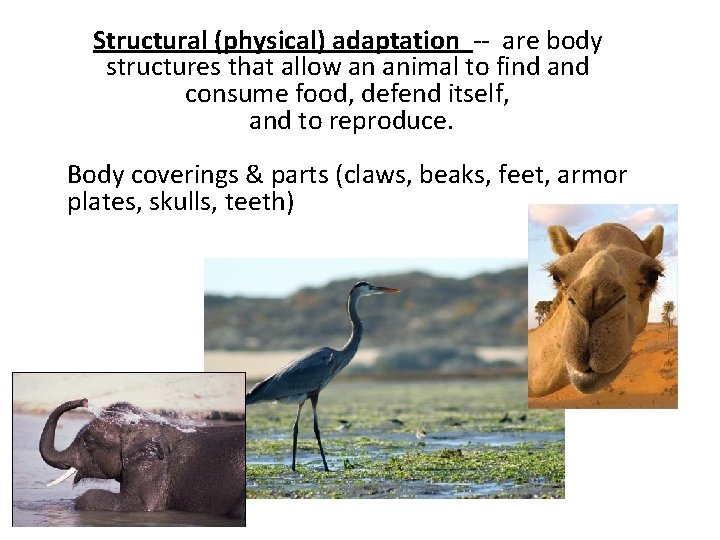
Structural (physical) adaptation -- are body structures that allow an animal to find and consume food, defend itself, and to reproduce. Body coverings & parts (claws, beaks, feet, armor plates, skulls, teeth)
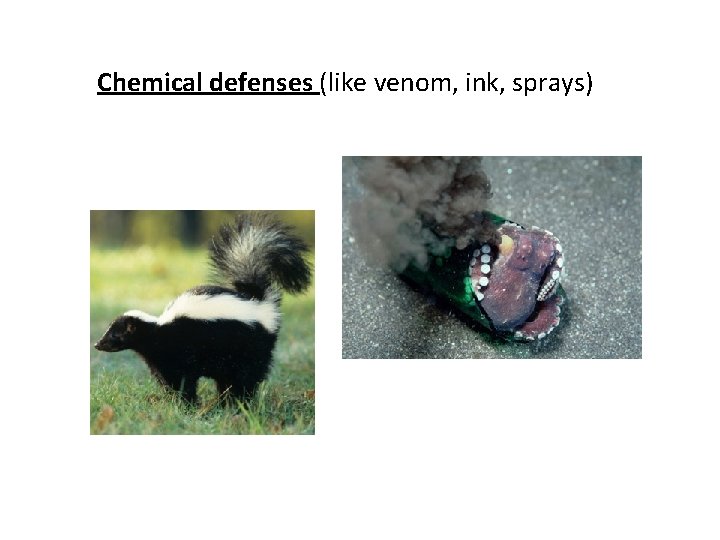
Chemical defenses (like venom, ink, sprays)
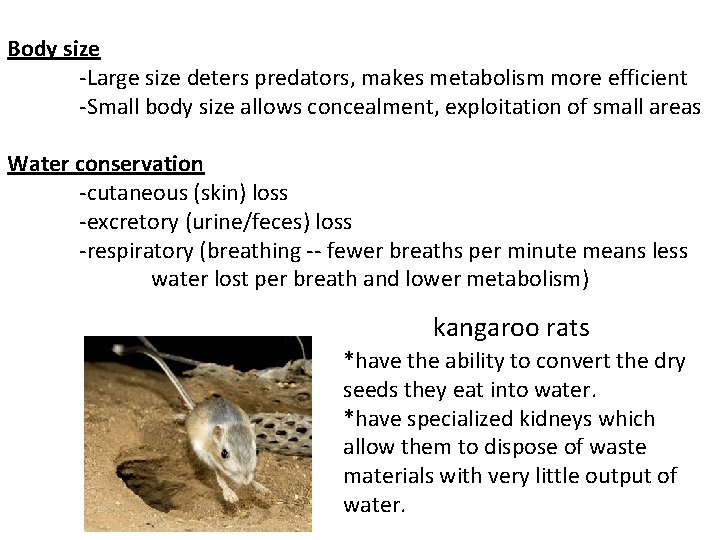
Body size -Large size deters predators, makes metabolism more efficient -Small body size allows concealment, exploitation of small areas Water conservation -cutaneous (skin) loss -excretory (urine/feces) loss -respiratory (breathing -- fewer breaths per minute means less water lost per breath and lower metabolism) kangaroo rats *have the ability to convert the dry seeds they eat into water. *have specialized kidneys which allow them to dispose of waste materials with very little output of water.
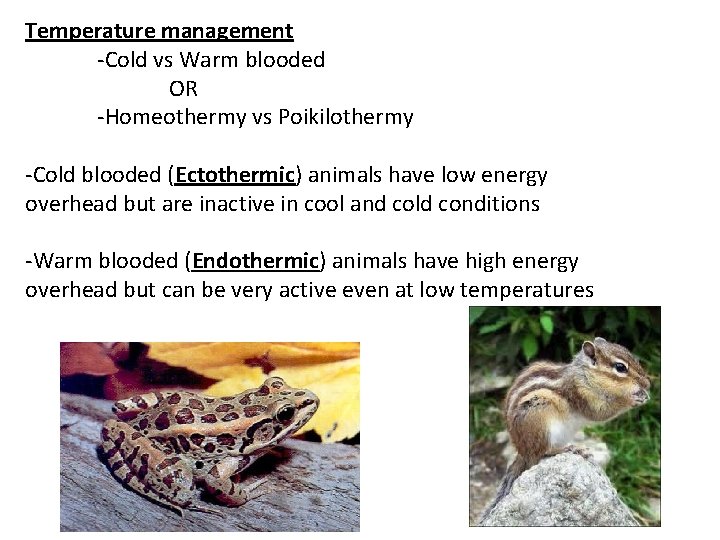
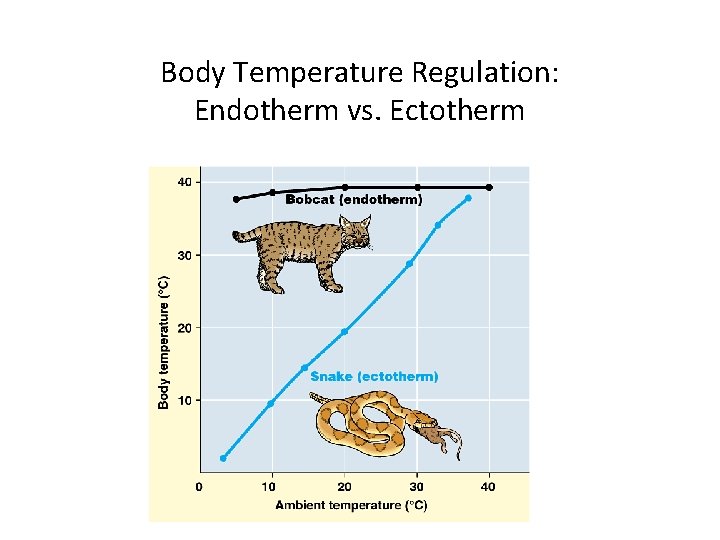
Temperature management -Cold vs Warm blooded OR -Homeothermy vs Poikilothermy -Cold blooded (Ectothermic) animals have low energy overhead but are inactive in cool and cold conditions -Warm blooded (Endothermic) animals have high energy overhead but can be very active even at low temperatures
Body Temperature Regulation: Endotherm vs. Ectotherm
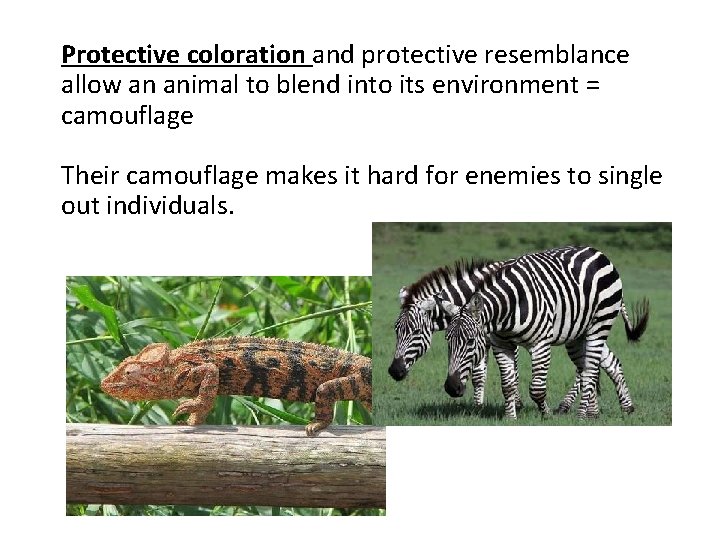
Protective coloration and protective resemblance allow an animal to blend into its environment = camouflage Their camouflage makes it hard for enemies to single out individuals.
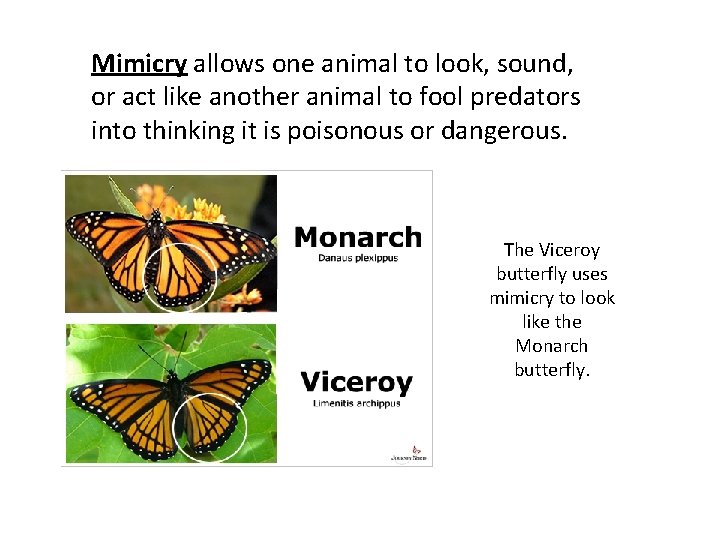
Mimicry allows one animal to look, sound, or act like another animal to fool predators into thinking it is poisonous or dangerous. The Viceroy butterfly uses mimicry to look like the Monarch butterfly.
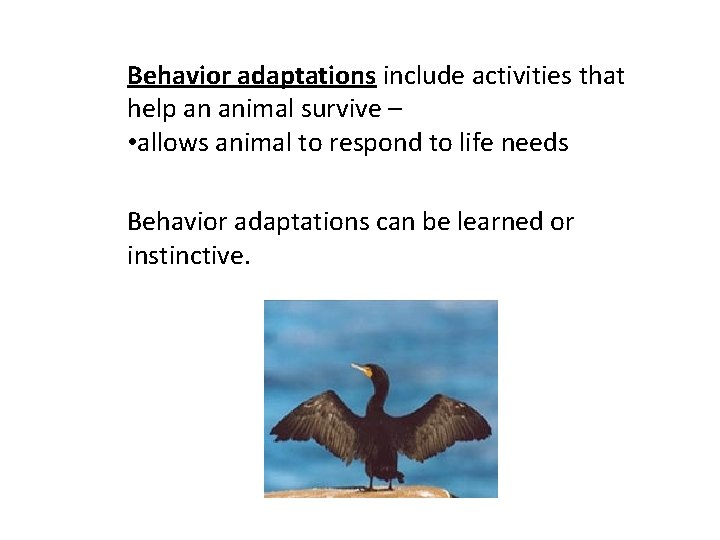
Behavior adaptations include activities that help an animal survive – • allows animal to respond to life needs Behavior adaptations can be learned or instinctive.
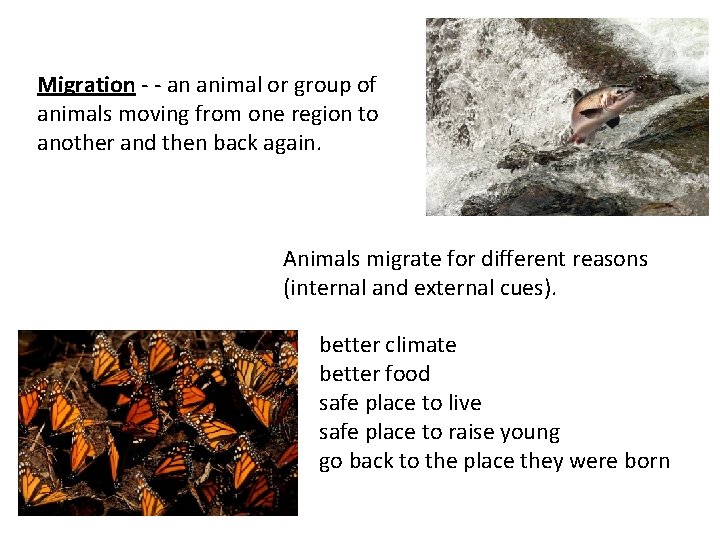
Migration - - an animal or group of animals moving from one region to another and then back again. Animals migrate for different reasons (internal and external cues). better climate better food safe place to live safe place to raise young go back to the place they were born
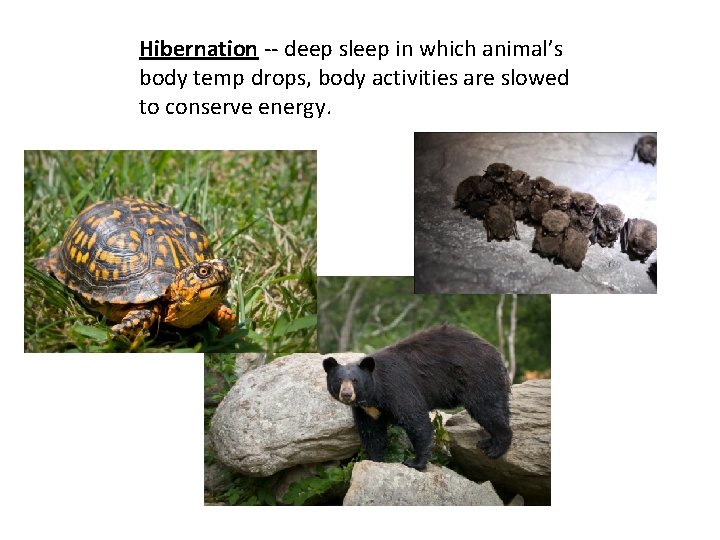
Hibernation -- deep sleep in which animal’s body temp drops, body activities are slowed to conserve energy.
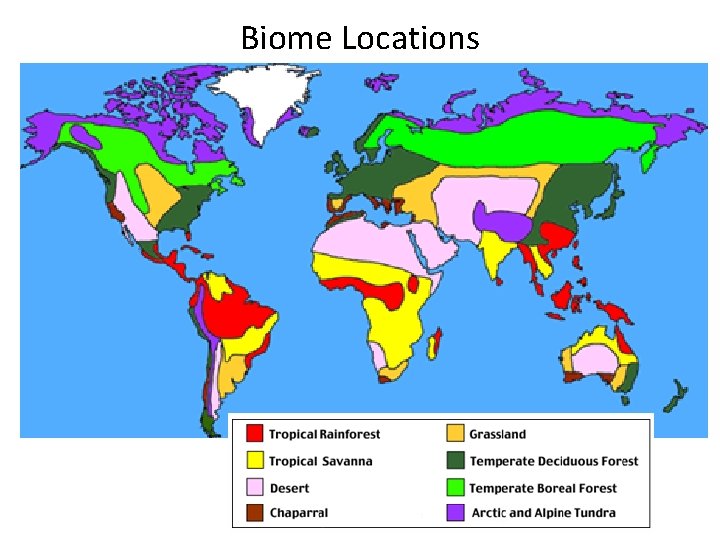
Biome Locations
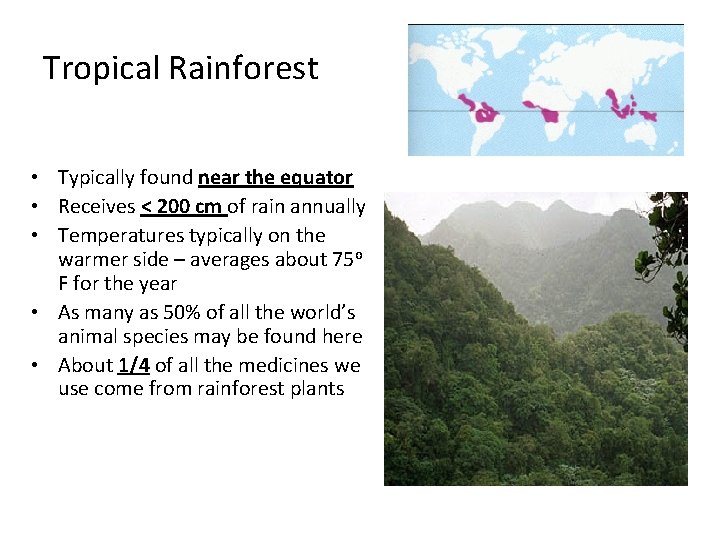
Tropical Rainforest • Typically found near the equator • Receives < 200 cm of rain annually • Temperatures typically on the warmer side – averages about 75 o F for the year • As many as 50% of all the world’s animal species may be found here • About 1/4 of all the medicines we use come from rainforest plants
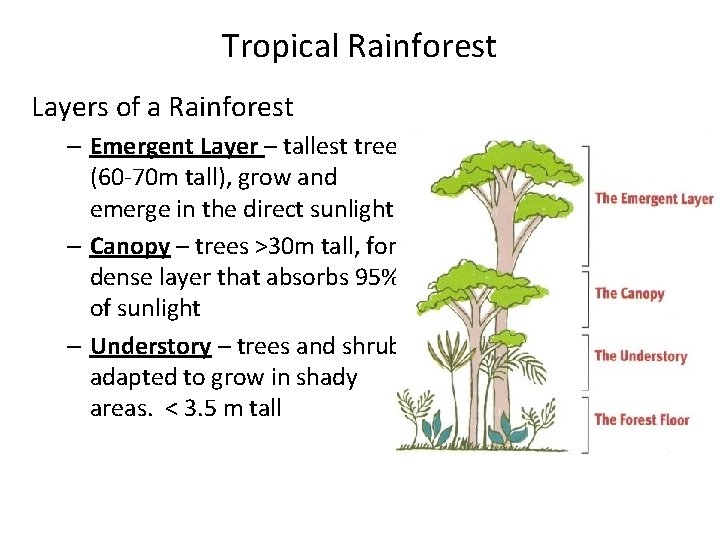
Tropical Rainforest Layers of a Rainforest – Emergent Layer – tallest trees (60 -70 m tall), grow and emerge in the direct sunlight. – Canopy – trees >30 m tall, form dense layer that absorbs 95% of sunlight – Understory – trees and shrubs adapted to grow in shady areas. < 3. 5 m tall
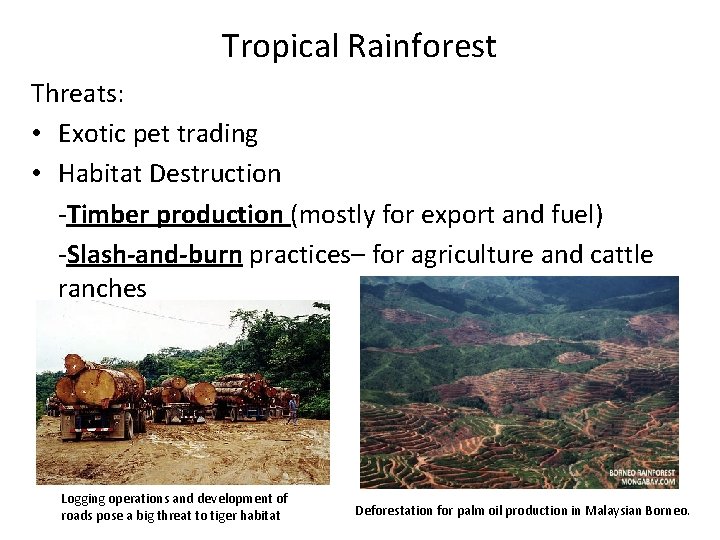
Tropical Rainforest Threats: • Exotic pet trading • Habitat Destruction -Timber production (mostly for export and fuel) -Slash-and-burn practices– for agriculture and cattle ranches Logging operations and development of roads pose a big threat to tiger habitat Deforestation for palm oil production in Malaysian Borneo.
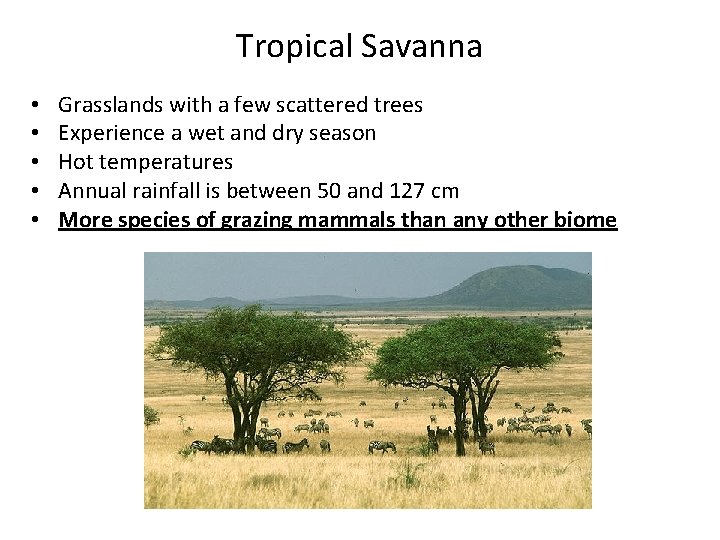
Tropical Savanna • • • Grasslands with a few scattered trees Experience a wet and dry season Hot temperatures Annual rainfall is between 50 and 127 cm More species of grazing mammals than any other biome
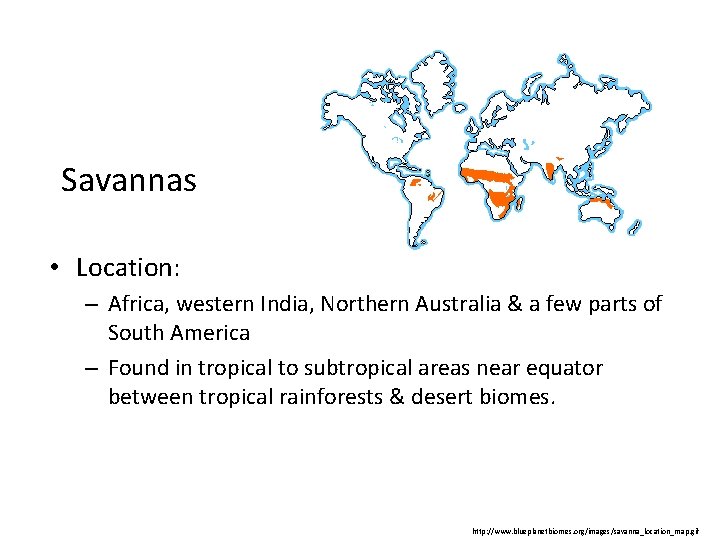
Savannas • Location: – Africa, western India, Northern Australia & a few parts of South America – Found in tropical to subtropical areas near equator between tropical rainforests & desert biomes. http: //www. blueplanetbiomes. org/images/savanna_location_map. gif
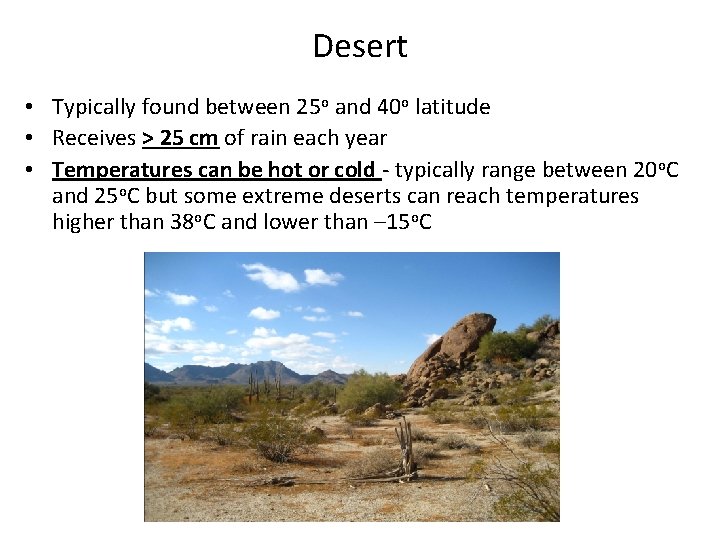
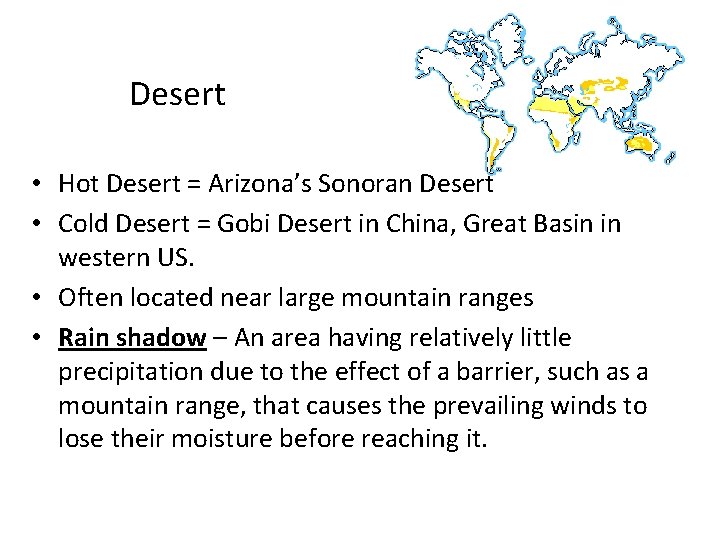
Desert • Typically found between 25 o and 40 o latitude • Receives > 25 cm of rain each year • Temperatures can be hot or cold - typically range between 20 o. C and 25 o. C but some extreme deserts can reach temperatures higher than 38 o. C and lower than – 15 o. C
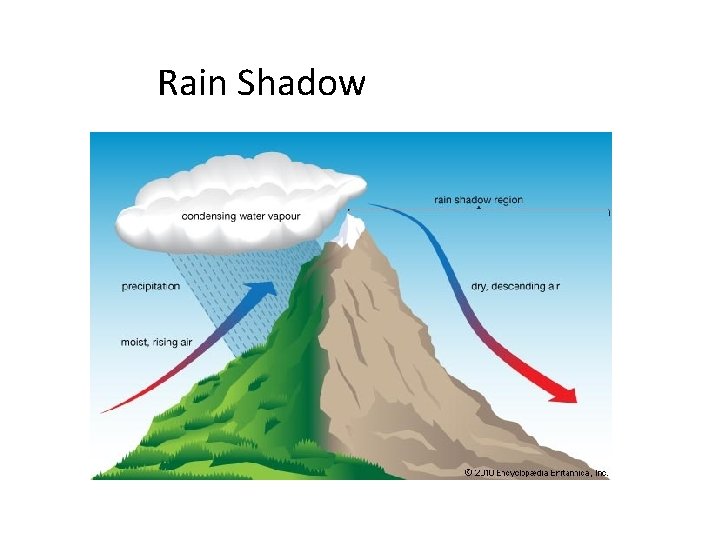
Desert • Hot Desert = Arizona’s Sonoran Desert • Cold Desert = Gobi Desert in China, Great Basin in western US. • Often located near large mountain ranges • Rain shadow – An area having relatively little precipitation due to the effect of a barrier, such as a mountain range, that causes the prevailing winds to lose their moisture before reaching it.
Rain Shadow
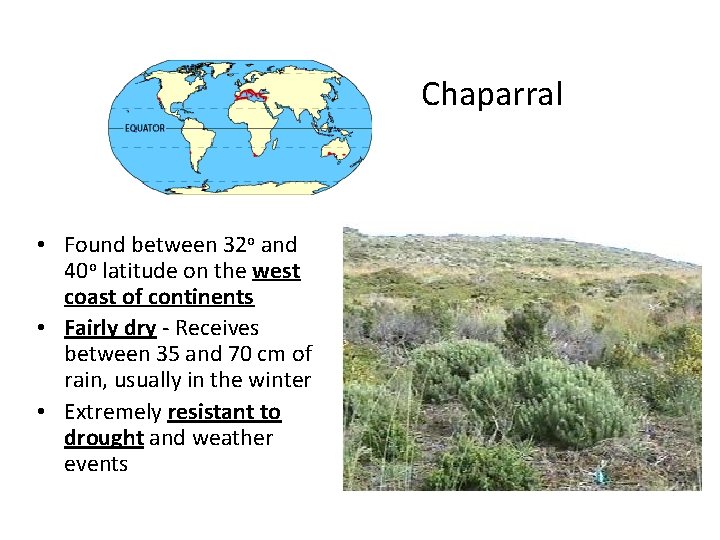
Chaparral • Found between 32 o and 40 o latitude on the west coast of continents • Fairly dry - Receives between 35 and 70 cm of rain, usually in the winter • Extremely resistant to drought and weather events
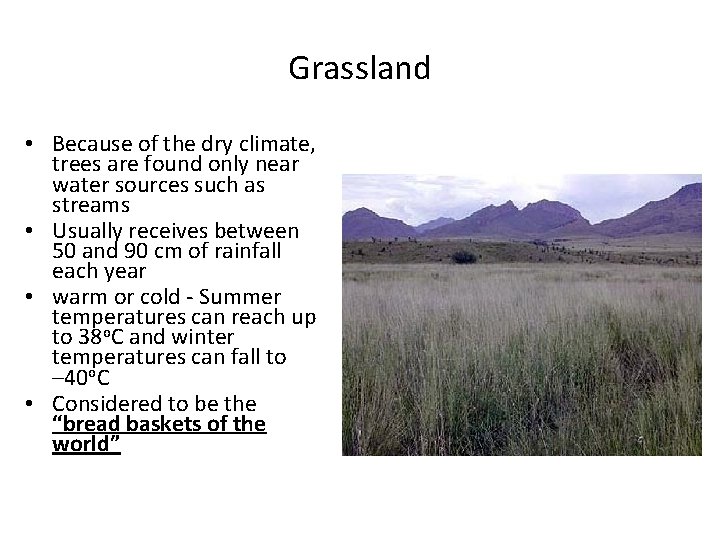
Grassland • Because of the dry climate, trees are found only near water sources such as streams • Usually receives between 50 and 90 cm of rainfall each year • warm or cold - Summer temperatures can reach up to 38 o. C and winter temperatures can fall to – 40 o. C • Considered to be the “bread baskets of the world”
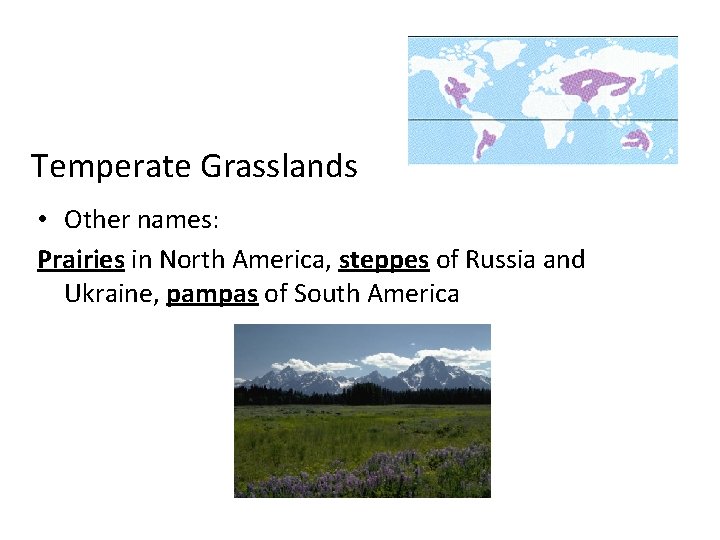
Temperate Grasslands • Other names: Prairies in North America, steppes of Russia and Ukraine, pampas of South America
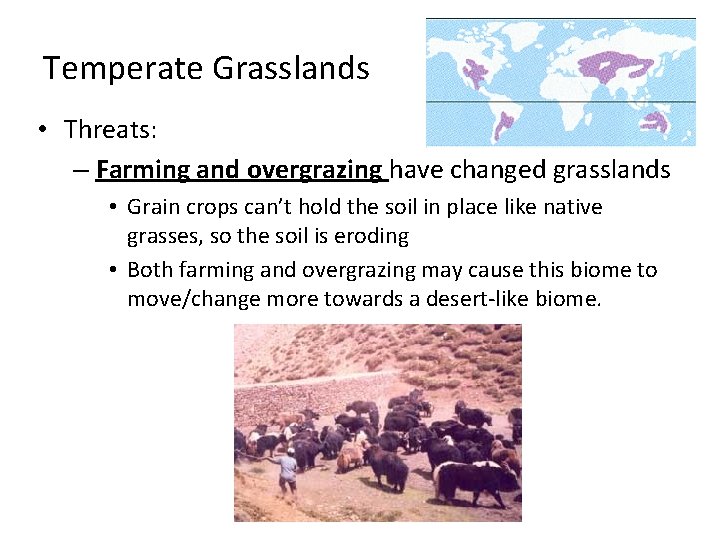
Temperate Grasslands • Threats: – Farming and overgrazing have changed grasslands • Grain crops can’t hold the soil in place like native grasses, so the soil is eroding • Both farming and overgrazing may cause this biome to move/change more towards a desert-like biome.
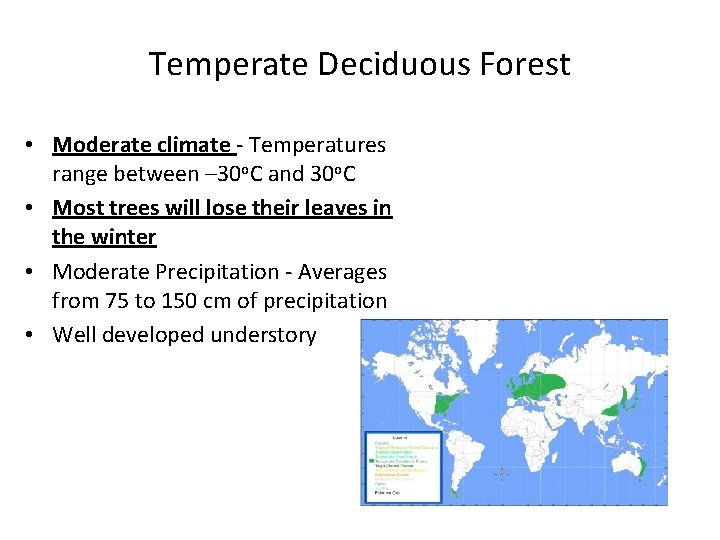
Temperate Deciduous Forest • Moderate climate - Temperatures range between – 30 o. C and 30 o. C • Most trees will lose their leaves in the winter • Moderate Precipitation - Averages from 75 to 150 cm of precipitation • Well developed understory
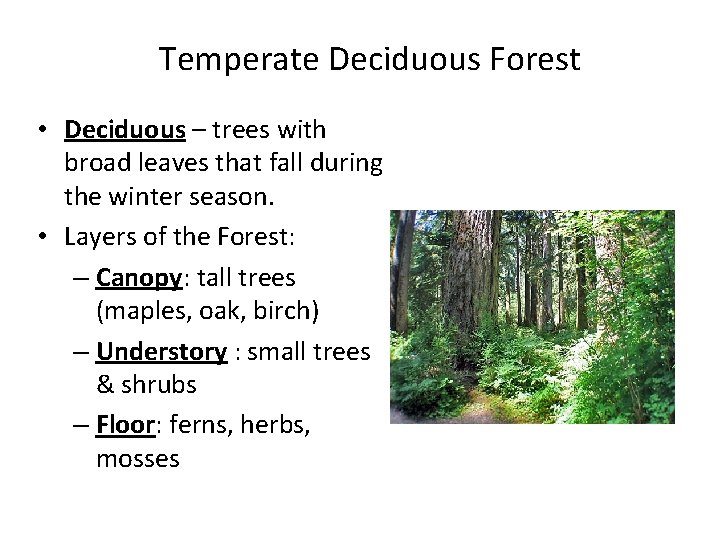
Temperate Deciduous Forest • Deciduous – trees with broad leaves that fall during the winter season. • Layers of the Forest: – Canopy: tall trees (maples, oak, birch) – Understory : small trees & shrubs – Floor: ferns, herbs, mosses
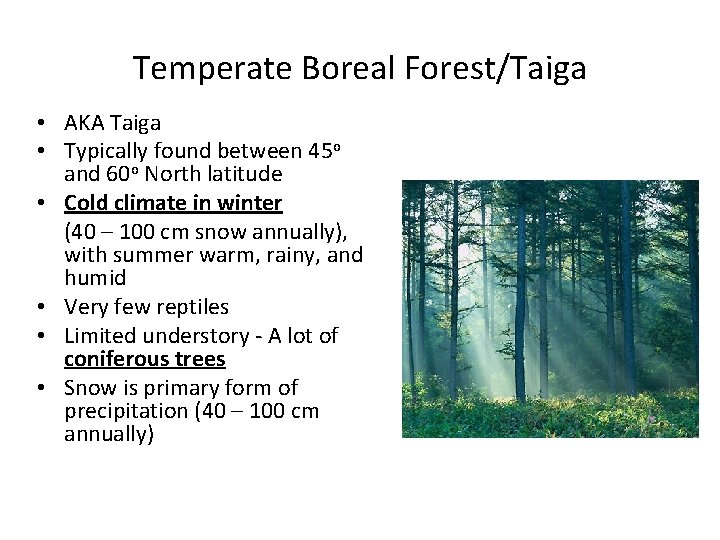
Temperate Boreal Forest/Taiga • AKA Taiga • Typically found between 45 o and 60 o North latitude • Cold climate in winter (40 – 100 cm snow annually), with summer warm, rainy, and humid • Very few reptiles • Limited understory - A lot of coniferous trees • Snow is primary form of precipitation (40 – 100 cm annually)
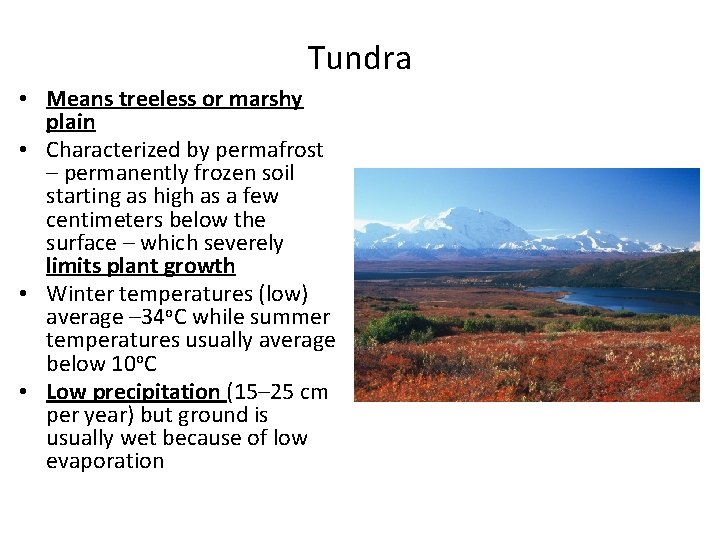
Tundra • Means treeless or marshy plain • Characterized by permafrost – permanently frozen soil starting as high as a few centimeters below the surface – which severely limits plant growth • Winter temperatures (low) average – 34 o. C while summer temperatures usually average below 10 o. C • Low precipitation (15– 25 cm per year) but ground is usually wet because of low evaporation
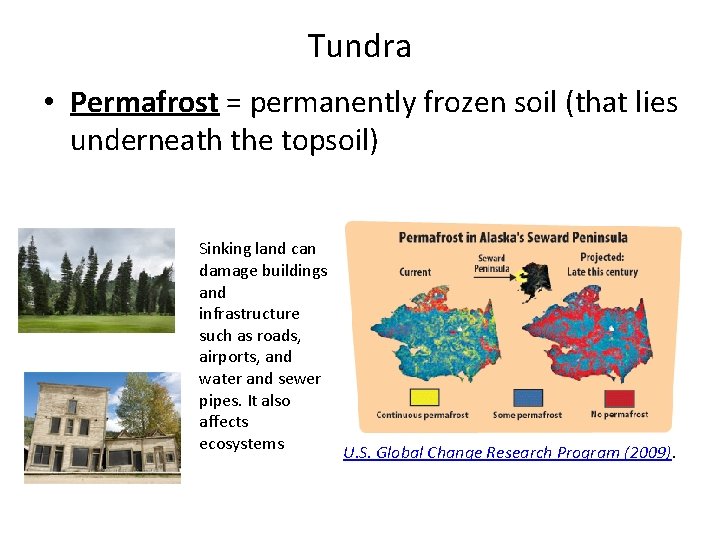
Tundra • Permafrost = permanently frozen soil (that lies underneath the topsoil) Sinking land can damage buildings and infrastructure such as roads, airports, and water and sewer pipes. It also affects ecosystems U. S. Global Change Research Program (2009).
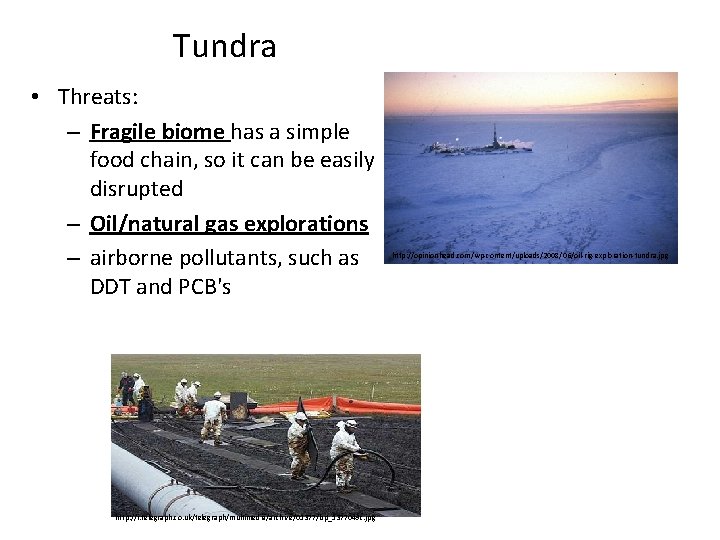
Tundra • Threats: – Fragile biome has a simple food chain, so it can be easily disrupted – Oil/natural gas explorations – airborne pollutants, such as DDT and PCB's http: //i. telegraph. co. uk/telegraph/multimedia/archive/01377/bp_1377049 c. jpg http: //opinionhead. com/wp-content/uploads/2008/06/oil-rig-exploration-tundra. jpg