
ARE YOU IN AN INFINITIVE MOOD HOW ARE

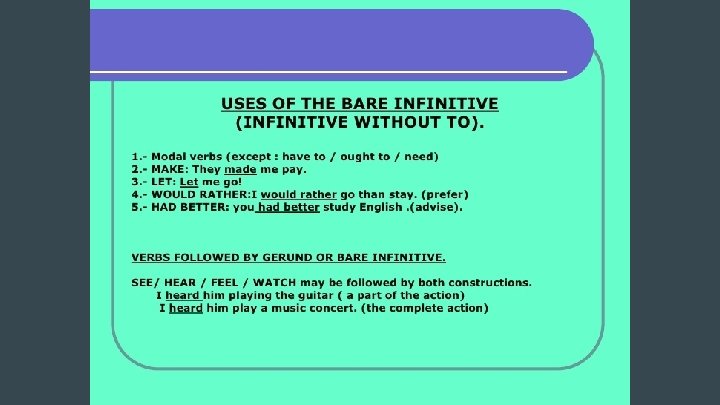
- Slides: 22
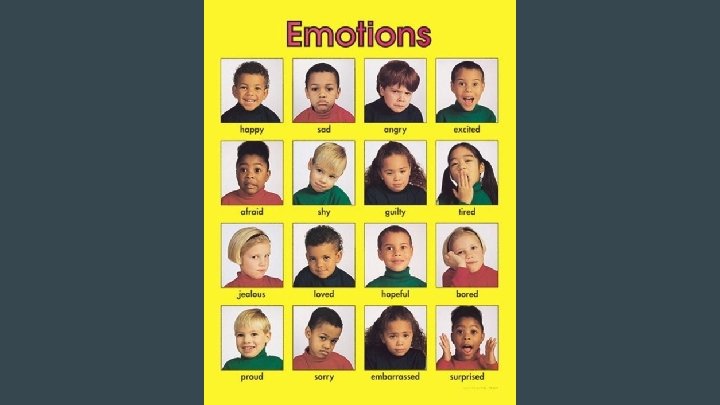
ARE YOU IN AN INFINITIVE MOOD? HOW ARE YOU FEELING NOW?
Grammar Do the “Grammar links-1” box, p. 210.
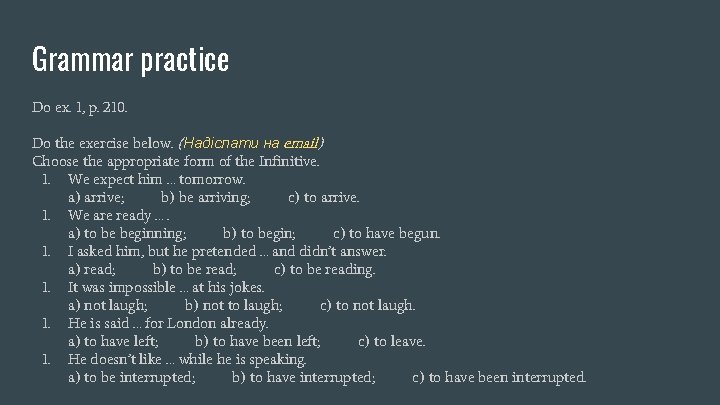
Grammar practice Do ex. 1, p. 210. Do the exercise below. (Надіслати на email) Choose the appropriate form of the Infinitive. 1. We expect him … tomorrow. a) arrive; b) be arriving; c) to arrive. 1. We are ready …. a) to be beginning; b) to begin; c) to have begun. 1. I asked him, but he pretended … and didn’t answer. a) read; b) to be read; c) to be reading. 1. It was impossible … at his jokes. a) not laugh; b) not to laugh; c) to not laugh. 1. He is said … for London already. a) to have left; b) to have been left; c) to leave. 1. He doesn’t like … while he is speaking. a) to be interrupted; b) to have interrupted; c) to have been interrupted.
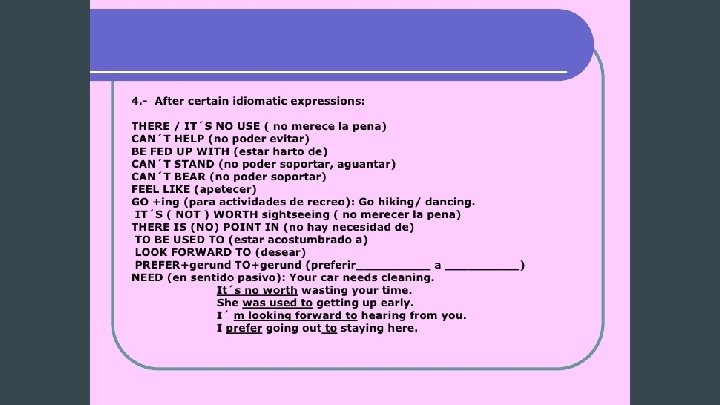
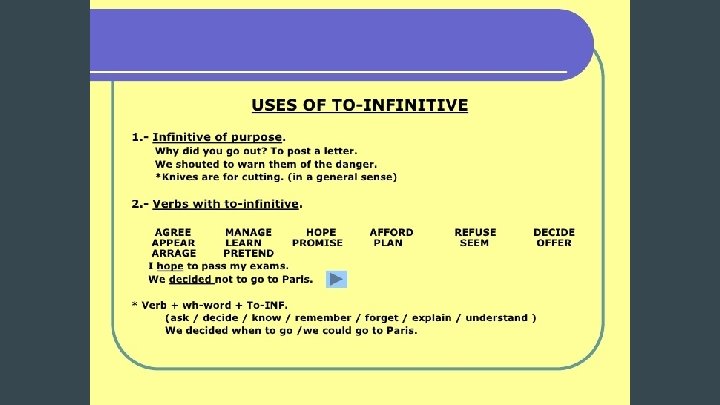
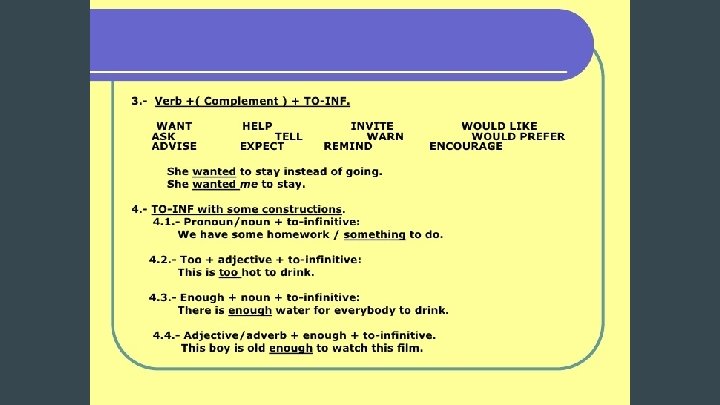
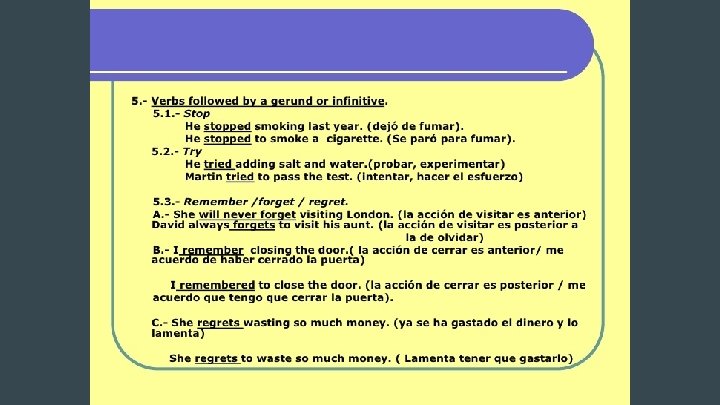
Watch the video, read and remember the rules https: //learnenglishteens. britishcouncil. org/grammar/beginnergrammar/verb-ing-or-verb-infinitive
Grammar Do the “Grammar links-2, 3” box, p. 210– 211. Do ex. 2, p. 210. Do ex. 3, p. 212 Виконані вправи 2 і 3 надіслати на email. Do ex. 4, p. 212
Listening Listen to the audio and do ex. 2 a, p. 213. Listen to the song.
Speaking Do ex. 1, p. 215.
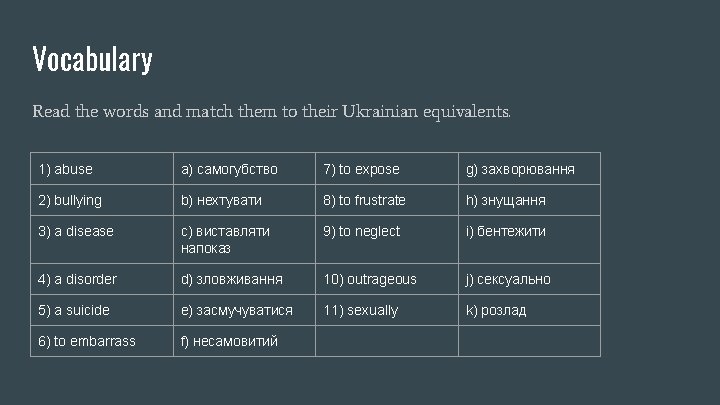
Vocabulary Read the words and match them to their Ukrainian equivalents. 1) abuse a) самогубство 7) to expose g) захворювання 2) bullying b) нехтувати 8) to frustrate h) знущання 3) a disease c) виставляти напоказ 9) to neglect i) бентежити 4) a disorder d) зловживання 10) outrageous j) сексуально 5) a suicide e) засмучуватися 11) sexually k) розлад 6) to embarrass f) несамовитий
Speaking Do ex. 1, p. 215. Do ex. 2, p. 215. Do ex. 3, p. 216.
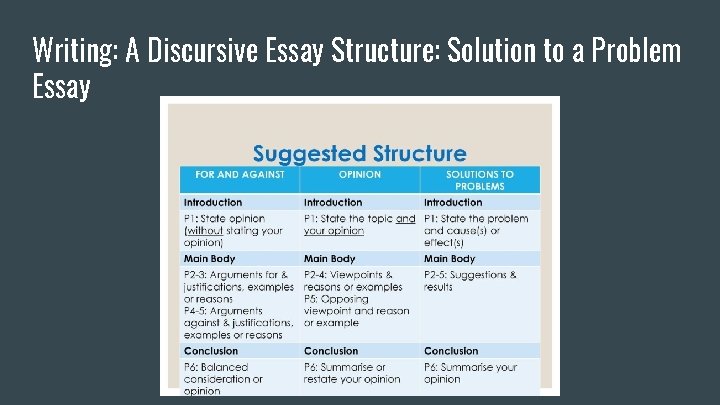
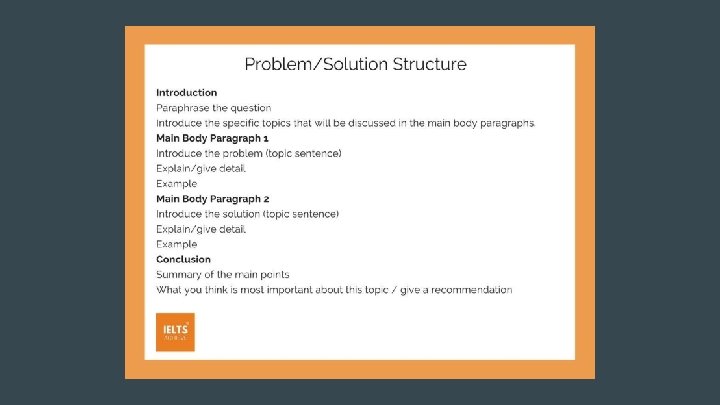
Writing: A Discursive Essay Structure: Solution to a Problem Essay
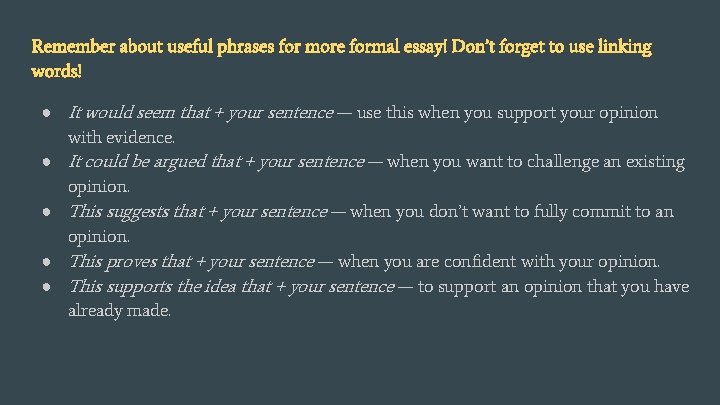
Remember about useful phrases for more formal essay! Don’t forget to use linking words! ● It would seem that + your sentence — use this when you support your opinion with evidence. ● It could be argued that + your sentence — when you want to challenge an existing opinion. ● This suggests that + your sentence — when you don’t want to fully commit to an opinion. ● This proves that + your sentence — when you are confident with your opinion. ● This supports the idea that + your sentence — to support an opinion that you have already made.