
Are we ready to think about HBV elimination
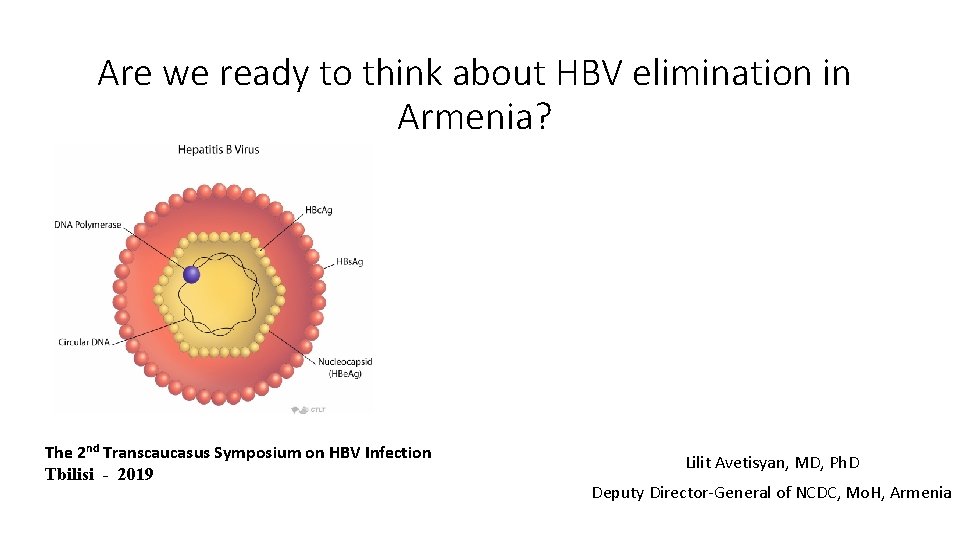
Are we ready to think about HBV elimination in Armenia? The 2 nd Transcaucasus Symposium on HBV Infection Tbilisi - 2019 Lilit Avetisyan, MD, Ph. D Deputy Director-General of NCDC, Mo. H, Armenia
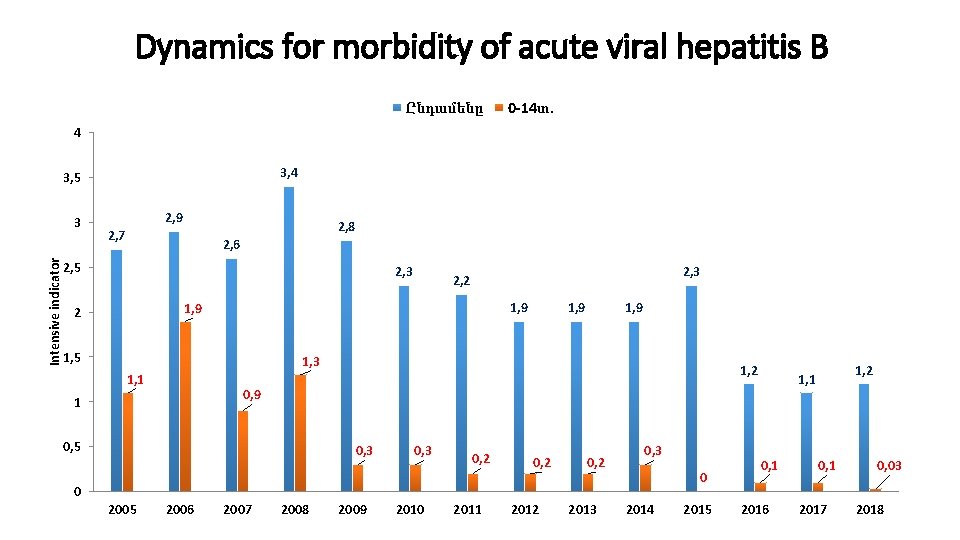
Dynamics for morbidity of acute viral hepatitis B Ընդամենը 0 -14տ. 4 3, 5 Intensive indicator 3 2, 9 2, 8 2, 7 2, 6 2, 5 2, 3 2, 2 1, 9 2 1, 5 1, 9 1, 3 1, 1 1, 2 0, 9 1 0, 5 0, 3 0, 2 0, 3 0 0 2005 2006 2007 2008 2009 2010 2011 2012 2013 2014 2015 1, 2 1, 1 0, 1 2016 0, 1 2017 0, 03 2018
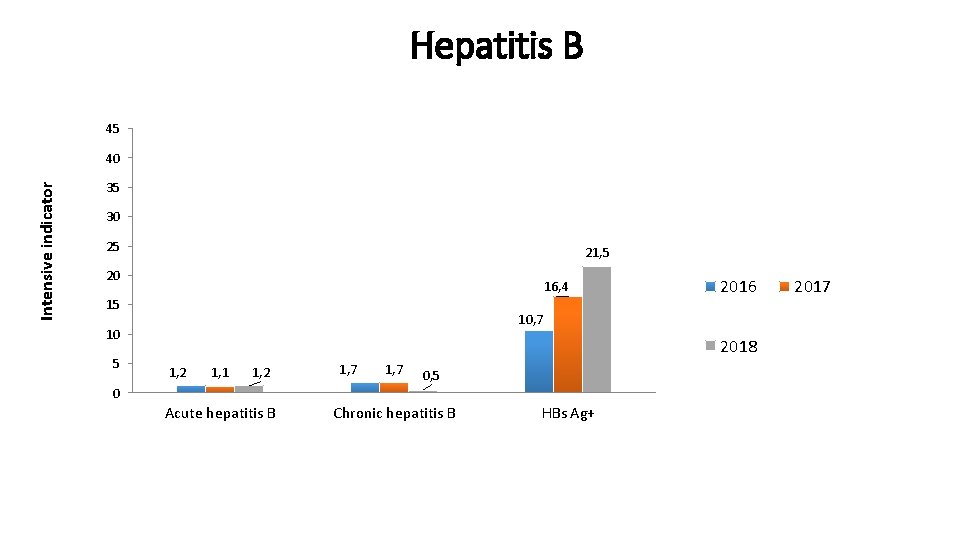
Hepatitis B 45 Intensive indicator 40 35 30 25 21, 5 20 16, 4 15 10, 7 10 5 2016 2018 1, 2 1, 1 1, 2 1, 7 0, 5 0 Acute hepatitis B Chronic hepatitis B HBs Ag+ 2017
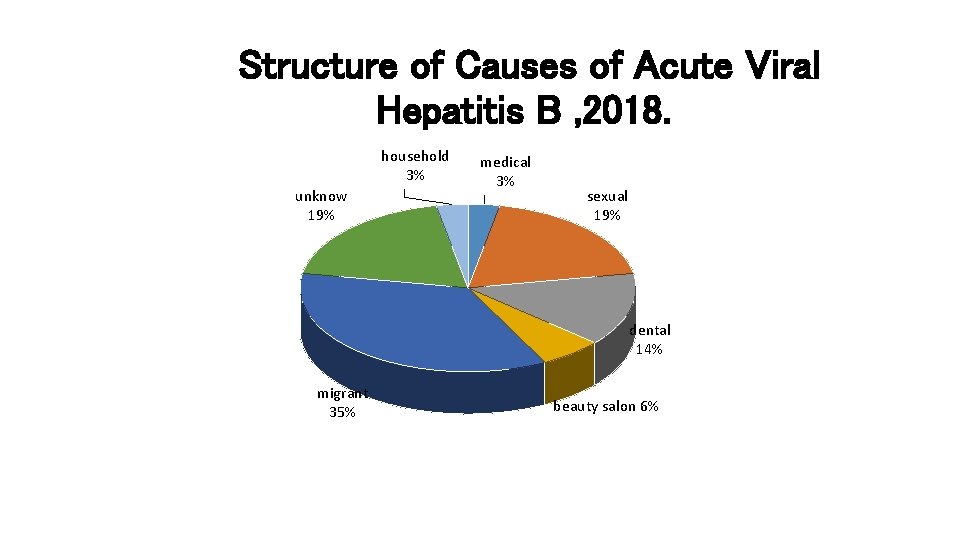
Structure of Causes of Acute Viral Hepatitis B , 2018. household 3% unknow 19% medical 3% sexual 19% dental 14% migrant 35% beauty salon 6%
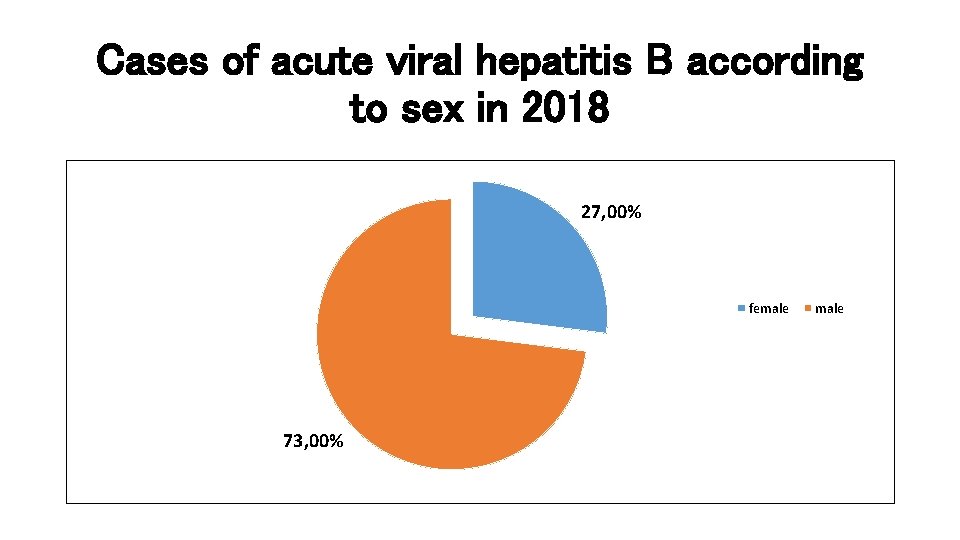
Cases of acute viral hepatitis B according to sex in 2018 27, 00% female 73, 00% male
Hepatitis B Preventive Vaccination Process: • Hepatitis B vaccination was introduced in 1999. • High rates of hepatitis B vaccination: 95% -98% • 2016: Inclusion of hepatitis B vaccination among risk groups in the National Vaccination Schedule
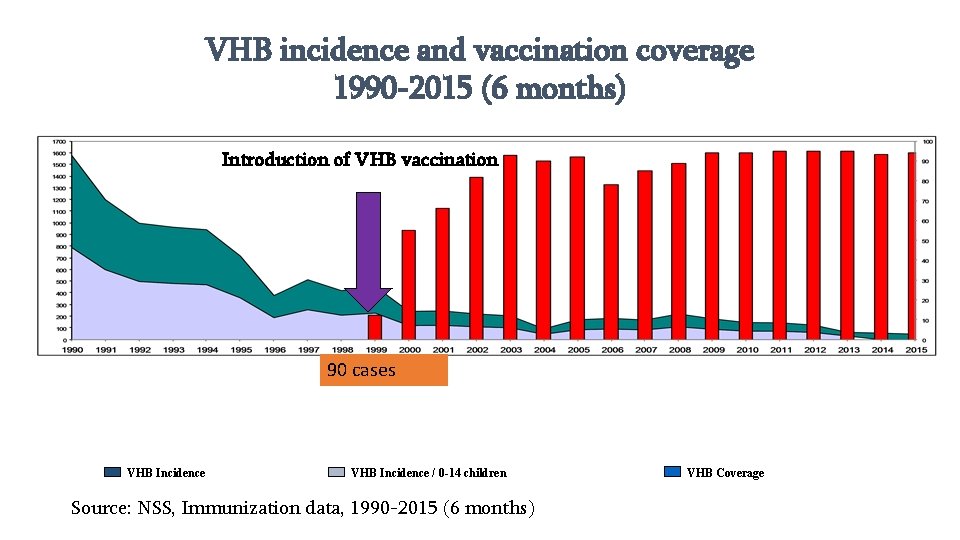
VHB incidence and vaccination coverage 1990 -2015 (6 months) Introduction of VHB vaccination 90 cases VHB Incidence / 0 -14 children Source: NSS, Immunization data, 1990 -2015 (6 months) VHB Coverage
Preventive measures for HB • Immunization • Surveillance • Epidemiological studies for each case • Early detection of hepatitis among risk groups • Medical staff training • Medical waste safe management • Periodic medical examination of medical staff • Implementation of disinfection and sterilization standard in medical centers and beauty salons • Public awareness
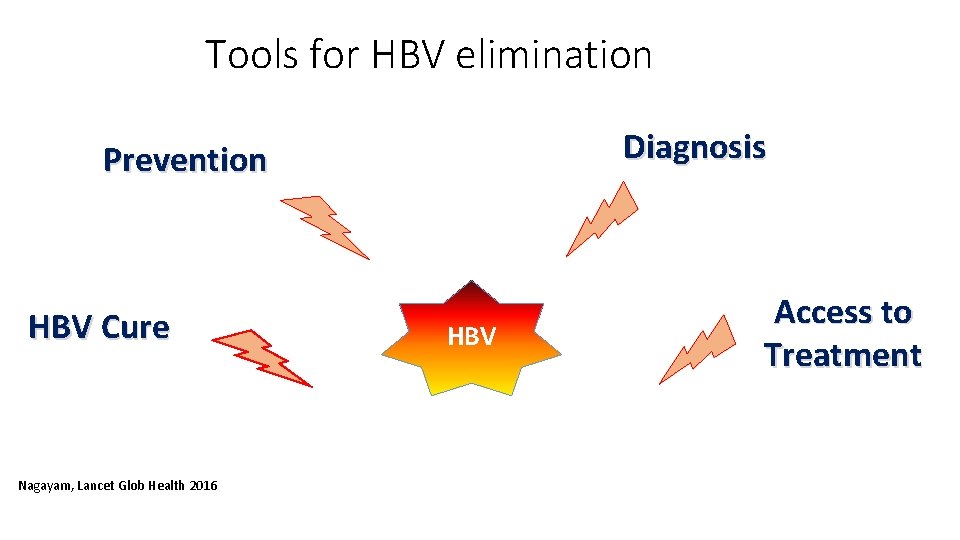
Tools for HBV elimination Diagnosis Prevention HBV Cure Nagayam, Lancet Glob Health 2016 HBV Access to Treatment
Program for Viral Hepatitis Prevention and Control for 2019 -2023 Order N 1387 -L dated May 27, 2019 of the Minister of Health Purpose: To reduce morbidity and mortality in chronic hepatitis B and C by 2030, as a target to eliminate a public health threat. Challenges: üCollaboration with all stakeholders üEarly detection üEffective treatment üPrevention at all levels üPublic awareness on risks
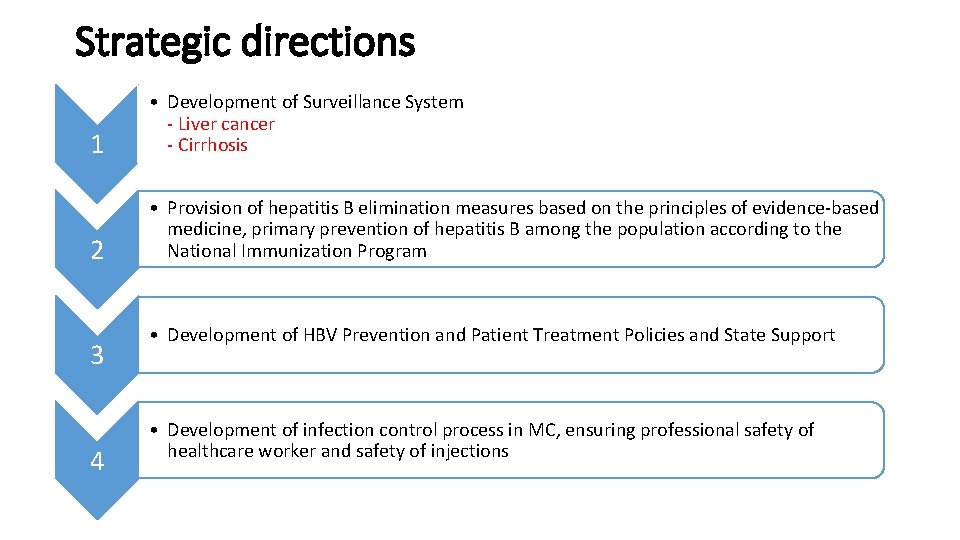
Strategic directions 1 • Development of Surveillance System - Liver cancer - Cirrhosis 2 • Provision of hepatitis B elimination measures based on the principles of evidence-based medicine, primary prevention of hepatitis B among the population according to the National Immunization Program 3 4 • Development of HBV Prevention and Patient Treatment Policies and State Support • Development of infection control process in MC, ensuring professional safety of healthcare worker and safety of injections
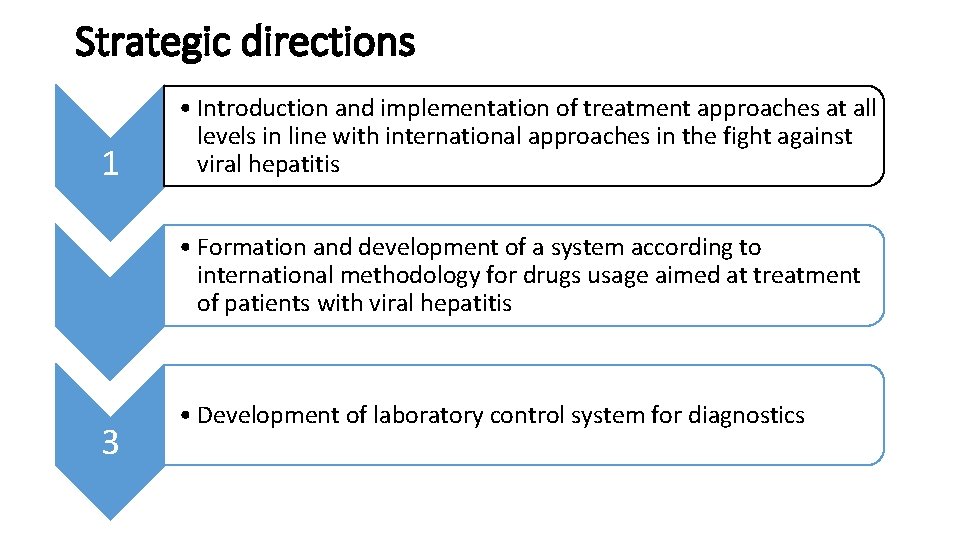
Strategic directions 1 • Introduction and implementation of treatment approaches at all levels in line with international approaches in the fight against viral hepatitis • Formation and development of a system according to international methodology for drugs usage aimed at treatment of patients with viral hepatitis 3 • Development of laboratory control system for diagnostics
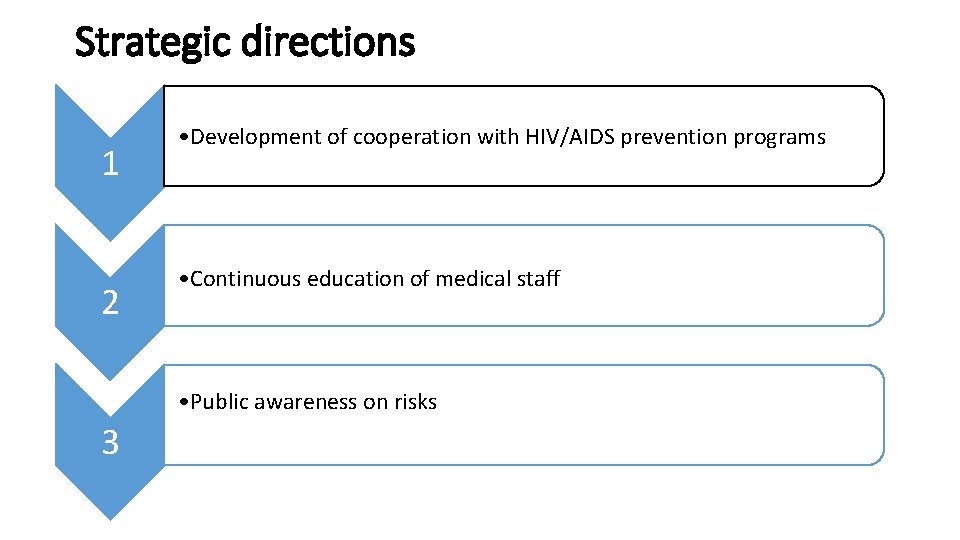
Strategic directions 1 2 • Development of cooperation with HIV/AIDS prevention programs • Continuous education of medical staff • Public awareness on risks 3
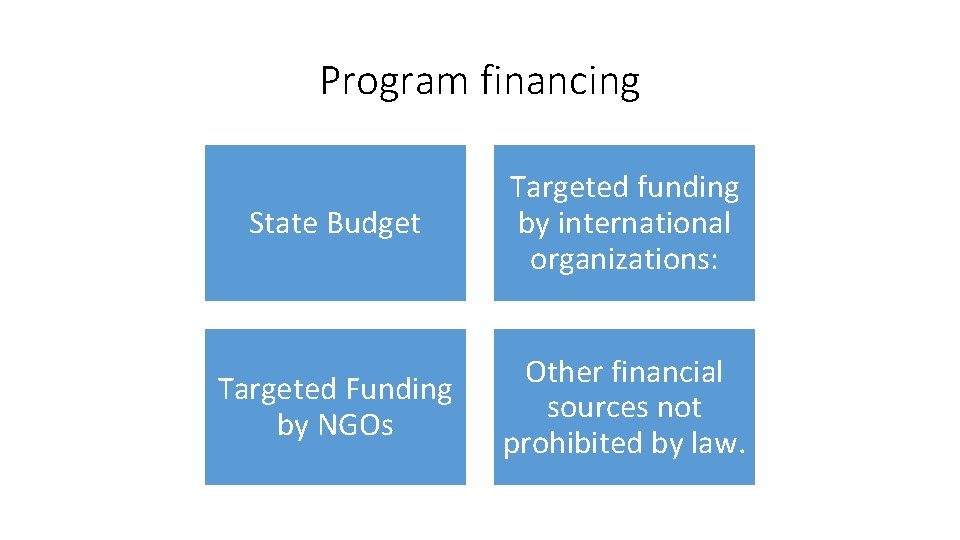
Program financing State Budget Targeted funding by international organizations: Targeted Funding by NGOs Other financial sources not prohibited by law.
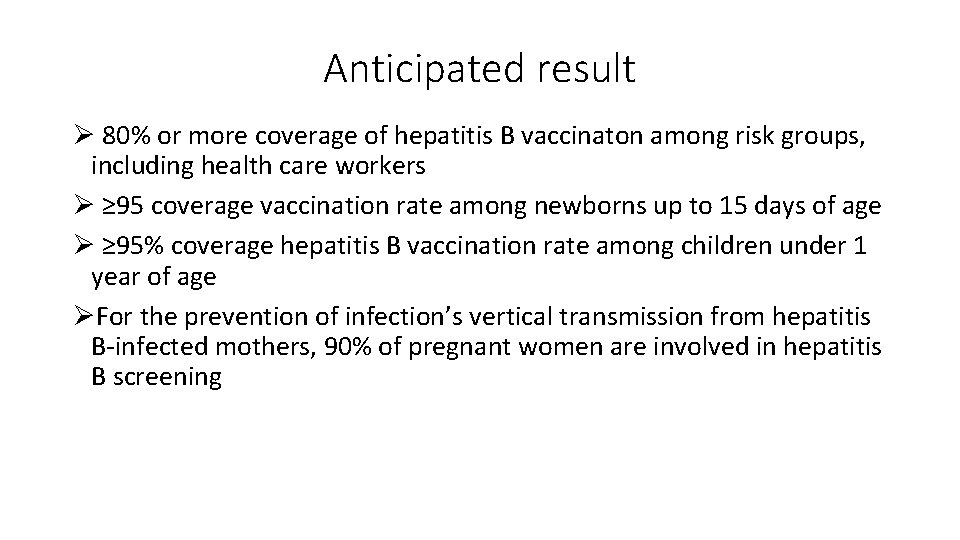
Anticipated result Ø 80% or more coverage of hepatitis B vaccinaton among risk groups, including health care workers Ø ≥ 95 coverage vaccination rate among newborns up to 15 days of age Ø ≥ 95% coverage hepatitis B vaccination rate among children under 1 year of age ØFor the prevention of infection’s vertical transmission from hepatitis B-infected mothers, 90% of pregnant women are involved in hepatitis B screening
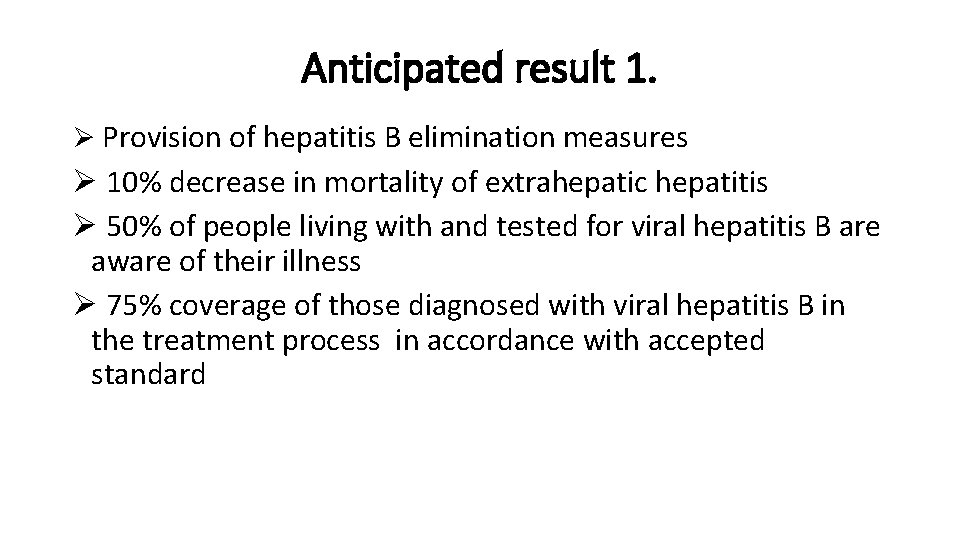
Anticipated result 1. Ø Provision of hepatitis B elimination measures Ø 10% decrease in mortality of extrahepatic hepatitis Ø 50% of people living with and tested for viral hepatitis B are aware of their illness Ø 75% coverage of those diagnosed with viral hepatitis B in the treatment process in accordance with accepted standard

Thank you!
- Slides: 17