
Are There Different Types of Online Research Impact

- Slides: 15
Are There Different Types of Online Research Impact? Steffen Lemke, Maryam Mehrazar, Athanasios Mazarakis, Isabella Peters These slides can be found on Zenodo #ASIS T 18 1
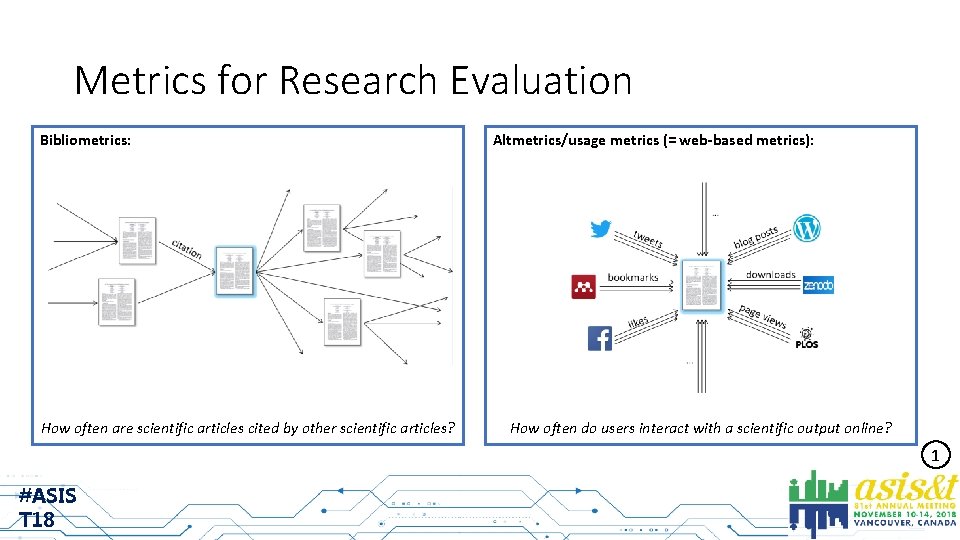
Metrics for Research Evaluation Bibliometrics: How often are scientific articles cited by other scientific articles? Altmetrics/usage metrics (= web-based metrics): How often do users interact with a scientific output online? 1 #ASIS T 18
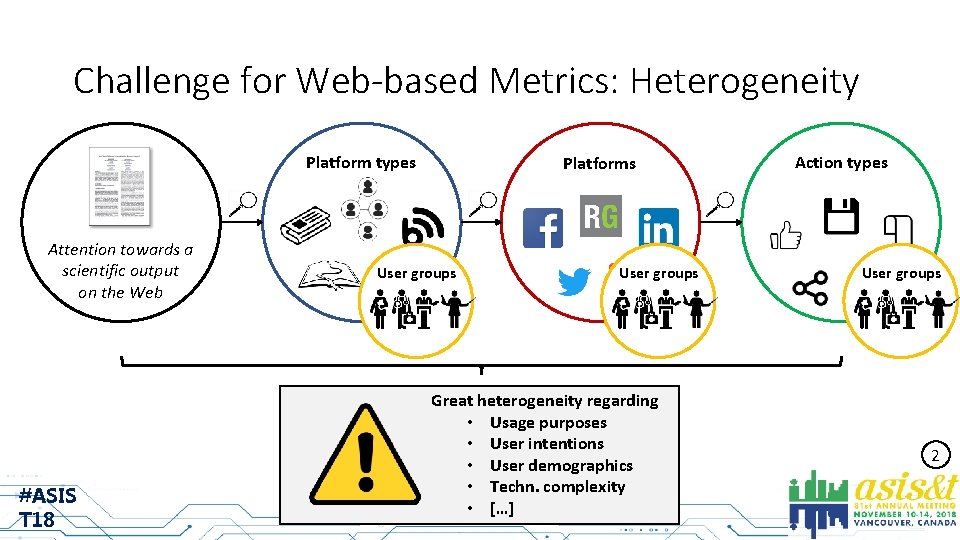
Challenge for Web-based Metrics: Heterogeneity Platform types Attention towards a scientific output on the Web #ASIS T 18 Platforms User groups Great heterogeneity regarding • Usage purposes • User intentions • User demographics • Techn. complexity • […] Action types User groups 2
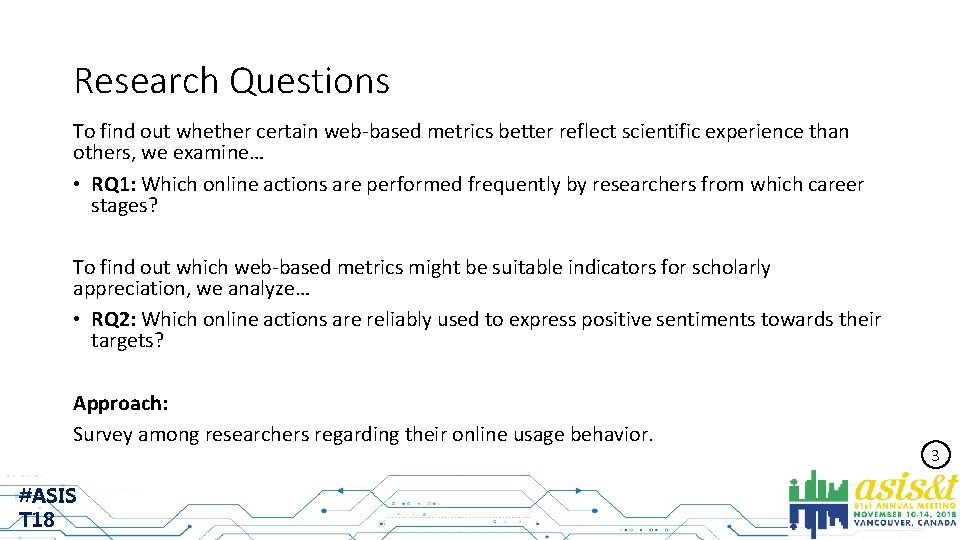
Research Questions To find out whether certain web-based metrics better reflect scientific experience than others, we examine… • RQ 1: Which online actions are performed frequently by researchers from which career stages? To find out which web-based metrics might be suitable indicators for scholarly appreciation, we analyze… • RQ 2: Which online actions are reliably used to express positive sentiments towards their targets? Approach: Survey among researchers regarding their online usage behavior. #ASIS T 18 3
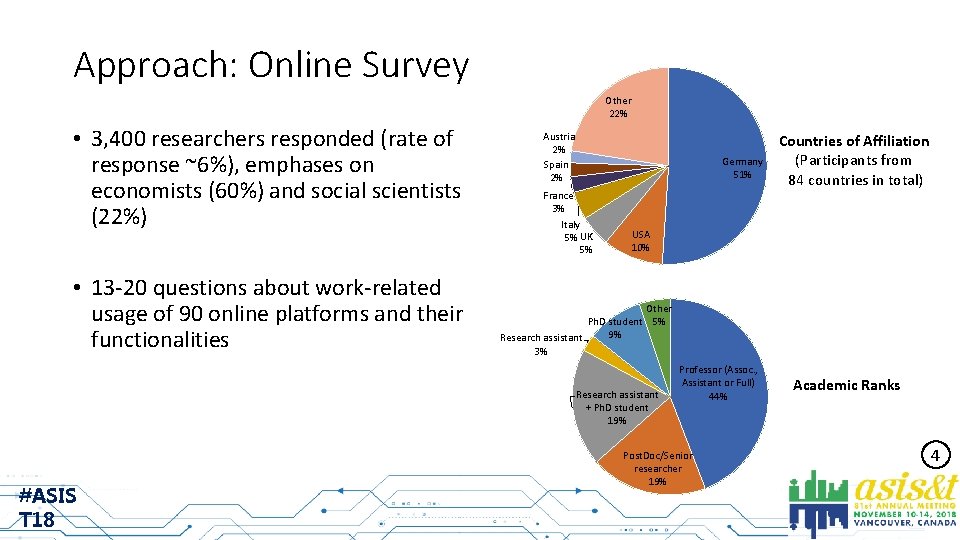
Approach: Online Survey Other 22% • 3, 400 researchers responded (rate of response ~6%), emphases on economists (60%) and social scientists (22%) • 13 -20 questions about work-related usage of 90 online platforms and their functionalities Austria 2% Spain 2% Germany 51% France 3% Italy 5% UK 5% USA 10% Other Ph. D student 5% 9% Research assistant 3% Research assistant + Ph. D student 19% #ASIS T 18 Countries of Affiliation (Participants from 84 countries in total) Professor (Assoc. , Assistant or Full) 44% Post. Doc/Senior researcher 19% Academic Ranks 4
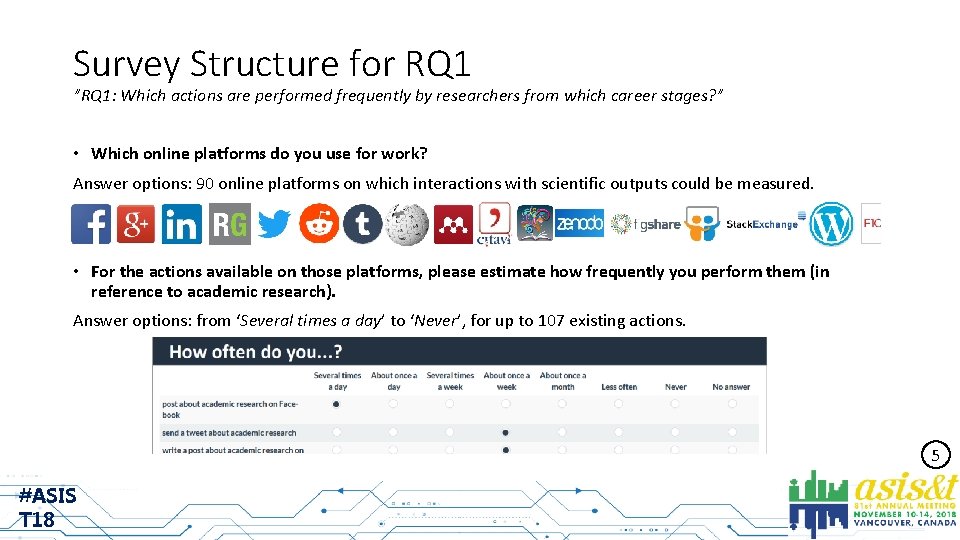
Survey Structure for RQ 1 ”RQ 1: Which actions are performed frequently by researchers from which career stages? ” • Which online platforms do you use for work? Answer options: 90 online platforms on which interactions with scientific outputs could be measured. • For the actions available on those platforms, please estimate how frequently you perform them (in reference to academic research). Answer options: from ‘Several times a day’ to ‘Never’, for up to 107 existing actions. 5 #ASIS T 18
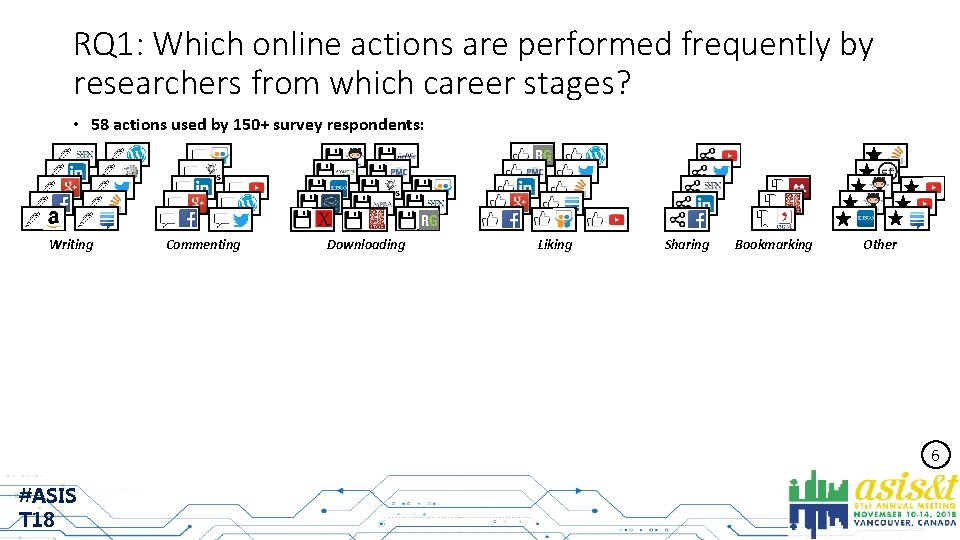
RQ 1: Which online actions are performed frequently by researchers from which career stages? • 58 actions used by 150+ survey respondents: Writing Commenting Downloading Liking Sharing Bookmarking Other 6 #ASIS T 18
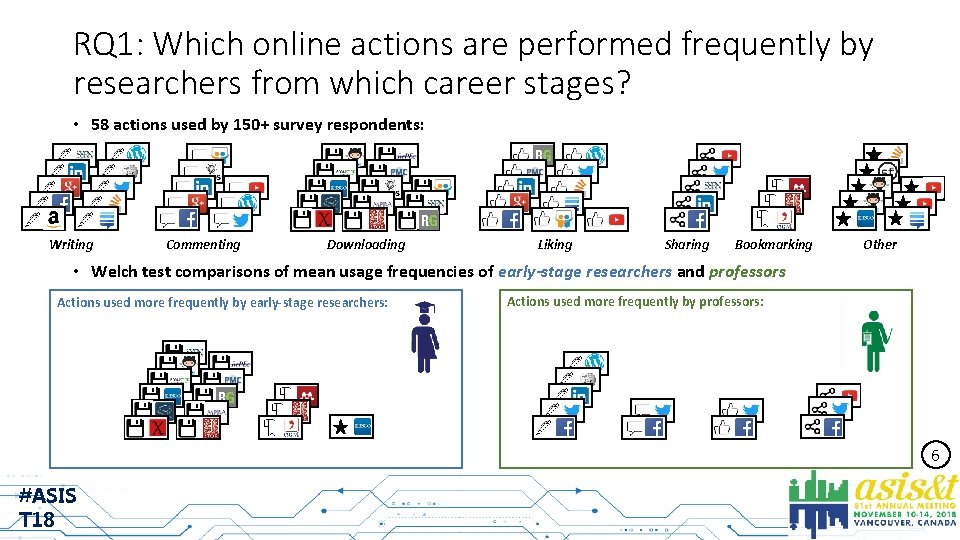
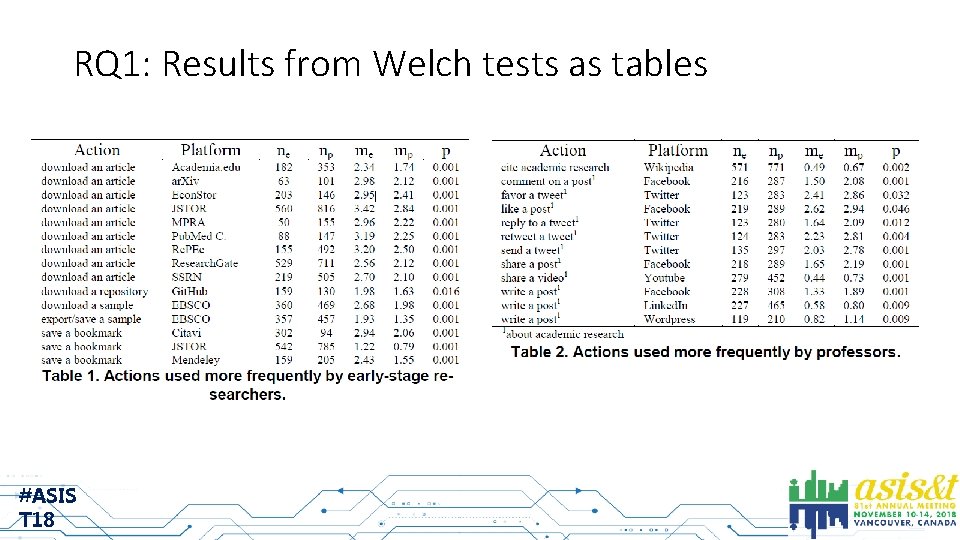
RQ 1: Which online actions are performed frequently by researchers from which career stages? • 58 actions used by 150+ survey respondents: Writing Commenting Downloading Liking Sharing Bookmarking Other • Welch test comparisons of mean usage frequencies of early-stage researchers and professors Actions used more frequently by early-stage researchers: Actions used more frequently by professors: 6 #ASIS T 18
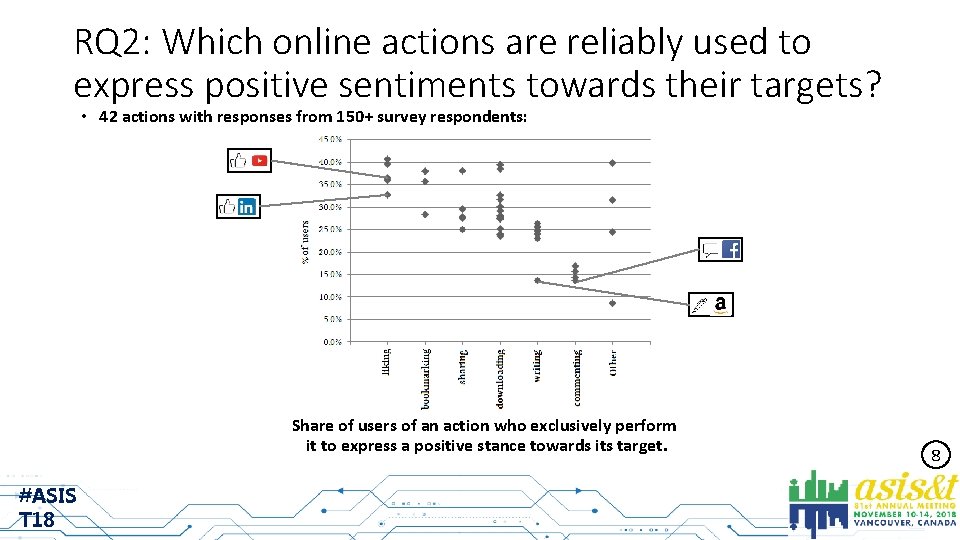
Survey Structure for RQ 2 “RQ 2: Which online actions are reliably used to express positive sentiments towards their targets? ” After the previously presented questions we additionally asked: • When you are performing the following actions, in how many cases does that indicate a positive stance on the respective target? Answer options: ‘In all cases’, ‘In most cases’, ‘In few cases’, ‘Never’; again for up to 107 existing actions. 7 #ASIS T 18
RQ 2: Which online actions are reliably used to express positive sentiments towards their targets? • 42 actions with responses from 150+ survey respondents: Share of users of an action who exclusively perform it to express a positive stance towards its target. #ASIS T 18 8
Conclusions • Users of web-based metrics need to differentiate carefully with regard to platforms and action types that metrics are based on. • Different platforms/actions reflect different users‘ judgments. • Aggregations are dangerous. • If needed, examining individual actions closely can reveal shared properties that might serve as a basis for reasonable aggregations. • Or, more optimistically: web-based metrics for research assessment offer much more interesting information as is currently utilized! 9 #ASIS T 18
Thank you! • Web: metrics-project. net • Email: s. lemke@zbw. eu • Twitter: @metrics_project, @stl 90
13
RQ 1: Results from Welch tests as tables #ASIS T 18
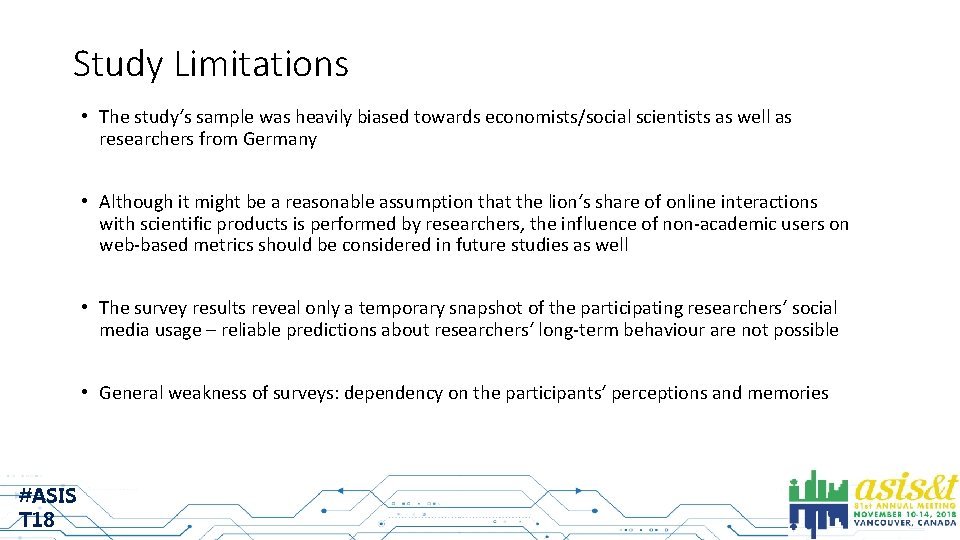
Study Limitations • The study‘s sample was heavily biased towards economists/social scientists as well as researchers from Germany • Although it might be a reasonable assumption that the lion‘s share of online interactions with scientific products is performed by researchers, the influence of non-academic users on web-based metrics should be considered in future studies as well • The survey results reveal only a temporary snapshot of the participating researchers‘ social media usage – reliable predictions about researchers‘ long-term behaviour are not possible • General weakness of surveys: dependency on the participants‘ perceptions and memories #ASIS T 18