
Are SPLP or TCLP testing data adequate for



- Slides: 14
Are SPLP or TCLP testing data adequate for understanding soil adsorption coefficients? Chris Bailey, T&T
Introduction • SPLP – Synthetic precipitation leaching procedure • TCLP – Toxicity characteristics leaching procedure • Soil adsorption or distribution coefficient • Important for contaminant fate and transport modelling – both for leaching from soil/waste to groundwater and for groundwater contaminants migrating towards a receptor.
Unsaturated and saturated zone contaminant transport
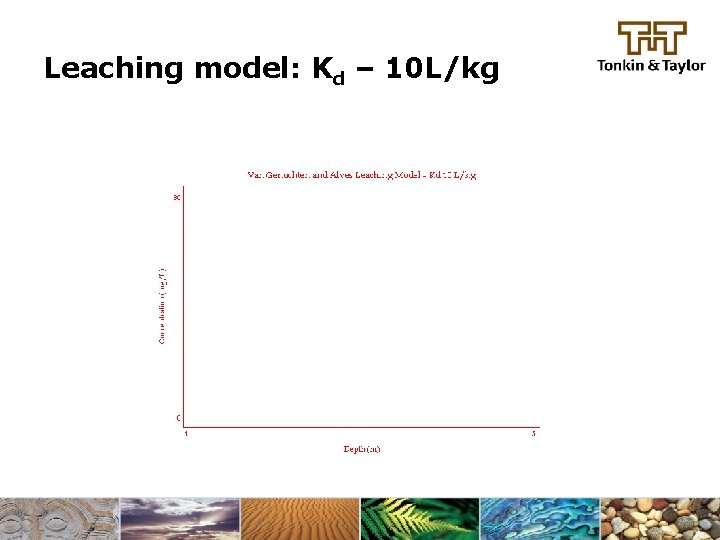
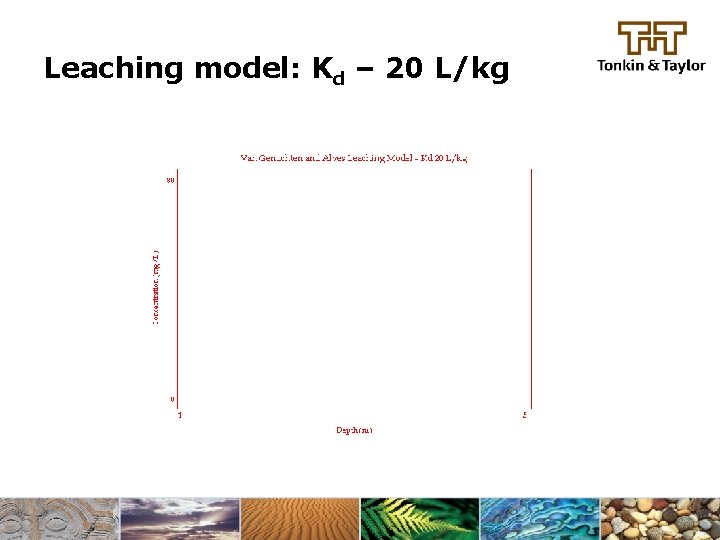
Leaching model • • Surface soil contamination 1 m deep Sandy soil with 1 m/yr infiltration rate Contaminant concentration of 1000 mg/kg Not volatile, no degradation 250 year simulation time Groundwater at 5 m depth Kds examined: 10, 20 and 100 L/kg
Leaching model: Kd – 10 L/kg
Leaching model: Kd – 20 L/kg
Leaching model: Kd – 100 L/kg
Determining Kds from SPLP data • Published guidance provides methodologies for determining Kds from SPLP data. • Methods account for loss of adsorbed phase during the testing. • However, the methods do not account for the potential for dilution effects from 20: 1 liquid-tosolid mixing.
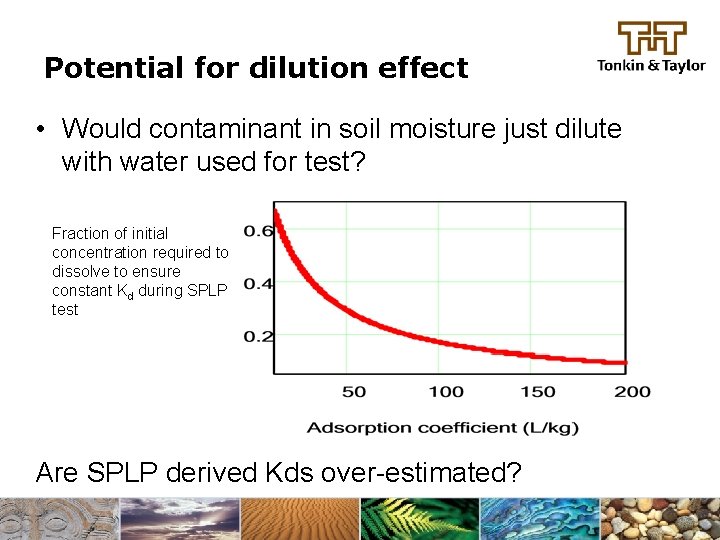
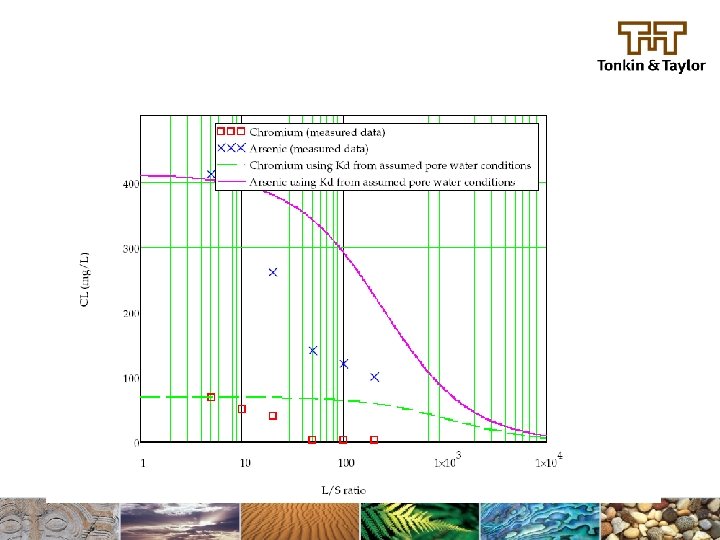
Potential for dilution effect • Would contaminant in soil moisture just dilute with water used for test? Fraction of initial concentration required to dissolve to ensure constant Kd during SPLP test Are SPLP derived Kds over-estimated?
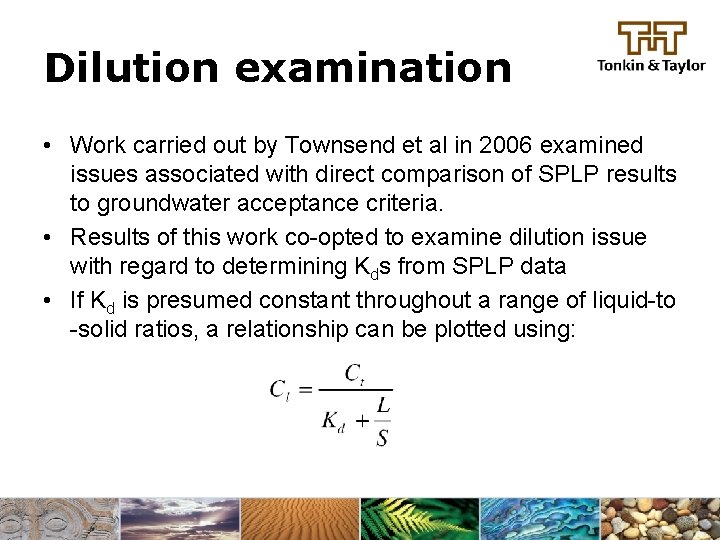
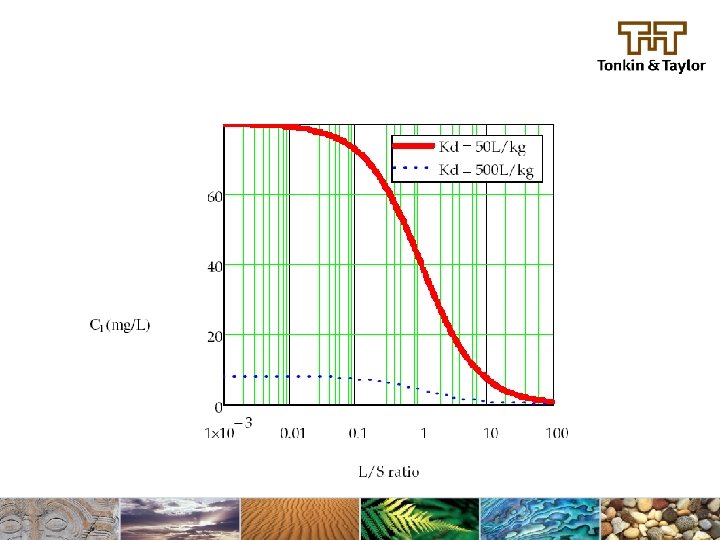
Dilution examination • Work carried out by Townsend et al in 2006 examined issues associated with direct comparison of SPLP results to groundwater acceptance criteria. • Results of this work co-opted to examine dilution issue with regard to determining Kds from SPLP data • If Kd is presumed constant throughout a range of liquid-to -solid ratios, a relationship can be plotted using:
Results and interpretation • Results indicated that for increased liquid to solid ratio testing, Kds are artificially inflated. Results suggest that Kds derived from SPLP testing of As and Cr should be decreased by a factor of 1. 7 and 1. 5, respectively (not 20 as complete dilution would imply). Other testing indicated factors between 2 and 5. • Results indicate that decreasing Kd by a factor of 20 would be overly conservative but not factoring some dilution is likely to under-predict leachate and potentially under-predict risks posed.
Results continued • Not a definitive resolution of the dilution issue with regard to SPLP derived Kds , but an option for consideration if the opportunity has passed for more testing and data only consists of SPLP or TCLP data. • Appropriate to closely examine Kds and their derivation methods for any contaminant fate and transport modelling given the sensitivity of results to this parameter