
ARE LARGE DAMS RESERVOIRS AND HEP SCHEMES A
- Slides: 15
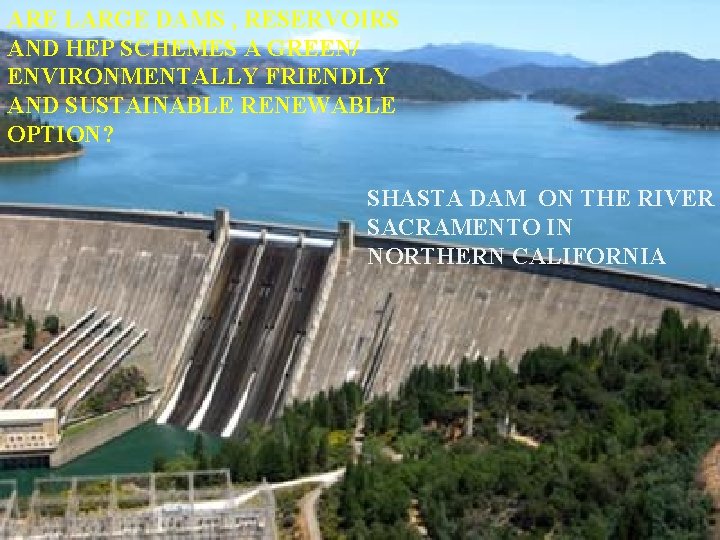
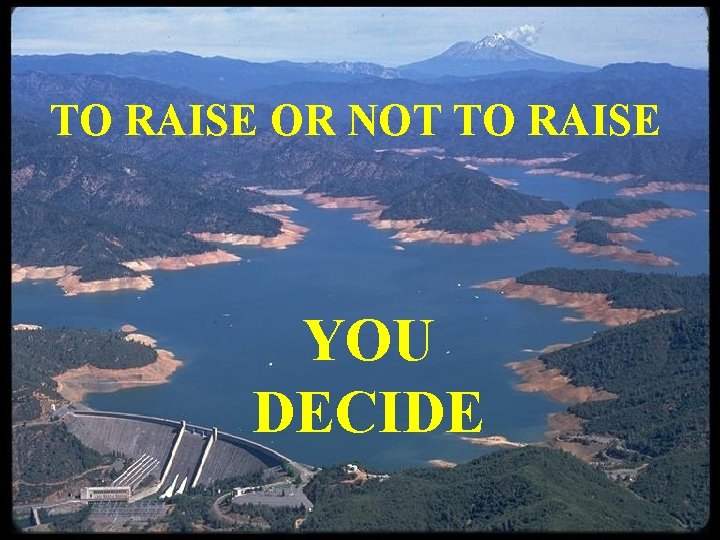
ARE LARGE DAMS , RESERVOIRS AND HEP SCHEMES A GREEN/ ENVIRONMENTALLY FRIENDLY AND SUSTAINABLE RENEWABLE OPTION? SHASTA DAM ON THE RIVER SACRAMENTO IN NORTHERN CALIFORNIA
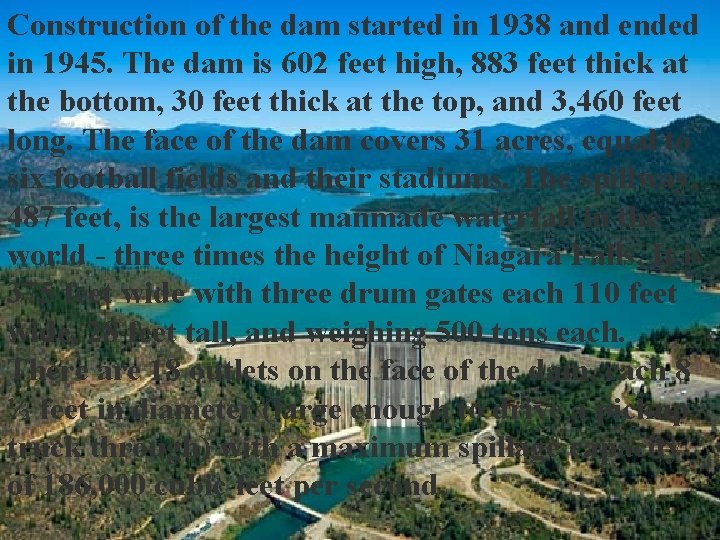
Construction of the dam started in 1938 and ended in 1945. The dam is 602 feet high, 883 feet thick at the bottom, 30 feet thick at the top, and 3, 460 feet long. The face of the dam covers 31 acres, equal to six football fields and their stadiums. The spillway, 487 feet, is the largest manmade waterfall in the world - three times the height of Niagara Falls. It is 375 feet wide with three drum gates each 110 feet wide, 28 feet tall, and weighing 500 tons each. There are 18 outlets on the face of the dam, each 8 ½ feet in diameter (large enough to drive a pickup truck through) with a maximum spillage capacity of 186, 000 cubic feet per second.
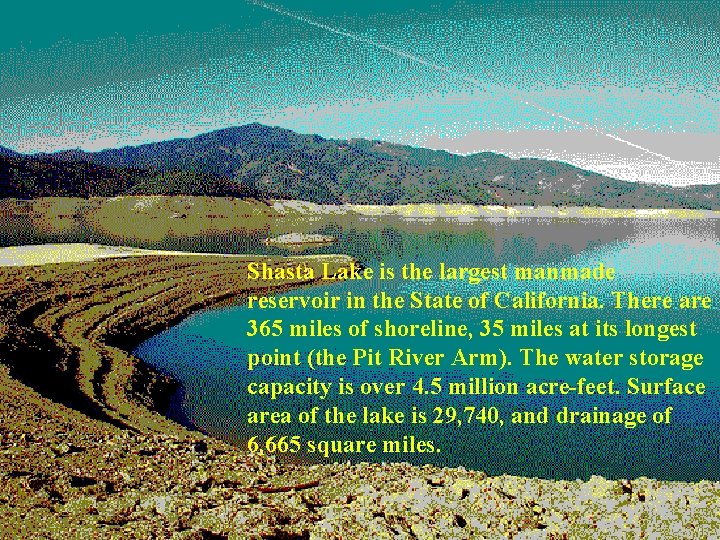
Shasta Lake is the largest manmade reservoir in the State of California. There are 365 miles of shoreline, 35 miles at its longest point (the Pit River Arm). The water storage capacity is over 4. 5 million acre-feet. Surface area of the lake is 29, 740, and drainage of 6, 665 square miles.
THE DAM AND RESERVOIR ARE MULTI -PURPOSE • GENERATION OF HEP • FLOOD CONTROL • IRRIGATION WATER FOR THE CENTRAL VALLEY FARMS • WATER SUPPLY FOR CITIES SUCH AS SAN FRANCISCO • RECREATION AND TOURISM
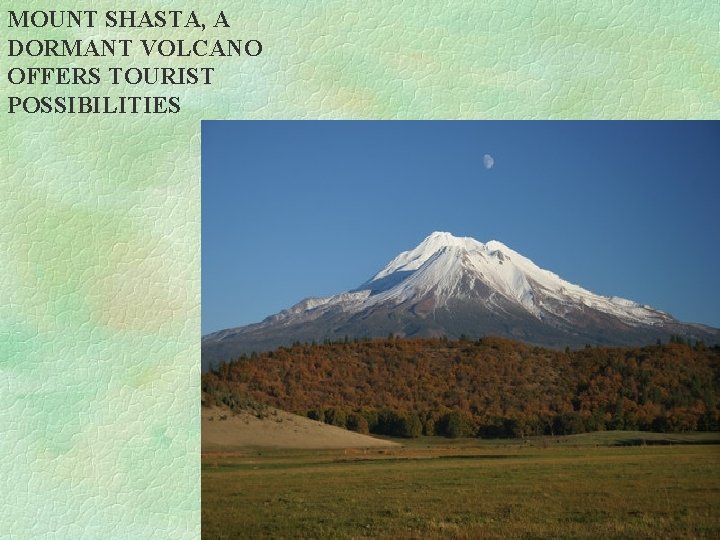
MOUNT SHASTA, A DORMANT VOLCANO OFFERS TOURIST POSSIBILITIES
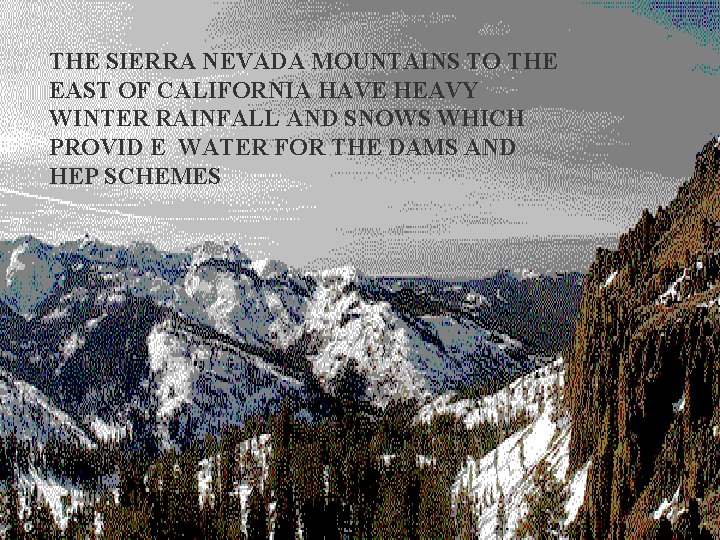
THE SIERRA NEVADA MOUNTAINS TO THE EAST OF CALIFORNIA HAVE HEAVY WINTER RAINFALL AND SNOWS WHICH PROVID E WATER FOR THE DAMS AND HEP SCHEMES
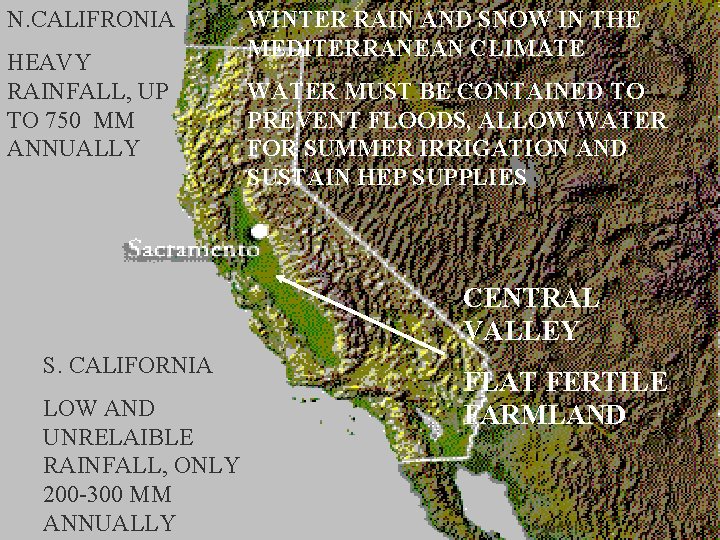
N. CALIFRONIA HEAVY RAINFALL, UP TO 750 MM ANNUALLY WINTER RAIN AND SNOW IN THE MEDITERRANEAN CLIMATE WATER MUST BE CONTAINED TO PREVENT FLOODS, ALLOW WATER FOR SUMMER IRRIGATION AND SUSTAIN HEP SUPPLIES CENTRAL VALLEY S. CALIFORNIA LOW AND UNRELAIBLE RAINFALL, ONLY 200 -300 MM ANNUALLY FLAT FERTILE FARMLAND
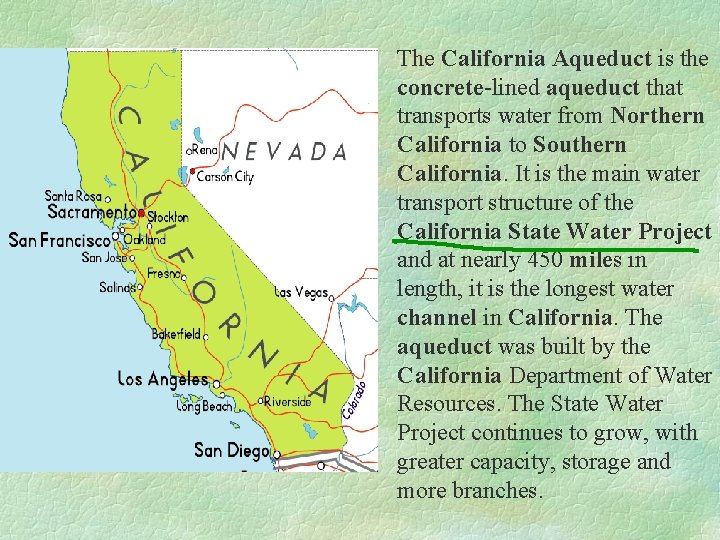
The California Aqueduct is the concrete-lined aqueduct that transports water from Northern California to Southern California. It is the main water transport structure of the California State Water Project and at nearly 450 miles in length, it is the longest water channel in California. The aqueduct was built by the California Department of Water Resources. The State Water Project continues to grow, with greater capacity, storage and more branches.
SAN FRANCISCO (Reuters) - California Governor Arnold Schwarzenegger on Friday declared a state emergency due to drought and said he would consider mandatory water rationing in the face of nearly $3 billion in economic losses from below-normal rainfall this year. As many as 95, 000 agricultural jobs will be lost, communities will be devastated and some growers in the most economically productive farm state simply are not able to plant, state officials said, calling the current drought the most expensive ever.
California's Water Supply Situation Worsened by Low Snowmelt Runoff Snowpack levels and the volume of actual snowmelt runoff are down in California. The California Department of Water Resources has reported that snowpack is at 67 percent of normal and the statewide water supply runoff is forecasted to be only 55 to 65 percent of normal, adding to the state's growing water supply and delivery challenges.
SOCIAL PROBLEMS LARGE DAMS NOT AS GREEN OR SUSTAINABLE AS YOU THINK ECONOMIC PROBLEMS ENVIRONMENTAL PROBLEMS
SOCIAL PROBLEMS • DISPLACED POPULATION • LOSS OF FARMLAND • LOSS OF FISHERIES • DISEASE, EG. MALARIA IN RESERVOIRS • IMPOVERISHMENT • INDIGENOUS PEOPLE SUFFER MOST • COMPENSATION INSUFFICIENT
ENVIRONMENTAL PROBLEMS • LOSS OF ECOSYSTEMS • LOSS OF SPECIES • LOSS OF BIODIVERSITY • MORE ENDANGERED SPECIES • CARBON DIOXIDE FROM CONCRETE MANUFACTURE ( GLOBAL WARMING) • RECENT RESEARCH SAYS METHANE (A GREENHOUSE GAS) IS EMITTED FROM RESERVOIRS
ECONOMIC PROBLEMS • LARGE DAMS AND RESERVOIRS ARE COSTLY TO BUILD • MANY ARE OVERBUDGET • MANY SUFFER DELAYS AND OVERUNS • MANY HAVE LOWER THAN PREDICTED ELECTRICITY OUTPUTS • SEDIMENTATION OF RESERVOIRS FROM UPSTREAM INPUT LOWERS THE LIFESPAN OF RESERVOIRS
TO RAISE OR NOT TO RAISE YOU DECIDE