
Arctic Antarctic and Polar air masses are cold
- Slides: 12
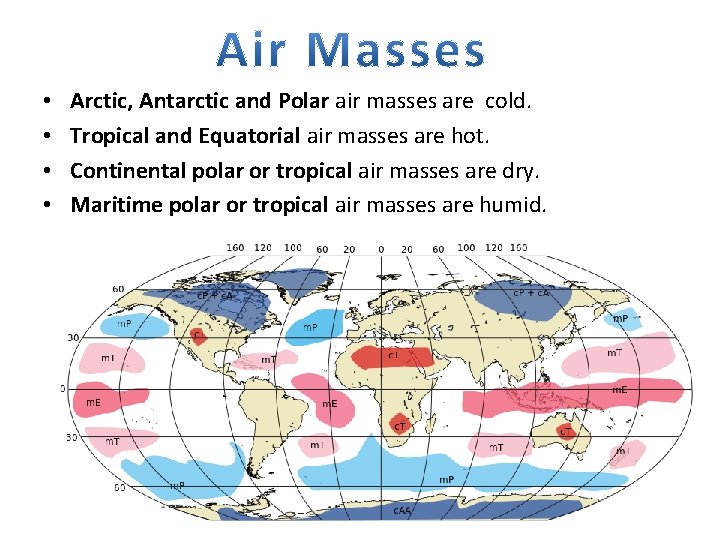
• • Arctic, Antarctic and Polar air masses are cold. Tropical and Equatorial air masses are hot. Continental polar or tropical air masses are dry. Maritime polar or tropical air masses are humid.
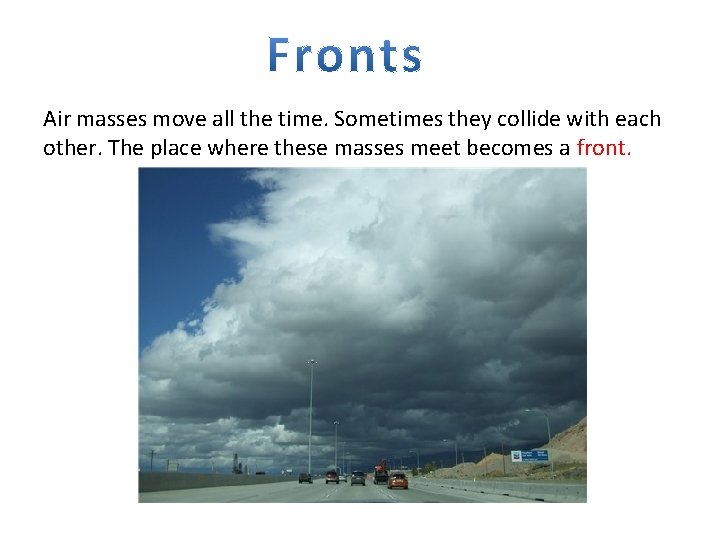
Air masses move all the time. Sometimes they collide with each other. The place where these masses meet becomes a front.
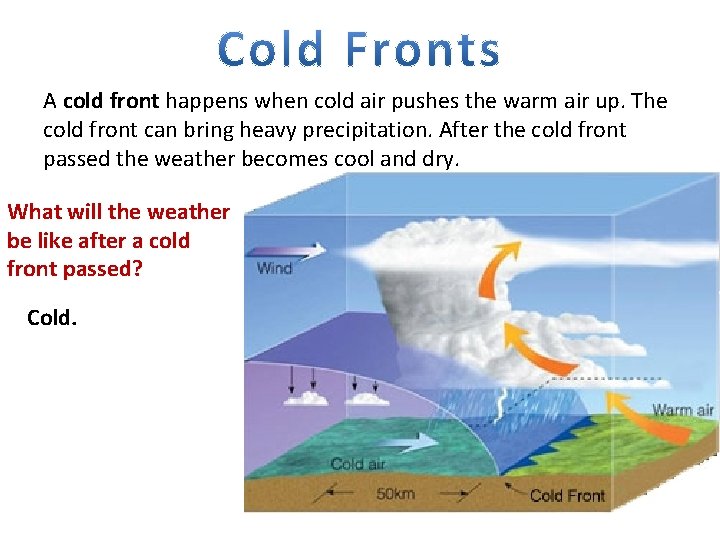
A cold front happens when cold air pushes the warm air up. The cold front can bring heavy precipitation. After the cold front passed the weather becomes cool and dry. What will the weather be like after a cold front passed? Cold.
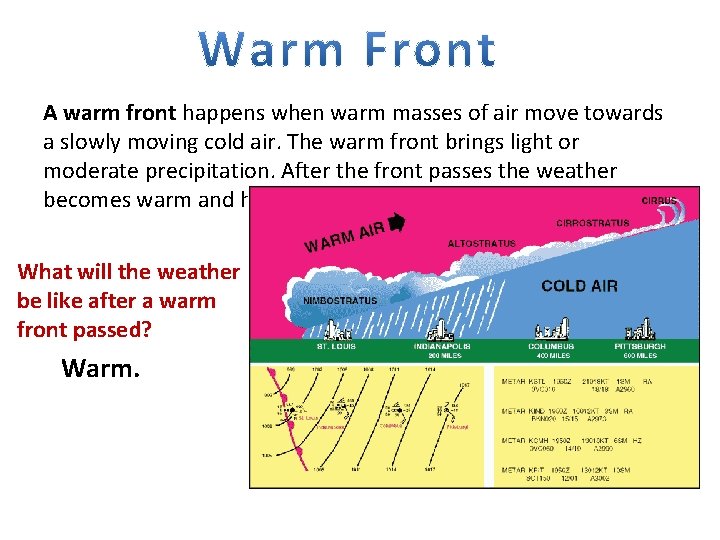
A warm front happens when warm masses of air move towards a slowly moving cold air. The warm front brings light or moderate precipitation. After the front passes the weather becomes warm and humid. What will the weather be like after a warm front passed? Warm.
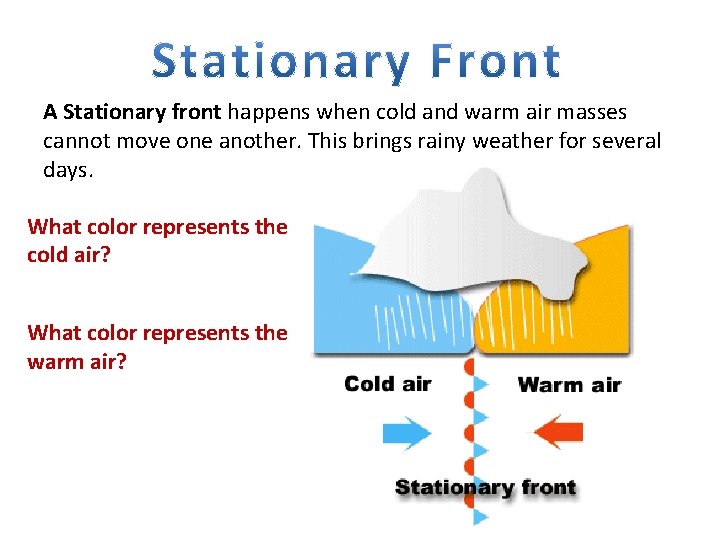
A Stationary front happens when cold and warm air masses cannot move one another. This brings rainy weather for several days. What color represents the cold air? What color represents the warm air?
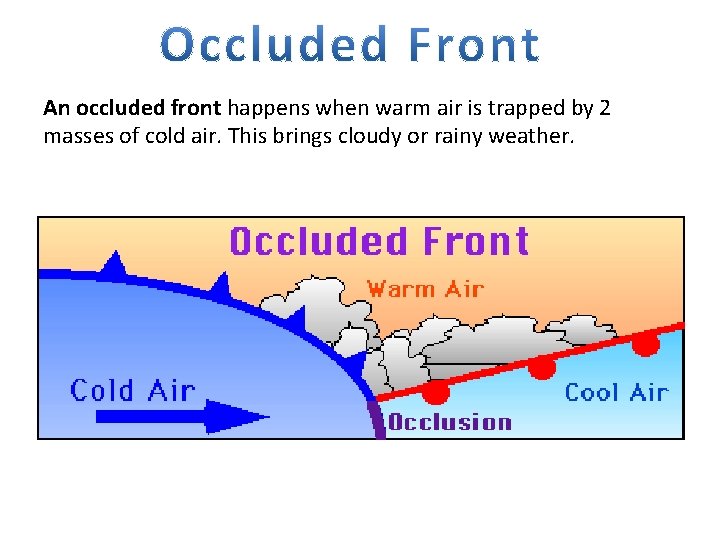
An occluded front happens when warm air is trapped by 2 masses of cold air. This brings cloudy or rainy weather.
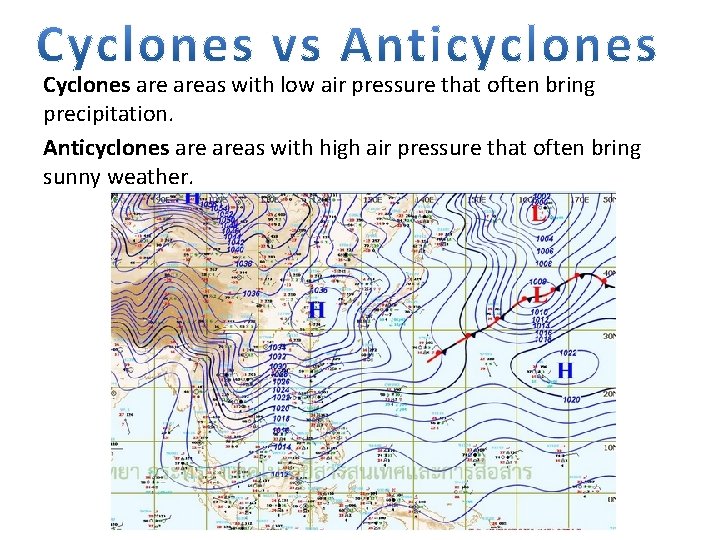
Cyclones areas with low air pressure that often bring precipitation. Anticyclones areas with high air pressure that often bring sunny weather.
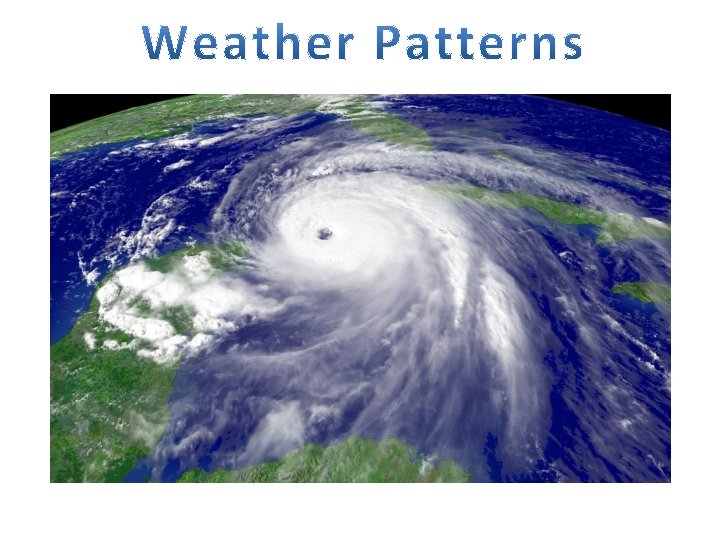
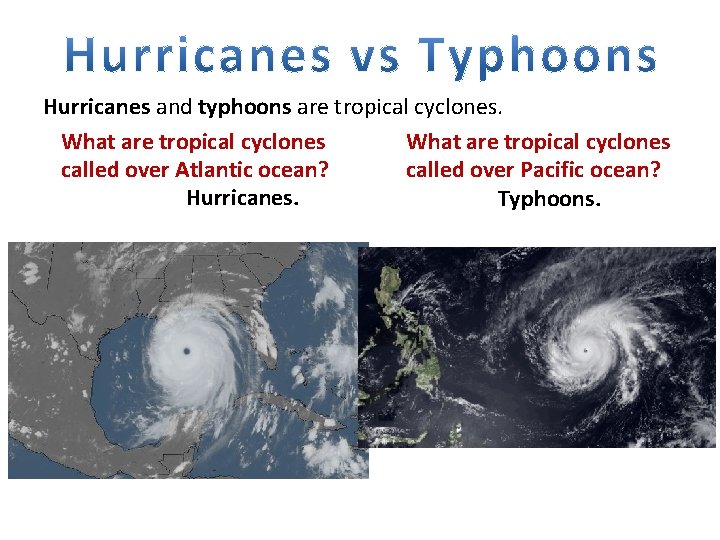
Hurricanes and typhoons are tropical cyclones. What are tropical cyclones called over Atlantic ocean? called over Pacific ocean? Hurricanes. Typhoons.
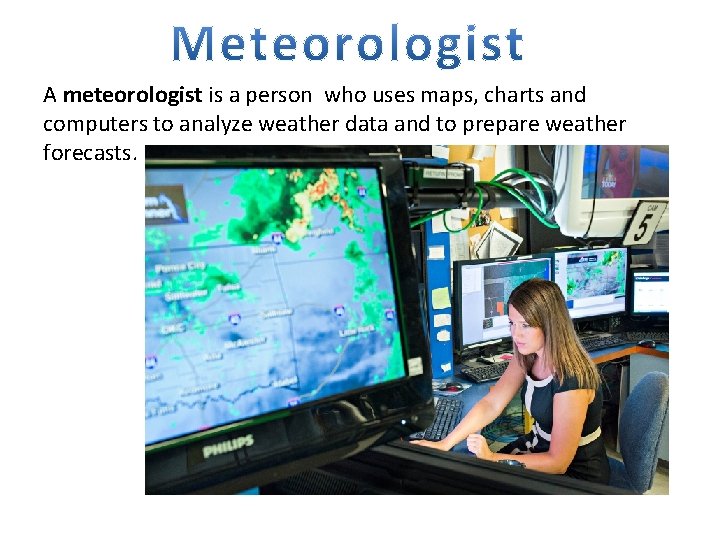
A meteorologist is a person who uses maps, charts and computers to analyze weather data and to prepare weather forecasts.
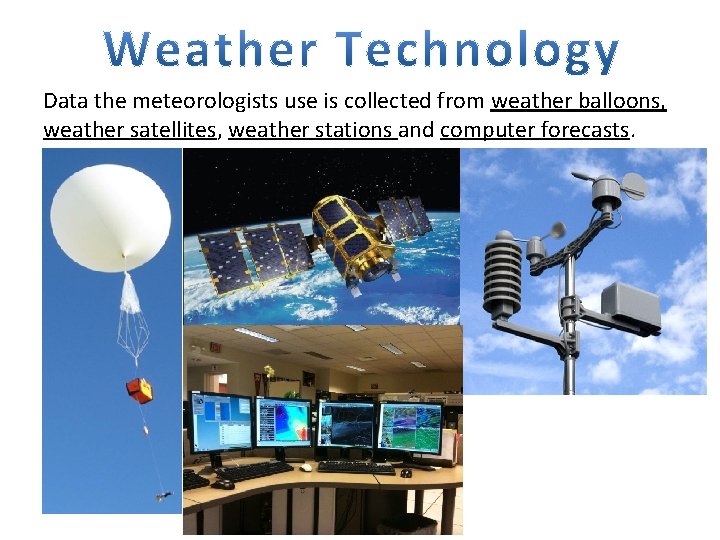
Data the meteorologists use is collected from weather balloons, weather satellites, weather stations and computer forecasts.
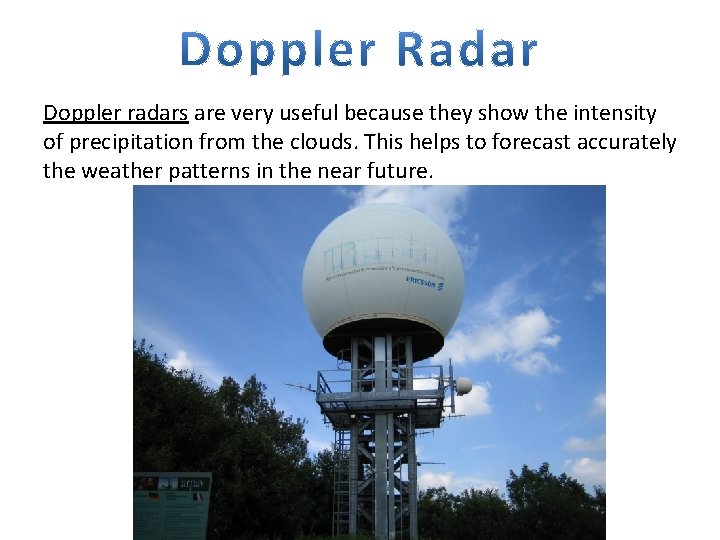
Doppler radars are very useful because they show the intensity of precipitation from the clouds. This helps to forecast accurately the weather patterns in the near future.