
Archives 2 0 If We Build It Will
Archives 2. 0: If We Build It, Will they Come? joy. palmer@manchester. ac. uk Archives Hub
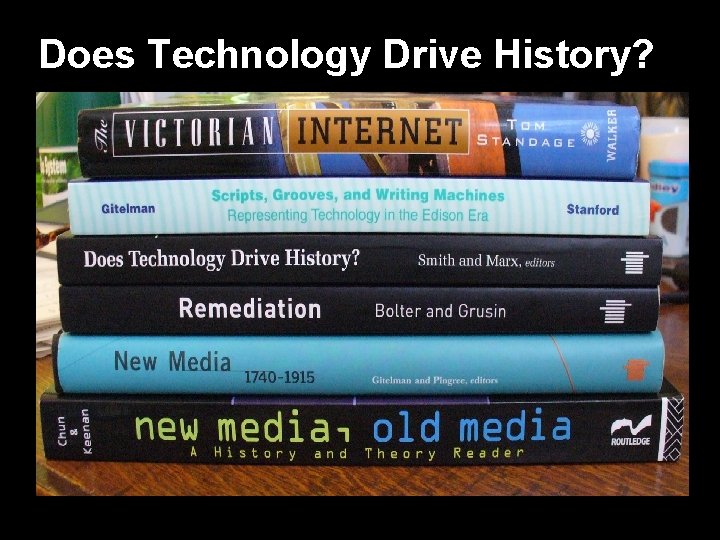
Does Technology Drive History? Technological Determinism: • Reductionist doctrine • Belief that technology drives change • Does not account for socio-cultural contexts
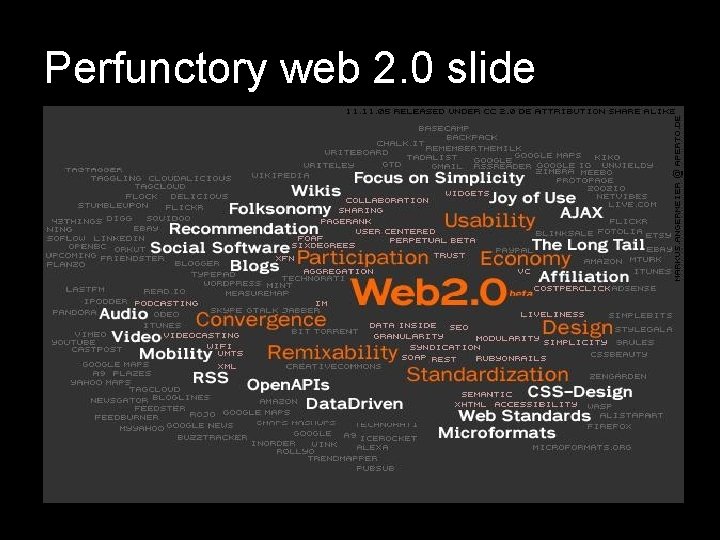
Perfunctory web 2. 0 slide
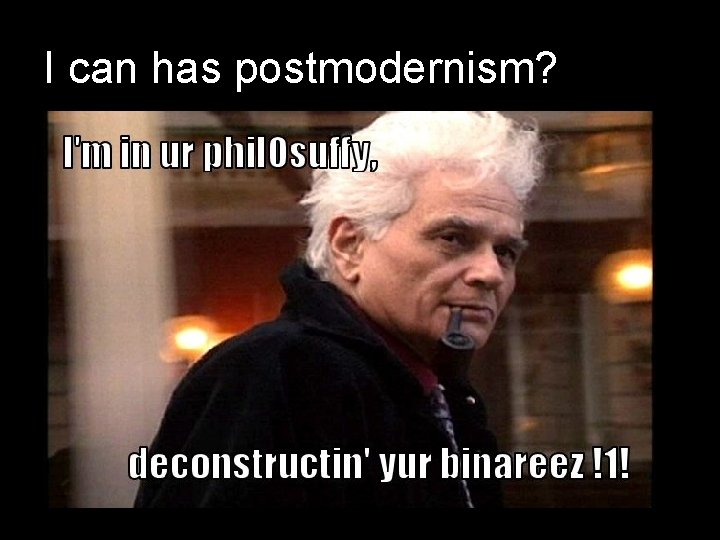
I can has postmodernism? “Facts in texts cannot be separated from their ongoing and past interpretation, nor author from subject or audience, not author from authoring, not author from context. Nothing is neutral. Nothing is objective. Everything is shaped, presented, re-presented, symbolized, signified, signed, constructed” Terry Cooke “Archival science and postmodernism: new formulations for old concepts” 2001
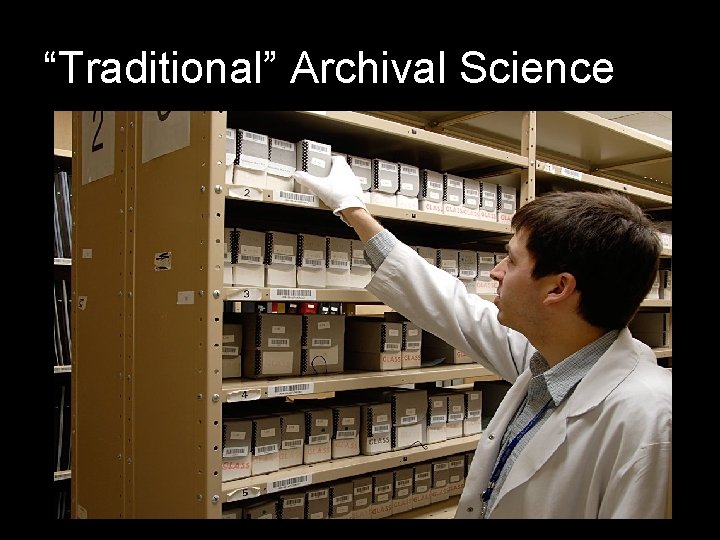
“Traditional” Archival Science Positivist in approach: • The archivist is impartial • The archival record is objective, “merely” descriptive, an empirical fact • “Respect des fonds”: provenance is the ‘authentic’ and authoritative archival context
Archives 2. 0 or Participatory Archive… • Neither archivist or user is neutral in relation to the archive • The archival context is not more authentic or authoritative • Participants are more knowledgeable than an archivist alone
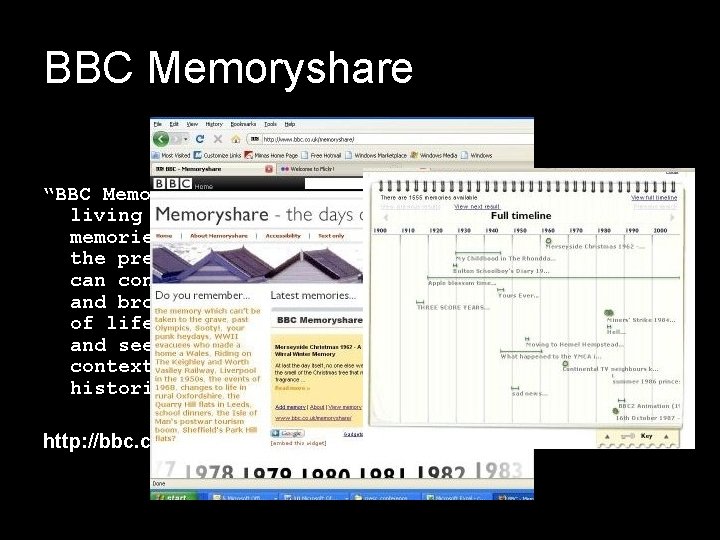
BBC Memoryshare “BBC Memoryshare is a living archive of memories from 1900 to the present day. You can contribute, share and browse memories of life experiences and see them in the context of recent and historical events. ” http: //bbc. co. uk/memoryshare
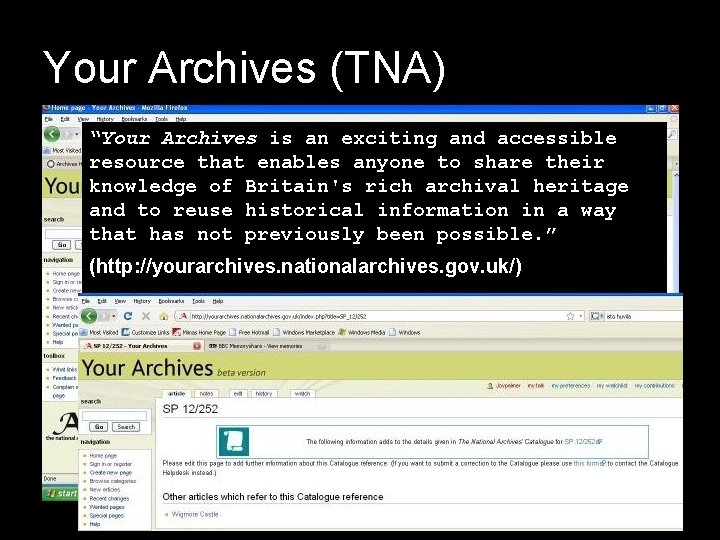
Your Archives (TNA) “Your Archives is an exciting and accessible resource that enables anyone to share their knowledge of Britain's rich archival heritage and to reuse historical information in a way that has not previously been possible. ” (http: //yourarchives. nationalarchives. gov. uk/)
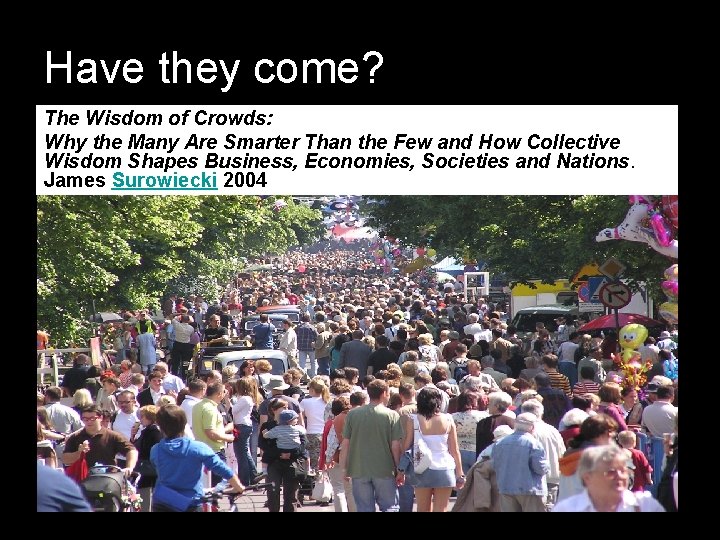
Have they come? The Wisdom of Crowds: Why the Many Are Smarter Than the Few and How Collective Wisdom Shapes Business, Economies, Societies and Nations. James Surowiecki 2004 The problem with crowds (even wise ones): • Relies on a diverse collection of independently-minded individuals • Relies on critical mass of users • Adaptive systems (i. e. Amazon) require a concentration of data
From Crowds to Communities of Practice “Communities of of practice are groups formed of by people who “Communities engage a process collective learning they in a do share a in concern or a of passion for something and learn how to it better as they interact shared domain of do human endeavor: a tribe regularly learning …” to survive, a band of artists seeking new forms of expression, a group of engineers working on similar problems, a clique of pupils Ettiene Wenger, Communities of Practice 1998 defining their identity in the school, a network of surgeons exploring novel techniques, a “Even though the participatory archive is about gathering of first-time managers helping each crowd-sourcing, it focuses on deeper involvement other cope. ” and more complex semantics rather than on larger crowds and simple annotation. ” Isto Huvila, “Participatory Archive” 2008
How? • Rethink the archive as domain(s) of interest • Consider potential Co. Ps (subject communities, learning communities) • Consider 2. 0 as tools to facilitate the Co. P, not an end in itself.
Thank you for listening…
- Slides: 12