
ARCHAIC EMBROIDERY The Estonian embroidery Ornamendid Ornaments Ornament
ARCHAIC EMBROIDERY. The Estonian embroidery.
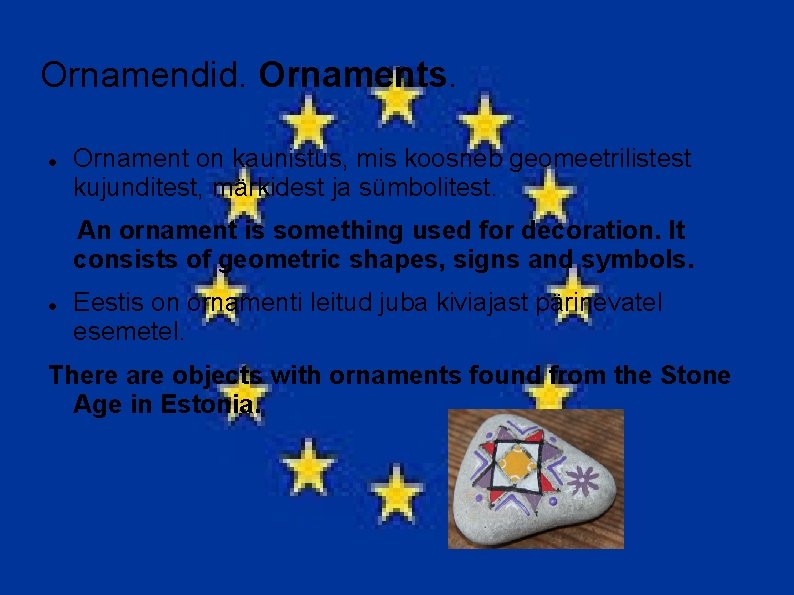
Ornamendid. Ornaments. Ornament on kaunistus, mis koosneb geomeetrilistest kujunditest, märkidest ja sümbolitest. An ornament is something used for decoration. It consists of geometric shapes, signs and symbols. Eestis on ornamenti leitud juba kiviajast pärinevatel esemetel. There are objects with ornaments found from the Stone Age in Estonia.
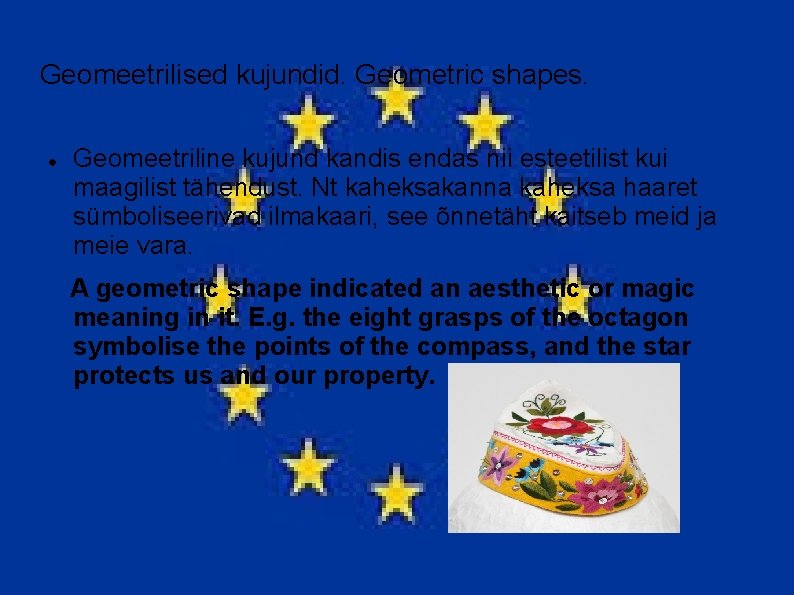
Geomeetrilised kujundid. Geometric shapes. Geomeetriline kujund kandis endas nii esteetilist kui maagilist tähendust. Nt kaheksakanna kaheksa haaret sümboliseerivad ilmakaari, see õnnetäht kaitseb meid ja meie vara. A geometric shape indicated an aesthetic or magic meaning in it. E. g. the eight grasps of the octagon symbolise the points of the compass, and the star protects us and our property.
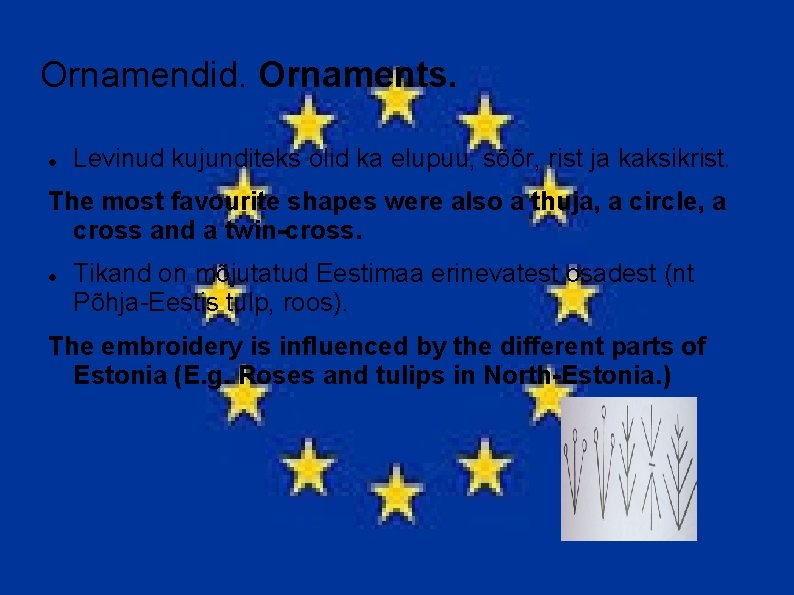
Ornamendid. Ornaments. Levinud kujunditeks olid ka elupuu, sõõr, rist ja kaksikrist. The most favourite shapes were also a thuja, a circle, a cross and a twin-cross. Tikand on mõjutatud Eestimaa erinevatest osadest (nt Põhja-Eestis tulp, roos). The embroidery is influenced by the different parts of Estonia (E. g. Roses and tulips in North-Estonia. )
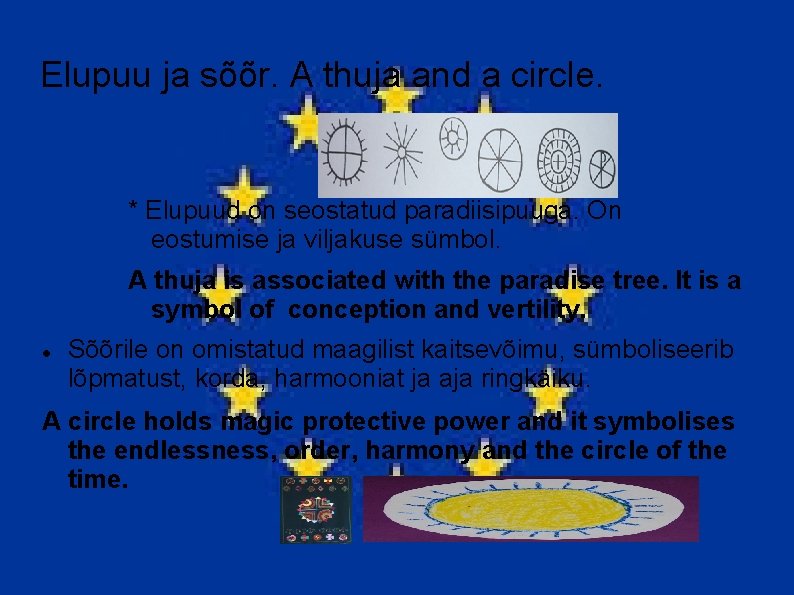
Elupuu ja sõõr. A thuja and a circle. * Elupuud on seostatud paradiisipuuga. On eostumise ja viljakuse sümbol. A thuja is associated with the paradise tree. It is a symbol of conception and vertility. Sõõrile on omistatud maagilist kaitsevõimu, sümboliseerib lõpmatust, korda, harmooniat ja aja ringkäiku. A circle holds magic protective power and it symbolises the endlessness, order, harmony and the circle of the time.
Värvid. Colours. Kollane tähistab päikesevalgust. Yellow marks the light of the Sun. Soe roheline on nii maa, kasvavate taimede kui ka surma värv. Warm green is the colour of the land, growing plants and is also a colour of the death. Sügavsinine kannab endas taevast ja
Ornamentide joonistamine. Drawing ornaments. Rahvuslike ornamentide joonistamine mõjub rahustavalt, motiivide kordus tekitab seesmise rütmi, mis korrastab mõtteid. Drawing national ornaments makes children calm, the repetation generates the inner rhythm that helps to put thoughts in order. Lastel arenevad erinevad koordinatsiooni, peenmotoorika ja esteetilised oskused. Lapse käsi muutub kindlamaks. Pupils’ different skills of coordination and aesthetic develop. A hand becomes more fixed. Loovus ja fantaasia aitab lapsel avastada igapäevaselt mustrite ja rütmide kordust. Creativity and fantasy help pupils routinely to discover
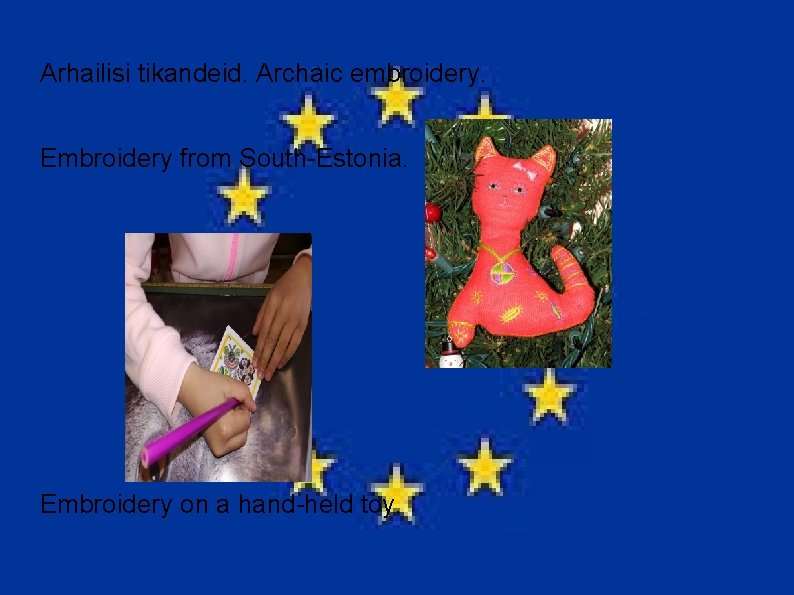
Arhailisi tikandeid. Archaic embroidery. Embroidery from South-Estonia. Embroidery on a hand-held toy.
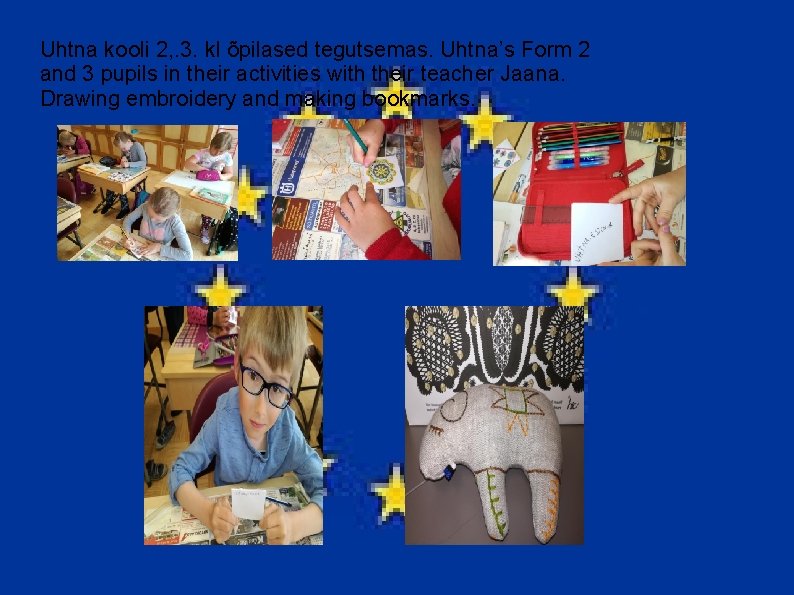
Uhtna kooli 2, . 3. kl õpilased tegutsemas. Uhtna’s Form 2 and 3 pupils in their activities with their teacher Jaana. Drawing embroidery and making bookmarks.
1. klassi õpilased tegevuses. The first class pupils in their activities with their teacher Kadri. Drawing the shapes and making bookmarks.
Our school’s hand-held toy – Juss the Sheep! The author is Riina, the teacher of handicraft. Thank you for your attention! Anne, Jaana, Kadri, Riina
- Slides: 11