
Archaeology in 6 Steps Archaeologists have to follow
- Slides: 10
Archaeology in 6 Steps!
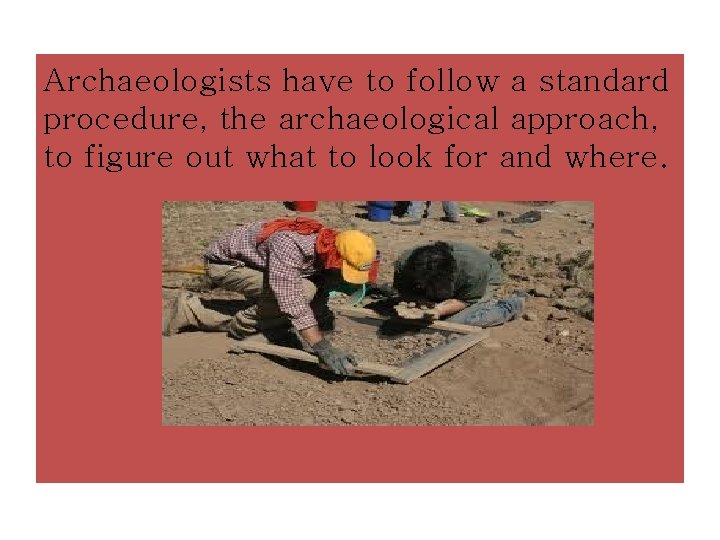
Archaeologists have to follow a standard. procedure, the archaeological approach, to figure out what to look for and where.
Step 1: Check sources of information • Archaeologists find their first clues by looking at books, letters, official documents, travel journals, maps and plans. They consult these sources in order to determine a site’s potential and confirm their initial assumptions. They find clues about the site – its history, geography, resources and inhabitants. Materials required: Books, journals, maps, etc.
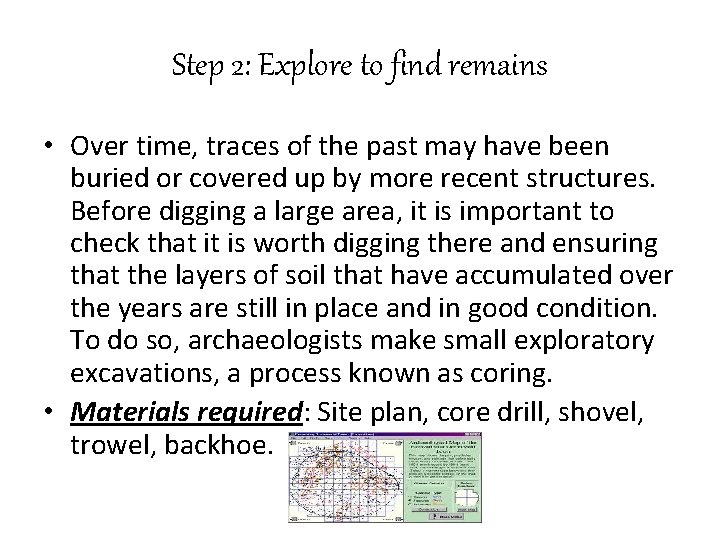
Step 2: Explore to find remains • Over time, traces of the past may have been buried or covered up by more recent structures. Before digging a large area, it is important to check that it is worth digging there and ensuring that the layers of soil that have accumulated over the years are still in place and in good condition. To do so, archaeologists make small exploratory excavations, a process known as coring. • Materials required: Site plan, core drill, shovel, trowel, backhoe.
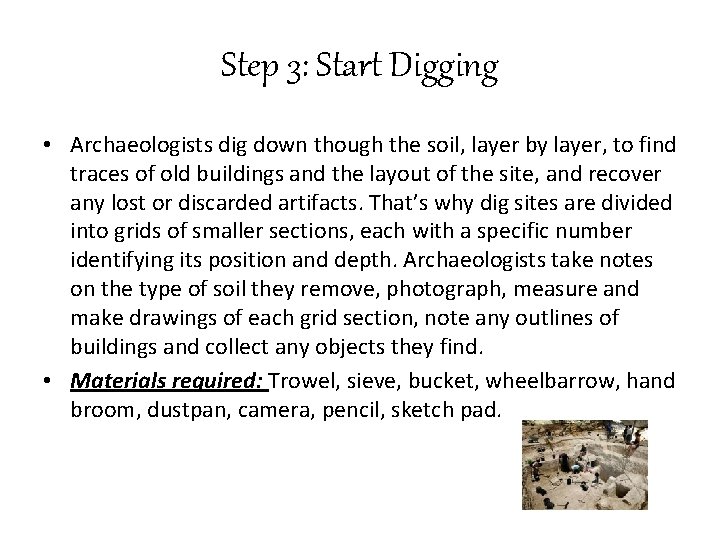
Step 3: Start Digging • Archaeologists dig down though the soil, layer by layer, to find traces of old buildings and the layout of the site, and recover any lost or discarded artifacts. That’s why dig sites are divided into grids of smaller sections, each with a specific number identifying its position and depth. Archaeologists take notes on the type of soil they remove, photograph, measure and make drawings of each grid section, note any outlines of buildings and collect any objects they find. • Materials required: Trowel, sieve, bucket, wheelbarrow, hand broom, dustpan, camera, pencil, sketch pad.
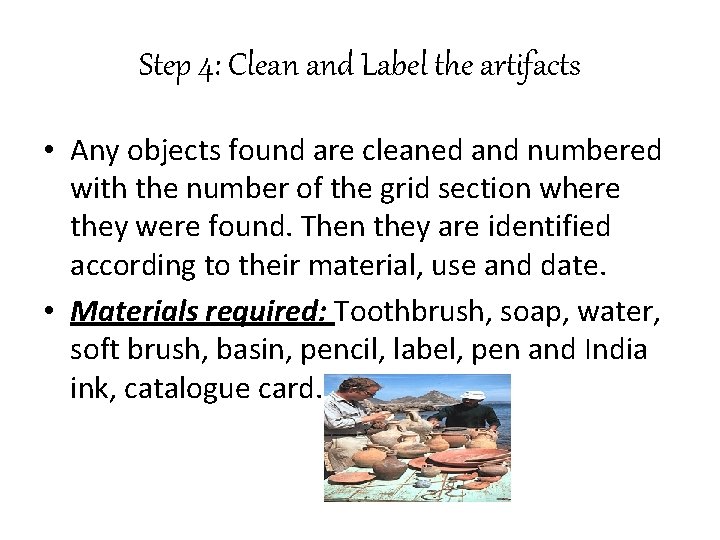
Step 4: Clean and Label the artifacts • Any objects found are cleaned and numbered with the number of the grid section where they were found. Then they are identified according to their material, use and date. • Materials required: Toothbrush, soap, water, soft brush, basin, pencil, label, pen and India ink, catalogue card.
Step 5: analyze the finds • Based on all the information from the dig (site plan, remains, inventory of objects, drawings and photos of the dig), the archaeologist writes a report about the finds. Through analyzing, the archaeologist can also place the artifacts within a given time period and setting. • Materials required: Data from the dig.
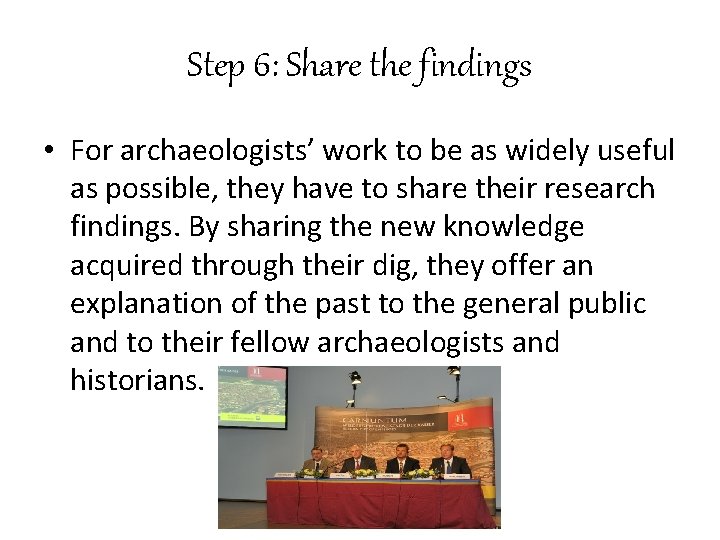
Step 6: Share the findings • For archaeologists’ work to be as widely useful as possible, they have to share their research findings. By sharing the new knowledge acquired through their dig, they offer an explanation of the past to the general public and to their fellow archaeologists and historians.
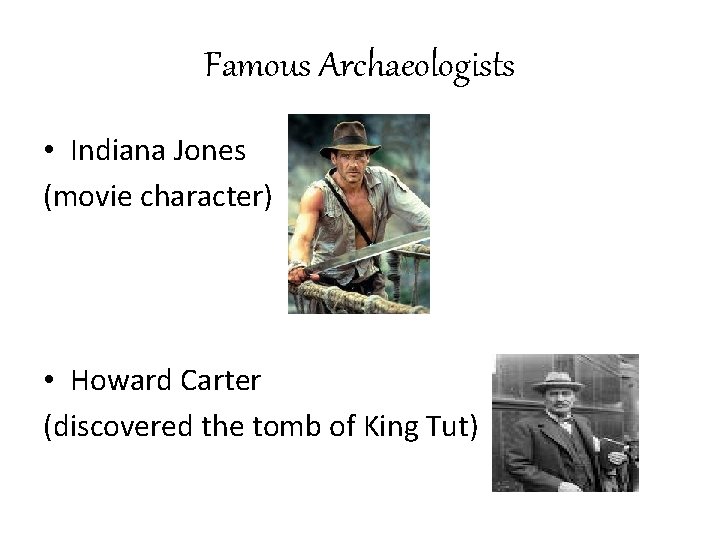
Famous Archaeologists • Indiana Jones (movie character) • Howard Carter (discovered the tomb of King Tut)
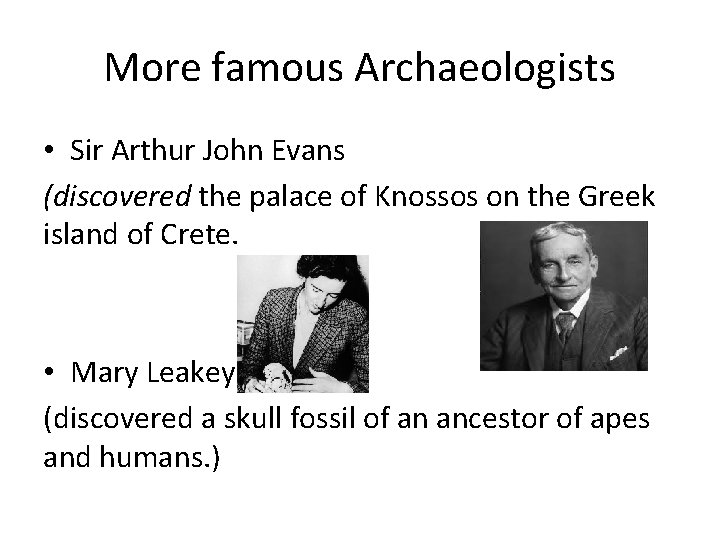
More famous Archaeologists • Sir Arthur John Evans (discovered the palace of Knossos on the Greek island of Crete. • Mary Leakey (discovered a skull fossil of an ancestor of apes and humans. )