
Archaeology and the Old Testament Chapter 9 Part

- Slides: 135
Archaeology and the Old Testament Chapter 9, Part 1 Great Flood and the Tower of Babel Dr. Gregg Wilkerson
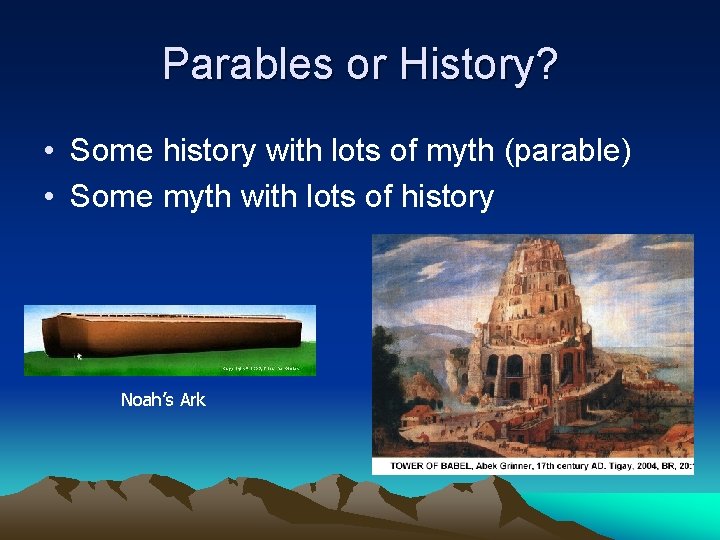
Parables or History? • Some history with lots of myth (parable) • Some myth with lots of history Noah’s Ark
Noah’s Flood • Expeditions to Mt. Ararat • In search of Noah’s Ark
YOUNG-EARTH CREATIONISM AND “FLOOD GEOLOGY “ • • Early Enlightenment Universal Deluge Universal Solvent All rocks precipitated from seawater during the Great Flood • Catastrophism • Anti-Uniformitarianism
YOUNG-EARTH CREATIONISM AND “FLOOD GEOLOGY “ • • Post WWI "fountains of the great deep" “vapor canopy ” The Genesis Flood, Morris and Whitcomb, 1975 • Date of Great Flood: 3, 000 -2, 900 BC • Or 10, 000 BP
YOUNG-EARTH CREATIONISM AND “FLOOD GEOLOGY “ • Institute for Creation Research, San Diego • http: //www. icr. org/
OLD-EARTH CREATIONISM AND A LOCAL FLOOD • Biostratigraphic record of Earth as the result of a series of catastrophes occurring over the past 4. 7 billion years
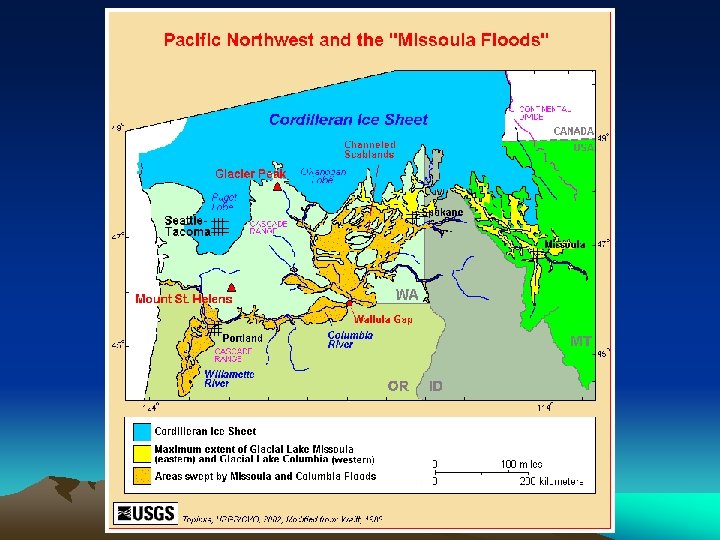
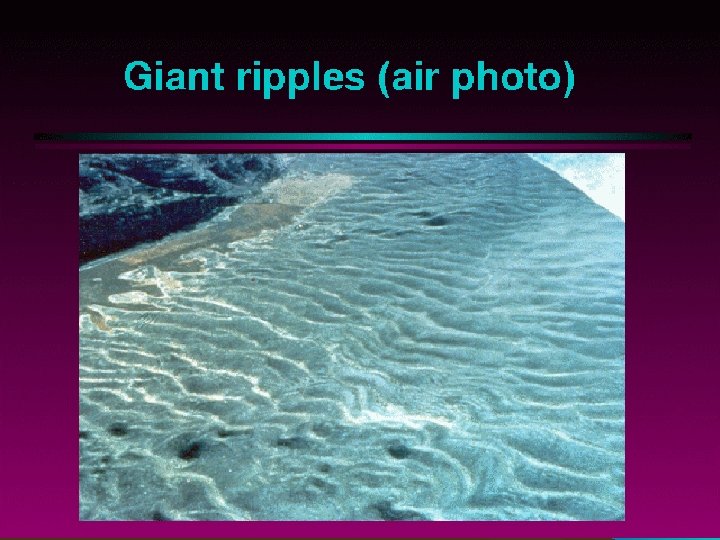
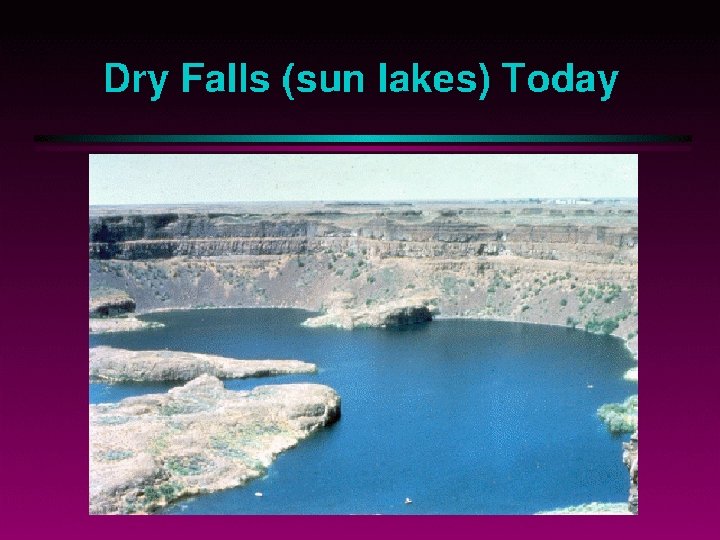
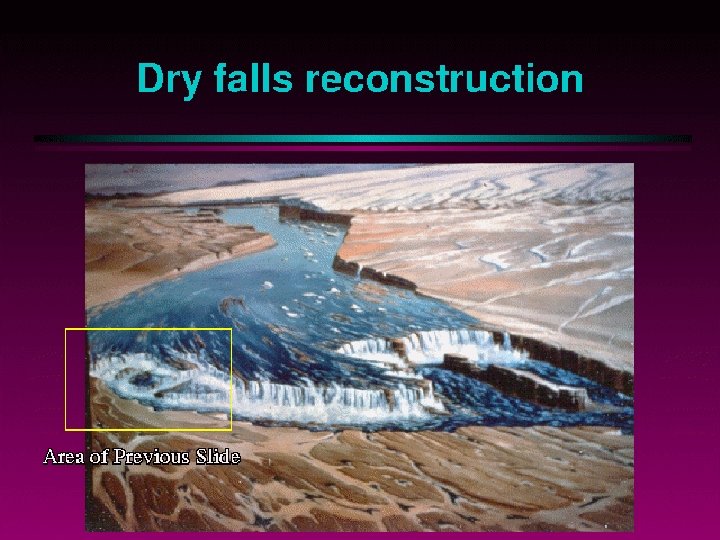
Floods of Glacial Lake Missoula • Caused by the break-up of an ice dam on glacial lake Missoula • The dam was 2, 000 feet high. • The lake, at its maximum height, contained 500 cubic miles of water and was 200 miles long
Floods of Glacial Lake Missoula • Down the Columbia River drainage • Across northern Idaho and eastern and central Washington • Through the Columbia River Gorge • Back up into Oregon's Willamette Valley • Discharge into the Pacific Ocean at the mouth of the Columbia River
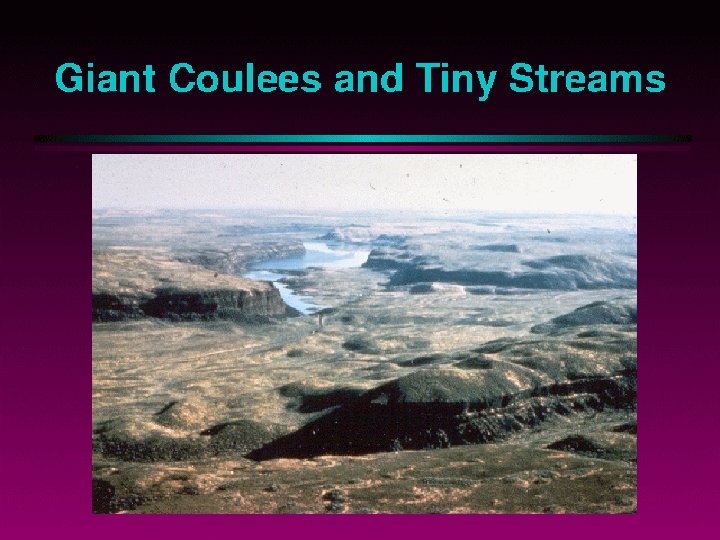
Floods of Glacial Lake Missoula • Released more water than 10 times the flow of all earth rivers combined • Flood waters roaring across the landscape at speeds approaching 65 miles per hour • Lake would have drained in as little as 48 hours • Carved out more than 50 cubic miles of earth • Piled mountains of gravel 30 stories high • Created giant ripple marks the height of threestory buildings • Scattered 200 -ton boulders from the Rockies to the Willamette Valley
Great Floods Can Be Identified • Geologic record shows evidence of many large floods in earth history • The Pleistocene Epoch was an time characterized by large catastrophic floods • But not a single world-wide flood event
Geologic Setting of the Flood Stories • Late Ice Age • Noah’s Flood is a memory of a Missoula Flood-like event • Tigres-Euphrates valleys were flooded by the rapid draining of pluvial lakes • Additional flooding may have been caused or exacerbated by rising of sea level and landward encroachment of the Arabian Sea.
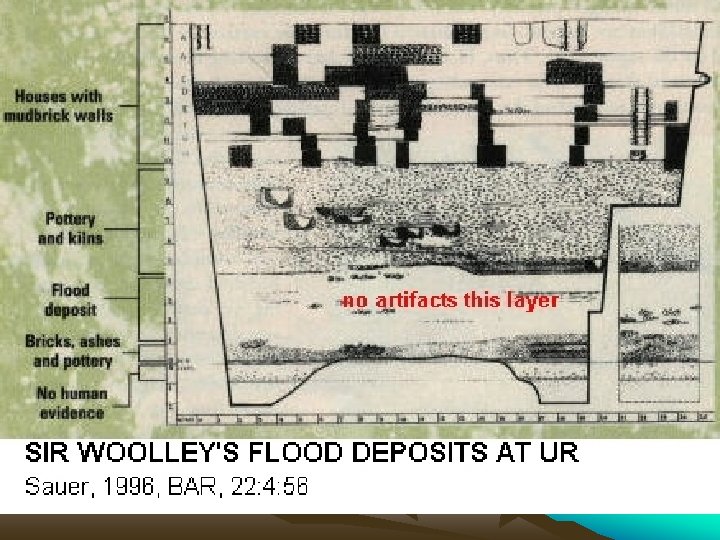
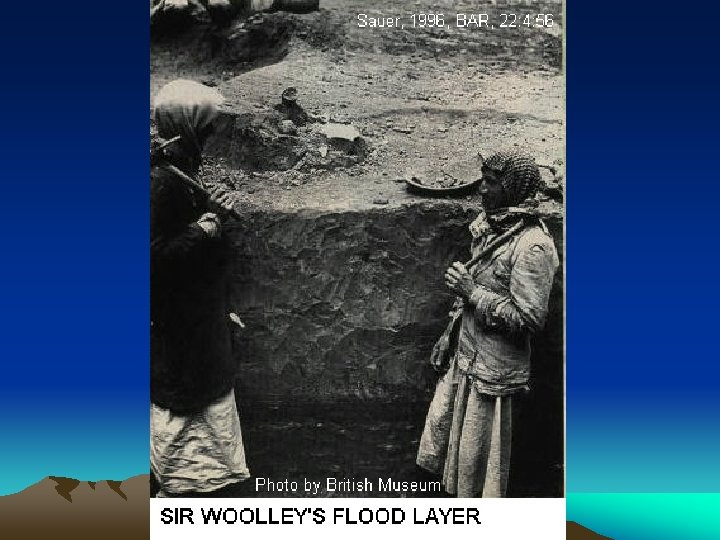
Local Floods at Mesopotamian Sites • Royal tombs at Ur and Kish had evidence of flooding with flood levels sandwiched between layers of the Al Ubaid pre-historic cultural phase
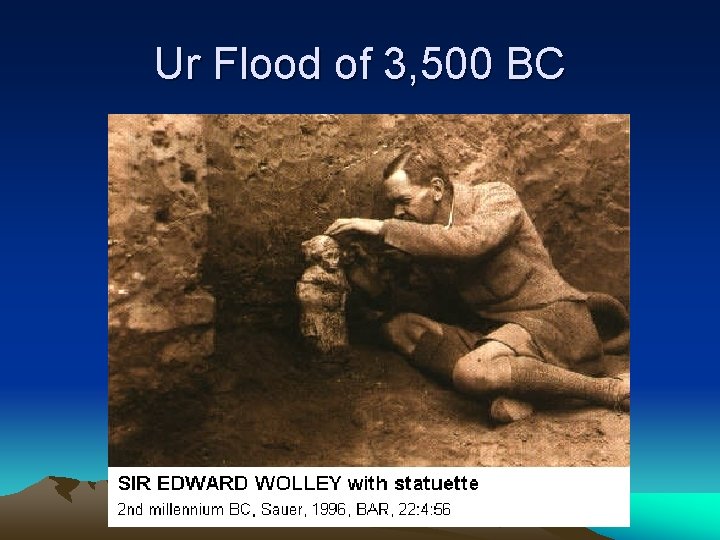
Ur Flood of 3, 500 BC • Did not cover entire city mound • No flood deposits at Eridu, just seven miles away and separated from Ur by a low ridge
Ur Flood of 3, 500 BC
Flooding at Kish in 3000 -2900 and 2600 -2300 BC • Left ten inch debris layers
Flood at Shurappak 2950 -2850 BC • Home of Sumerian Noah, Ziusudra • left a fifteen inch layer
Climate Change • Holocene flood deposits corroborate other evidence (pollen, incised drainages) • Middle East had a much wetter climate between 7500 and 3500 BC
MESOPOTAMIAN FLOOD TRADITIONS • • Gilgamesh Epic Atra-Hasis Epic Sumerian Ziusudra Deluge Story Writings of Babylonian Priest Berosus
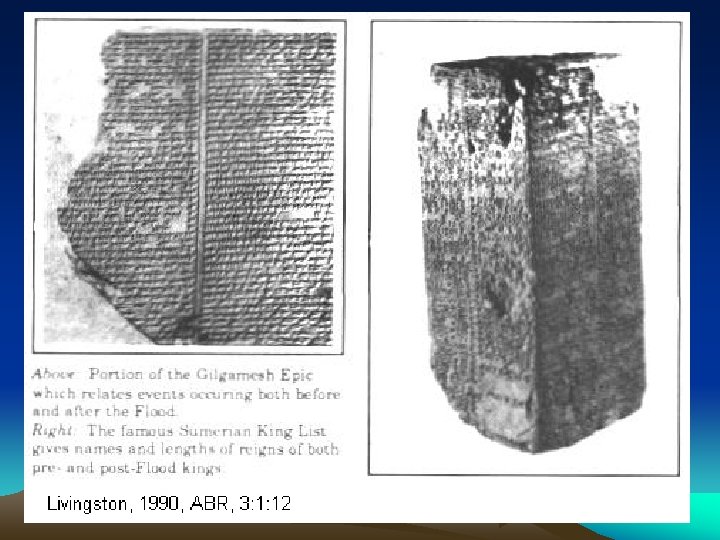
Gilgamesh Epic • • First found at Nineveh Tablets dated to the 7 th century BC Library of Ashurbanipal (668 -627 BC) Based on a historical person, later mythologized, who lived 2700 -2600 BC • Sumerian King List: Rulers before and after the Great Flood
Gilgamesh Fragment
Gilgamesh Epic • Flood story is part of the Epic • The 9 th tablet (TXI) of the Epic • Gilgamesh listens to a story about a Great Flood and its hero Utnapishtim • Gilgamesh lived several hundred years after the Flood which occurred in 29002800 BC
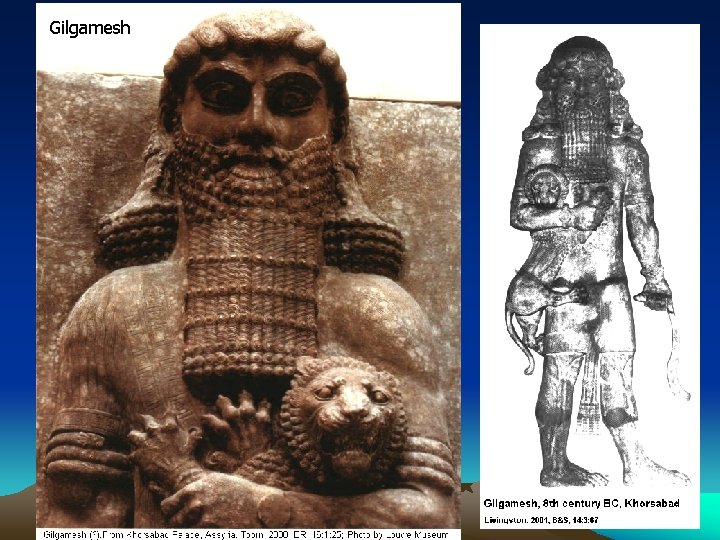
Gilgamesh
Gilgamesh Epic • Internal date of 2900 -2800 BC for the Great Flood in the Epic agrees with the age of flood deposits found at Kish and Shurappak • Myth is based on historical experience
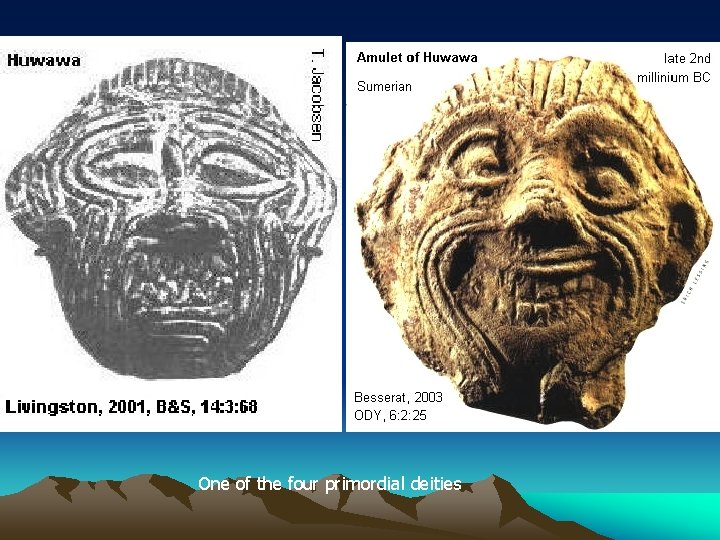
Gilgamesh Epic • The great Mesopotamian primordial deities (Anu, Enlil, Ea, Huwawa) decided to bring about an abubu on the earth without any reason given. • Abubu = “cyclone”, “windstorm” (note used to be translated “flood”)
One of the four primordial deities
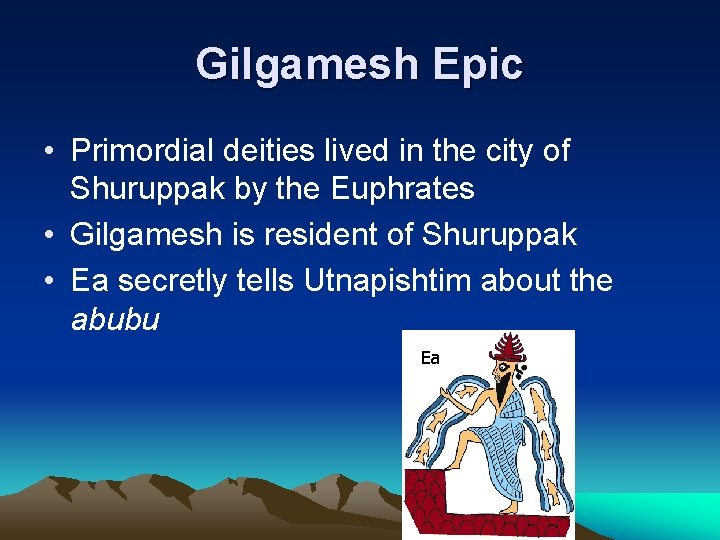
Gilgamesh Epic • Primordial deities lived in the city of Shuruppak by the Euphrates • Gilgamesh is resident of Shuruppak • Ea secretly tells Utnapishtim about the abubu Ea
Gilgamesh Epic • Utnapishtim built a ship (not an ark) that took him out to sea for 6 days (not 40 days) to live with Ea until the planned upheaval on the land was over
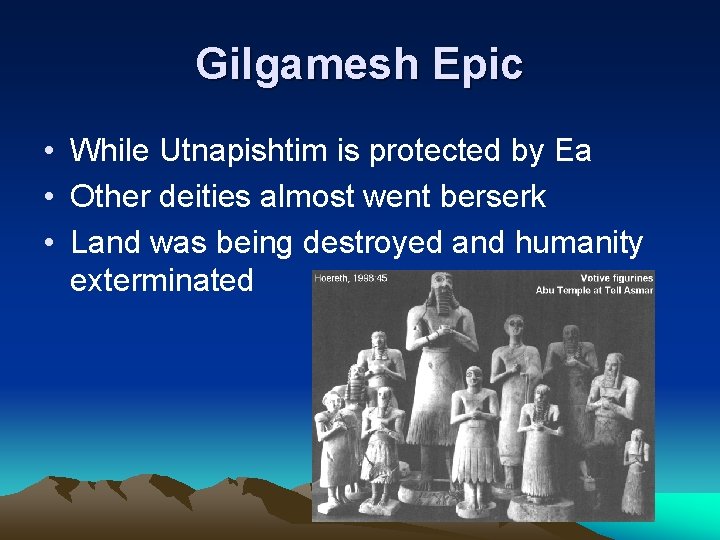
Gilgamesh Epic • While Utnapishtim is protected by Ea • Other deities almost went berserk • Land was being destroyed and humanity exterminated
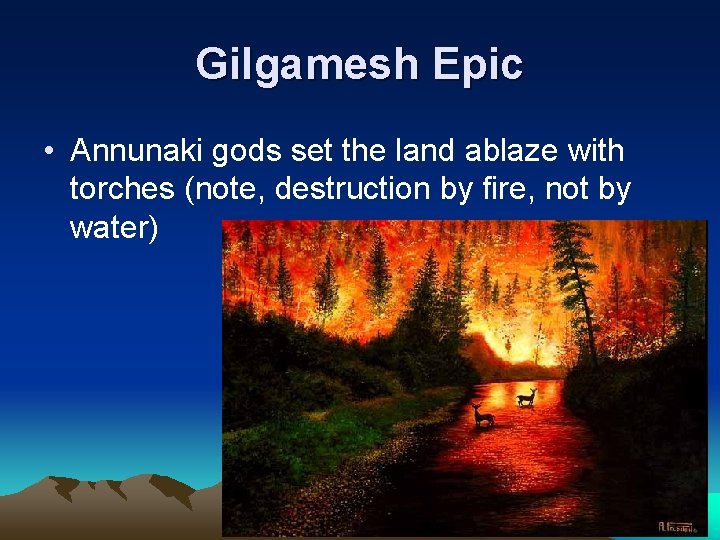
Gilgamesh Epic • Annunaki gods set the land ablaze with torches (note, destruction by fire, not by water)
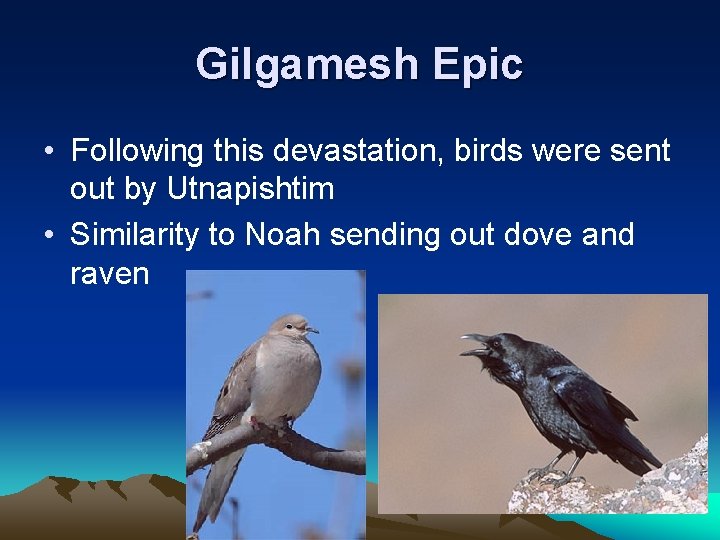
Gilgamesh Epic • Following this devastation, birds were sent out by Utnapishtim • Similarity to Noah sending out dove and raven
Gilgamesh Epic • After the destruction, the deities came "like flies" to Utnapishtim's post-abubu offering
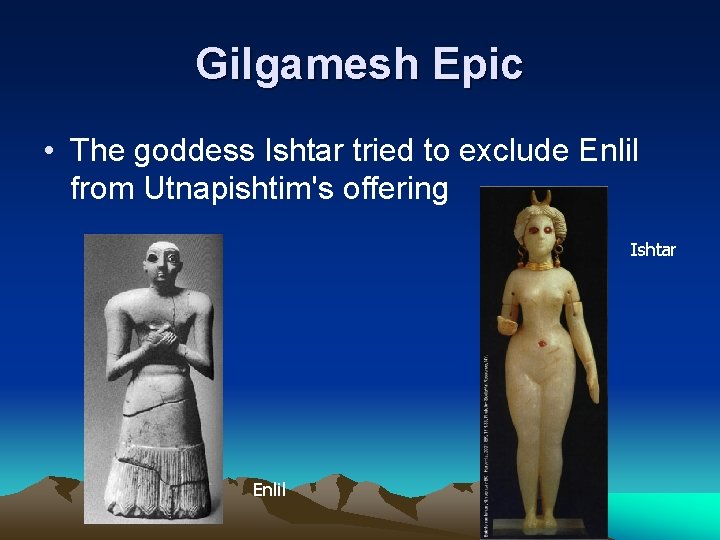
Gilgamesh Epic • The goddess Ishtar tried to exclude Enlil from Utnapishtim's offering Ishtar Enlil
Gilgamesh Epic • Enlil was angry that someone survived the abubu. • After harsh words from Ea, Enlil went up to the ship, pulls out Utnapishtim and his good lady, and they are raised to status of deities. •
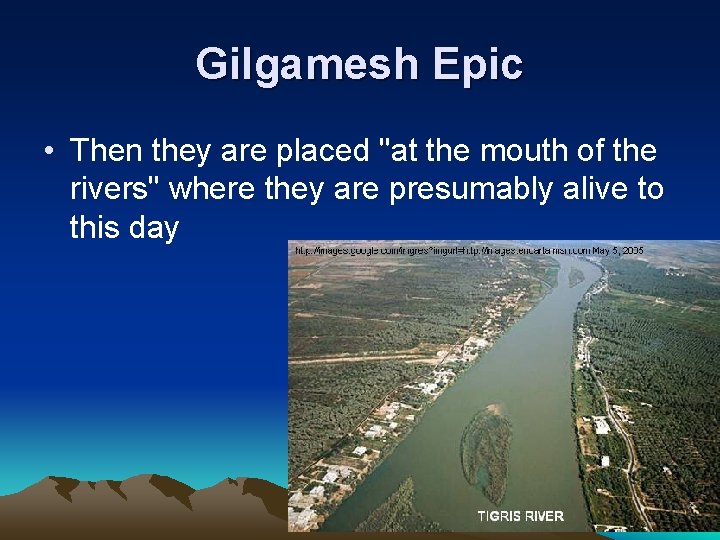
Gilgamesh Epic • Then they are placed "at the mouth of the rivers" where they are presumably alive to this day
Differences • GENESIS • source of water in Genesis is "windows of heaven" and "fountains of the deep“ • 24 references to rain or water • GILGAMESH • no source for the water in TXI • No references to rain
Differences • GENESIS • GILGAMESH
Differences • TXI: 128 -132 (translation by C. J. Gadd) • For six days and nights • The wind, the storm raged, and the cyclone [aduba] overwhelmed the Land. • When the seventh day came the cyclone ceased, • the storm and battle which had fought like an army • The sea became quiet, the grievous wind went down, the cyclone ceased.
Differences • GENESIS • Noah sought safety from Flood • GILGAMESH • Utnapishim sought escape from land upheaval
Differences • GENESIS • 10 th century BC • GILGAMESH • 7 th century BC
Gilgamesh and Ecclesiastes • GILGAMESH EPIC • ECCL. 9: 7 -9 • But you, Gilgamesh, • Go, eat your bread let your belly be full with enjoyment, and drink your wine with a enjoy yourself always by merry heart day and by night! Make merry each day. Dance and play day and night!
Gilgamesh and Ecclesiastes • GILGAMESH EPIC • ECCL. 9: 7 -9 • Let your clothes be • Let your garments be clean always white • let your head be • Let not oil be lacking washed, may you on your head bathe in water! • Gaze on the child who holds your hand
Gilgamesh and Ecclesiastes • GILGAMESH EPIC • Let your wife enjoy your repeated embrace • ECCL. 9: 7 -9 • Enjoy life with the wife whom you love
Gilgamesh and Ecclesiastes • GILGAMESH EPIC • Who is there, my friend, can climb to the sky? Only the gods dwell forever with the Sun-god As for man, his days are numbered, whatever he may do, he is but wind • ECCL. 5: 2, 16 • God is in heaven and you upon earth • What gain do they have from striving after wind?
Gilgamesh and Genesis • The similarities suggest that the cosmopolitan compiler/author of Ecclesiastes was familiar with Gilgamesh and other Mesopotamian literary traditions. • The Hebrew tradition was probably older.
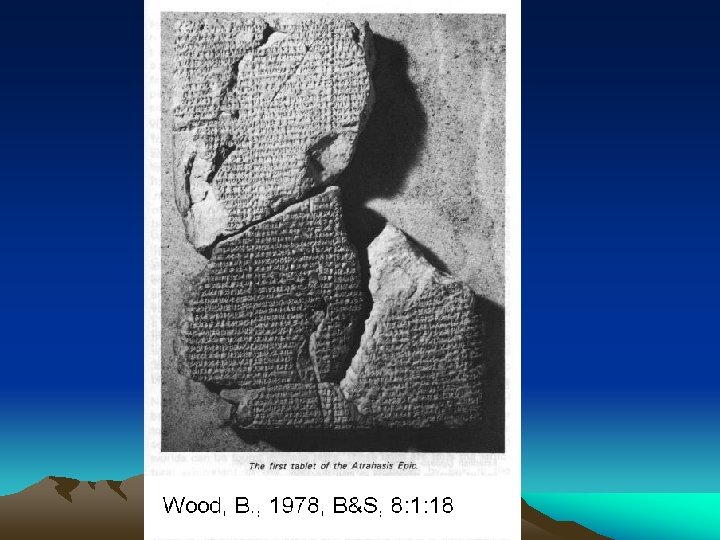
Atra-Hasis Epic • Composed around 1700 BC • Atra-hasis is Old Babylonian meaning "exceedingly wise” • Tells about a primeval History similar to that found in Genesis • After creation: overpopulation
Atra-Hasis Epic Gods are Annoyed • Twelve hundred years [had not passed] • [when the land was extended] and the people multiplied • The [land] was bellowing [like a bull] • The gods were disturbed with [their uproar] • [Enlil heard] their noise • [and addressed] the great gods • "The noise of mankind [has become to intense for me] • [with their uproar] I am deprived of sleep
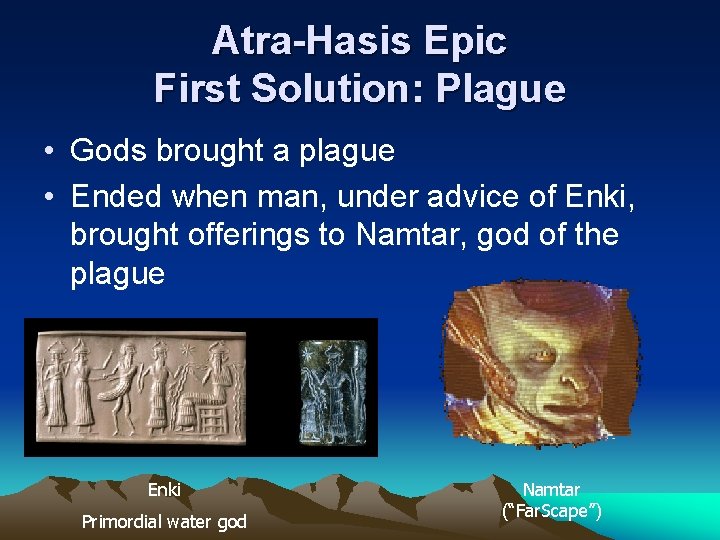
Atra-Hasis Epic First Solution: Plague • Gods brought a plague • Ended when man, under advice of Enki, brought offerings to Namtar, god of the plague Enki Primordial water god Namtar (“Far. Scape”)
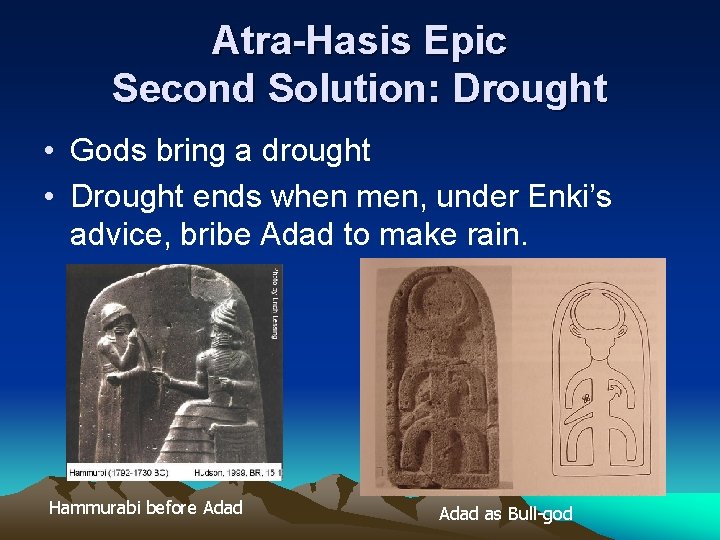
Atra-Hasis Epic Second Solution: Drought • Gods bring a drought • Drought ends when men, under Enki’s advice, bribe Adad to make rain. Hammurabi before Adad as Bull-god
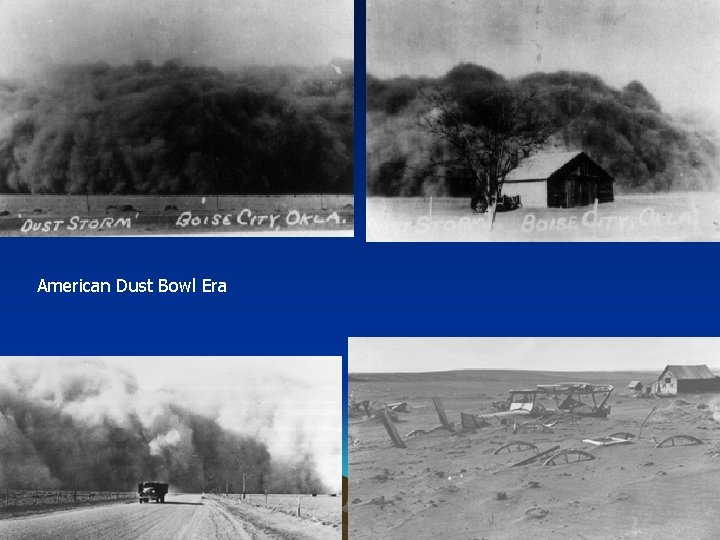
American Dust Bowl Era
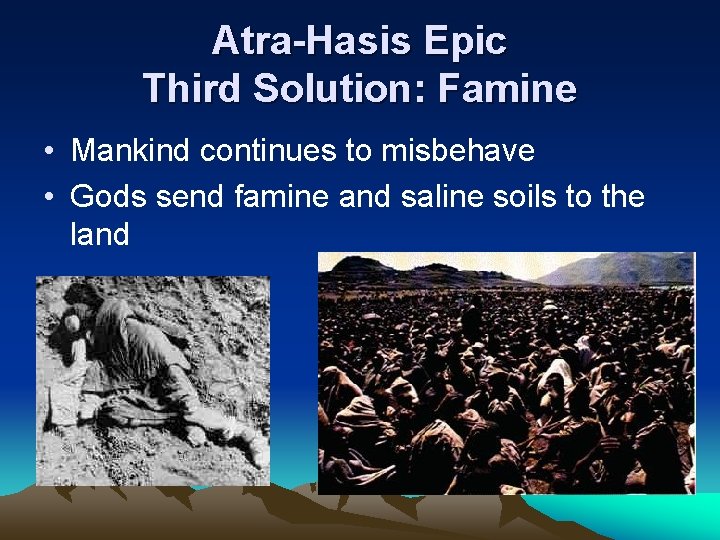
Atra-Hasis Epic Third Solution: Famine • Mankind continues to misbehave • Gods send famine and saline soils to the land
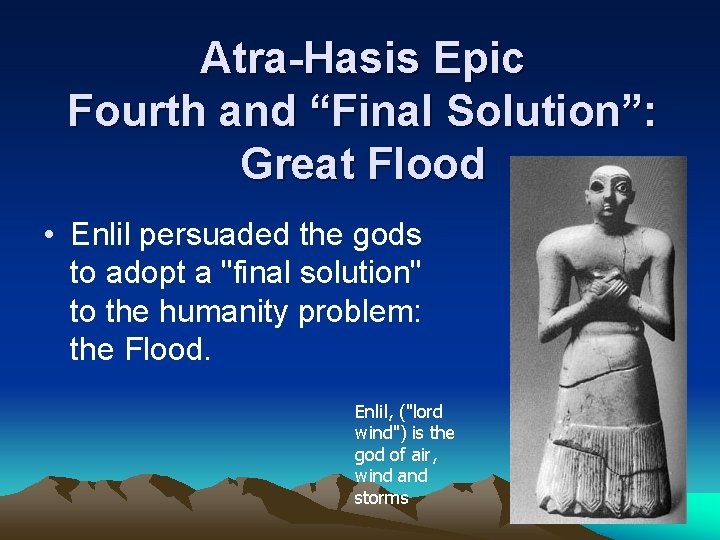
Atra-Hasis Epic Fourth and “Final Solution”: Great Flood • Enlil persuaded the gods to adopt a "final solution" to the humanity problem: the Flood. Enlil, ("lord wind") is the god of air, wind and storms
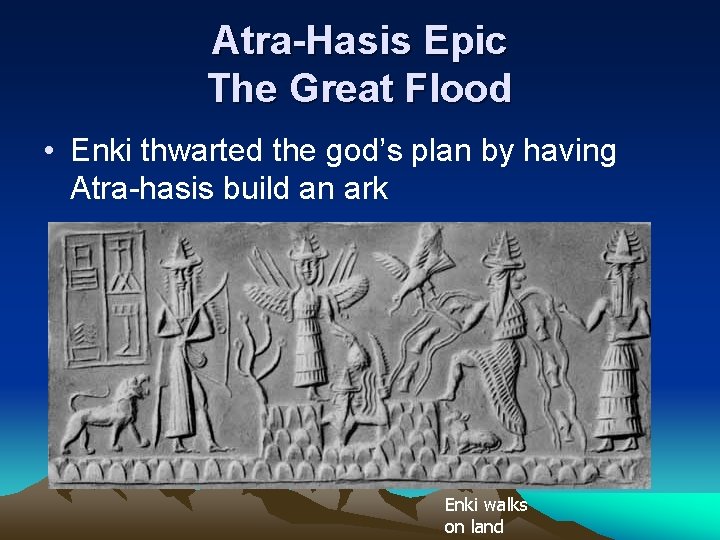
Atra-Hasis Epic The Great Flood • Enki thwarted the god’s plan by having Atra-hasis build an ark Enki walks on land
Atra-Hasis Epic Post-Flood Regrets • • Gods regret the Flood Gods are hungry and thirsty Nobody around to do the work Gods realize they need Mankind
Restoration • Atra-hasis brought a sacrifice and the gods came to eat • At the banquet, Enki presented solution to problem • New world order • Enki summoned Nintu, birth goddess • Nintu created new creatures and provided a solution to the overriding problem for mankind and the gods of overpopulation
Nintu’s Solution • In addition, let there be a third category among the people • Among the peoples women who bear and women who do not bear • Let there be among the peoples the Pasittudemon [miscarriage, stillbirth, infantside? ] • to snatch the baby from the lap of her who bore it • Establish Ugbatu-women, Entu-women and Igisitu-women • and let them be taboo and so stop childbirth
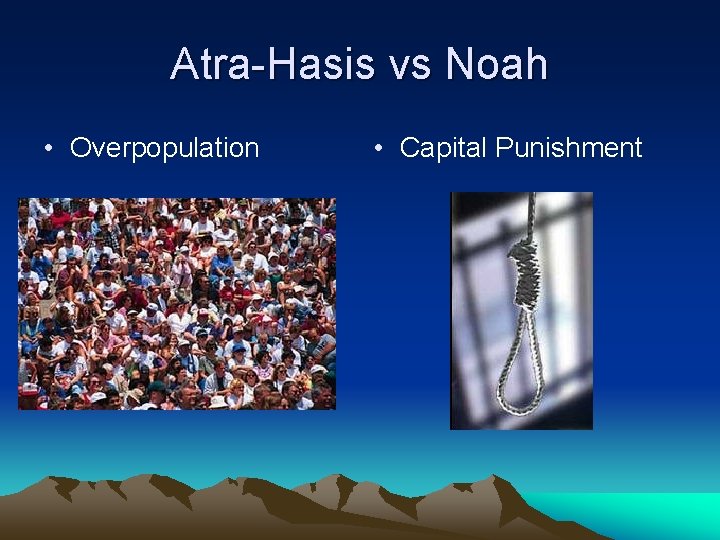
Atra-Hasis vs Noah • Overpopulation • Capital Punishment
Capital Punishment • Universal capital punishment during the flood • No individual capital punishment before the Flood • Post Flood capital punishment for individuals
Pollution of the Land • Pre-flood murderers not avenged by death (Cain, gets a “mark” instead) • Blood spilled on the ground, pollutes it • Flood needed to cleanse the ground
Laws after the Flood • Laws given to Noah and his sons to prevent the earth from becoming polluted again • Murder, idolatry and sexual abominations (Lev 18: 24 -25, Jer 2: 7, Ezek 36: 18), Num 35: 31 -34) were prohibited.
Post-Flood Laws • 1) be fruitful and multiply (Genesis 9: 7, the same as in Genesis 1: 28) • 2) man may eat meat but no blood (Genesis 9: 4) • 3) no killing without being killed (Genesis 9: 6)
NEXT TIME • Sumerian Ziusudra Deluge Story
Archaeology and the Old Testament Chapter 9, Part 2 Great Flood and the Tower of Babel Dr. Gregg Wilkerson
Sumerian Ziusudra Deluge Story • Pre-dates Gilgamesh and Atra-hasis • Is very fragmentary • Understandable only by comparison with other known Mesopotamian flood stories
Sumerian Ziusudra Deluge Story • All the windstorms, exceedingly powerful, attacked as one • At the same time, the (cyclone? Flood? ) swept over the cult centers • Afterwards, for seven days and seven nights • The flood has swept over the land, • And the huge boat was tossed about by the windstorms on the great waters
Sumerian Ziusudra Deluge Story • Utu [sun god] came forth, who sheds light on heaven and earth • Ziusudra opened a window on the huge boat • The hero Utu brought his rays into the giant boat • Ziusudra, the king • Prostrated himself before Utu, • The king kills an ox, slaughters a sheep
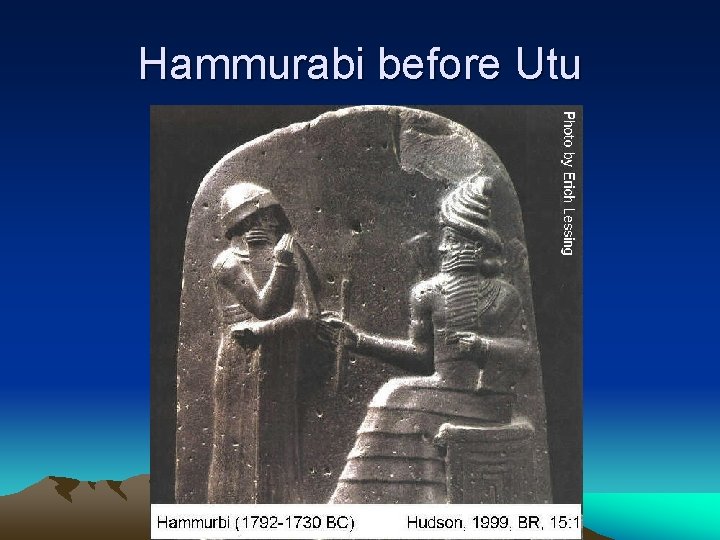
Hammurabi before Utu
Character equivalence • Noah (Hebrew Epic) • Utnapishtim (Gilgamesh Epic) • Ziusudra (Sumerian Ziusudra Epic)
Similar Themes Genesis and Mesopotamian Traditions • • • Mankind wickedness Great Wind Great Flood Boat (ark) Sacrifice
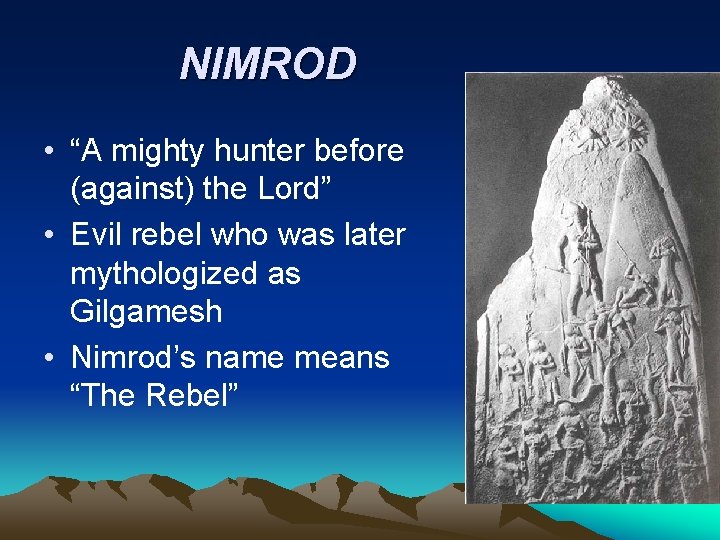
NIMROD • “A mighty hunter before (against) the Lord” • Evil rebel who was later mythologized as Gilgamesh • Nimrod’s name means “The Rebel”
Nimrod and Gilgamesh • GILGAMESH • Kish was the first city to be built after the Flood • Gilgamesh lived in the “Land of Shinar” • Kish was the center of kingship which “descended from heaven” after the Flood • NIMROD • A son of Ham was named Cush • Shinar = Sumner
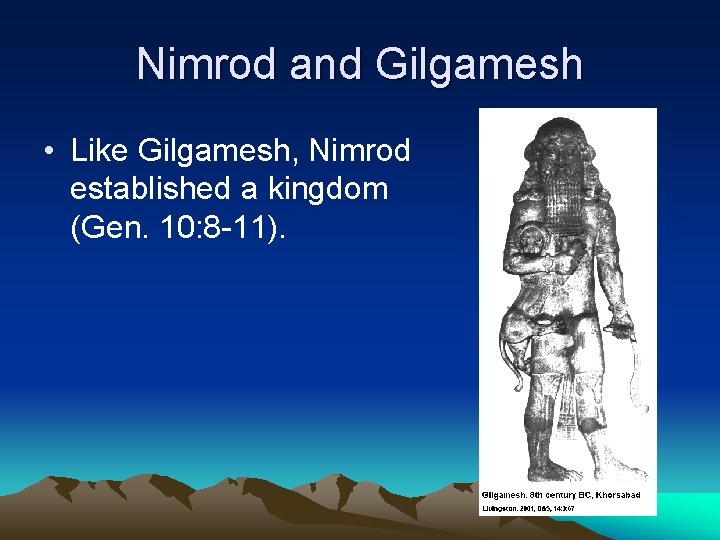
Nimrod and Gilgamesh • Like Gilgamesh, Nimrod established a kingdom (Gen. 10: 8 -11).
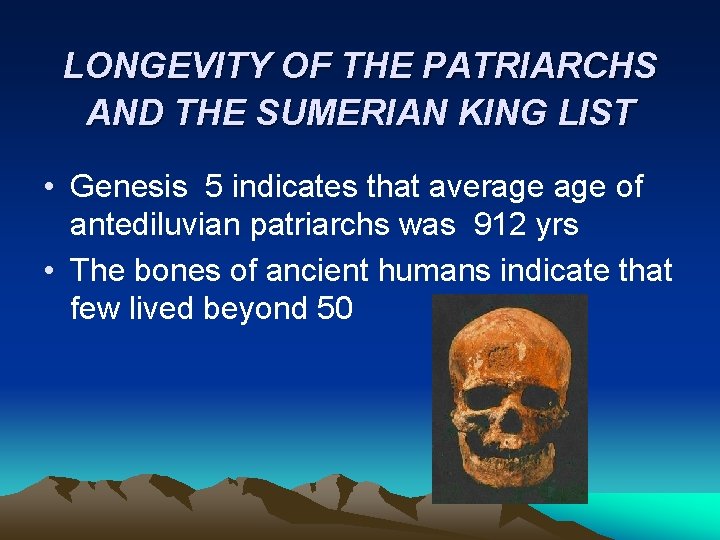
LONGEVITY OF THE PATRIARCHS AND THE SUMERIAN KING LIST • Genesis 5 indicates that average of antediluvian patriarchs was 912 yrs • The bones of ancient humans indicate that few lived beyond 50
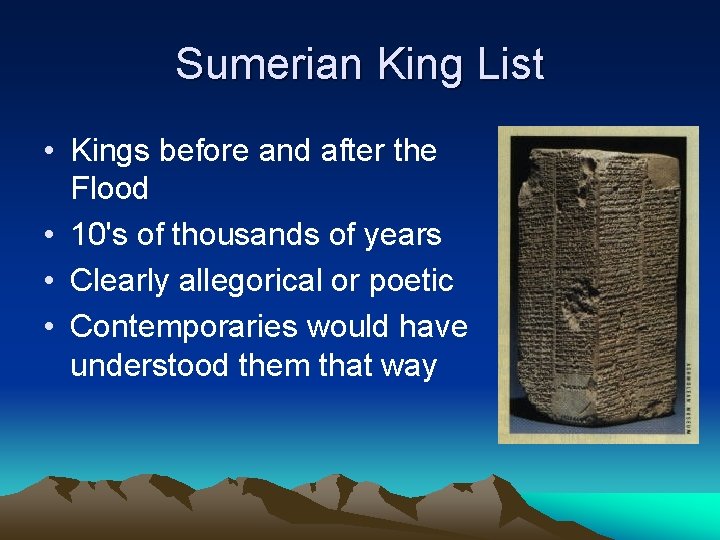
Sumerian King List • Kings before and after the Flood • 10's of thousands of years • Clearly allegorical or poetic • Contemporaries would have understood them that way
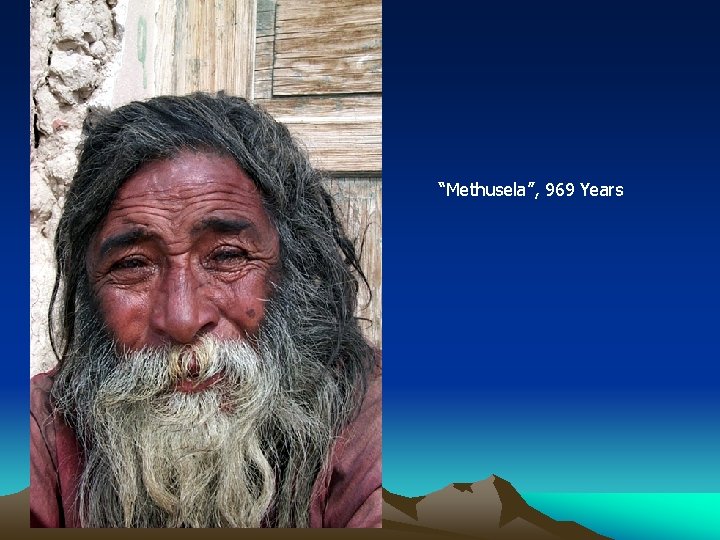
“Methusela”, 969 Years
Longevity of Patriarchs • “Vapor Canopy”, protection from UV radiation • Count months as years • Elaborations, or embellishments and personifications of the records for of an original dynastic framework • Dynasties, not individuals
Longevity of Patriarchs • Late Historization (making history) from dynasty to individuals • But! • Not all Patriarchs fall into Dynastic divisions (Noah) • Bible clearly says that each father begat a son, not a dynasty
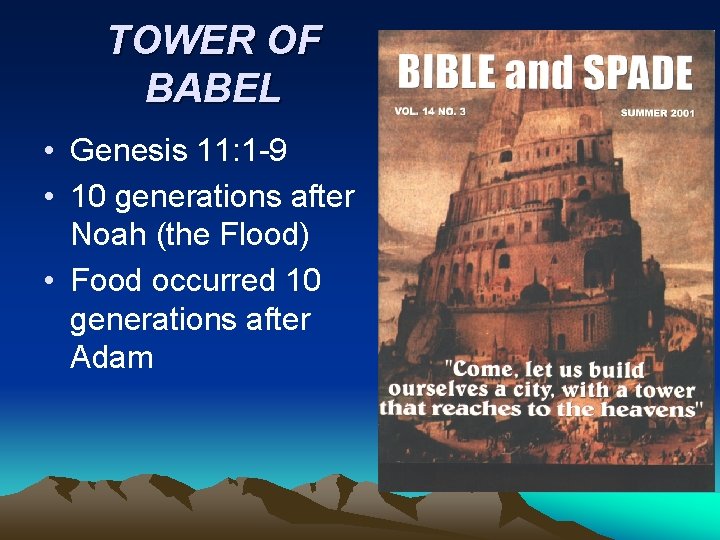
TOWER OF BABEL • Genesis 11: 1 -9 • 10 generations after Noah (the Flood) • Food occurred 10 generations after Adam
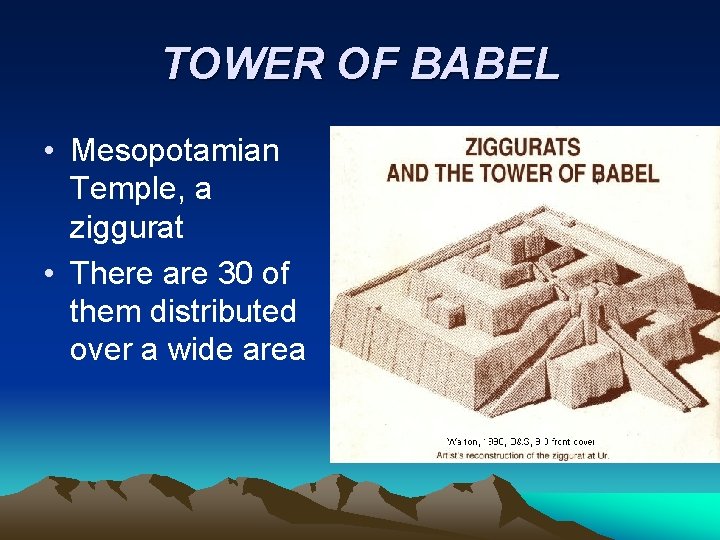
TOWER OF BABEL • Mesopotamian Temple, a ziggurat • There are 30 of them distributed over a wide area
Ziggurats • Earliest are the Ubaid temples at Eridu (4300 BC) • Latest ones are Selucid from the 3 rd century (250 BC) • A 4, 000 year architectural tradition
Ziggurats • Smallest ziggurats are 20 meters on a side • Largest ones are 90 meters on a side
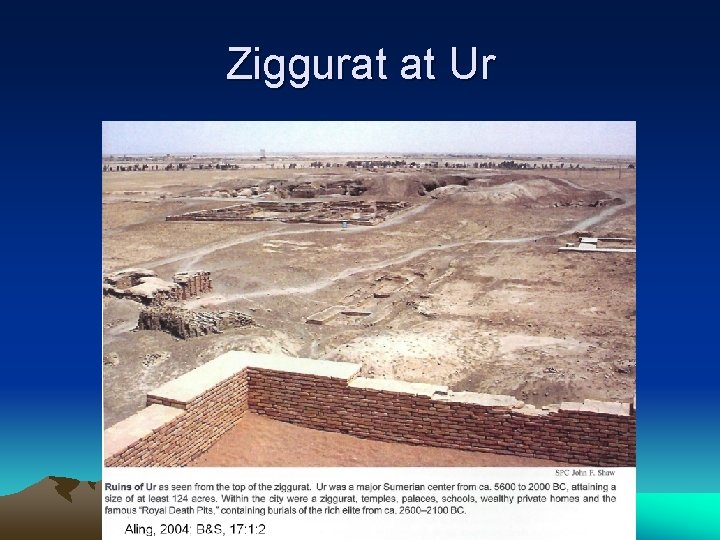
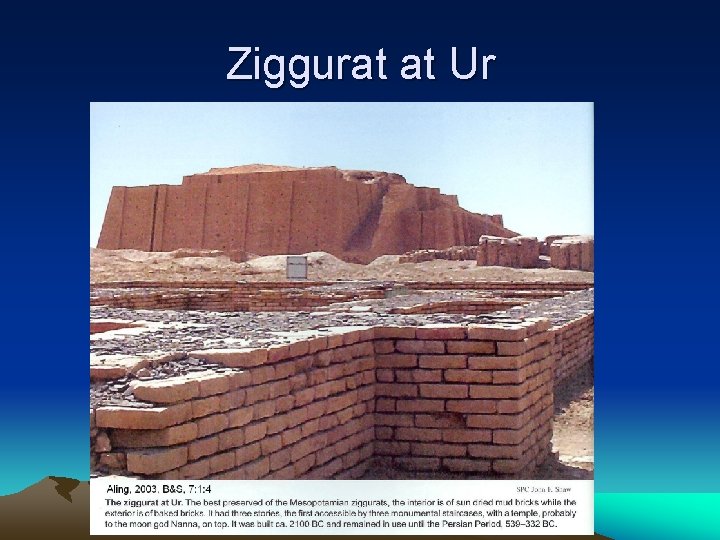
Cyclic Construction • Ziggurats were built, filled and built over up to 16 times (Ur III, ziggurat of Amar-Sin 2046 -2038 BC) • The resulting stair-case geometry lead to conscious architectural design of a staged tower in the Early Dynastic period (29002350 BC)
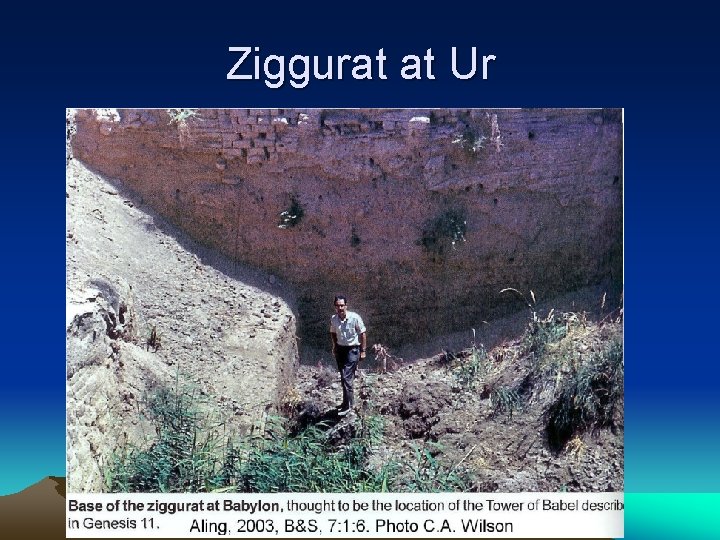
Ziggurat at Ur
Ziggurat at Ur
Ziggurat at Ur
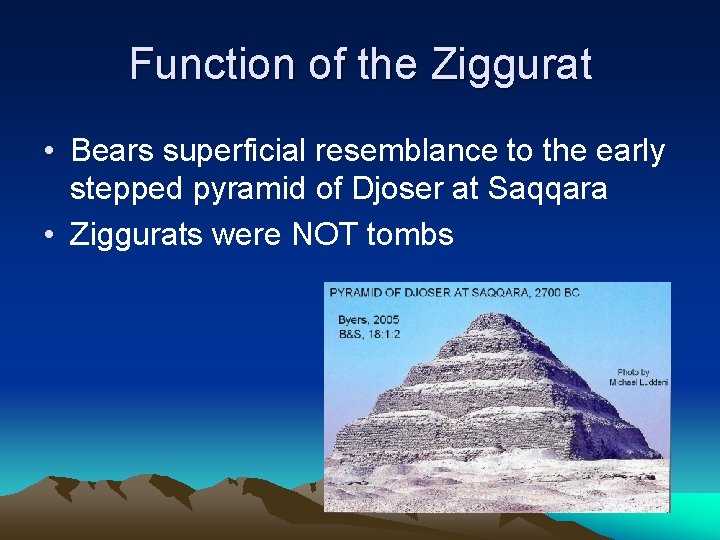
Function of the Ziggurat • Bears superficial resemblance to the early stepped pyramid of Djoser at Saqqara • Ziggurats were NOT tombs
Names of Some Ziggurats • Sippar • Larsa • Babylon • Temple of the Stairway to Pure Heaven • Temple which Links Heaven and Earth • Temple of the Foundation of Earth and Heaven
Function of the Ziggurat • Stairway to heaven • Total absence of any description of use of ziggurats in cultic rituals • Ziggurat supplies a connection between heaven and earth for deities, but not for mortals
Ziggurat as Holy Mountain Names • Nippur • Temple of the Mountain Breeze • Ehursagkalamma • Temple of the Exalted Mountain
Holy Mountains in Hebrew Traditions • Exodus 19, YHWH comes down on a mountain, Sinai • Mountains are popular places of sacrifice (Moriah, Gen. 22, Carmel 1 Kings 18) • Moses, Aaron and Elijah all go up on a mountain to meet YHWH
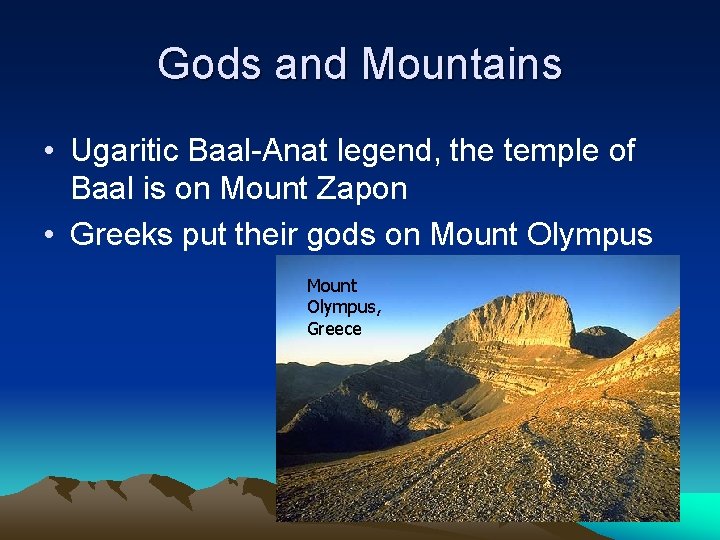
Gods and Mountains • Ugaritic Baal-Anat legend, the temple of Baal is on Mount Zapon • Greeks put their gods on Mount Olympus, Greece
Function of the Ziggurat • Babel = “God’s Gate” • Support a monumental stairway • Used by the gods to travel from one realm to another • Gate at the top, the entrance to the divine place • Ziggurat as “teleporter”
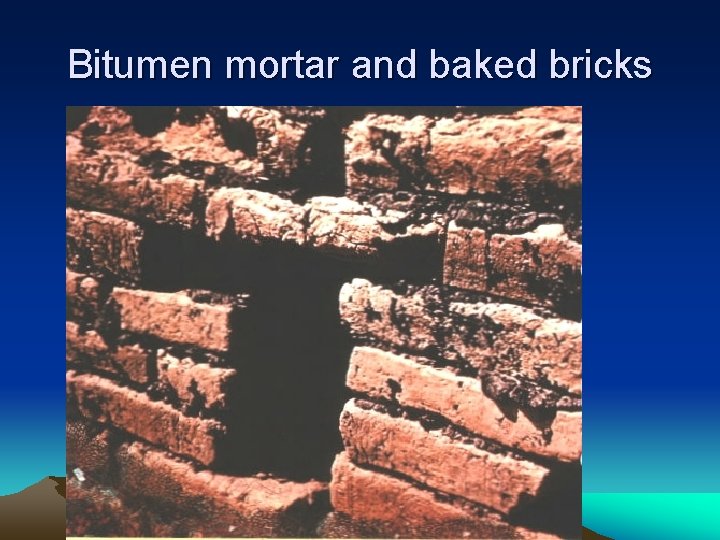
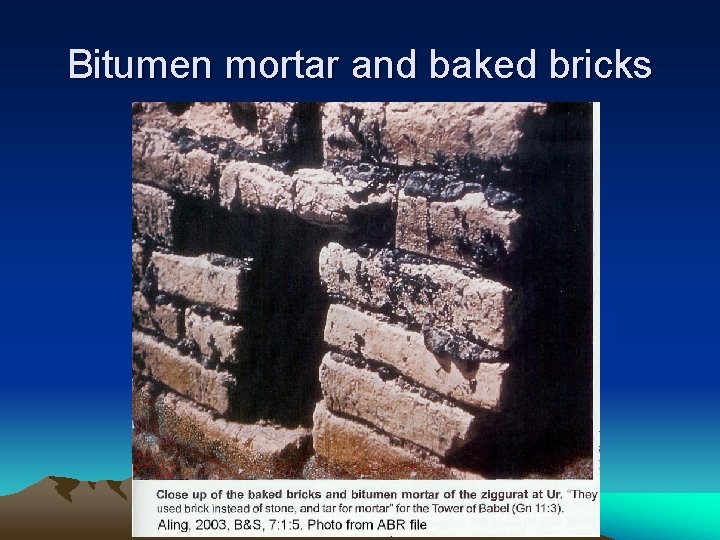
Building Materials • Genesis 11: 3 • “make bricks and bake them hard; they used bricks for stone and bitumen for mortar. ” • Note: Exterior only, interior was unbaked mud-bricks
Bitumen mortar and baked bricks
Bitumen mortar and baked bricks
Ziggurat and Economics • Public building projects • Huge investment and organization of labor, materials and money • Centralization of economic authority • Urbanization • United different aspects of the society • Common goal • Similar to Works Projects Administration in U. S. following World War I.
Gods in the image of men • The creation of this huge economic/political/religious machine • Lead to an increase in material culture • Preference for urbanization • Resistance to becoming “scattered (dispersed) all over the earth” (Gen. 11: 4).
Assembly to Kingship • Early Mesopotamian societies were quasidemocratic or republican, being run by general assemblies. • Assembly system of government quickly changed to one of kingship. • General assembly form of government was preserved in Mesopotamian mythology where gods debate, vote and take collective action. • As the urbanized state began to take shape, the universe came to be considered a state ruled by gods
Assembly to Kingship • Cities and Ziggurat • Create gods in the image of men • Revolting to the Hebrew who took theological position that it was the other way around: man was made in the image of God • City dwellers vs the Farmer-Nomads • Kingship vs Tribal Assemblies
Effect of the Confusion of Tongues • Delayed urbanization • Forced obedience to the command “be fruitful and multiply…fill the earth” (Genesis 1: 28 and 9: 7) • Note: Mesopotamian urban concerns about overpopulation compared to rural interest in large families
Dating the Tower of Babel • Early stage of urbanization described in Genesis 11: 1 -11 •
Urbanization • -baked brick-bitumen building technology developed at Jamdet Nasr ca. 3100 BC • -development of the ziggurat in the Early Dynastic Period, ca 2500 (earlier prototypes go back to Late Uruk phase ca 3200 BC) • -early urbanization in Early Dynastic Period, ca 2800 BC • -government by Ruling Assembly, Early Dynastic I, ca 2900 BC • -during the Ubaid period (5000 -3500 BC), climatic changes caused less flooding and opened up more areas for settlement
Dating the Tower of Babel • Setting for story of the Tower of Babel is in the early stage of Mesopotamian urbanization and ziggurat building, possibly 2800 BC. 4300 BC at the earliest. • Tale cannot be about a ziggurat at Babylon because it didn’t have one until the Ur III period in the 21 st century BC. • So if Babel = Babylon, the site would have been deserted and abandoned for over a millennium before it was occupied again in Ur III
Dating the Tower of Babel • To put the Tower of Babel in Mesopotamia in 2800 BC, another site other than Babylon must be found • Many candidates • Or look for the Tower in earlier phases of ziggurat culture
Dating the Tower of Babel • Clearly a ziggurat • Ziggurats first built during the Uruk culture in Mesopotamia c. 3500 -3100 BC.
The Epic of Enmerkar and the Lord of Aratta • Sumerian Epic • Early 3 rd millennium BC • May preserve a memory of the confusion of language told in the Tower of Babel
The Epic of Enmerkar and the Lord of Aratta • In those days, the land of Subur (and) Hamazi • Harmony-tongued (? ) Sumer, the great land of the decrees of prince-ship • Uri, the land having all that is appropriate (? ) • He land of Martu, resting in security • The whole universe, the people in unison (? ) • To Enlil in one tongue [spoke]
The Epic of Enmerkar and the Lord of Aratta • [Then] Enki, the lord of abundance (whose) commandments are trustworthy • The lord of wisdom, who understand the land • The leader of gods, • Endowed with wisdom, the lord of Eridu • Changes the speech in their mouths, [brought (? )] contention into it, • Into the speech of man that (until then) had been one • Enki is the god of Eridu which is home of a ziggurat
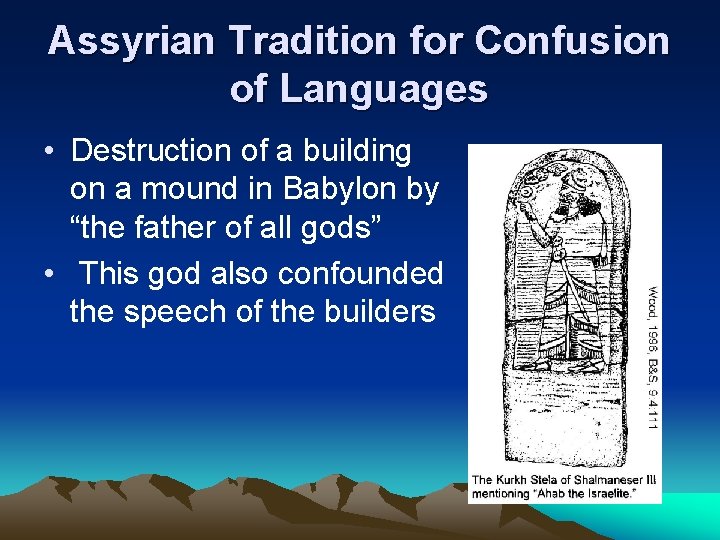
Assyrian Tradition for Confusion of Languages • Destruction of a building on a mound in Babylon by “the father of all gods” • This god also confounded the speech of the builders
Assyrian Tradition for Confusion of Languages • “. . . he the father of all gods had repudiated; the thought of his heart was evil, . . . of Babylon he hastens to the submission (? ) [small] and great he confounded (on) the mound. . Their walls all day he founded for their destruction (punishment) in the night. . . ”
Assyrian Tradition for Confusion of Languages • “…he did not leave a remainder. In his anger also (his)secret counsel he pours out; (to)confound (their) speeches he set his face. He gave the command, he made strange their counsel. . . ”
Evolution of Semitic Language • All Mesopotamian languages belong to the Semitic Language Group • All Semitic languages developed from a common parent language between 8000 and 6000 BC • At an early stage of development, all of the Semitic languages shared certain characteristics with the rest of the Afro. Asiatic language family
Semitic Language Groups • • northern peripheral northern central southern peripheral
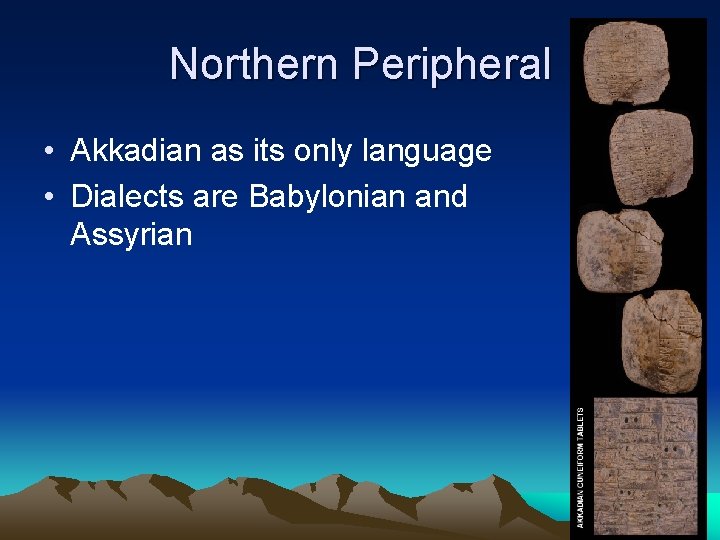
Northern Peripheral • Akkadian as its only language • Dialects are Babylonian and Assyrian
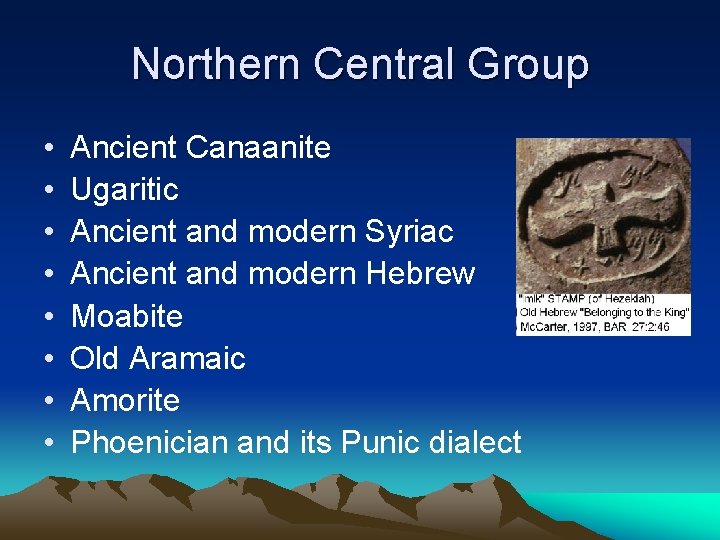
Northern Central Group • • Ancient Canaanite Ugaritic Ancient and modern Syriac Ancient and modern Hebrew Moabite Old Aramaic Amorite Phoenician and its Punic dialect
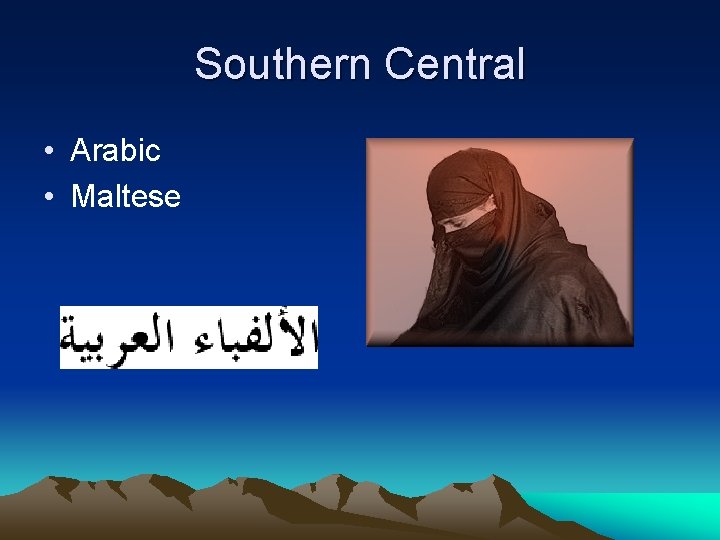
Southern Central • Arabic • Maltese
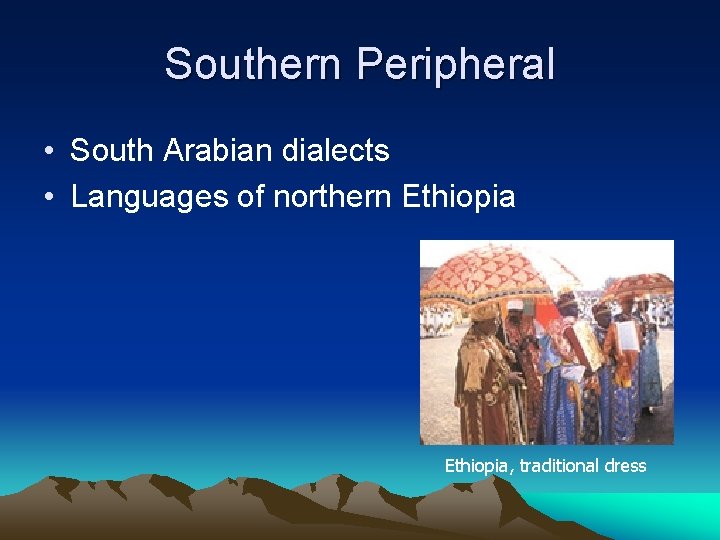
Southern Peripheral • South Arabian dialects • Languages of northern Ethiopia, traditional dress
Semitic Language Development • Early (all common features retained) • Middle (2/3 of original consonant system, 50%f of other early features) • New (lost more than half of their early features)
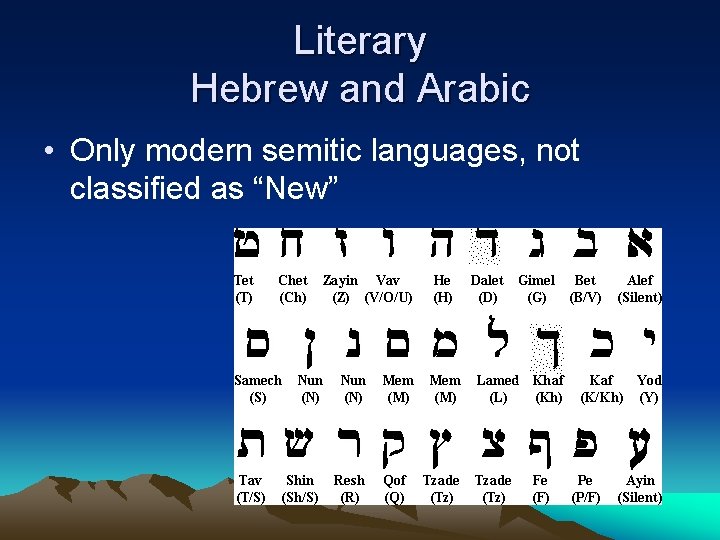
Literary Hebrew and Arabic • Only modern semitic languages, not classified as “New”
Tower of Babel and Language Diversification • Several languages were present in ca 2800 BC • Tower of Babel cannot have been an original diversifying force in world language development, if Noah’s Flood and the Tower occurred in the late 2 nd millennium
The Sumerian "Problem" • Archaeology shows continuity of material culture in the Ubaid, Uruk and Proto. Literate (Jemdat Nasr Culture) Periods c. 4100 to c. 3100 BC • Linguistic (philogistic) evidence suggests a disruption of culture at the start of the Uruk culture c. 3750 BC
Continuity and Disruption • Archaeological continuity c. 4100 -3100 BC • Linguistic disruption c. 3700 BC
Solution to the “Sumerian Problem” • Mesopotamians originally spoke a nowextinct language • A few words of this extinct language are preserved in place names, river names and the words for some plants and animals
Solution to the “Sumerian Problem” • Tower of Babel and confusion of tongues occurred in Shinar (Sumner) c. 3700 BC • Several new language families (including Sumerian) were created • The Sumerian speakers stayed in Shinar, but the other groups moved on to other locations
Solution to the “Sumerian Problem” • "If this solution is accepted, both the archaeologists and the linguists are correct. While many people left the area after God changed languages, no new major group came in, so the archaeologists are right. But the new language, Sumerian, came into existence, so the philologists are also correct. " (Aling, 2004: 6).
NEXT TIME • MESOPOTAMIAN ARCHAEOLOGY BEFORE ABRAHAM