
Arc Hydro Groundwater Data Model This presentation is
- Slides: 59
Arc Hydro Groundwater Data Model This presentation is adapted from the Groundwater Preconference Seminar presented at the 2008 ESRI User Conference by David Maidment, Gil Strassberg, and Norman Jones The research described here is based on the Ph. D dissertation of Gil Strassberg, which is accessible at: ftp: //ftp. crwr. utexas. edu/pub/outgoing/strassberg/Groundwater. Data. Model/Documents/Dissertaion_Strassberg. pdf 1
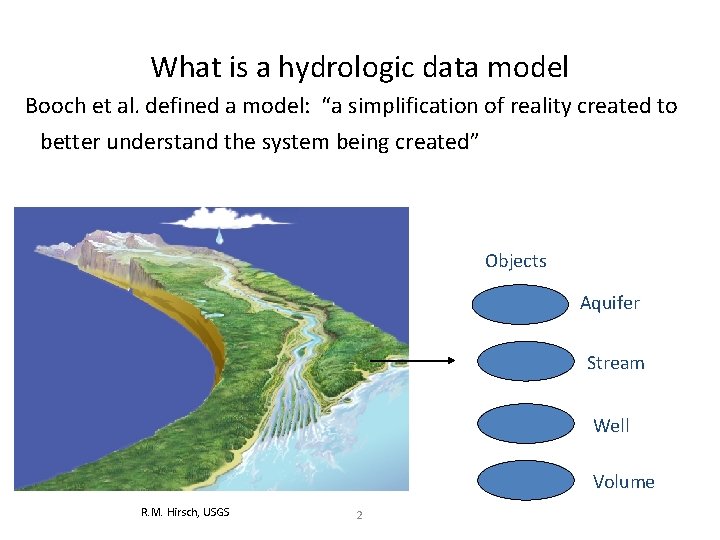
What is a hydrologic data model Booch et al. defined a model: “a simplification of reality created to better understand the system being created” Objects Aquifer Stream Well Volume R. M. Hirsch, USGS 2
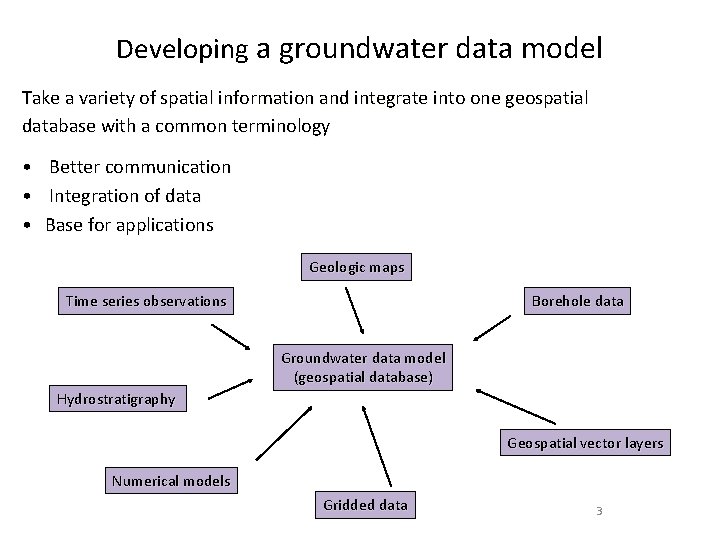
Developing a groundwater data model Take a variety of spatial information and integrate into one geospatial database with a common terminology • Better communication • Integration of data • Base for applications Geologic maps Time series observations Borehole data Groundwater data model (geospatial database) Hydrostratigraphy Geospatial vector layers Numerical models Gridded data 3
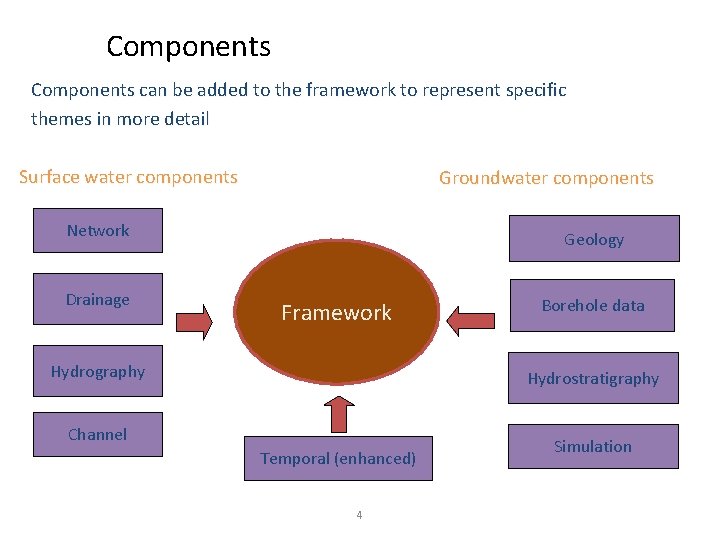
Components can be added to the framework to represent specific themes in more detail Surface water components Groundwater components Network Drainage Geology Framework Hydrography Borehole data Hydrostratigraphy Channel Temporal (enhanced) 4 Simulation
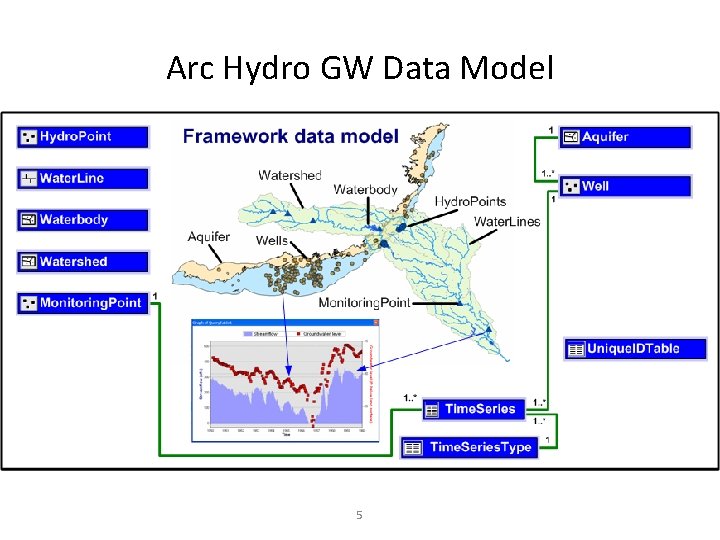
Arc Hydro GW Data Model 5
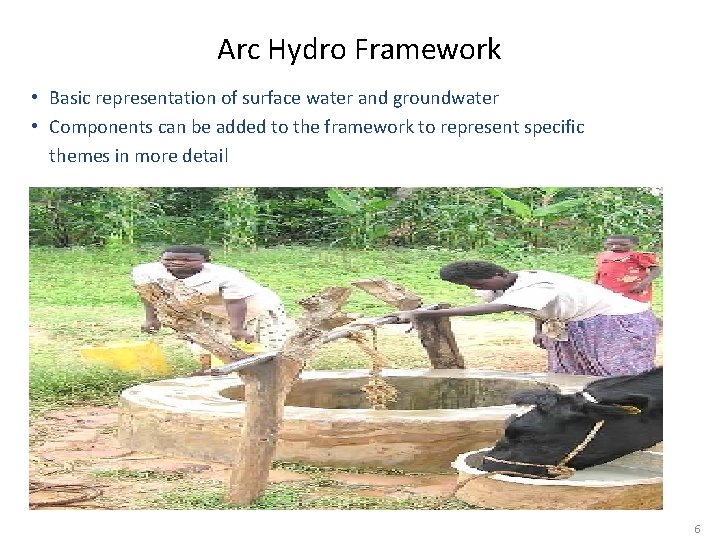
Arc Hydro Framework • Basic representation of surface water and groundwater • Components can be added to the framework to represent specific themes in more detail 6
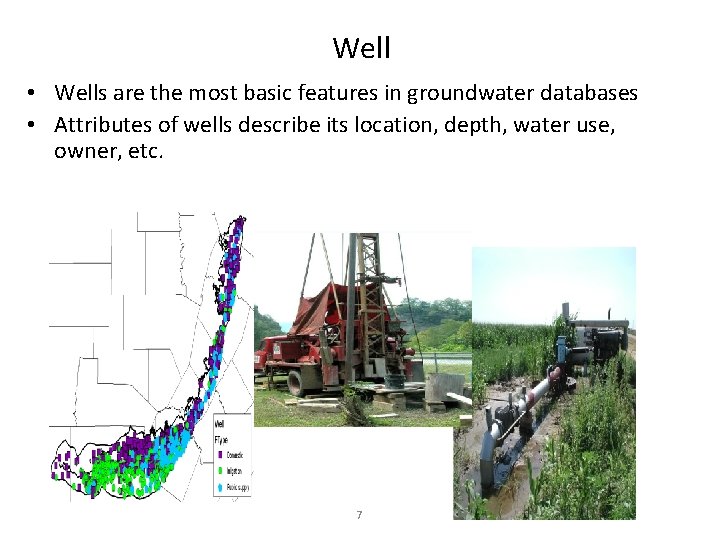
Well • Wells are the most basic features in groundwater databases • Attributes of wells describe its location, depth, water use, owner, etc. 7
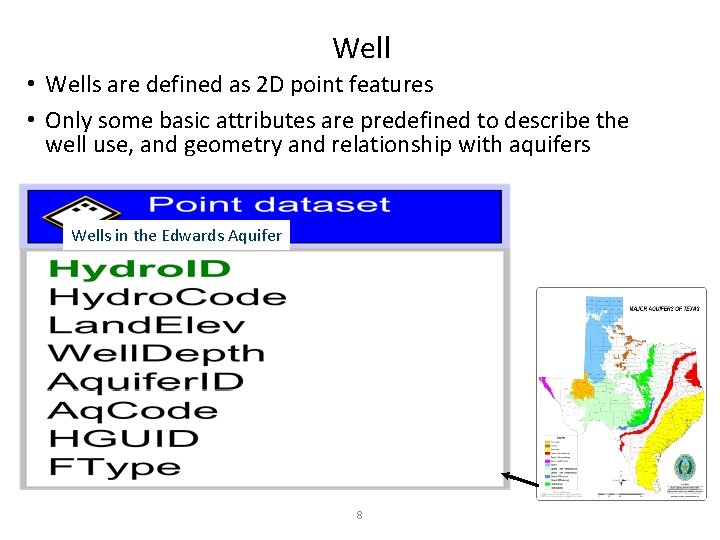
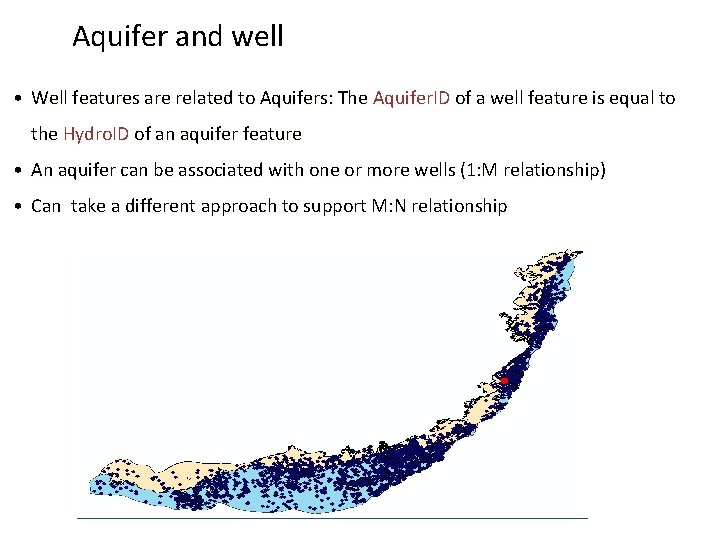
Well • Wells are defined as 2 D point features • Only some basic attributes are predefined to describe the well use, and geometry and relationship with aquifers Wells in the Edwards Aquifer 8
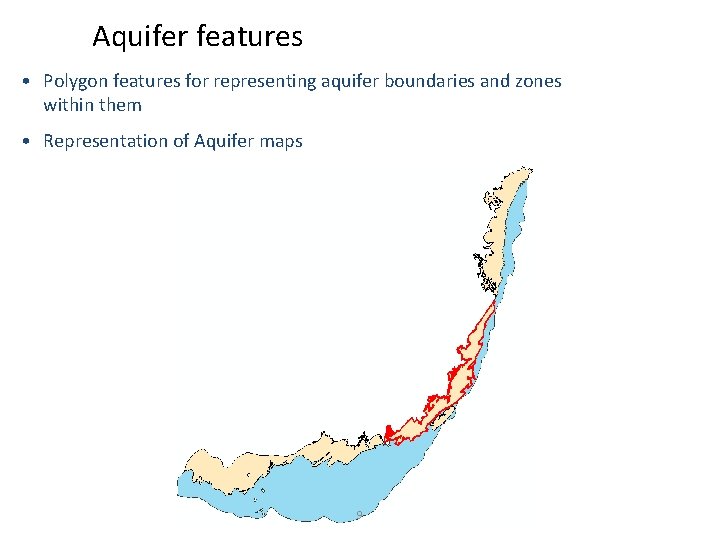
Aquifer features • Polygon features for representing aquifer boundaries and zones within them • Representation of Aquifer maps 9
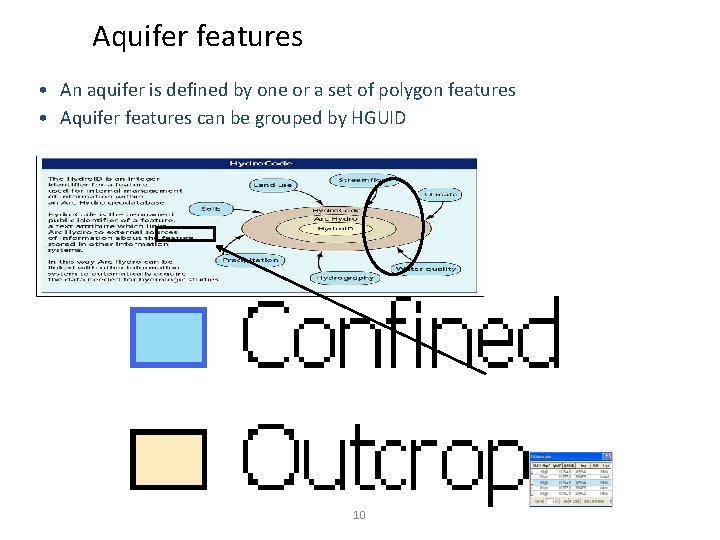
Aquifer features • An aquifer is defined by one or a set of polygon features • Aquifer features can be grouped by HGUID 10
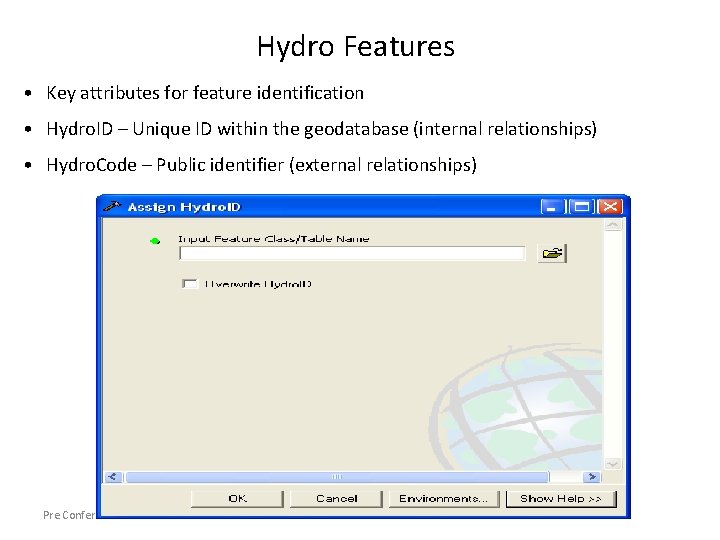
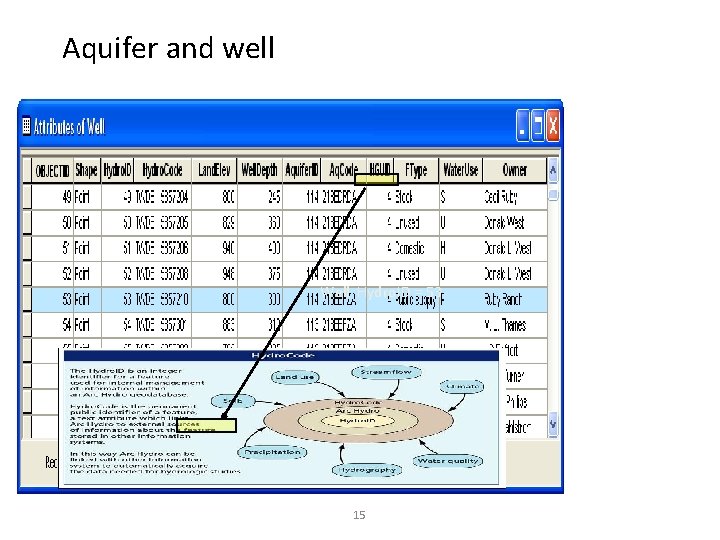
Hydro Features • Key attributes for feature identification • Hydro. ID – Unique ID within the geodatabase (internal relationships) • Hydro. Code – Public identifier (external relationships) Pre Conference Seminar 11
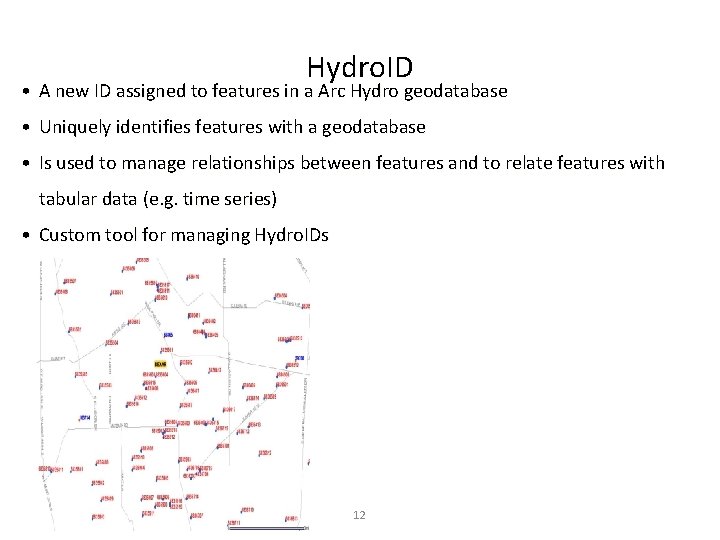
Hydro. ID • A new ID assigned to features in a Arc Hydro geodatabase • Uniquely identifies features with a geodatabase • Is used to manage relationships between features and to relate features with tabular data (e. g. time series) • Custom tool for managing Hydro. IDs Pre Conference Seminar 12
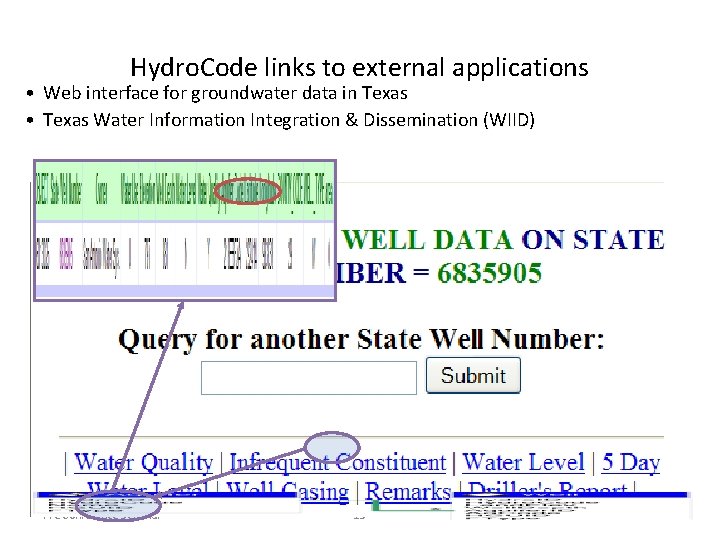
Hydro. Code links to external applications • Web interface for groundwater data in Texas • Texas Water Information Integration & Dissemination (WIID) Pre Conference Seminar 13
Aquifer and well • Well features are related to Aquifers: The Aquifer. ID of a well feature is equal to the Hydro. ID of an aquifer feature • An aquifer can be associated with one or more wells (1: M relationship) • Can take a different approach to support M: N relationship 14
Aquifer and well Well Hydro. ID = 53 15
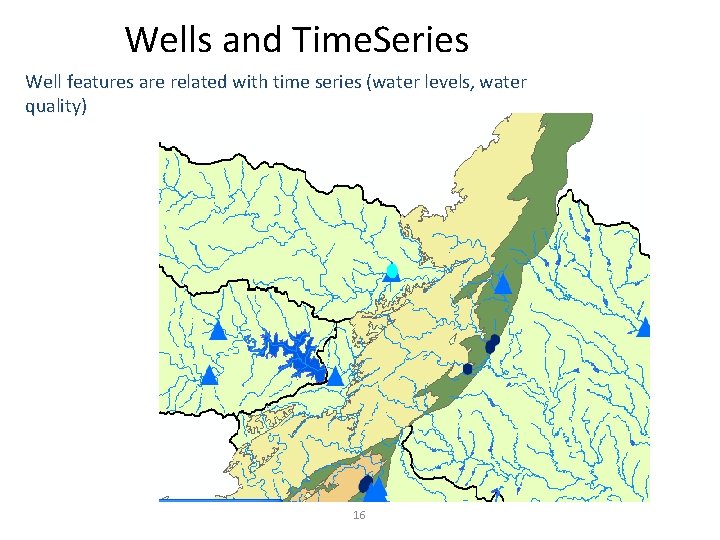
Wells and Time. Series Well features are related with time series (water levels, water quality) 16
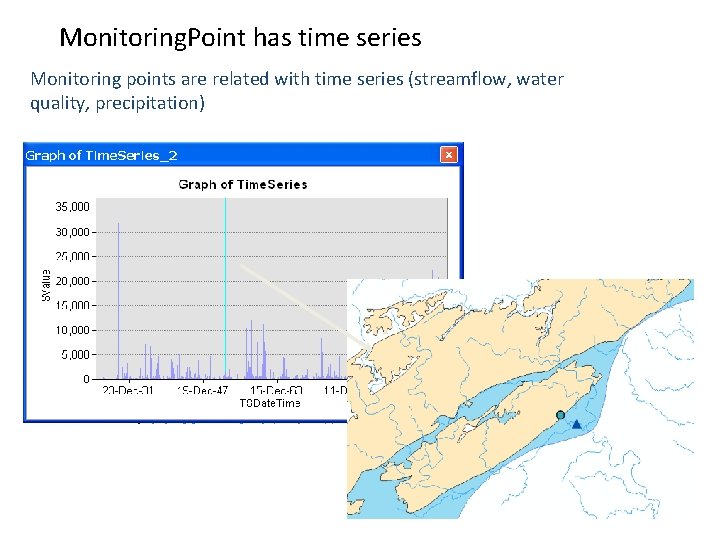
Monitoring. Point has time series Monitoring points are related with time series (streamflow, water quality, precipitation) 17
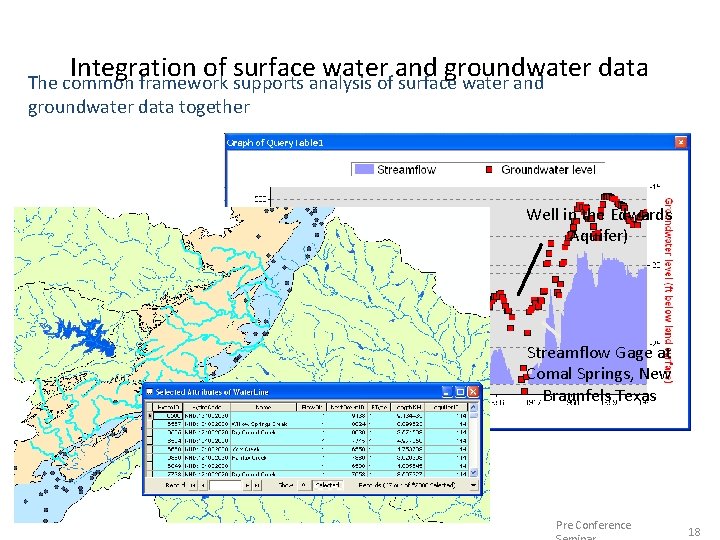
Integration of surface water and groundwater data The common framework supports analysis of surface water and groundwater data together Well in the Edwards Aquifer) Streamflow Gage at Comal Springs, New Braunfels Texas Pre Conference 18
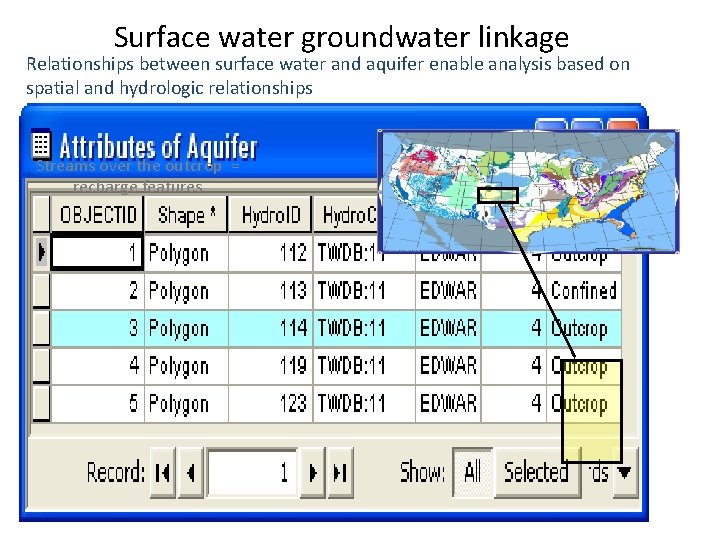
Surface water groundwater linkage Relationships between surface water and aquifer enable analysis based on spatial and hydrologic relationships Streams over the outcrop = recharge features Pre Conference Seminar 19
Components • Geology - Representation of data from geologic maps • Wells and Boreholes – Description of well attributes and borehole data • Hydrostratigraphy – 2 D and 3 D description of hydrostratigraphy • Temporal – Representation of time varying data • Simulation – Representation of groundwater simulation models (focus on MODFLOW) 20
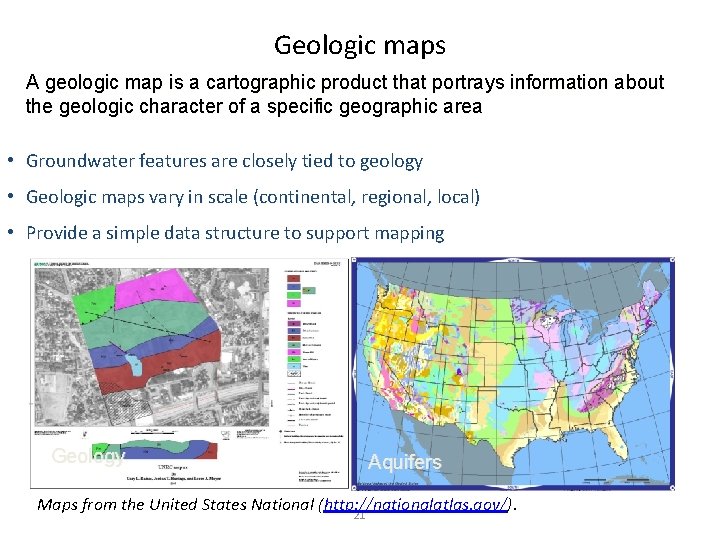
Geologic maps A geologic map is a cartographic product that portrays information about the geologic character of a specific geographic area • Groundwater features are closely tied to geology • Geologic maps vary in scale (continental, regional, local) • Provide a simple data structure to support mapping Geology Aquifers Maps from the United States National (http: //nationalatlas. gov/). 21
Geologic map databases “A digitally-compiled collection of spatial (geographically referenced) and descriptive geologic information about a specific geographic area” (Geologic Data Subcommittee, Federal Geographic Data Committee 2006) • Standards for archiving geologic map data • Support the development of applications for automating map creation • Complex Examples: § North American Geologic Map Data Model (NADM) § National Geologic Map Database (NGMDB) § State geologic map databases (e. g. Geologic Atlas of Texas) § Arc. Geology 22
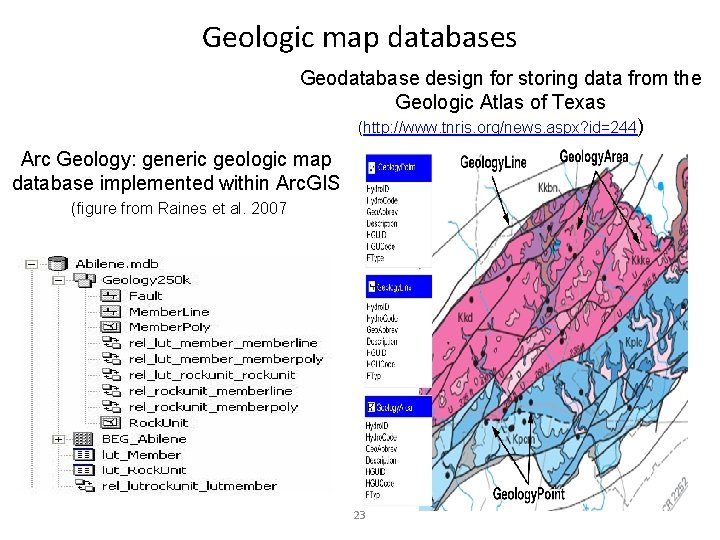
Geologic map databases Geodatabase design for storing data from the Geologic Atlas of Texas (http: //www. tnris. org/news. aspx? id=244) Arc Geology: generic geologic map database implemented within Arc. GIS (figure from Raines et al. 2007 23
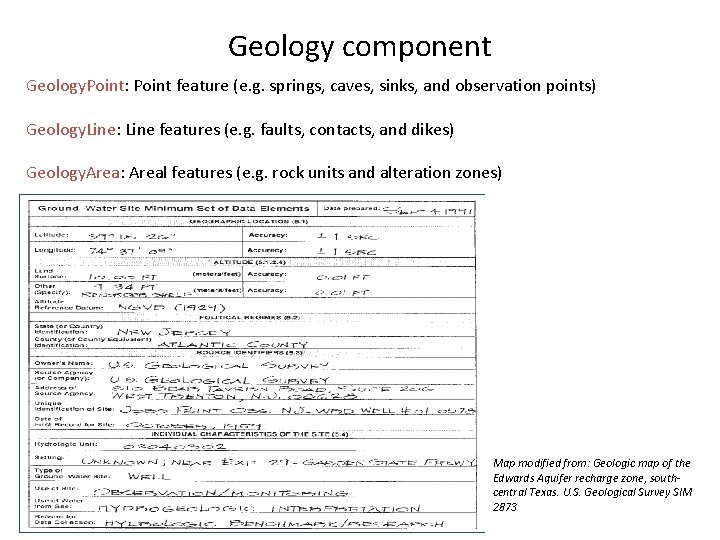
Geology component Geology. Point: Point feature (e. g. springs, caves, sinks, and observation points) Geology. Line: Line features (e. g. faults, contacts, and dikes) Geology. Area: Areal features (e. g. rock units and alteration zones) Pre Conference Seminar 24 Map modified from: Geologic map of the Edwards Aquifer recharge zone, southcentral Texas. U. S. Geological Survey SIM 2873
Components • Geology - Representation of data from geologic maps • Wells and Boreholes – Description of well attributes and borehole data • Hydrostratigraphy – 2 D and 3 D description of hydrostratigraphy • Temporal – Representation of time varying data • Simulation – Representation of groundwater simulation models (focus on MODFLOW) Pre Conference Seminar 25
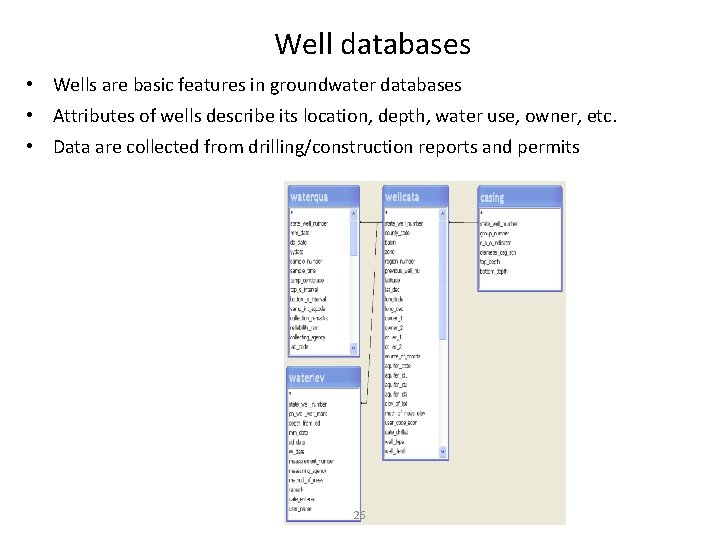
Well databases • Wells are basic features in groundwater databases • Attributes of wells describe its location, depth, water use, owner, etc. • Data are collected from drilling/construction reports and permits 26
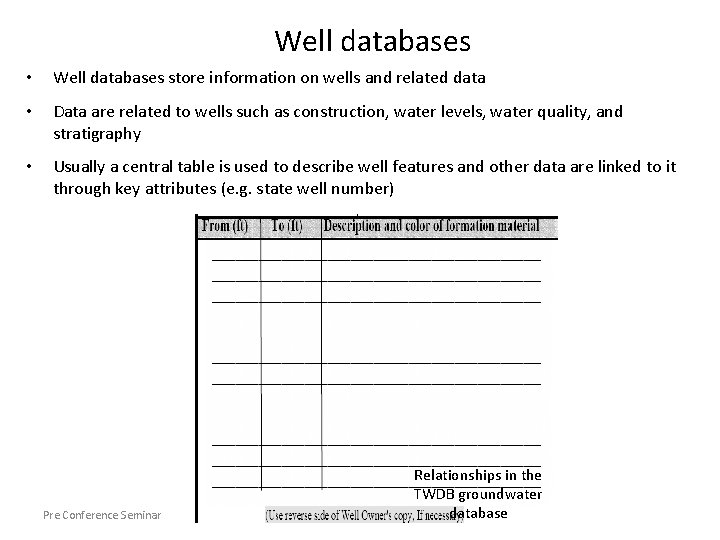
Well databases • Well databases store information on wells and related data • Data are related to wells such as construction, water levels, water quality, and stratigraphy • Usually a central table is used to describe well features and other data are linked to it through key attributes (e. g. state well number) Pre Conference Seminar 27 Relationships in the TWDB groundwater database
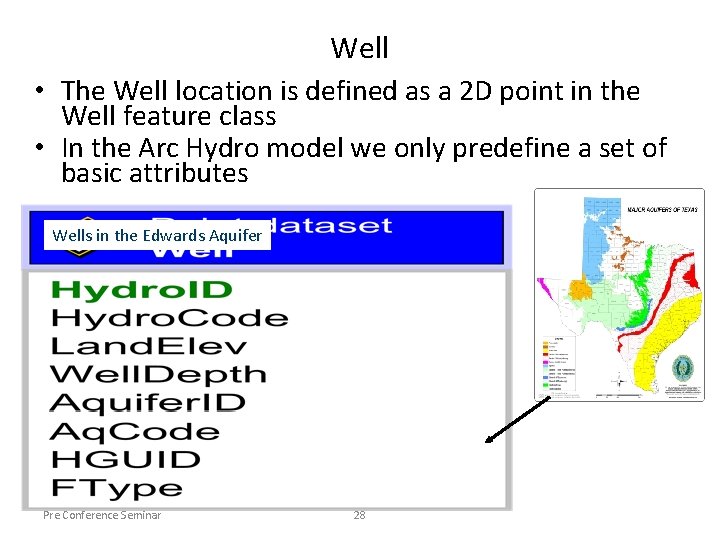
Well • The Well location is defined as a 2 D point in the Well feature class • In the Arc Hydro model we only predefine a set of basic attributes Wells in the Edwards Aquifer Pre Conference Seminar 28
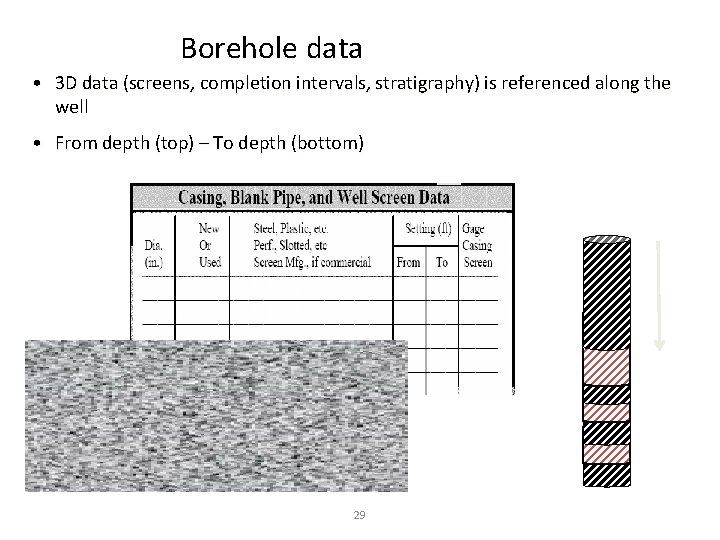
Borehole data • 3 D data (screens, completion intervals, stratigraphy) is referenced along the well • From depth (top) – To depth (bottom) 29
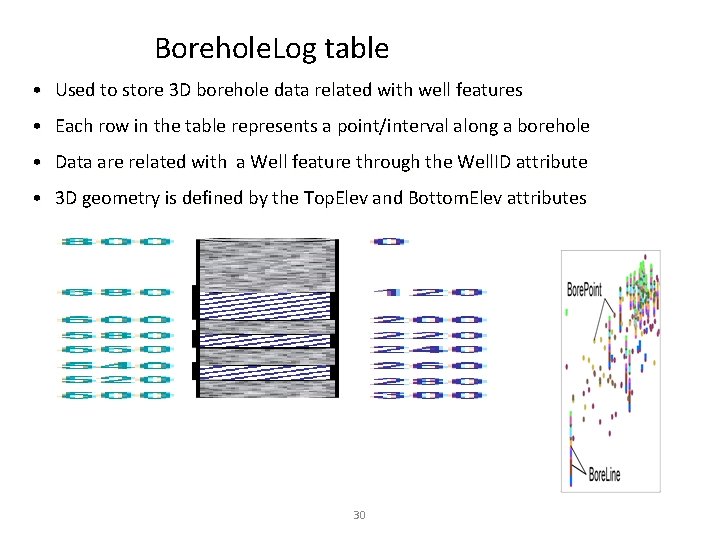
Borehole. Log table • Used to store 3 D borehole data related with well features • Each row in the table represents a point/interval along a borehole • Data are related with a Well feature through the Well. ID attribute • 3 D geometry is defined by the Top. Elev and Bottom. Elev attributes 30
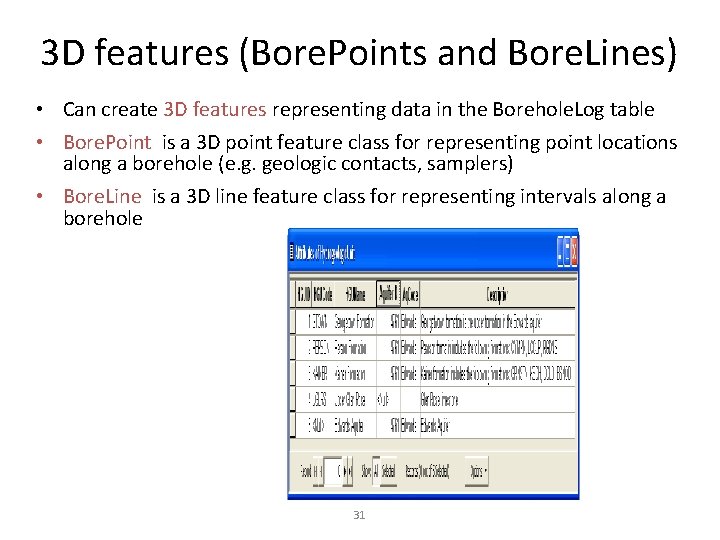
3 D features (Bore. Points and Bore. Lines) • Can create 3 D features representing data in the Borehole. Log table • Bore. Point is a 3 D point feature class for representing point locations along a borehole (e. g. geologic contacts, samplers) • Bore. Line is a 3 D line feature class for representing intervals along a borehole 31
Components • Geology - Representation of data from geologic maps • Wells and Boreholes – Description of well attributes and borehole data • Hydrostratigraphy – 2 D and 3 D description of hydrostratigraphy • Temporal – Representation of time varying data • Simulation – Representation of groundwater simulation models (focus on MODFLOW) 32
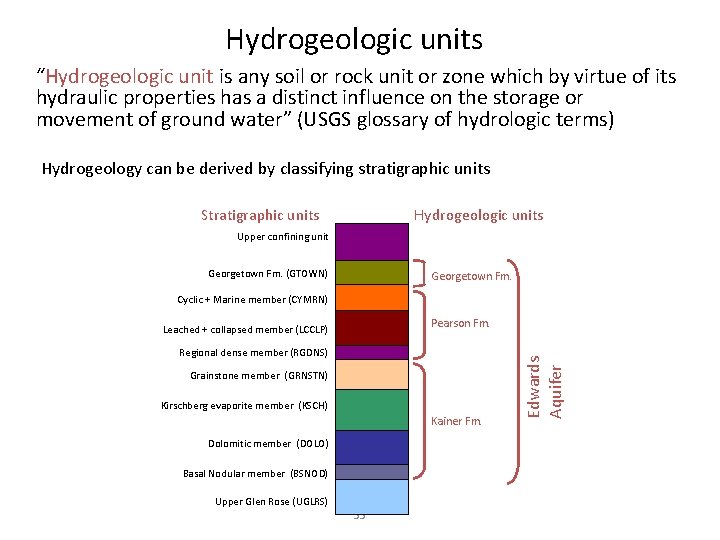
Hydrogeologic units “Hydrogeologic unit is any soil or rock unit or zone which by virtue of its hydraulic properties has a distinct influence on the storage or movement of ground water” (USGS glossary of hydrologic terms) Hydrogeology can be derived by classifying stratigraphic units Hydrogeologic units Stratigraphic units Upper confining unit Georgetown Fm. (GTOWN) Georgetown Fm. Cyclic + Marine member (CYMRN) Regional dense member (RGDNS) Grainstone member (GRNSTN) Kirschberg evaporite member (KSCH) Kainer Fm. Dolomitic member (DOLO) Basal Nodular member (BSNOD) Upper Glen Rose (UGLRS) 33 Edwards Aquifer Pearson Fm. Leached + collapsed member (LCCLP)
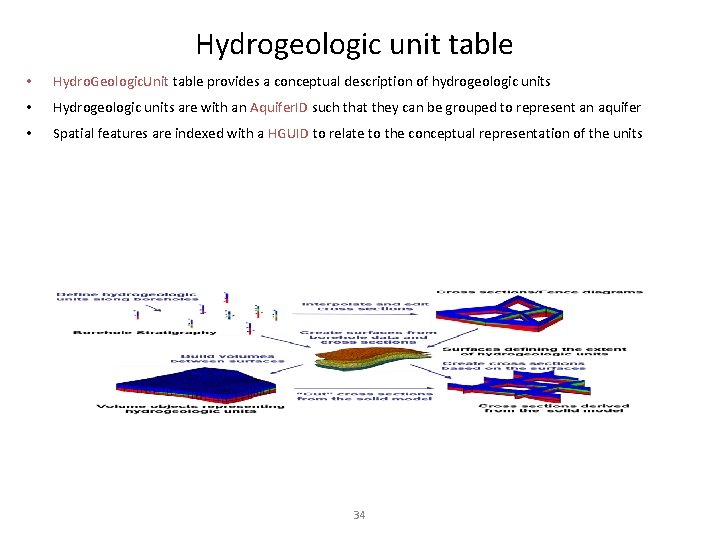
Hydrogeologic unit table • Hydro. Geologic. Unit table provides a conceptual description of hydrogeologic units • Hydrogeologic units are with an Aquifer. ID such that they can be grouped to represent an aquifer • Spatial features are indexed with a HGUID to relate to the conceptual representation of the units 34
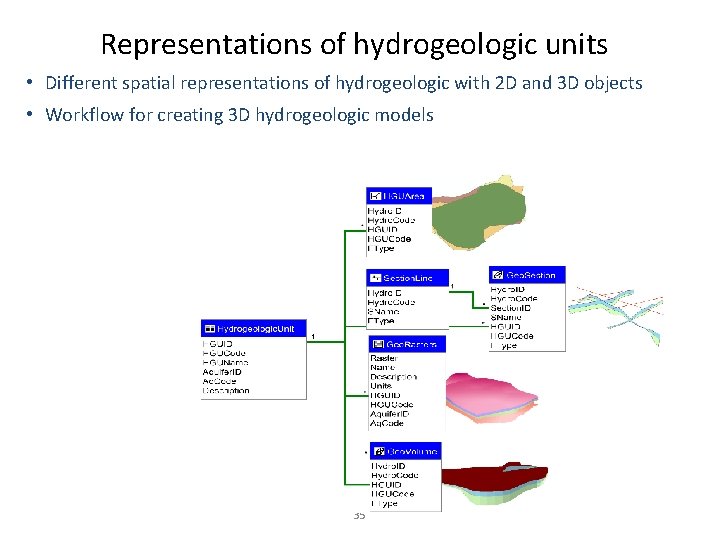
Representations of hydrogeologic units • Different spatial representations of hydrogeologic with 2 D and 3 D objects • Workflow for creating 3 D hydrogeologic models 35
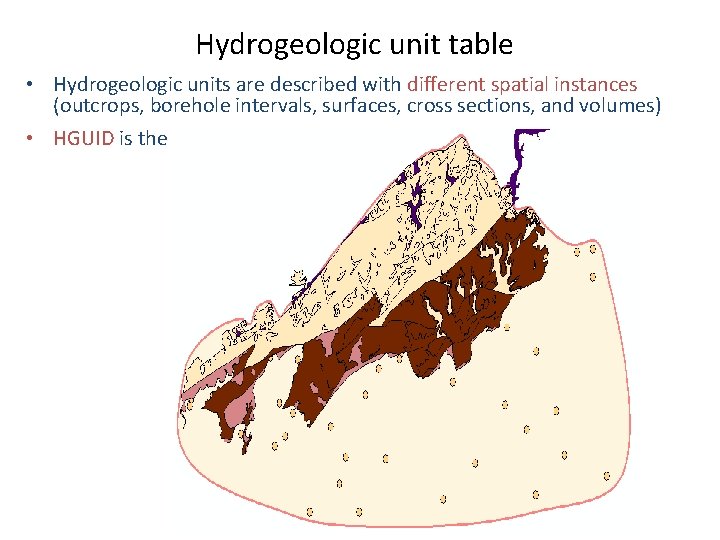
Hydrogeologic unit table • Hydrogeologic units are described with different spatial instances (outcrops, borehole intervals, surfaces, cross sections, and volumes) • HGUID is the key attribute 36
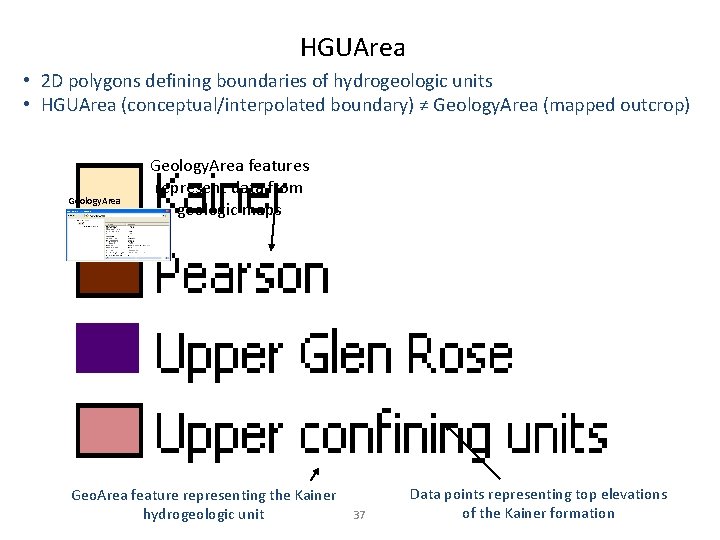
HGUArea • 2 D polygons defining boundaries of hydrogeologic units • HGUArea (conceptual/interpolated boundary) ≠ Geology. Area (mapped outcrop) Geology. Area features represent data from geologic maps Geo. Area feature representing the Kainer hydrogeologic unit 37 Data points representing top elevations of the Kainer formation
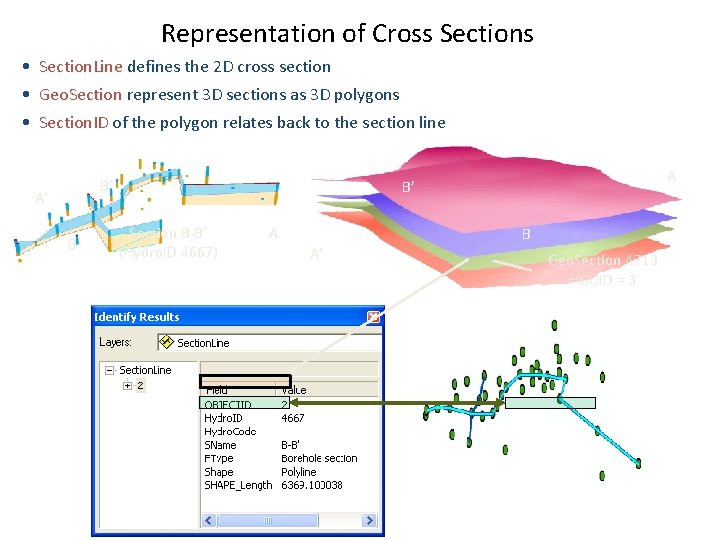
Representation of Cross Sections • • • Section. Line defines the 2 D cross section Geo. Section represent 3 D sections as 3 D polygons Section. ID of the polygon relates back to the section line B’ A’ B A B’ Section B-B’ (Hydro. ID 4667) A B A’ Geo. Section 4713 HGUID = 3 38
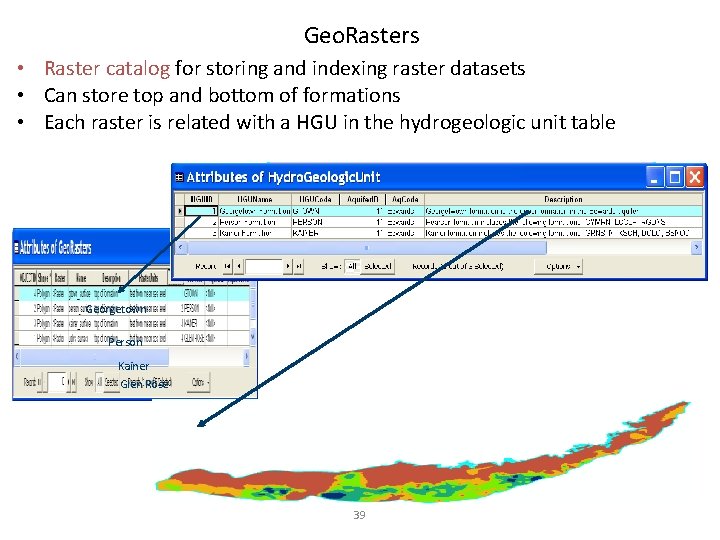
Geo. Rasters • Raster catalog for storing and indexing raster datasets • Can store top and bottom of formations • Each raster is related with a HGU in the hydrogeologic unit table Georgetown Person Kainer Glen Rose 39
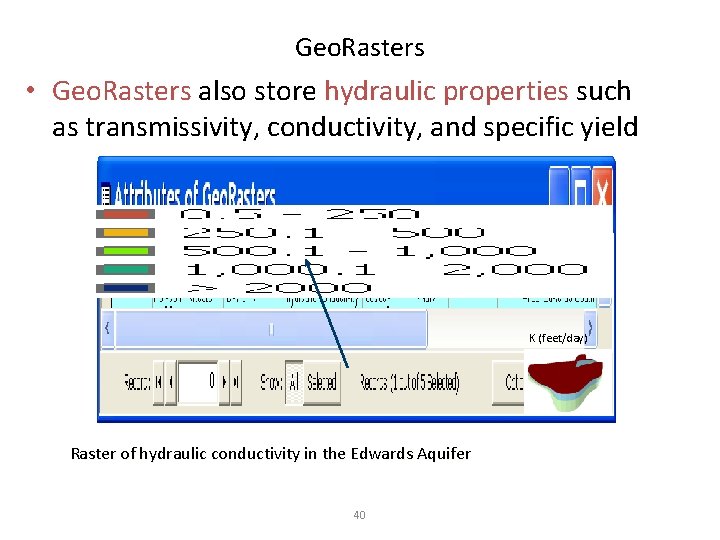
Geo. Rasters • Geo. Rasters also store hydraulic properties such as transmissivity, conductivity, and specific yield K (feet/day) Raster of hydraulic conductivity in the Edwards Aquifer 40
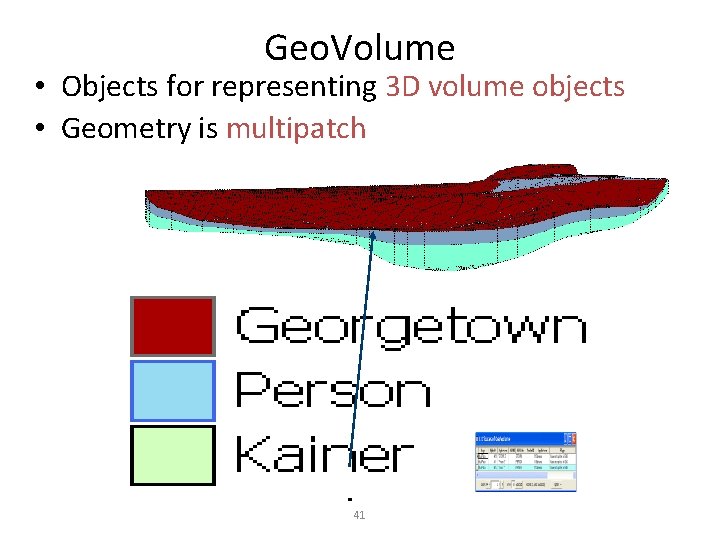
Geo. Volume • Objects for representing 3 D volume objects • Geometry is multipatch 41
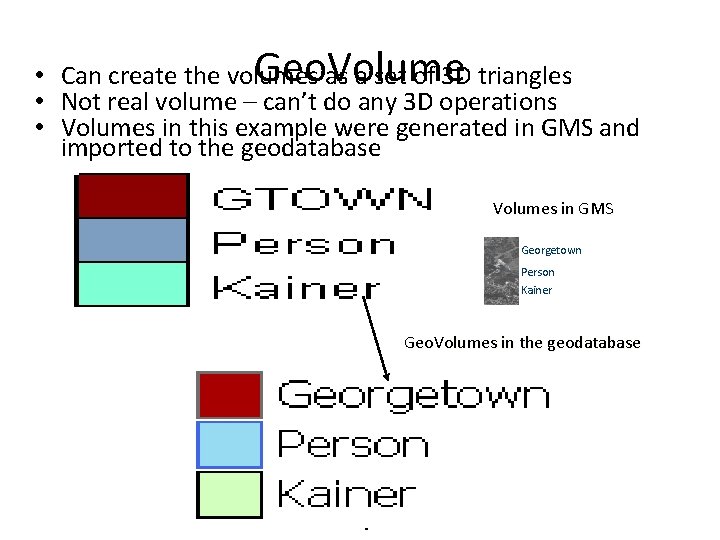
Geo. Volume • Can create the volumes as a set of 3 D triangles • Not real volume – can’t do any 3 D operations • Volumes in this example were generated in GMS and imported to the geodatabase Volumes in GMS Georgetown Person Kainer Geo. Volumes in the geodatabase 42
Components • Geology - Representation of data from geologic maps • Wells and Boreholes – Description of well attributes and borehole data • Hydrostratigraphy – 2 D and 3 D description of hydrostratigraphy • Temporal – Representation of time varying data • Simulation – Representation of groundwater simulation models (focus on MODFLOW) 43
Types of time varying datasets • Single variable time series – A single variable recorded at a location, such as stream discharge or groundwater levels • Multi variable time series – Multiple variables recorded simultaneously at the same location, such as chemical analysis of a water sample • Time varying surfaces (raster series) – Raster datasets indexed by time. Each rater is a “snapshot” of the environment at a certain time. • Time varying features (feature series) – A collection of features indexed by time. Each feature in a feature series represents a variable at a single time period. 44
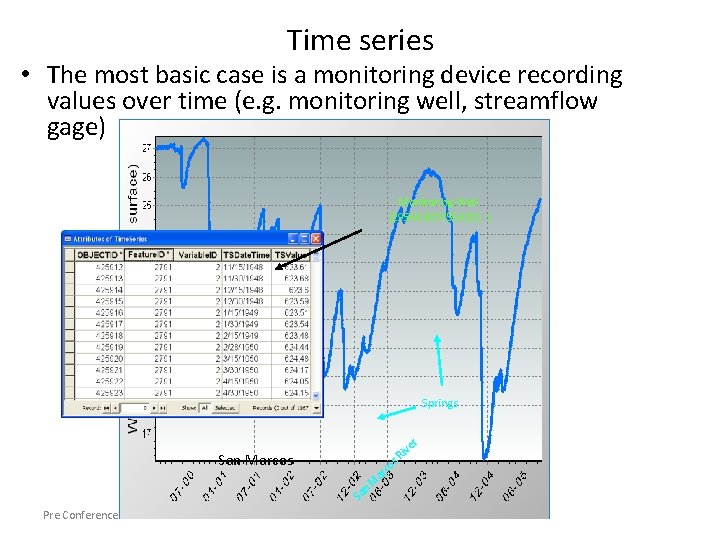
Time series • The most basic case is a monitoring device recording values over time (e. g. monitoring well, streamflow gage) Monitoring Well (295443097554201 ) Sink Creek San Marcos springs San Marcos n Sa Pre Conference Seminar 45 M ar co r ve i s. R
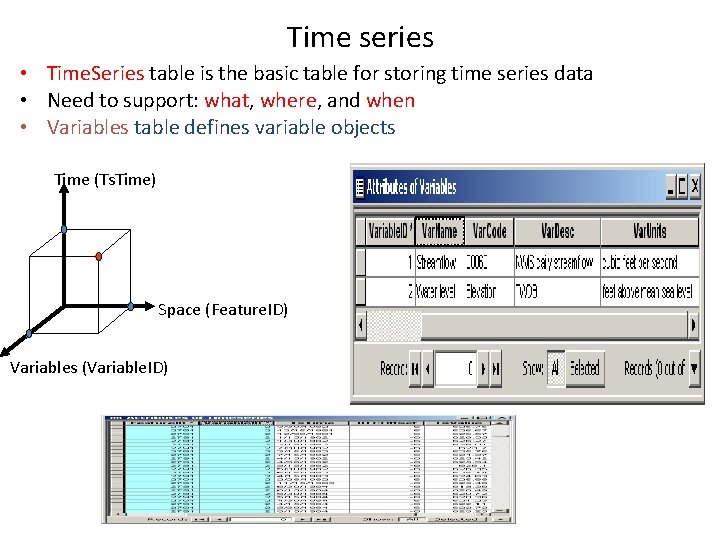
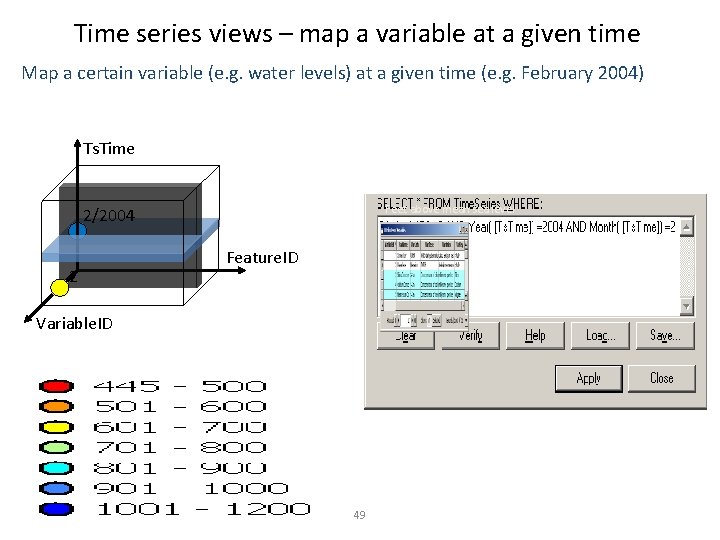
Time series • Time. Series table is the basic table for storing time series data • Need to support: what, where, and when • Variables table defines variable objects Time (Ts. Time) Space (Feature. ID) Variables (Variable. ID) 46
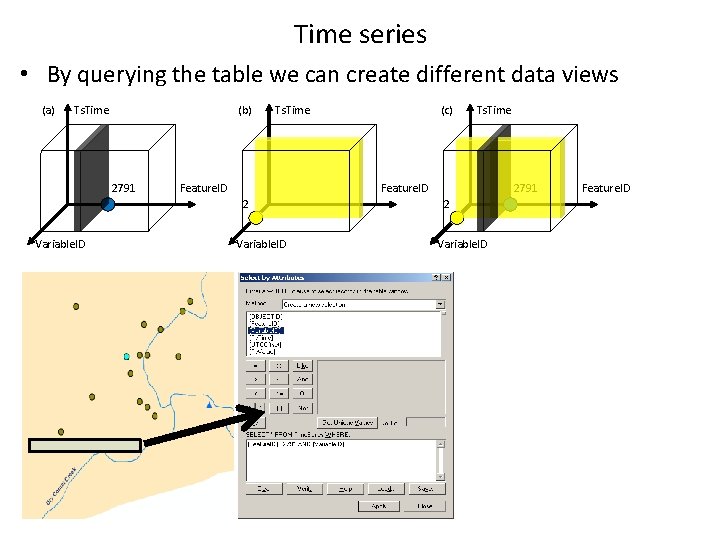
Time series • By querying the table we can create different data views (a) Ts. Time (b) 2791 Ts. Time (c) Feature. ID 2 Variable. ID Pre Conference Seminar Ts. Time 2791 2 Variable. ID 47 Feature. ID
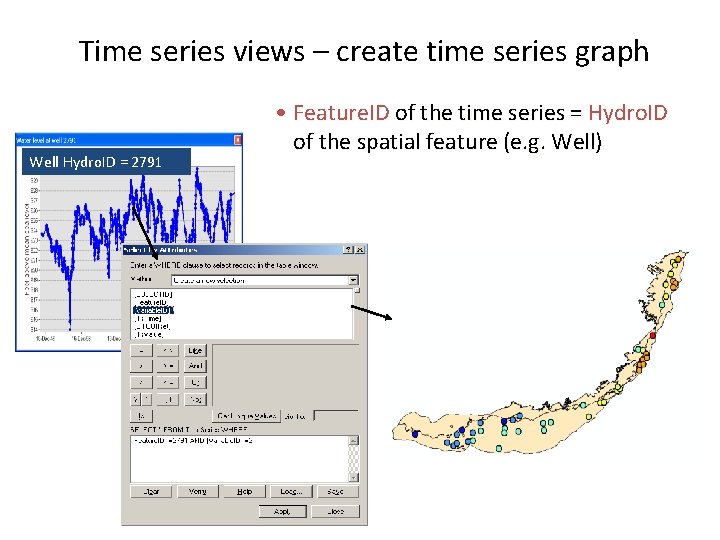
Time series views – create time series graph Well Hydro. ID = 2791 • Feature. ID of the time series = Hydro. ID of the spatial feature (e. g. Well) 48
Time series views – map a variable at a given time Map a certain variable (e. g. water levels) at a given time (e. g. February 2004) Ts. Time Feet above mean sea level 2/2004 2 Feature. ID Variable. ID Pre Conference Seminar 49
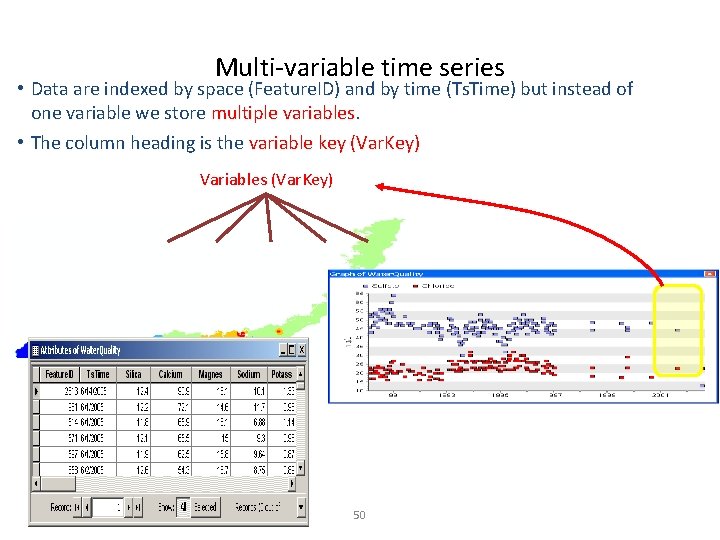
Multi-variable time series • Data are indexed by space (Feature. ID) and by time (Ts. Time) but instead of one variable we store multiple variables. • The column heading is the variable key (Var. Key) Variables (Var. Key) Pre Conference Seminar 50
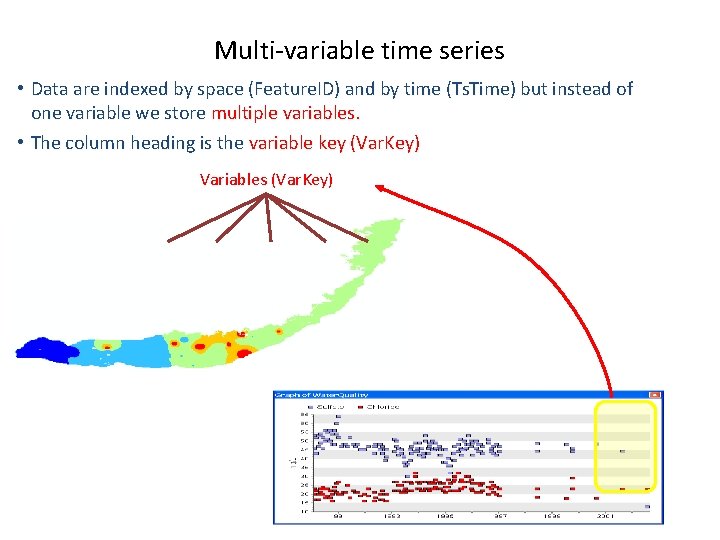
Multi-variable time series • Data are indexed by space (Feature. ID) and by time (Ts. Time) but instead of one variable we store multiple variables. • The column heading is the variable key (Var. Key) Variables (Var. Key) 51
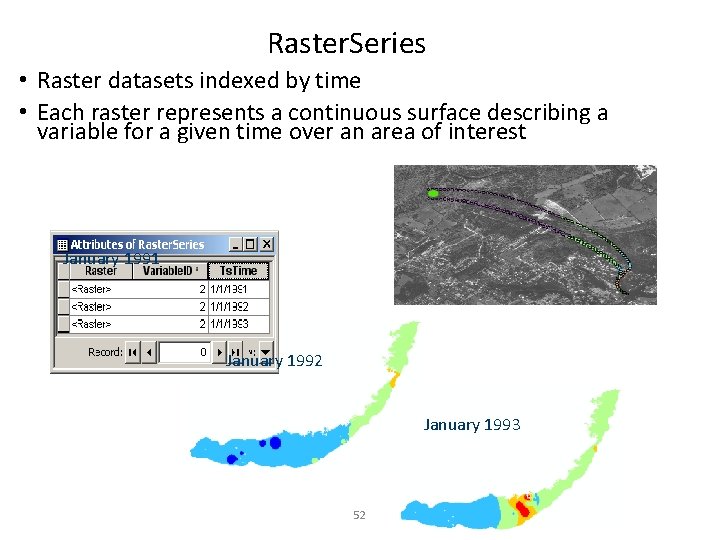
Raster. Series • Raster datasets indexed by time • Each raster represents a continuous surface describing a variable for a given time over an area of interest January 1991 January 1992 January 1993 52
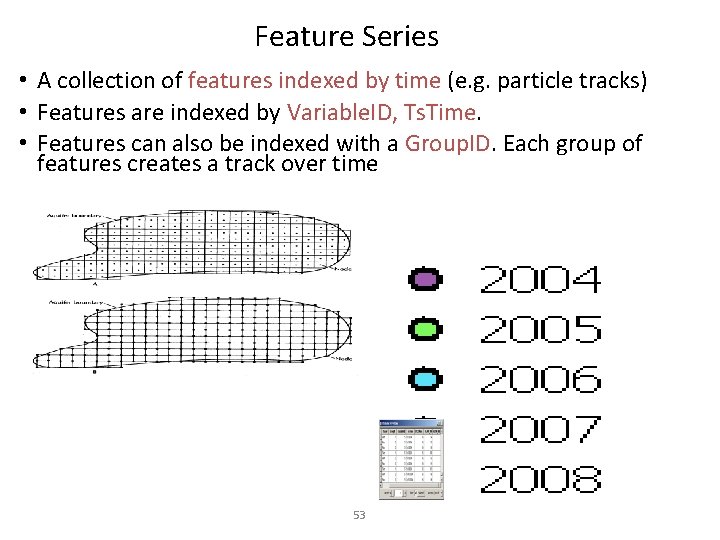
Feature Series • A collection of features indexed by time (e. g. particle tracks) • Features are indexed by Variable. ID, Ts. Time. • Features can also be indexed with a Group. ID. Each group of features creates a track over time 53
Components • Geology - Representation of data from geologic maps • Wells and Boreholes – Description of well attributes and borehole data • Hydrostratigraphy – 2 D and 3 D description of hydrostratigraphy • Temporal – Representation of time varying data • Simulation – Representation of groundwater simulation models (focus on MODFLOW) 54
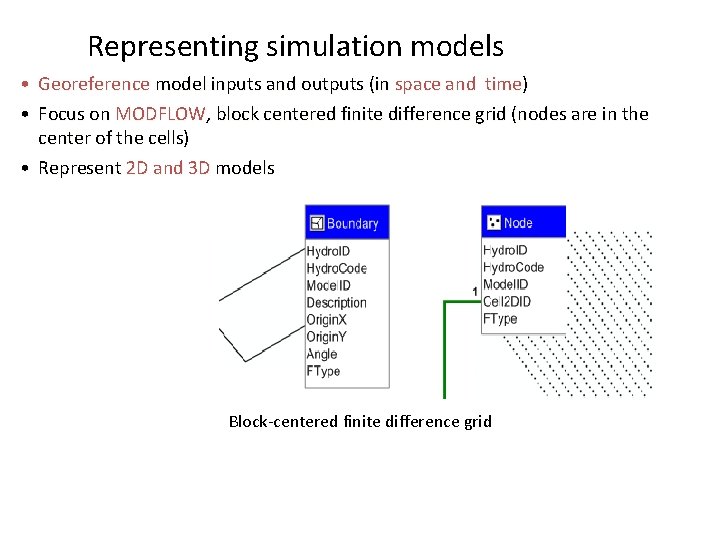
Representing simulation models • Georeference model inputs and outputs (in space and time) • Focus on MODFLOW, block centered finite difference grid (nodes are in the center of the cells) • Represent 2 D and 3 D models Block-centered finite difference grid
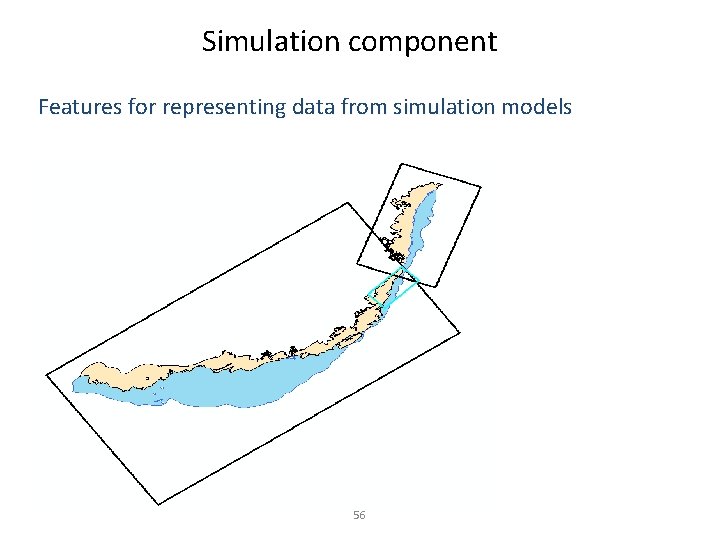
Simulation component Features for representing data from simulation models 56
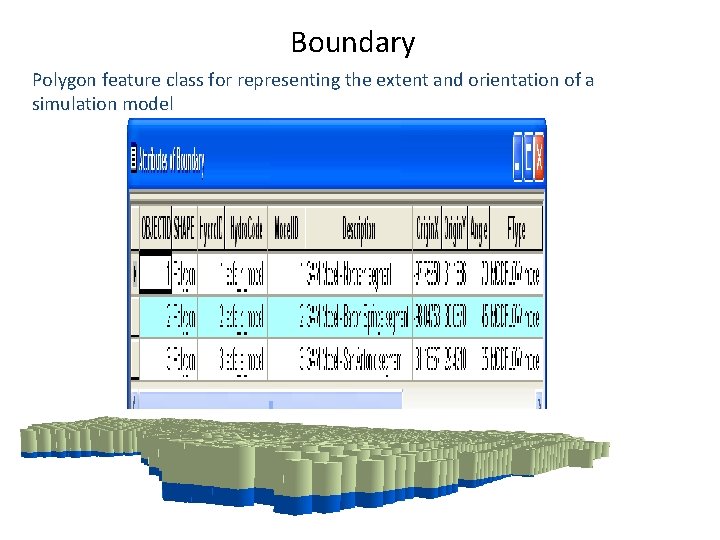
Boundary Polygon feature class for representing the extent and orientation of a simulation model Pre Conference Seminar 57
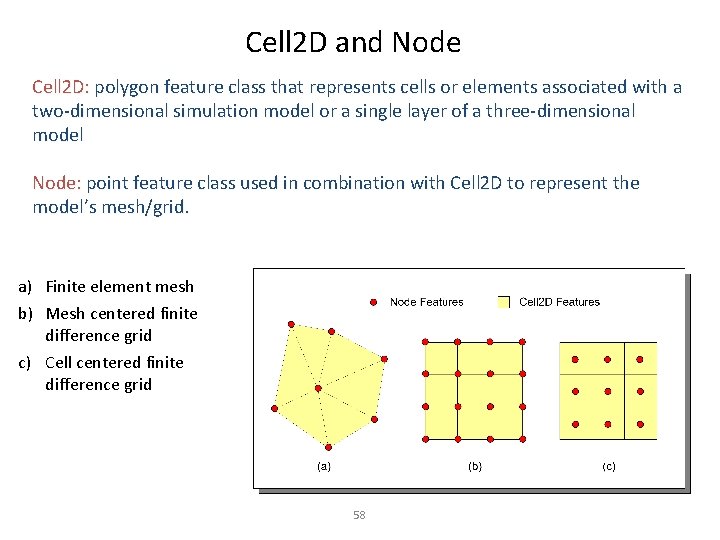
Cell 2 D and Node Cell 2 D: polygon feature class that represents cells or elements associated with a two-dimensional simulation model or a single layer of a three-dimensional model Node: point feature class used in combination with Cell 2 D to represent the model’s mesh/grid. a) Finite element mesh b) Mesh centered finite difference grid c) Cell centered finite difference grid 58
Cell 3 D • Multipatch feature class that represents three-dimensional cells and elements • Used mostly for visualization of 3 D models 59