
Arc Flash Data Centers March 2015 Matt Phillips

- Slides: 16
Arc Flash & Data Centers March 2015 Matt Phillips , VP of Business Development Frank Jenkins, Sr. Electrical Engineer
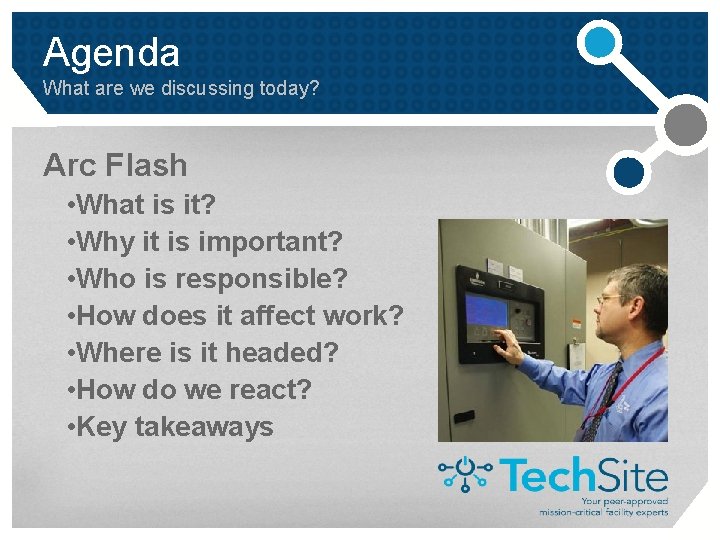
Agenda What are we discussing today? Arc Flash • What is it? • Why it is important? • Who is responsible? • How does it affect work? • Where is it headed? • How do we react? • Key takeaways
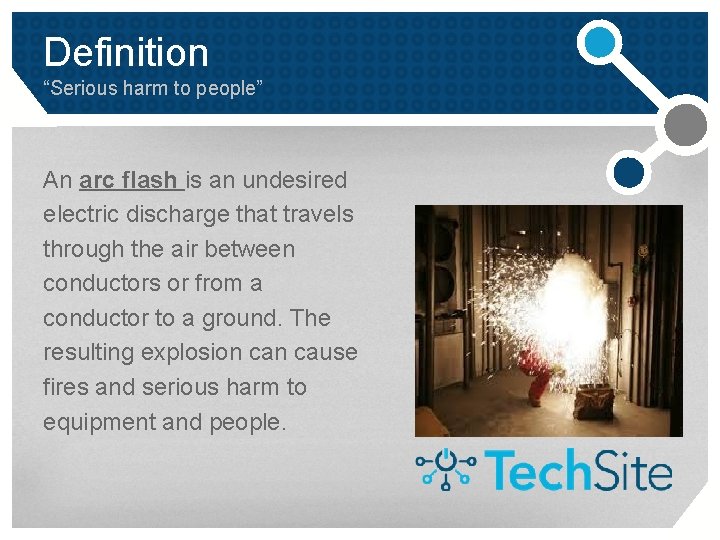
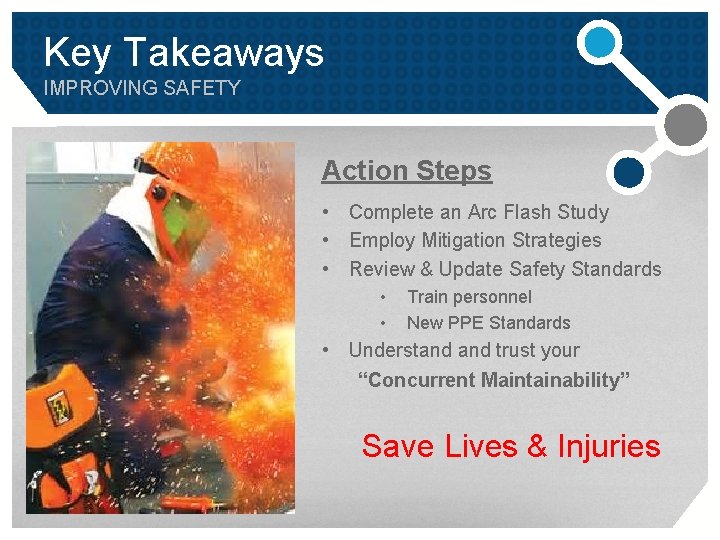
Definition “Serious harm to people” An arc flash is an undesired electric discharge that travels through the air between conductors or from a conductor to a ground. The resulting explosion cause fires and serious harm to equipment and people.
Why is Arc Flash a big topic Code, Regulations, and Lawyers • NFPA 70 E 2015 Standard for Electrical Safety Requirements for Employee Workplaces • OSHA Standards 29 -CFR, Part 1910 Sub part S (electrical) Standard number 1910. 333. • NEC 2002 Article 110. 16 NFPA 70 B 2002 Recommended Practice for Electrical Equipment Maintenance. There almost as many lawyers as engineers at Arc Flash Training Seminars
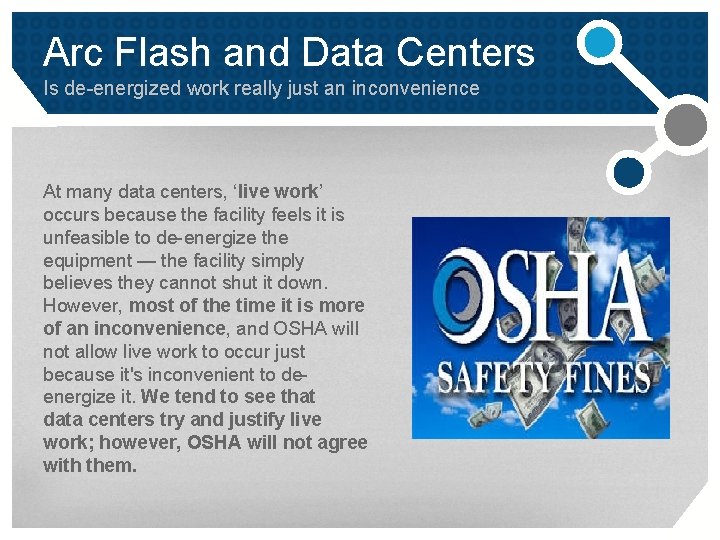
Arc Flash and Data Centers Is de-energized work really just an inconvenience At many data centers, ‘live work’ occurs because the facility feels it is unfeasible to de-energize the equipment — the facility simply believes they cannot shut it down. However, most of the time it is more of an inconvenience, and OSHA will not allow live work to occur just because it's inconvenient to deenergize it. We tend to see that data centers try and justify live work; however, OSHA will not agree with them.
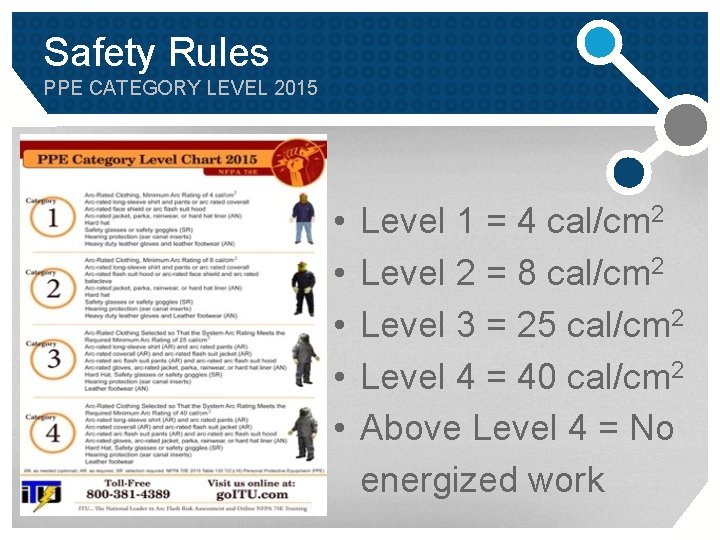
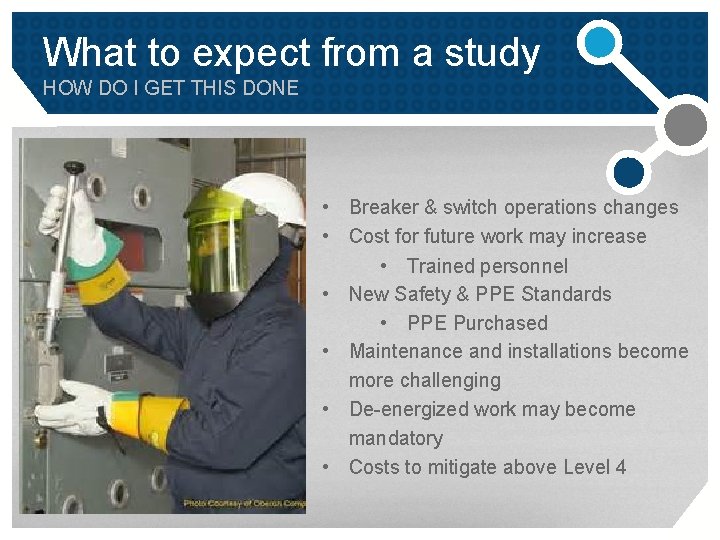
Safety Rules PPE CATEGORY LEVEL 2015 • • • Level 1 = 4 cal/cm 2 Level 2 = 8 cal/cm 2 Level 3 = 25 cal/cm 2 Level 4 = 40 cal/cm 2 Above Level 4 = No energized work
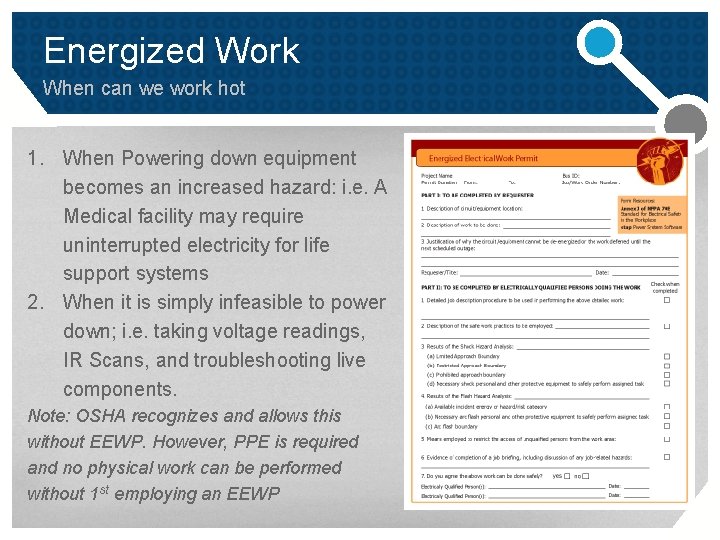
Energized Work When can we work hot 1. When Powering down equipment becomes an increased hazard: i. e. A Medical facility may require uninterrupted electricity for life support systems 2. When it is simply infeasible to power down; i. e. taking voltage readings, IR Scans, and troubleshooting live components. Note: OSHA recognizes and allows this without EEWP. However, PPE is required and no physical work can be performed without 1 st employing an EEWP
Energized Electrical Work Permit OSHA Approved - Who is liable?
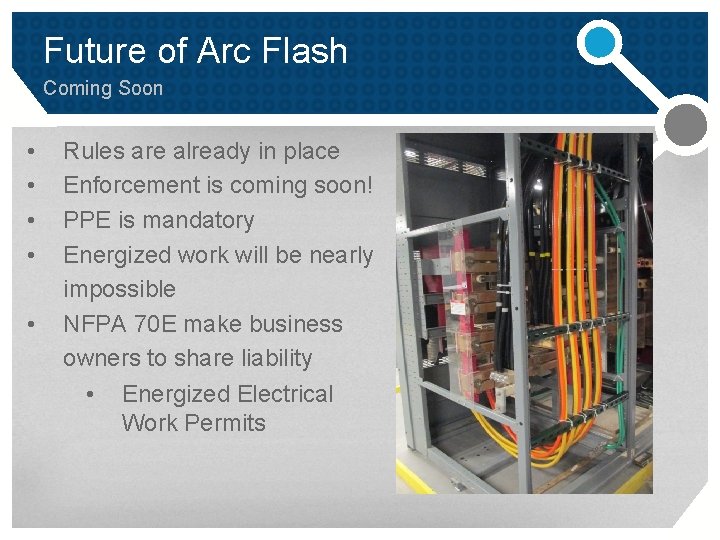
Future of Arc Flash Coming Soon • • • Rules are already in place Enforcement is coming soon! PPE is mandatory Energized work will be nearly impossible NFPA 70 E make business owners to share liability • Energized Electrical Work Permits
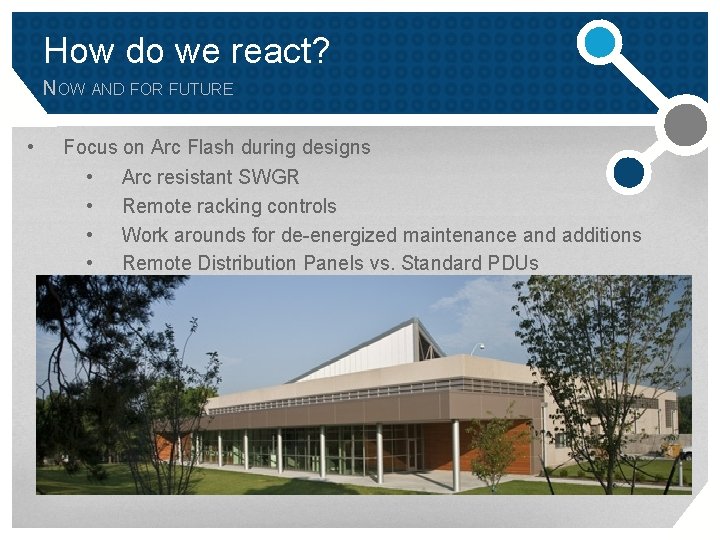
How do we react? NOW AND FOR FUTURE • Focus on Arc Flash during designs • Arc resistant SWGR • Remote racking controls • Work arounds for de-energized maintenance and additions • Remote Distribution Panels vs. Standard PDUs
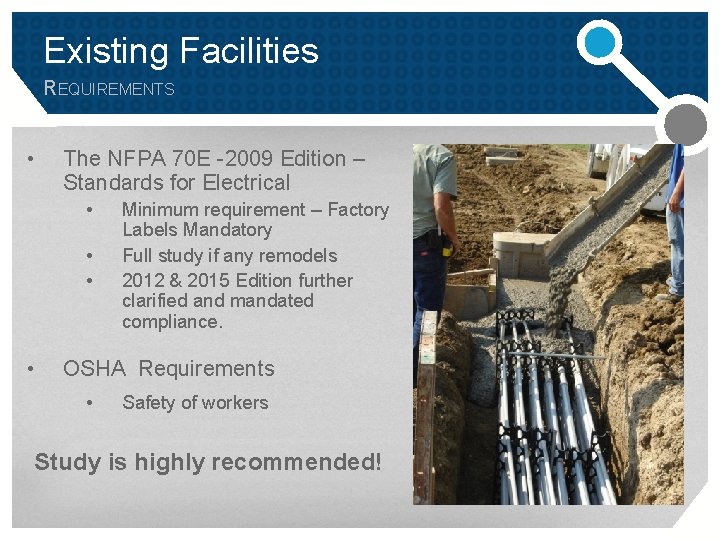
Existing Facilities REQUIREMENTS • The NFPA 70 E -2009 Edition – Standards for Electrical • • Minimum requirement – Factory Labels Mandatory Full study if any remodels 2012 & 2015 Edition further clarified and mandated compliance. OSHA Requirements • Safety of workers Study is highly recommended!
What to expect from a study HOW DO I GET THIS DONE • Breaker & switch operations changes • Cost for future work may increase • Trained personnel • New Safety & PPE Standards • PPE Purchased • Maintenance and installations become more challenging • De-energized work may become mandatory • Costs to mitigate above Level 4
De-energized work ARE YOU FOR REAL Know your Tier Level 1. Tier I - Single path of power 2. Tier II - Single path of power - Redundant components 3. Tier III - Multiple power and cooling distribution paths, only one path active, redundant components, concurrently maintainable 4. Tier IV – Multiple active power and cooling distribution paths, redundant components, concurrently maintainable, fault tolerant “Learning to trust concurrently maintainable”
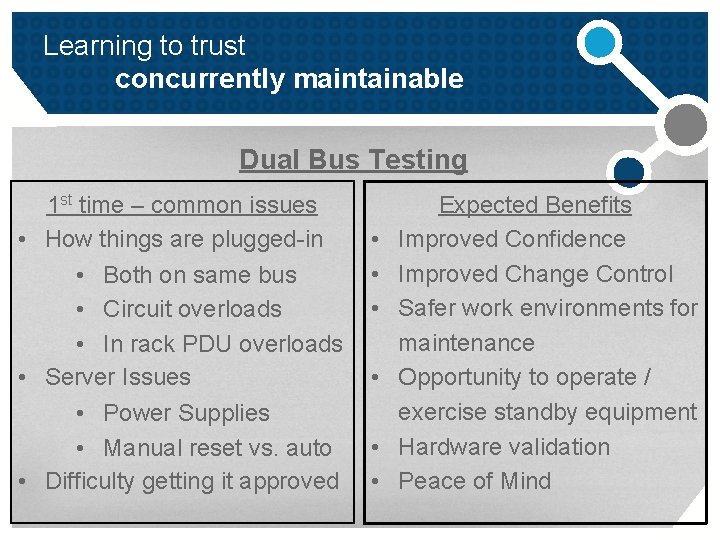
Learning to trust concurrently maintainable Dual Bus Testing 1 st time – common issues • How things are plugged-in • Both on same bus • Circuit overloads • In rack PDU overloads • Server Issues • Power Supplies • Manual reset vs. auto • Difficulty getting it approved • • • Expected Benefits Improved Confidence Improved Change Control Safer work environments for maintenance Opportunity to operate / exercise standby equipment Hardware validation Peace of Mind
Key Takeaways IMPROVING SAFETY Action Steps • Complete an Arc Flash Study • Employ Mitigation Strategies • Review & Update Safety Standards • • Train personnel New PPE Standards • Understand trust your “Concurrent Maintainability” Save Lives & Injuries
Questions? Thank you Matt Phillips Vice President of Business Development, Secretary/Treasurer Matt. Phillips@techsiteplan. com Frank Jenkins Senior Electrical Engineer Frank. Jenkins@techsiteplan. com HTTP: //WWW. TECHSITEPLAN. COM