
Arbitrary Detention and Secret Police personal freedom in
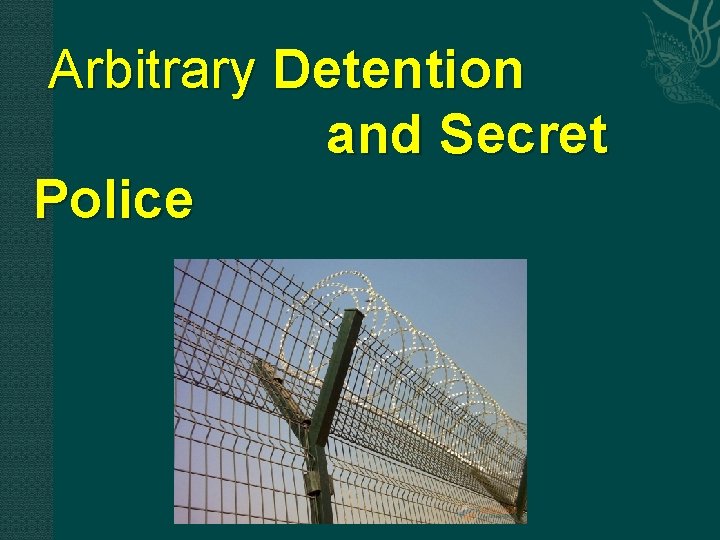
Arbitrary Detention and Secret Police
personal freedom in Chinese law PRC Constitution - Article 37: Freedom of the person of citizens of China is inviolable. No citizen may be arrested, except with the approval of or by decision of a People’s Procuratorate or by decision of a People’s Court, and arrests must be made by a public security organ. Unlawful detention or deprivation or restriction of citizens’ freedom of the person by other means is prohibited. Criminal Procedure Law; Law on Legislation
Arbitrary detention The grounds for the arrest are illegal The victim was not informed of the reasons for the arrest The procedural rights of the victim were not respected The victim was not brought before a judge within a reasonable amount of time A violation of international law on the ground of discrimination
Arbitrary detention substantive and procedural freedom of expression, movement, assembly, association, right to vote, religious freedom…. . extrajudicial detention administrative detention extralegal detention/Unlawful detention enforced disappearance
Abolished Extrajudicial Detention 1. 收容审查 ‘Investigation Detention, ’ shourong shencha (or: ‘detention for interrogation, ’ ‘shelter for examination /investigation’ –shourong means ‘shelter’ ) Created in 1961 to detain suspects who had no known status or confirmed residence or who were ‘itinerant criminals’ Limited to 6 months or up to 2 years, could in practice be much longer Abolished in 1997
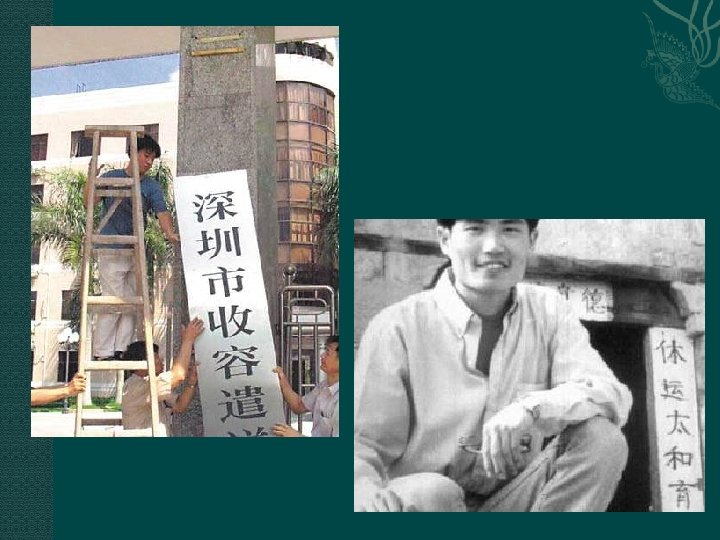
Abolished Extrajudicial Detention 2. 收容遣送 ‘Custody and Repatriation, ’ shourong qiansong Established in 1982 , it originally applied to “three withouts persons, ”(三无人员) i. e. those with "no fixed place of residence, no means of livelihood and no permits to live in the city in question" but from 1991 it was applied also to those without just the residence or work permits Abolished in 2003 - Sun Zhigang Incident Replaced by “relief stations”
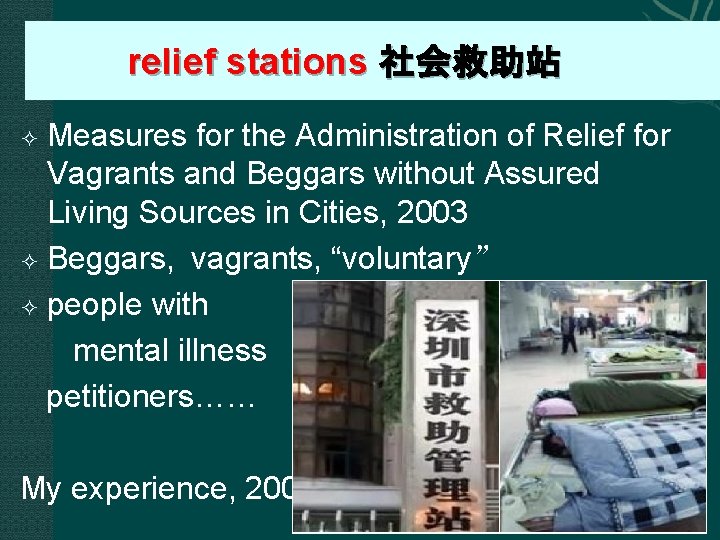
relief stations 社会救助站 Measures for the Administration of Relief for Vagrants and Beggars without Assured Living Sources in Cities, 2003 Beggars, vagrants, “voluntary” people with mental illness petitioners…… My experience, 2004
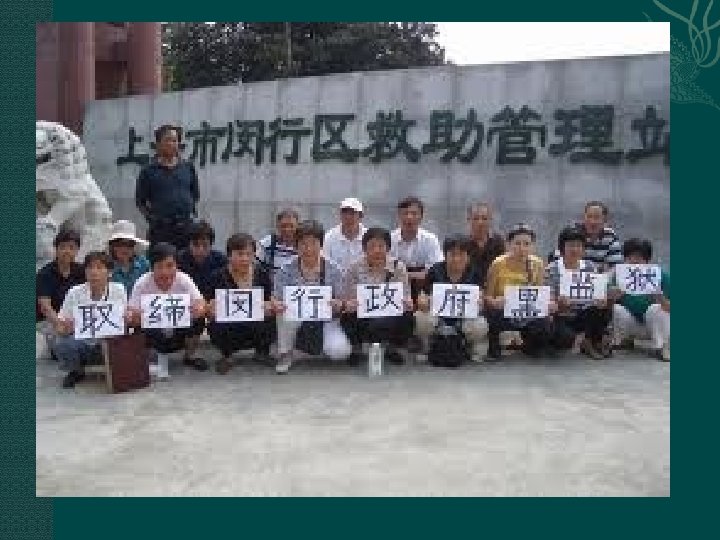
Abolished Extrajudicial Detention 3. 勞動教養 (Laodong jiaoyang, laojiao, or RETL), created in 1957, first to deal with persons who were not “politically reliable” but had not committed crimes; then quickly expanded to those who had committed minor criminal offenses. Laojiao was subsequently applied to “rightists” and other categories of offenders such as habitual criminals, released criminals who had “endangered public order, etc. Later, used to control petitioners, Falun Gong practitioners, religious activists, persons who engage in pyramid selling, dissidents, human rights
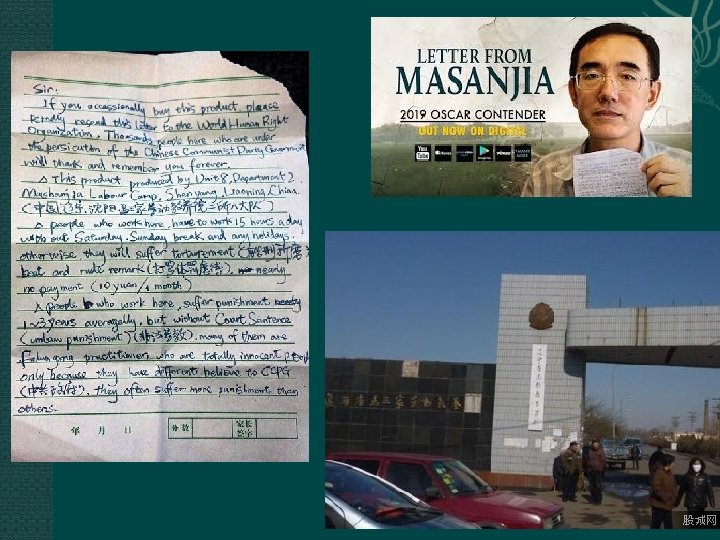
RTL elastic enough to include many offenses Up to 3 years (can be extended to 4 years) Laojiao committee (controlled by PSB) No administrative litigation before 1989 Cases include that of Liu Xiaobo, Chongqing cases, Zhu Yubiao, Masanjia Labor Camp Cao Shunli Wang Yi (the “twitter martyr”) Abolished in 2013

In November 2012, an Oregon woman Julie Keith , finds an SOS message from a Chinese dissident in a package of Halloween decorations from Kmart, setting off a chain of events that would shut down the entire labor camp system in China. In Dec. 2016, Sun successfully fled to Indonesia. In March 2017, he met with Keith in Indonesia. Sun Yi died in October 2017, skeptical
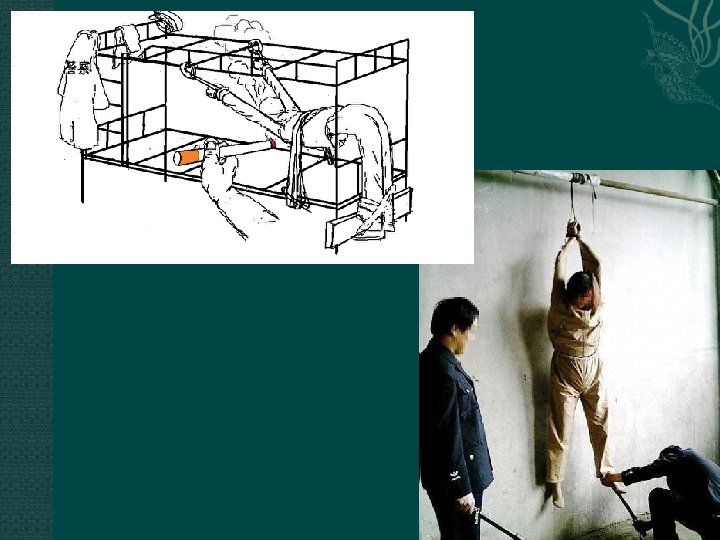
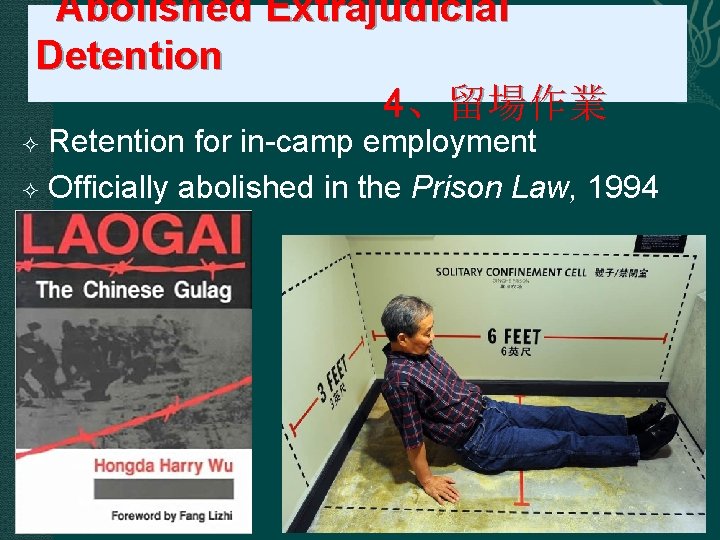
Abolished Extrajudicial Detention 4 、留場作業 Retention for in-camp employment Officially abolished in the Prison Law, 1994
Abolished Extrajudicial Detention 5. 双规 “Double designation, ” shuanggui,started in 1990 Having to come “to a designated place at a designated time to answer questions” – targets Party members and officials Administered through CCP’s internal disciplinary hearings An institutionalized form of secret detention used on Party members/officials by Party Discipline and Inspection Commissions
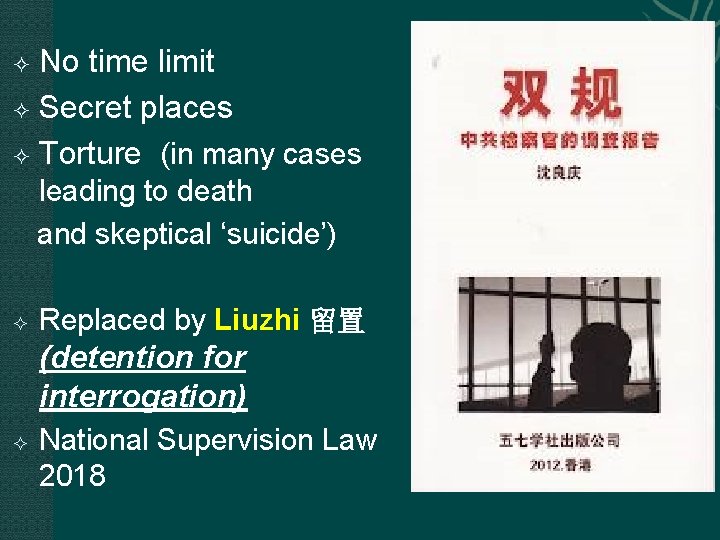
No time limit Secret places Torture (in many cases leading to death and skeptical ‘suicide’) Replaced by Liuzhi 留置 (detention for interrogation) National Supervision Law 2018
Abolished Extrajudicial Detentions 6. 收容教育 ‘Detention for education, ’ shourong jiaoyu An administrative compulsory measure for the purpose of providing concentrated “legal and moral education” to sex workers and sex workers’ clients 1991 NPC Standing Committee Decision on the Strict Prohibition of Prostitution 《关于严禁卖淫嫖娼的决定》 1993 State Council Decision on Detention for Education of Prostitutes and Prostitutes’ Clients 《卖淫嫖娼人员收容教育办法》
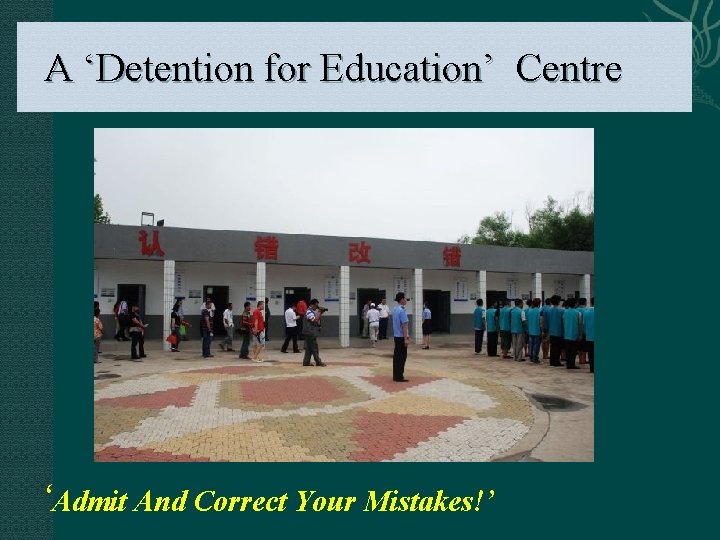
A ‘Detention for Education’ Centre ‘Admit And Correct Your Mistakes!’
Extrajudicial Detention Still in use 1、收容教養 ‘Detention for reeducation, ’ shourong jiaoyang Article 17. 4, Criminal Law Targets those 14 -16 years old 1991 NPC Law on the Protection of Minors Extended to those under 14 years old by 1993 Ministry of Public Security Regulation Duration: 1 — 3 years Li Tianyi case
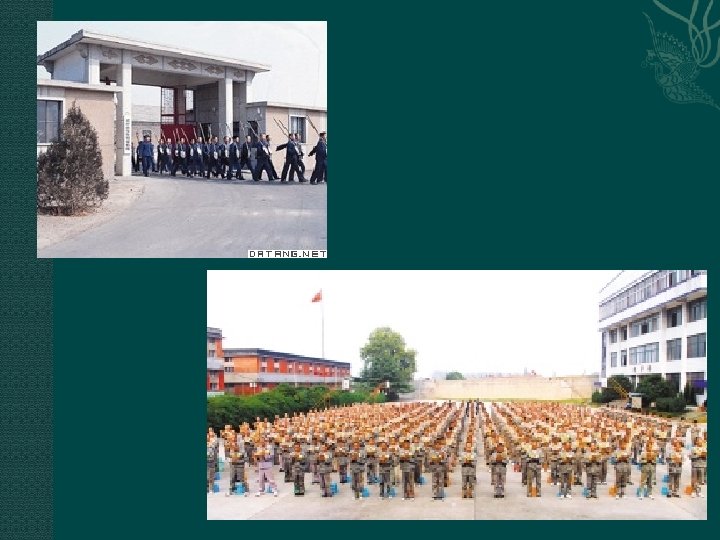
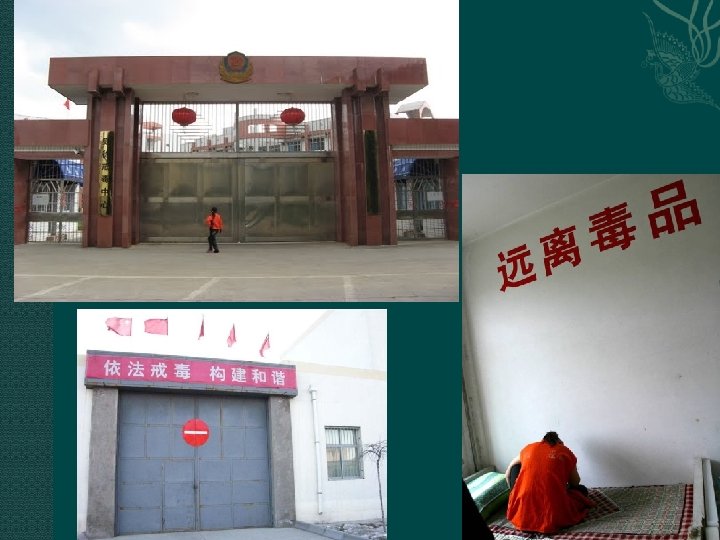
Extrajudicial Detention Still in use 2、強制戒毒 Isolation for Compulsory Drug Treatment, qiangzhi jiedu (ICDT) 1990 NPC Standing Committee Decision On Prohibiting Drugs Duration: 3— 6 months, can be extended to 1 year
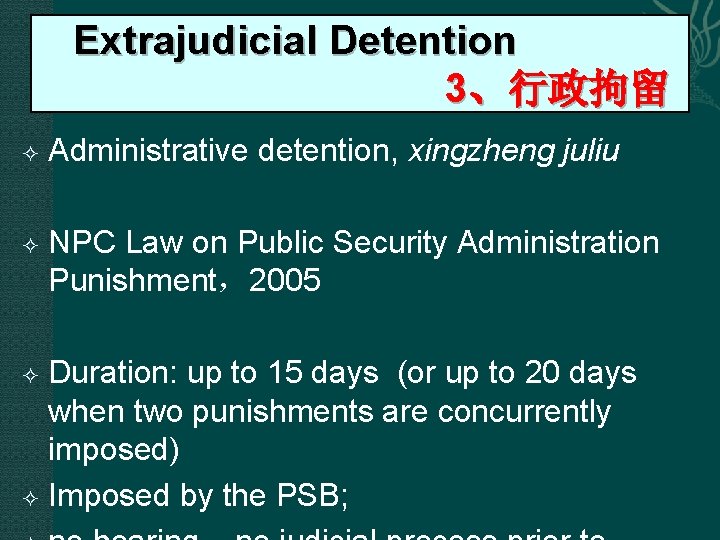
Extrajudicial Detention 3、行政拘留 Administrative detention, xingzheng juliu NPC Law on Public Security Administration Punishment,2005 Duration: up to 15 days (or up to 20 days when two punishments are concurrently imposed) Imposed by the PSB;
Extrajudicial Detention 4、RSDL Residential Surveillance at a Designated Location 指定場所監視居住 up to 6 months legalized enforced disappearance Torture “Jasmine articles”(2012 CPL)
“for a crime suspected to endanger State security, crime involving terrorist activities and a crime involving significant amount of bribes” Art. 73,CPL, 2012 “The family of the detainee shall be notified of the detention within 24 hours after the detention, unless the notification cannot be processed or where the detainee is involved in crimes endangering State security or crimes of terrorist activities, and such notification may hinder the investigation. ”

Extrajudicial Detention 5、留置 detention for interrogation, liuzhi National Supervisory Law, Article 43 a Party-state hybrid body, 2018 Beyond Party or government officials, -all who exercise public power -all who perform public duties (SOEs, hospital, schools…) 3 months + 3 months (up to 6 months) not in pre-trial detention centers
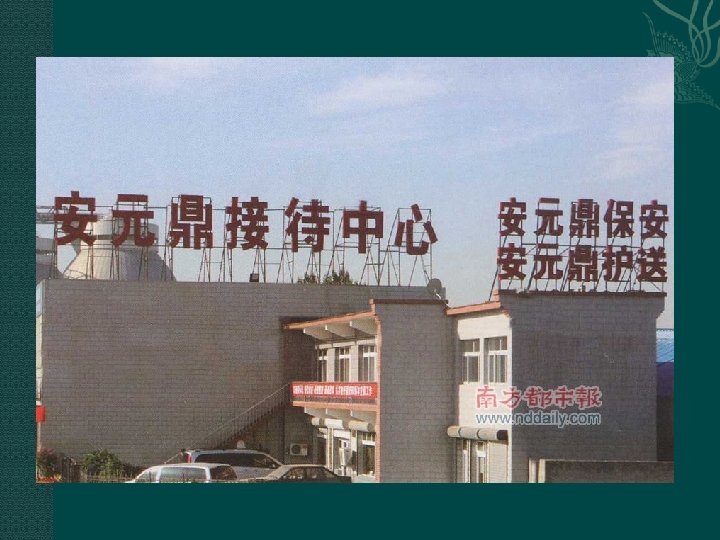
Extra-legal detention as Institutionalized crime extrajudicial detention vs. extralegal detention? 6、Black jails (detaining petitioners) Majialou马家楼 Jiujingzhuang 久敬庄, Anyuanding 安元鼎 Gongmeng’s campaign against black jails
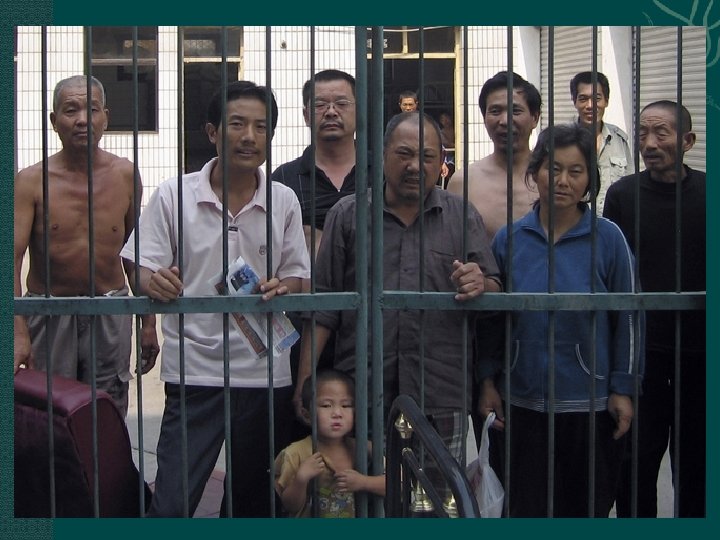
Extra-legal detention 7、 (Involuntary Psychiatric Commitment) Holding “mentally ill patients” in psychiatric facilities精神病强制 收容 Civil Rights and Livelihood Watch 《中国精神病院受难者数据库》 Equity and Justice Initiative 衡平机构 petitioners , activists , dissidents (e. g. Yang Jia’s mother; Deng yujiao,Li

Wang Wanxing Dong Yaoqiong 王万星 董瑶琼
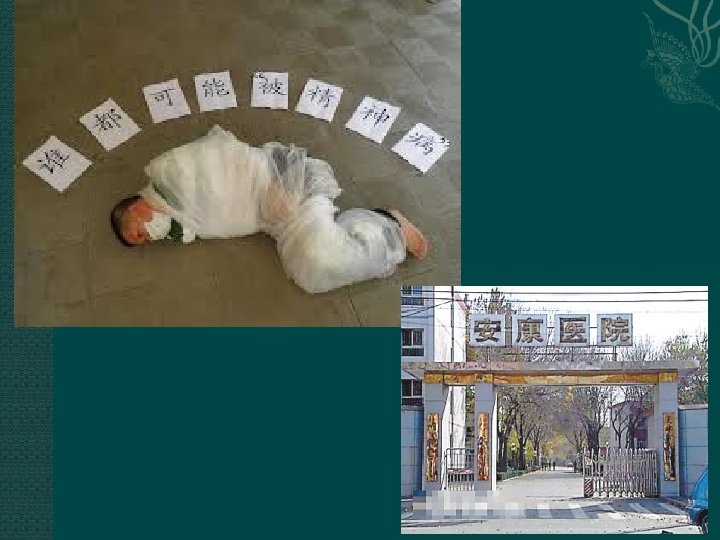
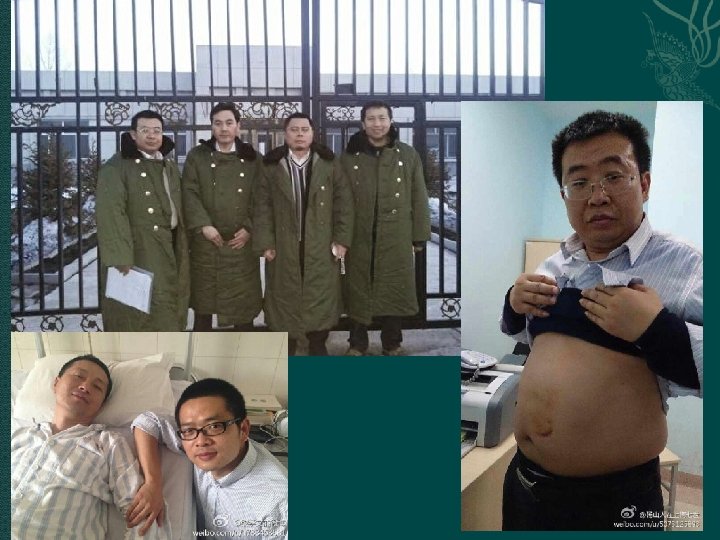
Extra-legal detention 8、Legal Education Center 法制教育中心 informally known as “brainwashing class, ” “Brainwashing Center” A recent study found 449 of these legal education centers that are named variously Legal Education School, Legal Education Training Center, Education and Transformation Class. Some name themselves “Caring Education Centers. ” mainly targeting members of Falun Gong torture occurs far more frequently and cruelly in
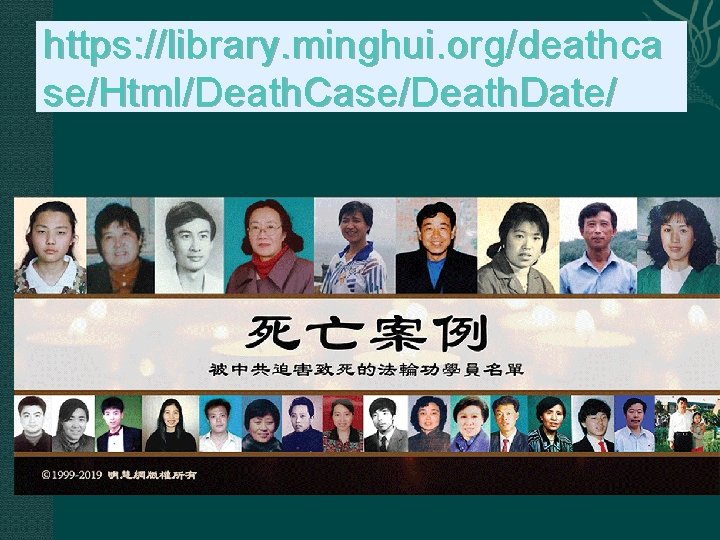
https: //library. minghui. org/deathca se/Html/Death. Case/Death. Date/
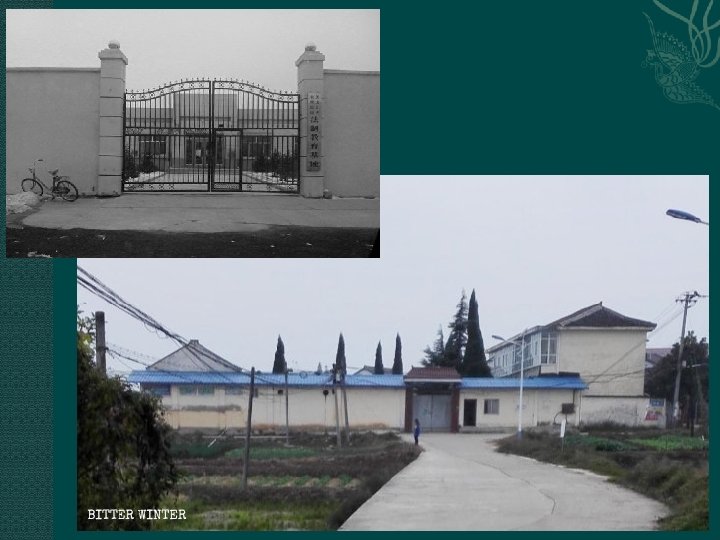
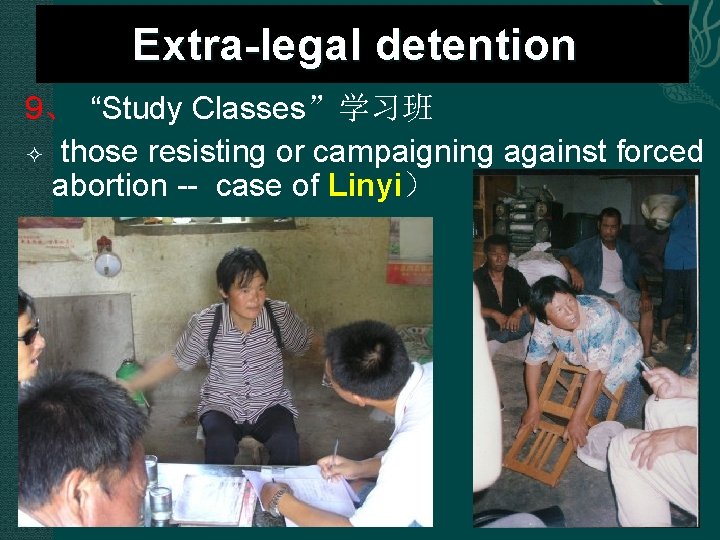
Extra-legal detention 9、 “Study Classes”学习班 those resisting or campaigning against forced abortion -- case of Linyi)
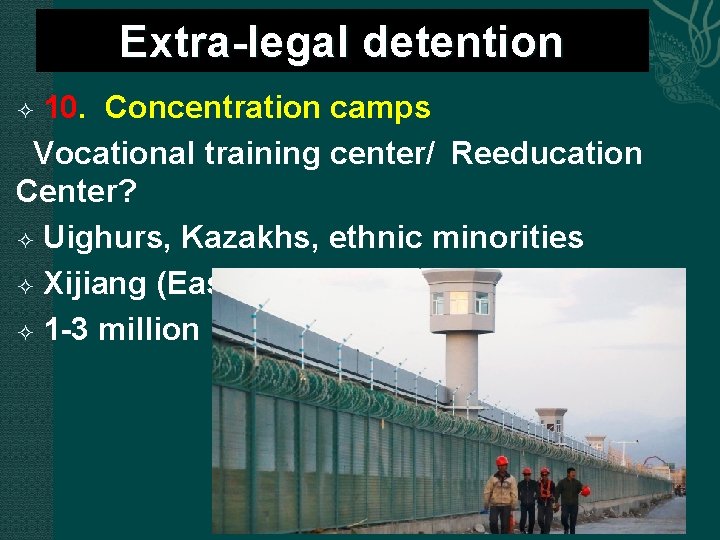
Extra-legal detention 10. Concentration camps Vocational training center/ Reeducation Center? Uighurs, Kazakhs, ethnic minorities Xijiang (East Turkestan) 1 -3 million
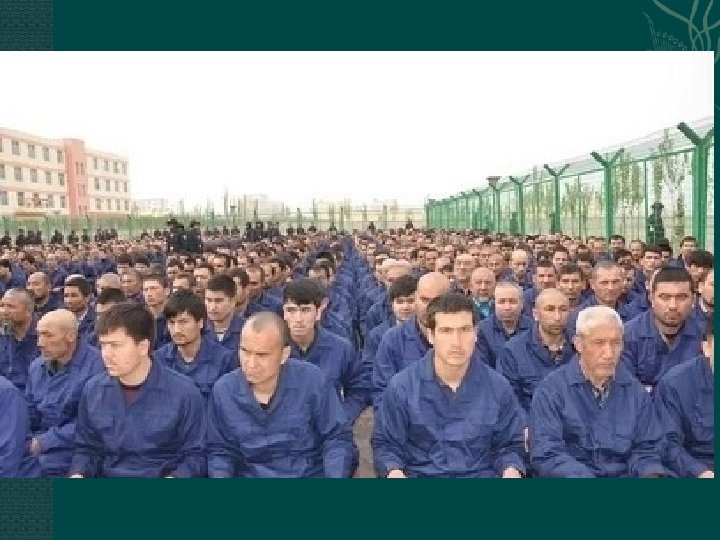
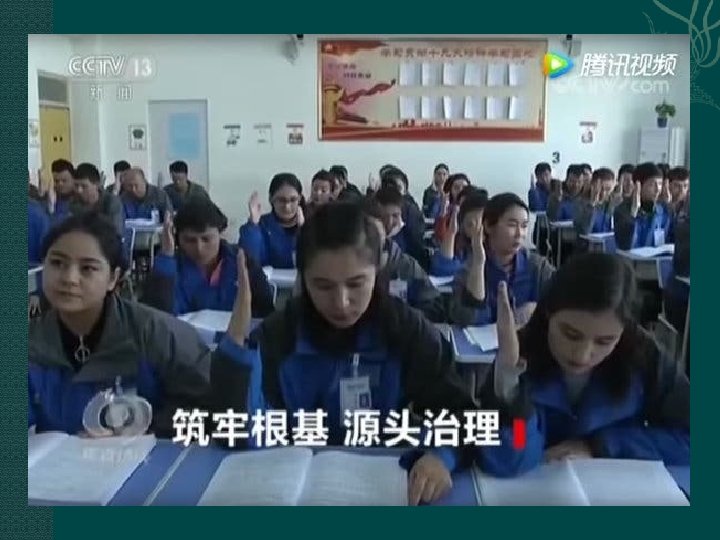

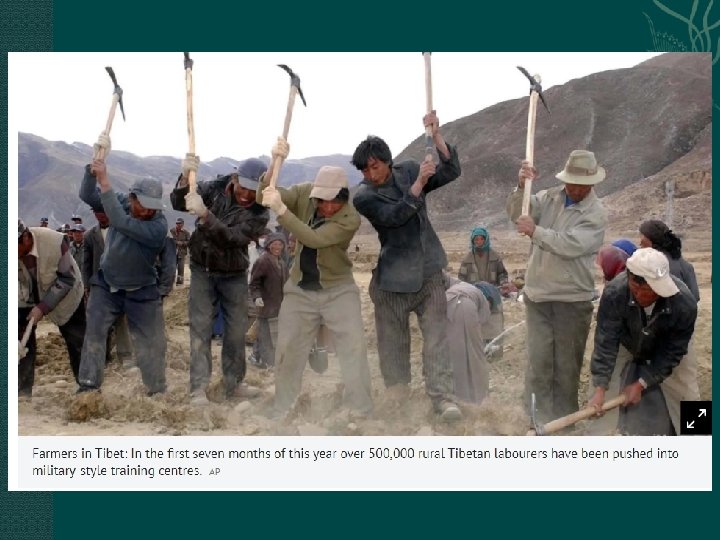
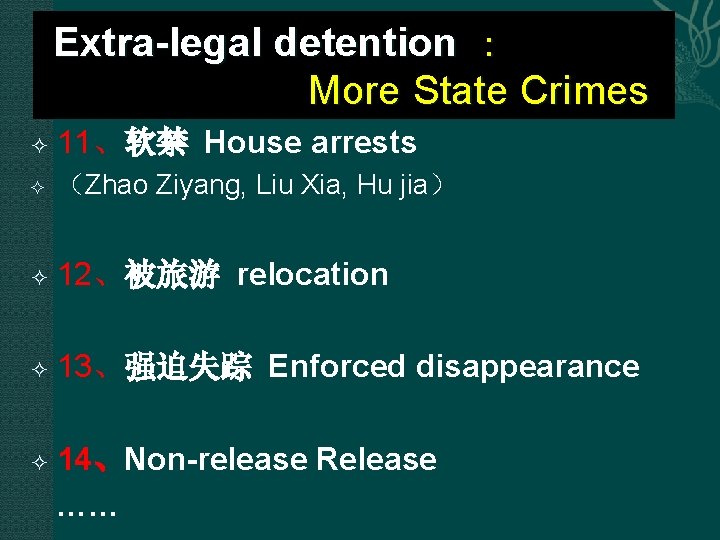
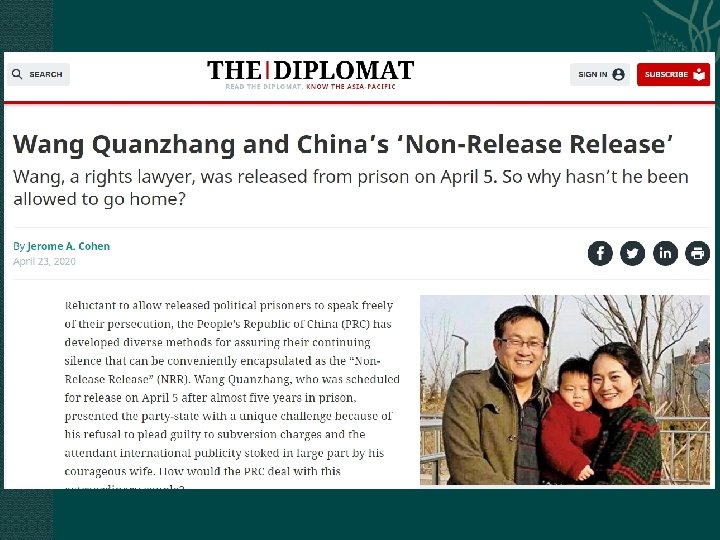
Extra-legal detention : More State Crimes 11、软禁 House arrests (Zhao Ziyang, Liu Xia, Hu jia) 12、被旅游 relocation 13、强迫失踪 Enforced disappearance 14、Non-release Release ……
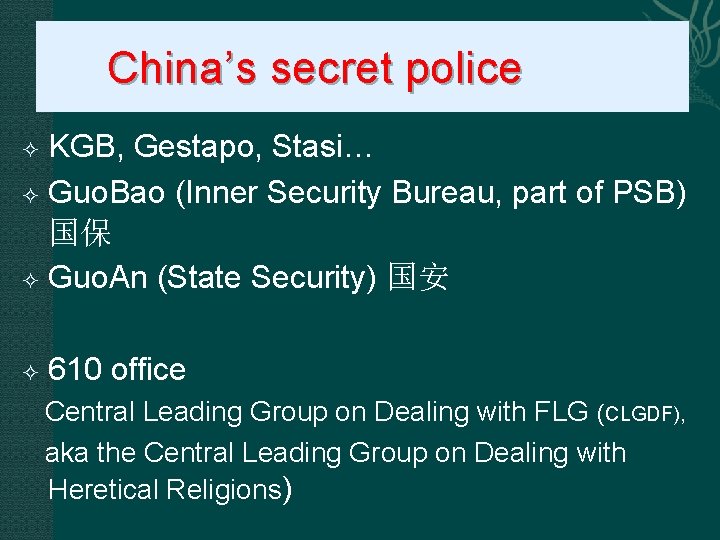
China’s secret police KGB, Gestapo, Stasi… Guo. Bao (Inner Security Bureau, part of PSB) 国保 Guo. An (State Security) 国安 610 office Central Leading Group on Dealing with FLG (CLGDF), aka the Central Leading Group on Dealing with Heretical Religions)

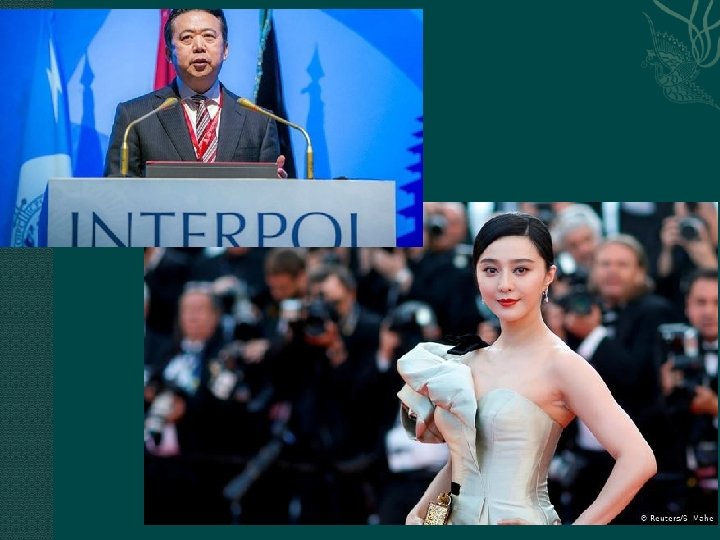
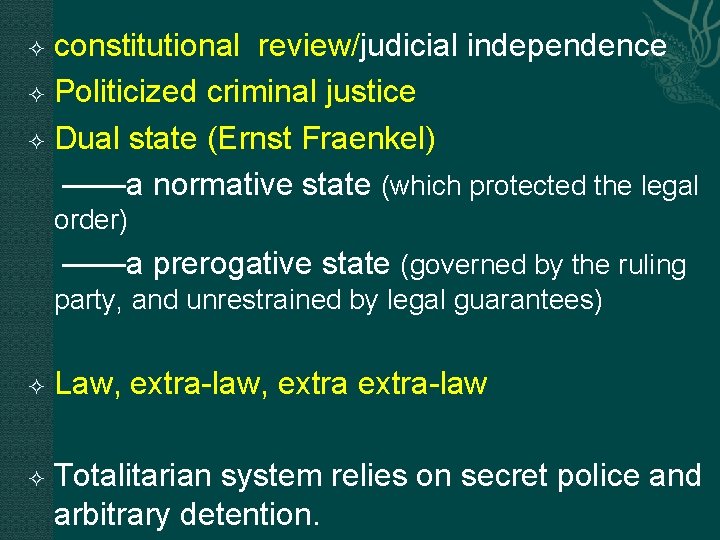
constitutional review/judicial independence Politicized criminal justice Dual state (Ernst Fraenkel) ——a normative state (which protected the legal order) ——a prerogative state (governed by the ruling party, and unrestrained by legal guarantees) Law, extra-law, extra-law Totalitarian system relies on secret police and arbitrary detention.
- Slides: 50