
Aqueduct n Aqueduct a bridgelike structure that carries
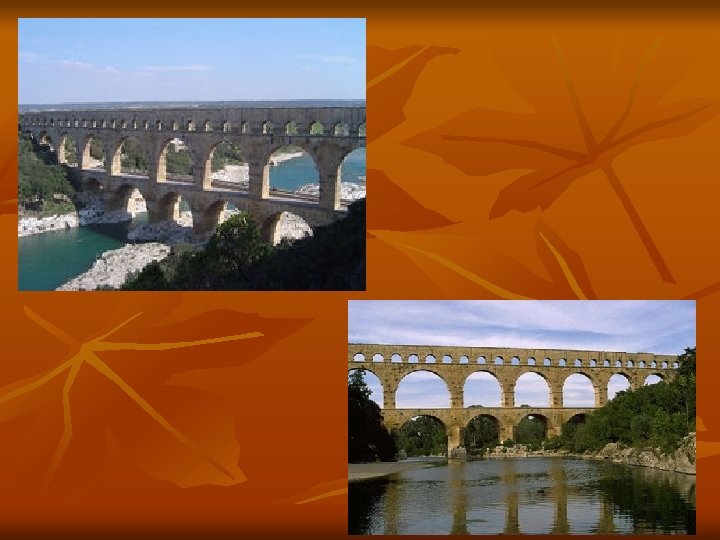

Aqueduct n Aqueduct -a bridge-like structure that carries a water conduit or canal across a valley or over a river.
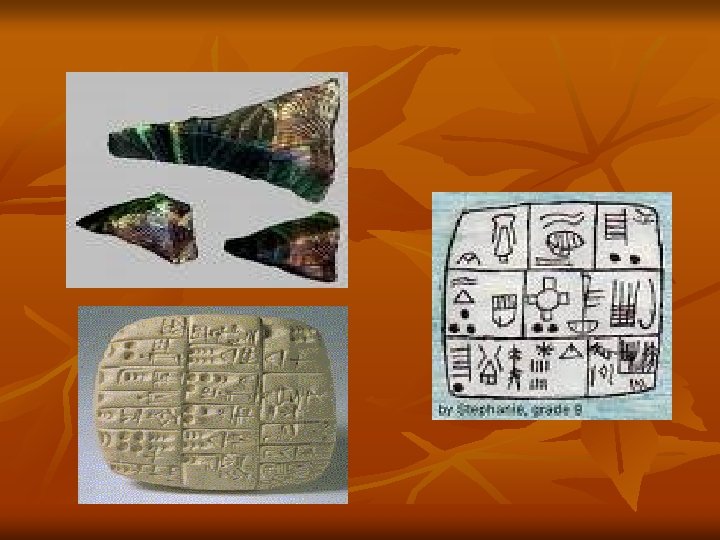
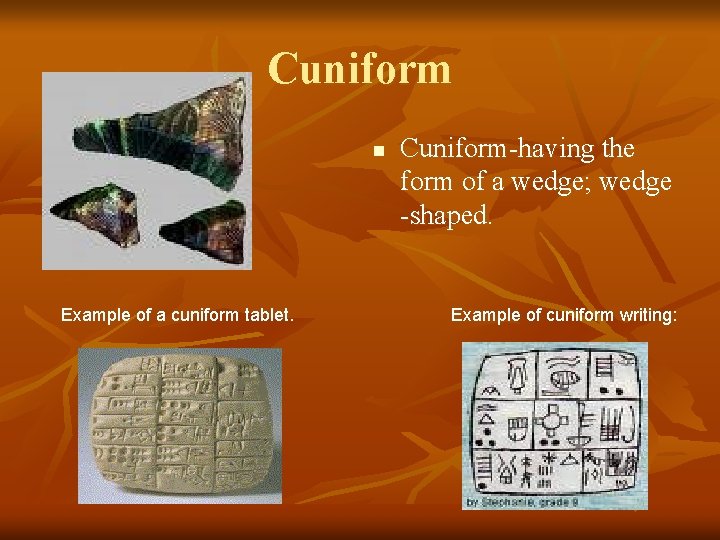
Cuniform n Example of a cuniform tablet. Cuniform-having the form of a wedge; wedge -shaped. Example of cuniform writing:
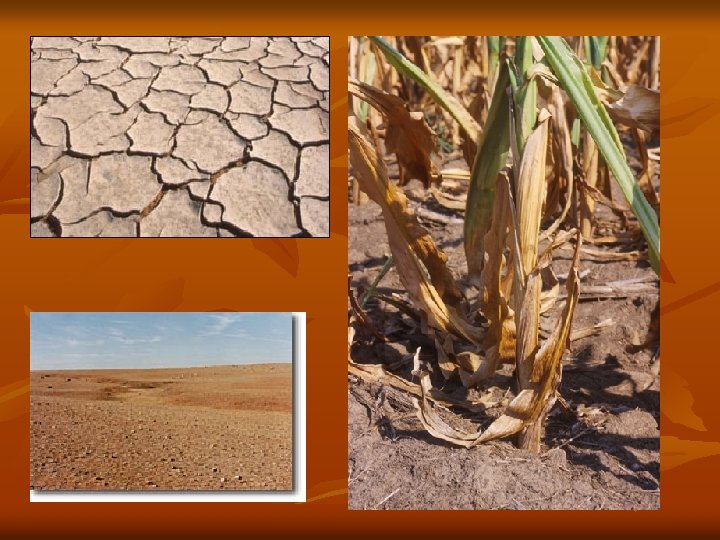
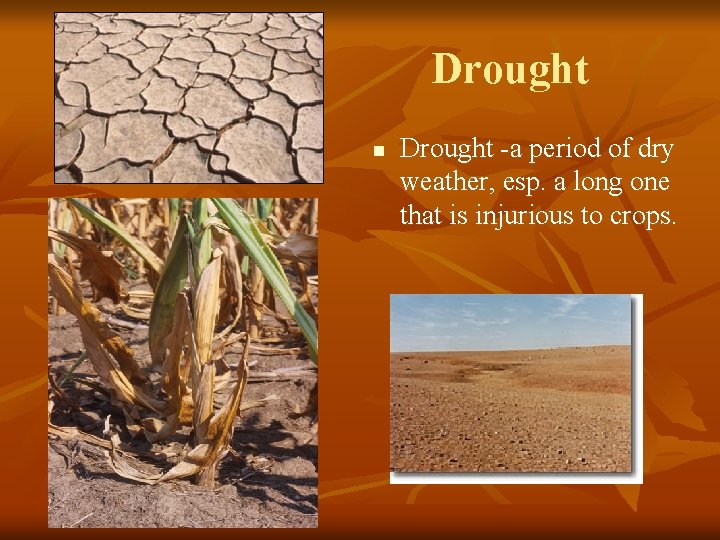
Drought n Drought -a period of dry weather, esp. a long one that is injurious to crops.
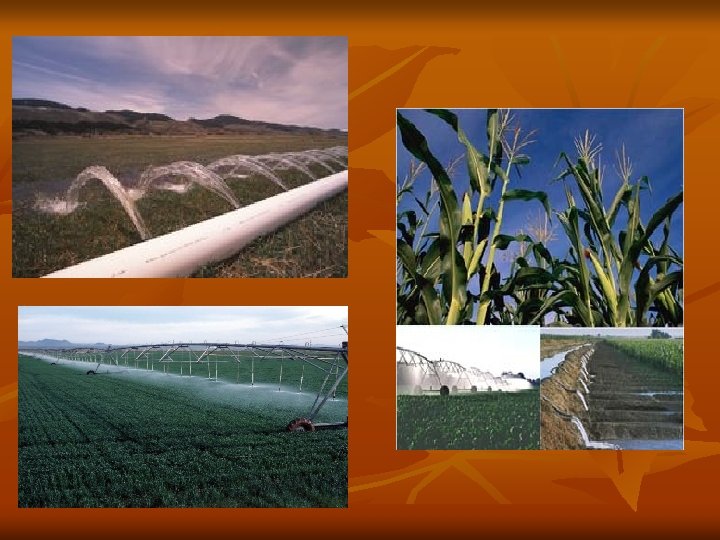
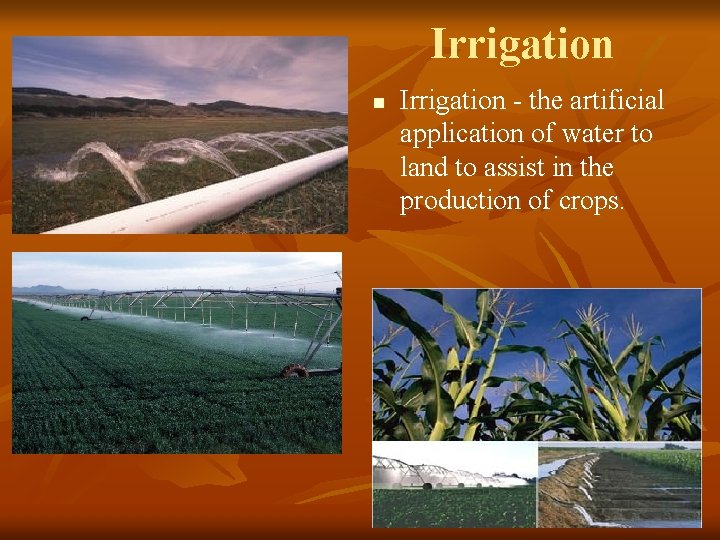
Irrigation n Irrigation - the artificial application of water to land to assist in the production of crops.
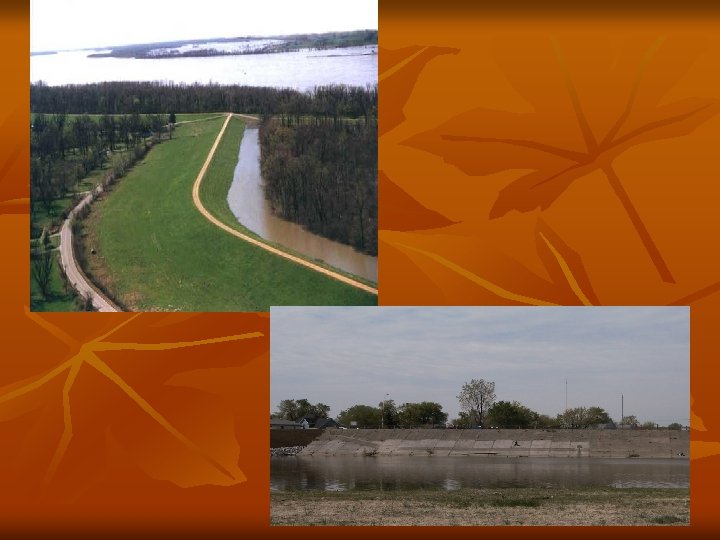
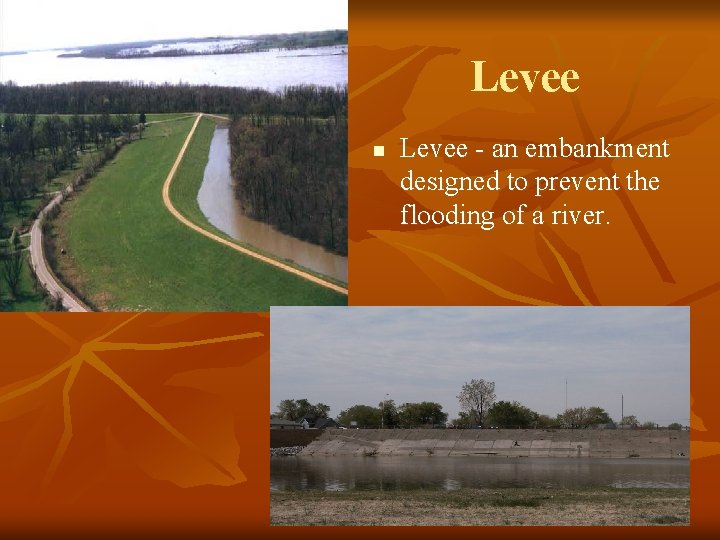
Levee n Levee - an embankment designed to prevent the flooding of a river.
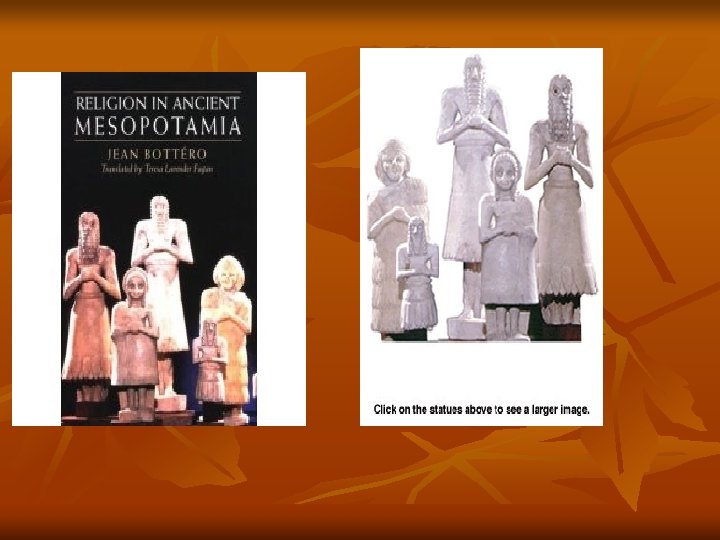
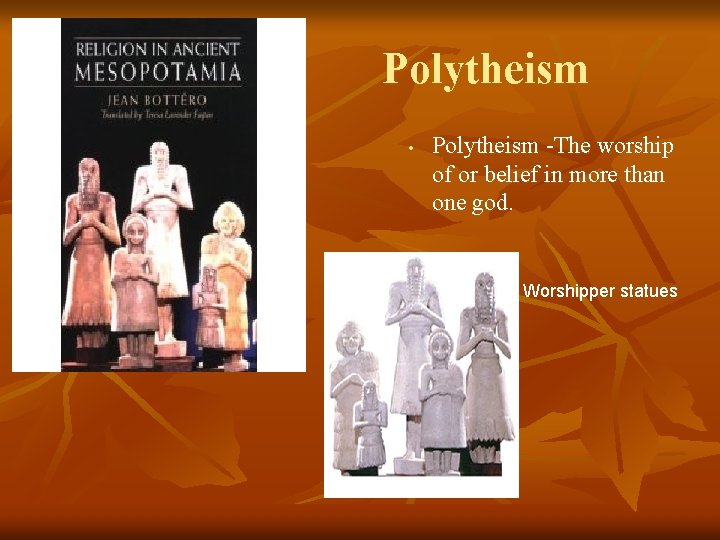
Polytheism • Polytheism -The worship of or belief in more than one god. Worshipper statues
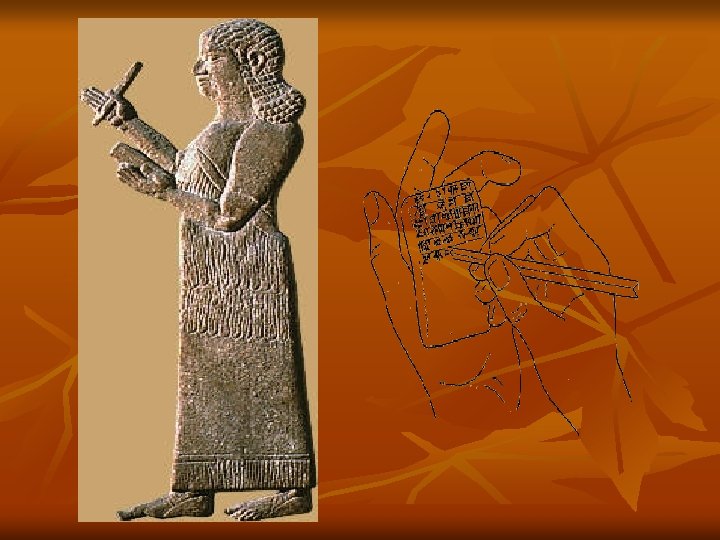
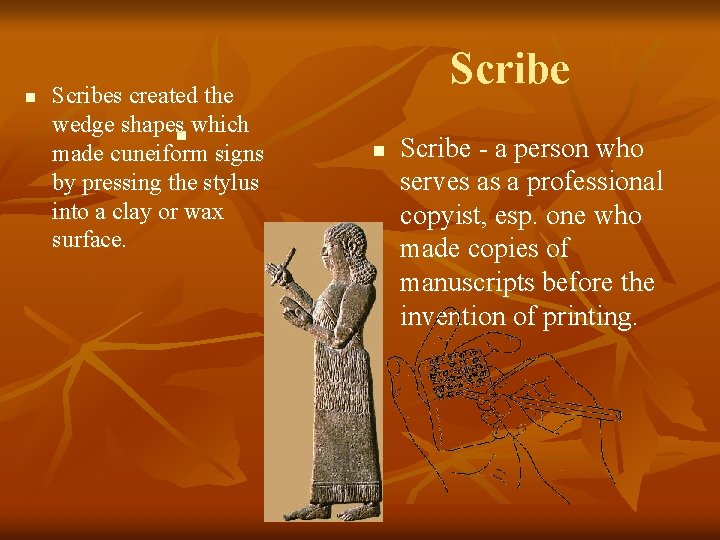
n Scribes created the wedge shapesn which made cuneiform signs by pressing the stylus into a clay or wax surface. Scribe n Scribe - a person who serves as a professional copyist, esp. one who made copies of manuscripts before the invention of printing.
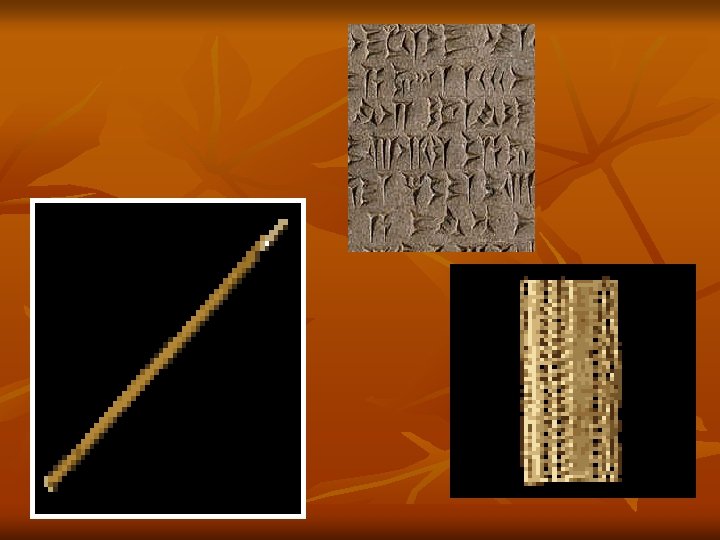
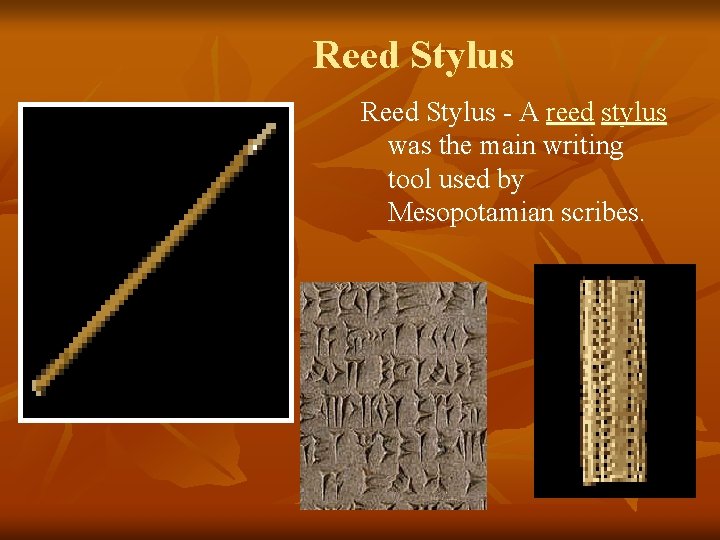
Reed Stylus - A reed stylus was the main writing tool used by Mesopotamian scribes.
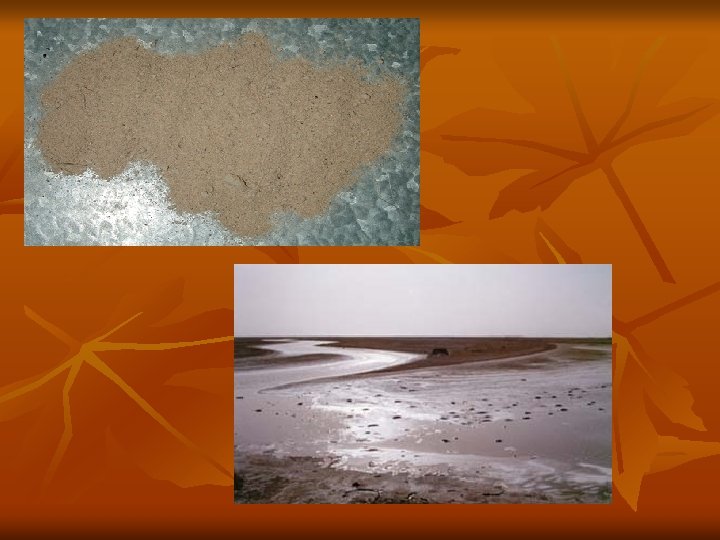
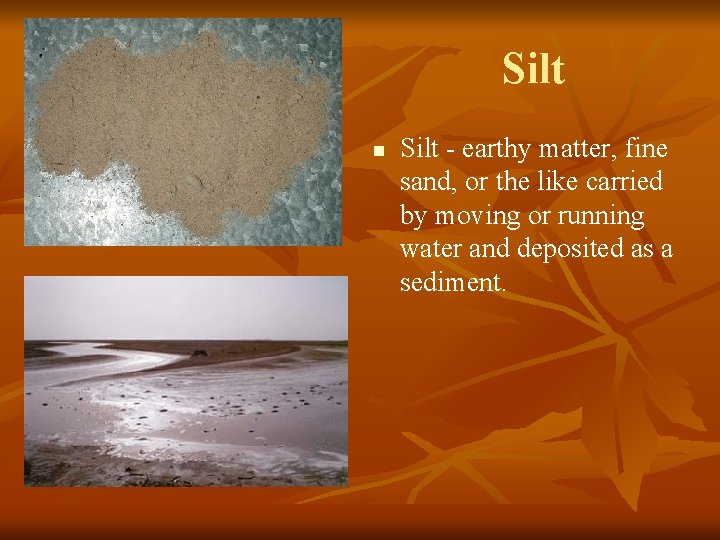
Silt n Silt - earthy matter, fine sand, or the like carried by moving or running water and deposited as a sediment.
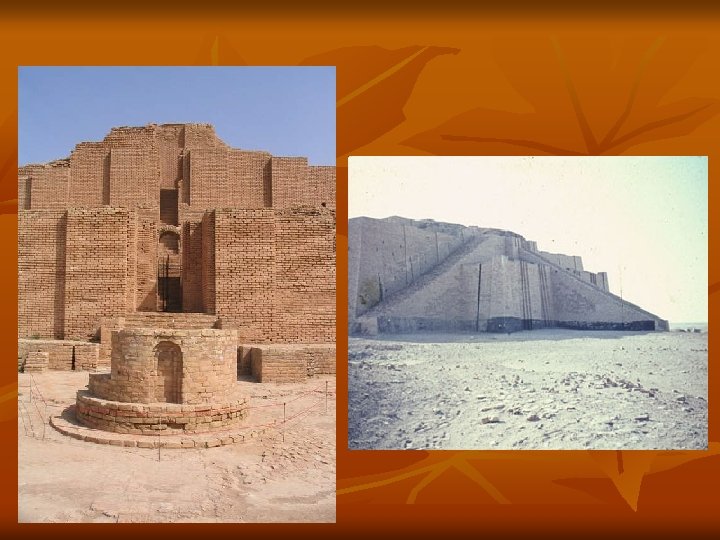
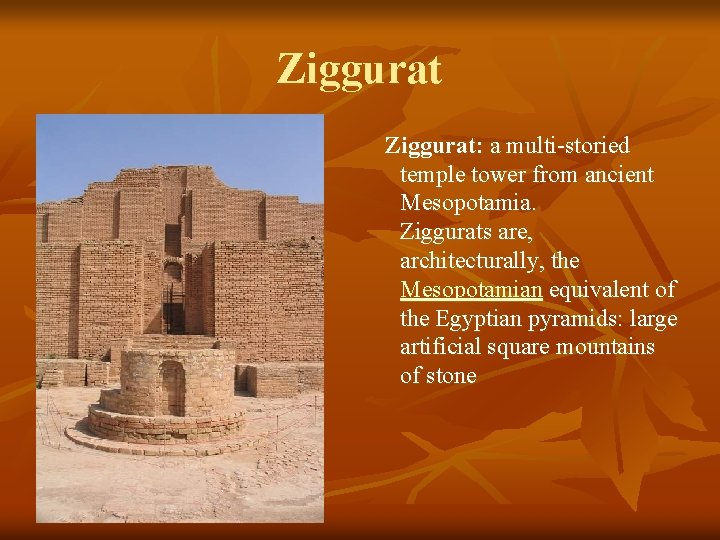
Ziggurat: a multi-storied temple tower from ancient Mesopotamia. Ziggurats are, architecturally, the Mesopotamian equivalent of the Egyptian pyramids: large artificial square mountains of stone
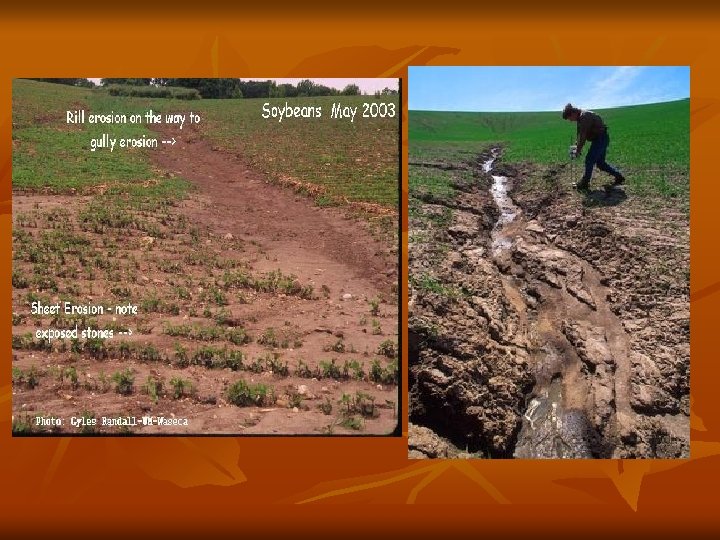
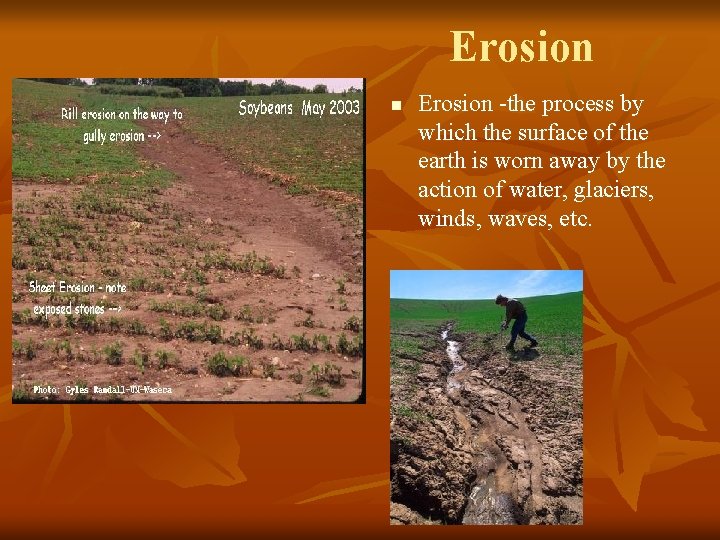
Erosion n Erosion -the process by which the surface of the earth is worn away by the action of water, glaciers, winds, waves, etc.
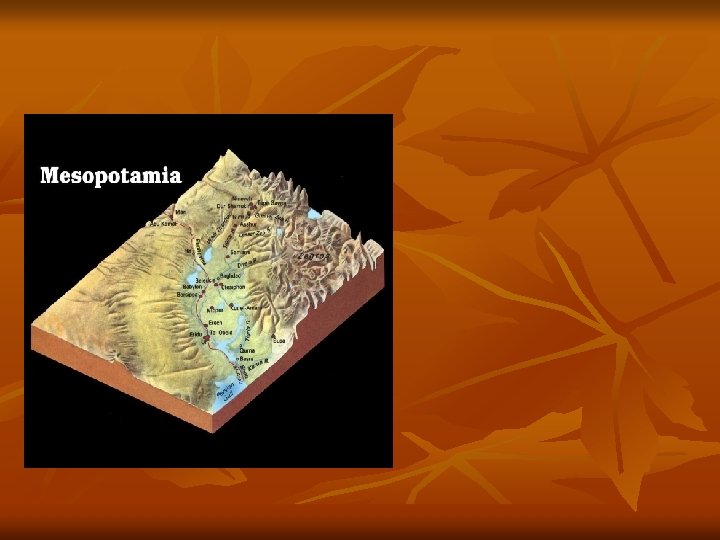
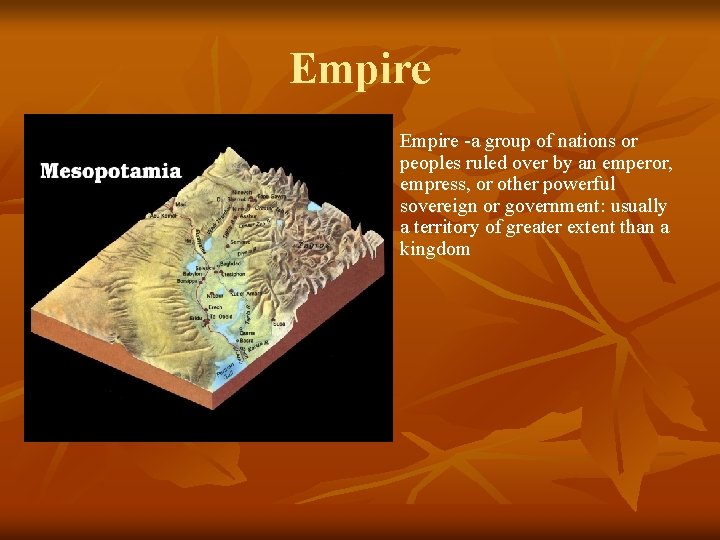
Empire n Empire -a group of nations or peoples ruled over by an emperor, empress, or other powerful sovereign or government: usually a territory of greater extent than a kingdom
City-state n City-state -A city-state is a region controlled exclusively by a city, and usually having sovereignty. Historically, city-states have often been part of larger cultural areas.
- Slides: 25