
Aquatic Organism Passage AOP Importance of ecological connectivity
- Slides: 19
Aquatic Organism Passage (AOP): Importance of ecological connectivity at road/stream crossings. Mark Hudy Transportation Ecologist USDA Forest Service hudymx@csm. jmu. edu
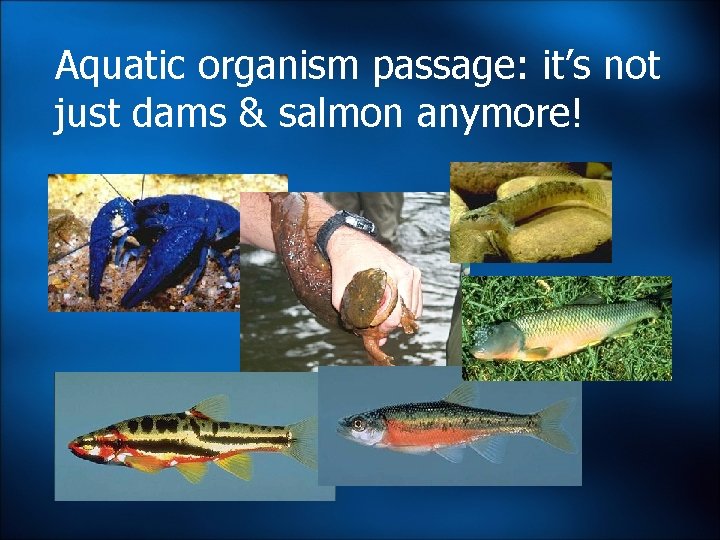
Aquatic organism passage: it’s not just dams & salmon anymore!
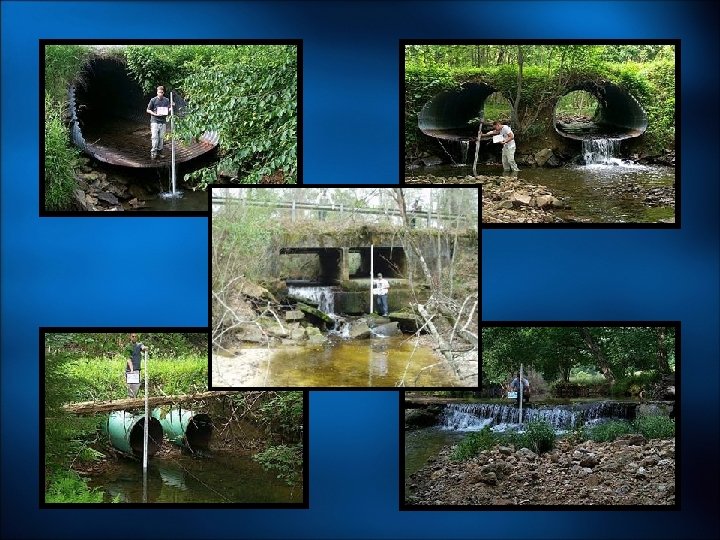
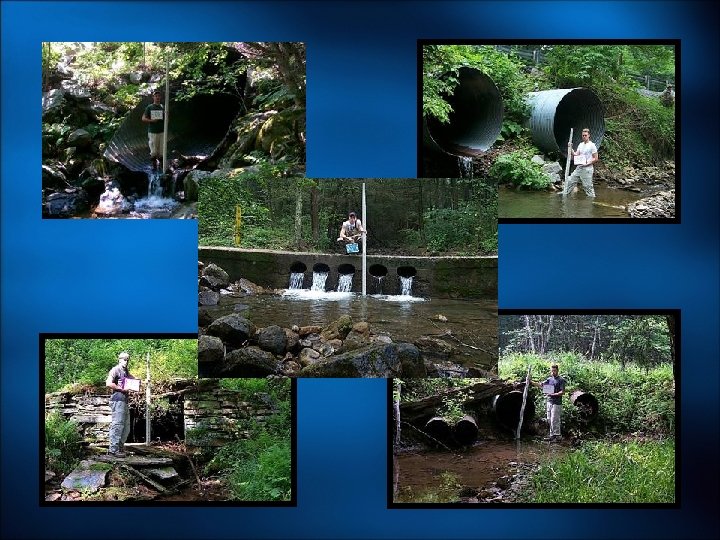
Road crossings of all types are prevalent everywhere and number in the 100, 000’s.
Roads Historically road/stream crossing design & installation typically do not address the needs & abilities of aquatic organisms to freely move along stream corridors.
Roads Road crossings can negatively impact aquatic organisms by prohibiting recolonization of upstream habitats and restricting movements to locate food, habitat or spawning areas.
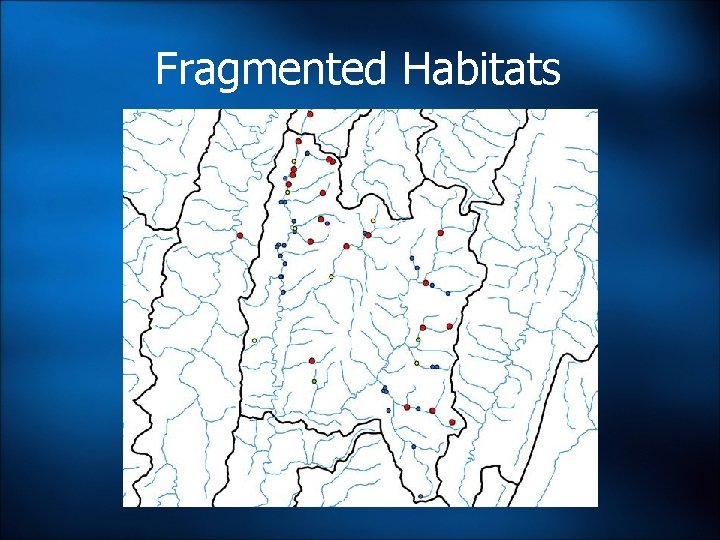
Fragmented Habitats
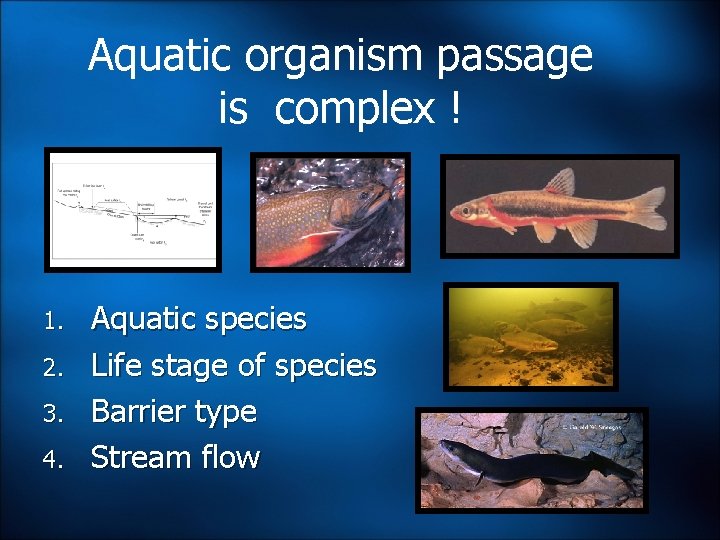
Aquatic organism passage is complex ! 1. 2. 3. 4. Aquatic species Life stage of species Barrier type Stream flow
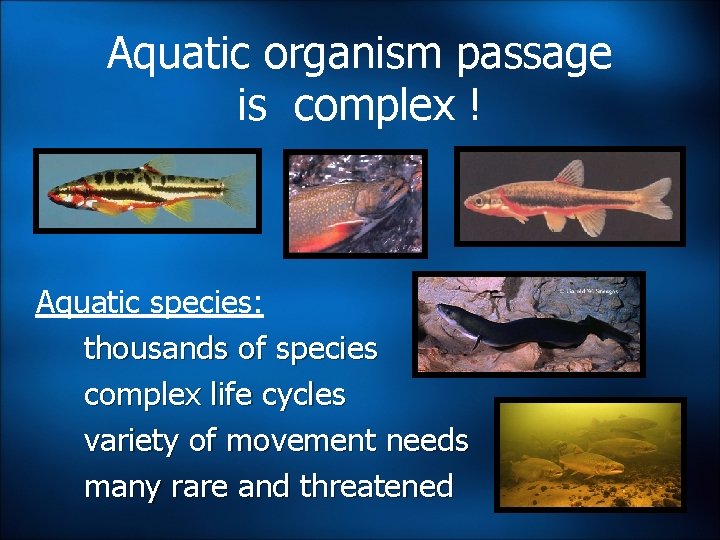
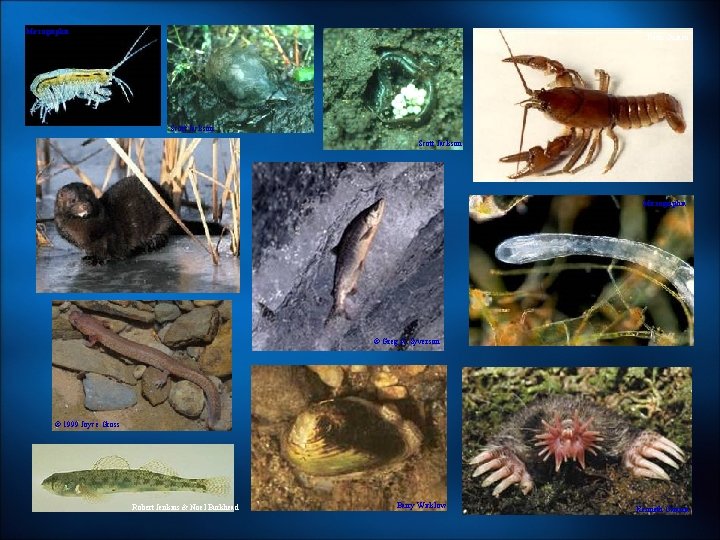
Aquatic organism passage is complex ! Aquatic species: thousands of species complex life cycles variety of movement needs many rare and threatened
Micrographia Radu Guiasu Scott Jackson Micrographia © Greg A. Syverson © 1999 Joyce Gross Robert Jenkins & Noel Burkhead Barry Wicklow Kenneth Catania
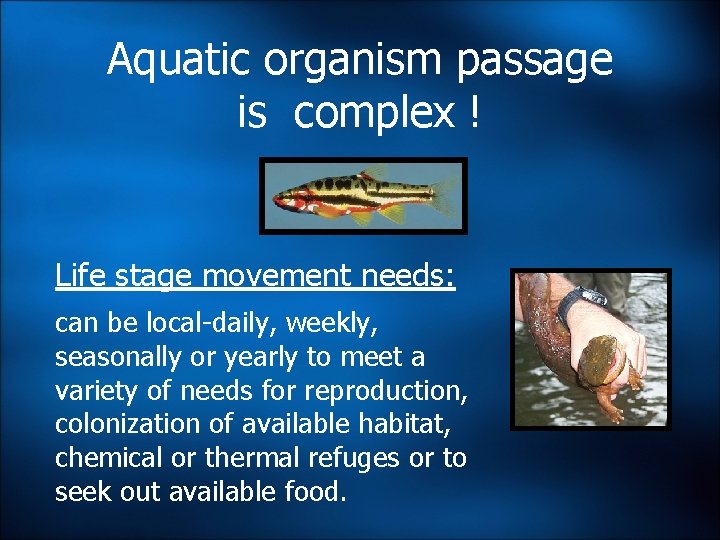
Aquatic organism passage is complex ! Life stage movement needs: can be local-daily, weekly, seasonally or yearly to meet a variety of needs for reproduction, colonization of available habitat, chemical or thermal refuges or to seek out available food.
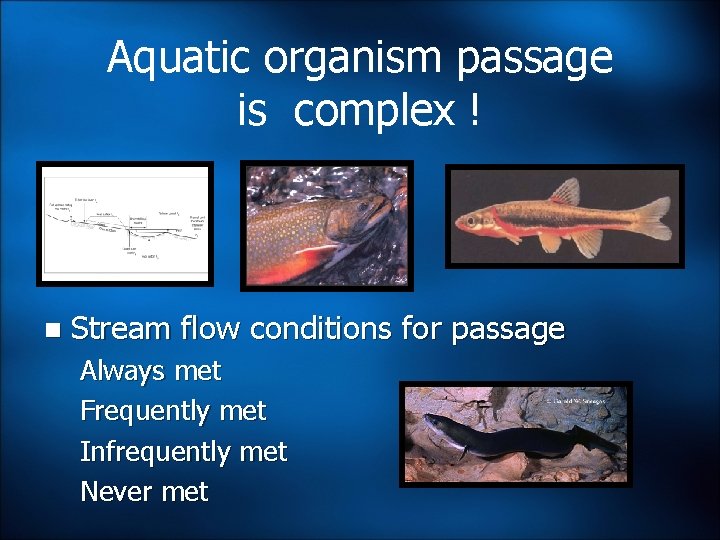
Aquatic organism passage is complex ! n Stream flow conditions for passage Always met Frequently met Infrequently met Never met
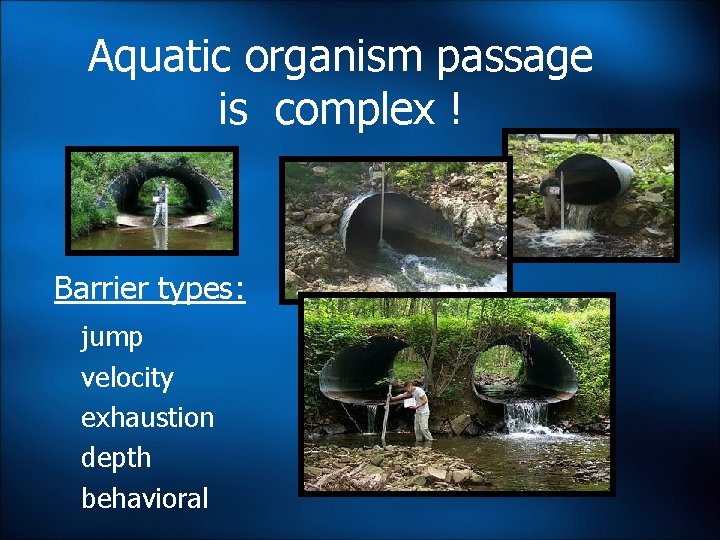
Aquatic organism passage is complex ! Barrier types: jump velocity exhaustion depth behavioral
Today a road that crosses a stream or river with minimal ecological impact is often the goal for new construction and maintenance or mitigation of existing road/stream crossings.
These low ecological impact designs simulate natural streams and rivers. Stream simulation designs often don’t require extensive studies on target species at target times and flows because the design mimics the stream.
Why is AOP, Ecological Connectivity and Stream Simulation important at road/stream crossings? 1. 2. 3. 4. 5. 6. $$ Less maintenance $$ Reduced overall long-term costs Regulatory- Clean Water Act Regulatory – Endangered Species Act Regulatory – National Forest Management Act Ecological – long-term ecological integrity “Right thing to do”
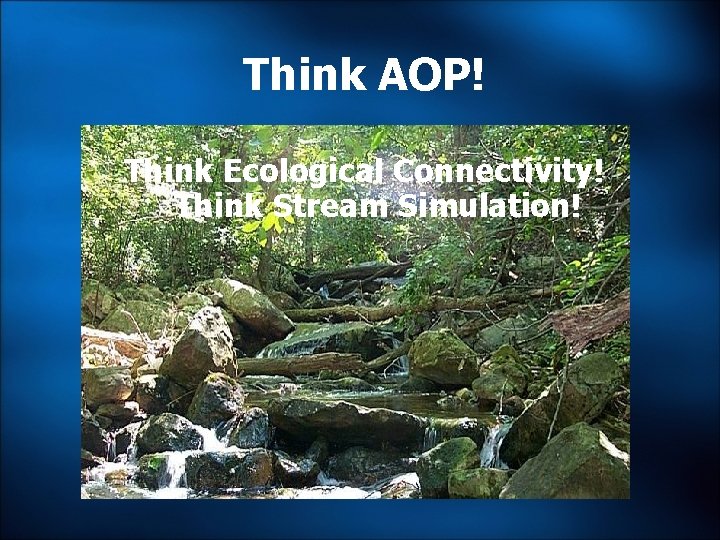
Think AOP! Think Ecological Connectivity! Think Stream Simulation!
Clean Water Act: Nationwide Roads Exemption BMP 40 CFR 232. 3 c(6) The design, construction and maintenance of the road crossing shall not disrupt the migration or other movement of those species of aquatic life inhabiting the water body.