
AQUATIC ECOSYSTEMS Wetlands contain fresh water for part
- Slides: 12
AQUATIC ECOSYSTEMS
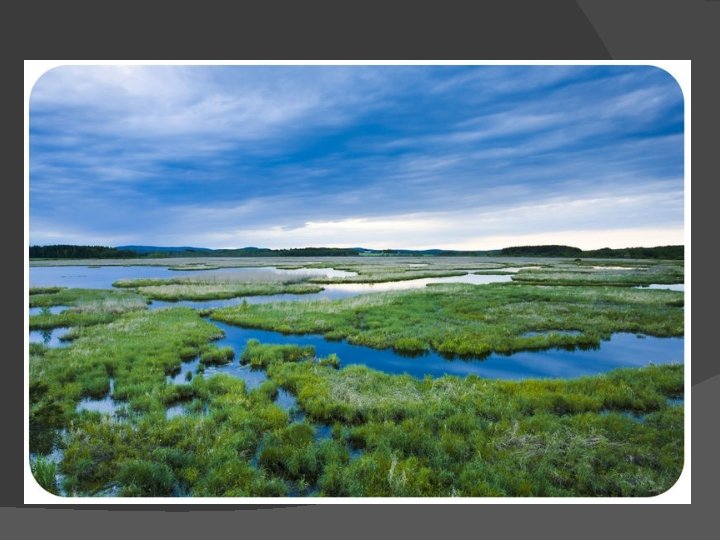
Wetlands contain fresh water for part of the year -trap and filter sediments and pollutants -protect shorelines from erosion -spawning grounds for many commercially important species -habitat for rare and endangered animals and plants � Includes marshes and swamps � Act as transitional areas between freshwater and saltwater �
Marine Ecosystems � Estuary (FW and SW) � Salt marsh � Mangrove swamps � Barrier Islands � Coral reef � Open ocean
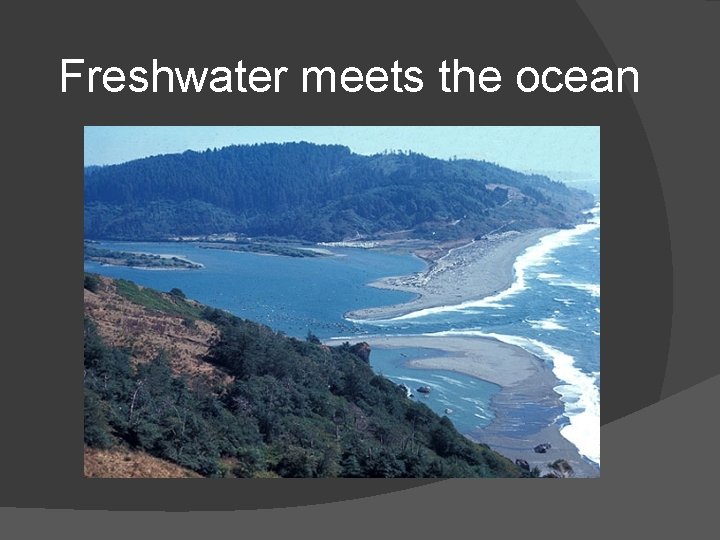
Estuary � area where freshwater from a river meets salt water from the ocean -very productive ecosystems -rich in nutrients and minerals -plenty of sunlight (shallow water)
Freshwater meets the ocean
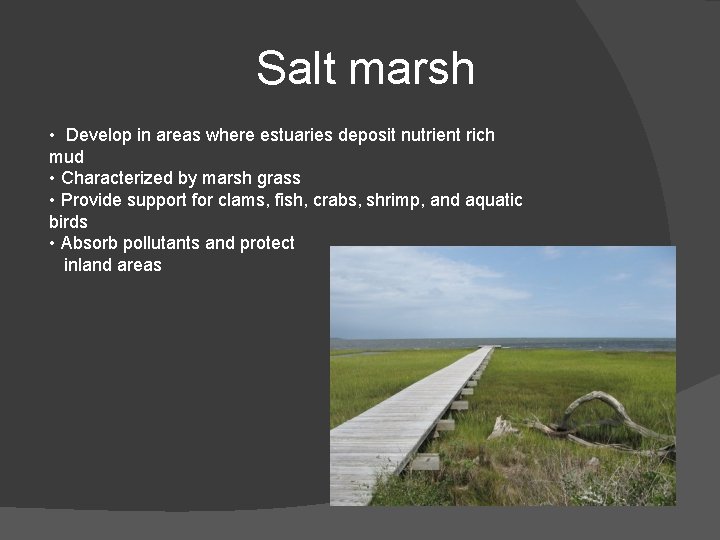
Salt marsh • Develop in areas where estuaries deposit nutrient rich mud • Characterized by marsh grass • Provide support for clams, fish, crabs, shrimp, and aquatic birds • Absorb pollutants and protect inland areas
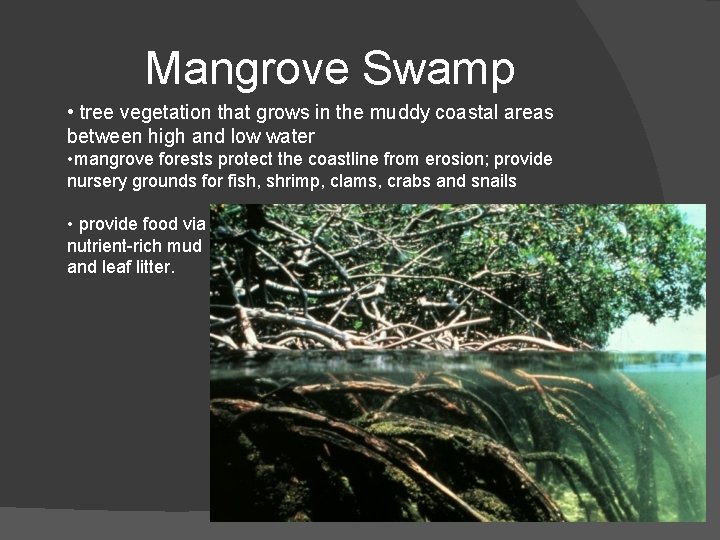
Mangrove Swamp • tree vegetation that grows in the muddy coastal areas between high and low water • mangrove forests protect the coastline from erosion; provide nursery grounds for fish, shrimp, clams, crabs and snails • provide food via nutrient-rich mud and leaf litter.
� Approximately one-third of all marine biological productivity occurs along coastal areas. These areas include mangroves, salt marshes, tidal zones and sea grass beds.
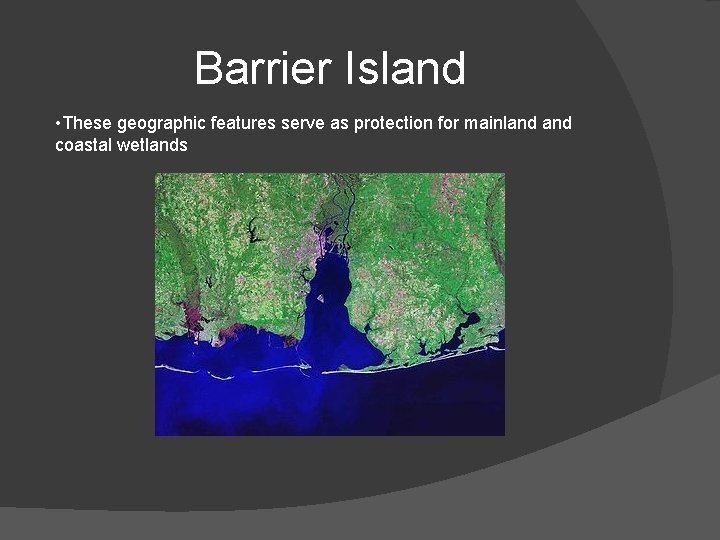
Barrier Island • These geographic features serve as protection for mainland coastal wetlands
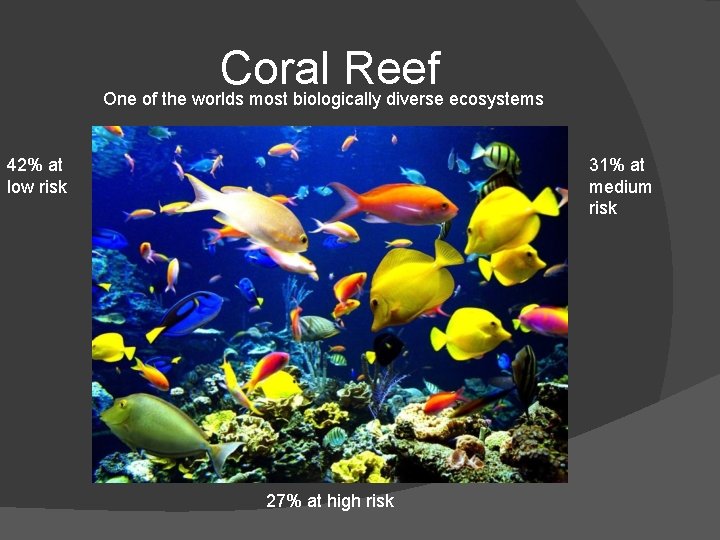
Coral Reef One of the worlds most biologically diverse ecosystems 42% at low risk 31% at medium risk 27% at high risk
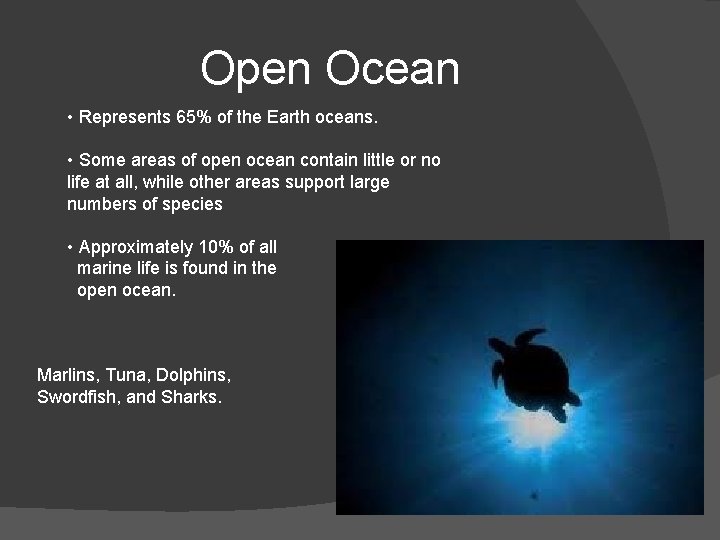
Open Ocean • Represents 65% of the Earth oceans. • Some areas of open ocean contain little or no life at all, while other areas support large numbers of species • Approximately 10% of all marine life is found in the open ocean. Marlins, Tuna, Dolphins, Swordfish, and Sharks.