
Aquatic Ecosystems Chapter 7 Aquatic Environments Types and

- Slides: 50
Aquatic Ecosystems Chapter 7
Aquatic Environments: Types and Characteristics n Aquatic life zones • Saltwater • Freshwater
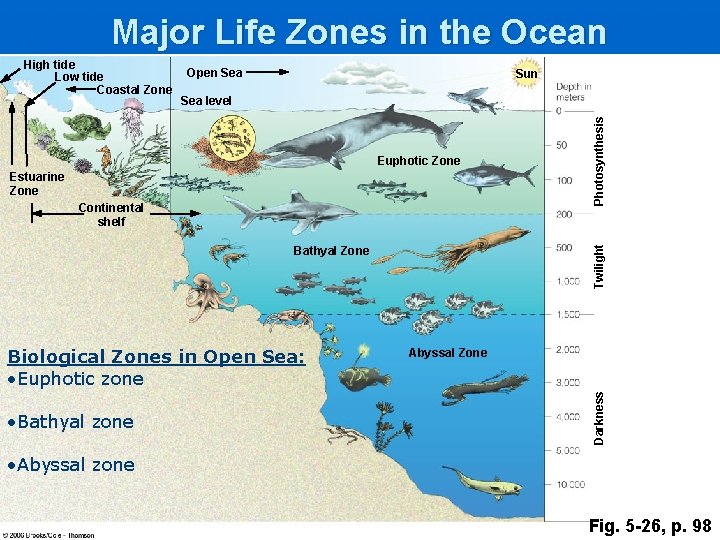
Major Life Zones in the Ocean Open Sea Sun Euphotic Zone Estuarine Zone Twilight Continental shelf Bathyal Zone Biological Zones in Open Sea: • Euphotic zone • Bathyal zone Photosynthesis Sea level Abyssal Zone Darkness High tide Low tide Coastal Zone • Abyssal zone Fig. 5 -26, p. 98
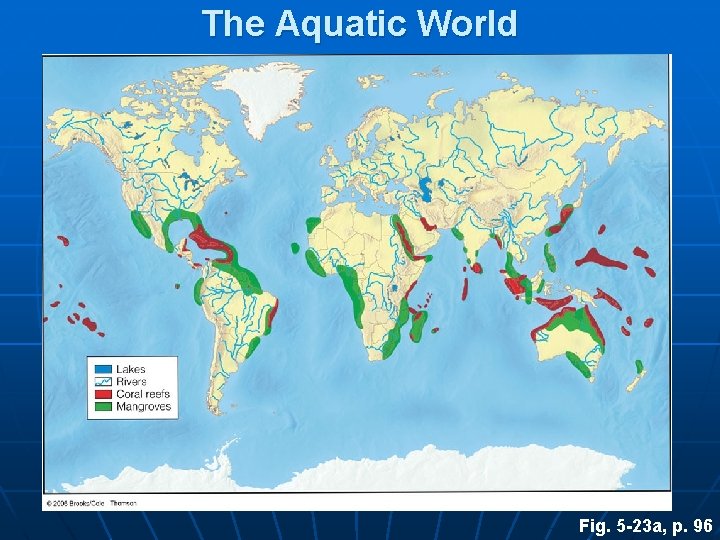
The Aquatic World Fig. 5 -23 a, p. 96
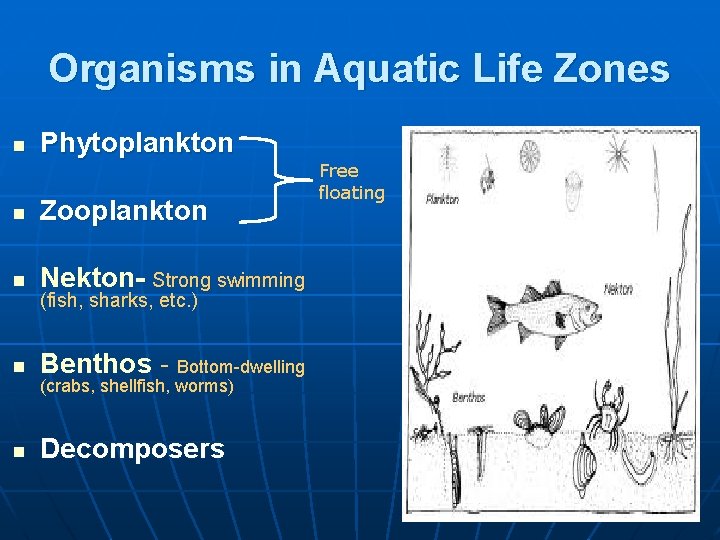
Organisms in Aquatic Life Zones n Phytoplankton n Zooplankton n Nekton- Strong swimming n Benthos - Bottom-dwelling n Decomposers (fish, sharks, etc. ) (crabs, shellfish, worms) Free floating
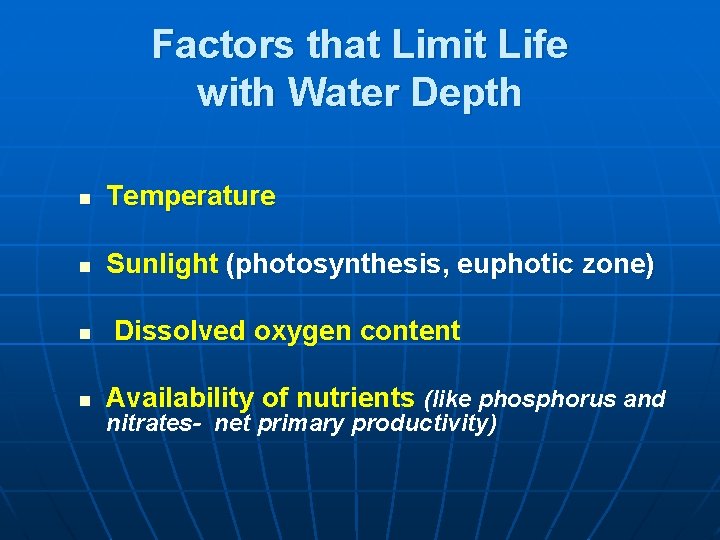
Factors that Limit Life with Water Depth n Temperature n Sunlight (photosynthesis, euphotic zone) n n Dissolved oxygen content Availability of nutrients (like phosphorus and nitrates- net primary productivity)
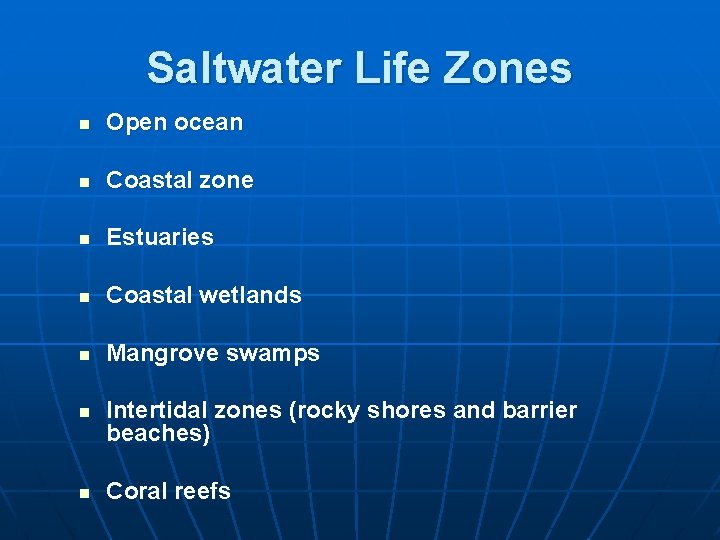
Saltwater Life Zones n Open ocean n Coastal zone n Estuaries n Coastal wetlands n Mangrove swamps n n Intertidal zones (rocky shores and barrier beaches) Coral reefs
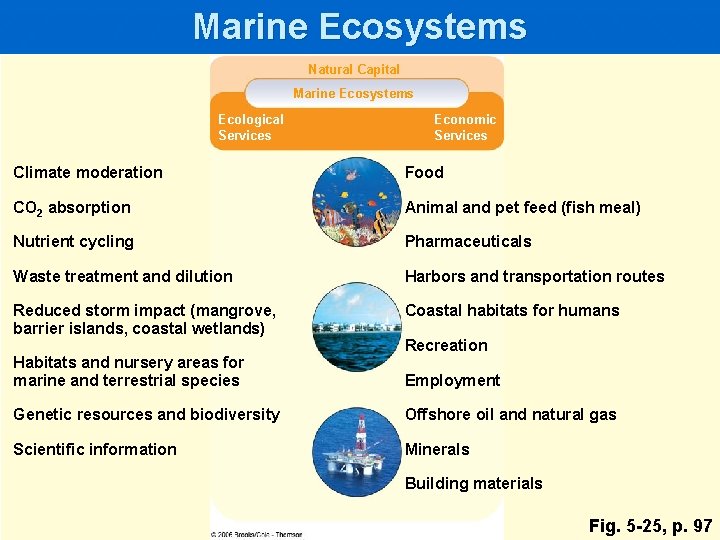
Marine Ecosystems Natural Capital Marine Ecosystems Ecological Services Economic Services Climate moderation Food CO 2 absorption Animal and pet feed (fish meal) Nutrient cycling Pharmaceuticals Waste treatment and dilution Harbors and transportation routes Reduced storm impact (mangrove, barrier islands, coastal wetlands) Coastal habitats for humans Habitats and nursery areas for marine and terrestrial species Recreation Employment Genetic resources and biodiversity Offshore oil and natural gas Scientific information Minerals Building materials Fig. 5 -25, p. 97
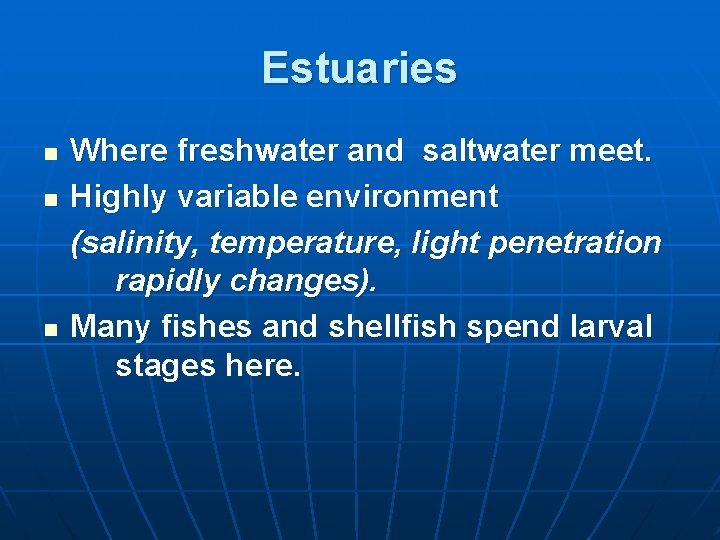
Estuaries n n n Where freshwater and saltwater meet. Highly variable environment (salinity, temperature, light penetration rapidly changes). Many fishes and shellfish spend larval stages here.
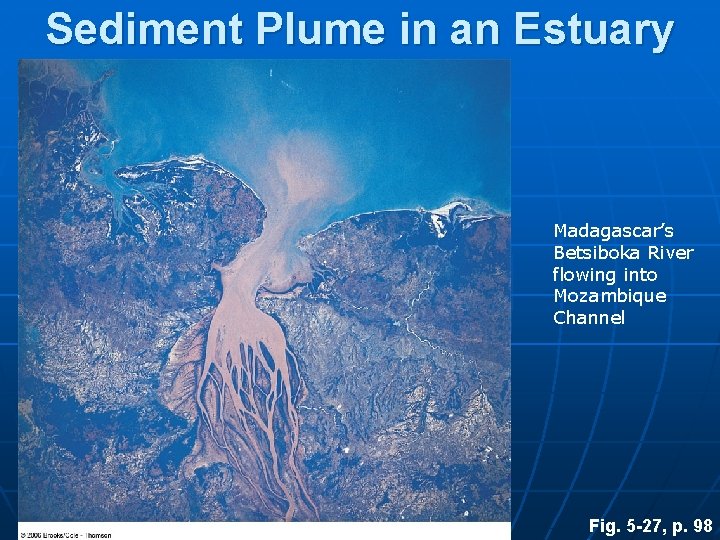
Sediment Plume in an Estuary Madagascar’s Betsiboka River flowing into Mozambique Channel Fig. 5 -27, p. 98
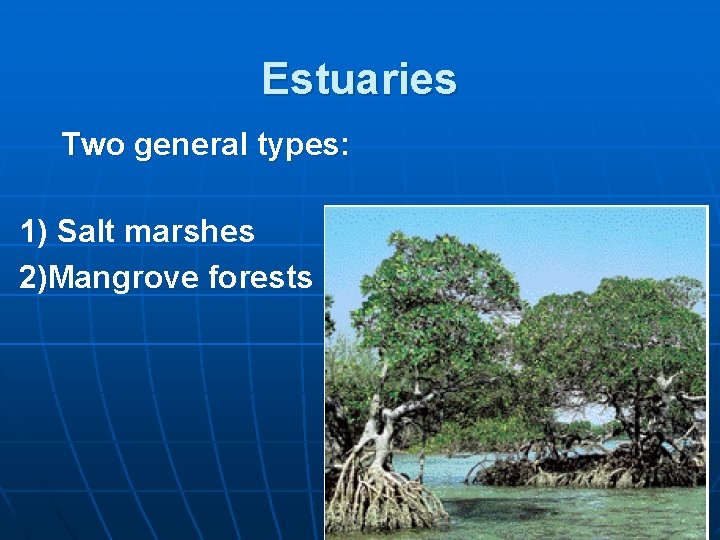
Estuaries Two general types: 1) Salt marshes 2)Mangrove forests
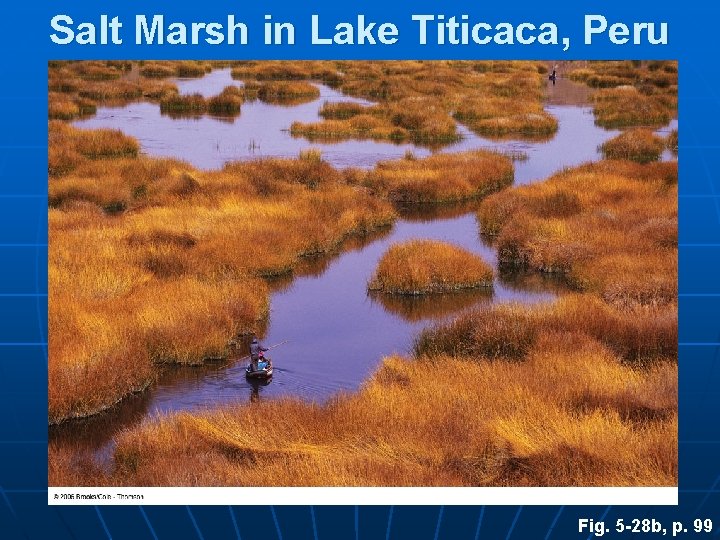
Salt Marsh in Lake Titicaca, Peru Fig. 5 -28 b, p. 99
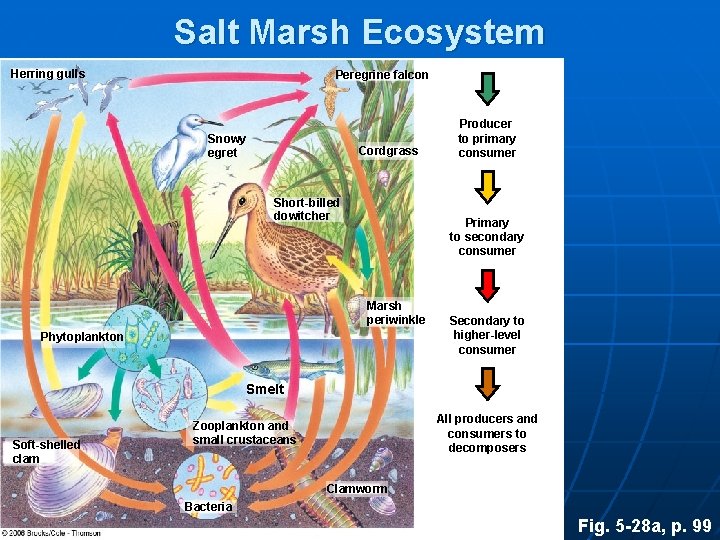
Salt Marsh Ecosystem Herring gulls Peregrine falcon Snowy egret Cordgrass Short-billed dowitcher Producer to primary consumer Primary to secondary consumer Marsh periwinkle Phytoplankton Secondary to higher-level consumer Smelt Soft-shelled clam All producers and consumers to decomposers Zooplankton and small crustaceans Clamworm Bacteria Fig. 5 -28 a, p. 99
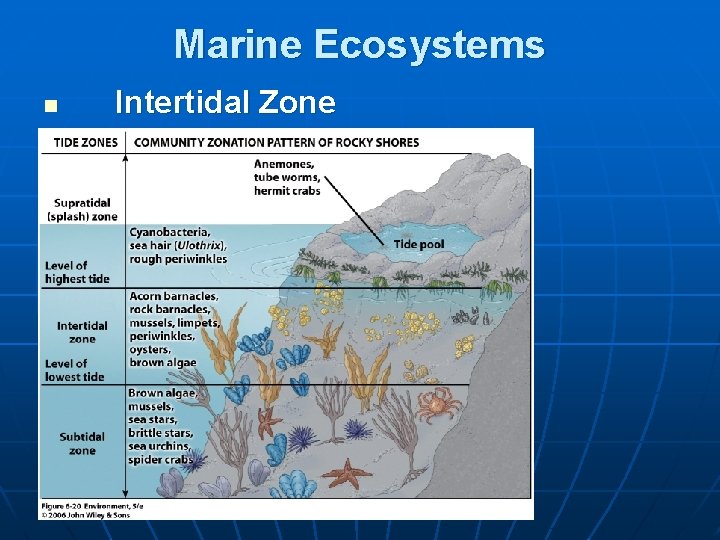
Marine Ecosystems n Intertidal Zone
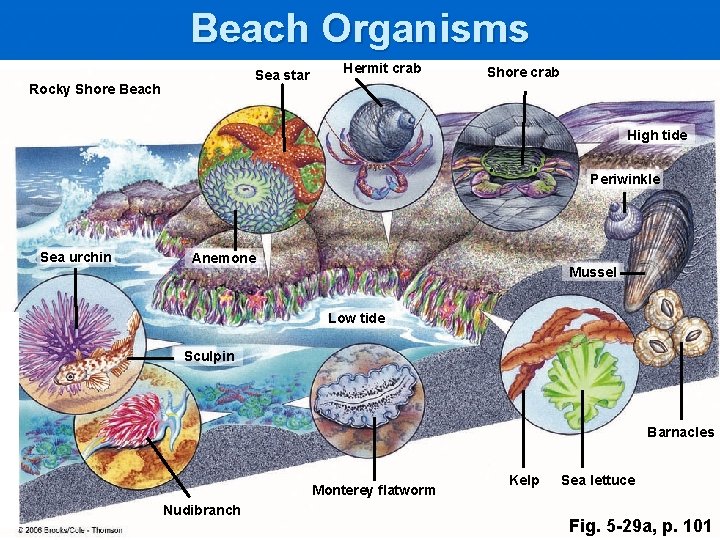
Beach Organisms Sea star Rocky Shore Beach Hermit crab Shore crab High tide Periwinkle Sea urchin Anemone Mussel Low tide Sculpin Barnacles Monterey flatworm Nudibranch Kelp Sea lettuce Fig. 5 -29 a, p. 101
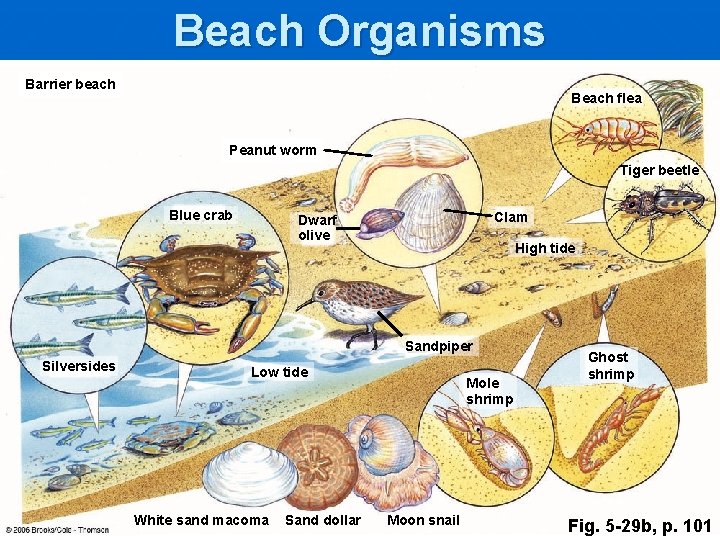
Beach Organisms Barrier beach Beach flea Peanut worm Tiger beetle Blue crab Clam Dwarf olive High tide Sandpiper Silversides Low tide White sand macoma Sand dollar Mole shrimp Moon snail Ghost shrimp Fig. 5 -29 b, p. 101
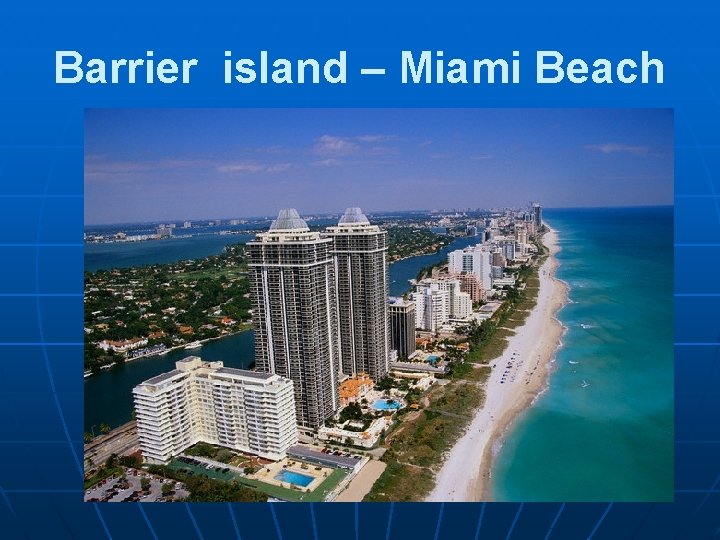
Barrier island – Miami Beach
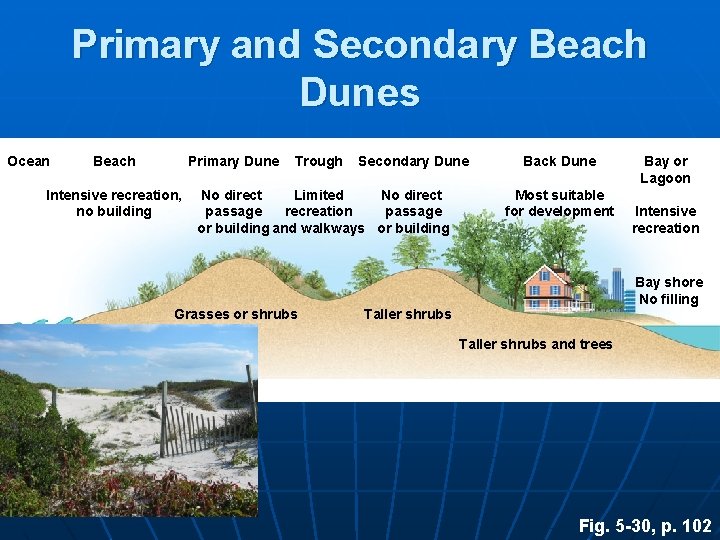
Primary and Secondary Beach Dunes Ocean Beach Primary Dune Intensive recreation, no building Trough Secondary Dune No direct Limited No direct passage recreation passage or building and walkways or building Grasses or shrubs Back Dune Most suitable for development Bay or Lagoon Intensive recreation Bay shore No filling Taller shrubs and trees Fig. 5 -30, p. 102
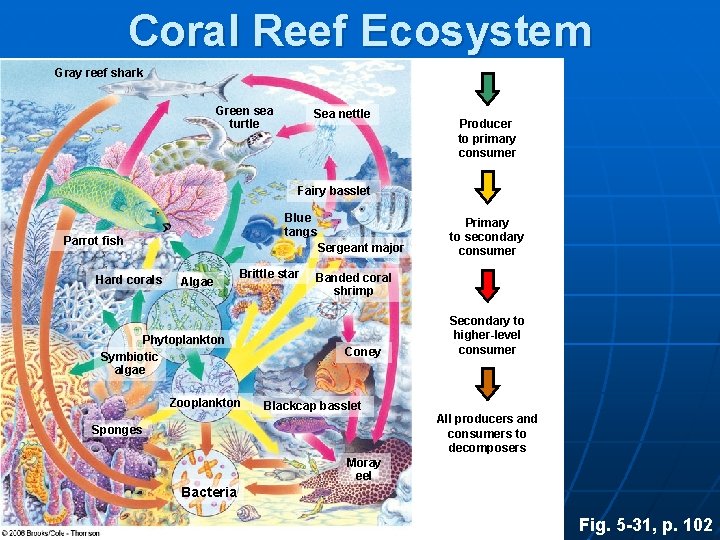
Coral Reef Ecosystem Gray reef shark Green sea turtle Sea nettle Producer to primary consumer Fairy basslet Blue tangs Parrot fish Hard corals Sergeant major Algae Brittle star Phytoplankton Symbiotic algae Zooplankton Primary to secondary consumer Banded coral shrimp Coney Blackcap basslet Sponges Secondary to higher-level consumer All producers and consumers to decomposers Moray eel Bacteria Fig. 5 -31, p. 102
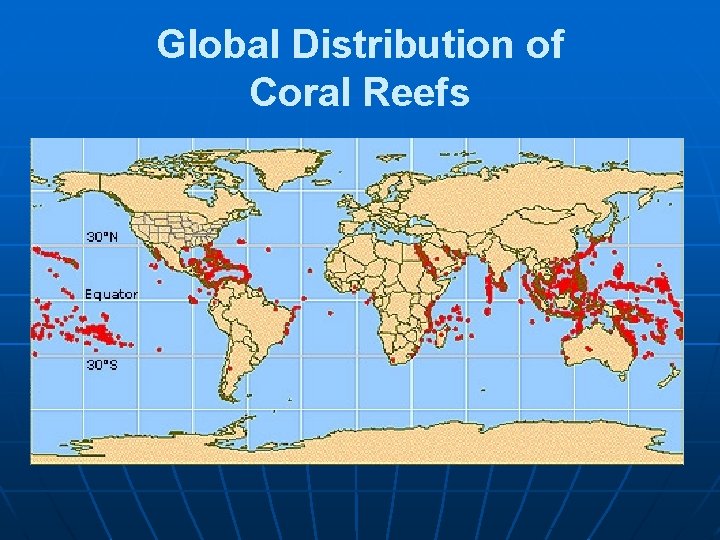
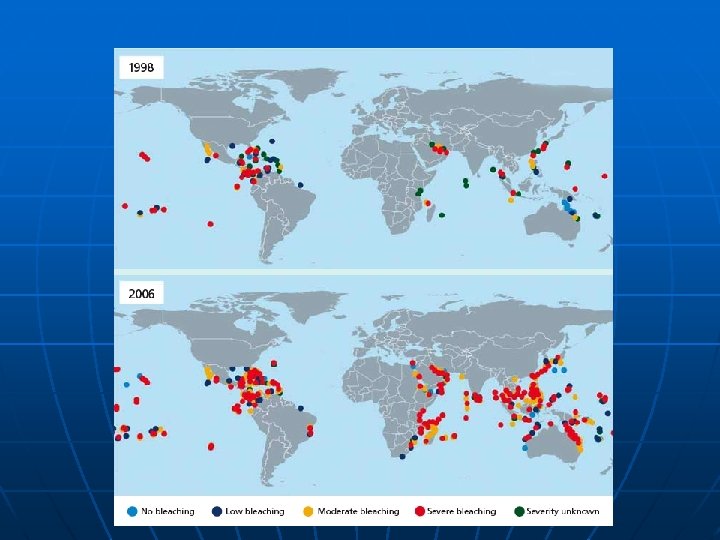
Global Distribution of Coral Reefs
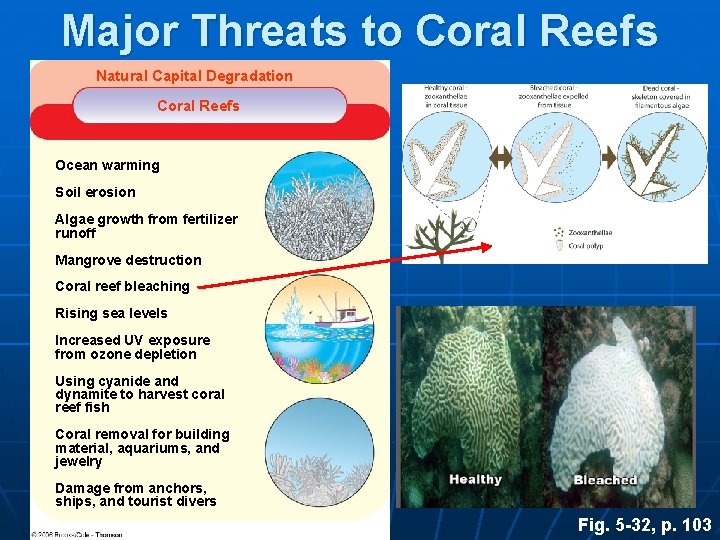
Major Threats to Coral Reefs Natural Capital Degradation Coral Reefs Ocean warming Soil erosion Algae growth from fertilizer runoff Mangrove destruction Coral reef bleaching Rising sea levels Increased UV exposure from ozone depletion Using cyanide and dynamite to harvest coral reef fish Coral removal for building material, aquariums, and jewelry Damage from anchors, ships, and tourist divers Fig. 5 -32, p. 103
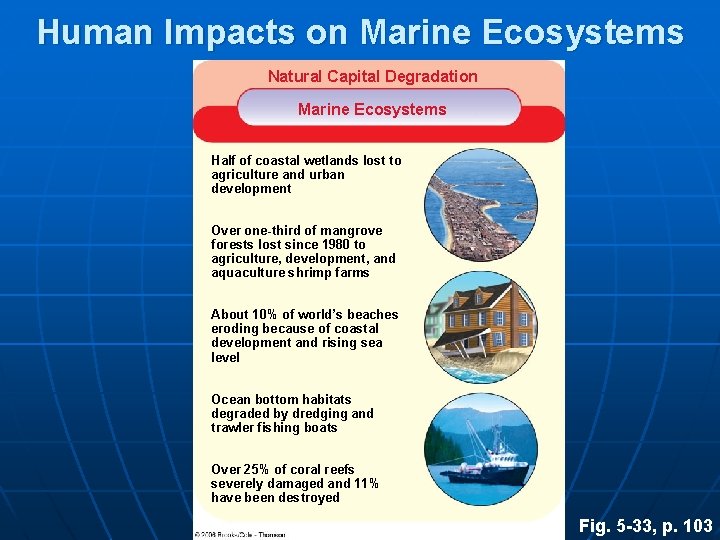
Human Impacts on Marine Ecosystems Natural Capital Degradation Marine Ecosystems Half of coastal wetlands lost to agriculture and urban development Over one-third of mangrove forests lost since 1980 to agriculture, development, and aquaculture shrimp farms About 10% of world’s beaches eroding because of coastal development and rising sea level Ocean bottom habitats degraded by dredging and trawler fishing boats Over 25% of coral reefs severely damaged and 11% have been destroyed Fig. 5 -33, p. 103
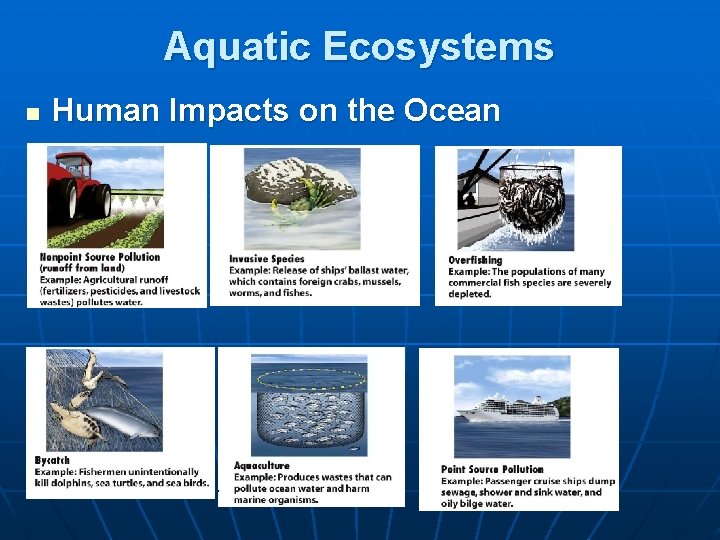
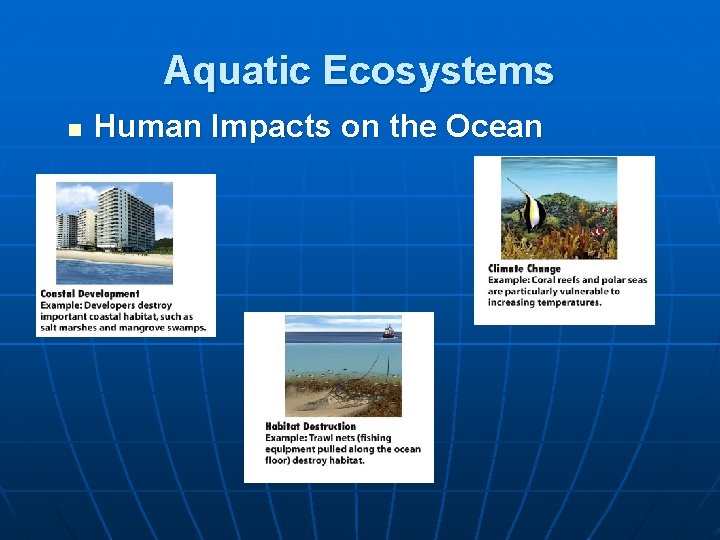
Aquatic Ecosystems n Human Impacts on the Ocean
Aquatic Ecosystems n Human Impacts on the Ocean
Freshwater Life Zones Standing (lentic) water - lakes and ponds Flowing (lotic) water - streams and rivers
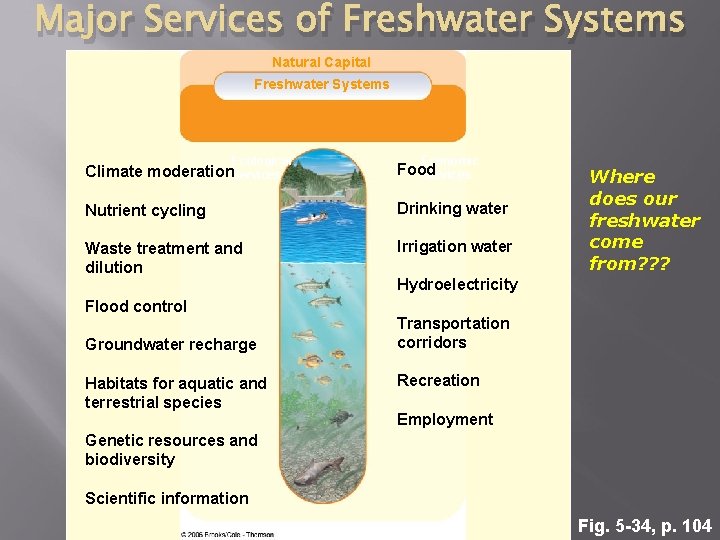
Major Services of Freshwater Systems Natural Capital Freshwater Systems Ecological Economic Climate moderation. Services Food Services Nutrient cycling Drinking water Waste treatment and dilution Irrigation water Flood control Groundwater recharge Habitats for aquatic and terrestrial species Where does our freshwater come from? ? ? Hydroelectricity Transportation corridors Recreation Employment Genetic resources and biodiversity Scientific information Fig. 5 -34, p. 104
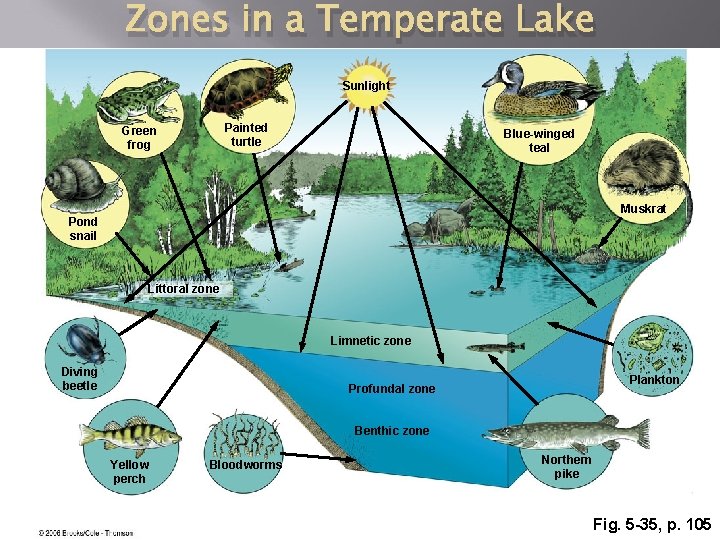
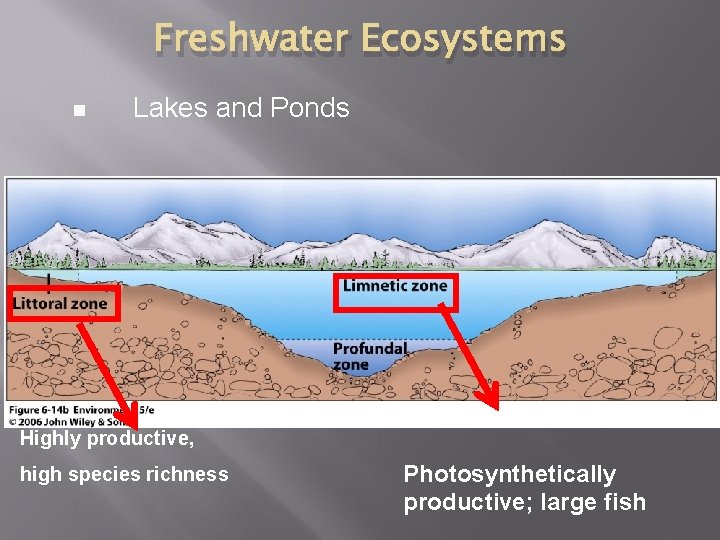
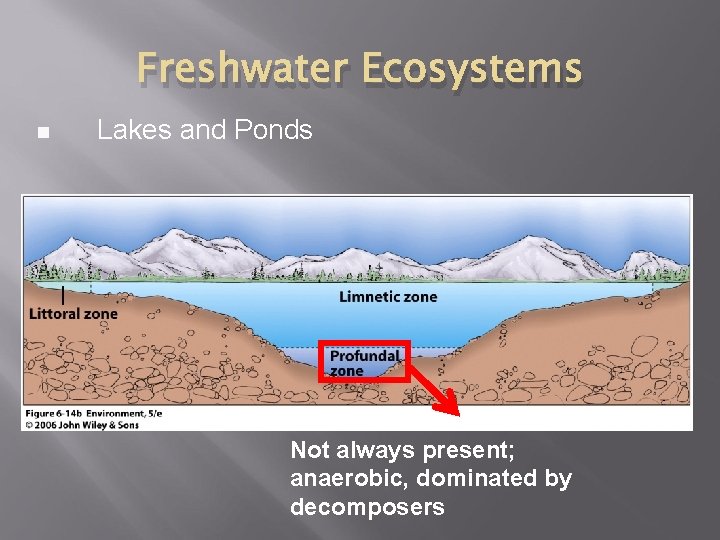
Zones in a Temperate Lake Sunlight Painted turtle Green frog Blue-winged teal Muskrat Pond snail Littoral zone Limnetic zone Diving beetle Plankton Profundal zone Benthic zone Yellow perch Bloodworms Northern pike Fig. 5 -35, p. 105
Freshwater Ecosystems n Lakes and Ponds Highly productive, high species richness Photosynthetically productive; large fish
Freshwater Ecosystems n Lakes and Ponds Not always present; anaerobic, dominated by decomposers
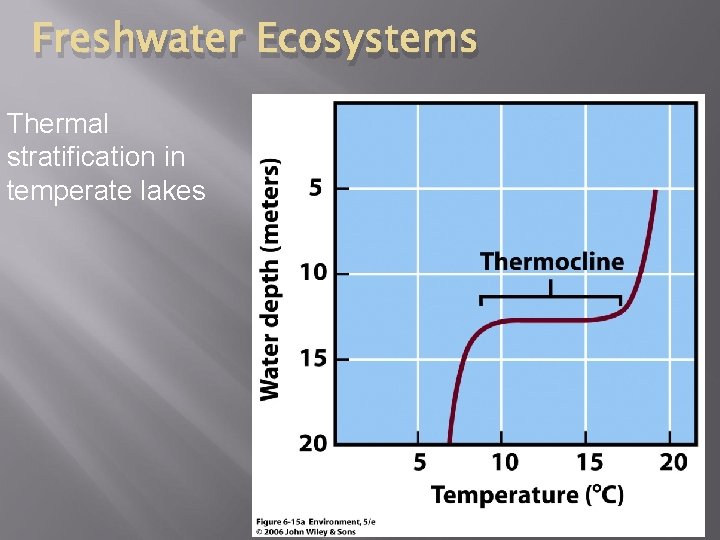
Freshwater Ecosystems Thermal stratification in temperate lakes
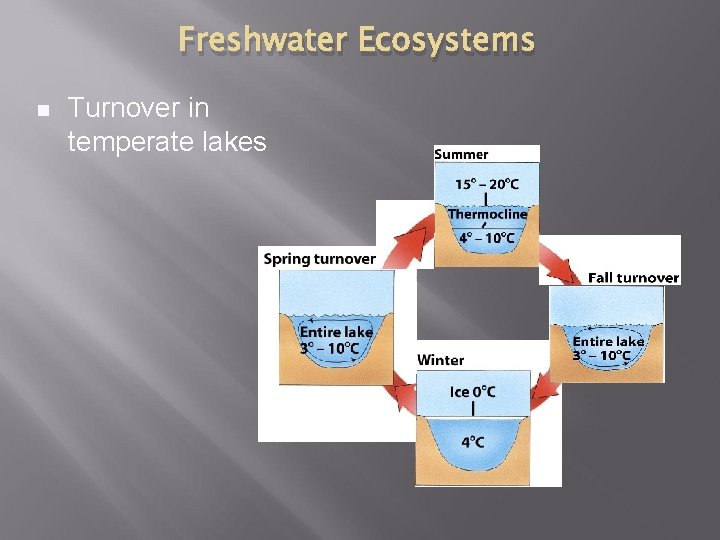
Freshwater Ecosystems n Turnover in temperate lakes
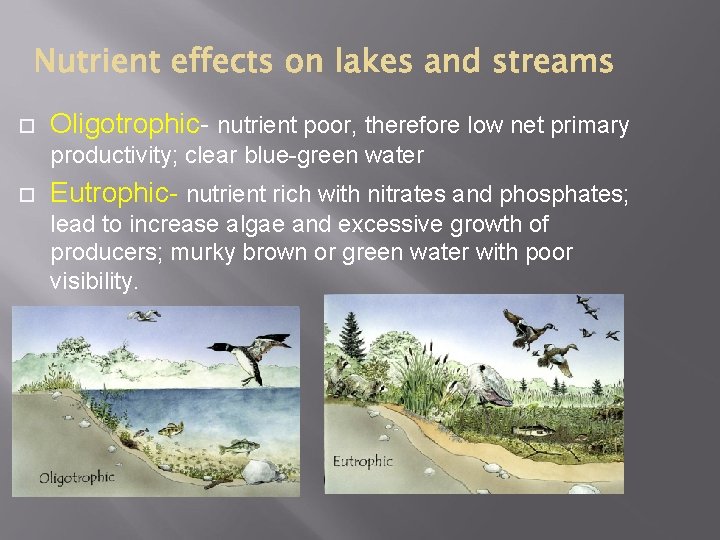
Oligotrophic- nutrient poor, therefore low net primary productivity; clear blue-green water Eutrophic- nutrient rich with nitrates and phosphates; lead to increase algae and excessive growth of producers; murky brown or green water with poor visibility.
Animation of river eutrophication
Freshwater Streams and Rivers Surface water- precipitation that does not sink into the ground. Runoff Watershed or drainage basin- area of land where rivers and streams come together (river basin- all the water drains into a large river) *Aquifers- porous, water-saturated layers of sand, gravel or bedrock that are filled from surface water percolating down through the sediments. *Water table- upper surface of the zone of saturation , where all pores between sediment particles are filled with water.
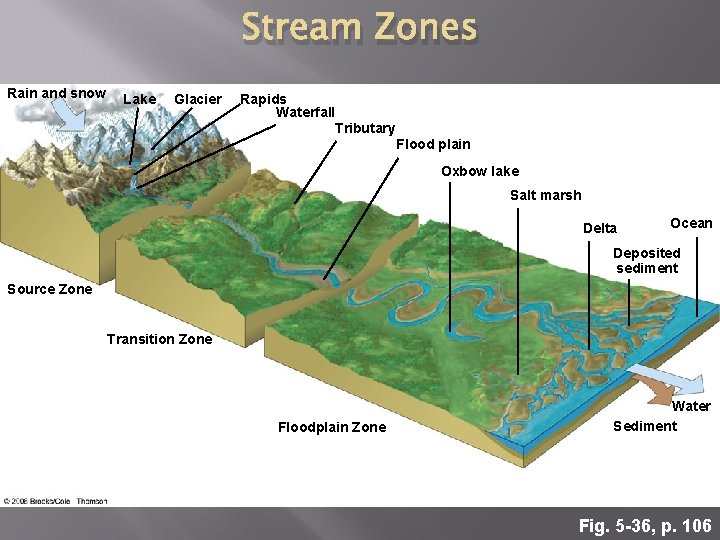
Flowing water zones- (Planet Earth) Source: Tend to be narrow, swift, clear, cold, nutrient poor, and highly oxygenated; not very productive Transition: warmer, wider, deeper streams, support more producers than source zone Floodplain: Tend to be wide, deeper river meet valleys. slow, cloudy, warm, nutrient rich, and less oxygenated; large levels of algae, aquatic plant
Stream Zones Rain and snow Lake Glacier Rapids Waterfall Tributary Flood plain Oxbow lake Salt marsh Delta Ocean Deposited sediment Source Zone Transition Zone Floodplain Zone Water Sediment Fig. 5 -36, p. 106
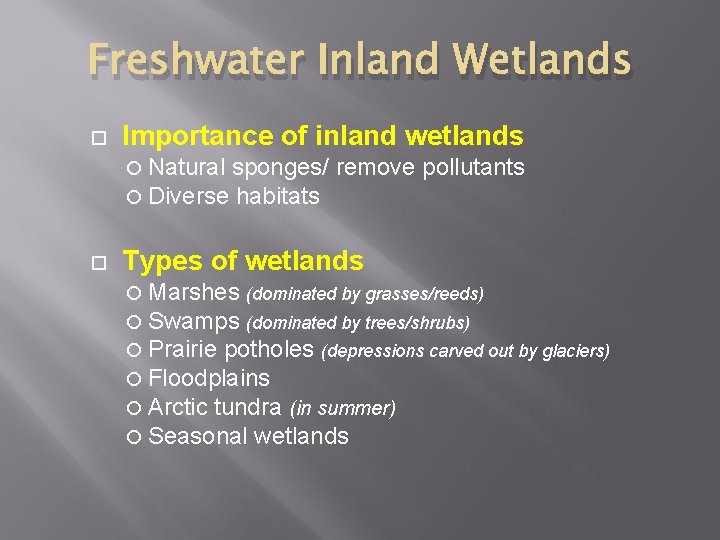
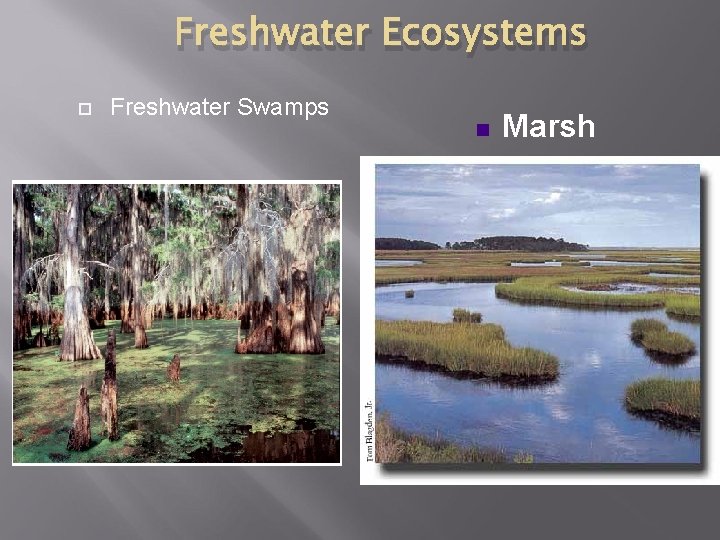
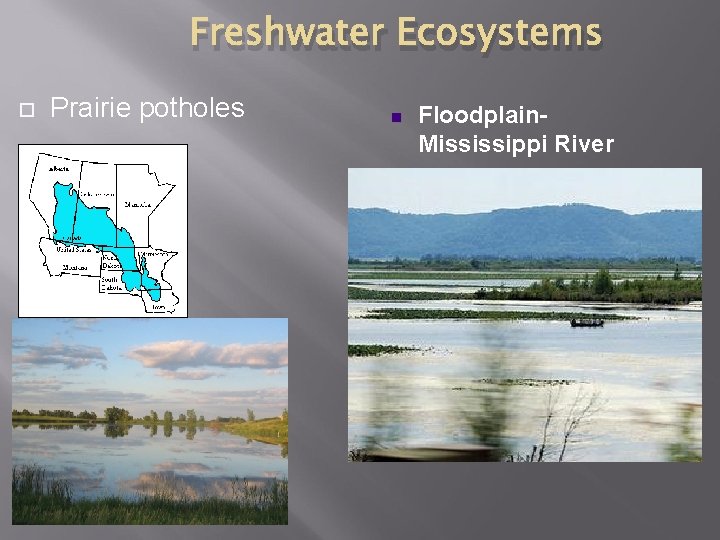
Freshwater Inland Wetlands Importance of inland wetlands Natural sponges/ Diverse habitats remove pollutants Types of wetlands Marshes (dominated by grasses/reeds) Swamps (dominated by trees/shrubs) Prairie potholes (depressions carved out by glaciers) Floodplains Arctic tundra (in summer) Seasonal wetlands
Freshwater Ecosystems Freshwater Swamps n Marsh
Freshwater Ecosystems Prairie potholes n Floodplain. Mississippi River
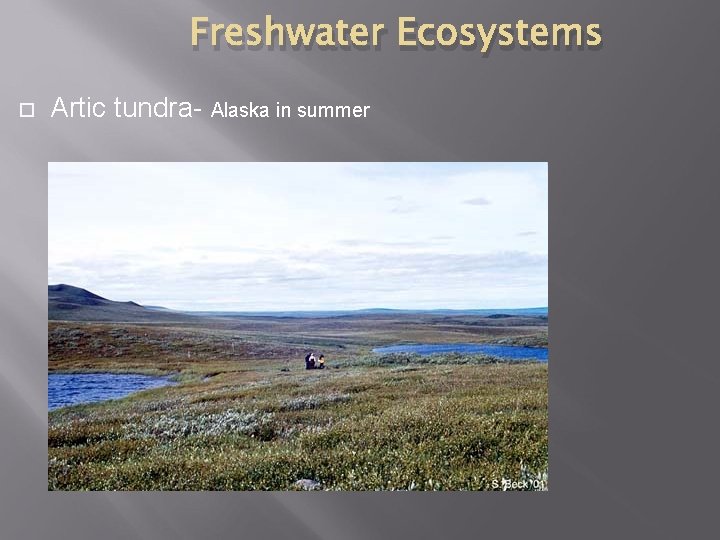
Freshwater Ecosystems Artic tundra- Alaska in summer
Human Impacts on Freshwater Systems n Dams, diversions and canals - Animation n Flood control levees and dikes n Pollutants from cities and farmlands n Wetland destruction
` STOP FOR QUIZ!
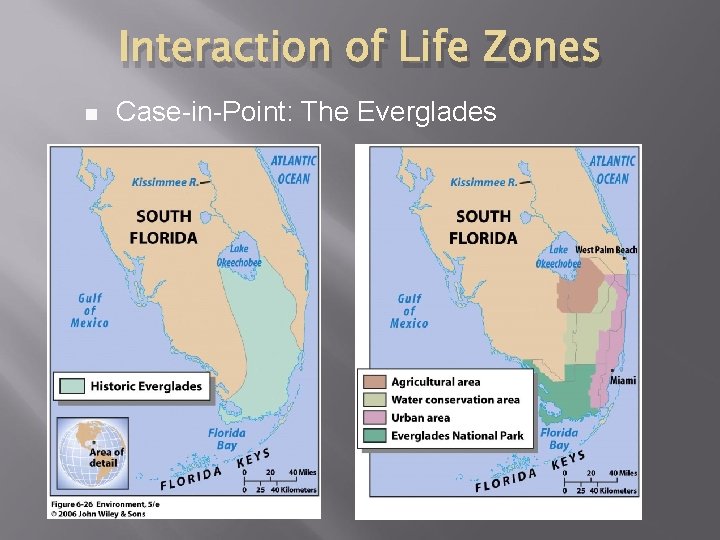
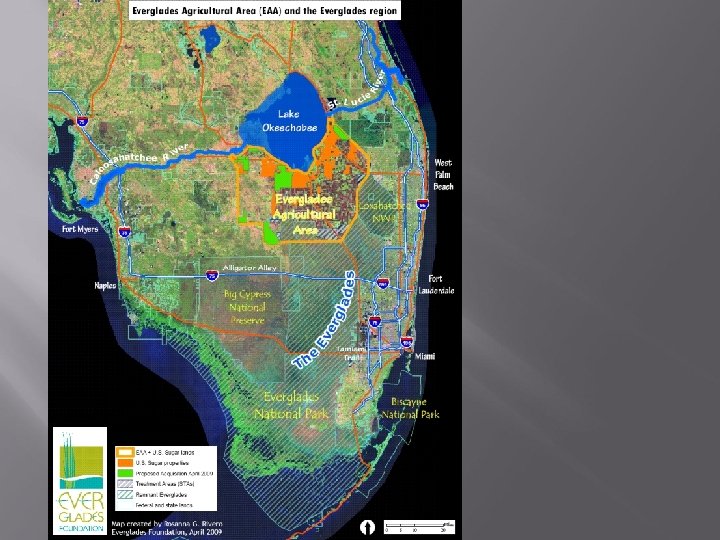
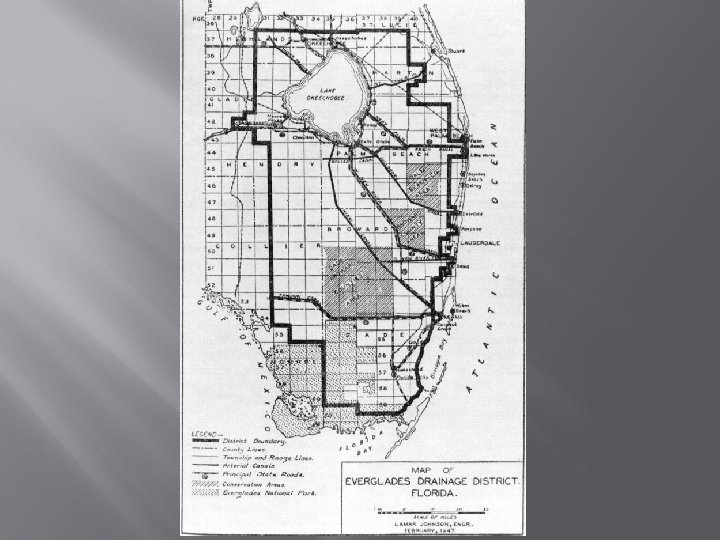
Interaction of Life Zones n Case-in-Point: The Everglades
Used to cover 11, 000 square miles flowing from Kissimmee River to Lake Okeechobee, and then south through the Everglades to Florida Bay (KOE watershed) Spans up to 60 miles in width, but can be only 6 inches in depth in some areas Considered a hot spot of biodiversity Only area in the world where Alligators and Crocodiles exist side by side Nicknamed “River of Grass” (Marjorie Stoneman Douglas)
1905 - FL governor Napoleon Bonaparte Broward began the push to drain the Everglades Miami and Ft. Lauderdale were created when tracts of land were drained into farmland 1948 - Central and South Florida Project (US congress)-- created man-made canals and levees moving over 1 billion gallons of water daily into the ocean The Everglades is now one half of the size it used to be due to this change
CERP (Comprehensive Everglades Restoration Plan) 30 year, $10. 9 billion 50 -50 partnership with FL and US govts Improve water quality and water flow Flow maps
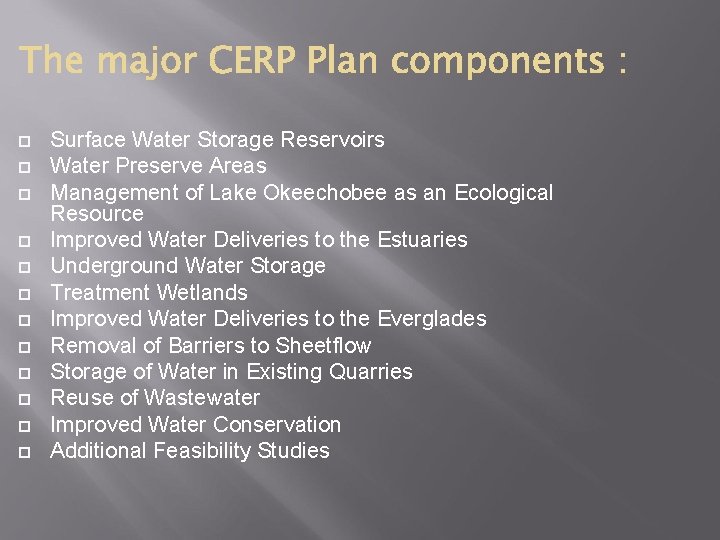
Surface Water Storage Reservoirs Water Preserve Areas Management of Lake Okeechobee as an Ecological Resource Improved Water Deliveries to the Estuaries Underground Water Storage Treatment Wetlands Improved Water Deliveries to the Everglades Removal of Barriers to Sheetflow Storage of Water in Existing Quarries Reuse of Wastewater Improved Water Conservation Additional Feasibility Studies